
Reviewed · MOSHI & KILIMANJARO TOURS
Private Market Tour and Tanzanian Cooking Class in Moshi
The best part of this Moshi experience is the way it links the local market to the family table. William takes you through the stalls, introduces you to familiar and less familiar ingredients, and then brings those foods to his mother Shida’s home for a hands-on cooking lesson.
I like the private format, which gives you time to ask questions and follow the cooking at your own pace. I also like the simple setting: a mud house, a wood fire, a coconut grinder, and benches outside for the meal. The main consideration is that this is a real home visit, not a polished cooking studio, so anyone wanting air conditioning, restaurant-style service, or a tightly scripted class should choose another activity.
Key points
- Market visit first: William helps you shop for fruits, vegetables, herbs, and other ingredients while explaining how they are used.
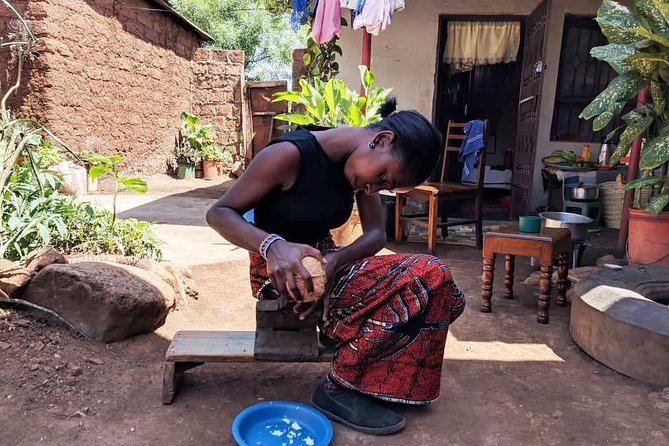
- Traditional coconut preparation: You’ll use a buzi, a small wooden seat with a grinder, to shave coconut meat and make fresh coconut milk.
- Ugali over a wood fire: The cornmeal staple looks simple, but stirring it takes effort and care.
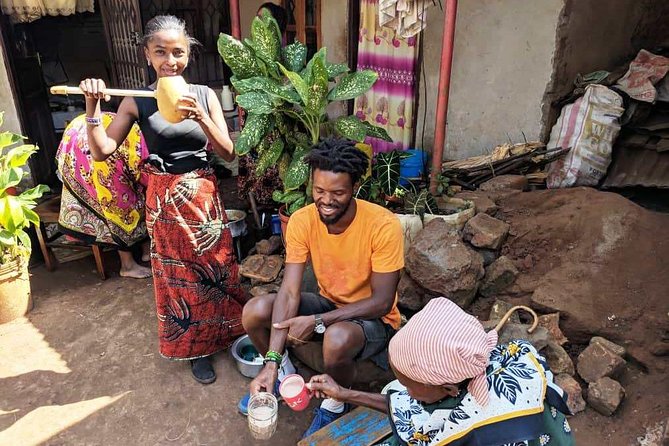
- Family meal at Shida’s home: Eat outside on benches with Shida, Marissa, William, and the household.
- Private five-and-a-half-hour outing: Pickup and drop-off at your Moshi hotel are offered, and only your group takes part.
- Good cultural value at $86: The price covers transport, a personal market guide, cooking instruction, food, and drinks rather than just a meal.
From Moshi’s market to Shida’s kitchen
This is a food experience with a useful order: you shop first, then cook what you have seen and selected. That simple structure helps you understand Tanzanian food better than a meal served without context.
William, a local Tanzanian and Marissa’s husband, picks you up at your Moshi hotel. He takes you into a local market, where you look at fruit, vegetables, herbs, and other ingredients used in everyday cooking. He also stops with you at favorite vendors, giving the market visit a personal feel instead of making it a quick walk past anonymous stalls.
You may be offered tastes along the way. One participant tried fruit, vegetables, dried sardines, and other local foods during the market visit. That makes this part more than a shopping stop. It gives you a chance to ask what an ingredient is, how it is prepared, and why it belongs in a Tanzanian kitchen.
The market may feel less tidy or familiar than a supermarket at home. One person began with some concern about cleanliness, so bring an open mind and remember that this is an everyday food market, not a display for tourists. If you enjoy seeing food in its ordinary setting, the rough edges are part of the point.
More Cooking Classes in Moshi & Kilimanjaro:
- Zanzibar Cooking Class & Spice Tour
★ 4.5 · 77 reviews - Zanzibar: Spice Farm Tour with Traditional Cooking Lesson
★ 4.8 · 77 reviews - Half-Day Kuza Cave Swimming Adventure and Cooking Class
★ 4.5 · 44 reviews
The 20-minute trip to a Moshi family home
After the market, you travel to Shida’s home, about 20 minutes away. The transfer may be a leisurely walk or a tuk-tuk ride, depending on the arrangements for your outing.
That short trip helps shift the experience from public market to private household. You are not simply being taken to a class venue with a Tanzanian theme. You are visiting a family home and cooking with people who have prepared these foods in their own lives.
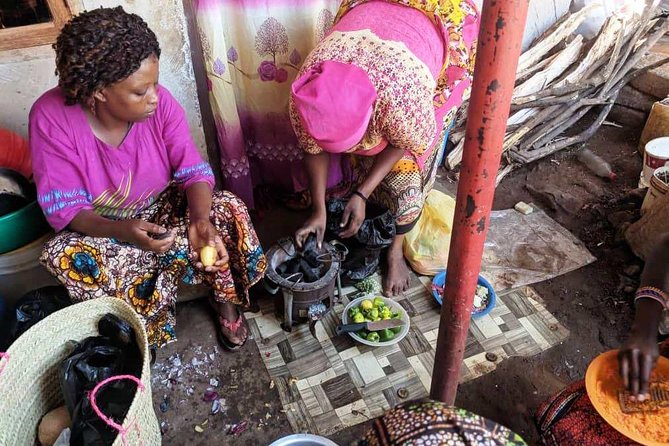
Shida’s home is described as a mud house. The setting is plain and practical, with cooking done over a wood fire and the meal served on benches outside. This can be a strong match for you if you want to see a slice of daily life around Moshi. It may be less suitable if you need a formal kitchen, modern equipment, or a quiet place away from smoke and outdoor activity.
The private setup matters here. With no other group joining your class, you can spend more time watching a particular step, asking about ingredients, or taking part without feeling rushed. Group discounts are available, but the exact discount depends on the booking.
Grating coconut with a traditional buzi
The cooking lesson lasts about one hour. One of its most memorable tasks is making coconut milk by hand.
You’ll use a buzi, a small wooden seat fitted with a grinder. Sitting on it, you shave the coconut meat into pieces, then work with it to produce fresh coconut milk. This is a practical bit of equipment, not a decorative prop. It shows how a basic household tool turns a whole coconut into an ingredient for cooking.
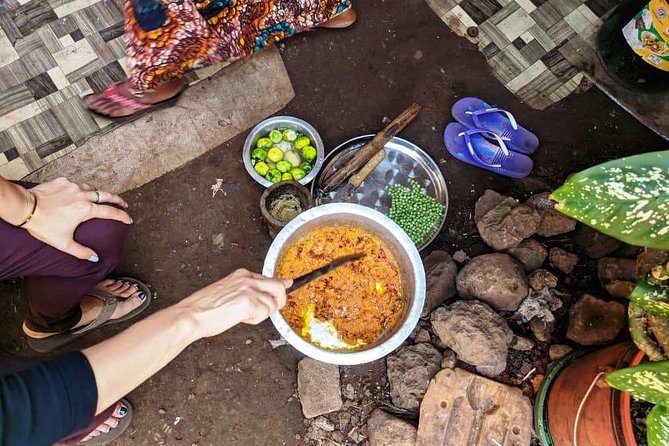
The coconut milk is used as a base for vegetable and stew dishes. I like this part because it connects the market ingredient to the finished food. You see the coconut, handle it, process it, and then taste the result in a cooked dish.
The work can be tiring, especially if you are not used to preparing food by hand. That is useful to know before you arrive. This class is not simply a demonstration where you sit and watch someone else cook. You are expected to take part, and some tasks require repeated effort.
Learning why ugali takes patience
The central dish is ugali, a staple made from cornmeal. It is often served with sautéed vegetables, and here it is prepared over a wood fire.
Ugali uses only a few basic ingredients, but that does not make it effortless. Stirring the cornmeal mixture into the right texture takes steady work. Shida treats the dish as a family favorite and shares the method with care, giving you a better sense of why a simple staple can still be an important cooking skill.
For you, the value is partly in learning the technique and partly in seeing how a common food fits into an ordinary meal. Fancy ingredients are not required. Fire, cornmeal, vegetables, coconut, and time do much of the work.
The class also gives you a chance to compare the cooking method with what you know at home. A recipe card alone would not show the feel of the mixture, the effort needed to stir it, or the way the cook judges when it is ready. Those physical details are what make the lesson useful.
More markets in Moshi & Kilimanjaro:
- Full-Day Moshi Private Forest Walk and Local Market Tour
★ 5.0 · 4 reviews - Stone Town Guided Tour: Culture, Slave Market & Spice Market
★ 4.8 · 44 reviews - Arusha: Traditional Tanzania Cooking Class & Food Market Tour
★ 5.0 · 34 reviews - Spice , Prison Island ,Stone Town and Slave Market Site Tour
★ 5.0 · 24 reviews
Eating outside with the whole family
Once the food is ready, you eat outside on benches with the family. The meal includes ugali and sautéed vegetables, along with peanut brittle and drinks. Homemade alcohol is also served.
This is the point where the activity becomes a shared visit rather than a cooking lesson followed by a quick meal. You have already met the people who helped you shop and cook, so sitting down together gives the food a personal setting.
You should be comfortable with a modest meal and a household setting. The description does not promise a long menu or a restaurant-sized spread, and the appeal is not variety. The appeal is eating food that you have helped prepare, in the home where these cooking habits belong.
The drinks deserve a practical note. Homemade alcohol is part of the offering, but you are not required to treat it as the main event. If you do not drink alcohol, ask for the other available drinks. The food and conversation remain the core of the outing.
What the private format adds at $86
At $86 per person, this is not the cheapest way to eat in Moshi. You could spend less on a local meal. You are paying for much more than a plate of food, though.
The price includes a private experience, hotel pickup and drop-off, a guided market visit, transport or a walk to the home, cooking instruction, ingredients, the shared meal, and drinks. Since only your group participates, the cost makes more sense for couples, families, or small groups that want personal attention.
I would compare it with the price of a standard cooking class plus a private guide and separate transport. Against that combination, $86 can be reasonable. The value is strongest if you want cultural contact and participation, not just a meal.
It is also a good choice for a final day in Moshi. The outing lasts about five hours and 30 minutes, which is long enough to feel substantial without taking up a full day. One person used it as a way to finish a Tanzania trip, while another used it as an early cultural introduction. Both uses make sense.
The advance booking pattern is about 16 days, so you should not assume you can arrange it at the last minute during a busy stay. Pickup is offered, and mobile tickets make the practical side simple, but confirm your hotel details when booking.
Who will enjoy this Moshi cooking class?
I would recommend this outing to you if you enjoy meeting local people, trying unfamiliar foods, and taking part in basic household work. It suits travelers who prefer a personal story and a family setting over a formal attraction.
It is also a good fit for anyone visiting Mount Kilimanjaro who wants a cultural activity before or after time outdoors. The market and home visit give you a different view of Moshi than a hotel, restaurant, or transport stop can provide.
Families may like the hands-on format, especially if children enjoy markets and cooking. The private structure makes it easier to adjust the pace and explain unfamiliar foods. Couples and small groups also get the benefit of having the hosts’ attention to themselves.
I would think twice if you are looking for a luxury food tour. This is not presented as a high-end culinary class. You will work with simple tools, cook over a wood fire, and eat outside. That is exactly why it works for many people, but it will not suit every style of trip.
You should also consider your comfort with trying foods offered at a local market. The experience includes tasting items such as fruit, vegetables, and dried sardines. You can approach that at your own pace, but the market is meant to be part of the food experience, not just a backdrop.
A practical five-and-a-half-hour plan
The schedule begins with hotel pickup in Moshi. William then leads the market visit, where you learn about ingredients and buy what will be used later.
Next comes the roughly 20-minute walk or tuk-tuk ride to Shida’s home. The cooking portion lasts about one hour and includes coconut preparation and ugali. The remaining time allows for the market, transfers, preparation, eating, and conversation.
Because the activity is private, you have some room to ask questions and spend longer on a step that interests you. Still, the total duration is approximate, so leave some flexibility around other plans. I would not schedule a tight airport transfer immediately afterward.
The experience is offered with pickup and drop-off at your Moshi hotel. That removes the need to find the market or family home yourself, which is especially helpful if you are new to Moshi.
Booking, cancellations, and simple planning tips
Confirmation is provided at the time of booking. The activity is private, so only your own group participates.
You can cancel for a full refund up to 24 hours before the local start time. Cancellations made less than 24 hours ahead are not refunded, and changes within that same 24-hour window are not accepted.
For the day itself, wear clothes that are comfortable for walking, market visits, and hands-on cooking. The supplied details do not specify a dress code or special equipment, so you should ask the provider directly if you have particular needs.
Plan to be curious and patient. The strongest parts of the visit are not quick photo stops. They are the slower tasks: choosing food at the market, grating coconut, stirring ugali, and sitting down with the family afterward.
Should you book the Moshi market and cooking class?
Book this experience if you want a private, personal look at food and family life in Moshi. The market visit, the buzi coconut grinder, the wood-fire ugali, and the outdoor family meal give you specific memories rather than a generic food tasting.
At $86, the value depends on what you want from the day. It is a fair choice if you place a high price on private guiding, hotel transport, and time with a local family. Skip it if you want a polished cooking studio, a large menu, or luxury comfort.
For most curious food lovers, I would book it, especially as a relaxed half-day around a Kilimanjaro trip. Go ready to walk, work, taste, and accept a simple home setting. That is where this experience earns its price.
FAQ
How long does the experience last?
The activity lasts approximately five hours and 30 minutes.
Is hotel pickup available in Moshi?
Yes. Pickup and drop-off at your Moshi hotel are offered.
Is this a private tour?
Yes. Only your group participates in the activity.
Who leads the market and cooking experience?
William leads the market visit and takes you to his mother Shida’s home. Marissa is William’s wife and is also part of the local hosting family.
What will I cook?
You will learn to make fresh coconut milk using a traditional buzi grinder and prepare ugali, a cornmeal dish served with sautéed vegetables.
What food and drinks are included?
You will share a home-cooked meal that includes ugali, vegetables, peanut brittle, and drinks. Homemade alcohol is also part of the meal.
Can I cancel for a full refund?
Yes, if you cancel at least 24 hours before the experience start time. Cancellations or changes made less than 24 hours before the local start time are not accepted for a refund.
More workshops and classes in Moshi & Kilimanjaro
- Gifts and art lessons
★ 5.0 · 35 reviews - NGO Lifted Strong – Traditional Tanzanian Cooking Class
★ 5.0 · 39 reviews - Zanzibar: Spice Farm Tour with Traditional Cooking Class
★ 4.6 · 16 reviews - Cooking and Sewing & Jewelry Workshops in Arusha
★ 5.0 · 14 reviews
More shopping trips in Moshi & Kilimanjaro
- Stone Town Private Tour with Slave Market Tickets
★ 5.0 · 13 reviews - Arusha: Traditional Tanzania Cooking class& Food Market Tour
★ 4.9 · 12 reviews - Tanzanite experience tour – Tanzanite shopping in Arusha
★ 5.0 · 12 reviews - Zanzibar:Stone town Street food market walking tour,transfer
★ 4.5 · 9 reviews
Newly listed around Moshi & Kilimanjaro
- Climb Mount Kilimanjaro: 7 Days Machame Route★ 5.0 · 3 reviews
- 6 Days Mount Kilimanjaro Climbing via Rongai Route★ 5.0 · 3 reviews
- Explore 1 day Ngorongoro Crater Budget Group Safari from Arusha★ 5.0 · 3 reviews
- Mt. Kilimanjaro Day Hiking★ 5.0 · 3 reviews
- Chemka (Kikuletwa) Hot Springs, Tanzania★ 5.0 · 3 reviews
- Guided City tour of Moshi★ 4.3 · 3 reviews
- 8 Day Tanzania Family Safari★ 5.0 · 3 reviews
- Rongai Route 7 Days★ 5.0 · 3 reviews
Moshi & Kilimanjaro Tours, compared.








Browse the lists this tour appears in