
Reviewed · ARUSHA TOURS
Tanzanite experience tour – Tanzanite shopping in Arusha
Arusha is one of the few places where you can buy Tanzanite close to its source, and this tour gives the stone more meaning than a quick stop at a jewellery counter. You learn how it is mined, cut, polished, and graded before visiting shops for Tanzanian crafts, paintings, carvings, and jewellery.
I like the hotel pickup and the private format, which make a shopping day far easier in a busy city. I also like the mix of polished commercial galleries and the Shanga Foundation, where disabled Tanzanians make useful art from recycled materials. The main drawback is the flexible three-to-eight-hour length: you should confirm how much time you want for each stop before setting out.
- Tanzanite museum first: Learn how this rare blue stone was formed, mined, named, cut, and graded.
- Certified purchases: Tanzanite bought at the museum store comes with a certificate from the Tanzanite Laboratory.
- Private transport: Hotel pickup and a group limited to your party make the outing easier to tailor.
- Shanga Foundation visit: See glassware, beads, fabrics, paintings, and recycled-material crafts made by disabled local artisans.
- Cultural Heritage Centre: Shop for Tanzanian jewellery, carvings, paintings, antiques, and precious stones in one large complex.
- Useful final-day option: The tour can fill a spare day in Arusha, and an airport ride may be arranged for an extra fee.
Why Tanzanite Makes Sense as an Arusha Souvenir
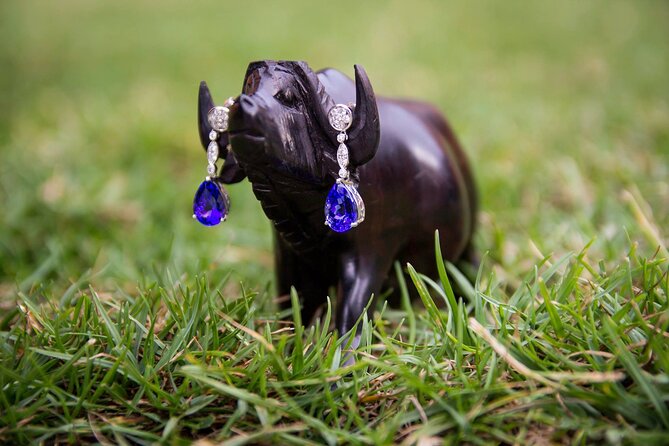
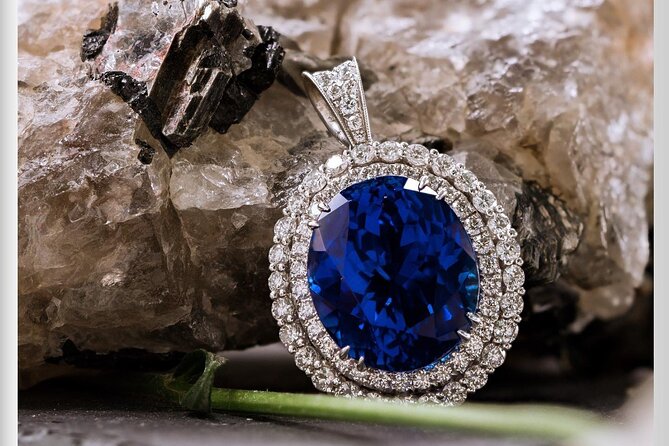
Tanzanite is mined only in Tanzania, making it a particularly local reminder of your time in East Africa. It is associated with December birthdays and is known for its blue colour, which can make a small piece of jewellery feel more personal than a standard souvenir.
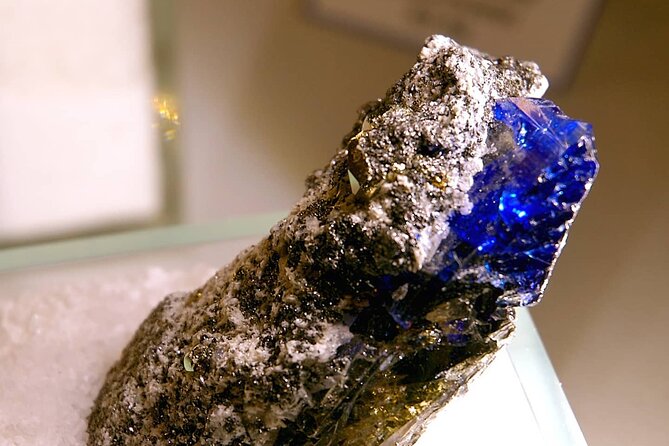
The stone became famous after New York jewellers Tiffany & Co. promoted it as an exceptionally beautiful blue stone and gave it the name Tanzanite. The tour also explains the claim that it is far rarer than diamonds, while showing you the practical steps between rough mineral and finished jewellery.
I appreciate that the day begins with information rather than a sales pitch. If you are considering a purchase, you first see how the stone is assessed and graded. That gives you a better basis for asking questions about colour, cut, clarity, size, and certification.
The museum is in central Arusha and has a shop attached. You can buy Tanzanite there, with purchased stones accompanied by a certificate from the Tanzanite Laboratory. That certificate matters because it gives you written information connected to the stone you are buying.
Still, you should treat the tour as a shopping and cultural outing, not as a promise that you will find a bargain. Prices depend on the jewellery, stone, quality, and design. The $35 tour price covers the guided outing, but your own purchases are separate.
Starting at the Tanzanite Experience Museum
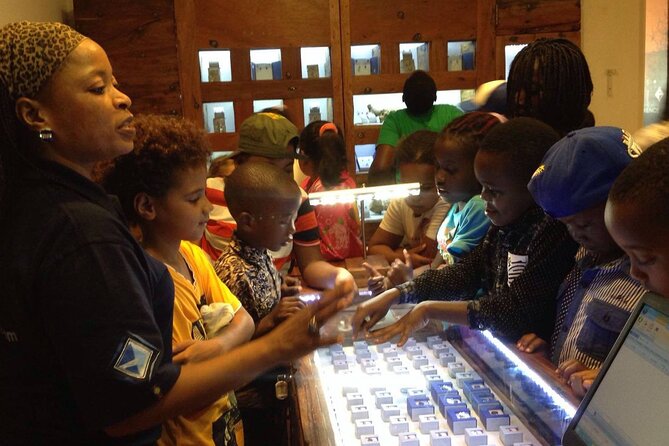
Pickup begins after the 9:00 am start time. The first stop is the Tanzanite Experience museum, where displays explain the stone’s origin and its path through the trade.
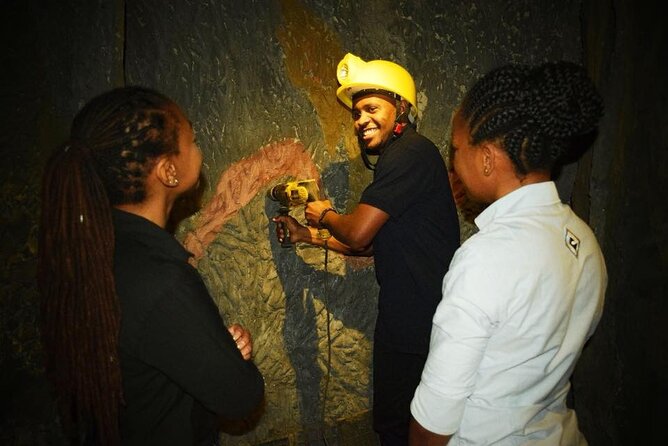
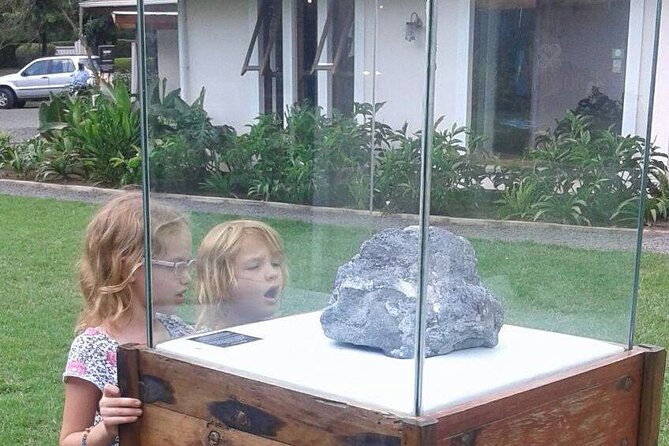
The presentation includes visual exhibits and interactive elements, plus a replica of a Tanzanite mine shaft. That replica helps put the mining process into physical terms. You are not simply looking at finished rings and necklaces. You are also seeing how the material is extracted and prepared.
The museum explains how Tanzanite was created, named, mined, cut, polished, and graded. For anyone who has never bought a precious or semi-precious stone, the grading section is especially useful. It gives you basic terms to use when comparing pieces in the attached store and later shopping areas.
I would allow time here even if you already know you want to buy. A hurried jewellery purchase can be hard to judge, especially when colour and cut vary from stone to stone. The museum gives you a starting point for deciding what you value most.
The store offers Tanzanite directly from the source, and the certificate from the Tanzanite Laboratory adds a useful record to the purchase. You can ask the guide for help as you compare stones, though the final choice and cost remain yours.
More shopping trips in Arusha:
- Arusha: Traditional Tanzania Cooking Class & Food Market Tour
★ 5.0 · 34 reviews - Arusha: Traditional Tanzania Cooking class& Food Market Tour
★ 4.9 · 12 reviews - 24 Hours in Arusha—Arusha Museum, Cultural Heritage, Maasai Market, Shanga
★ 5.0 · 4 reviews
Shopping With Alfred or MPembo
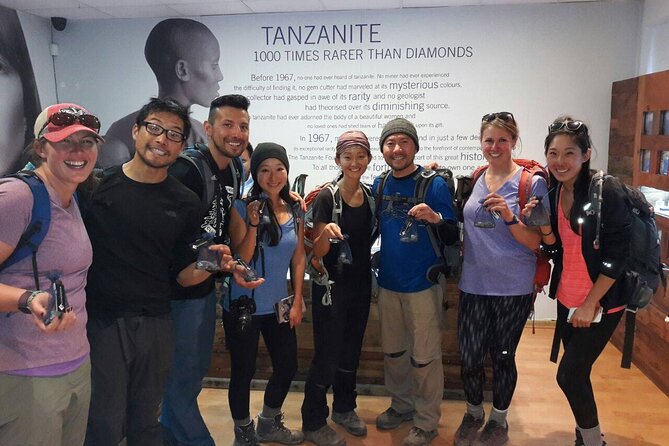
The private setup is one of the strongest practical features. Your group is limited to your own party, so the guide can shape the outing around shopping interests rather than moving a large crowd from one counter to another.
Alfred and MPembo are names connected with the guiding and driving service. MPembo is also able to help with a final-day plan that combines shopping with an airport ride for an extra fee. That airport transfer is not part of the listed $35 price, so arrange and price it separately.
The transport matters in Arusha. The tour takes you between several shopping and cultural sites, and hotel pickup removes the need to arrange each short ride yourself. It also lets you carry purchases more easily than you might if you were moving around town on foot.
The direct feedback about Alfred points to the value of having a guide who handles both driving and local shopping stops. The strongest reason to book this outing is not simply the number of shops. It is the added confidence of having someone help you get around Arusha while you decide where to spend your money.
You should still be clear about your priorities at the start. Tell the guide if you mainly want certified Tanzanite, affordable crafts, art, ebony carvings, Maasai items, or a little of everything. The itinerary can last from about three to eight hours, so your available time will shape the day.
Shanga Foundation and Recycled-Material Crafts
The Shanga Foundation offers a different kind of shopping stop. It is a workshop and craft store where disabled local artisans make glassware, beads, paintings, fabrics, and other goods.
The work includes recycled materials, which gives the displays an inventive quality. Reused wine bottles form walls that catch the light, and the store sells items made from recycled cloth and other materials. Stuffed elephants made from old men’s shirts are among the unusual products you might find.
You can also see people making beaded jewellery and cloth. That working element makes this more than a standard souvenir shop. You get a sense of how the objects are produced, and your purchase supports an organisation that provides a place for disabled people to use their craft skills.
I like this stop because it gives you a way to spend money with a clear local connection. A small piece of glassware, fabric, or jewellery can be easier to pack than a large carving, and the shop has options for different budgets.
The information also places a Tanzanite boutique at Shanga, where you can order bracelets and necklaces. I would compare any jewellery there with what you saw at the museum. You do not need to make a decision at the first counter, and a private guide makes it easier to take your time.
Cultural Heritage Centre Art and Jewellery
The Cultural Heritage Centre sits on the outskirts of Arusha and brings many types of shopping into one large complex. You will find curio shops, jewellery counters, a Tanzanite and precious-stone section, a bargain centre, a restaurant, and a large African art gallery.
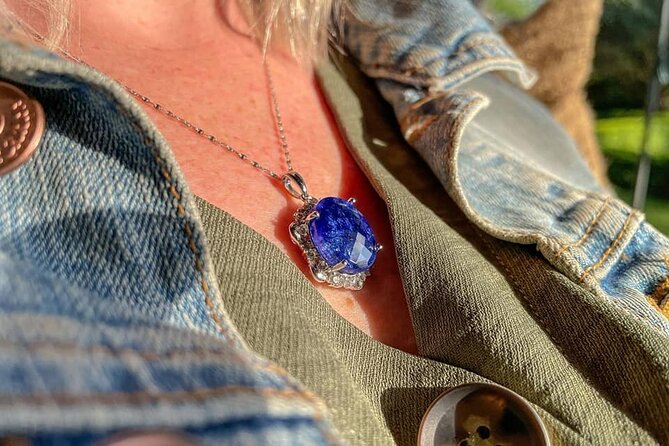
The selection includes Tanzanian crafts, ornaments, antiques, paintings, sculptures, ebony carvings, and jewellery. Precious and semi-precious stones listed here include rubies, emeralds, tsavorite, diamonds, sapphires, and opals.
This is the broadest stop on the route. If you want to compare Tanzanite with other stones, or if someone in your group prefers art to jewellery, the centre gives you room to split your attention. Expert assistants are available to help with African art and antiques.
The scale can also be a drawback. A large collection may feel less personal than the small workshop at Shanga, and you can easily spend more time and money than planned. I suggest setting a budget before you enter, especially if you are shopping for several people at home.
The centre also has a restaurant serving traditional African dishes and hummus. That gives you a convenient place to pause during a longer outing, although the tour information does not specify whether a meal is included in the $35 price. Plan to pay separately unless your guide tells you otherwise.
A few more Arusha days to compare
- Balloon Safari & Bush Breakfast in Serengeti – Miracle Experience
★ 5.0 · 1,646 reviews - Tanzania Classic – 7 Days
★ 5.0 · 1,151 reviews - 4 Days Group Camping Safari
★ 5.0 · 1,101 reviews - 5 Days Group Camping Safari
★ 5.0 · 730 reviews
What the $35 Price Delivers
At $35 per person, the value depends on how you use the time. The price includes the guided shopping outing, hotel pickup, transport between the stops, and access to the planned visits. It does not include the cost of Tanzanite, crafts, artwork, food, or an airport ride arranged for an extra fee.
For a short three-hour version, the tour works well if you want the museum and one or two focused shopping stops. For a longer day of up to eight hours, it becomes more useful for comparing jewellery, browsing art, eating at the Cultural Heritage Centre, and looking for gifts.
The private format adds value for couples, families, or small groups with different shopping goals. A large shared tour could force you to follow someone else’s interests. Here, you can ask for more time at the Tanzanite store or move on once you have found the right craft shop.
I would not book this solely to save money on a stone. Jewellery prices are separate, and a guide cannot guarantee a particular colour, size, design, or price. I would book it for the combination of transport, explanation, shopping support, and access to several established places in one outing.
The experience is booked around 18 days ahead on average. That suggests you should reserve it before your Arusha stay if the timing matters, especially if you want it on your last day.
The Best Uses for a Final Day in Arusha
This tour fits neatly into a final day because pickup begins at 9:00 am and the duration can be adjusted within the stated three-to-eight-hour range. One confirmed use is combining shopping with transport to the airport for an extra fee.
That arrangement can be practical if you have already checked out and need something planned between leaving your hotel and flying. Confirm the airport timing directly, since the airport transfer costs extra and the tour duration is not fixed.
A final-day shopping trip also lets you avoid carrying fragile purchases through the rest of a safari or multi-city journey. You can choose jewellery, carvings, paintings, or smaller craft items near the end of your visit.
The risk is time pressure. Tanzanite shopping is not a good place to rush, and airport plans leave less room for delays. If you use the tour before a flight, keep a generous buffer and settle the transport details in advance.
Who Will Get the Most From This Tour
I would recommend this outing to you if you want to buy Tanzanite but do not feel comfortable choosing a stone without guidance. The museum provides useful context, the attached store provides certified purchases, and the private guide helps you move between several places.
It also suits anyone who wants more than jewellery. Shanga Foundation covers recycled crafts and local production, while Cultural Heritage Centre offers art, antiques, carvings, food, and a wide range of stones.
Families and small groups should like the private format because each person can browse at a different pace. The tour also works for a spare day in Arusha, especially when you want a planned activity with hotel pickup.
I would be more cautious if you dislike shopping or already have a full sightseeing schedule. Much of the day involves browsing and buying, and the duration can run as long as eight hours. You should also be ready to make your own decisions about price and quality rather than assuming every item is a bargain.
The activity is described as suitable for most participants. Confirmation arrives at booking, and you receive a mobile ticket. Free cancellation is available if you cancel at least 24 hours before the local start time. Changes or cancellations inside that window are not refunded, and poor weather can lead to a new date or full refund.
Should You Book the Tanzanite Experience?
Book it if you want a safe, organized way to shop in Arusha, particularly for certified Tanzanite. The museum adds real value because it explains the stone before you buy, while Shanga Foundation and Cultural Heritage Centre keep the day from becoming a single jewellery stop.
The $35 price is fair when you use the included transport and private guide for several hours. It is especially practical on a final day, although an airport transfer costs extra and should be arranged carefully.
Skip it if you are not interested in shopping, or if you prefer to explore Arusha without a set route. For everyone else, this is a useful way to take home a Tanzanian souvenir with a clearer sense of where it came from and how it was made.
FAQ
Where does the Tanzanite Experience tour take place?
The tour takes place in Arusha, Tanzania. It includes the Tanzanite Experience museum, Shanga Foundation, and Cultural Heritage Centre.
What time does the tour start?
The stated start time is 9:00 am.
How long does the tour last?
The approximate duration is three to eight hours. The exact length can vary based on how much time you spend at each stop.
Is hotel pickup available?
Yes. Round-trip pickup and transport from your Arusha hotel are offered.
Is the tour private?
Yes. The experience is limited to your group, allowing for a more personal itinerary.
Can I buy certified Tanzanite?
Yes. The Tanzanite Experience museum has an attached store, and Tanzanite purchased there comes with a certificate from the Tanzanite Laboratory.
What can I shop for besides Tanzanite?
You can look for Maasai crafts, ebony carvings, paintings, jewellery, fabrics, beads, glassware, antiques, sculptures, and other African art and local crafts.
What is special about Shanga Foundation?
Shanga Foundation is a craft workshop and store where disabled local artisans make items such as glassware, beads, paintings, fabrics, and goods from recycled materials.
Does the tour include an airport transfer?
An airport ride may be arranged for an extra fee. It is not included in the stated $35 per-person price.
Can I cancel for a full refund?
Yes, if you cancel at least 24 hours before the experience start time. Cancellations or changes made less than 24 hours in advance are not refunded, and poor weather may result in a different date or a full refund.
Newly listed around Arusha
- 5-Day Private Safari Tour in Tanzania’s Wildlife★ 5.0 · 3 reviews
- 3 Days private safari Tarangire ,Ngorongroro crater &Manyara★ 5.0 · 3 reviews
- 3 Day Sharing Safari – Manyara, Ngorongoro Crater and Tarangire National Parks★ 5.0 · 3 reviews
- Tarangire National Park Day Trip★ 5.0 · 3 reviews
- 2 Days Tarangire and Ngorongoro Crater Tour★ 5.0 · 3 reviews
- 6 -Day Tarangire, Manyara, Serengeti & Ngorongoro★ 5.0 · 3 reviews
- 5 Days Group Camping Safari★ 4.7 · 3 reviews
- 4 Days Tanzania Safari★ 4.5 · 3 reviews
Arusha Tours, compared.

Balloon Safari & Bush Breakfast in Serengeti – Miracle Experience
Read our review →






Browse the lists this tour appears in