
Reviewed · ARUSHA TOURS
Arusha: Traditional Tanzania Cooking Class & Food Market Tour
Arusha’s best food lesson begins before you reach the kitchen. You start in the central food market, where your guide explains local produce, meat, spices, and everyday cooking habits while vendors carry on with their work. You then choose two dishes, shop for the ingredients, and travel to Sanawari for a hands-on meal.
I like two things here: the market visit gives the cooking real context, and the meal is made in a working local kitchen, not a polished demonstration room. The main consideration is comfort. Expect low tables, charcoal burners, tubs, and basic tools rather than a Western-style kitchen. That is part of the point, but it may not suit anyone seeking a tidy, highly structured cooking school.
Key points to know before booking
- The market comes first: Spend about 30 to 45 minutes learning how Arusha residents buy fresh food.
- You choose two dishes: Your guide explains the local options, then you select what you want to prepare.
- The kitchen is traditional: Cooking may use charcoal burners, a gas burner, low tables, and simple utensils.
- Local transport is part of the lesson: You may use ordinary public transport from the market to Sanawari.
- Lunch or dinner is included: You eat the food you help prepare, with takeaway food also available.
- The price covers the basics: At $42 per person, the fee includes pickup near central Arusha, ingredients, transport, instruction, and the meal.
Start at Arusha’s central food market
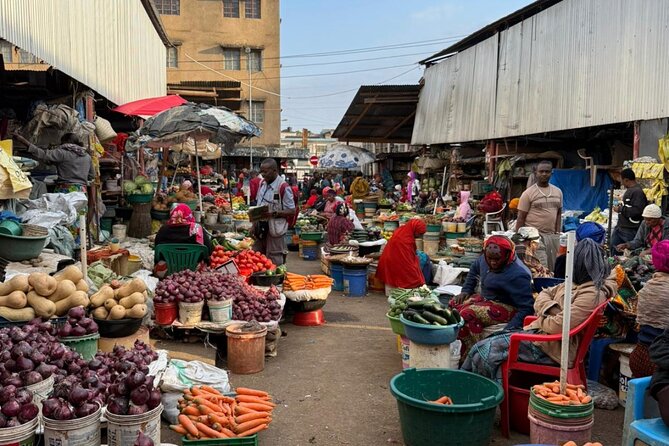
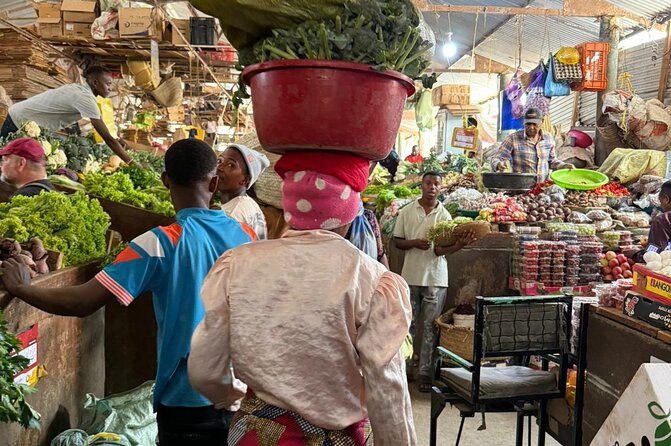
The first stop is the central food market, usually for about 30 minutes, though some schedules describe the visit as closer to 45 minutes. This is not a quick photo stop. It is where you begin to understand what Tanzanian cooking looks like before anyone hands you a spoon.
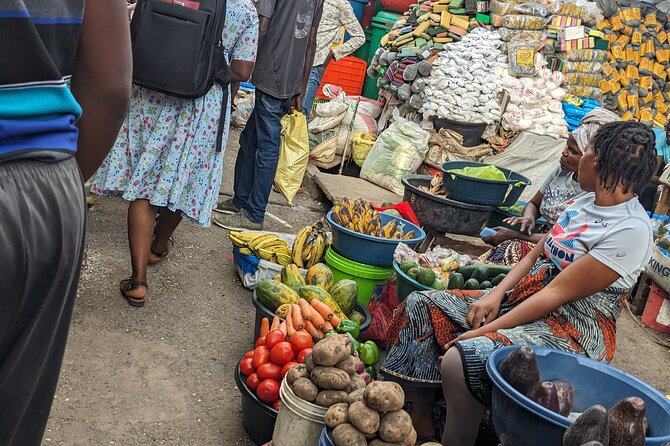
Your guide walks you through the stalls and explains the foods sold there, how they are used, and which ingredients are common in local meals. Much of the produce is grown in Tanzania, though some goods come from outside the country. The market also gives you a look at ordinary Arusha life, with local shoppers, sellers, fresh food, and the constant movement of a working market.
I like this order. If you began in the kitchen, you could learn a recipe but miss the link between the dish and the people who eat it. Here, you see the ingredients first. You can ask what something is, how it is cooked, and why it appears on the table.
The market is also a good place to slow down and use your senses. You might notice the smell of fresh produce, spices, and meat before you know what you are looking at. Your guide is there to help you move through the market respectfully and to explain the local way of using the food.
Guides named in the experience include Israel, James, Jack, Lameck, Magret, Bariki, and Fen. The guide assigned to you may be different, but the guide’s role is important. A market can feel confusing if you do not know the names or uses of the foods. With an explanation, the visit becomes a short lesson in Tanzanian life rather than a walk past unfamiliar stalls.
A practical note: this is a food market, not a quiet museum. You should be comfortable with crowds, strong smells, uneven movement, and the sight of fresh meat and other raw ingredients. Wear shoes that are easy to walk in and bring patience. The market portion is short, but it is one of the most useful parts of the experience.
More Cooking Classes in Arusha:
- NGO Lifted Strong – Traditional Tanzanian Cooking Class
★ 5.0 · 39 reviews - Cooking and Sewing & Jewelry Workshops in Arusha
★ 5.0 · 14 reviews - Arusha: Traditional Tanzania Cooking class& Food Market Tour
★ 4.9 · 12 reviews
Choose two dishes and shop for the meal
After the market tour, your guide explains the local dishes available for the cooking session. You choose two of the options offered that day. This gives the class some flexibility, though the exact menu is not fixed in advance.
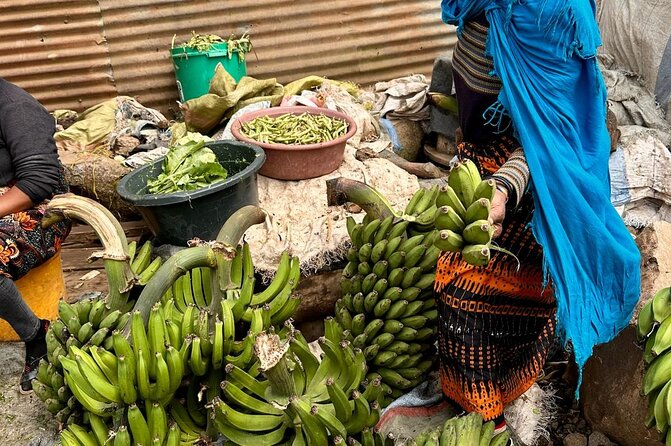
That matters because Tanzanian food is not one single set menu. The choices may reflect what is fresh and available at the market. Several dishes specifically mentioned in connection with this experience are ugali and ndizi. Your guide will explain the options on the day, so you do not need to arrive with a firm menu in mind.
The ingredients are purchased as part of the experience. The cost of the shopping is included, so you are not expected to bargain over each item or pay extra for the food that becomes your meal. Spices from the market are not included, however. Drinks are also separate, including water, soda, and beer. You can buy a drink along the way.
This shopping stage helps you see the value of the $42 price. You are not paying only for an hour of instruction. The fee also covers the food, market guidance, local transport, pickup and drop-off near the city center, and the meal at the end. For a four-hour activity, that makes the cost reasonable, especially if you want a food experience that includes more than a recipe demonstration.
You should still keep a little cash available for drinks and any spice purchase you want to make. The tour does not include a separate spice package, so do not assume you will leave with a collection of seasonings.
Travel from the market to Sanawari
The next part takes you from the central market to Sanawari. The route is described as using ordinary public transport, the sort of transport local people commonly use. This adds a small but useful slice of daily life to the outing.
For some people, this will be a highlight. You are not sealed inside a private vehicle for the whole afternoon. You get a sense of how people move around Arusha, and the change of neighborhood helps connect the market to the cooking location.
For others, public transport may feel less comfortable than a private transfer. The experience does include hotel pickup and drop-off near central Arusha, but the trip between the market and Sanawari uses normal local transport. If you need a highly private or carefully controlled itinerary, ask about the transport arrangement before booking.
The ride also takes time, so the stated four-hour duration should be treated as approximate. The market stop is around 30 minutes, the cooking lesson is about 1 hour and 30 minutes, and the rest includes shopping, transport, eating, and hotel return. This is a half-day plan, not a short class squeezed between other appointments.
Cook in a traditional Sanawari kitchen
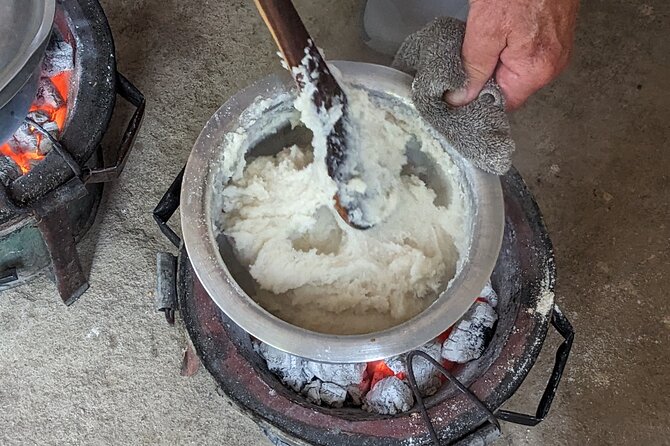
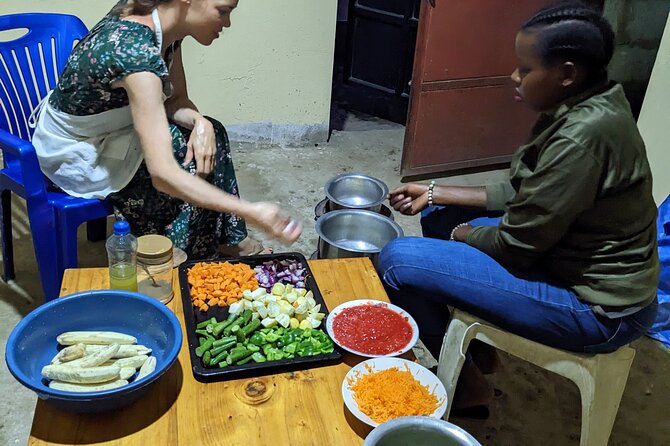
In Sanawari, you meet the local chef and prepare the two dishes you selected. The setting is deliberately simple. You may cook in a room with a low table, two charcoal burners, a gas burner, large tubs, and basic cooking tools.
This detail is worth taking seriously. If your idea of a cooking class includes stainless-steel counters, a sink at every station, electric burners, and printed recipes, this will feel very different. The class is meant to show how food is prepared in an everyday Tanzanian setting. It is less about professional kitchen technique and more about local habits, shared work, and the practical use of simple equipment.
I like that the cooking is not separated from daily life. Charcoal and gas cooking affect the pace of a dish. Low work surfaces change how you prepare ingredients. Basic tools make you pay attention to the process instead of standing back while someone else does everything.
The class is described as interactive and fun, with the guide and chef explaining the food and helping you take part. You may chop, stir, prepare ingredients, and work through the dishes with instruction. The exact level of hands-on work can depend on the group and the selected dishes, so it is sensible to ask questions and volunteer for tasks.
Guides such as Israel and Fen have been associated with the food and culture explanations, while other sessions have included people such as Magret and James. The names are useful to know, but do not book based on a promise that one particular guide will lead your class unless the operator confirms it directly.
The kitchen’s simplicity also means you should dress for cooking rather than photographs. Choose comfortable clothes and shoes. The information provided does not specify protective clothing, private workstations, or special dietary arrangements, so tell the operator about dietary needs before you arrive and confirm what can be accommodated.
More Food Tours in Arusha:
- Organic Coffee Tour and Local Food Experience in Arusha
★ 5.0 · 29 reviews - Street Food and Community Walking Tour
★ 5.0 · 12 reviews - Waterfalls, Coffee, Hotsprings, Food Cuisine, & Serval Wildlife
★ 5.0 · 6 reviews - Mama Aziz Food Court
★ 5.0 · 3 reviews
Sit down to eat what you prepared
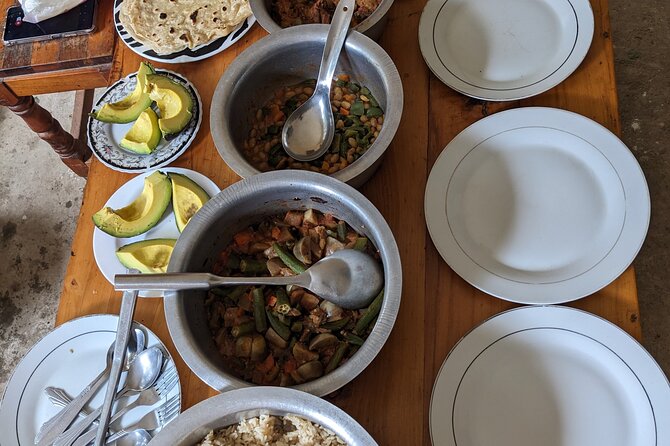
Once the food is ready, you eat it as lunch or dinner. The meal is included for the people taking part, and everyone in the group can sit down and enjoy what was prepared.
This is where the market and kitchen portions come together. You have seen the ingredients, helped buy them, and taken part in cooking. The final plate is not just something placed in front of you. You know more about the work behind it and the way the food fits into local life.
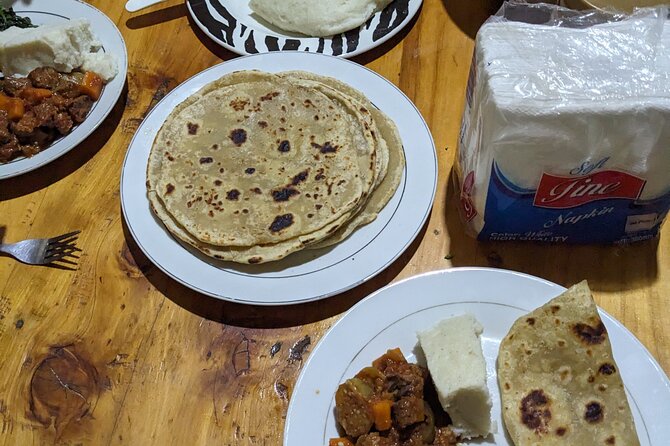
The menu varies because you select two dishes from the choices explained that day. Ugali and ndizi are among the foods connected with the class, but you should not assume they are guaranteed on every date. Ask what is available when you book if one dish matters to you.
Drinks are not included. Bring money for water, soda, or beer, or buy one during the outing. This is a small extra cost, but it is easy to overlook when comparing the tour price.
Takeaway food is also offered as an option after the meal. The details of the takeaway portion are not specified, so ask the guide what is available and whether there is an extra charge before making plans around it.
What the four-hour schedule feels like
The total duration is about four hours. Pickup is offered from hotels near central Arusha, and the guide returns you to your hotel at the end.
The experience has a clear rhythm:
- Hotel pickup in Arusha
- A guided visit to the central food market
- An explanation of local dishes and a choice of two
- Shopping for fresh ingredients
- Local transport to Sanawari
- A cooking lesson with a local chef
- Eating the finished food
- Optional takeaway food and return to your hotel
The timing is best for a morning or afternoon when you have room around it. One session has begun at 5:00 p.m., so start times can vary. Confirm the start time after booking, especially if you have a safari departure, airport transfer, or other fixed plan.
The activity is open to most people, and the stated maximum is 200 participants. That maximum is unusually high for a cooking class, though the real group size for your date may be much smaller. Ask about the expected number of people if personal instruction matters to you. A smaller group should make it easier to use the tools and work directly with the chef.
The real value at $42 per person
At $42, this is a good-value half-day activity if you want transport, food, and cultural context in one package. You are not paying separately for the market visit, the ingredients, the cooking lesson, the meal, or the local transport.
The price is especially fair for someone with limited time in Arusha. You get a look at the food market and a practical introduction to local cooking without arranging several separate stops. Hotel pickup and return also remove some of the hassle of getting around an unfamiliar city.
The value is less clear if you only want a formal cooking lesson. A specialist class with modern workstations, fixed recipes, professional equipment, and a take-home recipe sheet may suit you better, but that is not what this experience is selling.
You should also remember the extras. Drinks are not included, and spices from the market are excluded. Tips are optional, not required, and can reflect your satisfaction with the guide and chef.
The experience is commonly booked about 23 days in advance. That does not guarantee that every date fills, but it is a useful sign that you should not leave it until the last minute if your Arusha schedule is fixed.
Who will enjoy this experience most
I would recommend this to you if food is one of your main ways of getting to know a place. It works particularly well for first-time visitors to Arusha who want something beyond sightseeing and safari planning.
It also suits curious eaters who enjoy asking questions, trying local ingredients, and taking part in a meal without needing restaurant-style comfort. Families and most visitors can participate, though young children may need close attention around charcoal burners, hot cookware, and a busy market.
You should think twice if you dislike public transport, strong market smells, simple facilities, or flexible menus. The class is also not ideal if you need guaranteed dishes, a private group, or a fully accessible modern kitchen, since those features are not promised.
Solo visitors can book, and the mobile ticket makes the activity easy to keep on your phone. Confirmation is provided at booking, with contact by WhatsApp or email. Pickup details should still be checked carefully because the included pickup area is near central Arusha.
Weather, cancellation, and small practical details
The experience requires good weather. If poor weather causes cancellation, you will be offered another date or a full refund.
You can cancel for a full refund up to 24 hours before the start time. Cancellations or changes made less than 24 hours before the start are not accepted for a refund, and the cut-off follows local Arusha time.
The tour is near public transportation, but you do not need to arrange the main hotel transfer yourself if you are staying near the city center. Wear comfortable clothing, keep your phone charged for the mobile ticket and WhatsApp contact, and bring money for drinks.
Should you book the Arusha cooking class?
Book it if you want to see where local food is bought, learn how it is prepared with modest equipment, and eat the result. The central market and the trip to Sanawari give the class a stronger local feel than a stand-alone kitchen lesson.
Skip it if you want a polished culinary school, a guaranteed menu, or a private, controlled setting. For everyone else, $42 buys a practical four-hour introduction to Arusha’s food culture, with a market walk, local transport, cooking, and a shared meal in one outing.
FAQ
How long does the experience last?
The experience lasts approximately four hours, including hotel pickup, the market visit, transport to Sanawari, the cooking lesson, the meal, and the return trip.
What is included in the price?
The price includes a guided central food market tour, the cooking lesson, pickup and drop-off near central Arusha, local transport used during the experience, the shopping cost for ingredients, and the meal you prepare.
Are drinks included?
No. Water, soda, and beer are not included, but you can buy them during the outing.
Can I choose the dishes I cook?
Yes. Your guide explains the available local dishes on the day, and you select two for the cooking lesson. Ugali and ndizi are examples associated with the experience, but the daily choices can vary.
Where does the cooking lesson take place?
The lesson takes place in Sanawari, after the market visit and shopping.
What kind of kitchen should I expect?
Expect a traditional local kitchen with simple tools. The setup may include a low table, charcoal burners, a gas burner, large tubs, and basic cooking equipment rather than modern counters and appliances.
Is hotel pickup available?
Yes. Pickup and drop-off are offered for hotels near the center of Arusha. The guide will contact you by WhatsApp or email after booking.
Is the tour suitable for most people?
The activity states that most people can participate. It also uses public transportation during part of the outing and a simple cooking space, so you should consider your comfort with those conditions before booking.
What is the cancellation policy?
You can cancel at least 24 hours before the local start time for a full refund. Changes or cancellations made less than 24 hours before the start are not accepted for a refund. If bad weather causes the operator to cancel, you will be offered another date or a full refund.
More shopping trips in Arusha
- Tanzanite experience tour – Tanzanite shopping in Arusha
★ 5.0 · 12 reviews - Zanzibar:Stone town Street food market walking tour,transfer
★ 4.5 · 9 reviews - Private Market Tour and Tanzanian Cooking Class in Moshi
★ 5.0 · 7 reviews - Zanzibar: Stone Town Heritage & Slave Market Tour
★ 4.4 · 7 reviews
More markets in Arusha
- 24 Hours in Arusha—Arusha Museum, Cultural Heritage, Maasai Market, Shanga
★ 5.0 · 4 reviews - Stone Town Guided Tour: Culture, Slave Market & Spice Market
★ 4.8 · 44 reviews - Spice , Prison Island ,Stone Town and Slave Market Site Tour
★ 5.0 · 24 reviews - Stone Town Private Tour with Slave Market Tickets
★ 5.0 · 13 reviews
Newly listed around Arusha
- 5-Day Private Safari Tour in Tanzania’s Wildlife★ 5.0 · 3 reviews
- 3 Day Sharing Safari – Manyara, Ngorongoro Crater and Tarangire National Parks★ 5.0 · 3 reviews
- 3 Days private safari Tarangire ,Ngorongroro crater &Manyara★ 5.0 · 3 reviews
- Tarangire National Park Day Trip★ 5.0 · 3 reviews
- 6 -Day Tarangire, Manyara, Serengeti & Ngorongoro★ 5.0 · 3 reviews
- 2 Days Tarangire and Ngorongoro Crater Tour★ 5.0 · 3 reviews
- 5 Days Group Camping Safari★ 4.7 · 3 reviews
- 7-Day Mt. Kilimanjaro Hiking: Machame Route★ 5.0 · 3 reviews
Arusha Tours, compared.

Balloon Safari & Bush Breakfast in Serengeti – Miracle Experience
Read our review →



Browse the lists this tour appears in