
Reviewed · KILIMANJARO CLIMBS
7-Day Mt. Kilimanjaro Hiking: Machame Route
The Machame Route gives you Kilimanjaro at its most scenic, but it asks for real effort in return. In seven days, you move from wet rainforest to moorland, volcanic rock, alpine desert, and a cold, breathless summit night. This is not a casual walk with a tall mountain in the background.
I like the careful altitude pattern, especially the climb to Lava Tower at 4,630 meters followed by the descent to Barranco Camp. I also like that the support team includes experienced guides such as Abouh, Samuel, Edgar, and Justin, along with porters and a cook. The main drawback is the pace: seven days is a short itinerary for such a high mountain, and the steep trail can be muddy, cold, and tiring.
Key points to know before booking
- The route changes scenery every day: Rainforest, moorland, Shira Plateau, volcanic rock, alpine desert, and snow near the summit.
- The hardest work comes late: The midnight ascent to Stella Point is the physical and mental test of the trip.
- Lava Tower helps with acclimatization: You climb high during Day 3, then sleep lower at Barranco Camp.
- Camping is basic and exposed: Barafu Camp is cold, rocky, windy, and without accessible water.
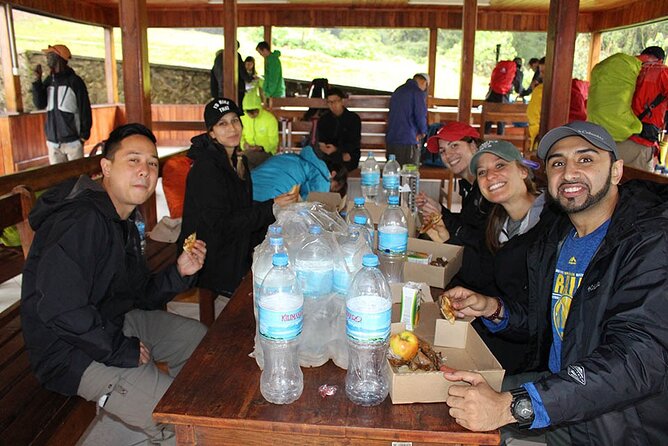
- A full support team is included: Guides, assistant guides, a cook, porters, meals, water, camping equipment, and park fees are covered.
- The price is $2,500 per person: That is a substantial fee, but it includes most of the mountain costs that can make a Kilimanjaro trip expensive.
Why the Machame Route suits strong hikers
Machame is often called the Whiskey Route. The nickname hints at its character: scenic, popular, and more demanding than the gentler routes. You gain height quickly, tackle several steep sections, and spend much of the trip sleeping in tents rather than huts.
The seven-day plan is designed for people with moderate physical fitness, but fitness alone does not solve the altitude problem. You can be strong on level ground and still struggle above 4,000 meters. Hiking or backpacking experience, comfort with long days, and some past high-altitude experience will make this route a better match.
The route’s greatest strength is variety. You do not spend the whole week looking at one type of mountain scenery. The forest feels damp and enclosed on the first day. The Shira Plateau opens the view. Lava Tower brings bare volcanic rock and thin air. Barranco gives you a dramatic wall to climb. Barafu is stark and exposed, and the summit night is a slow walk through darkness, scree, cold, and hope.
That variety also means changing conditions. Rain can turn the first day into a muddy, slippery slog. Higher camps can fall well below freezing. You need clothing and footwear suited to wet forest, cold nights, loose rock, and possible snow.
More Hiking Tours in Arusha
- 8-Day Small-group Lemosho Kilimanjaro Summit Trekking
★ 5.0 · 186 reviews - Mountain Kilimanjaro Day Hike
★ 5.0 · 102 reviews - Private Full Day Hiking Experience to Marangu Route
★ 5.0 · 61 reviews
Day 1: From Arusha to the wet Machame forest
Your morning begins with pickup at about 7:00 am. The stated starting point is Arusha Airport, although the tour also describes pickup from Arusha at about 1,400 meters. Confirm the exact pickup arrangement before you set out, especially if you are staying at a hotel rather than arriving at the airport.
The drive takes you to Machame Village. This is your last useful point to buy mineral water, and you receive a packed lunch there. Depending on road conditions, the vehicle may continue toward Machame Gate. If the road is muddy, you walk the final three kilometers, which takes about an hour.
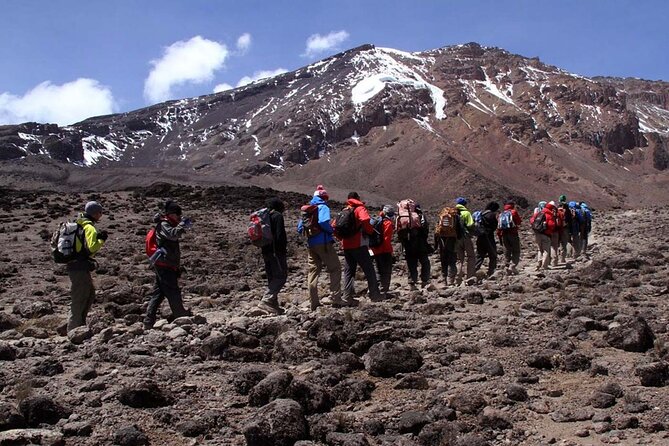
After registration at the gate, the trail enters the rainforest almost at once. This is a lovely start, but do not mistake lovely for easy. Rain is common in the forest, and wet ground can turn the path into mud. Slippery footing slows everyone down, so waterproof clothing and shoes with a firm grip matter.
The day takes about eight hours. You stop for lunch roughly halfway and finish at Machame Camp. The forest gives you shade, but it can also feel humid and crowded with effort. Keep your first day steady. The goal is not speed. It is to arrive with enough energy for the six more days ahead.
Day 2: Shira Plateau and the first truly cold camp
Day 2 takes about seven hours and covers approximately nine kilometers. After breakfast at Machame Camp, you climb for about an hour to the top of the forest. The gradient then eases for roughly two hours as you enter the moorland zone.
This is a welcome change from the wet forest. The air feels more open, and the views begin to stretch across the mountain. After lunch and a rest, you follow a rocky ridge toward the Shira Plateau. Looking east, you may see the Western Breach and its glaciers.
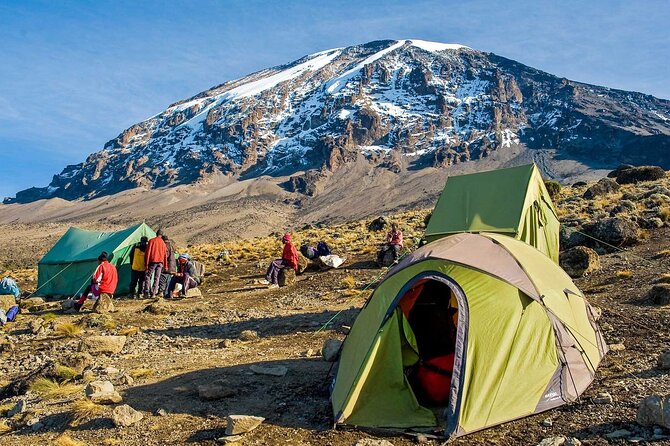
Shira Camp sits at about 3,840 meters. That altitude matters. You may feel the cold more sharply at night, with temperatures dropping well below freezing. The porters boil water for drinking and washing, and dinner is served at camp.
This is one reason the included water service has real value. The package provides at least three liters of bottled water per day, while the mountain team boils water for drinking and washing at camp. You should still treat the cold as a serious issue. A warm sleeping setup and dry layers are not luxuries here.
Day 3: Lava Tower provides the key acclimatization test
Day 3 is one of the most useful and difficult days on the route. You hike for about eight hours through semi-desert and volcanic rock, covering roughly the approach to Lava Tower at 4,630 meters.
The climb to Lava Tower takes about five hours. You stop for lunch in a designated area before tackling the rocky scree path. This is often where altitude becomes hard to ignore. Breathlessness, headaches, and irritability can appear, and even a simple uphill walk can feel slow.
The smart part of the day comes after lunch. You descend nearly 680 meters to Barranco Camp, which sits at about 3,950 meters. In simple terms, you climb high and then sleep lower. That pattern gives your body useful time to adjust.
Do not treat the descent as an easy finish. Loose rock and tired legs can make it awkward, and the total day still lasts about eight hours. Follow the guide’s pace and take symptoms seriously. The scenic payoff is strong, but Day 3 is not a day to prove how tough you are.
More Kilimanjaro routes:
- 7-Day Machame Kilimanjaro Summit Tour from Arusha
★ 5.0 · 125 reviews - From Arusha/Moshi: Kilimanjaro Hike Marangu Route Day Trip
★ 4.5 · 54 reviews - Mount Kilimanjaro Day Hike Through Marangu Route to Mandara Hut
★ 5.0 · 37 reviews - 6 Days: Hiking Kilimanjaro via Machame Route
★ 5.0 · 24 reviews
Day 4: The Barranco Wall and a better rhythm
Day 4 covers about five kilometers and takes four to five hours. After breakfast, you face the Great Barranco Wall. From below, it can look intimidating. The route is described as a Class 2 hike, and the main challenge is the steep, rocky movement rather than technical climbing equipment.
At the top, you get views of Heim Glacier and the striking sight of clouds below you. The trail then rises and falls through the Karanga Valley. Compared with Day 3, this is a shorter day, and that makes it a valuable recovery and acclimatization stage.
I like this part of the plan because it gives you time to adjust without wasting a day. You still work hard, but you are not asked to cover a huge distance. Take care on the wall, keep your hands free when possible, and let the guide set the pace through the rockier sections.
Day 5: Karanga to exposed Barafu Camp
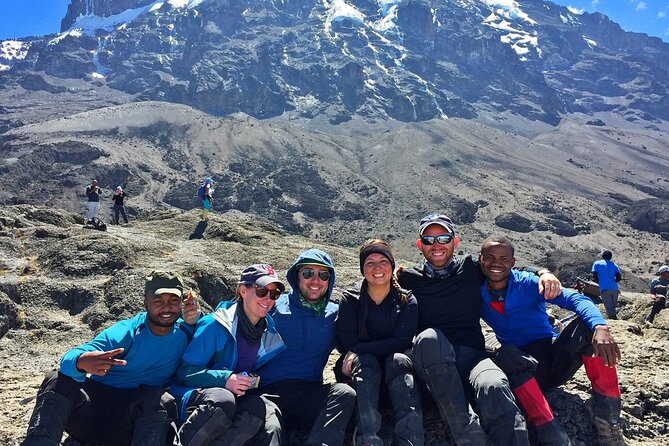
The walk from Karanga Camp, at about 3,959 meters, to Barafu Hut takes two to three hours and covers approximately four kilometers. On paper, this is a short day. In practice, you are gaining height and preparing for the summit push, so it can feel more serious than the distance suggests.
The trail meets the Mweka Route, which you use for the final descent. After about an hour, you reach Barafu Hut at 4,550 meters. This is the last water stop for the porters. There is no accessible water at Barafu Camp, so the water carried and prepared by the support team becomes especially important.
Barafu means ice in Swahili. The camp sits on a rocky, exposed ridge, and tents can be hit by wind. Rocks and uneven ground are part of the setting. Familiarize yourself with the camp before dark, because you will need to move around again late at night.
Dinner is served early, followed by rest. You should organize your summit clothing and headlamp before lying down. The schedule calls for waking around 11:30 pm, so this is not a normal night of sleep. It is more like a short pause before the biggest effort of the trip.
Day 6: The midnight climb to Stella Point and Uhuru Peak
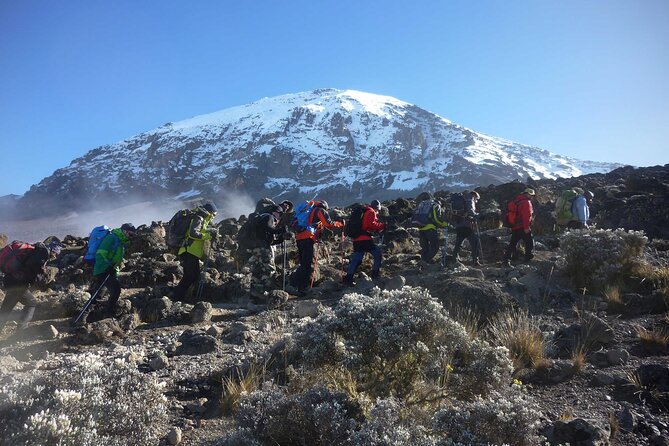
Summit day begins around 11:30 pm with tea and biscuits. You head northwest through heavy scree toward Stella Point on the crater rim. The climb to Stella Point takes about six hours and is described as the most demanding part of the route for many hikers.
The darkness can help by hiding the full scale of the climb, but it also makes the effort feel slow and repetitive. Your main task is to keep moving at the guide’s pace. The altitude is extreme, and the cold adds another layer of strain.
At Stella Point, 5,685 meters, you pause for a short rest. If the weather allows, sunrise is the reward. From Stella Point, you normally encounter snow during the roughly two-hour ascent to Uhuru Peak, the summit at 5,895 meters.
Time at the summit depends on weather conditions. Do not plan on a long celebration at the top. Cold, wind, and altitude can change the situation quickly, so listen to your guides and follow their instructions.
The exact time for the descent is not provided, but you should understand the shape of the day: a midnight start, a long ascent, summit time, and further movement afterward. Day 6 is an eight-hour activity in the stated schedule, though the summit section is the part that will dominate your energy and attention.
Day 7: Certificates, celebration, and the Mweka descent
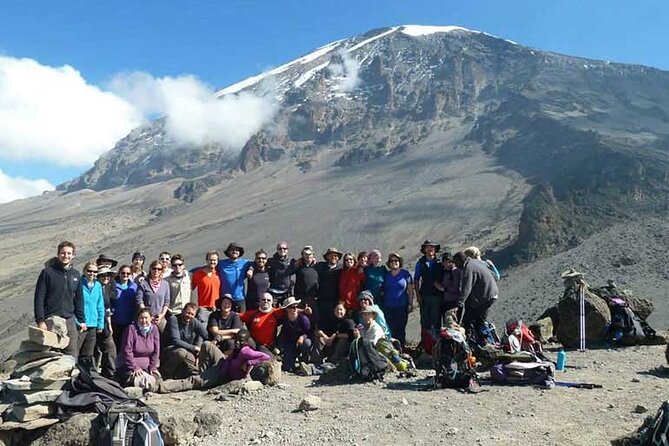
After a well-earned breakfast, the mountain team holds a celebration with dancing and singing. This is also when you present tips to the guide, assistant guides, cook, and porters. Tips are not included in the $2,500 price, so plan for that extra cost and carry enough local currency or another accepted form of payment.
You then descend for about three hours to Mweka Gate. The national park requires you to sign your name there before receiving a certificate. Reaching Stella Point earns a green certificate. Reaching Uhuru Peak earns a gold certificate.
From the gate, you continue to Mweka Village for about one hour, covering three kilometers. The day’s hiking time is listed as about seven hours, with approximately 15 kilometers in total. After the cold upper mountain, the return to the forest can feel like a major change in temperature and scenery.
The final descent is not just a formality. Knees and feet often take a beating on downhill ground, particularly after summit night. Use trekking poles if you have them, keep your pace controlled, and save some attention for the slippery sections.
What the $2,500 price really covers
At $2,500 per person, this is not a bargain mountain walk. It is also not a bare-bones price once you count what is included: park fees and taxes, camping equipment, portage, meals, water, a professional English-speaking mountain guide, a cook, and six lunches and dinners plus five breakfasts.
The meal plan covers the seven-day schedule, though breakfast is listed for five mornings rather than six. That is worth clarifying before booking, since the summit schedule and final day can make meal timing important.
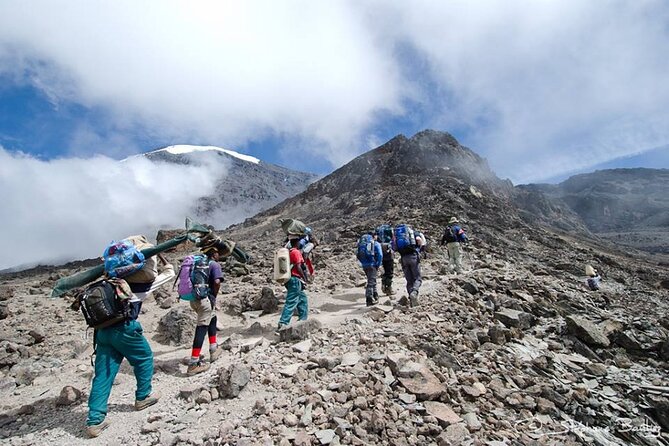
The porter system is central to the trip. Porters carry camping equipment and supplies, allowing you to hike with a lighter personal load. The package also includes at least three liters of bottled water daily. The team boils water at camp for drinking and washing.
You still need to budget for flights, a visa, tips, and mountain gear. The last item can become expensive if you need to buy waterproof clothing, warm layers, gloves, a sleeping bag, or suitable boots. Ask for the operator’s current gear list before you pay. A low tour price is not good value if you then have to buy everything at the last minute.
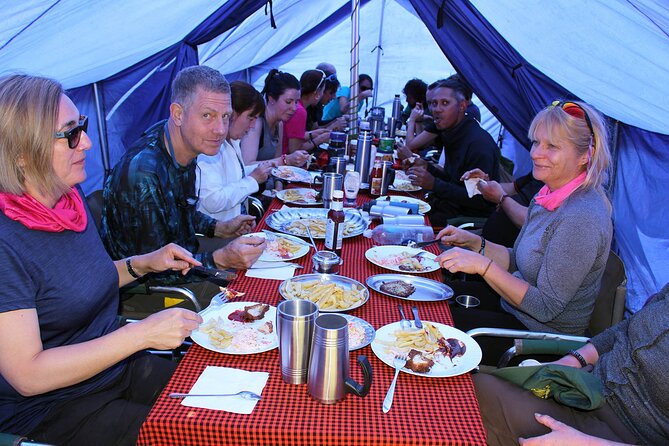
The maximum group size is 15 people. That is large enough to give the trip a social feel, but small enough for guides to keep an eye on the group more easily than on a huge commercial trek. The listed team includes Abouh as head guide and Samuel, Edgar, and Justin as guides praised for motivation, reassurance, attentiveness, and good humor. Those qualities matter most when the air gets thin and the trail stops being fun.
Practical strengths, limits, and the people behind the trek
The strongest part of this experience is the human support. Abouh, Samuel, Edgar, and Justin are identified as guides who keep hikers reassured and motivated. The porters are also described as cheerful, helpful, and hardworking. On a mountain where morale can change from hour to hour, a calm guide and an attentive team are practical assets, not decoration.
The weak point is the short schedule. A seven-day Machame climb offers a good route through several zones, but it leaves less time for altitude adjustment than a longer itinerary would. You need to arrive ready for long days and accept that the summit attempt may be physically rough.
Pickup is offered, and the stated start time is 7:00 am. Confirmation is provided when you book. The meeting details mention Arusha Airport and Arusha, so confirm the exact meeting place if you are not arriving at the airport that morning.
Free cancellation is available if you cancel at least 24 hours before the local start time. A cancellation within 24 hours is not refunded, and changes inside that window are not accepted.
FAQ
How long is the Kilimanjaro Machame Route tour?
The trip lasts approximately seven days, with hiking activities scheduled on all seven days.
Where does the tour start?
The stated meeting point is Arusha Airport in Arusha, Tanzania, with a 7:00 am start time. Pickup is also offered, and the route description refers to pickup from Arusha.
How many people can join the group?
The maximum group size is 15 people.
What meals are included?
The package includes six lunches, six dinners, and five breakfasts. Meals are served during the mountain trek.
How much water is provided?
At least three liters of bottled water are provided per day. Porters also boil water for drinking and washing at camp.
Are park fees, camping equipment, and porters included?
Yes. All fees and taxes, camping equipment, portage, a professional English-speaking mountain guide, and a cook are included.
What is not included in the price?
Tips, flights, visa fees, and mountain gear are not included.
Should you book this seven-day climb?
Book this trek if you want Kilimanjaro’s most scenic route and you are comfortable with steep trails, wet forest, cold camps, and a midnight summit attempt. The included support team, camping gear, meals, water, porters, and park fees give the $2,500 price solid value for a full-service climb.
Think twice if you want a slow, gentle approach to altitude or if your hiking experience is limited to short day walks. The seven-day schedule is demanding, especially on Days 3 and 6. For a fit and determined hiker who values scenery and strong guide support, the Machame Route offers a serious but rewarding way to reach Uhuru Peak.
More week long trips in Arusha
- Tanzania Classic – 7 Days
★ 5.0 · 1,151 reviews - 7-Day Premium Luxury Tanzania Safari All-Inclusive
★ 5.0 · 426 reviews - Group Safari 7 Days in Tanzania’s Main Parks
★ 5.0 · 240 reviews - 7 Days Tanganyika Wilderness Safari
★ 5.0 · 159 reviews
Newly listed around Arusha
- 5-Day Private Safari Tour in Tanzania’s Wildlife★ 5.0 · 3 reviews
- 3 Days private safari Tarangire ,Ngorongroro crater &Manyara★ 5.0 · 3 reviews
- 3 Day Sharing Safari – Manyara, Ngorongoro Crater and Tarangire National Parks★ 5.0 · 3 reviews
- Tarangire National Park Day Trip★ 5.0 · 3 reviews
- 6 -Day Tarangire, Manyara, Serengeti & Ngorongoro★ 5.0 · 3 reviews
- 2 Days Tarangire and Ngorongoro Crater Tour★ 5.0 · 3 reviews
- 5 Days Group Camping Safari★ 4.7 · 3 reviews
- 4 Days Tanzania Safari★ 4.5 · 3 reviews
Kilimanjaro Climbs, compared.








Browse the lists this tour appears in