
Reviewed · KILIMANJARO CLIMBS
Climbing Kilimanjaro – Machame Route
The Machame Route gives you Kilimanjaro in six demanding days, from dripping rainforest to the ice-capped summit of Uhuru Peak. The route is a steady series of big changes: forest, moorland, semi-desert, alpine desert, then bare rock and ice.
I like the fact that porters, cooks, and guides handle the hard logistics, and I like the route’s clever climb-high, sleep-lower pattern on Day 3. The main catch is simple: six days is a tight schedule, and the summit push is physically punishing.
Key points to know before you book
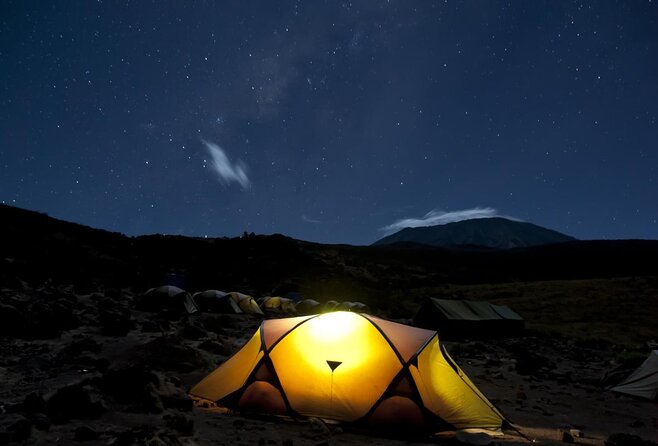
- A true route through five habitats: You move from montane forest to moorland, semi-desert, alpine desert, and summit scree.
- The toughest day comes before the summit: Day 3 reaches Lava Tower at 4,630 meters before dropping to Barranco camp.
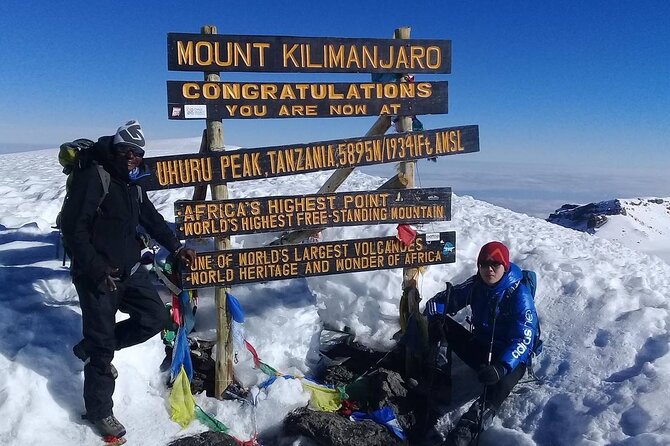
- A midnight start leads to Uhuru Peak: You leave Barafu around 11:30 p.m. for Stella Point and the final walk to 5,895 meters.
- The crew carries the practical burden: Porters transport supplies and equipment, while a cook prepares breakfast, lunch, and dinner.
- A small group keeps the climb manageable: The maximum group size is 12 people.
- The six-day plan favors speed over rest: If you need more time to adjust to altitude, the schedule deserves careful thought.
What the $2,322.06 price really covers
At first glance, $2,322.06 per person is a large sum. On Kilimanjaro, though, the useful question is not simply what the trek costs. It is what you would have to arrange yourself.
This package includes two nights at Springlands Hotel in Moshi, transport to and from the mountain, airport transfers to and from Kilimanjaro International Airport, national park fees, rescue fees, tents, sleeping mattresses, dining equipment, and the mountain crew. You also receive boiled water and all meals on the mountain.
That list matters. A Kilimanjaro climb is not just a walk with a backpack. Park access, food, camp equipment, crew accommodation, transport, and safety arrangements all need to be handled. Here, the guide, porters, cook, and waiter are part of the operating team, rather than costs you need to organize separately.
The price does not include climbing gear, visas, personal items, unspecified meals and drinks, emergency oxygen, or tips. A single-room supplement may also apply at the hotel, except on the one-person rate. You should set aside money for crew tips before you arrive, since they are not included.
The package also includes pulse oximeters and a first aid kit. Those items do not remove the risks of high altitude, but they show that the crew has tools for basic monitoring and medical response. Rescue fees are included, which is another meaningful part of the value.
More Kilimanjaro routes:
- Kilimanjaro climb by Lemosho Route (7-day)
★ 5.0 · 651 reviews - Kilimanjaro climb, Machame Route (7-day)
★ 5.0 · 262 reviews - Kilimanjaro Climbing Lemosho Route 8 Days.
★ 5.0 · 186 reviews
Day 1: From Moshi into the Kilimanjaro rainforest
Your day begins with a briefing, breakfast, and a roughly 45-minute drive from Moshi to Machame village. Moshi sits at about 910 meters, while the village is around 1,490 meters, so the mountain begins with a manageable rise.
At the village, guides and porters organize the supplies and equipment. Depending on road conditions, the vehicle may continue to Machame Gate. If the road is too muddy, you walk about three kilometers from the village, which can add roughly an hour before the main hike begins.
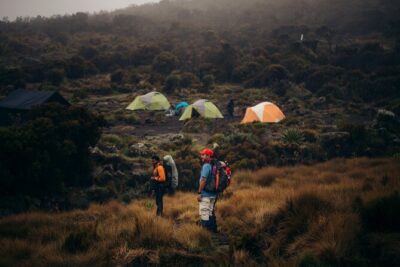
After registration at the gate, you enter the montane forest. The day’s official distance is about 18 kilometers, with around seven hours of walking, finishing at Machame camp at 2,980 meters.
This is a long opening day, but the forest gives it character. The route is shaded and enclosed, a big contrast to the exposed camps later on. You receive a packed lunch at the gate, and the food arrangement starts working immediately.
The main thing to watch is the combination of driving, registration, gear preparation, and a long first hike. Do not treat Day 1 as a casual stroll. Keep your pace calm, drink regularly, and let the guide set the rhythm.
Day 2: Moorland and the open Shira Plateau
From Machame camp, you climb for about an hour through the upper forest before the trees thin out. The route then becomes gentler for a time as you enter the moorland zone.
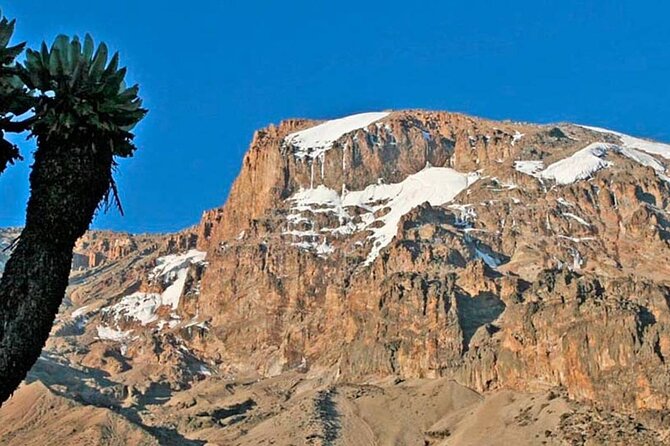
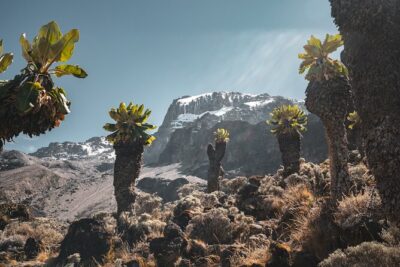
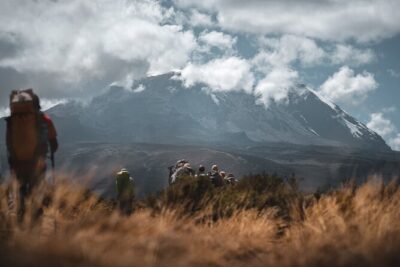
After lunch and a rest, you continue along a rocky ridge toward the Shira Plateau. This is one of the route’s first great rewards. The trees fall away, the sky opens, and you gain broad views toward Kibo and the Western Breach, with its glaciers.
The day covers about nine kilometers and takes roughly six hours, although the published schedule allows about seven hours. Shira camp sits at 3,840 meters. The camp is exposed, and temperatures can drop well below freezing at night.
The scenery here is excellent, but the cold is no small detail. Your sleeping bag, warm layers, gloves, and dry socks matter. The crew boils water for drinking and washing, then serves dinner in the mess tent or another arranged dining space.
This is also where the support system becomes especially useful. You can focus on walking and resting while porters deal with camp equipment and food. The tradeoff is that the camp feels less sheltered than the forest camp, and the altitude begins to make itself known.
Day 3: Lava Tower, altitude symptoms, and Barranco camp
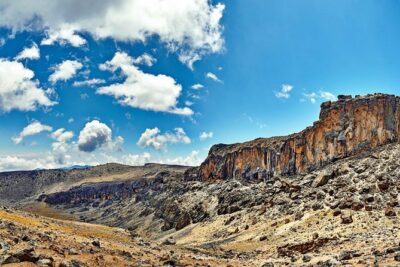
Day 3 is the route’s key acclimatization day and one of its hardest. You leave Shira and head east through a rocky semi-desert toward Lava Tower at 4,630 meters.
The climb takes about five hours, with a total walking time of roughly seven hours and a distance of about 15 kilometers. Lunch is served in a designated area before the ascent to Lava Tower. At this height, some people may feel breathlessness, irritability, or headaches.
Those symptoms are worth taking seriously. Tell your guide how you feel rather than trying to hide it. The day is designed to take you high, then bring you down to sleep lower, at Barranco camp around 3,950 meters.
The descent is close to 680 meters from Lava Tower. That change is the clever part of the schedule. You get time at a higher altitude, then rest at a lower camp instead of sleeping at the day’s maximum height.
Barranco camp brings the famous Barranco Wall into view. The route description calls the day the toughest so far, and it is easy to understand why: you gain altitude, cross rough ground, and then lose height before camp.
Still, this is a useful hard day. I would rather have the climb-high, sleep-lower pattern here than a route that simply pushes upward every afternoon. Eat what you can, keep your drinking water close, and protect your energy for the days ahead.
A few more Moshi & Kilimanjaro days to compare
- Safari Serengeti And Ngorongoro
★ 5.0 · 288 reviews - Climbing Kilimanjaro through 7 days Machame Route
★ 5.0 · 151 reviews - Kilimanjaro climb, Lemosho Route (8-day)
★ 5.0 · 148 reviews - Kilimanjaro climb, Lemosho Route (6-day)
★ 5.0 · 129 reviews
Day 4: Barranco Wall and the exposed Barafu ridge
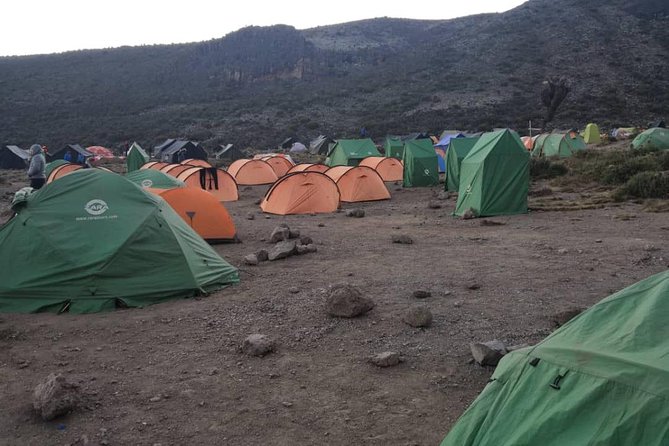
The route from Barranco to Karanga Valley and then Barafu camp takes about seven hours and covers roughly 13 kilometers. You remain in the alpine desert, with little shelter and plenty of stone underfoot.
The Barranco Wall is the day’s defining feature. The route is misty in places, and the wall gives the climb a more hands-on feel than the earlier walking. It is not just a long uphill path. You negotiate rock and uneven ground before continuing toward Barafu.
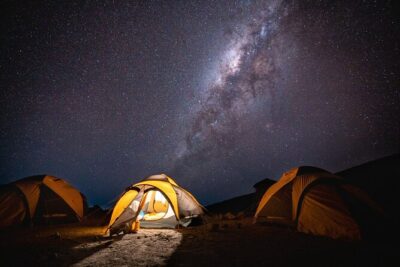
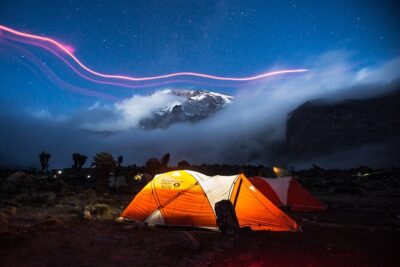
Barafu camp sits at about 4,550 meters. The camp is exposed to strong winds, with tents pitched on a narrow, stony ridge. You should become familiar with the immediate terrain before dark, since moving around camp on rough ground is harder after sunset.
The summit attempt begins the same night, so this afternoon is not ordinary camp time. Prepare your headlamp, camera batteries, spare batteries, ski stick or trekking poles, and thermal clothing. Water can freeze, so the instructions advise carrying it in a thermos or another protected container.
This schedule is one reason the six-day version feels so tough. You finish a substantial day at altitude, then must rest quickly before leaving around midnight. The camp’s position is practical for the summit, but it is not a comfortable place for a leisurely evening.
Day 5: Stella Point, sunrise, and Uhuru Peak
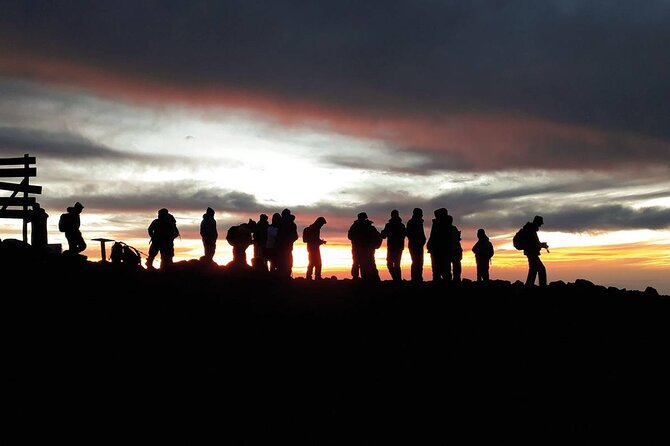
Around 11:30 p.m., you wake for tea and biscuits. Then comes the summit push in darkness, first over heavy scree toward Stella Point on the crater rim.
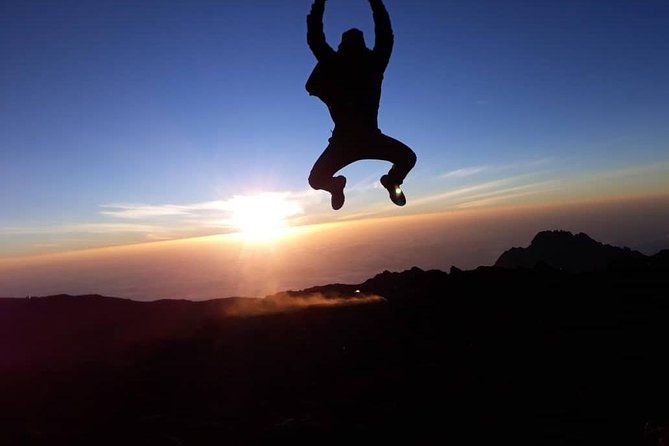
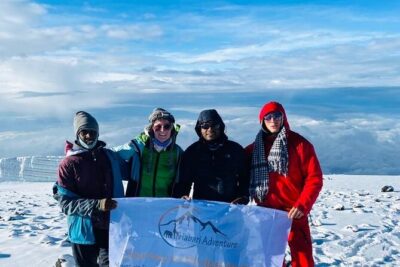
The climb to Stella Point takes about six hours. It is a slow, steep, mentally draining walk, and the loose stone makes every step feel expensive. At Stella Point, at about 5,685 meters, you pause for a short rest and watch the sunrise.
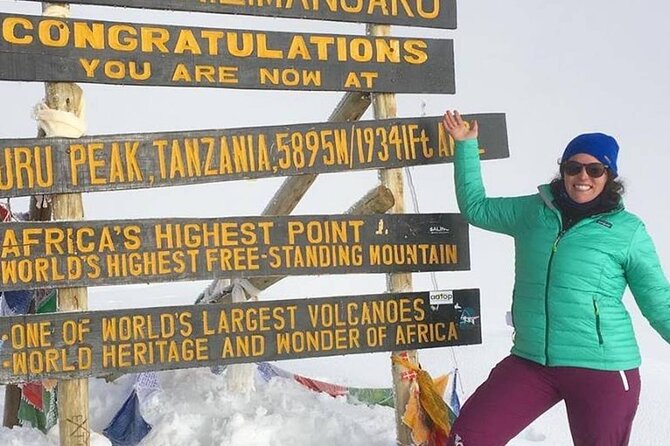
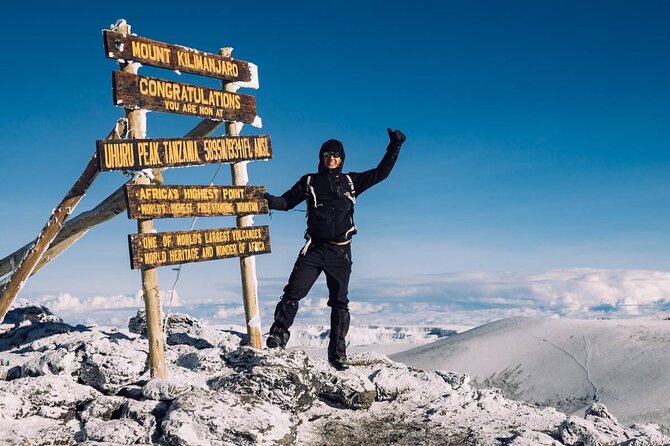
From there, Uhuru Peak is still ahead. The summit stands at 5,895 meters, and the route continues around the crater rim to the highest point in Africa. The supplied schedule allows about eight hours to reach Uhuru Peak from Barafu.
You should not assume the summit is guaranteed simply because the package includes a certificate. Altitude, cold, fatigue, and the pace of the ascent all matter. Your guide’s judgment is important, and turning around can be the right decision if your condition worsens.
If you reach Uhuru Peak, you return to Barafu and then continue down toward Mweka camp at about 3,100 meters. The descent is listed at roughly 23 kilometers, compared with about seven kilometers on the ascent, and can take seven or eight hours.
That makes Day 5 extraordinarily long. It is the physical center of the trip, not just a summit photo opportunity. Your knees and feet may suffer more on the descent than you expect. Keep your movements controlled and use your poles.
The reward is the changing view, from summit ice and scree to lower slopes and camp. Successful climbers receive summit certificates at the end of the trip. Those reaching Uhuru Peak receive gold certificates, while those reaching Stella Point receive green certificates.
Day 6: Forest descent, a hot lunch, and Moshi
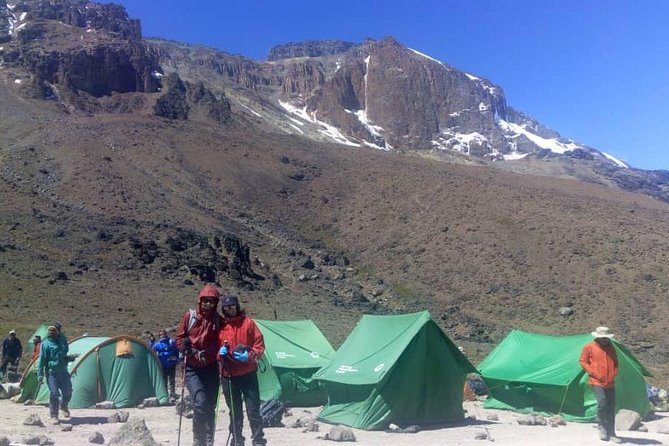
After breakfast at Mweka camp, you descend through forest to Mweka Gate at around 1,980 meters. The descent itself takes about three hours and covers about 15 kilometers, with the route often muddy.
From the gate, you continue into Mweka village, normally another muddy and lengthy hour on foot. A vehicle then takes you to Springlands Hotel, where a hot lunch is served before you return to Moshi for a shower and the night.
This final hotel night is more valuable than it may sound. After several nights under canvas, a shower, a proper bed, and a warm meal give you a clear end point. It also provides the practical setting for tips and summit certificates.
The package includes two nights at Springlands Hotel, one before and one after the climb. Extra nights are not included, so check your international flight timing before booking airport transfers and departure plans.
Guides, porters, food, and camp life
Your guide is central to the experience. Names associated with this operation include Salim, Yesse Lema, Julius, Godlisten, Festo, Mike, Abdallah Chombo, also called Soap, and Reggie. You should not assume a particular guide will lead your group, but the operating team has several guides praised for route knowledge, care, and steady support.
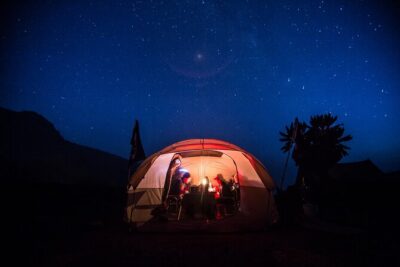
The crew also handles the parts of camping that wear people down. Porters carry equipment and supplies, the cook prepares meals, and a waiter helps with camp service. A mess tent, small camping chairs, tables, candles, crockery, and utensils are included.
Food is a pleasant surprise for many climbers. The menu is described as varied, with meals such as breakfast, lunch, and dinner prepared throughout the mountain days. One practical detail matters here: you need enough energy for long walks at altitude, so eat even when your appetite is poor.
The team has also shown small acts of care, such as offering honey in tea to help with a cough. That kind of attention can make a hard day feel more manageable. Still, you remain responsible for bringing the personal items and climbing gear you need.
The maximum group size is 12. That is large enough for a social climb but small enough for guides to keep track of the group. The exact number of guides and porters may vary according to the group size and operating needs.
How hard is the six-day Machame Route?
You need a moderate level of physical fitness, but that phrase should not make this sound easy. The route includes seven-hour walking days, a midnight start, a summit at 5,895 meters, a long descent, cold nights, mud, loose scree, and exposed camps.
The six-day plan is best for someone who already understands that the summit day will be the hardest physical effort they have attempted. Several people have found the schedule too tight, especially the limited rest before the summit and the long walk on the day before reaching the top.
If you can add an extra day, ask about a seven-day Machame itinerary. The supplied information includes a separate seven-day Machame experience, and an extra day can provide more time for altitude adjustment and recovery. Do not assume the six-day price or schedule includes that option.
Train for long uphill walks, but do not focus only on speed. You need steady endurance, comfortable movement over uneven ground, and the ability to keep going after a poor night’s sleep. Your guide controls the pace, so your job is to conserve energy and communicate honestly.
What to pack and what to check
Gear for the climb is not included. Before booking, confirm the exact equipment list with Zara Tours and bring suitable cold-weather clothing, a sleeping bag, sturdy footwear, headlamp, spare batteries, gloves, warm layers, and protection for personal items.
The instructions specifically call for spare headlamp and camera batteries. Water can freeze at Barafu, so a method of keeping it insulated is useful.
You also need personal items, visas, and any meals or drinks not specified in the package. Emergency oxygen is not included. The tour does include rescue fees, pulse oximeters, and a first aid kit, but those provisions are not a substitute for medical advice or honest communication about altitude symptoms.
Pickup is offered, the ticket is mobile, and confirmation is received at booking. The stated operating hours run Monday through Sunday, all day, for the listed period ending June 18, 2026. The meeting information names Kilimanjaro Airport and Kilimanjaro National Park, so confirm your exact pickup point and timing before arrival.
Free cancellation is available up to 24 hours before the experience start time. Changes or cancellations inside that window are not accepted for a refund, based on local time.
Who should book this climb?
You should consider this trek if you want a scenic, fully supported route and are ready for a serious physical challenge. It suits hikers who value changing scenery, organized camp life, and the satisfaction of working toward a certificate at the top.
It is less suitable if you want a relaxed mountain holiday, dislike cold camping, or need several easy days before a major altitude push. The six-day version packs a lot into a short period.
At 4.9 from 171 ratings, with a 100 percent recommendation figure, the package has a strong record for guide support, food, organization, and the overall summit experience. Those strengths are real parts of the value, but they do not change the demands of altitude or the schedule.
Should you book the Machame Route?
Book it if you want Kilimanjaro’s scenic route and appreciate having transport, meals, porters, tents, park fees, rescue cover, and hotel nights arranged in one package. The guides and crew are the heart of the experience, and names such as Salim, Julius, Godlisten, Festo, Mike, and Soap are associated with attentive support.
My main advice is to treat six days as the minimum, not the easy option. If you are fit, prepared for a very long summit day, and comfortable with basic camping, this can be a powerful way to climb Kilimanjaro. If altitude worries you or you prefer more recovery time, ask for the seven-day version before paying.
FAQ
How long is the Kilimanjaro Machame Route experience?
The experience lasts approximately six days. It includes two nights at Springlands Hotel in Moshi, one before and one after the mountain climb.
What is the highest point reached?
The summit is Uhuru Peak at 5,895 meters. Climbers who reach Uhuru Peak receive a gold summit certificate.
What happens if I reach Stella Point but not Uhuru Peak?
Climbers who reach Stella Point at 5,685 meters receive green certificates.
Are meals included?
Yes. Breakfast, lunch, and dinner are included on the mountain, along with boiled water. Meals and drinks not specified in the package are not included.
Are porters and a cook provided?
Yes. Porters carry equipment and supplies, while a cook prepares the meals. Guides, porters, cooks, and waiters are included in the operating crew.
Is airport transportation included?
Yes. Return airport transfers to Kilimanjaro International Airport are included, along with return transportation from Moshi to the mountain start and finish points.
What is the cancellation policy?
You can cancel up to 24 hours before the experience start time for a full refund. Cancellations or changes made less than 24 hours before the start time are not accepted for a refund.
Newly listed around Moshi & Kilimanjaro
- Climb Mount Kilimanjaro: 7 Days Machame Route★ 5.0 · 3 reviews
- 6 Days Mount Kilimanjaro Climbing via Rongai Route★ 5.0 · 3 reviews
- Explore 1 day Ngorongoro Crater Budget Group Safari from Arusha★ 5.0 · 3 reviews
- Mt. Kilimanjaro Day Hiking★ 5.0 · 3 reviews
- Chemka (Kikuletwa) Hot Springs, Tanzania★ 5.0 · 3 reviews
- Guided City tour of Moshi★ 4.3 · 3 reviews
- 8 Day Tanzania Family Safari★ 5.0 · 3 reviews
- Serengeti Safari with Sirikwa Travel★ 5.0 · 3 reviews
Kilimanjaro Climbs, compared.
Browse the lists this tour appears in