
Reviewed · KILIMANJARO CLIMBS
Kilimanjaro climb by Lemosho Route (7-day)
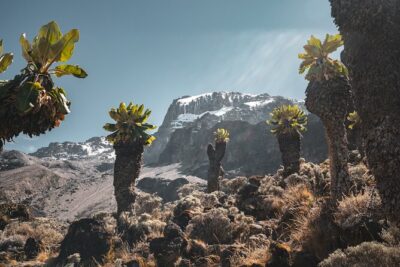
Kilimanjaro’s Lemosho Route gives you a gradual approach to Africa’s highest summit, with long views across the Shira Plateau, a night ascent to Uhuru Peak, and a descent through rainforest. You begin at Londorossi Gate and finish at Mweka Gate, crossing several climate zones along the way.
I like the careful altitude plan, especially the Lava Tower climb followed by a lower night at Barranco Camp. I also like the practical support: hot meals, medical checks, oxygen, sturdy North Face tents, and guides trained in Wilderness First Response. The catch is simple: summit night is hard, and seven hiking days leave less room for your body to adjust than longer routes.
Key points to know before booking
- Seven mountain days become a nine-day trip: Two hotel nights in Moshi surround the climb, with airport transfers included.
- Lemosho crosses five distinct zones: Expect rainforest, moorland, alpine desert, volcanic rock, and Arctic conditions near Uhuru Peak.
- Altitude matters more than technical climbing: The summit trail is not highly technical, but 5,895 meters can bring serious fatigue and discomfort.
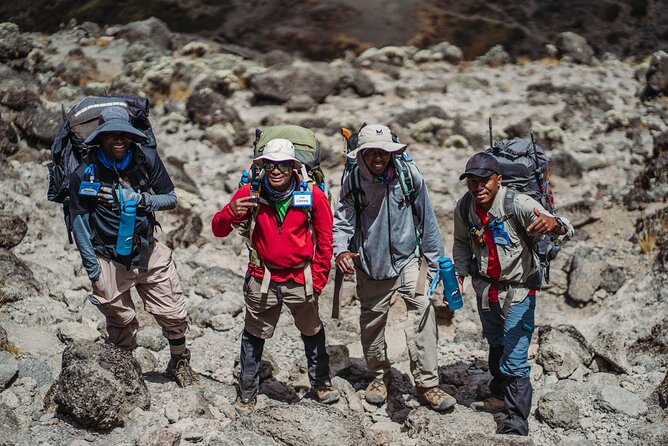
- The support package is strong: Porters, cooks, camp staff, medical kits, oximeters, unlimited oxygen tanks, and three meals a day are included.
- You get a private group experience: Only your own group participates, with personal summit guides assigned to pairs of climbers.
- The price covers most major mountain costs: At $3,476 per person, park fees, transport, lodging, food, tents, and professional support are bundled together.
Why Lemosho is a smart route to Kilimanjaro
Lemosho approaches Kilimanjaro from the west, beginning far from the crowded lower slopes used by some other routes. The first high camp is already at 3,505 meters, reached by vehicle after the long drive to Londorossi Gate and a rougher transfer toward the Shira Plateau.
That high start has a trade-off. You save some walking on the first day, but you also arrive at altitude quickly. The itinerary handles this with short early hikes, rest periods, and acclimatization walks that take you higher before returning to camp.
I like this route because it gives you varied scenery without requiring technical mountaineering. You walk through changing vegetation and volcanic terrain rather than repeating the same kind of trail each day. The route also uses the useful climb high, sleep lower pattern on the Lava Tower and Barranco section.
The experience is private, but not necessarily solitary. Your own group is the only group on the activity, and the size of that group can affect walking pace, tent arrangements, and the amount of personal attention available. Ask for the planned group size before paying.
More Kilimanjaro routes:
- Kilimanjaro climb, Machame Route (7-day)
★ 5.0 · 262 reviews - Kilimanjaro Climbing Lemosho Route 8 Days.
★ 5.0 · 186 reviews - Climbing Kilimanjaro – Machame Route
★ 5.0 · 170 reviews
Day 1: Airport pickup, hotel rest, and a serious gear check
Your trip begins at Kilimanjaro International Airport, where an Altezza Travel representative meets you and drives you to the hotel. Two nights at Aishi Machame Hotel are included, with two people sharing a room unless you pay for single accommodation.
This first night is more useful than it may sound. You get a bed, hot water, internet access, a swimming pool, and time to recover from the flight before the mountain begins. Hotel check-in starts at 2:00 PM, so an early arrival may leave you waiting before your room is ready.
An evening briefing helps set expectations. The company checks that you are ready for the climb, and the next morning brings another briefing with your guide and mountain crew. Use this time well. Confirm what personal equipment you have, what you need to rent, and how your group will handle medication, water, pacing, and summit night.
Your international flight, visa, personal clothing, footwear, sleeping bag, and mountaineering insurance are not included. Most nationalities pay $50 for a visa at JRO, while US passport holders pay $100. Insurance covering trekking up to 6,000 meters is strongly recommended.
Day 2: Londorossi Gate and the first view of Shira
The morning drive to Kilimanjaro National Park’s western entrance takes roughly three to four hours. At Londorossi Gate, the crew handles permits and registration with the search and rescue service.
You then continue by off-road vehicle toward the drop-off point at about 3,500 meters. This is not a polished road transfer, so expect a long day of movement before your boots really get to work. The reward is an immediate view of the Shira Plateau.
From the drop-off point, the walk to Shira 1 Camp at 3,505 meters takes about five hours in total for the day. The elevation gain is modest, and the walk is described as manageable, but do not mistake short mileage for a free pass. Your body is adapting to altitude from the moment you leave the lowlands.
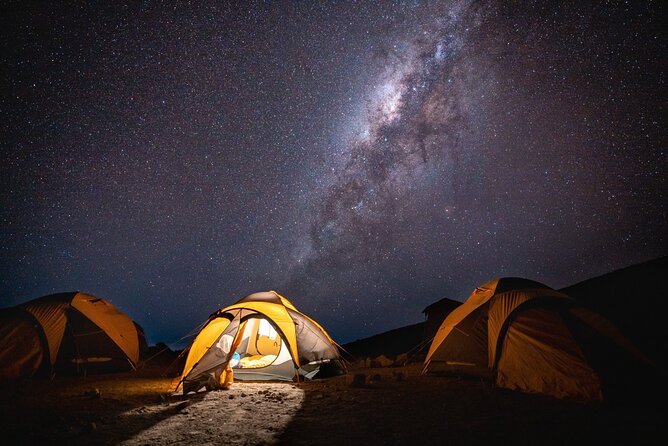
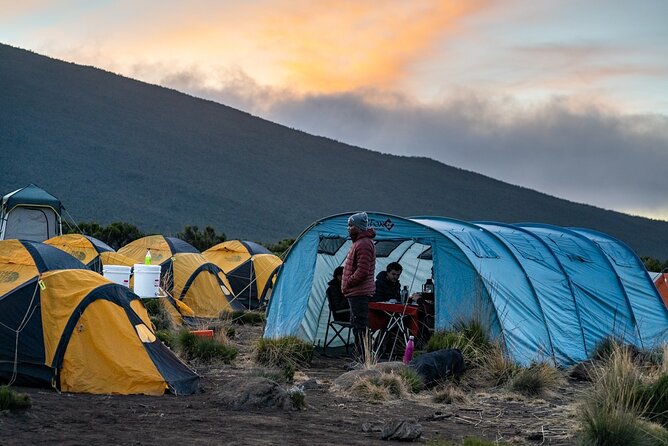
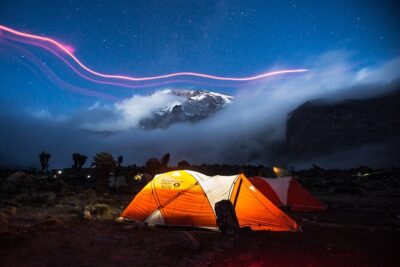
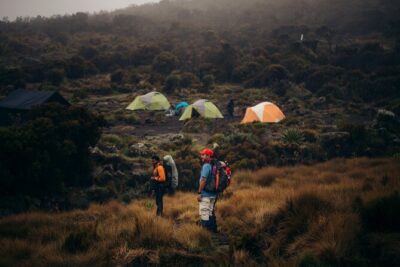
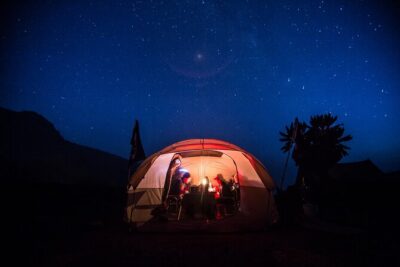
The first camp introduces the rhythm of the climb: walk slowly, eat, drink, rest, and follow the guide’s instructions. You sleep in a North Face VE-25 tent, with two hikers per tent except on solo climbs.
Day 3: Shira 2, Mount Meru views, and the first acclimatization hike
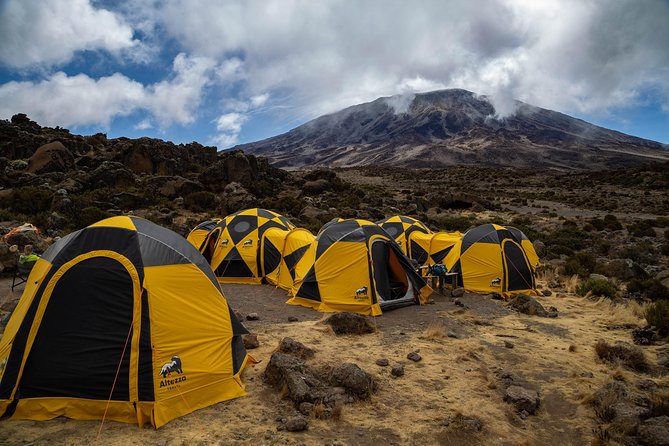
The walk from Shira 1 to Shira 2 Camp rises from 3,505 to 3,900 meters. It takes about six hours and is considered one of the easier trekking days.
This is a good day for looking around. The route offers unusual Kilimanjaro flora, broad African views, and, if the weather cooperates, a chance to see Mount Meru. At 4,566 meters, Meru is Tanzania’s second-highest mountain and one of the most striking sights from the Kilimanjaro area.
After lunch and about two hours of rest at Shira 2, you take an acclimatization hike toward Lava Tower Camp. The walk adds roughly 200 meters of elevation before returning to camp. It may feel like extra work, but that is the point. A short period higher up helps your body begin adjusting before the route reaches its more difficult sections.
Pay attention to how you feel. Headache, unusual tiredness, nausea, dizziness, or poor coordination should be reported promptly. The guides conduct medical checks, and their Wilderness First Response certification adds useful safety depth, but no guide can replace honest communication from you.
More week long trips in Moshi & Kilimanjaro:
- Climbing Kilimanjaro through 7 days Machame Route
★ 5.0 · 151 reviews - 7 Days Kilimanjaro via Machame route affordable price
★ 5.0 · 110 reviews - Private Kilimanjaro Hike 7 Day Lemosho Route
★ 5.0 · 60 reviews - 7-Day Magical Tanzania Safari -Premium High End Package
★ 5.0 · 53 reviews
Day 4: Lava Tower and the descent to Barranco
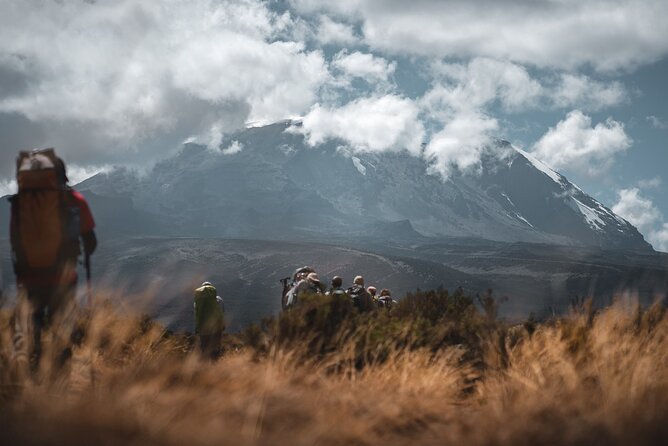
Day four is the key acclimatization day. You leave Shira 2 at 3,900 meters and climb toward Lava Tower at 4,630 meters. The route includes repeated uphill and downhill sections, so the eight-hour day can feel longer than the distance suggests.
Lava Tower may bring some discomfort. That is normal at this height, but it is also where you need to take symptoms seriously. The plan calls for spending at least one to two hours at the high point and eating lunch there before descending.
The descent to Barranco Camp at 3,960 meters is the clever part of the day. You climb high during daylight, then sleep nearly 700 meters lower. This gives you valuable exposure to altitude without forcing you to spend the night at Lava Tower.
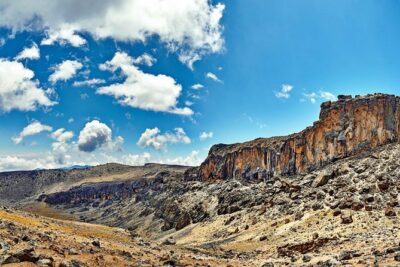
Barranco Camp sits beneath the famous Barranco Wall. The wall looks intimidating from below, but the trail is described as a straightforward hiking route rather than a technical climb. Still, it requires steady feet and some confidence on uneven ground.
If conditions or a participant’s condition require a change, the route may be adjusted. That flexibility is sensible on a mountain where weather and altitude can alter plans quickly.
Day 5: Barranco Wall, Karanga, and another high walk
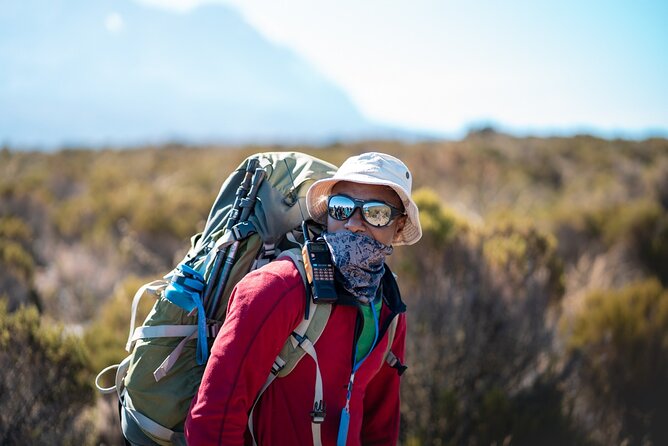
Start early for Barranco Wall. Leaving sooner helps you avoid congestion from other groups, an especially useful tip on a route where several parties may reach the same narrow trail at once.
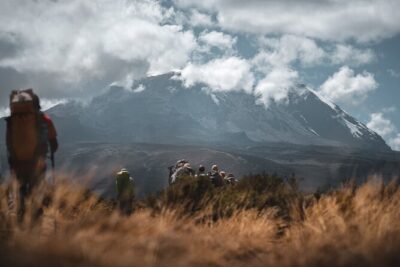
The climb takes about an hour. It is steep in places, but it is not presented as a technical rock climb. Afterward, you can stop for photographs with Kibo, Kilimanjaro’s central volcanic cone, before continuing toward Karanga Camp.
The walk to Karanga includes plenty of ups and downs. That repeated climbing and descending can be tiring, particularly after the previous day’s high-altitude work. Guides set the pace for the group, and the mountain’s preferred rhythm is slow, even, and patient.
At Karanga, you get a warm lunch and time to rest. Later, an acclimatization walk heads toward Barafu Camp before returning. Again, the extra climb makes the day feel demanding, but it prepares you for the next stage.
This is also a good point to check your feet. Blisters that seem minor at lower altitude can become a serious nuisance during summit night. Carry the footwear you have already tested, and tell the crew early if something is rubbing.
Day 6: Barafu Camp and the quiet before summit night
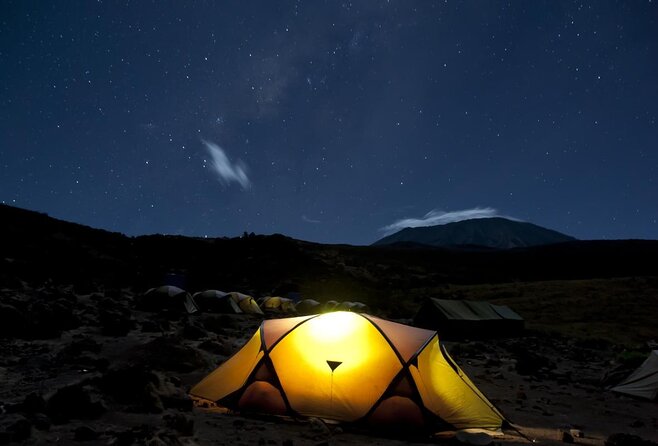
You climb from Karanga to Barafu Summit Camp at 4,640 meters. Barafu is the launch point for the night ascent to Uhuru Peak, so the schedule shifts here. After reaching camp, you complete another acclimatization hike toward Kosovo Summit Camp at about 4,800 meters, then return to Barafu.
The aim is not sightseeing. The aim is to expose your body to more altitude, eat a hot dinner, and sleep before the hardest effort of the trip. Your tent and sleeping bag are prepared by the crew, allowing you to focus on resting rather than camp chores.
This day lasts about 14 hours according to the supplied schedule, though the detailed timing can vary. The combination of the Karanga to Barafu walk, the acclimatization hike, and preparation for the night ascent makes this a demanding transition day.
Pack your summit items before dinner. Keep warm layers, gloves, headlamp, water, snacks, and any personal medication close at hand. At nearly 4,640 meters, the wind and cold can be more troublesome than the trail itself.
Day 7: Uhuru Peak at 5,895 meters
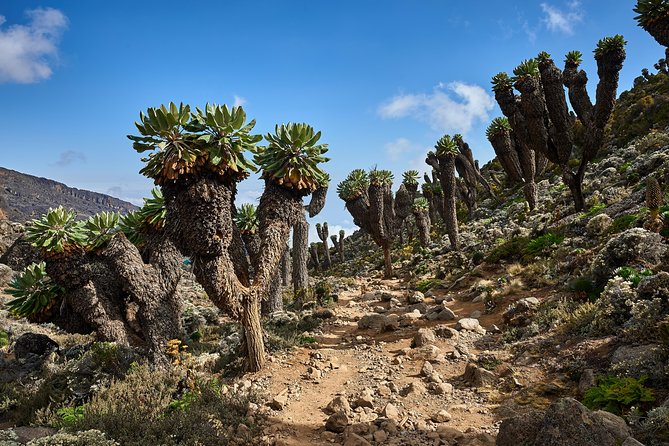
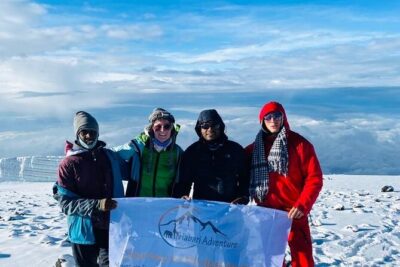
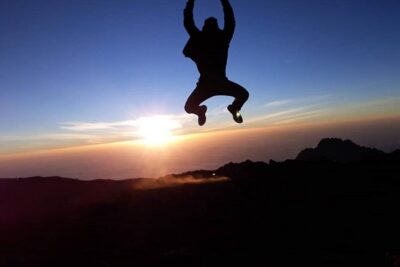
The summit attempt begins at night from Barafu. You walk slowly toward Uhuru Peak, the highest point on Mount Kilimanjaro at 5,895 meters.
Technically, the route is relatively simple. Physically, it is the hardest part because of the altitude, cold, darkness, and long hours. Each pair of climbers receives a personal guide for the ascent, allowing the guide to watch your physical and mental condition closely.
The pace will be deliberately slow. You may spend hours on a gradual climb before reaching the summit, then stop for photographs at Uhuru Peak. A possible descent to the nearest glacier is included as an option, but your guide should help you decide if you have enough energy and time.
After the summit, you descend to Barafu for about two hours of rest. You then continue down to Millennium Camp at 3,820 meters. This is an important warning point: descending can be hazardous because fatigue affects balance and concentration.
Keep your eyes on the trail, protect your knees, and do not rush simply because the summit is behind you. The day lasts about 12 hours and can be the most exhausting stretch of the entire climb.
Day 8: Rainforest descent and the Mweka Gate finish
The drop in altitude feels welcome at Millennium Camp. The camp is in tropical rainforest, a sharp change from the bare volcanic slopes above. After breakfast, you continue to Mweka Gate at 1,640 meters.
The descent takes about five hours. The vegetation changes again as you lose height, and the trail becomes a final test for tired legs. At the gate, the group gathers, shares thoughts in the company guestbook, and receives commemorative summit certificates at the office.
A transfer returns you to the hotel. This is a practical finish, since it gives you a shower, a proper bed, and time to recover before your flight or onward plans.
Day 9: A slow morning before the airport
The final day is set aside for hotel rest and airport transfer. Check-out is at 11:00 AM. If your flight leaves in the evening, late check-out is available for an extra fee.
That detail matters. After summit night and the long descent, a few extra hours in a room can be worth paying for. It is also wise to avoid scheduling a tight onward connection immediately after the mountain portion, since weather, park formalities, and transfer timing can affect the day.
Food, tents, and medical support
Three energy-rich meals are provided each day on the mountain, with drinks such as tea, coffee, juice, and soda. Vegetarian, vegan, lactose-free, gluten-free, halal, and other meal plans are available.
The menu is designed for fuel and warmth rather than gourmet dining. That is exactly what you want at altitude. A hot meal at camp can make a tough afternoon feel manageable, and the included drinks reduce the need to carry every comfort from home.
The support setup includes a dining tent, sleeping pads, tables, chairs, crockery, and cutlery. Porters carry the camp equipment, while cooks and camp staff keep the daily routine moving. You should still confirm the company’s current porter welfare practices before booking and plan appropriate tips based on service and local guidance.
Safety support includes certified Wilderness First Response guides, medical kits, regular medical checks, oximeters, and unlimited oxygen tanks. Oxygen is not a substitute for descent when altitude illness is serious, but having monitoring and emergency supplies on hand is a meaningful part of the package.
Is $3,476 a fair price?
The listed price is $3,476 per person. That is a major expense, but it includes the parts of a Kilimanjaro climb that quickly become costly when arranged separately: airport pickup and drop-off, ground transport, two hotel nights, park fees, mountain tents, camp equipment, food, drinks, guides, porters, cooks, medical support, and rescue registration.
The price is strongest for someone who wants a managed climb rather than a bare-bones trek. You are paying for logistics and staff as much as for the trail itself. Group discounts may improve the value for friends or families traveling together.
You still need to budget for flights, visas, personal gear, sleeping bag rental or purchase, insurance, tips, and hotel lunches or dinners. Hotel breakfast is included, but lunch and dinner at the hotel average about $15 per person.
Single hotel rooms and solo tent arrangements cost extra. Ask for the full supplement before booking, since the base price assumes two people per room and two hikers per tent.
Who should book this Kilimanjaro climb?
This route suits you if you have moderate physical fitness, enjoy long days outdoors, and want professional support from airport arrival through the summit. You do not need to be an elite athlete, but you do need to tolerate several consecutive days of walking, repeated climbs, cold nights, and a very long summit day.
It can work well for first-time high-altitude hikers because the route includes repeated acclimatization walks and a trained support team. Experienced hikers may also appreciate the route’s varied scenery and carefully managed schedule.
It is less suitable if you want a relaxed holiday with a few scenic walks. The summit attempt begins at night, the schedule is demanding, and altitude can affect even strong hikers. The seven-day version also offers less adjustment time than an eight-day route.
Altezza’s guide teams have included people such as Kombe, Elia, Joshua, Bosco, George, and Hamza, but your assigned crew will depend on the departure. The company’s strongest service points are its organization, communication, mountain staffing, and attention to small needs such as warm meals and gear checks.
Booking advice and cancellation terms
Confirmation is provided at booking, and the activity begins at a listed 9:00 AM start time. Airport pickup is included, and the tour is a private activity for your own group.
Free cancellation is available when you cancel at least 24 hours before the local start time. Changes or cancellations inside that window are not accepted for a refund.
Before booking, ask four direct questions: the likely group size, the exact personal gear rental costs, the expected porter-to-climber ratio, and the current tipping guidance. Those answers will make the advertised price easier to judge.
Should you book it?
I would choose this climb if you want a well-supported route with strong acclimatization planning, full park logistics, hot food, airport transfers, and a private group structure. Lemosho gives you broad scenery and a gradual build toward the summit, while the medical and guide support helps you make safer decisions when altitude becomes serious.
I would hesitate only if your fitness is below the stated moderate level, if you dislike cold overnight conditions, or if you need a flexible schedule. For everyone else, the $3,476 cost is defensible because so much is included. Go in prepared, pack carefully, walk slowly, and treat the descent with the same respect as the summit.
FAQ
How long does the Kilimanjaro experience last?
The full experience lasts about nine days. Seven days are spent hiking on Kilimanjaro, with hotel nights before and after the mountain climb.
What route does the climb use?
The climb uses the Lemosho Route, beginning near Londorossi Gate on the western side of Kilimanjaro and ending at Mweka Gate.
What is the highest point reached?
The summit is Uhuru Peak at 5,895 meters.
Is airport transportation included?
Yes. Pickup and drop-off at Kilimanjaro International Airport are included, along with ground transportation during the trip.
Are hotel nights included?
Yes. Two nights at Aishi Machame Hotel are included, based on two people sharing a room. Single accommodation costs extra.
What meals are provided?
Three meals a day are provided on the mountain. The package includes six lunches, eight breakfasts, and six dinners, along with drinks such as tea, coffee, juices, and soda.
Is personal hiking equipment included?
No. Personal clothing, footwear, sleeping bags, and similar items are not included. Equipment is available for rent.
What level of fitness is required?
The activity recommends a moderate physical fitness level. The summit is technically relatively simple, but the altitude, cold, long walking days, and night ascent make the climb physically demanding.
Newly listed around Moshi & Kilimanjaro
- Climb Mount Kilimanjaro: 7 Days Machame Route★ 5.0 · 3 reviews
- 6 Days Mount Kilimanjaro Climbing via Rongai Route★ 5.0 · 3 reviews
- Explore 1 day Ngorongoro Crater Budget Group Safari from Arusha★ 5.0 · 3 reviews
- Mt. Kilimanjaro Day Hiking★ 5.0 · 3 reviews
- Chemka (Kikuletwa) Hot Springs, Tanzania★ 5.0 · 3 reviews
- Guided City tour of Moshi★ 4.3 · 3 reviews
- 8 Day Tanzania Family Safari★ 5.0 · 3 reviews
- Serengeti Safari with Sirikwa Travel★ 5.0 · 3 reviews
Kilimanjaro Climbs, compared.
Browse the lists this tour appears in