
Reviewed · KILIMANJARO CLIMBS
8-Day Small-group Lemosho Kilimanjaro Summit Trekking
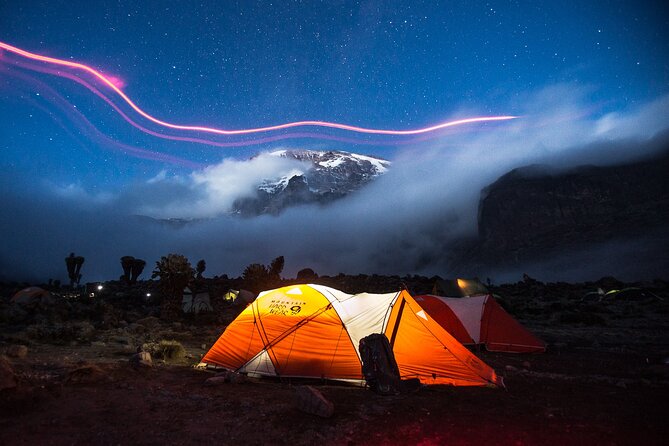
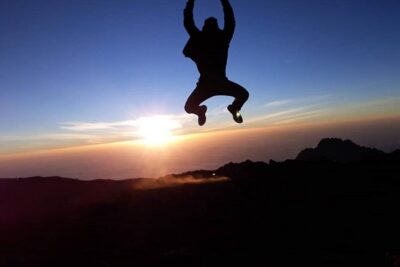
Kilimanjaro is not a technical climb, but it is a serious high-altitude trek. This 8-day Lemosho route gives you time to cross rainforest, heath, volcanic desert, and icy summit terrain while your body adjusts to thinner air. The midnight push to Uhuru Peak is the hard part, followed by a sunrise few people forget.
I like the extra acclimatization time and the small-group format, which lets guides check your pace, energy, and comfort more closely. I also like the practical all-in-one setup: hotel transfers, park fees, tents, camping gear, and meals are included.
The catch is simple: this is not a casual holiday walk. Long days, cold nights, high altitude, and a demanding summit night require strong fitness. A high summit rate is encouraging, but no operator can remove the effects of altitude or guarantee that you will reach the top.
Key points before you book
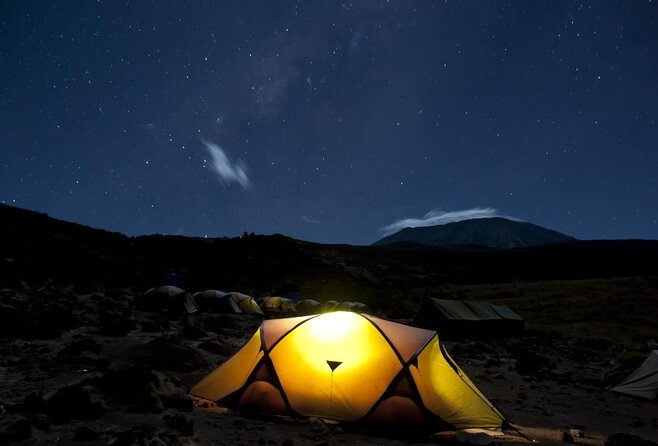
- Eight days gives your body more time to adjust: The route gains height gradually, with a full Shira Plateau day and an acclimatization hike to Lava Tower before Barranco Camp.
- Lemosho offers changing scenery: You begin in montane forest and finish among volcanic rock, glaciers, scree, and high Arctic conditions.
- Summit night starts around midnight: Expect a steep, cold ascent to Stella Point, then roughly another hour to Uhuru Peak.
- The group can include up to 15 people: Smaller departures may feel more personal, but the advertised maximum is not a private trek.
- The package covers major trip costs: Park admission, camping equipment, meals, and round-trip transfers from an Arusha hotel are included.
- The route is demanding even for fit hikers: You should arrive with a strong physical fitness level and be ready for a 13-mile summit-day effort.
Why the Lemosho route earns eight days
Lemosho is a strong choice when your main goal is reaching the summit without rushing the mountain. The route approaches Kilimanjaro from the west, then crosses the Shira Plateau before joining the southern circuit toward Barranco, Karanga, and Barafu.
That extra time matters because altitude is the great unknown. You can be fit, experienced, and determined, yet still struggle when the air gets thin. This plan includes a full day on the Shira Plateau and a high hike to Lava Tower followed by a lower camp. That pattern gives you useful exposure to altitude before sleeping lower.
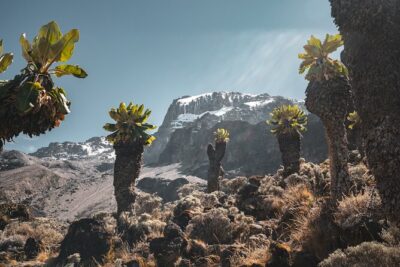
The route also has variety. You do not spend eight days staring at the same rocky trail. The forest is wet and shaded at the start. Higher up, trees give way to heather, grasses, volcanic rock, and giant senecio plants. Near the summit, the scenery becomes stark and cold.
The price is $2,895 per person. That is a substantial sum, but the value depends on what you would otherwise have to arrange. The cost includes transfers from your Arusha hotel, park admission, camping equipment, meals, and the guiding and support structure needed for a high-altitude trek. You are paying for logistics as much as for the walk itself.
Before booking, confirm exactly what your own departure includes, especially hotel nights, airport transfers, tips, and personal gear. Those details are not fully spelled out here. The listed package does cover the main mountain costs, but you should not assume every Tanzania travel expense is included.
More Hiking Tours in Arusha
- Mountain Kilimanjaro Day Hike
★ 5.0 · 102 reviews - Private Full Day Hiking Experience to Marangu Route
★ 5.0 · 61 reviews - 4 Days Mount Meru Trekking
★ 5.0 · 55 reviews
Day 1: Londorossi Gate to Mti Mkubwa
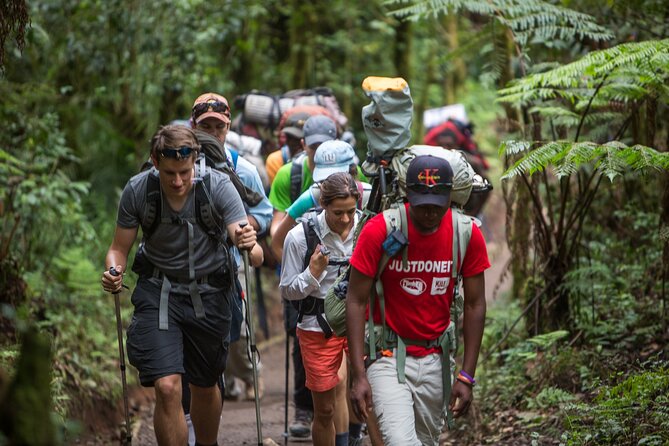
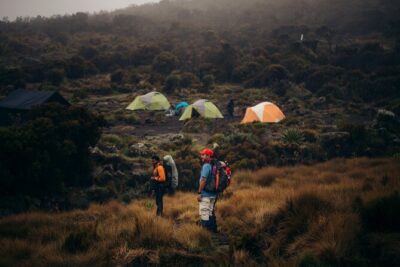
Your trek begins after a night at a hotel, with an 8:00 am start time and transport toward the western side of Kilimanjaro. The group checks in at Londorossi Gate, then begins walking through montane forest.
This first section is gentle by Kilimanjaro standards. The route covers about 3 miles and takes roughly three to four hours, reaching Mti Mkubwa Camp at about 7,742 feet. Mti Mkubwa means Big Tree, and the camp sits in the rainforest zone.
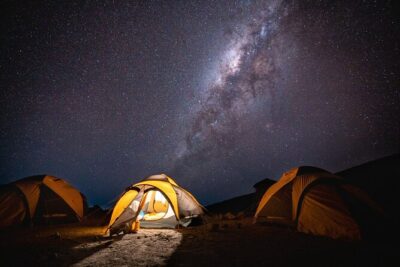
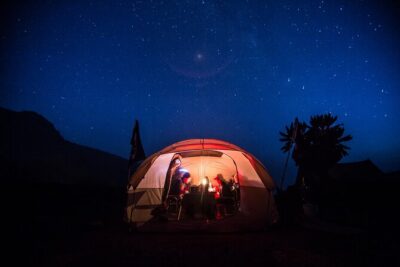
The first day is less about testing your strength than settling into the routine. You will sleep in a tent, eat camp meals, and begin adjusting to walking for several hours with a pack. Your personal belongings are described as being inside your tent when you arrive, a small comfort after the transfer and park formalities.
The forest can feel like a proper wilderness entrance, but do not expect a long, leisurely stroll. Rain, mud, and uneven ground can still make the opening day tiring. Use it to establish a slow pace and learn how the group moves.
Day 2: Heather country and the Shira Ridge
The trail climbs out of the forest and enters a more open zone of tall grasses, heather, and volcanic rock covered with hanging lichen. The change is striking. You go from shaded forest to broad views and a rougher, more exposed trail.
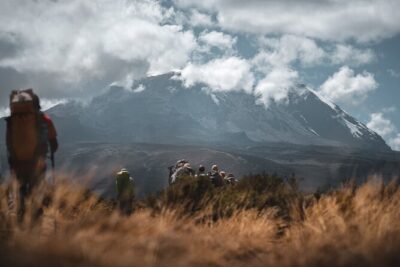
The day covers about 4.9 miles and takes five to six hours, reaching around 11,500 feet. In the afternoon, the route follows the Shira Ridge toward the high plateau. This is where views of Kibo, Kilimanjaro’s main summit cone, begin to open.
The Shira Plateau is one of the reasons to choose Lemosho. It gives you a sense of scale. Kibo appears ahead, often looking close enough to touch, though the remaining climb is still substantial. The open setting also means more wind and less shelter, so your clothing system begins to matter.
You may feel fine at this stage, or you may notice a slower pace, mild headache, or reduced appetite. The itinerary is built around acclimatization, so there is no prize for racing ahead. Follow the guide’s pace and tell the staff how you feel.
Day 3: A full day across the Shira Plateau
Day three is a useful feature of the schedule. Instead of simply moving from one camp to another, you spend a full day exploring the Shira Plateau. The route heads east toward Kibo and may include an optional visit to the collapsed Shira Cone, the oldest of Kilimanjaro’s three volcanoes.
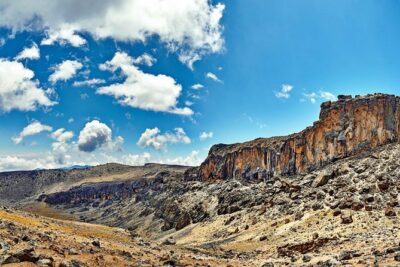
The distance is about 8.7 miles, with five to seven hours of walking, and the high point is listed at roughly 13,800 feet. You finish at Moir Camp, set in a large gorge at the end of a dormant lava flow.
This is a long day, but it is not a summit-day effort. Its value is in gaining height during the day and becoming familiar with thinner air before progressing toward the mountain’s upper slopes. The broad, dry surroundings offer a very different feel from day one.
The optional Shira Cone visit gives you a choice. If your legs and breathing are good, it adds interest. If you are feeling the altitude, conserving energy may be wiser. A good guide should help you make that call without turning an optional stop into a test of pride.
More Kilimanjaro routes:
- 7-Day Machame Kilimanjaro Summit Tour from Arusha
★ 5.0 · 125 reviews - From Arusha/Moshi: Kilimanjaro Hike Marangu Route Day Trip
★ 4.5 · 54 reviews - Mount Kilimanjaro Day Hike Through Marangu Route to Mandara Hut
★ 5.0 · 37 reviews - 6 Days: Hiking Kilimanjaro via Machame Route
★ 5.0 · 24 reviews
Day 4: Lava Tower and Barranco Camp
Day four is the route’s key acclimatization day. You climb toward Lava Tower, listed at about 15,000 feet in the itinerary, before descending through a giant senecio forest to Barranco Camp. The camp itself is listed at about 13,000 feet, below the high point reached earlier.
This is the classic high-to-low pattern that makes the day useful. You spend time at greater elevation, then sleep lower. The walking distance is only about 4.3 miles, but the 4-to-6-hour timing reflects the steep and high nature of the route.
The trail passes a junction toward the Arrow Glacier after Lava Tower. The itinerary describes a rest at the tower, then a descent toward a waterfall before Barranco. The scenery here is more severe and theatrical, with enormous plants and the massive Barranco Wall rising near camp.
This is also where the altitude may become impossible to ignore. Do not judge the entire climb by how you feel at lunch. Your guide will need to know about symptoms such as headache, nausea, unusual tiredness, or poor coordination. The goal is not simply to reach the next tent. It is to reach the summit safely.
Day 5: Up the Barranco Wall
The Barranco Wall is the day’s defining feature. You climb the wall by a demanding but non-technical route, then continue through the Karanga Valley. The itinerary gives a distance of about 2.2 miles and four to five hours, reaching around 13,100 feet at camp.
Short mileage does not mean an easy day. The wall involves hands-on movement and steep sections, though the route is not described as technical climbing. You should be comfortable with exposure to uneven rock and with moving carefully rather than quickly.
The reward is a memorable change in the mountain’s character. You leave the Barranco Valley and move into the high Arctic zone, with Kibo and Mawenzi becoming more prominent. Karanga Camp is a staging point before the final push to the summit zone.
This is a good day to keep your expectations realistic. The group may move slowly, and that is exactly what you want at altitude. The guides’ role is not just navigation. It is also pacing, encouragement, and deciding when to rest.
Day 6: Kosovo Camp and summit preparation
Day six covers about 2.6 miles in five to six hours, with a slow climb to Kosovo Camp at roughly 16,000 feet. You pass Barafu Camp and gain strong views of Kibo and Mawenzi peaks.
The short distance can be misleading. At this height, every step costs more effort. The exposed ridge at Kosovo Camp makes it important to understand the terrain before darkness. You also need to use the afternoon for rest and preparation rather than wandering around camp.
This is the quiet before summit night. You will need to organize warm clothing, headlamp supplies if you bring them, water, snacks, and anything else you want close at hand. The information provided does not specify a personal equipment list, so ask the operator for one before departure.
The support team is an important part of the value here. Past departures have included guides such as Amani, Raymond, Goodluck, John, Herment Mosha, Manny, Cinga, and Steve, along with assistant guides, cooks, and porters. Your exact team will vary, but the repeated praise for patient pacing, safety checks, meals, and camp support points to the human side of this experience.
Day 7: The midnight climb to Uhuru Peak
Summit day is the test. You start around midnight and climb through steep scree toward Stella Point on the crater rim. The ascent is listed at six to seven hours, followed by about one more hour from Stella Point to Uhuru Peak, the highest point in Africa.
The full day covers about 13 miles, with roughly 5 miles of ascent and 12 kilometers of descent, and is described as 11 hours overall. That figure captures the physical demand, but not the mental challenge of walking uphill in darkness, cold, and low oxygen.
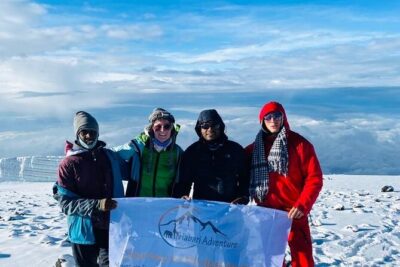
At Stella Point, sunrise is the major reward. From there, the summit is visible, though the final hour can feel surprisingly long. The route continues between the Rebmann and Ratzel glaciers toward Uhuru Peak, then you descend to Mweka Camp for dinner and a celebration.
The descent is not an afterthought. Once you have reached the top, you still have a great deal of downhill walking. Knees, feet, and concentration can suffer, so keep your pace controlled. The strongest guide teams put safety before summit pride. That is one reason the small-group promise matters.
Do not treat the published high summit rate as a personal guarantee. It suggests a route and schedule designed for success, and several departures have reported successful summits. Still, altitude affects each person differently, and turning around can be the correct decision.
Day 8: Mweka Gate and a welcome shower
The final morning is a three-to-four-hour walk to Mweka Gate, covering about 6.4 miles and descending to roughly 5,400 feet. The Climb Kili vehicle waits at the gate for the transfer back to your hotel.
After a week of camping, the hotel shower will feel like a major attraction. The final walk also gives you time to think about how quickly the mountain changed, from rainforest to summit rock and back down again.
The return transfer is especially useful because you will be tired. You do not need to solve transport from the park gate yourself. Pickup is offered, and the package specifies round-trip transfers from your Arusha hotel.
Meals, tents, and the small-group experience
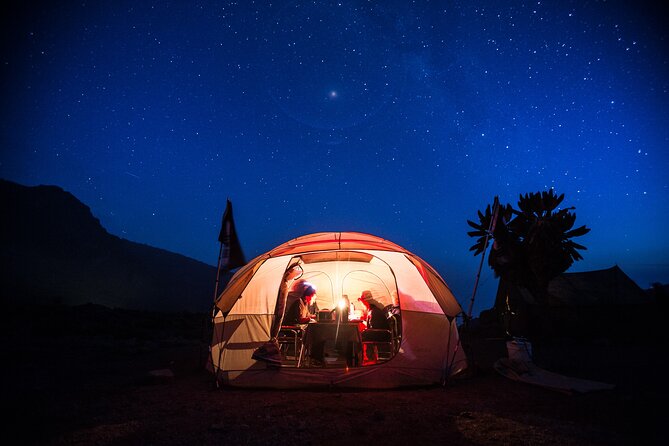
Camping equipment, park fees, and meals are included. That removes some of the hardest planning work, although you still need to confirm the personal gear you must bring and any excluded costs.
The maximum group size is 15 people. That is small compared with a mass departure, but it is not the same as booking a private climb. Some past groups have been as small as four or five people, while another departure included more than 10 crew members supporting the climbers.
I would ask about the expected group size before paying. A four-person group creates a different rhythm from a 15-person group, especially on summit night. The operator’s guide structure may also vary with the number of climbers.
The most consistently praised features are the staff’s attention to safety, comfort, food, pacing, and encouragement. Names such as Raymond, Amani, Isaya, Emmanuel, Goodwin, Thomas, Balthasar, and Simon have been associated with positive departures. Balthasar’s coffee wake-up calls and Thomas’s care with tent comfort are the sort of small touches that make a hard trip easier, though you should not assume the same crew will lead your climb.
Who should book this Kilimanjaro trek?
This route suits you if you want a serious mountain challenge with a planned schedule and substantial support. It is also a good fit for a first-time high-altitude climber who prefers a gradual route rather than a short, compressed ascent.
You should have strong physical fitness. The itinerary includes several five-to-seven-hour days, a midnight summit attempt, and a long descent on day seven. Experience with mountain hiking helps, but the tour is presented as suitable for beginners and advanced climbers alike.
You may want another option if you dislike camping, cannot tolerate long days, or want a private group guaranteed from the start. You should also think carefully if you have medical concerns related to altitude, since the experience reaches nearly 19,340 feet.
The cancellation terms are flexible if your plans change early: cancel at least 24 hours before the local start time for a full refund. Cancellations or changes inside that window are not accepted for a refund.
Should you book the 8-day Lemosho trek?
I would choose this trip if reaching the summit is your priority and you value a slower acclimatization plan, organized support, and a route with major scenery changes. The extra day compared with shorter Kilimanjaro programs is worth considering, especially for a first attempt.
The strongest reasons to book are the Lemosho route, the full Shira Plateau day, the Lava Tower acclimatization hike, included mountain logistics, and the reported care from the guiding teams. The main cautions are the price, exposed high camps, demanding summit night, and the fact that a maximum group size of 15 may feel less intimate than the phrase small group suggests.
Ask for the current group size, exact equipment list, included hotel arrangements, and the names and experience of your lead guide. If those details suit you and you are ready for a real physical challenge, this is a well-structured way to attempt Kilimanjaro.
FAQ
How long is the Kilimanjaro trek?
The trek lasts approximately eight days, including the approach, summit attempt, descent, and transfer back to your Arusha hotel.
Which Kilimanjaro route does this trip use?
It uses the Lemosho route, beginning on the western side of Mount Kilimanjaro and continuing across the Shira Plateau before joining the southern circuit.
What time does the experience start?
The listed start time is 8:00 am.
Is hotel pickup included?
Yes. Round-trip transfers from your Arusha hotel are included, and a vehicle transfers you back to your hotel after reaching Mweka Gate.
What does the price include?
The $2,895 price includes camping equipment, park fees, meals, and round-trip transfers from your Arusha hotel.
How large can the group be?
The maximum group size is 15 people. The actual group may be smaller.
How fit do I need to be?
You should have a strong physical fitness level. The trek includes several long hiking days, high-altitude camping, and a demanding summit day.
What time does the summit attempt begin?
The summit attempt begins around midnight on day seven. The ascent to Stella Point takes about six to seven hours, followed by roughly another hour to Uhuru Peak.
Can I cancel for a full refund?
Yes, if you cancel at least 24 hours before the experience start time. Cancellations made less than 24 hours before the start time are not refunded, and changes inside that period are not accepted.
Newly listed around Arusha
- 5-Day Private Safari Tour in Tanzania’s Wildlife★ 5.0 · 3 reviews
- 3 Days private safari Tarangire ,Ngorongroro crater &Manyara★ 5.0 · 3 reviews
- 3 Day Sharing Safari – Manyara, Ngorongoro Crater and Tarangire National Parks★ 5.0 · 3 reviews
- Tarangire National Park Day Trip★ 5.0 · 3 reviews
- 2 Days Tarangire and Ngorongoro Crater Tour★ 5.0 · 3 reviews
- 6 -Day Tarangire, Manyara, Serengeti & Ngorongoro★ 5.0 · 3 reviews
- 5 Days Group Camping Safari★ 4.7 · 3 reviews
- 4 Days Tanzania Safari★ 4.5 · 3 reviews
Kilimanjaro Climbs, compared.
Browse the lists this tour appears in