
Reviewed · ARUSHA TOURS
Street Food and Community Walking Tour
The most interesting part of this Arusha tour is that it takes you beyond the usual city sights and into Sinoni, a working neighborhood south of the center. You walk with a local guide, stop for small tastes from neighborhood vendors, and see everyday activities such as maize milling, carpentry, recycling, and urban farming.
I like two things right away: the direct contact with local life, and the fact that 100 percent of the tour’s profits support Jamii Imarika Foundation. Guides Jackson and Given have been especially helpful and friendly, sharing useful details while making it easy to ask questions and speak with people along the way.
The main consideration is simple: this is a community walking tour, not a polished food crawl. Food portions are tasting portions, the streets may be basic, and the experience depends on walking outdoors in good weather. If you want a comfortable restaurant meal or a tightly scripted sightseeing route, this may not be your best match.
Key points
- Sinoni, not the standard tourist route: See a residential district south of central Arusha and learn about daily community life.
- Food along the way: Try sweet and salty local foods from different vendors rather than sitting down for one large meal.
- Practical community stops: Look at urban farming, recycling, maize milling, carpentry, mud houses, and churches.
- Small group setting: The tour accepts a maximum of 10 people, which leaves room for questions and conversation.
- A tour with a social purpose: Profits go to Jamii Imarika Foundation, which supports children, women, and youth.
- Simple logistics: Meet at Kajo Art Gallery near the Maasai Market and finish in Sinoni, with help returning to your hotel.
Walking from Kajo Art Gallery into Sinoni
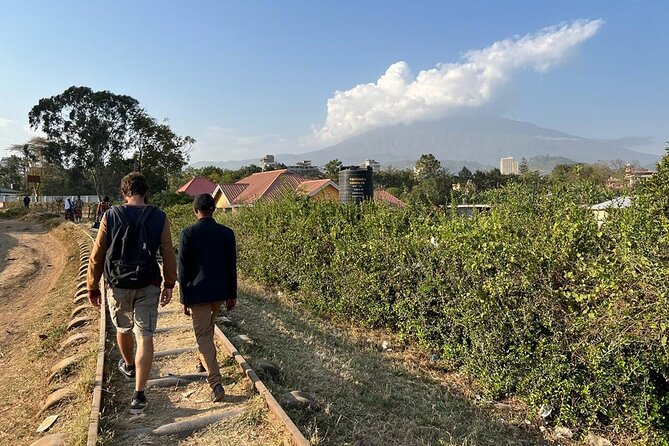
The tour begins at Kajo Art Gallery on Tanesco Road, near the Maasai Market in Arusha. This is a practical meeting point if you are already in the city center, though you should check the exact location before setting out because the walking portion finishes in Sinoni rather than returning to the start.
From the gallery, your guide leads you toward Sinoni, a district just south of central Arusha. The change in setting is the point of the tour. Instead of moving from one major sight to another, you get a closer look at the places where people live, work, make things, worship, and prepare food.
The tour lasts about two to three hours, with the main community walk planned for roughly two and a half hours. That is long enough to give the neighborhood some context without taking up an entire day. You should still wear comfortable shoes and be ready to walk on ordinary streets rather than a prepared visitor path.
The group limit of 10 matters here. In a small group, you can hear the guide more easily and stop to ask about something that catches your eye. It also makes conversations with local people feel less like a large organized procession.
More Walking Tours in Arusha
- Arusha Guided Walking City Tour, Culture, Lifestyle & History
★ 5.0 · 150 reviews - 7-Day Private Tanzania Safari with Sunset Walking on the Crater Rim and Maasai
★ 5.0 · 40 reviews - 4 Days lodge safari Tarangire , Ngorongoro crater & Walking
★ 5.0 · 39 reviews
Tasting Tanzania one small stop at a time
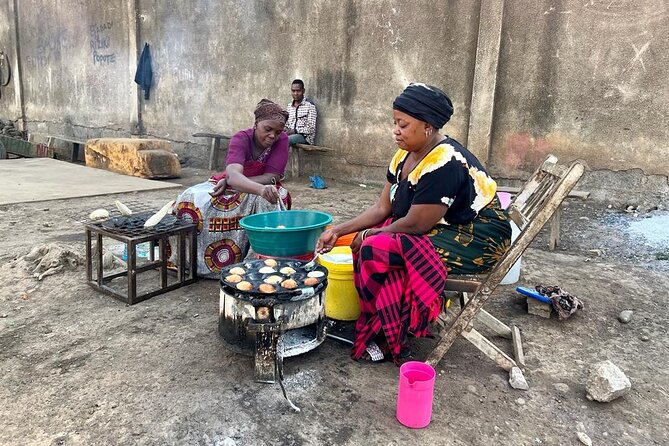
Food is part of the walk, but it is not the only reason to book it. You receive sweet and salty foods from different vendors as you go, giving you a series of small introductions to local eating habits instead of one formal meal.
That format works well for curious eaters. You can try several items, ask what they are, and connect each taste with the neighborhood around you. The supplied details do not promise a fixed menu, so you should not book this expecting a specific dish or restaurant. The food selection may depend on what vendors are offering on the day.
I like this approach because it keeps the meal tied to the community. You are not simply being served food in a room set aside for tourists. You are walking through Sinoni and seeing how food fits into ordinary life.
There is a practical limit. The included food consists of tastings, not a full lunch or dinner. If you tend to get hungry after a few hours of walking, plan another meal before or after the tour. You may also want to tell the guide about dietary concerns when booking, but no specific dietary arrangements are promised in the information provided.
Urban farming and the work behind the neighborhood
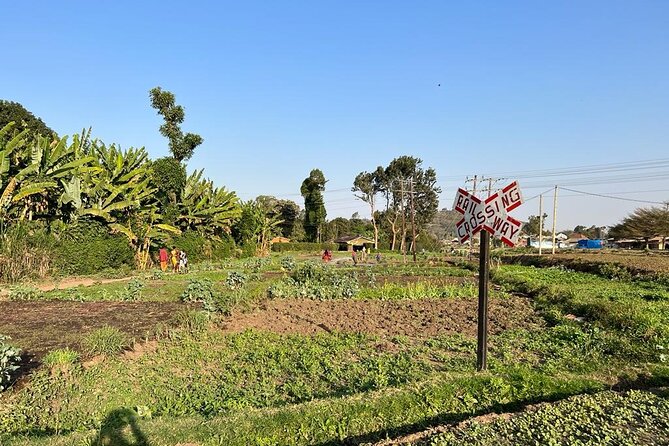
One stop focuses on urban farming. In a city setting, small growing areas can show how residents make use of available space and connect food production with daily life. The tour does not present urban farming as a grand attraction. Its value is that it helps you notice the practical ways a community functions.
The recycling stop adds another useful layer. Rather than seeing Arusha only through its central streets and major visitor services, you get a chance to learn how materials and waste are handled within the neighborhood. Your guide can explain the local context and answer questions, which is more useful than simply passing by without knowing what you are seeing.
These stops may appeal most to people who enjoy seeing how a place works. If you prefer famous buildings and a list of major landmarks, they may feel modest. If you want a grounded look at daily routines, they give the walk its purpose.
The guide’s role is important here. Jackson and Given were described as friendly and helpful, and their strength appears to be explaining the neighborhood while staying open to questions. That personal exchange is likely to be more valuable than a memorized speech.
Maize milling and carpentry in everyday use
The maize milling stop gives you a look at a basic part of food preparation. Milling is not presented as a staged demonstration, so the experience may depend on what is happening when you arrive. Still, it connects directly to the food you may taste and to the work needed before ingredients reach a kitchen or vendor.
Carpentry offers a similar window into local work. You can see a trade in progress and ask about how it fits into community life. These are useful stops because they shift your attention from sightseeing to livelihoods. You are not only looking at what Sinoni has, but also at what people do there.
The walk may be most rewarding when you let these places prompt questions. Ask how the work serves the area, who uses the products, or how the trade fits into everyday routines. The tour is designed for engagement, and the guide can provide context that you would not get by walking alone.
Do keep your expectations measured. The information does not specify demonstrations, workshops, or hands-on activities. Think of these as observation and conversation stops rather than activities where you make something yourself.
More Food Tours in Arusha:
- Arusha: Traditional Tanzania Cooking Class & Food Market Tour
★ 5.0 · 34 reviews - Organic Coffee Tour and Local Food Experience in Arusha
★ 5.0 · 29 reviews - Arusha: Traditional Tanzania Cooking class& Food Market Tour
★ 4.9 · 12 reviews - Waterfalls, Coffee, Hotsprings, Food Cuisine, & Serval Wildlife
★ 5.0 · 6 reviews
Mud houses and churches along the route
Mud houses are another part of the Sinoni walk. They offer a chance to consider local building methods and the appearance of homes in the district. The point is not to treat a house as an exotic object, but to understand it as part of a lived neighborhood.
Your guide can help explain what you are seeing and place the buildings within the wider story of daily life in Arusha. Because the tour encourages questions, you can ask about construction, use, or the way homes fit into the area. The available details do not promise a formal architectural lesson, so the depth of the explanation may depend on your guide and your conversation.
Churches appear among the community stops as well. Their inclusion reminds you that this is a neighborhood with social and religious spaces, not simply a collection of work sites and food stalls. You may find that the churches are more useful as part of the overall local picture than as standalone sightseeing attractions.
As with the homes, respectful behavior matters. You are walking through a lived-in place. Listen to the guide about when photography is suitable, and ask before taking pictures of people or private property.
A social purpose that changes the value of $25
The price is $25 per person. For a two-and-a-half-hour walk that includes a local guide, food tastings, and fees, that is a reasonable price even before considering the charitable purpose. The stronger value comes from the fact that 100 percent of the tour profits are directed to Jamii Imarika Foundation.
The organization works to support disadvantaged children with education and basic needs, empower women, and educate youth. That gives your booking a clear local purpose. You are paying for an experience, but the money also helps fund work in the community connected to the tour.
That does not mean you should ignore the experience itself. A social mission cannot make up for a poor tour, and this route will suit some people better than others. Here, the community focus, local guides, small group size, and food stops give the price a solid foundation.
You should also understand what the fee does not include. Private transportation is not included, and tips for the guide are optional. The tour ends in Sinoni, but the organizers help you find your way back to your hotel, which is useful if you do not know Arusha well.
Who will enjoy this Sinoni experience
I would choose this tour if you want conversation and context, not just photographs. It suits people who like to ask questions, try small portions of unfamiliar food, and see work and home life in a real neighborhood.
It is also a good choice for visitors who want their spending to support a local cause. The foundation’s focus on children, women, and youth makes the social impact clear rather than vague.
The small group limit helps solo visitors, couples, and families who prefer a more personal outing. Most people can participate, and service animals are allowed. The tour is also near public transportation, which makes the starting point easier to reach without private transport.
You may want to skip it if you need a fully indoor activity, have limited walking ability, or want a fixed menu. The route requires good weather, and cancellation is possible if the weather is poor or the minimum number of participants is not reached.
Useful timing and booking advice
This experience is often reserved about 42 days ahead. That does not guarantee that every departure sells out, but it is a useful sign that you should book early if your Arusha dates are fixed, especially during a busy Tanzania itinerary.
A mobile ticket is provided, and confirmation arrives at booking. The start point is Kajo Art Gallery, Maasai Market, Tanesco Road, Arusha. The end point is in Sinoni at the listed map location, and the organizers help with the return to your hotel.
Build a little flexibility into your day. The walk is advertised at two to three hours, and conversations or food stops can affect the pace. Do not schedule an important transfer immediately afterward.
The cancellation policy is generous if you plan ahead. Cancel at least 24 hours before the local start time for a full refund. Changes or cancellations within 24 hours are not accepted for a refund. If poor weather or an unmet minimum cancels the tour, you are offered another date or experience, or a full refund.
What to bring for a better walk
Wear shoes suited to several hours on ordinary streets. Bring water, though food tastings are included. A small amount of extra cash may be useful for optional purchases, but the tour price covers the listed food and fees.
Keep your phone charged because the ticket is mobile. A light rain layer is sensible for any outdoor walk, though the experience may be canceled in poor weather.
Most of all, arrive ready to pay attention. The best moments may be small: a conversation with a guide, an explanation at a milling stop, or a food taste that makes more sense once you have seen where it is sold. You get more from the tour when you treat the neighborhood as a community rather than a stage.
Should you book the Sinoni walking tour?
Book it if you want an affordable, small-group look at ordinary Arusha life, with local food and a direct benefit to a community organization. The guide support, charitable purpose, and range of stops make the $25 fee good value for the right kind of visitor.
Skip it if you are looking for a major sightseeing landmark, a sit-down feast, or a private vehicle. This is a walking conversation through Sinoni, with simple food tastings and real neighborhood settings.
For many people, it is a smart way to spend a half-day in Arusha before or after a safari. Just allow enough time, expect an informal route, and remember that the experience works best when you come with curiosity rather than a checklist.
FAQ
Where does the tour start?
The tour starts at Kajo Art Gallery near the Maasai Market on Tanesco Road in Arusha, Tanzania.
Where does the tour finish?
The walking tour finishes in Sinoni at the listed JM7M+65W location. The organizers help you return to your hotel.
How long does the experience last?
The tour lasts approximately two to three hours. The main Sinoni community walk is planned for about two hours and 30 minutes.
What food is included?
Sweet and salty food from different local vendors is included. The information does not provide a fixed menu.
How many people can join the tour?
The tour has a maximum group size of 10 participants.
What happens if I need to cancel?
You receive a full refund if you cancel at least 24 hours before the local start time. Cancellations or changes made within 24 hours are not accepted for a refund. If bad weather or an unmet minimum number of participants cancels the experience, you are offered another date or experience, or a full refund.
Newly listed around Arusha
- 5-Day Private Safari Tour in Tanzania’s Wildlife★ 5.0 · 3 reviews
- 3 Days private safari Tarangire ,Ngorongroro crater &Manyara★ 5.0 · 3 reviews
- 3 Day Sharing Safari – Manyara, Ngorongoro Crater and Tarangire National Parks★ 5.0 · 3 reviews
- Tarangire National Park Day Trip★ 5.0 · 3 reviews
- 2 Days Tarangire and Ngorongoro Crater Tour★ 5.0 · 3 reviews
- 6 -Day Tarangire, Manyara, Serengeti & Ngorongoro★ 5.0 · 3 reviews
- 5 Days Group Camping Safari★ 4.7 · 3 reviews
- Private 4×4 Vitara Safari in Arusha National Park★ 5.0 · 3 reviews
Arusha Tours, compared.

Balloon Safari & Bush Breakfast in Serengeti – Miracle Experience
Read our review →






Browse the lists this tour appears in