
Reviewed · ARUSHA TOURS
Arusha Guided Walking City Tour, Culture, Lifestyle & History
Arusha’s story comes into focus when you move through its streets with a local guide. This tour links the Old Boma Museum, the Clock Tower, gemstone workshops, craft markets, and a major African art gallery into one half-day introduction to the city.
I like the clear mix of history and daily life, and I like that guide Israel is repeatedly praised for his English, friendly manner, and pride in Tanzania. The price also gives you a useful city orientation for $26, with the Tanzanite museum and Cultural Heritage Centre included.
The main thing to understand is that this is not always a pure walking tour. Several sections may involve a car or tuk-tuk, and the German Boma museum charges an extra $6 per adult. Allow for shopping pressure at some stops, too.
Key Points to Know Before You Book
- Israel is the guide to request: He is praised for clear English, local insight, and making busy streets and markets feel manageable.
- The Old Boma gives Arusha its historical frame: You see colonial-era remains alongside displays on human evolution, wildlife, and the city’s past.
- Tanzanite gets more than a quick sales pitch: The museum explains mining, cutting, polishing, and the stone’s famous violet-blue color.
- The route blends walking with short rides: This suits many visitors, but it may disappoint anyone expecting four continuous hours on foot.
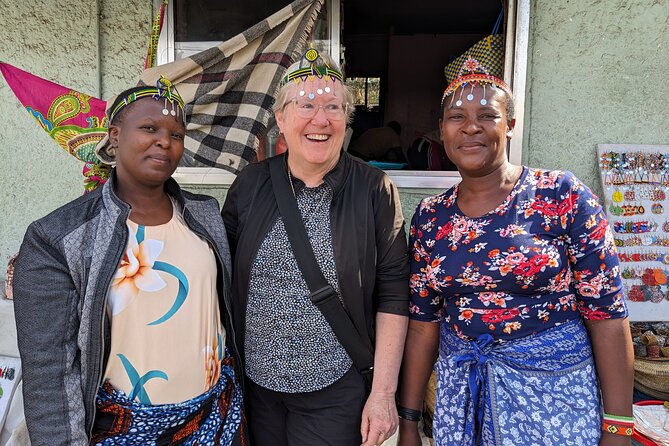
- Shopping is built into the experience: The Maasai market and Cultural Heritage Centre offer crafts, jewelry, fabrics, and art, with cash useful for purchases.
- The tour is good value for a first look at Arusha: It includes a guide, hotel pickup near central Arusha, Tanzanite museum entry, and Cultural Heritage Centre costs.
Arusha in One Half-Day
This experience is designed to give you a first reading of Arusha rather than send you deep into one museum. In roughly four hours, you move from government offices and colonial buildings to markets, jewelry, public meeting places, and African art.
That range is the real strength. Arusha can feel like a place you pass through on the way to a safari, but the city has its own character and history. A local walk helps you see more than hotel streets and safari offices.
The tour is usually suitable for most participants, and the maximum group size is 19. That is small enough for a guide to speak with you directly, though it is not the same as having a private guide. Pickup and drop-off are offered for hotels near the city center.
The schedule may take between two and a half and six hours, even though the standard description is about four hours. That likely reflects traffic, museum timing, shopping interest, and whether your group spends longer at certain sites. I would keep the rest of your day flexible.
Guide Israel receives especially strong praise for his communication. You can expect a guide who explains Tanzania’s past and present in straightforward English, answers questions, and helps you move through busy areas with confidence. One solo female visitor specifically appreciated his support and command of local history.
More History Tours in Arusha
- Materuni Waterfalls & Coffee making Cultural Tour | BURIGI CHATO SAFARIS LTD
★ 5.0 · 15 reviews - Arusha: City Walking Tour Historic and Modern Highlights
★ 4.5 · 12 reviews - Marangu waterfall & Coffee making Cultural Tour | BURIGI CHATO SAFARIS CO LTD
★ 5.0 · 12 reviews
Starting at the Old Boma Museum
The Old Boma Museum is the best place to begin because it gives the city a clear historical anchor. Before reaching it, the route passes the East African Community headquarters, the International Conference Centre, and a major public hospital. These sights help show Arusha’s role as more than a safari base.
The Boma itself was built by the Germans during the colonial period as a fort. It is described as the oldest building in the city, and its later use as a government museum adds another layer to the visit. You are looking at both a physical remnant of colonial rule and a public effort to explain the region’s past.
The museum has three permanent exhibitions and three temporary exhibitions. The human evolution display uses replica fossils, tools, and an explanation of the oldest footprint found in East Africa. This section gives you useful background for northern Tanzania, where questions about early human development are part of the wider archaeological story.
Another section covers the history of the Boma and Arusha from 1884 to 1919. That period is important because it connects the building to German colonial rule and the city’s early development. The museum is not huge, so this is a focused visit rather than an all-day museum stop.
An ecology and wildlife photography exhibition adds a more familiar subject for safari visitors. I like this combination because it avoids treating Arusha as only a place of old buildings. You get human origins, colonial history, and the natural world in one stop.
Admission to the Old Boma is not included. The stated fee is $6 per adult. Bring this extra amount into your budget, especially since the tour price can otherwise look fully inclusive at first glance.
Learning Why Tanzanite Matters
The Tanzanite Experience offers one of the tour’s more distinctive stops. Tanzania is the only country identified here as a source of tanzanite, the violet-blue stone that has become closely linked with the country.
The museum explains why the stone is considered rare, how it is mined, and what happens after extraction. You also learn about cutting and polishing, which helps turn a small stone into a finished piece of jewelry. The guide can also explain stories and myths connected with tanzanite.
This stop takes about 30 minutes and admission is included. That matters because the experience is not simply a shop visit. You receive an explanation before you see the sales area.
The shop carries stones and jewelry at a wide range of prices. The information gives examples from $100 to $3,000 and above. You are not required to buy anything, and I would treat this as a chance to learn first and shop only if you genuinely want to.
If you are considering a purchase, ask questions about the stone, its paperwork, and the final price before handing over money. The tour provides access to the museum and shop, but it does not include a souvenir budget. Carry cash if you plan to buy.
For many visitors, tanzanite is a more memorable subject than a standard souvenir stop. Even if you leave without jewelry, you come away understanding why this stone is part of Tanzania’s modern identity and export story.
Meeting at Arusha’s Clock Tower
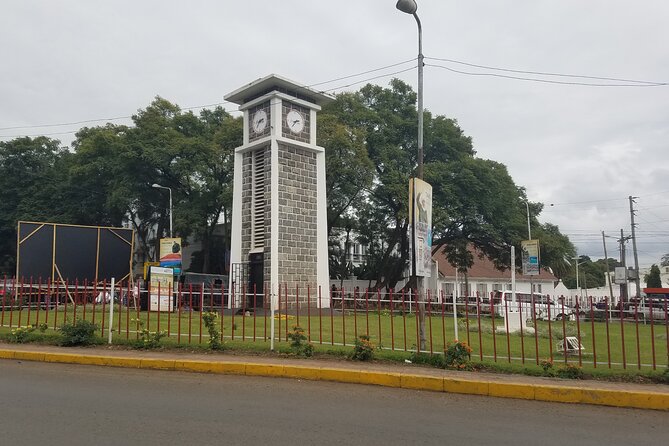
The Arusha Clock Tower is a short stop, about 15 minutes, but it gives you a useful sense of the city’s center. It is known as a meeting point for local people and is easy to recognize as you move through town.
The tower was built by Galanos, a Greek millionaire who came to Tanganyika in the early twentieth century. Local explanations also connect the tower with the midpoint between Cairo and Cape Town, and with the meeting point of Tanzania, Kenya, and Uganda.
Treat the geographic claims as part of the site’s local story rather than a reason to plan your whole visit around a map. The value here is the guide’s explanation of why this landmark matters to people in Arusha.
After the Clock Tower, the route continues toward one of the city’s oldest hotels and a colonial-era school. The exact amount of time spent there may depend on the pace of your group. This is a good point to ask Israel questions about how the city changed after the colonial period.
The Clock Tower stop also helps break up the museum and shopping portions of the tour. You get a street-level view of Arusha and a chance to watch the city function as a working urban center.
More Walking Tours in Arusha
- 7-Day Private Tanzania Safari with Sunset Walking on the Crater Rim and Maasai
★ 5.0 · 40 reviews - 4 Days lodge safari Tarangire , Ngorongoro crater & Walking
★ 5.0 · 39 reviews - Tanzania – Arusha NP – Private Guided 4×4 Safari – Game Drive & Walking
★ 5.0 · 30 reviews - Private Walking Tour with Giraffes
★ 5.0 · 18 reviews
Browsing the Maasai Market
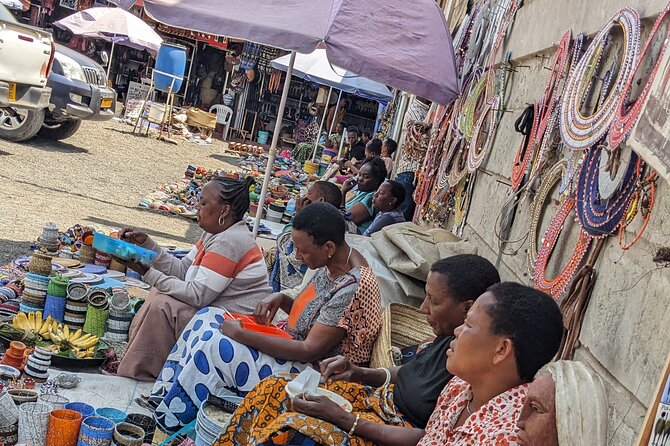
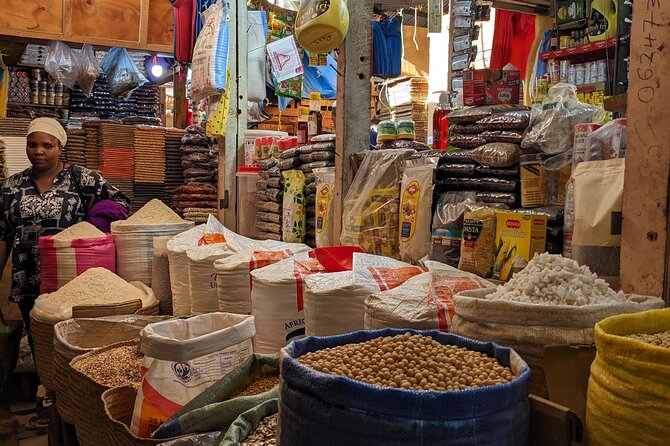
The Maasai Market is the most practical stop if you want souvenirs. It is an open-air market with clothing, fabrics, safari shirts, Tanzanian jerseys, Maasai sandals, jewelry, necklaces, bags, blankets, pots, pans, and artwork.
The market portion lasts about 25 minutes, so you will not have unlimited time to compare every stall. If you already know you want a fabric, small carving, piece of jewelry, or Maasai-style item, tell the guide early. A short stop goes quickly once you begin looking.
This is also where a guide can be genuinely useful. Israel has been praised for guiding people through busy streets and market areas in a way that makes them feel comfortable. He can help you understand what you are seeing and may make the experience less confusing for a first visit to Arusha.
I would not expect every item to be handmade or uniquely Maasai. Markets often contain a mixture of local products and tourist goods. Look closely, ask about materials, and compare prices before buying.
Cash is recommended for souvenirs. Food and drinks are not included, so this is not a scheduled meal stop. If you want to purchase something, carry small amounts and keep your spending plan in mind.
The market is best approached as a social and visual stop, not just a shop. Fabrics, clothing, and jewelry show how tourism and local design meet in Arusha. You also see what kinds of objects visitors are expected to take home.
Spending Time at the Cultural Heritage Centre
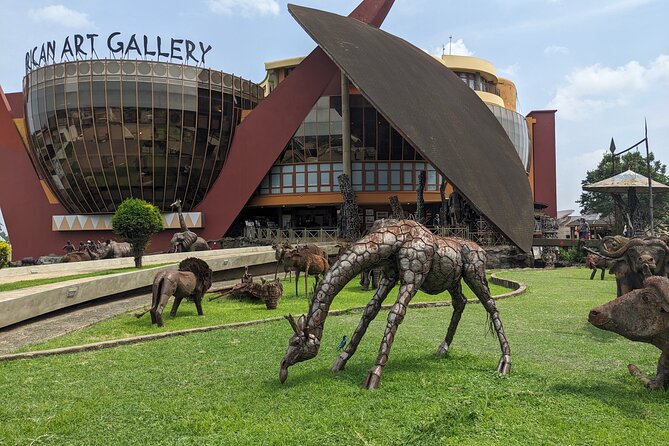
The Cultural Heritage Centre is the largest art-focused stop on the route. It is described as one of Africa’s biggest art galleries, with work from different parts of Tanzania and other African countries.
The visit takes about 40 minutes. That is enough time for a useful introduction, but not enough to inspect every piece in detail. If you care strongly about art, you may want to ask how much freedom you will have to browse after the guided portion.
The collection gives you a broader view than the Maasai market. Instead of focusing mainly on portable souvenirs, you can see sculpture, paintings, crafts, and other forms of African art. The center also has a shop where you can buy souvenirs if something catches your eye.
This stop is included in the tour cost, which improves the overall value. You get both a museum-style cultural visit and a chance to shop in a more organized setting.
Still, the shopping element is part of the design. You should feel free to look without buying. The best use of the stop is to notice differences in materials, styles, and regional traditions, then decide if you want to spend money.
What the $26 Price Really Covers
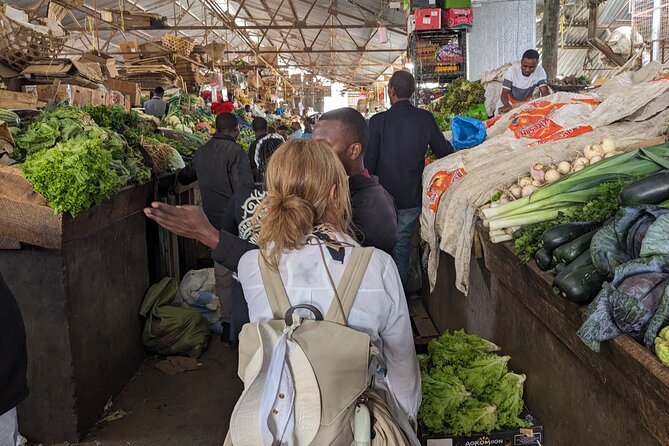
At $26 per person, the tour is priced as an affordable introduction to Arusha. The package includes a professional local guide, the Tanzanite museum, the Cultural Heritage Centre, and pickup and drop-off for hotels near the city center.
That is a fair deal if you want an organized first day in town. A guide who can explain local history and help you navigate markets adds value that you would not get from simply walking between landmarks with a map.
The price does not cover the $6 adult entrance fee for the Old Boma. It also excludes food, drinks, accommodation, personal purchases, tips, and any activity added after the city tour.
I would budget for the museum admission, a drink, and any market purchases. Tips are optional and depend on your satisfaction. Since shopping is built into two stops, it is easy to spend much more than the tour price if you are not careful.
The tour’s value depends partly on your expectations. If you want a polished, private sightseeing experience with every entry included, this is not that. If you want a low-cost introduction with a local guide and a useful mix of city sights, it offers good value.
Walking, Driving, and the Day’s Pace
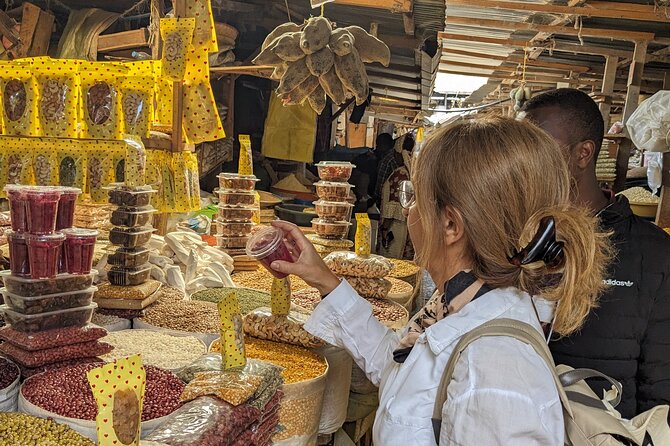
The title suggests a walking tour, but the actual experience can mix walking with short rides. One account describes being met at a hotel and taking a tuk-tuk to the first sight. Another says the group was driven close to most locations and walked between some of them.
That arrangement can be helpful in Arusha, especially if the day is hot or you do not want to spend four straight hours on foot. It also lets the tour cover more ground, including sights that are not directly beside one another.
On the other hand, you should not book this expecting a continuous neighborhood walk. If your main goal is to spend the entire morning on foot, ask about the planned transport before departure.
The standard duration is about four hours, but the stated guided time can range from two and a half to six hours. That is a wide spread. Confirm the start time, pickup point, and likely finish time if you have a safari transfer or another booking later.
The group limit of 19 keeps the tour from becoming a huge crowd, but the experience may feel more personal with a smaller party. Israel’s ability to explain clearly is especially useful when several people need to hear the same information at a busy street corner.
Who Will Enjoy This Arusha Tour
I would recommend this outing to first-time visitors who have a spare half-day before or after a safari. It gives you an introduction to city life, colonial history, local shopping, African art, and tanzanite without requiring complicated planning.
It also suits solo visitors. Israel’s friendly manner and ability to make busy areas feel comfortable are useful when you are exploring alone.
The tour works well for people who enjoy a bit of shopping but do not want to spend the whole day in markets. You see the Maasai market and the Cultural Heritage Centre, yet the schedule also includes museums and public landmarks.
It may be less suitable if you dislike sales-oriented stops, want a long museum visit, or expect a strenuous walking route. The mix of rides and short walks is practical, but it does not deliver a full urban walking study.
Families and older visitors may appreciate the flexible pace, although the available information does not give a detailed accessibility statement. Most participants can take part, and the operator says the tour is near public transportation.
Practical Tips for a Better Visit
Wear comfortable shoes, even if part of the route uses a car or tuk-tuk. You will still walk through streets, markets, museums, and gallery spaces.
Carry cash for the Old Boma fee and souvenirs. Food and drinks are not included, so bring money for refreshments as well.
Keep your schedule open for at least four hours, and possibly longer. The tour may run from two and a half to six hours depending on the route and pace.
Tell the guide what interests you most. If you care about colonial history, ask for more time around the Boma. If art or shopping matters more, say so before reaching the Cultural Heritage Centre.
If you want to buy tanzanite, take your time. The museum visit can teach you about mining and cutting, but the decision to purchase should be separate from the excitement of the stop.
Free cancellation is available when you cancel at least 24 hours before the local start time. Cancellations within 24 hours are not refunded, and changes during that period are not accepted.
Should You Book the Arusha City Tour?
Book it if you want a friendly local guide, a broad introduction to Arusha, and a low price that includes several important stops. Israel is the guide I would request, based on his clear English, strong grasp of Tanzanian history, and ability to help visitors feel at ease in busy parts of town.
The best parts are the Old Boma’s historical displays, the tanzanite explanation, and the contrast between the Maasai market and the Cultural Heritage Centre. Together, they show Arusha as a living city rather than merely a launch point for safari.
Skip it if you want a strict walking-only route, a private tour, or a day free from shopping opportunities. Also remember to add the $6 Boma fee and a personal spending budget.
For most first-time visitors with half a day available, I think the tour is a sensible way to get your bearings and see a side of Arusha that is easy to miss from a hotel or safari vehicle.
FAQ
How long does the Arusha guided city tour last?
The tour is approximately four hours. The included information also gives a guided duration of between two and a half and six hours, so the exact length can vary.
What is the price of the tour?
The listed price is $26 per person.
Is hotel pickup available?
Yes. Pickup and drop-off are offered for hotels near Arusha city center.
Is the tour entirely on foot?
No. The experience can combine walking with transport by car or tuk-tuk between locations. Ask about the planned route if continuous walking is important to you.
Is the Old Boma Museum entrance included?
No. The stated admission fee is $6 per adult and must be paid separately.
Which admissions are included?
Admission to the Tanzanite museum and the Cultural Heritage Centre is included.
Is food included?
No. Food and drinks are not included in the tour price.
How many people can join the tour?
The maximum group size is 19 participants.
Can I cancel for a full refund?
Yes, if you cancel at least 24 hours before the experience start time. Cancellations or changes made less than 24 hours before the start are not refunded.
Newly listed around Arusha
- 5-Day Private Safari Tour in Tanzania’s Wildlife★ 5.0 · 3 reviews
- 3 Days private safari Tarangire ,Ngorongroro crater &Manyara★ 5.0 · 3 reviews
- 3 Day Sharing Safari – Manyara, Ngorongoro Crater and Tarangire National Parks★ 5.0 · 3 reviews
- Tarangire National Park Day Trip★ 5.0 · 3 reviews
- 2 Days Tarangire and Ngorongoro Crater Tour★ 5.0 · 3 reviews
- 6 -Day Tarangire, Manyara, Serengeti & Ngorongoro★ 5.0 · 3 reviews
- 5 Days Group Camping Safari★ 4.7 · 3 reviews
- 4 Days Tanzania Safari★ 4.5 · 3 reviews
Arusha Tours, compared.
Balloon Safari & Bush Breakfast in Serengeti – Miracle Experience
Read our review →

Browse the lists this tour appears in