
Reviewed · KILIMANJARO CLIMBS
Marangu waterfall & Coffee making Cultural Tour | BURIGI CHATO SAFARIS CO LTD
Marangu’s best stories are found below Kilimanjaro’s summit, among coffee plants, forest paths, old caves, and village homes. This day combines a hike to Ndoro Waterfalls with a close look at Chagga life, so you get scenery and culture rather than just another viewpoint.
I like the hands-on coffee session, where you help process, roast, and prepare your own cup. I also like the chance to try a traditional meal and local banana beer, details that make the day feel connected to the community. The main drawback is the long schedule: eight hours, a waterfall hike, and several cultural stops can feel full after a busy safari or trek.
Key points at a glance
- Coffee from plant to cup: Learn how local coffee is grown, harvested, processed, roasted, and prepared.
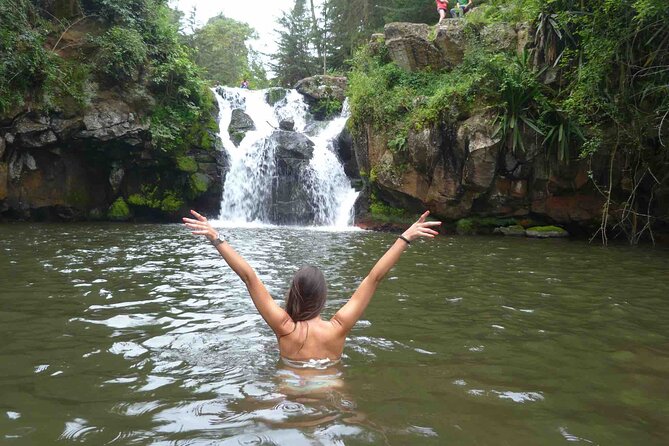
- Ndoro Waterfalls hike: Walk through lush greenery to a waterfall pool where swimming may be possible.
- Chagga underground caves: Hear how these caves were used during conflict and periods of danger.
- Traditional food and banana beer: Lunch is included, with a chance to sample Chagga culinary traditions and local spirits.
- Kilimanjaro foothill setting: Visit Marangu Gate at about 1,900 metres and look for views of Kilimanjaro.
- An active cultural day: Expect roughly four hours around the waterfall and four hours around Marangu’s cultural sites.
Why Marangu makes a strong day trip from Arusha
Marangu sits on the lower slopes of Kilimanjaro and is closely associated with the Chagga people. It is also the starting point for climbs using the Marangu Route, so the morning begins at Marangu Gate, at about 1,900 metres.
That opening stop gives you useful mountain context. You are not climbing Kilimanjaro, but you can see where one of its principal trekking routes begins and get a sense of the mountain’s importance to the area. The itinerary also allows time for photographs, though clear views of Kilimanjaro depend on weather and cloud.
The appeal here is variety. In one day, you move from mountain scenery to coffee production, from a forest walk to oral history, and from a museum visit to a local meal. I would choose this over a simple waterfall outing if you want the place to make sense, not just look pretty.
The tour begins at 8:00 a.m. and ends back at the meeting point. Pickup is available on request, but the published meeting location is Arusha, Tanzania. Confirm the pickup plan before booking, especially if your hotel is outside Arusha.
More History Tours in Arusha
- Arusha Guided Walking City Tour, Culture, Lifestyle & History
★ 5.0 · 150 reviews - Materuni Waterfalls & Coffee making Cultural Tour | BURIGI CHATO SAFARIS LTD
★ 5.0 · 15 reviews - Arusha: City Walking Tour Historic and Modern Highlights
★ 4.5 · 12 reviews
The walk to Ndoro Waterfalls
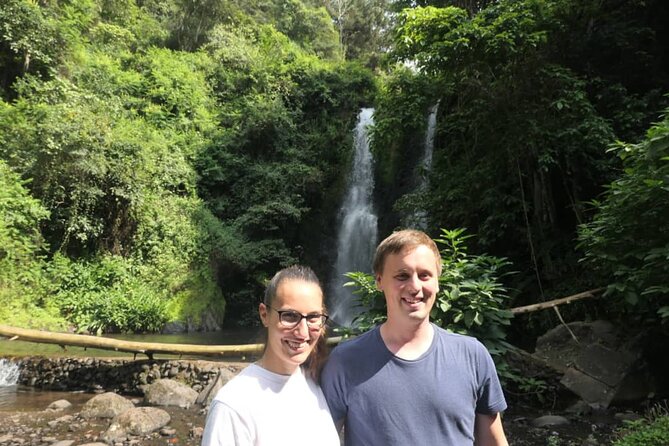
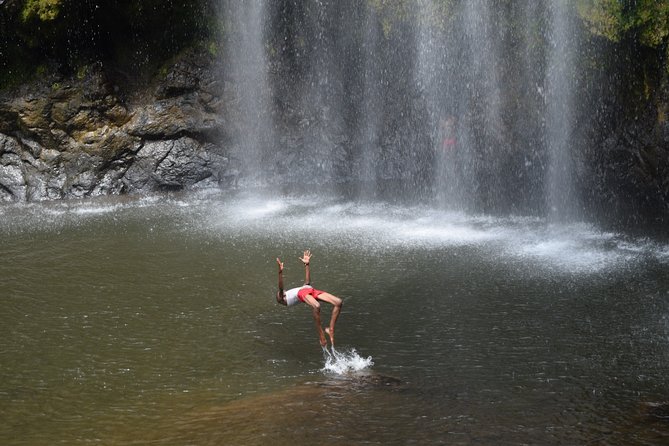
The waterfall section is the most active part of the day. You walk through green surroundings toward Ndoro Waterfalls, with the guide explaining local plants and the Chagga area along the way.
The hike is part of the experience, not just a transfer to a photo stop. Accounts of the outing describe enjoyable uphill walking, views toward the village and Moshi, and a sense of height around the falls. You may see plants used for practical purposes, including vegetation that marks boundaries between plots of land.
At the waterfall, you can take photographs and, if conditions allow, enter the pool for a swim. The water can be very cold, so bring a towel and wear clothing that dries reasonably fast. Swimming is optional, and you should follow the guide’s advice around the rocks and the top of the falls.
Safety deserves attention here. The water may be suitable for swimming, but the edge and upper sections can be dangerous. Do not climb toward an unprotected drop for a better photograph. Wet rock, steep ground, and strong water make this a place where caution matters more than getting close.
Wear sturdy shoes with a good grip. Sandals may be fine for a short village visit, but they are not the best choice for a forest hike. The tour is described as suitable for most people, though anyone with mobility concerns should ask about the walking conditions before paying.
The waterfall section is scheduled for about four hours, although that block also includes the drive and nearby activities. You should not read the timing as four continuous hours of hiking. The exact walking time is not specified, so ask the operator if you need a precise distance or elevation profile.
Making coffee on a small Marangu farm
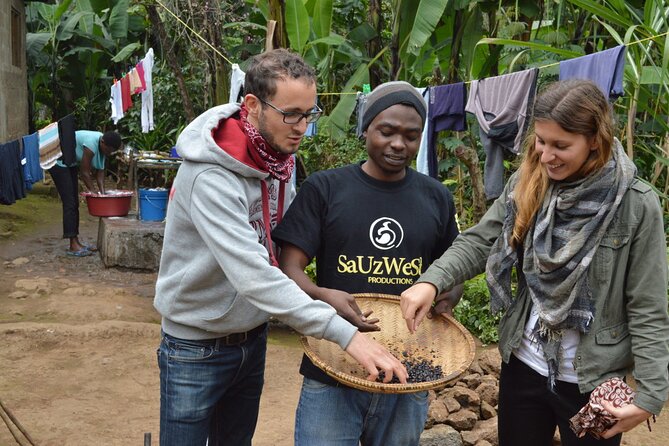
The coffee visit gives the day its most useful hands-on element. Instead of simply buying a cup, you learn how coffee is grown, harvested, and processed locally.
You can take part in processing the beans, roasting them, and preparing a fresh cup. That sequence helps you understand the work behind a drink that is often treated as a quick breakfast item. It also gives you a natural reason to talk with the people who produce it.
Coffee is closely tied to the lower slopes of Kilimanjaro, and Marangu’s farming setting gives the lesson a real sense of place. You see the crop in its local setting, then follow it through several steps before drinking it.
I would not book this expecting a formal coffee-school workshop. The details provided describe a small farm and practical participation, but not a technical tasting session, a specific coffee variety, or a guaranteed amount of coffee to take home. Think of it as a cultural farm visit with a cup at the end.
The coffee stop is also a good pause between the walking sections. After the waterfall, you have time to sit, work with the beans, and enjoy the result before moving on to the caves and museum.
Entering the Chagga underground caves
The caves are the most historically serious stop. They were built as part of the Chagga response to attacks from Maasai groups who moved up the lower slopes during drought in search of food and water.
The guide explains how the caves functioned during conflict, including their role as places of escape and defense. This is not a light museum anecdote. It deals with violence, displacement, and the ways local communities adapted to danger.
Expect the cave visit to be more atmospheric than polished. You are there to understand how people used the underground network, not to see a grand architectural site. A guide who can tell the story clearly makes a major difference, since the meaning of the caves is tied to events and local memory.
Bring shoes suitable for uneven ground. The provided details do not specify lighting, steps, or the exact cave conditions, so ask before departure if enclosed spaces or difficult footing are a concern.
The cave visit works best when you listen closely rather than rush through it. It adds depth to the rest of the day: the coffee farm and waterfall show how people live with the mountain today, while the caves show how earlier generations protected themselves in a difficult period.
More Kilimanjaro routes:
- 8-Day Small-group Lemosho Kilimanjaro Summit Trekking
★ 5.0 · 186 reviews - 7-Day Machame Kilimanjaro Summit Tour from Arusha
★ 5.0 · 125 reviews - Private Full Day Hiking Experience to Marangu Route
★ 5.0 · 61 reviews - From Arusha/Moshi: Kilimanjaro Hike Marangu Route Day Trip
★ 4.5 · 54 reviews
Meeting Chagga traditions at the live museum
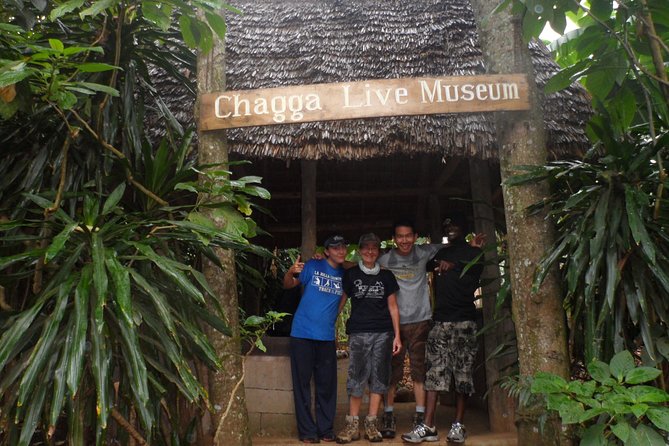
The Chagga Live Museum is a small outdoor museum focused on traditional Chagga life. It provides a more visible and practical setting than the underground caves, with attention to homes, customs, food, and everyday traditions.
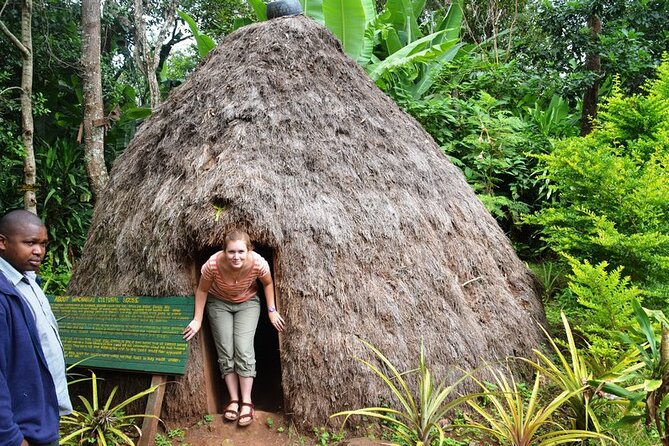
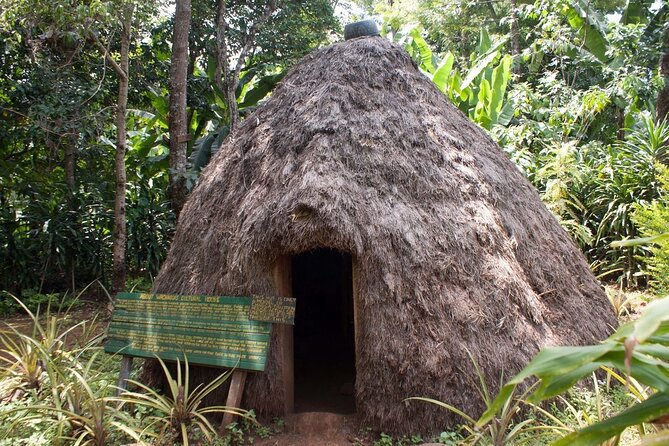
You may see traditional houses with straw roofing and learn how people used local plants and materials. The visit is designed to explain Chagga life rather than present a large collection of objects. That makes the guide’s storytelling important.
This stop is also where the cultural side of the tour becomes more personal. The program may include introductions to local people and a look at how traditional foods and drinks fit into village life. The supplied experiences describe meals served by a local family and opportunities to taste banana beer, a local brew.
Keep an open mind about the food. The meal is included and is described as a traditional hot lunch, but the exact menu is not fixed in the information provided. You might find familiar staples alongside dishes you have not tried before. This is a chance to eat what the area offers, not to order from a standard tourist menu.
Banana beer is part of the cultural tasting. It is a local alcoholic drink, so sample it only if you want to and if it fits your health needs. You may also hear it referred to as a local brew or spirit during the day.
How the eight-hour schedule works
The advertised duration is about eight hours, with an 8:00 a.m. start and a return to the meeting point in Arusha. The itinerary divides the day into two broad blocks of about four hours each.
The first block includes the drive toward Marangu Gate, photographs around the Kilimanjaro route entrance, the coffee farm, and the Ndoro Waterfalls visit. The second covers the Chagga caves, the live museum, and lunch.
That is a full day, and driving time is part of it. The program is best suited to someone who wants several connected experiences rather than long, unhurried time at one site. If you prefer a slow morning or dislike changing activities, this may feel busy.
The group limit is listed as 200 people, which is a very large maximum even if the actual group is smaller. Ask about the expected group size when booking. A small group would be better for the cave explanation, coffee preparation, and village interactions. A large group could mean more waiting and less direct contact.
Hotel pickup can be arranged on request. Since pickup is not automatically described for every booking, settle the meeting point and transport details in advance. The activity ends where it begins.
What the $150 price includes
At $150 per person, this is not the cheapest way to see a waterfall. Its value depends on how much use you make of the cultural program.
The price includes lunch, entrance fees and taxes, crew wages, and a first-aid kit. That is useful because the day includes several stops rather than one standalone attraction. You are paying for transport and guiding as well as access, though the supplied details do not spell out every transport arrangement.
The meal adds real value. Buying lunch separately would be simple, but an included traditional meal gives you a direct connection to the Chagga food experience. The coffee lesson also makes the price more worthwhile than a standard sightseeing transfer.
Several costs are not included. Flights, visas, tips, hotel costs, and additional park fees are excluded. The wording around additional park fees is worth clarifying before departure, especially because the tour visits the Kilimanjaro area. Ask the operator exactly which entrance charges are covered and whether any extra local fee could arise.
Tipping the crew is optional but not included. Carry some local currency if you plan to tip, though the information supplied does not set an expected amount.
The tour has a five out of five rating from 12 recorded ratings, with 100 percent recommending it. That is encouraging, but the sample is small. I would treat it as a sign that the basic mix of waterfall, coffee, food, and Chagga culture works well, not as a guarantee that every guide or departure will be identical.
Who should book this Marangu experience
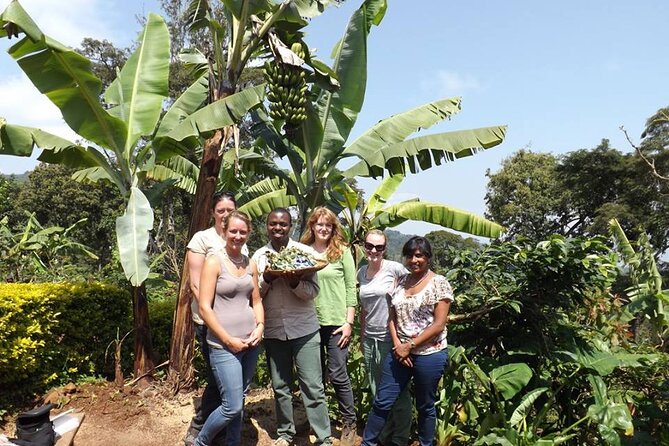
I would recommend this day to you if you are staying in Arusha or near Kilimanjaro and want a cultural outing with some walking. It suits first-time visitors who want an introduction to the Chagga people without committing to a multi-day trek.
It is also a good fit after a safari, provided you still have energy for an eight-hour day. The coffee farm and food stop give the outing a relaxed side, while the waterfall and cave provide movement and variety.
Families and mixed-age groups may enjoy the range of activities, but the walking and cave conditions should be checked for anyone with limited mobility. Most people can participate, according to the supplied activity information, but that does not replace a personal assessment of the hike.
I would be less likely to choose it if your main goal is a quiet mountain day, serious coffee tasting, or a long swim. The schedule covers many subjects, and each stop receives only part of the day. It is a broad introduction, not a specialist tour.
The experience is also a good choice if you want local food and ordinary village life included in your sightseeing. The family-style meal, banana beer, plant explanations, and traditional homes give the day more texture than a quick photo stop.
Practical preparation for the day
Bring walking shoes, water, sun protection, and a light change of clothes if you may swim. A towel is sensible because the waterfall pool can be cold and wet rocks are part of the setting.
Keep your camera ready around Marangu Gate and the waterfall, but do not let photography distract you from footing near the falls. Clear Kilimanjaro views are possible but not guaranteed.
Ask in advance about pickup, group size, the exact walking conditions, and any additional park charges. Confirmation is provided at booking, and most people can take part, but these questions will help you match the day to your own needs.
Cancellation is free if you cancel at least 24 hours before the 8:00 a.m. start. Cancellations or changes made within 24 hours are not refunded or accepted, based on local time.
Should you book it?
Book this tour if you want one well-filled day that links Ndoro Waterfalls, coffee making, Chagga caves, traditional food, and Kilimanjaro foothill scenery. Its strongest feature is the mix. You are not only looking at the area; you are walking, tasting, listening, and taking part.
The main question is pace. At $150, the tour makes sense when you value lunch, access fees, transport, guiding, and several cultural stops together. If you want only a waterfall or only a coffee farm, a narrower activity may offer better value.
For an introduction to Marangu and Chagga culture, I would book it, but I would confirm pickup, group size, and extra fees first. Pack for both a hike and a meal with local people, and leave room in the schedule for the day to run at its natural pace.
FAQ
Where does the tour start and finish?
The tour starts in Arusha, Tanzania, at 8:00 a.m., and ends back at the meeting point.
Is hotel pickup available?
Hotel pickup is available upon request. Confirm the pickup arrangement when booking because the published meeting point is in Arusha.
How long does the tour last?
The experience lasts approximately eight hours. The day begins at 8:00 a.m.
Is lunch included?
Yes. A traditional hot meal is included in the tour price.
Can I swim at the waterfall?
The waterfall has a pool where swimming may be possible. The water can be very cold, and you should take care around rocks, the waterfall edge, and the upper sections.
What happens if I cancel?
You receive a full refund if you cancel at least 24 hours before the start time. Cancellations or changes made less than 24 hours before the start are not refunded or accepted.
More coffee stops in Arusha
- Materuni Waterfalls, coffee tour & Kikuletwa Hot Springs
★ 5.0 · 643 reviews - Materuni waterfalls coffee tour & Chemka hot springs Day trip
★ 5.0 · 131 reviews - Maasai village visit, Materuni waterfalls & coffee experience
★ 4.5 · 95 reviews - Materuni Waterfalls & Coffee Tour from Moshi
★ 5.0 · 92 reviews
Newly listed around Arusha
- 5-Day Private Safari Tour in Tanzania’s Wildlife★ 5.0 · 3 reviews
- 3 Days private safari Tarangire ,Ngorongroro crater &Manyara★ 5.0 · 3 reviews
- 3 Day Sharing Safari – Manyara, Ngorongoro Crater and Tarangire National Parks★ 5.0 · 3 reviews
- Tarangire National Park Day Trip★ 5.0 · 3 reviews
- 2 Days Tarangire and Ngorongoro Crater Tour★ 5.0 · 3 reviews
- 6 -Day Tarangire, Manyara, Serengeti & Ngorongoro★ 5.0 · 3 reviews
- 5 Days Group Camping Safari★ 4.7 · 3 reviews
- 4 Days Tanzania Safari★ 4.5 · 3 reviews
Kilimanjaro Climbs, compared.
Browse the lists this tour appears in