
Reviewed · SPICE FARM TOURS
Zanzibar: Spice Farm Tour with Traditional Cooking Class
Zanzibar’s spices make the best part of this outing more than a quick sniff at a market stall. At Jambo Spice Farm Dole, you can touch cinnamon, taste fresh ginger, smell cloves, and gather ingredients before cooking a Swahili meal with local cooks. I like the hands-on harvest and the generous spread of tropical fruit, especially when a family trip includes young children.
I also like the simple route from Stone Town, with hotel pickup, a guide, lunch, drinks, and cooking equipment included in the $61 price. The main drawback is that the farm can feel like a large tourist garden rather than a working plantation, and repeated requests for tips may sour an otherwise warm experience.
Key points to know before booking
- Taste spices at the plant: See and smell cinnamon, vanilla, nutmeg, cloves, ginger, pepper, lemongrass, and more.
- Cook what you collect: Harvest vegetables and spices, then prepare a traditional Swahili meal with local cooks.
- Plan for two hours in the van: The journey from Stone Town takes about one hour each way.
- Fresh fruit is part of the meal: Expect mango, papaya, pineapple, bananas, passion fruit, avocado, and local grapefruit.
- Private does not always mean quiet: The booking is for a private group, but the farm may have several groups on its paths.
- Carry small local notes for tips: Service charges are not listed, yet several people may ask for tips along the way.
The one-hour ride from Stone Town
The tour begins with pickup at your Stone Town hotel. A representative meets you in the lobby or reception area, then drives you south toward Jambo Spice Farm Dole. The drive takes about one hour each way, so transport uses a good portion of the five-hour outing.
That timing matters. You get roughly three hours at the farm for walking, tasting, cooking, and lunch. If you are staying in Stone Town and want a straightforward half-day outside the old city, the drive is reasonable. If you are looking for a full agricultural day with long talks in the fields, this schedule may feel short.
The vehicle transfer is one of the useful parts of the package. You do not need to arrange a separate taxi, bargain with a driver, or figure out how to reach a farm outside town. Pickup and drop-off are available at hotels in Zanzibar, but give the operator your hotel name and room number when booking so the meeting point is clear.
The tour is described as a private group experience. That suits couples and families who want to move at their own pace. Still, the farm itself may not feel private. One account describes several groups sharing the paths, which can make the walk feel organized for tourism rather than like a quiet visit to a rural farm.
More Cooking Classes in Zanzibar
- Zanzibar Cooking Class & Spice Tour
★ 4.5 · 77 reviews - Zanzibar: Spice Farm Tour with Traditional Cooking Lesson
★ 4.8 · 77 reviews - Half-Day Kuza Cave Swimming Adventure and Cooking Class
★ 4.5 · 44 reviews
At Jambo Spice Farm Dole, follow your nose
The walking tour is the heart of the first half. Your guide introduces the plants one by one, explaining where the spices come from and how people use them in Zanzibar cooking and traditional medicine.
You may taste and smell cinnamon, vanilla, nutmeg, lemongrass, cloves, ylang-ylang, cumin, ginger, pepper, tamarind, and chili. The point is not just to see dried packets in a shop. You get to connect the finished spice to the plant itself, which makes the later cooking class easier to understand.
A good feature of the tour is the guide’s use of questions. Rather than naming every plant at once, the guide may ask you to guess the spice from its scent or appearance. That small game works well for children and keeps the walk from turning into a long botanical lecture.
The experience also includes tropical fruit tasting. Depending on what is available, you may sample mangoes, passion fruit, avocado, papaya, local grapefruit, bananas, and pineapple. This is a pleasant change of pace from the spice stops, and it gives you a sense of Zanzibar’s produce beyond the seasonings most visitors associate with the island.
The farm’s scale is worth understanding before you book. You may find a big garden with winding paths, many plants, and clearly arranged stops rather than a broad commercial plantation. That does not make the tour useless, but it changes the experience. Think of it as an accessible introduction to Zanzibar’s spices, designed for a short visit, not a working farm study.
There is also time to buy spices and fruit. Shopping is optional, but the tour’s stops may guide you toward purchases. If you want gifts for home, the chance to buy directly at the farm is convenient. Ask about prices before committing, and remember that the $61 activity price does not mean you must buy anything extra.
Harvesting ingredients for the cooking class
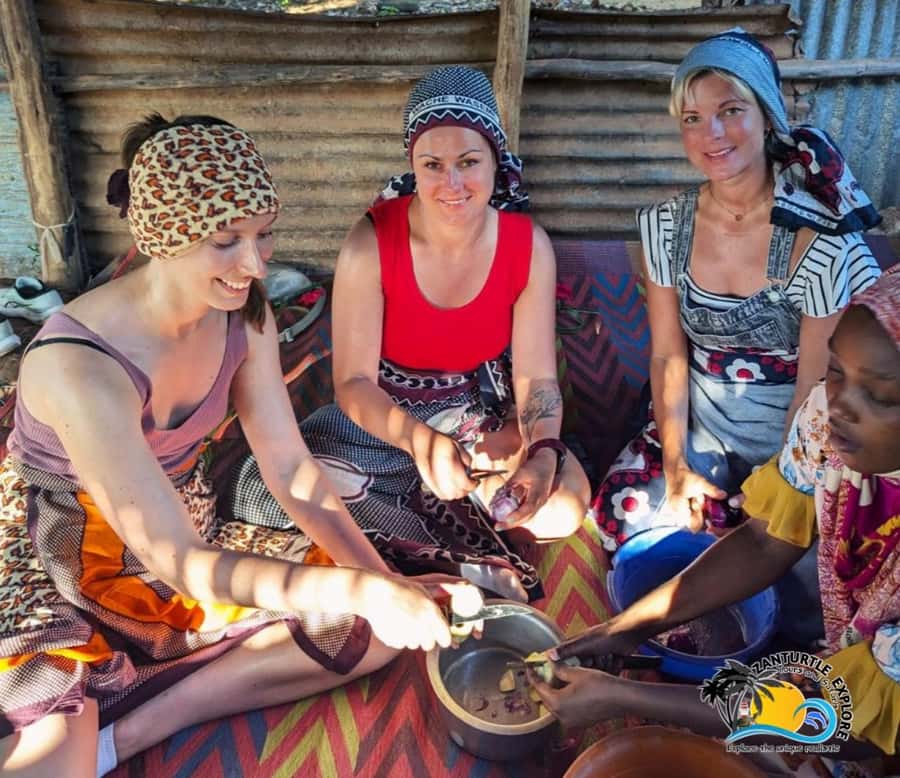
After the walking tour, you help collect vegetables and spices for the meal. This step gives the class a clear connection to the farm. You are not simply watching a cook prepare lunch from ingredients brought in earlier. You take part in gathering some of what will be used.
Wear shoes that can handle uneven paths and clothing that will not bother you in a warm cooking area. A hat, sunscreen, drinking water, and insect repellent are sensible. The activity asks you to participate, so this is not the best choice if you want a purely passive food demonstration.
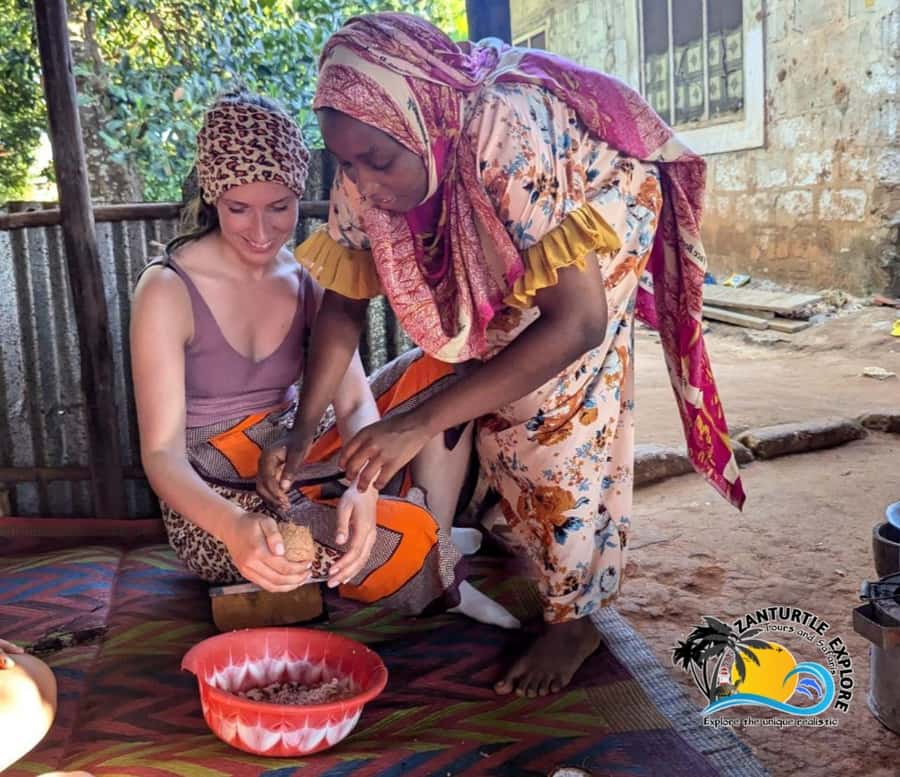
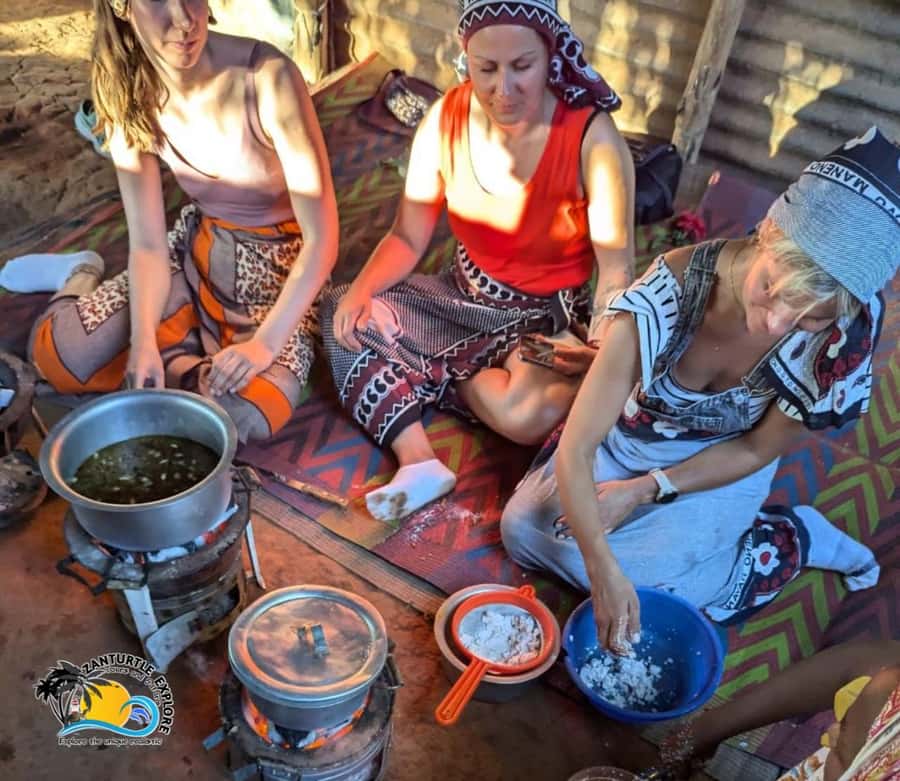
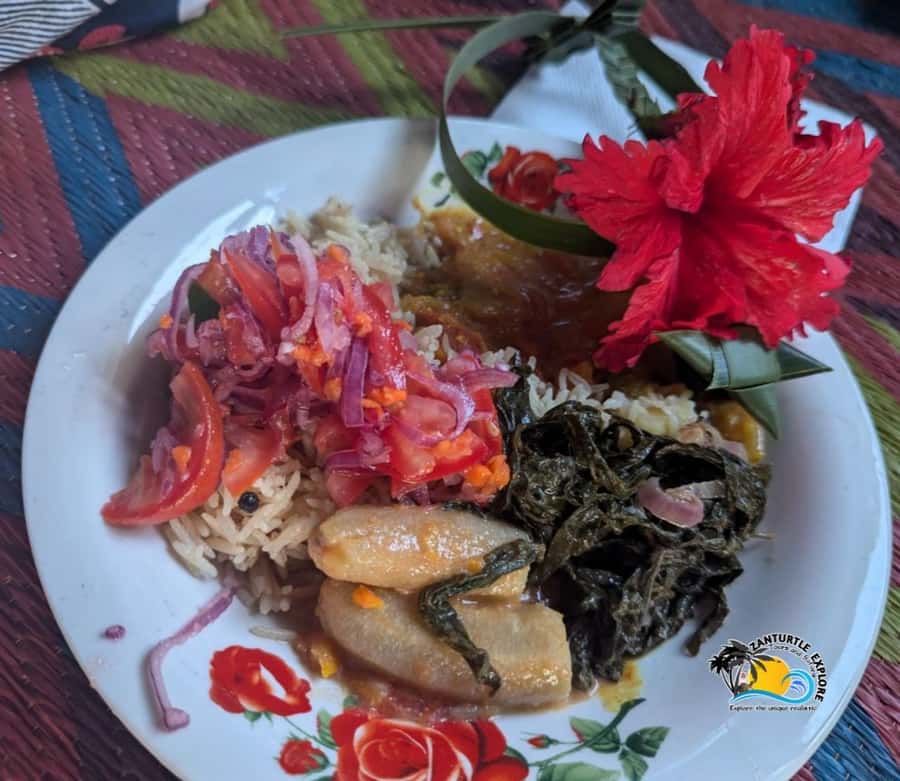
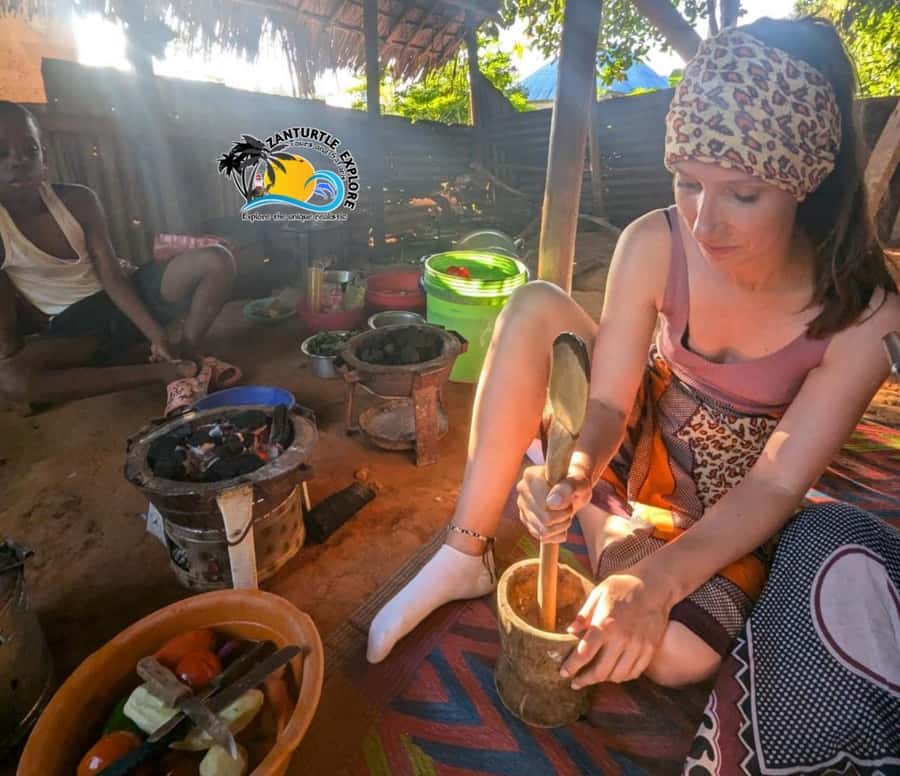
The cooking class uses traditional equipment and older cooking methods modeled on the way food was prepared along Zanzibar’s coast in earlier generations. The exact menu is not specified, so you should expect a local Swahili meal rather than one fixed dish promised in advance.
That flexibility can be a plus. The food reflects what the cooks have available, and the meal has a stronger sense of place than a standard restaurant lunch. It also means you should not book this expecting a precise recipe list or a formal culinary school lesson.
Why the cooking class is the strongest part
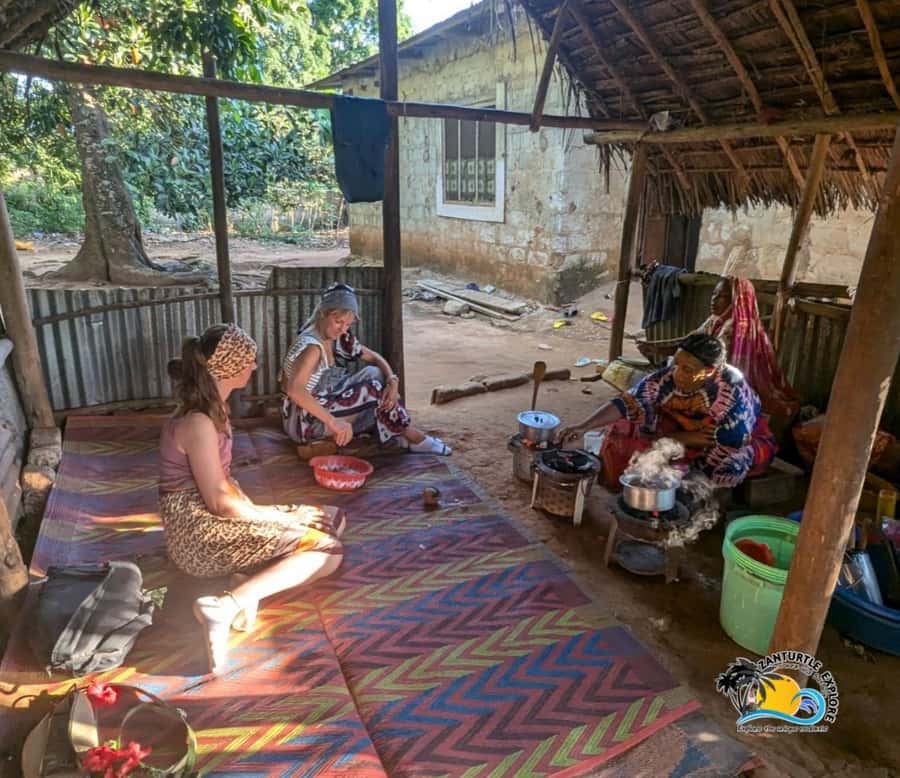
The class is where the tour becomes personal. Local cooks guide you through the preparation, and you eat the meal afterward. One cook named Aïcha received particular praise for cooking with visitors and sharing lunch, while another family found that their three-year-old child was welcomed into the kitchen and included by the local women.
That family-friendly quality is important. A child may not follow every explanation about spice origins, but smelling plants, collecting vegetables, and helping in the kitchen gives the day a clear rhythm. Adults get a practical look at Swahili food, and children get something to do with their hands.
The food itself is repeatedly described as tasty, and lunch, drinks, and tropical fruit are included. I would consider that a real part of the value. You are not paying $61 for transportation and a short walk, then buying lunch separately. The meal turns the visit into a complete half-day outing.
Still, the social side of the class can vary. One account described the women demonstrating the dishes without showing much interest in conversation. If you want a lively, back-and-forth lesson, the interaction may feel limited at times. A private group can also reduce the chance of meeting other people, although it gives you more control over your own party.
The best approach is to treat this as a participatory local meal, not a professional chef course. You will learn traditional techniques, handle ingredients, and cook with guidance. You probably will not receive the polished instruction, printed recipes, or kitchen setup found in a dedicated cooking school.
More spice farm mornings:
- Zanzibar: Stone Town, Spice Tour, Prison Island with Lunch
★ 4.4 · 1,219 reviews - Zanzibar: Prison Island, Stone Town, & Spice Farm Tour
★ 4.5 · 579 reviews - Zanzibar: Stone Town, Spice tour & Prison Island with Lunch
★ 4.6 · 453 reviews - Full-Day Private Stone Town +Spice Farm and Prison Island Tour
★ 4.5 · 216 reviews
Music, decorations, and the pressure to tip
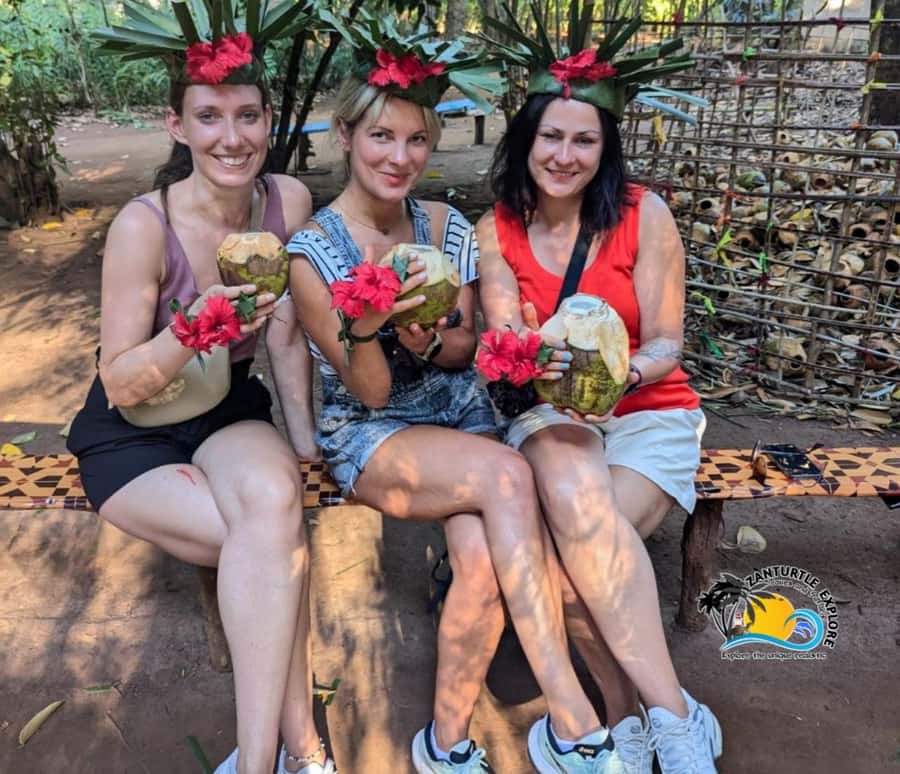
Traditional music and dance are included, adding a cultural performance to the farm visit. You may also see handmade decorations made from leaves. These touches can be fun, especially for children and for anyone who wants more than a plant identification walk.
The practical issue is tipping. Several parts of the visit may involve a request for money: a person who climbs a tree to provide a coconut, the assistant, the cooks, the driver, and people making leaf decorations. You may also hear encouragement to buy items or give money to local children and women.
Some people find these requests manageable and tip modestly. One person described using Tanzanian shillings, giving small amounts to several people and about 10,000 shillings in total. Others found the repeated expectations uncomfortable, particularly because the tour already has a set price.
I would bring small local notes if you plan to tip, but decide your limit before the tour begins. A polite no is enough when you do not want an extra service or purchase. You do not need to accept a coconut, decoration, or other add-on simply because it is offered.
This is not a reason for everyone to avoid the experience, but it is a genuine part of the decision. If you prefer a tightly priced activity with no extra selling, this may frustrate you. If you are comfortable with informal tipping and village commerce, it may be easier to take in stride.
Toilets and other unglamorous details
The toilet facilities have been described as poor. That is a small point on paper, but it matters during a five-hour activity that includes a one-hour drive in each direction. Use the facilities before leaving your hotel and keep your expectations modest at the farm.
The activity involves walking, outdoor stops, harvesting, and cooking. Comfortable shoes are more useful than stylish ones, and clothes should suit both walking and food preparation. A camera is recommended, but protect it from dust and keep sunscreen and water close at hand.
The tour offers live guiding in Arabic, English, French, German, Italian, Polish, Russian, and Spanish. If language matters to you, state your preference when you reserve. A guide who can explain unfamiliar plants clearly will make a major difference, particularly during the smell-and-guess portion of the walk.
What the $61 price really covers
At $61 per person, the price is fair if you use most of what is included. You receive hotel transportation, a trained guide, entrance and conservation fees, the spice walk, harvesting, cooking equipment, lunch, drinks, tropical fruit, and the cultural music and dance portion.
The value is strongest for visitors who want several activities combined in one outing. Arranging a ride, a farm visit, a food class, and lunch separately could take more time and require extra bargaining. Here, the day has one booking and one pickup plan.
The value is weaker if your main goal is a large-scale plantation visit. The farm may feel more like a compact tourist garden, and two hours of driving is a sizable share of a five-hour schedule. You are paying for the complete experience, not simply access to acres of farmland.
Budget for possible purchases and tips. International flights, visa costs, airport taxes, and personal spending are not included. The tour allows free cancellation up to 24 hours before departure and offers reserve-now, pay-later booking, which helps if your Zanzibar plans are still shifting.
Who will enjoy this half-day outing
I would recommend the tour to you if you want a gentle introduction to Zanzibar food and plants, especially if you are staying in Stone Town and prefer an organized transfer. Couples can enjoy the tasting and cooking, while families may appreciate the active format and the way children can take part.
It also suits anyone who wants a local meal with context. You learn why spices matter in Zanzibar cooking, see how ingredients are grown, and use some of them at lunch. That connection is more rewarding than buying a packet of cloves with no idea how the plant looks.
You may want another option if you dislike shopping stops, tip requests, or facilities that are basic. It is also not ideal for someone seeking a quiet agricultural visit, since the paths can be shared with other groups and the farm is arranged around a short tourism program.
Should you book the Jambo Spice Farm cooking class?

Book it if you want the cooking class and lunch to be the main event, with a spice walk and fruit tasting around them. The food, welcoming family participation, easy hotel transfer, and broad range of spices give the $61 price solid value.
Go in with realistic expectations. This is a tourist-friendly farm visit, not a remote plantation or a formal culinary course. Prepare for a modest toilet, possible tip requests, and a farm that may feel small for its name.
If those limits are acceptable, this is a useful way to spend half a day in Zanzibar. I would especially choose it for families, first-time visitors, and anyone who wants to understand Swahili food by helping make it rather than only eating it.
FAQ
How long does the Zanzibar spice farm and cooking tour last?
The activity lasts five hours. The van journey from Stone Town to Jambo Spice Farm Dole takes about one hour each way.
Is hotel pickup included?
Yes. Pickup and drop-off are included, with service available from hotels in Zanzibar. You should provide the hotel name and room number, and meet the representative in the hotel lobby or reception area.
What spices can I see and taste?
The tour may include cinnamon, vanilla, nutmeg, lemongrass, cloves, ylang-ylang, cumin, ginger, pepper, tamarind, chili, and other spices. The guide explains their culinary and medicinal uses.
Is lunch included in the price?
Yes. Lunch, drinks, and tropical fruits are included. You help harvest some vegetables and spices, prepare a traditional Swahili meal, and eat the food you make.
What languages are available for the guide?
Guiding is available in Arabic, English, French, German, Italian, Polish, Russian, and Spanish.
What should I bring?
Bring comfortable shoes, a hat, sunscreen, water, insect repellent, and a camera. Wear clothing suitable for walking and cooking, and be ready to participate in harvesting and food preparation.
More workshops and classes in Zanzibar
- Traditional Zanzibar Cooking Class including Spice Tour
★ 4.5 · 14 reviews - Mnemba Dolphin Tour, Clear Kayak, Cooking Class, Horse Riding
★ 4.5 · 14 reviews - A private half day spice farm with a cooking lesson
★ 5.0 · 13 reviews - Full-Day Private Tour in Zanzibar with Cooking Class
★ 5.0 · 11 reviews
More farm visits in Zanzibar
- Zanzibar: Stone Town & Spice Farm Tour with Lunch
★ 4.5 · 97 reviews - Zanzibar:Stone Town & Spice Farm Private Tour Lunch Included
★ 4.2 · 94 reviews - Zanzibar full day Jozani forest + Spice farm and stone town
★ 4.7 · 90 reviews - Zanzibar: Spice Farm & Stone Town Tour with Lunch
★ 4.5 · 80 reviews
Newly listed around Zanzibar
- Zanzibar: Nungwi/Kendwa Beach Sunset Dhow Cruise with Fruits★ 3.4 · 3 reviews
- Prison Island, Sea Turtles, Rock Restaurant & Relax in Beach★ 4.6 · 3 reviews
- Starfish Beach; The Rock; Kuza Cave; Paje Beach; Salaam Cave Tour★ 4.5 · 3 reviews
- Zanzibar: Half-Day Spice Farm Tour,the flavours of Zanzibar★ 4.7 · 3 reviews
- Joazani forest & Spice farm with lunch★ 5.0 · 3 reviews
- Nakupenda Island Snorkeling Sea trip & Lunch W/Transfer -Zanzibar★ 4.0 · 3 reviews
- Mnemba Island Snorkeling and Dolphin tour★ 5.0 · 3 reviews
- Zanzibar:Jozani forest, Spice farm with Swahili Cuisine clas★ 4.2 · 3 reviews
Spice Farm Tours, compared.



Full-Day Private Stone Town +Spice Farm and Prison Island Tour
Read our review →
The Swahili Spice Experience – Spice Tour + Culinary Journey
Read our review →Browse the lists this tour appears in