
Reviewed · KILIMANJARO CLIMBS
Rongai Route 7 Days
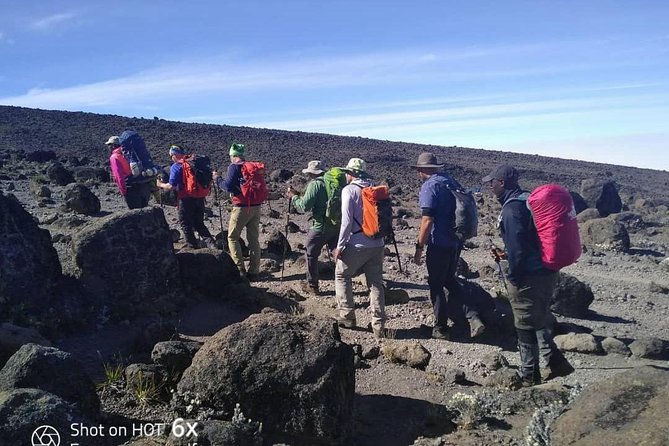
The Rongai Route gives you a different Kilimanjaro experience from the start. You approach Africa’s highest mountain from the north, near Kenya, where the trail is quieter and the early climb is gradual. The route passes through farmland, pine forest, moorland, and the stark saddle between Mawenzi and Kibo before the summit push.
I like the low-crowd feel and the steady acclimatization schedule, especially the rest period at Mawenzi Tarn. I also like that the route is well suited to climbers with less backpacking experience. The main drawback is the summit day: up to 15 hours on foot, followed by another long descent the same day.
Key points to know before booking
- Northern approach: Rongai is Kilimanjaro’s only route from the Kenyan side, giving you a quieter starting point and a different view of the mountain.
- Gradual early climb: The first days build height steadily, which can be easier on your body than a sharper ascent.
- Mawenzi Tarn rest stop: Day four includes time to rest or explore at 4,310 meters, a useful pause before the high camps.
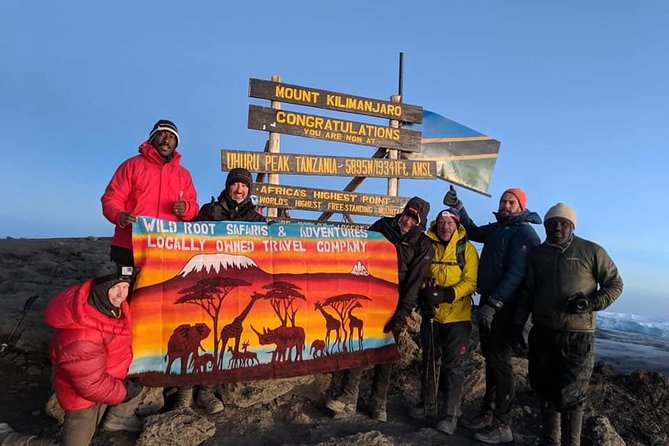
- Uhuru Peak summit: You aim for Kilimanjaro’s highest point at 5,895 meters, beginning the final climb around midnight.
- Camping support: A chef, porters, mountain guides, mess tents, private four-season sleeping tents, meals, and key transfers are included.
- Private departure: Only your group takes part, so the pace and daily routine are handled within your party.
Why the Rongai Route feels different
Rongai is the route to consider if you want Kilimanjaro with fewer people around you. It begins near Nale Moru, close to the Kenyan border, rather than on the busy southern side. The trail spends much of its time in genuine wilderness, although the scenery changes less dramatically than on some western routes.
The northern side receives less rain than the southern slopes. That makes Rongai especially appealing during wetter periods, though no mountain route is guaranteed dry. The lower crowds also give the walk a more remote character. You are not simply following a parade of climbers uphill.
The route is rated moderately difficult. That does not mean easy. You still reach 5,895 meters, where altitude is the central challenge, and the final climb is long, cold, and tiring. What makes Rongai friendlier is its gradual gain in height during the first several days and the time built in near Mawenzi for acclimatization.
The descent uses the Marangu Route. That means you go up one side of the mountain and come down another, rather than retracing the same trail. It also lets you experience a different set of vegetation zones before leaving the park.
More Kilimanjaro routes:
- Kilimanjaro climb by Lemosho Route (7-day)
★ 5.0 · 651 reviews - Kilimanjaro climb, Machame Route (7-day)
★ 5.0 · 262 reviews - Kilimanjaro Climbing Lemosho Route 8 Days.
★ 5.0 · 186 reviews
Day one: Nale Moru Gate to Simba Camp
The morning begins with a drive from the Moshi area to Nale Moru village and the trailhead at about 1,990 meters. The first 8 kilometers take roughly four to five hours, ending at Simba Camp at 2,625 meters.
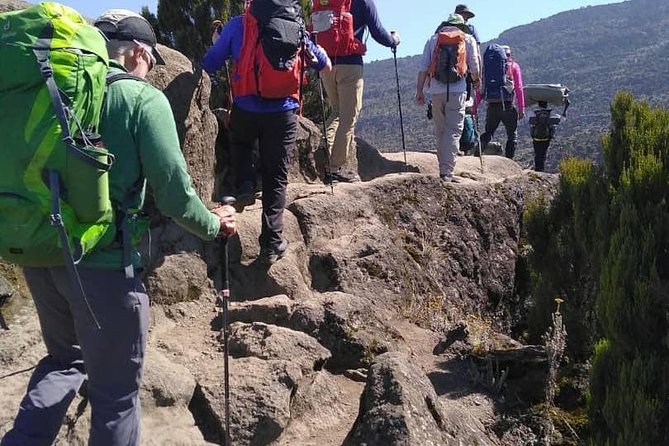
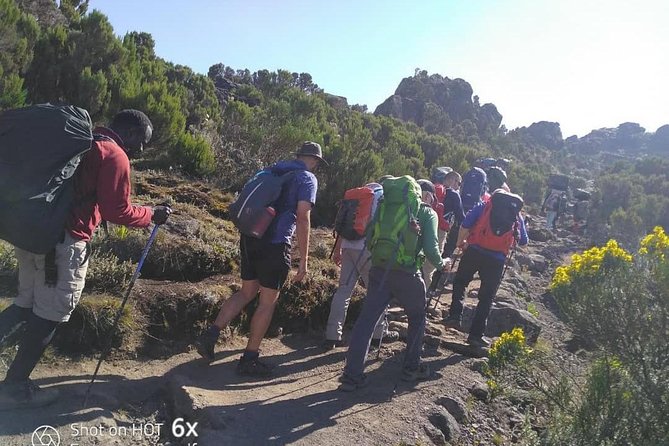
This is a gentle introduction to the mountain. The trail passes farmland and pine forest, so the day feels more like a rural walk than a high-altitude expedition. You might see colobus monkeys, and the route description also notes the possibility of elephants or buffalo in the area.
Simba Camp sits at the edge of the moorland zone. That change in vegetation matters: from here, the mountain begins to feel more open and exposed. You receive breakfast, lunch, and dinner, with the camping operation handling the cooking and camp setup.
The first day is short enough to leave you with energy, but do not treat it as a race. A slow pace gives you time to settle into the rhythm of walking, eating, drinking, and resting.
Day two: Simba Camp to Second Cave Camp
Day two covers only 5 kilometers, with three to four hours of walking. The trail continues upward through moorland to Second Cave Camp at 3,480 meters.
The shorter distance is useful because the real goal is not to cover ground quickly. It is to gain height in a controlled way. You get broad views toward Kibo, the main volcanic cone, and its eastern ice fields near the crater rim.
This section can feel more barren than day one. You leave most signs of farmland behind and begin to see the mountain as a high-altitude environment rather than a forested peak. Keep your clothing flexible, since the day can begin cool and become warmer during the climb.
With another full breakfast, lunch, and dinner included, the practical side is simple. Your job is to walk steadily, drink regularly, and report any signs of altitude trouble to your guide.
Day three: Second Cave Camp to Kikelewa Camp
The third day moves from Second Cave Camp at 3,480 meters to Kikelewa Camp at 3,630 meters. The stated walking time is about three hours, though the schedule does not give a distance for this section.
The route continues across moorland, with views toward Kibo and its ice fields. The more interesting change comes when you leave the main trail and follow a smaller path toward Mawenzi, the jagged second volcanic cone of Kilimanjaro.
This turn gives Rongai some of its best character. You are no longer simply following the broad route toward Kibo. The path heads into a quieter part of the mountain, with Mawenzi’s rough peaks becoming the visual focus.
Because the height gain is modest, this is another day when patience helps. You may feel strong and want to push ahead, but altitude rewards restraint. Kikelewa Camp is a transition point before the route climbs sharply toward Mawenzi Tarn.
More week long trips in Moshi & Kilimanjaro:
- Climbing Kilimanjaro through 7 days Machame Route
★ 5.0 · 151 reviews - 7 Days Kilimanjaro via Machame route affordable price
★ 5.0 · 110 reviews - Private Kilimanjaro Hike 7 Day Lemosho Route
★ 5.0 · 60 reviews - 7-Day Magical Tanzania Safari -Premium High End Package
★ 5.0 · 53 reviews
Day four: Kikelewa Camp to Mawenzi Tarn Hut
Day four covers 8 kilometers in about four to five hours, rising from 3,630 meters to Mawenzi Tarn Hut at 4,310 meters. The climb is short in distance but noticeably steeper, running up grassy slopes toward the dramatic cliffs of Mawenzi.
The reward is a wide view toward the Kenyan plains. It is one of the route’s most memorable changes in perspective, with the lower country far below and Mawenzi’s broken rock walls close at hand.
Vegetation fades shortly before camp. At 4,310 meters, the air is thinner and the surroundings feel much more severe. You have an afternoon to rest or explore nearby, and that free time is an important part of the schedule rather than wasted time.
I particularly value this pause. It gives your body a chance to adjust before the next two high camps. Do not feel pressured to turn the afternoon into another hike. Rest, eat, and follow your guide’s advice. The next stages require reserves.
Day five: Mawenzi Tarn to Kibo Hut
The fifth day leads across the saddle between Mawenzi and Kibo. You walk 8 kilometers in roughly five to six hours, climbing from 4,310 meters to Kibo Hut at 4,700 meters.
The saddle is a high, pale, open area with little vegetation. The setting can feel almost lunar, with Kibo ahead and the route to the summit camp visible across the wide space. This is one of Rongai’s strongest visual moments, but it is also a demanding place to walk because of the altitude and lack of shelter.
Once you reach Kibo Hut, the rest of the day is for eating, organizing your summit clothing, and sleeping as early as possible. The final ascent starts around midnight, so this is not a normal camping evening.
Bring your headlamp, warm layers, gloves, water, and any small personal items you need before turning in. The details matter more here because there is little room for leisurely preparation after midnight.
Day six: Kibo Hut to Uhuru Peak and Horombo Hut
This is the hardest and longest day. You leave Kibo Hut at 4,700 meters around midnight and climb toward Uhuru Peak at 5,895 meters. The total distance is 22 kilometers, and the full day can take 12 to 15 hours.
The first part rises slowly toward Hans Meyer Cave at about 5,220 meters. The route then continues toward Gillman’s Point at 5,681 meters, reached around sunrise if the pace and conditions allow.
Gillman’s Point is on the crater rim. From there, you continue for another one to two hours toward Uhuru Peak, Kilimanjaro’s highest point. The final stretch is not a quick photo stop. At this height, every step can feel slow, and cold or altitude symptoms may change your plans.
After reaching the summit, you return to Kibo Hut for a warm meal and a one to two hour break. Then you continue downhill to Horombo Hut at 3,700 meters. This second descent is why the day feels so long. You are not finished when you leave the summit.
Your guides are there to manage the pace and safety of the group, but you still need honest communication. If you feel unwell, say so early. A summit goal is important, but a safe return matters more.
Day seven: Horombo Hut to Marangu Gate
The final day covers about 20.8 kilometers in roughly eight hours. From Horombo Hut at 3,700 meters, you descend through the heath and moorland zones to Mandara Hut at about 2,700 meters.
A warm lunch is scheduled at Mandara, which gives you a useful break before the lower forest section. The trail then enters tropical rainforest, a striking change after the dry openness around Kibo and Mawenzi.
You finish at Marangu Gate at 1,860 meters. After saying goodbye to the mountain crew, a short transfer takes you back to your hotel in Arusha, where you can shower, rest, and celebrate.
The last day is downhill, but do not underestimate it. After the summit effort, 20.8 kilometers can be hard on tired knees and feet. Walking poles are not included, so renting or bringing them is worth considering if you normally use support on long descents.
What the $2,923 price includes
At $2,923.08 per person, this is a substantial trip, but the price covers more than a guided walk. You receive professional mountain guides, a chef, porters, their allowances, first and last accommodation, airport pickup and drop-off, meals, camp equipment, and private sleeping tents.
The camping setup includes quality mess tents with tables and chairs. Your sleeping tent is described as waterproof, four-season, and private for your group. Those details matter on a seven-day climb, because comfort at camp affects how well you recover each night.
Dinner is listed for all seven days, and the daily schedule also includes breakfast and lunch. Still, check the final booking details carefully, since the package description gives slightly different wording in its inclusions. Personal costs remain yours, including a Tanzania visa, sleeping bag, walking poles, laundry, telephone use, drinks, and gratuities.
The value is strongest if you want a supported climb rather than a self-equipped expedition. The porters and chef reduce the amount you need to carry and handle. If you already own all mountain equipment and prefer a leaner trip, the price may feel high. For a first major high-altitude trek, the included support can make the cost easier to justify.
Guides, camp life, and the private format
This is a private activity, so only your group participates. That can be a major advantage when people in the party have different walking speeds, provided everyone accepts that the guide’s safety decisions come first.
Wild Root Safaris and Adventures supplies professional, experienced mountain guides, a chef, and porters. Past company operations included trip planning by Mathew and a 2018 Kilimanjaro group led by Khoo Swee Chiow. Those names are useful points of contact, but you should confirm who will plan and lead your own departure before paying.
The supplied information highlights good food, helpful staff, careful organization, and attention to safety. That fits the needs of a long mountain trip. Ask for the guide-to-climber ratio, porter welfare policy, emergency procedures, and the exact hotel included before booking. These details are not provided here, but they are reasonable questions for any Kilimanjaro climb.
The starting time is 8:00 a.m. for the first day. Pickup is offered, and airport transfers are included. Confirmation is normally issued at booking, though bookings made within 12 hours of departure depend on availability.
Who should choose this climb?
I would point you toward Rongai if you want a quieter route, prefer a gradual beginning, or plan to climb during a wetter season. It is also a sensible choice if this is your first serious backpacking trip and you want porters, a chef, tents, and guides handling the camp work.
You still need a strong level of physical fitness. The daily distances are manageable on most days, but the summit day is not. The height, cold, darkness, and long return to Horombo make this a serious undertaking.
This route may be less appealing if your priority is the widest possible range of scenery. The western routes are described as more varied. Rongai trades some visual variety for solitude, wilderness, and the satisfaction of approaching from a less common side.
Cancellation is free if you cancel at least 24 hours before the local start time. Poor weather can lead to a new date or a full refund, while late cancellations and late changes are not accepted.
Is the seven-day Rongai Route worth booking?
Yes, if you want the quieter side of Kilimanjaro and value a measured climb over a crowded trail. The northern approach, Mawenzi Tarn rest period, private camping arrangement, and descent through Marangu give the trip a good sense of progression.
Book it only if you are ready for the reality of the summit day. The $2,923.08 price buys substantial support, but you still need your own sleeping bag and walking poles, plus money for a visa, personal expenses, and gratuity.
Before committing, confirm the departure guide, accommodation, group size, equipment rental options, and emergency plan. If those answers are clear and you like the idea of a remote northern approach, Rongai is one of the more appealing seven-day ways to reach Uhuru Peak.
FAQ
Where does the Rongai Route begin?
The trek begins at Nale Moru Gate, near the village of Nale Moru on the northern side of Mount Kilimanjaro, close to the Kenyan border.
Where does the trek end?
The descent ends at Marangu Gate, at about 1,860 meters. A short transfer then takes you to your hotel in Arusha.
How long is the Rongai Route experience?
The experience lasts about seven days.
What time does the tour start?
The stated start time is 8:00 a.m.
Is pickup available?
Yes. Airport pickup and drop-off are included, and pickup is offered for the experience.
Is this a private tour?
Yes. Only your group participates in the activity.
Are meals included?
Yes. Breakfast, lunch, and dinner are listed throughout the trek. Dinner is also listed for all seven days in the inclusions.
Is a sleeping bag included?
No. Sleeping bags are not included.
Are walking poles included?
No. Walking poles are not included.
What happens if bad weather cancels the climb?
If poor weather causes cancellation, you will be offered another date or a full refund. For a full refund after a normal cancellation, you must cancel at least 24 hours before the local start time.
Newly listed around Moshi & Kilimanjaro
- Climb Mount Kilimanjaro: 7 Days Machame Route★ 5.0 · 3 reviews
- 6 Days Mount Kilimanjaro Climbing via Rongai Route★ 5.0 · 3 reviews
- Explore 1 day Ngorongoro Crater Budget Group Safari from Arusha★ 5.0 · 3 reviews
- Mt. Kilimanjaro Day Hiking★ 5.0 · 3 reviews
- Chemka (Kikuletwa) Hot Springs, Tanzania★ 5.0 · 3 reviews
- Guided City tour of Moshi★ 4.3 · 3 reviews
- 8 Day Tanzania Family Safari★ 5.0 · 3 reviews
- Serengeti Safari with Sirikwa Travel★ 5.0 · 3 reviews
Kilimanjaro Climbs, compared.








Browse the lists this tour appears in