
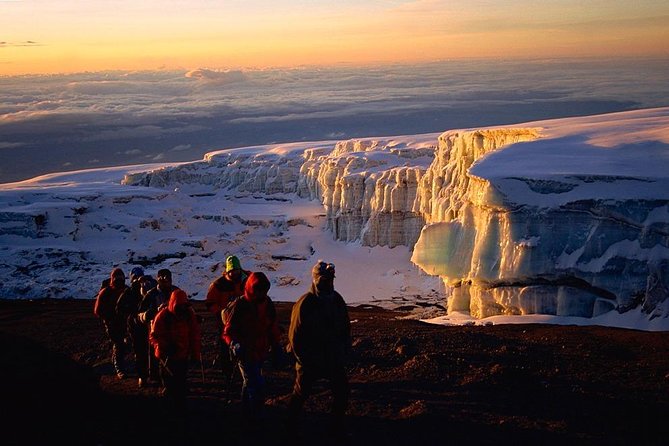
Reviewed · KILIMANJARO CLIMBS
6-Day Kilimanjaro Machame Route – A Stunning Trek to Uhuru Peak
Kilimanjaro’s Machame Route earns its Whiskey Route nickname honestly: it is scenic, serious, and not softened for easy walking. Over six days, you move from rainforest to moorland, cross the Shira Plateau, pass Lava Tower, climb the Barranco Wall, and make a midnight attempt on Africa’s highest point.
I like two things here. First, the scenery changes almost every day. Second, the package includes the costly working parts of a mountain trip: porters, cook, tents, meals, transfers, and daily hot water for washing. Guides including Justin and Frazier are praised for their care and organization. The main drawback is the schedule: summit day can last 11 to 14 hours, and six days gives you less adjustment time than longer routes.
Key points to know before booking
- Rainforest to alpine desert: The route moves through several climate zones, so you get far more than a single type of mountain scenery.
- A real acclimatization day: The Shira to Barranco section climbs high toward Lava Tower, then drops to camp, helping your body prepare for the summit.
- Midnight summit attempt: You reach Stella Point first, then continue to Uhuru Peak at 5,895 meters before descending to Mweka Camp.
- Strong support package: A guide team, porters, cook, tents, mattresses, meals, drinking water, hot wash water, and airport transfers are included.
- Gear is your responsibility: Personal clothing and trekking equipment are not included, though rental is available in Tanzania.
- Private booking: Only your own group participates, rather than being placed into an open public tour.
Why the Machame Route is worth the effort
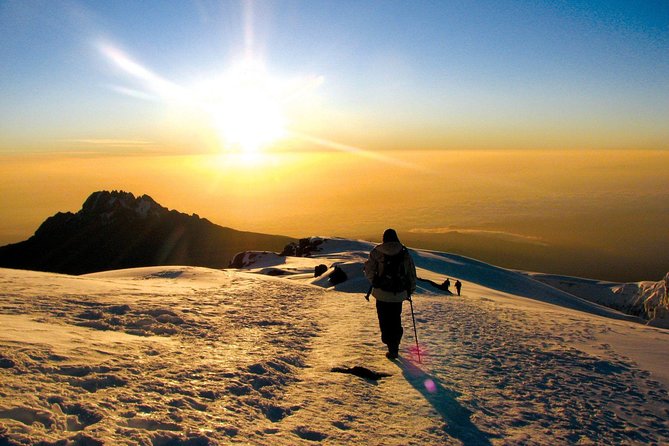
The Machame Route is popular because it gives you a broad sample of Kilimanjaro in a short time. Your first day begins in thick rainforest, where the trail is green, damp, and shaded. By the second day, the trees give way to open moorland. Later, the vegetation thins out almost completely as you enter the alpine desert near Barafu.
That change is the heart of the trip. You are not simply walking uphill for six days. You are watching the mountain alter around you, one zone at a time. Views toward Mount Meru and the valleys add interest before the summit section becomes more stark and demanding.
The route also uses a useful acclimatization pattern on Day 3. You climb toward Lava Tower at about 4,650 meters, then descend to Barranco Camp at roughly 4,000 meters. You finish near your starting elevation, but your body has spent time higher up. That is valuable preparation for the final push.
Still, six days is a brisk schedule. You need a moderate level of fitness, and you should be comfortable walking for several hours each day. The summit day is the real test, with a midnight start, a climb to Stella Point, a final walk to Uhuru Peak, and a long descent afterward.
More Hiking Tours in Moshi
- Private Kilimanjaro Hike 7 Day Lemosho Route
★ 5.0 · 60 reviews - Best Kilimanjaro hiking day trip tour with Kilinge Adventures
★ 4.5 · 54 reviews - #1. Best Kilimanjaro Day hike Tour-Machame Route-ISMANI
★ 4.2 · 47 reviews
Day 1: Machame Gate to Machame Camp
The day begins with a morning briefing and gear check, followed by a drive from Moshi or Arusha to Machame Gate. This is where you enter the mountain route and begin walking through the rainforest.
The distance is about 11 kilometers, with five to seven hours of hiking. You climb from 1,640 meters to 2,835 meters, so the day is not a gentle stroll, but the forest provides shade and a softer introduction than the exposed upper slopes.
You might notice native plants and some wildlife along the trail. The main pleasure is the change in atmosphere as traffic and town life fall away. By the time you reach camp, dinner and a tent are likely to feel more welcome than sightseeing.
The practical point is to keep your first day controlled. Do not race uphill to prove anything. A steady pace helps you conserve energy for the days ahead, and the guide team will set the rhythm.
Day 2: Moorland and the Shira Plateau
Day 2 covers only about 5 kilometers, but the climb is steeper. You leave the rainforest behind and walk across moorland toward Shira Cave Camp at 3,850 meters.
The route crosses streams and opens up views toward Mount Meru and the surrounding valleys. This is one of the days when the route begins to feel like a high mountain trek rather than a forest hike.
The shorter distance does not mean the day is easy. Altitude affects people differently, and your pace may slow as you climb. Drink the fresh water provided by the crew, follow the guide’s pace, and tell the team promptly if you feel unwell.
Camping on the Shira Plateau gives you a clear sense of exposure. The scenery is wide and open, and the night can feel much colder than the first evening in the forest. Keep warmer clothing close at hand rather than buried at the bottom of your bag.
Day 3: Lava Tower and Barranco Camp
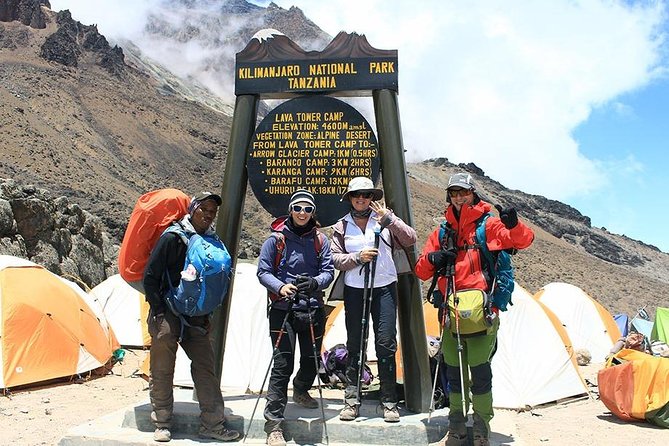
This is one of the most useful days on the route. From Shira, you head east along a ridge, pass the junction toward Kibo, and turn southeast toward Lava Tower, also called Shark’s Tooth.
The high point is about 4,650 meters. After passing the Lava Tower area, you continue down toward Barranco Camp at around 4,000 meters. The full distance is about 10 kilometers, and walking takes five to six hours.
I like this section because it combines scenery with a clear physical purpose. You spend time high, then sleep lower. That climb-high, sleep-lower pattern gives you a better chance to adjust than a route that simply sends you upward every day.
Barranco Camp also puts you close to the famous Barranco Wall, which you tackle the next morning. The camp sits in a dramatic part of the mountain, but the altitude can affect sleep and appetite. Do not expect a normal night’s rest.
The itinerary mentions several junctions near Lava Tower and Arrow Glacier. Your guide handles the route choices, so you can focus on your footing and breathing rather than navigation.
More Kilimanjaro routes:
- Kilimanjaro climb by Lemosho Route (7-day)
★ 5.0 · 651 reviews - Kilimanjaro climb, Machame Route (7-day)
★ 5.0 · 262 reviews - Kilimanjaro Climbing Lemosho Route 8 Days.
★ 5.0 · 186 reviews - Climbing Kilimanjaro – Machame Route
★ 5.0 · 170 reviews
Day 4: Barranco Wall to Barafu
Day 4 is a long climb through the alpine desert. You leave Barranco after breakfast and tackle the steep ridge over the Barranco Wall before continuing through Karanga Valley and onward to Barafu.
The day covers about 9 kilometers and takes seven to nine hours. The listed elevation runs from about 13,000 to 15,000 feet, placing you high above the lower forest and moorland zones.
This is a demanding day, even though it is shorter than summit day. The Barranco Wall can look intimidating from camp, but the route is a climb rather than a technical rock ascent. You should expect slow movement, uneven ground, and careful steps.
At Barafu, you have completed the Southern Circuit and can see Kibo and Mawenzi from different angles. The camp is the launch point for your summit attempt, so the afternoon is for resting, eating, organizing clothing, and preparing a small daypack.
This is where good staff support matters. The package includes tents, sleeping mattresses, tables, chairs, a cook, porters, and assistant guides. Those details may sound ordinary before the climb, but they become important when you arrive tired and need food, shelter, and a clear plan.
Day 5: Stella Point, Uhuru Peak, and Mweka Camp
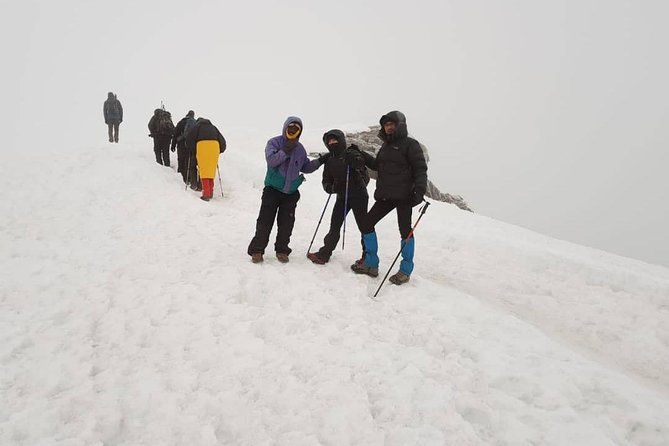
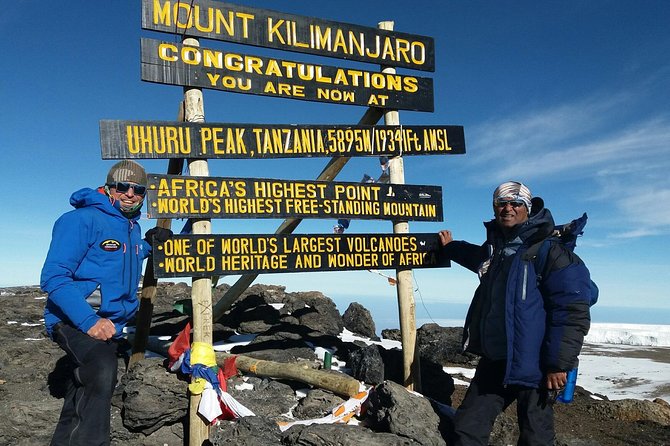
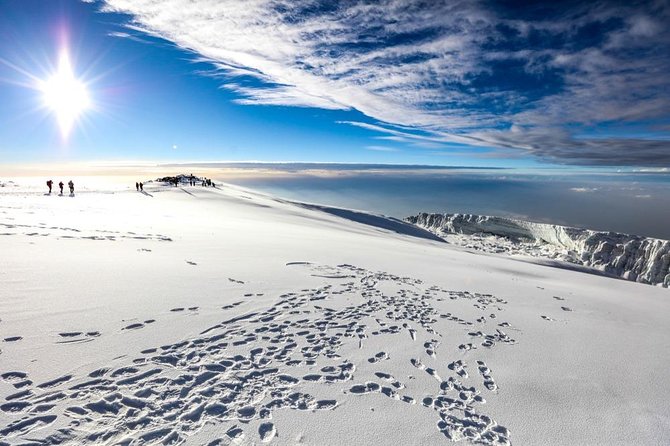
Summit day begins around midnight. You climb from the Barafu area toward Stella Point at 5,756 meters, then continue along the crater rim toward Uhuru Peak at 5,895 meters.
The total distance is about 17 kilometers, with 11 to 14 hours of walking. It is the hardest day by a wide margin because you are climbing in darkness, dealing with cold and altitude, then descending a long way after reaching the top.
The path to Stella Point is slow and steep. Your guide team will be close by, and the supplied emergency oxygen is intended for emergencies only, not as a substitute for acclimatization or fitness. A basic first aid kit is also included.
Uhuru Peak is the payoff: the highest point in Africa. The final section from Stella Point can feel mentally long, but the scale of the mountain and the summit sign give the day a clear goal.
After celebrating briefly, you descend to Mweka Camp at about 3,068 meters for your final night on the mountain. Do not underestimate this descent. Your legs have already worked hard, and loose ground can make the way down tiring and awkward.
Day 6: Mweka Trail and return to Moshi
The final walking section runs from about 3,090 meters down to 1,680 meters. It covers roughly 10 kilometers and takes three to four hours.
The Mweka Trail becomes wetter and muddier at lower elevation. Gaiters and trekking poles are useful here, and you should keep rain gear handy even if you are wearing shorts and a T-shirt by the lower section.
At Mweka Park Gate, you receive your summit certificates. The route then continues for about another hour to Mweka Village, where a vehicle takes you back to your Moshi hotel. The drive from the village to Moshi takes about 30 minutes.
That final transfer is included in the package, as are transfers between Kilimanjaro Airport and Moshi at the start and end of the wider trip. If you are arranging flights, this helps simplify the arrival and departure plan.
What the $2,253 price really covers
At $2,253 per person, this is not a basic walk with a guide. The price includes all taxes and fees, airport transfers, a qualified mountain guide, assistant guides, porters, and a cook. Their wages are included, which is important when comparing this package with cheaper offers that may add staff costs later.
You also receive camping equipment, including tents, camp chairs, tables, and sleeping mattresses. Fresh drinking water and hot water for a daily wash are included, along with five breakfasts, five dinners, and six lunches.
The food count fits the mountain schedule, with meals provided through the walking days. You should still budget for personal snacks and any drinks not specified in the package.
Several significant costs remain outside the price:
- Flights and visas
- Travel and health insurance
- Personal trekking clothing and equipment
- Personal medicine and water purification tablets
- Snacks and unspecified drinks
- Tips and gratuities
- An optional portable toilet
The portable toilet is highly recommended in the trip information. It costs extra, but some people will consider the added privacy worth paying for at high camps.
For value, the package makes sense if you need a full-service climb from Moshi. You are paying for a support system, not just access to a trail. Before booking, ask for the current gear rental costs and tipping guidance so the final budget is realistic.
Guides, porters, and the human side of the climb
The strongest praise for this operation centers on the staff. Justin is singled out for helping make a summit attempt successful, while Frazier is praised for professional organization and local knowledge. The wider team is described as kind, capable, and attentive from airport pickup through the mountain and back to the airport.
That matters on Kilimanjaro. A guide does more than point out the route. The team sets the pace, checks how you are coping, helps manage meals and camp routines, and supports you during the long summit night.
The package lists emergency oxygen and first aid, but you should treat these as safety provisions rather than guarantees. Your own preparation, insurance, honest communication with the guides, and willingness to turn back if necessary still matter.
One practical issue did arise around the handling of PCR results during an airport transfer. It was a small problem rather than a failure of the whole trip, but it is a useful reminder to keep important health and travel documents accessible and confirm transfer details before departure.
Who should choose this six-day climb
I would choose this route if you want a scenic Kilimanjaro climb and can manage long walking days without needing luxury lodging. It suits an active first-time high-altitude trekker as well as a more experienced hiker who wants a well-supported mountain trip.
The private format is useful if your group wants to move at its own pace. It also lets you share the experience with friends or family rather than joining an unrelated group.
I would think twice if you want a relaxed schedule or have limited time to acclimatize. A longer Kilimanjaro route may give your body more adjustment time, but that option is not part of this six-day package. You should also be ready to rent or buy proper gear, arrange insurance, and cover tips separately.
Booking details worth checking
Pickup is offered, and the meeting point is in Moshi Urban, Tanzania. The activity ends back at that meeting point after the Mweka Village transfer and return drive.
Confirmation is provided at booking. The stated operating period runs through June 18, 2026, with availability listed every day around the clock, but you should still confirm your chosen date before paying.
Cancellation is generous only up to the stated cutoff: cancel at least three full days before the local start time for a full refund. Cancellations or changes inside that window are not accepted for a refund.
Should you book the Machame Route?
Book it if your priority is a varied route, strong camp support, and a serious attempt at Uhuru Peak without arranging every service yourself. The rainforest, Shira Plateau, Lava Tower, Barranco Wall, and summit night give you a memorable progression through Kilimanjaro’s major zones.
The decision comes down to stamina and timing. Six days is efficient, but it is not easy. If you can handle a 17-kilometer summit day, prepare your gear carefully, carry suitable insurance, and follow the guides’ advice, the $2,253 package offers solid value for a fully supported climb.
FAQ
How long is the Kilimanjaro Machame Route experience?
The climb lasts approximately six days. Hiking times range from three to nine hours on most days, while summit day takes about 11 to 14 hours.
Where does the tour start and finish?
The meeting point is in Moshi Urban, Tanzania. After descending to Mweka Village on Day 6, a vehicle takes you back to your hotel in Moshi, and the activity ends at the meeting point.
Is airport transportation included?
Yes. Return transfers between Kilimanjaro Airport and Moshi are included.
Are meals included during the climb?
Yes. The package includes five breakfasts, five dinners, and six lunches. Snacks, unspecified drinks, and personal food are not included.
Is trekking equipment included?
Personal hiking and trekking gear is not included. Equipment can be rented from an equipment store in Tanzania. A portable toilet is optional but highly recommended and costs extra.
What level of fitness is required?
A moderate physical fitness level is required. You should also be prepared for the particularly demanding summit day, which begins around midnight and includes the climb to Uhuru Peak followed by a long descent.
More six day trips in Moshi & Kilimanjaro
- Kilimanjaro climb, Lemosho Route (6-day)
★ 5.0 · 129 reviews - Kilimanjaro climb, Marangu route (6-day)
★ 5.0 · 72 reviews - 6 Days 5 Night Safari
★ 5.0 · 57 reviews - 6 Days Tanzania Classic Safari
★ 5.0 · 52 reviews
More Hiking Tours in Moshi & Kilimanjaro
- Best Kilimanjaro Adventure 7 days Machame route Trekking
★ 5.0 · 42 reviews - Kilimanjaro 7 Day Private Trekking Experience
★ 5.0 · 40 reviews - 8 Days Kilimanjaro Hike via Lemosho Route
★ 5.0 · 39 reviews - 6 Days Machame Route Kilimanjaro Climbing Trekking Tour
★ 5.0 · 34 reviews
Newly listed around Moshi & Kilimanjaro
- Climb Mount Kilimanjaro: 7 Days Machame Route★ 5.0 · 3 reviews
- 6 Days Mount Kilimanjaro Climbing via Rongai Route★ 5.0 · 3 reviews
- Explore 1 day Ngorongoro Crater Budget Group Safari from Arusha★ 5.0 · 3 reviews
- Mt. Kilimanjaro Day Hiking★ 5.0 · 3 reviews
- Chemka (Kikuletwa) Hot Springs, Tanzania★ 5.0 · 3 reviews
- Guided City tour of Moshi★ 4.3 · 3 reviews
- 8 Day Tanzania Family Safari★ 5.0 · 3 reviews
- Serengeti Safari with Sirikwa Travel★ 5.0 · 3 reviews
Kilimanjaro Climbs, compared.








Browse the lists this tour appears in