
Reviewed · KILIMANJARO CLIMBS
8 Days Kilimanjaro Hike via Lemosho Route
The Lemosho Route gives you Kilimanjaro at its most varied. You begin in western rainforest, cross the open Shira Plateau, pass Lava Tower and Barranco Wall, then make the hard midnight push to Uhuru Peak. The route is scenic, gradual, and less crowded than some other approaches.
I like two things right away: the extra acclimatization built into eight days, and the practical support from Nafika Tours. Guides check your health each day, the crew treats your drinking water, and the company provides tents, sleeping bags, pads, meals, emergency oxygen, and private transport.
The catch is simple: this is a serious high-altitude climb, not a long sightseeing walk. The summit day lasts about 13 hours, and you need moderate fitness, patience, and a willingness to sleep in tents for much of the trip.
Key points to know before booking
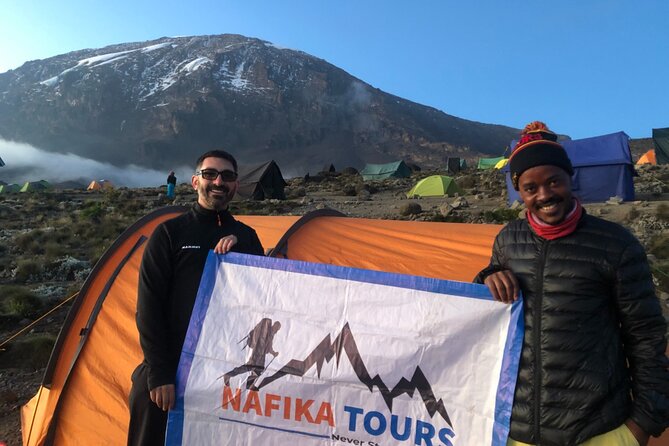
- Western approach: Start at Londorossi Gate and move through rainforest, heather, moorland, alpine desert, and glacier country.
- Strong acclimatization plan: The route reaches Lava Tower at 4,640 meters before dropping to Barranco Camp, helping your body adjust.
- Long summit day: Expect a midnight start, 4 to 5 hours to Stella Point, another hour to Uhuru Peak, then a long descent.
- Full camping setup included: Nafika supplies tents, sleeping bags, sleeping pads, tables, chairs, meals, and treated water.
- Safety receives daily attention: Guides carry emergency oxygen and a first aid kit, and they perform regular health checks.
- Small to medium group size: The maximum is 20 people, though some recent departures were much smaller family or friend groups.
Why Lemosho is a smart eight-day choice
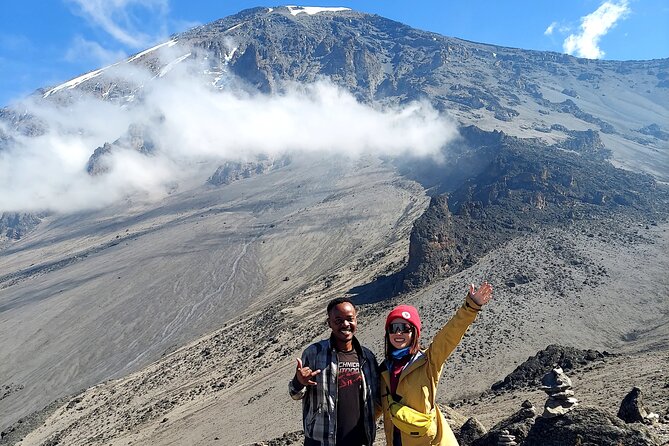
Kilimanjaro rises to 5,895 meters, so the main challenge is not technical climbing. You do not need ropes or rock-climbing skills on this route. The test is altitude, cold, fatigue, and the ability to keep moving at a slow pace.
That is why eight days matters. A shorter route may cost less or save time, but it gives your body fewer chances to adjust. Lemosho takes you up gradually, then adds an especially useful high point on Day 4 at Lava Tower before dropping you to a lower camp for the night.
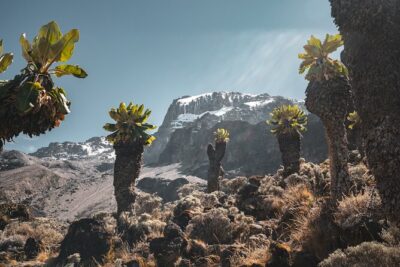
I also like the route’s changing scenery. The first day feels like a forest trek. Later, trees disappear and the mountain opens into grass, heather, volcanic rock, lava ridges, and pale alpine desert. You get broad views of Kibo, Mawenzi, the Shira Plateau, and the western ice fields rather than walking through the same type of terrain for a week.
Lemosho is also known for a quieter start than the Marangu and Machame routes. That does not mean solitude. Kilimanjaro is a popular mountain, and camps can still be busy. But the western approach gives the first stages a more remote feel.
More Hiking Tours in Moshi
- Private Kilimanjaro Hike 7 Day Lemosho Route
★ 5.0 · 60 reviews - Best Kilimanjaro hiking day trip tour with Kilinge Adventures
★ 4.5 · 54 reviews - #1. Best Kilimanjaro Day hike Tour-Machame Route-ISMANI
★ 4.2 · 47 reviews
Day 1: Londorossi Gate to Big Tree Camp
Your pickup is scheduled for about 8:00 in the morning after breakfast. Private transportation takes you from your hotel toward Londorossi Gate on the western side of the mountain, where the pre-hike formalities are handled.
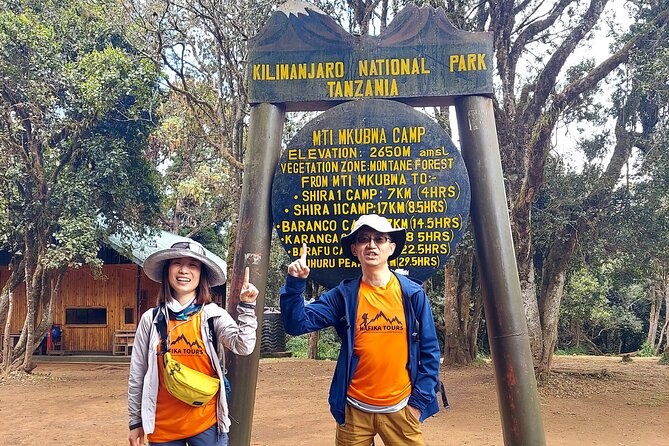
The trail begins at roughly 2,360 meters. The first walk leads through the Lemosho forest, with the route ending at Big Tree Camp after about four hours. This is a gentle introduction compared with what comes later, but do not treat it as a free pass. You are still carrying your daypack, adjusting to camp routines, and learning how the group moves.
The forest is one of the reasons to choose Lemosho. It gives you a sense of entering a large wilderness area rather than simply arriving at a trailhead. The description also notes wildlife in this rainforest zone, though sightings are not promised.
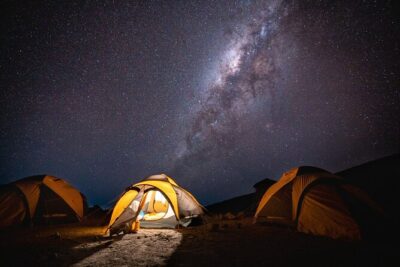
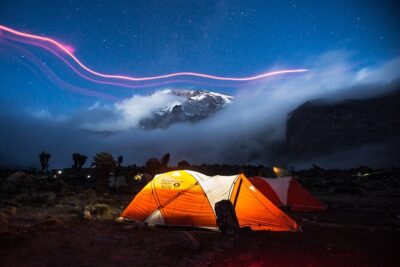
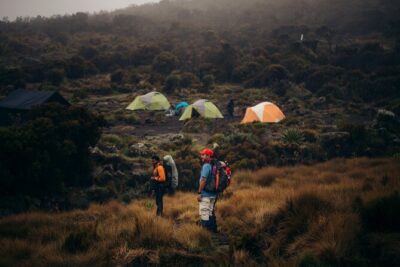
Your first night is in a tent. Camping equipment is provided, including Mountain Hardware sleeping tents, sleeping pads, and sleeping bags. That saves you from bringing a full expedition setup, but you still need suitable personal clothing and footwear.
Day 2: Shira 1 and the open moorland
Day 2 changes the mood. You leave much of the forest behind and cross grassy moorland and heather, with volcanic rock formations scattered along the route. The hike covers about 8.5 kilometers and takes around five hours.
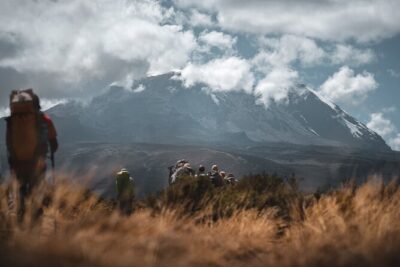
The destination is Shira 1 Camp. From here, Kibo Peak can appear to float above the clouds. That view is one of the first moments when the mountain feels truly enormous. You have not yet reached the high alpine zone, but the trees are gone and the open terrain makes every rise more noticeable.
Parts of this day are steep, and you gain a fair amount of altitude. The best approach is the classic Kilimanjaro rhythm: walk slowly, take regular breaks, drink often, and avoid racing ahead early in the trip. A strong first day does not win the mountain.
Nafika includes breakfast, lunch, and dinner during the trek. Food quality matters more than many first-time climbers expect. You need to eat even when altitude reduces your appetite, and a hot meal at camp can make the difference between feeling ready and feeling worn down.
Day 3: Shira Plateau and acclimatization
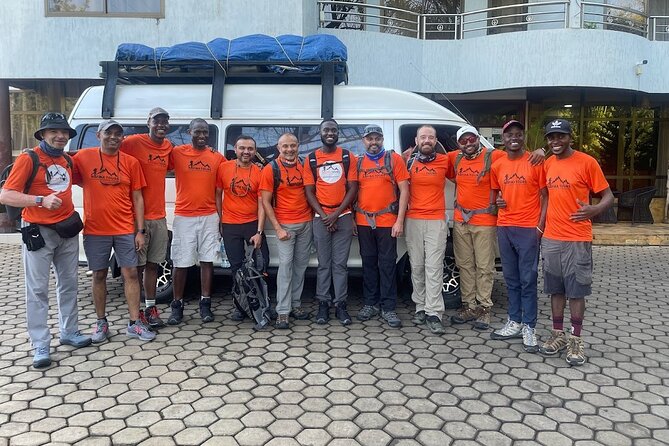
The third day stays high on the Shira Plateau, covering about eight kilometers in roughly four hours. You continue across moorland with wide views toward Kibo and the northern ice fields on the western side of the mountain.
This is a scenic day, but its real value is physiological. You gain altitude without pushing into an exhausting schedule, giving your body more time to adjust. After reaching Shira 2 Camp, the guides plan a short acclimatization walk before you return for dinner and sleep.
That extra walk is useful. It gives the guides another chance to see how you are responding, and it lets you spend time at a higher elevation before resting lower or at camp. If you feel fine, do not assume you are immune to altitude sickness. Symptoms can appear later, especially after a night at elevation.
The guides’ regular health checks are one of the strongest practical features of this trip. The company says safety is its main focus, with guides prepared to identify and treat altitude sickness. Emergency oxygen and a first aid kit are included. You should still report headaches, nausea, dizziness, unusual tiredness, or breathing problems honestly. Hiding symptoms helps nobody.
More Kilimanjaro routes:
- Kilimanjaro climb by Lemosho Route (7-day)
★ 5.0 · 651 reviews - Kilimanjaro climb, Machame Route (7-day)
★ 5.0 · 262 reviews - Kilimanjaro Climbing Lemosho Route 8 Days.
★ 5.0 · 186 reviews - Climbing Kilimanjaro – Machame Route
★ 5.0 · 170 reviews
Day 4: Lava Tower, 4,640 meters, then Barranco
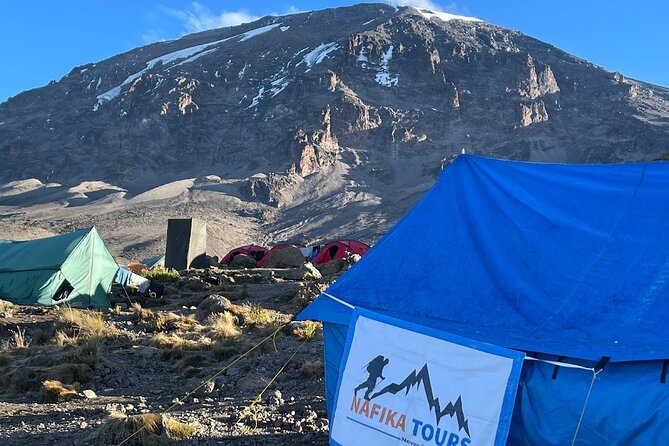
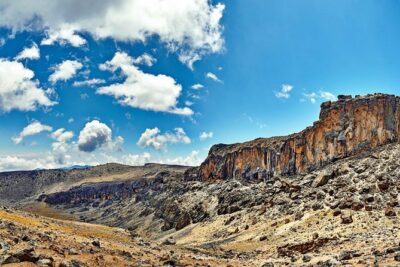
Day 4 is the route’s big acclimatization day. You climb through the upland desert toward the lava ridges below the Western Breach, reaching Lava Tower at 4,640 meters. The hike covers about 10 kilometers and takes approximately seven hours.
Lava Tower is the highest point you reach before summit day. Lunch is planned there, and the stop gives you time to experience high altitude before the route drops to Barranco Camp at about 3,960 meters.
That ascent followed by descent is exactly the kind of pattern that makes an eight-day route useful. You sleep lower than the day’s highest point, but your body has had time at a greater elevation. Still, this is a demanding day. The air is thin, the terrain is more barren, and the weather can change quickly.
Barranco Camp sits beneath towering cliffs with broad views toward the plains. It is one of the most memorable camp locations on the route. Bring your camera, but keep it protected from dust and cold. The setting is dramatic enough that you may spend more time looking than photographing.
Day 5: Barranco Wall to Karanga Valley
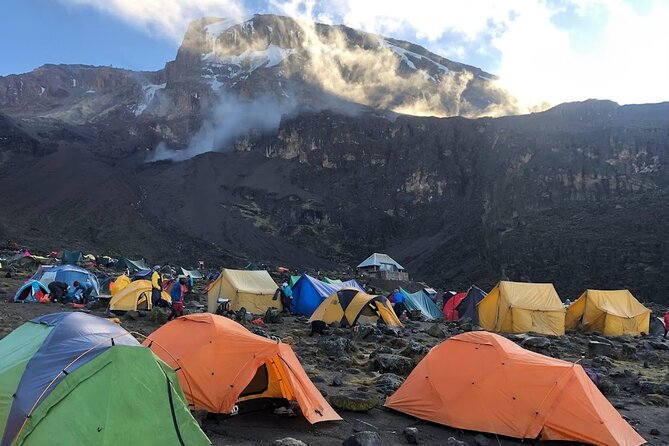
After breakfast, you climb the Barranco Wall. It looks intimidating from camp, but the route is described as easier than its appearance suggests. This is not a technical rock climb, though you should expect a steep, hands-on section and follow the guides’ instructions carefully.
You pass beneath the Heim and Kersten glaciers before descending toward the Karanga Valley. Kibo’s glaciers rise overhead, while Mawenzi’s jagged peaks appear to the east. The short distance and five-hour schedule make this an important rest and adjustment day rather than a mileage contest.
Lunch is served at camp, and the afternoon is mostly free. I would take the recommended nap. Summit preparation is not glamorous, and conserving energy here is smarter than trying to prove you feel strong.
For people who still have energy, the guides may offer an afternoon acclimatization walk up to around 4,200 meters, followed by a descent to camp. That option should depend on how you feel. The point is to prepare your body, not drain it.
Day 6: Barafu Camp and a quiet afternoon
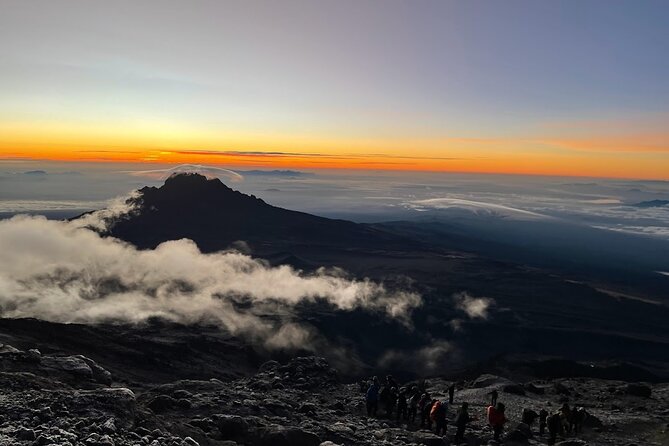
Day 6 is shorter, covering about four kilometers in roughly four hours. You climb to Barafu Camp at 4,640 meters through the alpine desert, with views of both Kibo and Mawenzi.
Barafu is the staging point for the summit attempt. After lunch, the best use of your time is sleep, rest, and organizing your clothing for the night. Dinner comes early, and alarms are set for around midnight.
This day can feel strangely still. You have spent several days walking, and now the main task is lying down while excitement and nerves compete with fatigue. Keep your summit clothing, water, headlamp, gloves, and snacks ready before dinner. The supplied information does not list a headlamp or personal snacks among the included equipment, so confirm your packing needs with Nafika before departure.
Day 7: Stella Point, Uhuru Peak, and the long descent
Summit day is the physical heart of the trip. You wake around midnight for light tea and breakfast, then begin a 4 to 5 hour climb toward the crater rim at Stella Point, 5,756 meters.
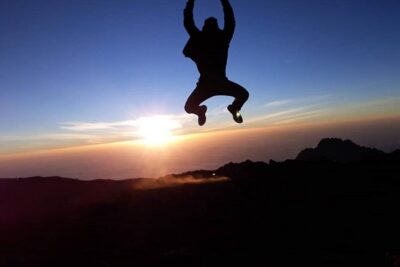
The climb gains a great deal of height over a short distance. You move slowly, often in darkness, with the main goal of steady progress. The first light of day arrives near the rim, and the sunrise views are part of the reward.
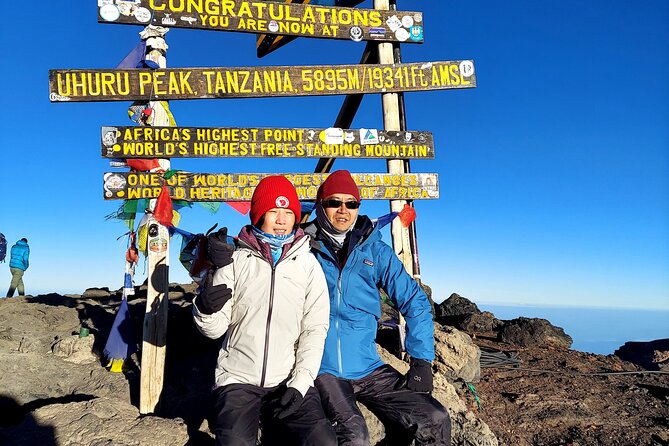
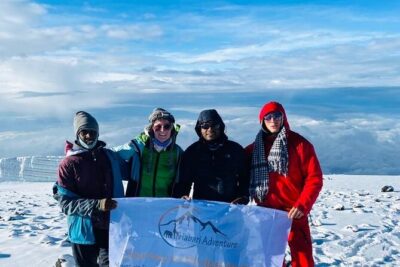
From Stella Point, the route continues for about one hour to Uhuru Peak at 5,895 meters. Reaching the summit is a major achievement, but the day is far from finished. Photos are taken at the top, then you descend to Barafu Camp for lunch and rest.
The entire day is listed at about 13 hours. That number deserves respect. Even if the summit climb goes well, the descent can be tiring on knees, ankles, and feet. You need to keep drinking, eat the lunch provided, and follow the guides’ pace.
The summit is not guaranteed simply because you choose an eight-day route. The longer schedule improves your odds, but weather, altitude, health, and fatigue still control the outcome. A good operator should treat a safe turnaround as a responsible decision, not a personal failure.
Day 8: Millennium Camp to Mweka Gate
The final day takes you through montane forest toward Mweka Gate. The distance is about 14 kilometers, with around five hours of walking.
After the stark upper mountain, the return to trees feels like a change of world. The trail is still long, especially after summit day, but the lower altitude makes breathing easier. At Mweka Gate, you collect your certificates and can finally enjoy a cold drink.
Private transport then returns you to your hotel. The package includes two nights in a Moshi hotel, which gives you a place to recover before or after the mountain portion. The supplied itinerary describes the final descent as starting from Millennium Campsite, so confirm the exact overnight camp sequence when you book.
What the $2,350 price covers
At $2,350 per person, this is not a bare-bones trail permit. The price includes private transportation, parking fees, two hotel nights in Moshi, camping equipment, meals, treated water, professional guides, emergency oxygen, and a first aid kit.
The food allowance is eight breakfasts, eight lunches, and seven dinners. That matches the eight-day schedule, with the final return day ending after breakfast and the descent.
The package also says the mountain crew, porters, and guides receive good salaries. That matters both practically and ethically. Kilimanjaro climbs depend on a large support team, and responsible treatment of that crew should be part of your booking decision.
I also like the inclusion of tables and chairs. One person specifically described having a table, food, tea, and sometimes chairs during breaks, rather than simply receiving a thermos. Small comforts count when you are cold, tired, and eating at high altitude.
The price does not include the Tanzanian visa, listed at $50. It also does not spell out every personal item you need to bring, so ask Nafika for a current packing list before you travel.
The guide and crew experience
Recent climbs have involved guides and team leaders named Eli, Elias, Meshakii, Alyce, Inocent, Musa, Diklan, and Abdala. You should not assume a particular person will lead your departure, but these names give you a sense of the local team behind the operation.
The strongest pattern in the feedback is personal attention. Guides are described as adjusting the pace, checking equipment before departure, conducting daily medical checks, answering questions, and helping people who were nervous on exposed sections such as Barranco Wall.
One group also noted that guides took turns eating with the climbers. That is a small detail, but it says something useful about camp atmosphere. You are not simply handed a tent and left alone. The staff appears to take an active role in keeping the group together and comfortable.
Food receives unusually warm praise as well. A chef prepared meals with occasional surprises, which can lift morale after a long day. Still, tastes and dietary needs vary, so tell the operator about any restrictions before you arrive.
The maximum group size is 20. That is not tiny, but it is manageable if the group is full and the guide-to-climber ratio is sensible. Recent trips included groups of four, five, six, and family groups, so actual departure size may be smaller.
Who should choose this climb
This route suits you if you want scenery, a gradual schedule, and a full-service camping setup. It is a strong choice for first-time high-altitude climbers who have moderate fitness and prefer more acclimatization time.
It also suits families and mixed-age groups, provided everyone is medically fit and prepared for the effort. One recent climb included a 69-year-old father with three siblings, while another family ranged from age 20 to 58. Those examples do not make the route easy, but they show that age alone does not define who can attempt it.
You should think twice if you have very limited hiking experience, dislike camping, or need a quick holiday with predictable comfort. The summit day is long, and the final descent is still substantial. Anyone with medical concerns should seek professional medical advice before booking.
Pickup is offered, and the activity can begin at Kilimanjaro International Airport. The meeting point is listed as Kilimanjaro International Airport, with the activity ending back at the meeting point. Confirm the exact pickup arrangement and hotel details before arrival.
Should you book the Nafika Lemosho hike?
I would choose this trip if your priority is a scenic route with sensible acclimatization and strong practical support. The combination of eight days, daily health checks, treated water, full camping gear, private transportation, and an experienced local crew gives you solid value at $2,350.
I would not book it casually. You need to train, prepare for cold nights, and accept that summit success is never certain. Ask for the current packing list, guide assignment, group size, crew arrangements, meal details, and exact camp sequence before paying.
The cancellation terms are straightforward: cancel at least 24 hours before the local start time for a full refund. Within 24 hours, the payment is not refunded, and late changes are not accepted.
For a prepared climber who wants Kilimanjaro’s most scenic side without rushing the altitude schedule, this is a sensible and appealing choice.
FAQ
How long is the Kilimanjaro Lemosho hike?
The experience lasts approximately eight days, including the approach, summit attempt, and descent to Mweka Gate.
What is the price per person?
The listed price is $2,350 per person.
Is pickup available?
Yes. Pickup is offered, and the meeting point is listed as Kilimanjaro International Airport.
What is the maximum group size?
The maximum group size is 20 people.
What fitness level do I need?
You should have a moderate level of physical fitness. The hike includes several long days, steep sections, high altitude, and a summit day of about 13 hours.
Is camping equipment included?
Yes. The package includes camping tents, sleeping pads, sleeping bags, tables, and chairs.
Are meals included?
Yes. The package includes eight breakfasts, eight lunches, and seven dinners.
Is drinking water provided?
Yes. Treated water is provided throughout the trek.
Is emergency oxygen included?
Yes. Emergency oxygen and a first aid kit are included.
Is the Tanzanian visa included?
No. The visa is listed separately at $50.
What happens on the summit day?
You wake around midnight for tea and breakfast, climb to Stella Point at 5,756 meters, continue to Uhuru Peak at 5,895 meters, then descend to Barafu Camp for lunch and rest.
Can I cancel for a full refund?
Yes, if you cancel at least 24 hours before the experience start time. Cancellations within 24 hours are not refunded.
More Hiking Tours in Moshi & Kilimanjaro
- Best Kilimanjaro Adventure 7 days Machame route Trekking
★ 5.0 · 42 reviews - Kilimanjaro 7 Day Private Trekking Experience
★ 5.0 · 40 reviews - The Best & Unique Kilimanjaro Hiking tour 7 days Machame route
★ 5.0 · 34 reviews - 6 Days Machame Route Kilimanjaro Climbing Trekking Tour
★ 5.0 · 34 reviews
Newly listed around Moshi & Kilimanjaro
- Climb Mount Kilimanjaro: 7 Days Machame Route★ 5.0 · 3 reviews
- 6 Days Mount Kilimanjaro Climbing via Rongai Route★ 5.0 · 3 reviews
- Mt. Kilimanjaro Day Hiking★ 5.0 · 3 reviews
- Explore 1 day Ngorongoro Crater Budget Group Safari from Arusha★ 5.0 · 3 reviews
- Chemka (Kikuletwa) Hot Springs, Tanzania★ 5.0 · 3 reviews
- Guided City tour of Moshi★ 4.3 · 3 reviews
- 8 Day Tanzania Family Safari★ 5.0 · 3 reviews
- Serengeti Safari with Sirikwa Travel★ 5.0 · 3 reviews
Kilimanjaro Climbs, compared.
Browse the lists this tour appears in