
Reviewed · KILIMANJARO CLIMBS
The Best & Unique Kilimanjaro Hiking tour 7 days Machame route
The smartest feature of this Kilimanjaro climb is the way it handles the hardest stretch. Instead of forcing you from Barranco to Barafu in one long day, the route gives you a night at Karanga Camp first. That shorter approach to the summit can leave you with more energy for the midnight push to Uhuru Peak.
I like the included breakfast, lunch, and dinner, since carrying and planning food is one less mountain problem to solve. I also like the steady guiding style described for Maneno and Hassan, who adjusted the hiking pace for a fast-moving couple while keeping the expedition safe and successful.
The main caution is the price. At $1,200 per person, this is not an all-in Kilimanjaro bill because park fees, crew tips, airport transfers, and Moshi hotel nights are extra. You also need moderate fitness for long uphill days, high altitude, and a summit day that combines seven to eight hours of climbing with a long descent.
Key points to know before climbing
- The summit plan is split sensibly: Barranco to Karanga, then Karanga to Barafu, avoids one punishing pre-summit hike.
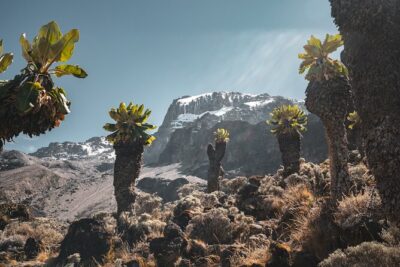
- The route crosses five mountain habitats: rainforest, heath, alpine desert, Arctic conditions, and rainforest again on the descent.
- Maneno and Hassan are named guides: The supplied account specifically praises their flexibility with hiking pace.
- Meals and basic camping gear are included: Breakfast, lunch, dinner, tents, and mattresses are part of the trek.
- Moshi hotel pickup and return are covered: Airport transfers and hotel stays before and after the climb are not.
- The trek is seven days but the summit day is still severe: Reaching Uhuru Peak means climbing from 15,331 feet to 19,341 feet, then descending to Mweka Camp.
Why the 7-day Machame Route works
Machame is a demanding route, but seven days gives the climb a more measured rhythm than a rushed ascent. You start in Moshi at the Africa Natural Tours office on Mkwawa Avenue, then travel to Machame Gate for registration and the first walk into the forest.
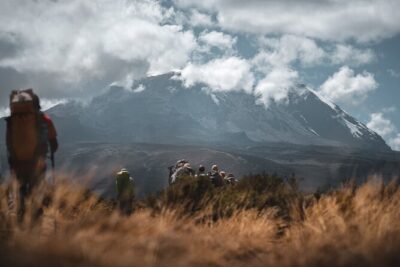
I like this route because the scenery changes often. You begin beneath tall rainforest growth, move into open heath, cross dry alpine ground, and finish in Arctic conditions near the summit. That variety gives each day a clear character, rather than making the mountain feel like one long uphill road.
The route also follows the useful high-to-low principle on day three. You climb from Shira 2 to Lava Tower at 15,190 feet, then sleep lower at Barranco Camp. That means a tough altitude day is followed by a drop in sleeping elevation, which gives you time to adjust before the final ascent.
Still, no itinerary can make Kilimanjaro easy. The highest point is 19,341 feet, and the summit push begins from Barafu Camp at 15,331 feet. You need patience, warm clothing, physical preparation, and a willingness to walk slowly when the guide sets that pace.
More Hiking Tours in Moshi
- Private Kilimanjaro Hike 7 Day Lemosho Route
★ 5.0 · 60 reviews - Best Kilimanjaro hiking day trip tour with Kilinge Adventures
★ 4.5 · 54 reviews - #1. Best Kilimanjaro Day hike Tour-Machame Route-ISMANI
★ 4.2 · 47 reviews
Day 1: Machame Gate to Machame Camp
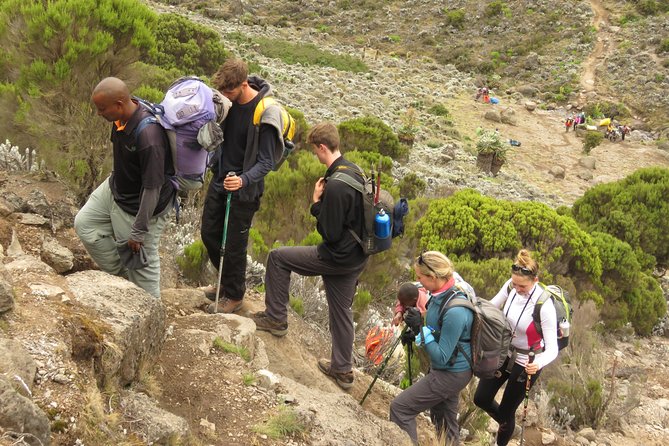
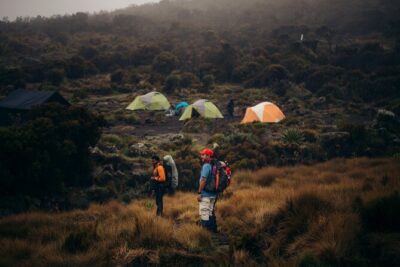
The opening hike runs 11 kilometers and takes about five to seven hours. You climb from 5,380 feet at Machame Gate to 9,350 feet at Machame Camp, with the entire day spent in rainforest.
This is a substantial first day, though the forest setting makes it feel more sheltered than the exposed sections higher up. You will be walking on a gradual uphill route, not simply strolling through trees. Keep your day pack light and make sure your rain protection is easy to reach.
The included Moshi pickup is useful here. You do not have to arrange separate transport to Machame Gate, and the company also returns you to your Moshi hotel at the end of the trek. The stated pickup applies to a hotel you booked in Moshi town, not to Kilimanjaro International Airport.
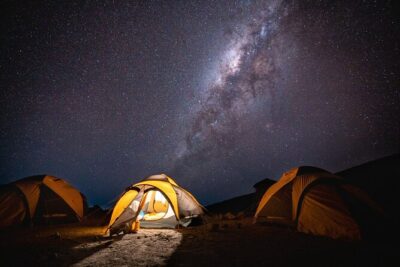
At camp, you will be at 9,350 feet. That is high enough for the climb to begin feeling serious, but the route still has plenty of cover and plant life. This first night is a good test of your boots, layers, day pack, and general pacing.
Day 2: Machame Camp to Shira 2 Camp
Day two is shorter at five kilometers, with four to six hours of hiking. You climb from 9,350 feet to 12,500 feet and leave the rainforest for heath habitat.
This change matters. The mountain begins to feel wider and more open, with less shelter from wind and sun. The distance is modest, but the elevation gain is notable, so you should not judge the day by kilometers alone.
Shira 2 Camp gives you a high night before the route reaches Lava Tower. The shorter walking distance can provide welcome recovery after day one, but you still need to pay attention to how your body reacts to altitude. Headaches, poor sleep, or unusual fatigue should be reported to the guide rather than brushed aside.
The schedule allows time for photos and stops, one of the advantages of taking seven days. You can enjoy the change in vegetation without treating every pause as lost time. A mountain climb is not improved by racing through every viewpoint.
Day 3: Shira 2, Lava Tower, and Barranco
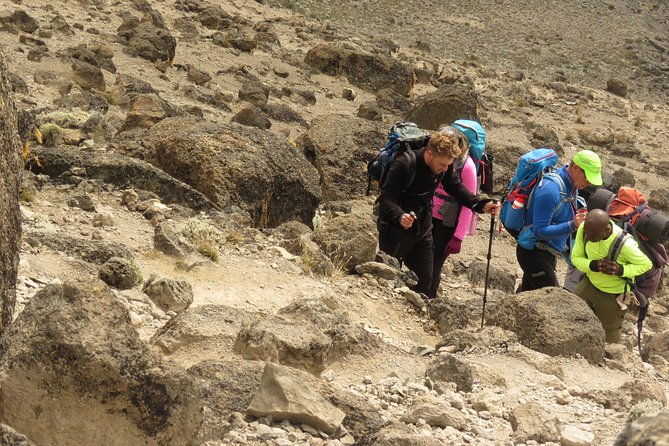
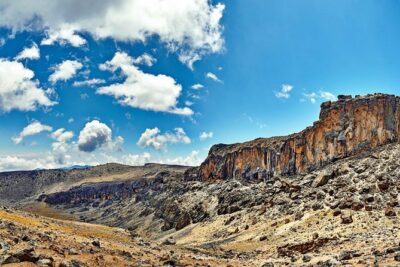
Day three is the route’s altitude lesson. You walk seven kilometers from Shira 2 to Lava Tower, climbing to 15,190 feet over four to five hours. The habitat is alpine desert, dry and exposed compared with the lower forest.
Lava Tower is the high point of the day. It is also where the route asks you to work hard before giving you a lower camp for the night. After reaching 15,190 feet, you continue another three kilometers downhill to Barranco Camp at 13,044 feet, taking about two to three hours.
The full day therefore includes an ascent and descent, with roughly six to eight hours of walking in total. That may sound tiring, and it is, but the structure is useful. You spend time high, then sleep lower at Barranco rather than staying at Lava Tower.
Barranco Camp has a special role in the itinerary. It prepares you for the next morning’s famous Barranco Wall section, although the supplied schedule does not give a separate distance or timing for that feature. Expect day three to test your breathing and day pack organization more than your route-finding skills, since you are accompanied by an English-speaking guide.
More Kilimanjaro routes:
- Kilimanjaro climb by Lemosho Route (7-day)
★ 5.0 · 651 reviews - Kilimanjaro climb, Machame Route (7-day)
★ 5.0 · 262 reviews - Kilimanjaro Climbing Lemosho Route 8 Days.
★ 5.0 · 186 reviews - Climbing Kilimanjaro – Machame Route
★ 5.0 · 170 reviews
Day 4: Barranco Camp to Karanga Camp
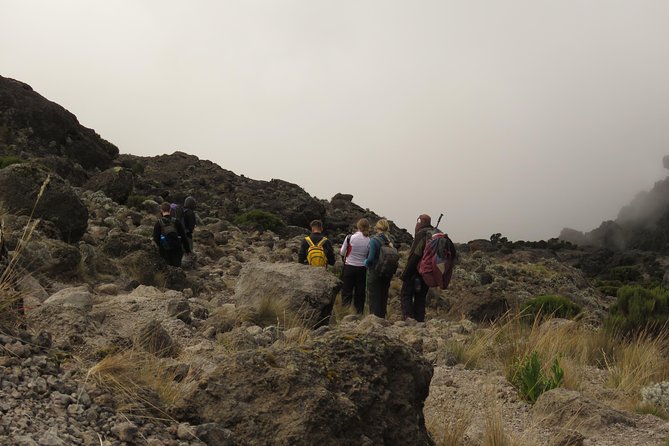
The hike from Barranco to Karanga is five kilometers and takes about four to five hours. The elevation changes only slightly, from 13,044 feet to 13,106 feet, but this is not a flat rest day.
The value is in the position of the camp. Karanga breaks up the approach to Barafu, giving you a separate night before the high camp. Instead of walking all the way from Barranco to Barafu, you reach Karanga first and deal with the remaining section the next day.
That split is the defining reason to consider this seven-day version. A long approach immediately before a midnight summit start can leave little time to eat, organize your clothing, or sleep. Karanga does not remove the hard work, but it makes the pre-summit schedule less compressed.
Because the elevation gain is small, you might feel that the day looks easy on paper. Do not mistake that for a free afternoon. At more than 13,000 feet, a short uphill section can feel slow, and the alpine desert offers little protection from changing conditions.
Day 5: Karanga Camp to Barafu Camp
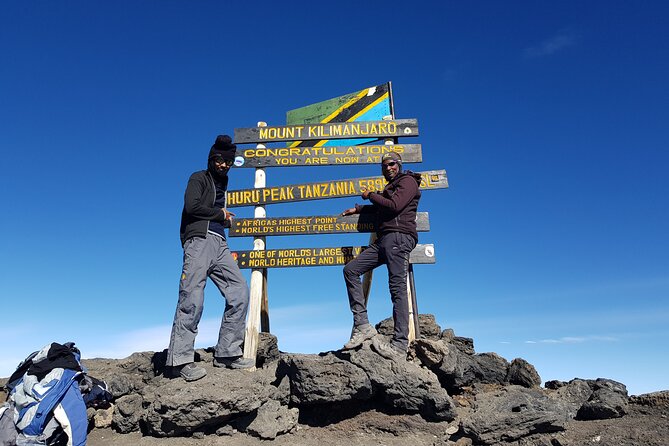
The fifth day covers only four kilometers, but you climb from 13,106 feet to 15,331 feet. The walk takes about four to five hours, again through alpine desert.
Barafu is the launch point for the summit attempt. You will arrive at high camp with the major climb still ahead, so this is the day to eat, drink, sort your clothing, and rest as much as possible. The itinerary does not specify the exact summit departure time, but the description makes clear that the ascent begins around midnight.
This is where the value of the Karanga split becomes practical. You have not just completed a long Barranco to Barafu march. Your preceding day was shorter, and the final approach to Barafu is also short in distance, though steep in elevation.
You should also keep your expectations realistic. The short walking distances on days four and five do not mean the route is gentle. The air is thin, the camps are high, and your body is preparing for the most demanding section of the entire trip.
Day 6: Barafu Camp to Uhuru Peak
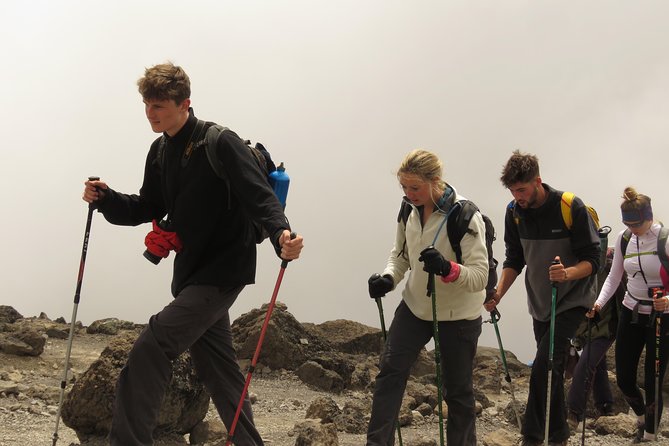
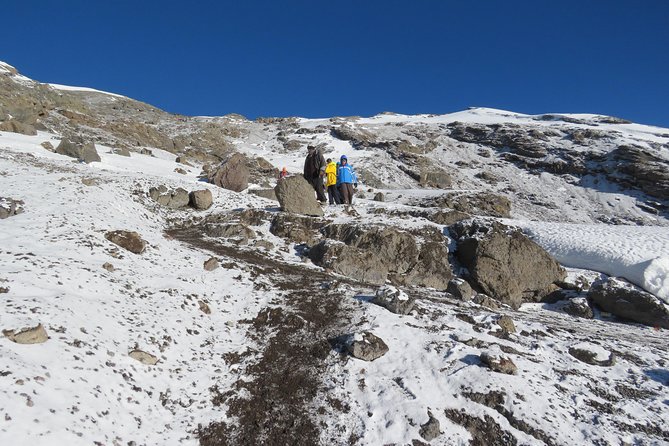
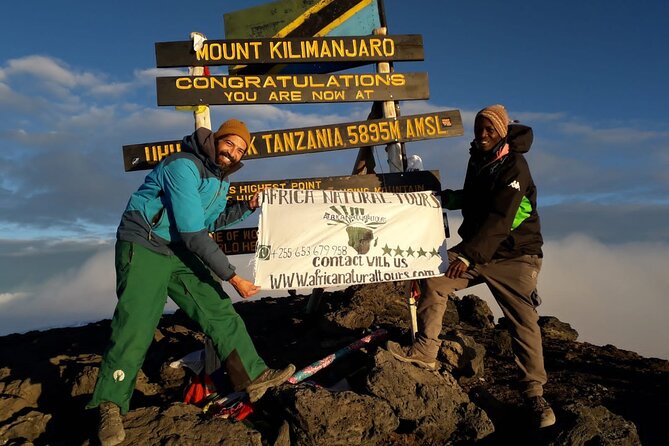
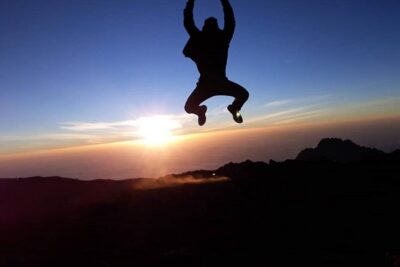
Summit day is the physical center of the trek. You climb five kilometers from Barafu at 15,331 feet to Uhuru Peak at 19,341 feet, taking about seven to eight hours. The habitat is Arctic, and the temperature and wind can feel very different from the forest below.
A midnight start gives you a chance to reach the summit during the morning hours, but it also creates a sleep problem. The itinerary itself points to the concern: a long hike from Barranco to Barafu would leave little time to rest before beginning the summit climb. The Karanga overnight helps, but you should still expect limited sleep.
The summit distance is only five kilometers, yet the elevation gain is immense. This is a slow, demanding climb where your guide’s pacing matters. The supplied account describes Maneno and Hassan as flexible with pace, including adjusting to a couple who walked quickly. That detail is useful because it suggests the guiding approach is not locked to one rigid speed.
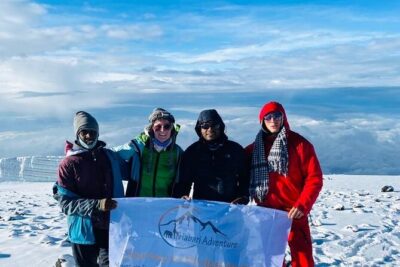
At Uhuru Peak, you reach the highest point of Mount Kilimanjaro. After photos and a short pause, the day is not finished. You descend 12 kilometers to Mweka Camp at 10,065 feet, taking another four to six hours.
That descent is a major reason to conserve strength on the way up. Knees and feet take a beating when you lose elevation quickly, and the total day can involve roughly 11 to 14 hours of movement. The drop to Mweka is welcome because sleeping much lower can feel easier after the summit, but you should not expect a casual walk down.
Day 7: Mweka Camp to Mweka Gate
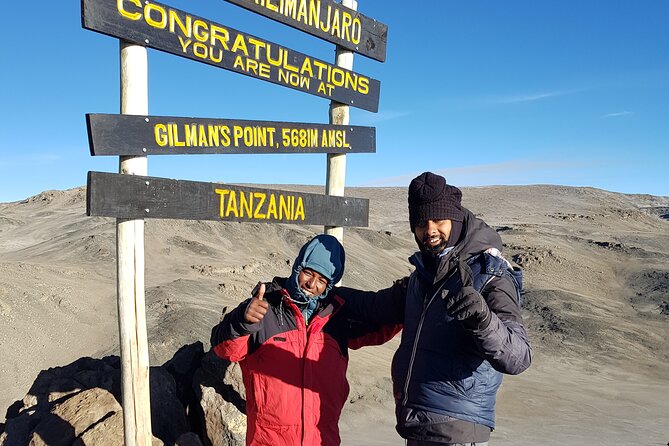
The final hike covers 10 kilometers and takes about three to four hours. You descend from 10,065 feet to 5,380 feet, returning to rainforest habitat.
This is a simpler day compared with the summit, but tired legs can make any downhill walk feel longer than expected. Take care with your footing and keep your water accessible. The walk ends at Mweka Gate, where the arranged transport returns you to your hotel in Moshi town.
The activity ends back at the meeting point, listed as the Africa Natural Tours office on Mkwawa Avenue. Your Moshi hotel must be booked separately, both before and after the climb.
What the $1,200 price really covers
The advertised cost is $1,200 per person. That price includes a professional English-speaking guide, meals during the trek, camping equipment such as a tent and mattress, and transport from a Moshi hotel to Machame Gate and back after the climb.
The food arrangement is a real convenience. Breakfast, lunch, and dinner are included throughout the trekking portion, so you do not need to carry your own meal supply or arrange separate mountain catering. You should still clarify any personal dietary needs before booking, since the supplied information does not describe menu choices.
The price does not include all park fees. Entry fees, rescue fees, and camping fees are listed separately, along with tips for the mountain crew. Kilimanjaro International Airport pickup and drop-off are also excluded, as are hotel nights in Moshi before and after the trek.
That makes the headline price useful for comparison, but not the final trip budget. I would ask for the exact extra park-fee amount, the recommended crew gratuity, and the airport transfer cost before paying. The value is strongest if you already have Moshi accommodation and can arrange your arrival and departure independently.
The tour offers free cancellation if you cancel at least 24 hours before the local start time. Within 24 hours, the payment is not refunded, and late changes are not accepted.
Camping, transport, and group size
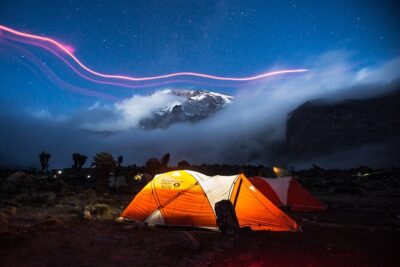
Camping equipment includes a tent and mattress. The information does not specify tent occupancy, sleeping bags, toilet arrangements, or the exact camping setup, so ask those questions before departure if they matter to you.
Pickup is offered from a hotel you booked in Moshi town, and the same town transfer is provided after the trek. The meeting point is Africa Natural Tours on Mkwawa Avenue, Tanzania. Airport transport is not part of the stated package.
The maximum group size is 50 people. That is a sizable possible group for a mountain climb, even though the experience describes private transportation and a guided format. If you want a smaller walking party, ask how the 50-person maximum is divided among guides and mountain crew.
The practical benefit of a guide is clear: you are not responsible for finding the route through changing habitats and camps. The guide also becomes important when deciding pace and responding to altitude concerns. The account involving Maneno and Hassan gives you two guide names to request or confirm, though guide assignment should be checked at booking.
Who should book this Kilimanjaro climb?
This route suits you if you want a full week on the mountain and prefer a schedule that protects the hours before the summit. It is a good match for someone with moderate physical fitness who can handle five to eight hours on several days and a very long summit day.
You should also like simple camping and changing conditions. This is not a hotel-based mountain holiday. The route reaches 19,341 feet, and the experience requires you to sleep at high camps, walk through alpine desert, and function with little rest before the summit attempt.
The trip may appeal to couples or private-minded climbers because transport is arranged and the guiding team can adjust pace. Still, the maximum group size of 50 means you should not assume a private hiking party without asking.
I would be cautious if you are mainly attracted by the $1,200 figure and have not budgeted for park fees, hotels, tips, and airport transport. I would also think twice if you want a short, comfortable climb. The seven-day schedule is better paced, not easy.
Should you book the 7-day Machame Route?
I would book this tour if your priority is a sensible summit schedule, included mountain meals, and direct support from an English-speaking guide. The Karanga overnight is the key advantage. It breaks up the pre-summit approach and gives you a better chance of reaching Barafu with useful energy left.
I would not book until I had confirmed the full cost. Park fees are excluded, and the tour does not cover Moshi hotel nights or airport transfers. Ask about group size, camping arrangements, crew tips, and the precise fee balance.
If you are prepared for a demanding climb and want seven days rather than a rushed ascent, this is a strong option. If your budget is tight or your fitness is uncertain, the low headline price and difficult summit day deserve careful thought before you commit.
FAQ
How long is the Kilimanjaro Machame Route tour?
The tour lasts seven days, approximately, including the ascent from Machame Gate, the summit attempt, and the descent to Mweka Gate.
Where does the tour start?
The listed meeting point is Africa Natural Tours on Mkwawa Avenue in Tanzania. Pickup is also offered from a hotel you booked in Moshi town.
Where does the tour end?
The activity ends back at the meeting point after transport from Mweka Gate. The included drop-off is to your hotel in Moshi town from the gate after the trek.
Are meals included during the climb?
Yes. Breakfast, lunch, and dinner are included during the trekking portion of the tour.
Is camping equipment included?
Yes. Camping equipment includes a tent and mattress.
Are Kilimanjaro park fees included?
No. Entry fees, rescue fees, and camping fees are listed as additional costs.
Is airport pickup included?
No. Pickup and drop-off at Kilimanjaro International Airport are not included.
Are Moshi hotel nights included?
No. Hotel accommodation before and after the trek in Moshi town is not included.
How fit do I need to be?
You should have a moderate level of physical fitness. The itinerary includes several four to seven-hour hiking days, plus a summit climb lasting about seven to eight hours and a 12-kilometer descent to Mweka Camp.
What is the cancellation policy?
You can receive a full refund by cancelling at least 24 hours before the local start time. Cancellations or changes made within 24 hours are not accepted for a refund.
More week long trips in Moshi & Kilimanjaro
- Climbing Kilimanjaro through 7 days Machame Route
★ 5.0 · 151 reviews - 7 Days Kilimanjaro via Machame route affordable price
★ 5.0 · 110 reviews - 7-Day Magical Tanzania Safari -Premium High End Package
★ 5.0 · 53 reviews - 7 Days Machame route – Kilimanjaro
★ 5.0 · 45 reviews
More Hiking Tours in Moshi & Kilimanjaro
- Best Kilimanjaro Adventure 7 days Machame route Trekking
★ 5.0 · 42 reviews - Kilimanjaro 7 Day Private Trekking Experience
★ 5.0 · 40 reviews - 8 Days Kilimanjaro Hike via Lemosho Route
★ 5.0 · 39 reviews - 6 Days Machame Route Kilimanjaro Climbing Trekking Tour
★ 5.0 · 34 reviews
Newly listed around Moshi & Kilimanjaro
- Climb Mount Kilimanjaro: 7 Days Machame Route★ 5.0 · 3 reviews
- 6 Days Mount Kilimanjaro Climbing via Rongai Route★ 5.0 · 3 reviews
- Explore 1 day Ngorongoro Crater Budget Group Safari from Arusha★ 5.0 · 3 reviews
- Mt. Kilimanjaro Day Hiking★ 5.0 · 3 reviews
- Chemka (Kikuletwa) Hot Springs, Tanzania★ 5.0 · 3 reviews
- Guided City tour of Moshi★ 4.3 · 3 reviews
- 8 Day Tanzania Family Safari★ 5.0 · 3 reviews
- Serengeti Safari with Sirikwa Travel★ 5.0 · 3 reviews
Kilimanjaro Climbs, compared.
Browse the lists this tour appears in