
Reviewed · KILIMANJARO CLIMBS
6 Days Machame Route Kilimanjaro Climbing Trekking Tour
Kilimanjaro’s Machame Route gives you a dramatic six-day climb through rainforest, moorland, rocky ridges, and high alpine terrain before the final push to Uhuru Peak at 5,895 meters. The route is scenic and varied, but the summit night is a serious physical test.
I like the steady climb through several distinct zones, and I like that the price includes the working parts that can quickly add up: guides, porters, cook, tents, meals, transfers, park and rescue fees, and a summit certificate. The emergency oxygen cylinder and purified drinking water are also useful safeguards on a demanding mountain.
The main drawback is the schedule. Six days gives you less acclimatization time than longer Kilimanjaro routes, and the summit attempt begins around midnight after a short stay at Barafu Camp. You need good preparation, sensible pacing, and a willingness to accept that altitude, not fitness alone, decides how far you get.
Key points to know before booking
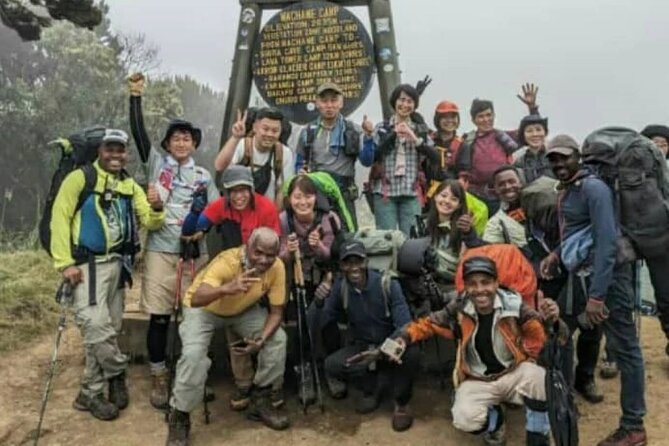
- Machame Gate to Uhuru Peak: The route climbs from 5,381 feet to 19,341 feet, passing through five very different mountain zones.
- Summit night begins around midnight: You climb from Barafu Camp to Stella Point, then continue to Uhuru Peak before descending the same day.
- Barranco Wall is the route’s hands-on section: The climb at Kiss Stone Point can feel exposed and awkward, but guides assist you through it.
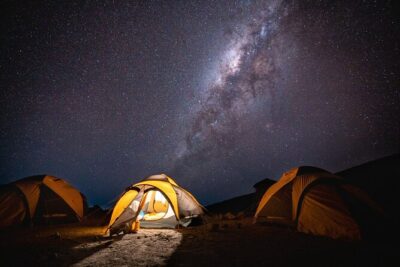
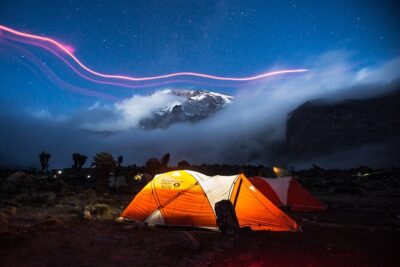
- Camping is part of the experience: Twin-sharing four-season tents, mattresses, a mess tent, tables, and chairs are provided.
- The package covers major costs: Park, camping, rescue, guide, porter, cook, food, water, hotel, and transfer costs are included.
- The operator has several praised guides: Names associated with previous departures include Victor, Baraka, Maneno, and Elipokea. Confirm your guide team before setting off.
Why the Machame Route is a strong six-day choice
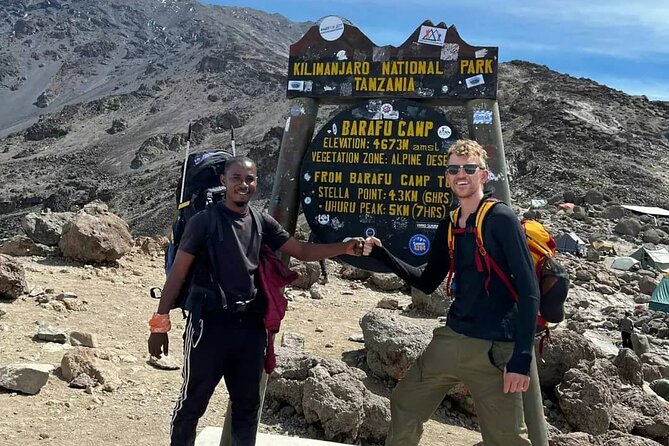
The Machame Route is often chosen for its scenery. You begin in thick forest and finish among bare volcanic slopes and glacial high country. That change is not just pretty. It gives the trek a clear sense of progress, as every day brings a new kind of ground and a new view.
The route also uses the climb-high, sleep-lower pattern on Day 3. You walk up to Lava Tower at 15,223 feet, then descend to Barranco Camp at 12,959 feet. That day is tiring, but the altitude profile is useful for getting your body accustomed to thinner air.
The trade-off is the six-day timetable. The itinerary includes long walking days and a quick summit schedule. If you are choosing between this trip and a seven or eight-day climb, the longer option generally gives you more time to adjust, but this package may suit you if your schedule and budget are tighter.
This is a private activity, so only your group participates. That can make a real difference on a mountain. Your walking pace, rest stops, and daily conversations are easier to manage when you are not tied to a large mixed group.
More Hiking Tours in Moshi
- Private Kilimanjaro Hike 7 Day Lemosho Route
★ 5.0 · 60 reviews - Best Kilimanjaro hiking day trip tour with Kilinge Adventures
★ 4.5 · 54 reviews - #1. Best Kilimanjaro Day hike Tour-Machame Route-ISMANI
★ 4.2 · 47 reviews
Day 1: Moshi to Machame Gate and the rainforest
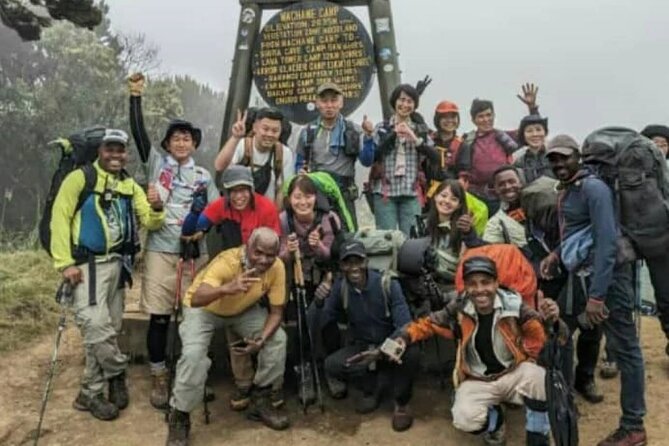
Your climb begins with a drive of about 45 minutes from Moshi to Machame Gate, at roughly 5,381 feet. The gate is the formal starting point, where mountain access and park arrangements are handled before you walk into Kilimanjaro National Park.
The first section climbs through the rainforest to Machame Camp at 9,301 feet. The walk takes about five to seven hours and is described as steep. You should expect a full first day rather than a gentle warm-up.
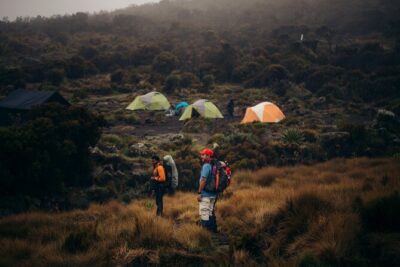
Machame Camp gives you your first night in the mountain. The supplied four-season tents are shared by two people, and a separate mess tent includes tables and chairs. That arrangement matters after a wet or tiring walk, since you have somewhere to eat and rest instead of sitting inside your sleeping tent.
The itinerary notes only eight to nine hours of sleep at camp, which is a useful reminder that mountain days begin early and do not follow a normal holiday rhythm. Keep your first day slow. The goal is not to prove anything on the lower slopes.
Day 2: Shira Cave Camp and the end of the forest
From Machame Camp, you continue toward Shira Cave Camp at 12,598 feet. This four-hour walk passes through the final part of the rainforest before reaching the moorland zone.
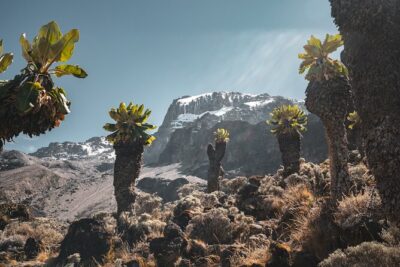
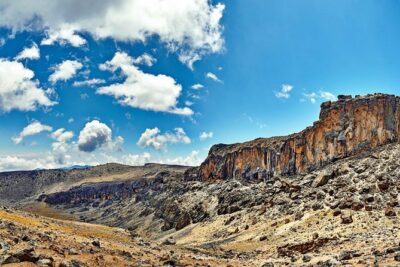
The change in vegetation is one of the satisfying details of this route. Trees give way to more open ground, rocky ridges, and wider views. You can look back and see how quickly the mountain has lifted you above the forest.
The trail includes several hours along a rocky ridge. That may sound shorter than Day 1, but the higher altitude and uneven footing can make it feel substantial. Your guide will set the pace, and you should follow the old mountain rule: walk slowly, drink often, and save energy for later.
Camping at Shira Cave Camp places you high on the mountain after only two walking days. For some people, the quick gain in altitude is the first point where the trek feels serious. Pay attention to how you feel and tell your guide about symptoms rather than trying to hide them.
Day 3: Lava Tower, Barranco Wall, and the best altitude lesson
Day 3 is the route’s key acclimatization day and one of its hardest. You climb from Shira Cave Camp to Lava Tower at about 15,223 feet, then descend to Barranco Camp at 12,959 feet. The walk takes approximately five to eight hours.
Lava Tower is a high point on the approach and a useful test of how your body responds to altitude. You gain height, spend time at a demanding elevation, then sleep lower at Barranco. That is more useful than simply marching upward every day.
The descent to Barranco Camp is not wasted effort. It gives you a chance to recover while still exposing you to high-altitude conditions. You will likely feel the combination of distance, steep ground, and thin air, so keep your expectations realistic.
Barranco Camp is also the staging point for the Barranco Wall the next morning. The wall can look intimidating from camp, but it is not presented as a technical climbing pitch. You use your hands in places, move carefully, and rely on the guide team for direction.
More Kilimanjaro routes:
- Kilimanjaro climb by Lemosho Route (7-day)
★ 5.0 · 651 reviews - Kilimanjaro climb, Machame Route (7-day)
★ 5.0 · 262 reviews - Kilimanjaro Climbing Lemosho Route 8 Days.
★ 5.0 · 186 reviews - Climbing Kilimanjaro – Machame Route
★ 5.0 · 170 reviews
Day 4: Barranco Wall to Barafu Camp
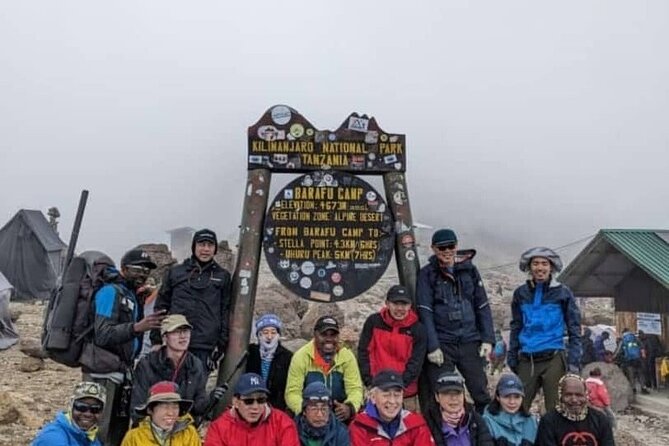
Day 4 begins with the Barranco Wall, followed by the Karanga Valley ridges and the climb to Karanga Camp at 13,238 feet. The hardest named spot is Kiss Stone Point, where the path becomes more challenging and careful movement is needed.
This is where an experienced guide earns his pay. The guide team helps climbers choose their footing and move through the awkward sections. Names connected with this operator include Victor, Baraka, Maneno, and Elipokea, although your assigned team should be confirmed before departure.
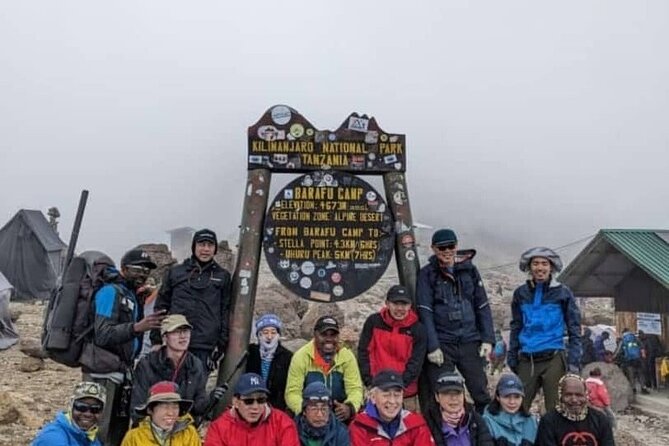
From Karanga, the route continues toward Barafu Camp at 15,354 feet. The trail connects with the Mweka Route, and the day’s total walking time is listed at about three to four hours for the climb, with the full day at roughly seven hours.
Barafu is not a place for a long evening. You receive an early dinner, organize your summit clothing and equipment, and try to sleep before the midnight start. This is one of the less glamorous parts of the trip: you may be tired, cold, excited, and unable to sleep much. Prepare your headlamp, warm layers, water, gloves, and snacks before lying down.
Day 5: Stella Point, Uhuru Peak, and the long descent
The summit day starts around midnight from Barafu Camp. The wording in the schedule says 12:00 pm, but the description clearly indicates a midnight summit attempt. You climb northwest through heavy scree toward the crater rim and Stella Point.
This is the toughest section of the trek. The ground is loose, the air is thin, and progress can feel slow. Your guide will set a measured pace, but you still need to manage your own energy. The summit is not won by rushing the first hours.
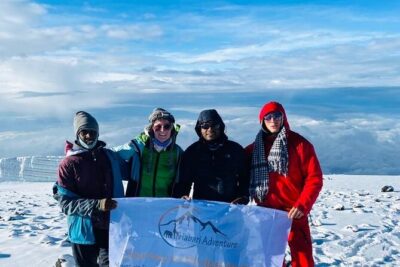
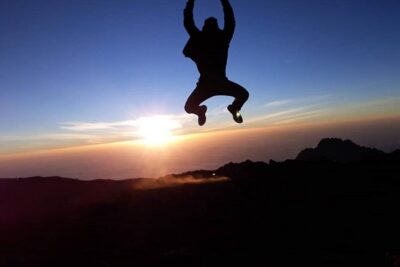
At Stella Point, you take about a 15-minute break before continuing along the crater rim to Uhuru Peak. Reaching Uhuru Peak means standing at 5,895 meters, or 19,341 feet, the highest point in Africa. The reward is a sunrise over the summit area, weather permitting, followed by the knowledge that the hardest uphill walking is behind you.
The descent to Barafu Camp comes next. You rest there for about two hours and take lunch before continuing to Millennium Camp for the final mountain dinner and overnight stay. This is a very long day even though the listed walking time is about six hours. The schedule combines a midnight start, summit climb, descent, rest, and another descent, so do not treat Day 5 as a simple peak walk.
The emergency oxygen cylinder included in the package is a sensible safety provision, but it is not a substitute for travel insurance, medical screening, or honest communication with your guide. Travel insurance is not included, and you should arrange it yourself.
Day 6: Mweka descent and the return to Moshi
The final morning begins at Millennium Camp and continues to Mweka Camp at 10,104 feet before descending through the rainforest to Mweka Gate at 5,380 feet. The hike from Millennium Camp to the gate takes about three to four hours.
After several days above the forest, the return to thick vegetation feels like a clear finish. Your knees may notice the descent more than your lungs do, especially after summit day. Trekking poles, if you bring or rent them, can be helpful, but personal equipment is not included in the package.
At Mweka Gate, you receive your Kilimanjaro summit certificate before the drive back to Moshi. The activity ends at the Macpace Tours and Safaris meeting point in Moshi, and the package includes transfers back to your hotel.
What the $1,950 price covers
At $1,950 per person, this is not a bare-bones park entry. The package includes airport pickup and drop-off, transport to and from the mountain, hotel accommodation, professional mountain guides, porters, a cook, salaries for the mountain crew, tents, mattresses, a mess tent, food, purified water, and major park-related charges.
The listed park costs include conservation, camping or hut, and rescue fees. Government VAT is also included. Those items are important because they are not small extras on Kilimanjaro.
Meals are listed as six breakfasts, six lunches, and six dinners. The food is described as fresh, nutritious, and served in large portions. On a trek like this, meals are practical fuel, not a minor comfort. The cook and dining setup can shape how well you recover between walking days.
The cost does not include Tanzania visa fees, international or domestic flights, personal trekking equipment, tips, or travel insurance. Sleeping bags, hiking boots, and clothing can be rented, but the price and condition of rental equipment are not specified, so ask before arrival.
One detail to clarify is the hotel arrangement. Hotels are included, but the supplied schedule describes a Moshi overnight after the final descent and does not spell out every hotel night. Ask the operator for the exact pre-trek and post-trek accommodation plan.
Camping, crew support, and daily comfort
You sleep in twin-sharing, waterproof, four-season mountain tents. A mattress is included, along with a mess tent furnished with a table and chairs. That is basic mountain comfort, but it makes the evenings more manageable.
Porters carry the group’s main luggage and help establish camp, while the cook prepares meals. Several booking accounts linked to this operator specifically praise the porters for keeping luggage safe and putting tents up on time. You should still pack a small day bag with water, rain protection, warm layers, medication, and anything you need between camps.
The guides are central to the trip. They manage the route, pace the group, assist at the Barranco Wall, and monitor the summit attempt. Previous guide names connected with the company include Victor, Baraka, Maneno, and Elipokea. Ask who will lead your departure and what first-aid qualifications the guide team holds.
The package includes clean, purified drinking water. That removes one daily worry, but you still need to drink regularly. A past booking account stresses water, good gear, and preparation as key parts of a successful climb. That is sensible advice, not a promise of reaching the summit.
Who should choose this Kilimanjaro climb
This trek suits you if you want a scenic route, prefer a private group, and can handle long walking days with a midnight summit attempt. You do not need to be an expert mountaineer, but the operator asks for a moderate fitness level, and the altitude makes the trip demanding.
It is a good match for someone who likes camping and wants the full mountain routine: walking, arriving at camp, eating in a mess tent, organizing gear, and sleeping in a shared tent. It is less suitable if you want a relaxed holiday schedule or dislike cold nights and early starts.
The six-day length may appeal if you have limited time. Still, you should understand the compromise. The itinerary is compact, and the body has less time to adapt than on a longer climb. If you have concerns about altitude or previous high-altitude problems, discuss the trip with a medical professional before booking.
Macpace Tours and Safaris has received a 5 rating with 100 percent recommendation shown in the supplied material, with praise focused on attentive staff, professional guides, helpful porters, food, tents, organization, and safety. Those are the areas I would care about most on Kilimanjaro. You should still confirm current crew arrangements, equipment standards, and the precise hotel plan.
Booking, cancellation, and meeting details
The meeting point is Macpace Tours & Safaris in Moshi, Tanzania. The activity ends back at that meeting point after the return from Mweka Gate.
Confirmation is provided at booking, and the experience is listed for Monday through Sunday during the stated operating period. It includes a mobile ticket, which is handy for keeping your booking details available on your phone.
You can cancel at least 24 hours before the local start time for a full refund. Cancellations or changes made within 24 hours are not accepted for a refund. The cancellation cut-off uses local Tanzanian time.
Should you book the six-day Machame Route?
I would choose this climb for the scenery, private format, broad range of inclusions, and the practical support of guides, porters, cook, tents, food, water, and transfers. The route offers a real sense of changing altitude, from rainforest to the high volcanic slopes around Uhuru Peak.
I would pause if you want the best possible acclimatization odds or dislike very long summit days. Before paying, ask about the exact guide team, hotel nights, rental equipment, group size within your private party, and the plan for handling altitude problems.
Book it if you are prepared for a demanding six-day mountain crossing and understand that reaching the summit is never guaranteed. If your schedule allows extra days, compare longer Kilimanjaro routes. If six days is the practical limit, the Machame Route offers a well-supported and scenic way to attempt Africa’s highest peak.
FAQ
Where does the Kilimanjaro trek begin?
The trek begins at Machame Gate, located at about 5,381 feet. Transport from Moshi to the gate takes approximately 45 minutes.
Where does the activity end?
The activity ends back at the Macpace Tours & Safaris meeting point in Moshi after you descend to Mweka Gate.
How long is the tour?
The tour lasts approximately six days.
What is the highest point reached?
The highest point is Uhuru Peak at 5,895 meters, or 19,341 feet.
Does the tour include accommodation?
Yes. Hotels are included, and mountain accommodation uses waterproof, four-season tents shared by two people. A mattress is also provided.
Are meals included?
Yes. The package lists six breakfasts, six lunches, and six dinners.
Is drinking water provided?
Yes. Clean, purified drinking water is included.
Are guides and porters included?
Yes. Professional mountain guides, porters, and a cook are included, along with their salaries.
Is personal trekking equipment included?
No. Personal equipment such as sleeping bags, hiking boots, and clothing is not included. The supplied information says these items are available for rent.
Is travel insurance included?
No. Travel insurance is not included. Tanzania visa fees, international and domestic flights, and tips are also excluded.
Can I cancel for a full refund?
Yes, if you cancel at least 24 hours before the experience start time. Cancellations or changes made within 24 hours are not refunded.
More six day trips in Moshi & Kilimanjaro
- Kilimanjaro climb, Lemosho Route (6-day)
★ 5.0 · 129 reviews - Kilimanjaro climb, Marangu route (6-day)
★ 5.0 · 72 reviews - 6 Days 5 Night Safari
★ 5.0 · 57 reviews - 6 Days Tanzania Classic Safari
★ 5.0 · 52 reviews
More Hiking Tours in Moshi & Kilimanjaro
- Best Kilimanjaro Adventure 7 days Machame route Trekking
★ 5.0 · 42 reviews - Kilimanjaro 7 Day Private Trekking Experience
★ 5.0 · 40 reviews - 8 Days Kilimanjaro Hike via Lemosho Route
★ 5.0 · 39 reviews - The Best & Unique Kilimanjaro Hiking tour 7 days Machame route
★ 5.0 · 34 reviews
Newly listed around Moshi & Kilimanjaro
- Climb Mount Kilimanjaro: 7 Days Machame Route★ 5.0 · 3 reviews
- 6 Days Mount Kilimanjaro Climbing via Rongai Route★ 5.0 · 3 reviews
- Explore 1 day Ngorongoro Crater Budget Group Safari from Arusha★ 5.0 · 3 reviews
- Mt. Kilimanjaro Day Hiking★ 5.0 · 3 reviews
- Chemka (Kikuletwa) Hot Springs, Tanzania★ 5.0 · 3 reviews
- Guided City tour of Moshi★ 4.3 · 3 reviews
- 8 Day Tanzania Family Safari★ 5.0 · 3 reviews
- Serengeti Safari with Sirikwa Travel★ 5.0 · 3 reviews
Kilimanjaro Climbs, compared.
Browse the lists this tour appears in