
Reviewed · KILIMANJARO CLIMBS
6 Days Mount Kilimanjaro Trek Marangu Route
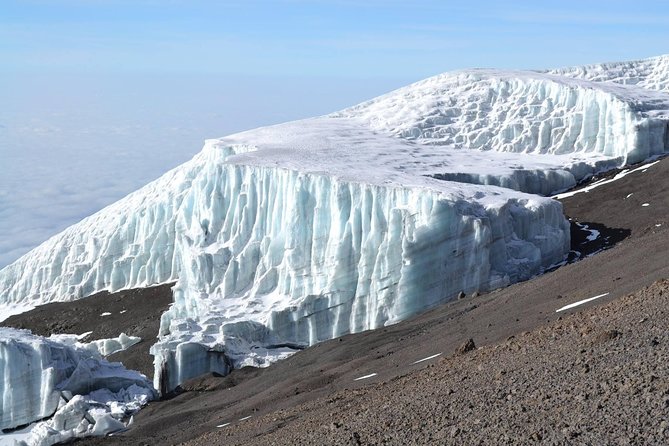
The Marangu Route gives you the most straightforward way up Kilimanjaro, with a proper hut each night instead of camping. You begin in rainforest, cross high moorland, spend an extra acclimatization day at Horombo, then make the cold midnight push toward Uhuru Peak at 5,895 meters.
I like two things here. First, the extra day at Horombo is a smart choice because the five-day version is rushed and gives your body less time to adjust. Second, the support package is generous: airport transfers, Moshi hotel nights, guides, porters, a cook, meals, drinking water, and emergency oxygen are all included.
The main drawback is the summit schedule. Day five can last 12 to 15 hours, with a midnight start, a steep climb to the crater rim, a return to Kibo Hut, and then more walking to Horombo. Marangu is often called the easiest route, but easy is not the same as easy-going at high altitude.
Key points before you book
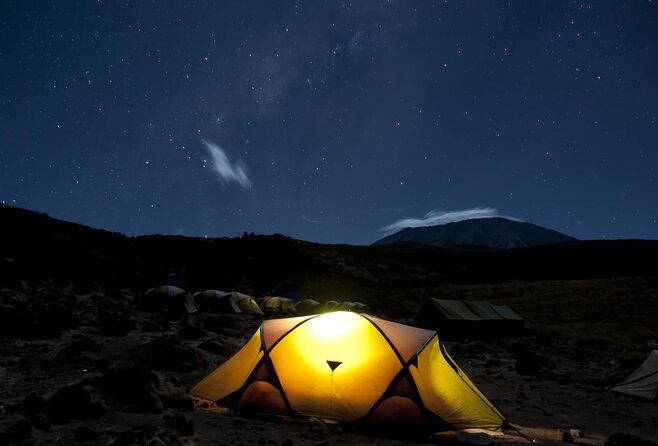
- Sleep in mountain huts: Marangu is the only Kilimanjaro route in this program described with dormitory-style hut accommodation.
- Take the sixth day seriously: The extra acclimatization day at Horombo includes a hike toward Mawenzi Ridge or Zebra Rock.
- Expect a very long summit day: The Uhuru Peak stage covers about 22 kilometers and may take 12 to 15 hours.
- The route changes dramatically: You move from tropical rainforest to heath, moorland, a bare saddle, and glacial high country.
- The support team is a major part of the value: A qualified guide, assistant guides, porters, cook, meals, transfers, and hotel nights are included.
- Clarify the equipment details: The package mentions both hut accommodation and camping equipment, so ask the operator exactly what sleeping gear and shelter are supplied.
What the six-day Marangu Route feels like
At $2,350 per person, this is not a cheap mountain walk. It is a full-service Kilimanjaro package, though, not simply a park entry ticket and a guide. Airport transfers, two Moshi hotel nights, mountain staff wages, meals, water, hut-based trekking, and emergency equipment all affect the price.
I would compare this offer by checking what other operators include. A lower headline price may leave out airport transport, hotel nights, meals, porter wages, or equipment. Here, the package takes care of many of the costly moving parts, which can make the price reasonable for someone who wants a managed climb rather than a do-it-yourself arrangement.
The trip is private, meaning only your group participates. That matters if you want the guide’s attention and a pace suited to your own party. It also means you should discuss the group size before paying, since the information does not specify how many people can join one booking.
The experience begins with collection from your Moshi lodge after breakfast. Return transfers between Kilimanjaro Airport and Moshi are included, along with dinner and breakfast at the hotel on the night before and the night after the climb.
More Hiking Tours in Moshi
- Private Kilimanjaro Hike 7 Day Lemosho Route
★ 5.0 · 60 reviews - Best Kilimanjaro hiking day trip tour with Kilinge Adventures
★ 4.5 · 54 reviews - #1. Best Kilimanjaro Day hike Tour-Machame Route-ISMANI
★ 4.2 · 47 reviews
Day 1: Marangu Gate to Mandara Hut
The first hiking day covers 8.3 kilometers and takes about five hours. After the park paperwork at Marangu Gate, the trail enters dense rainforest and climbs toward Mandara Hut.
This is a pleasant opening stage because the forest provides shade and a strong sense of change from ordinary life in Moshi. The route description also points to possible primate sightings, though wildlife is never guaranteed. Keep your eyes open, but do not treat the forest as a safari stop.
After reaching Mandara Hut, you can rest before walking to Maundi Crater. The crater viewpoint is a useful bonus rather than a throwaway side trip, with views toward the Kenyan interior. At this point, you are still at the friendly end of the mountain. The air is relatively comfortable, the vegetation is thick, and the walking day is manageable for someone with moderate fitness.
Mandara is also where the accommodation question starts to matter. The Marangu Route uses huts with dormitory-style sleeping, but the included list also refers to tents, camp chairs, tables, and sleeping mattresses. Ask for a clear explanation before departure. You should know if the mattress is supplied in the hut, if bedding is included, and why tent equipment appears in the package.
Day 2: Mandara Hut to Horombo Hut
Day two covers 12.5 kilometers. The stated hiking time varies between about four to six hours in the detailed schedule, while the day heading gives nine hours, so you should allow a full day for a slow uphill pace, breaks, lunch, and group conditions.
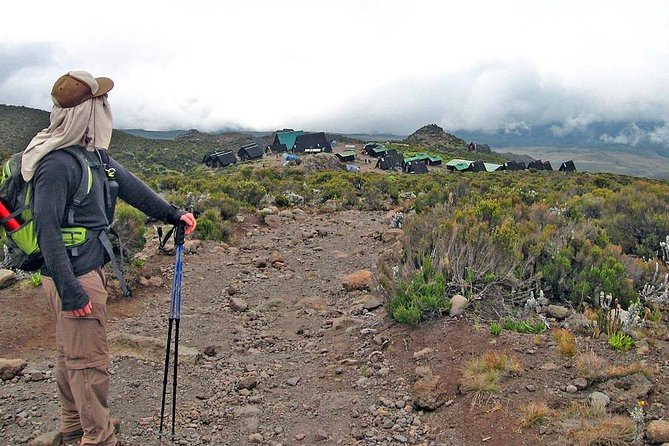
The forest thins soon after Mandara Hut. You enter the heath and moor zone, where the trees give way to open ground and unusual high-altitude plants. This change is one of the pleasures of Marangu. The route does not give you one unchanging view. It keeps presenting a new setting as you climb.
Horombo Hut sits at about 3,700 meters. From here, you can see Mawenzi, Kibo, and the broad plain toward the Masai steppe. The views are big, but the altitude is the real event of the day. Headaches, poor sleep, tiredness, and shortness of breath can begin here. Tell your guide early if you feel unwell. Do not try to hide symptoms to protect your summit chances.
The support team becomes especially important at Horombo. Meals are prepared on the mountain, hot water is provided for washing each day, and the guides monitor your condition. Several comments about the service single out the food, guide support, and attention to safety. One party even received a birthday cake and champagne at Horombo, showing that special celebrations may be possible if arranged in advance, though you should not assume they are part of the standard program.
Day 3: Acclimatization near Mawenzi Peak
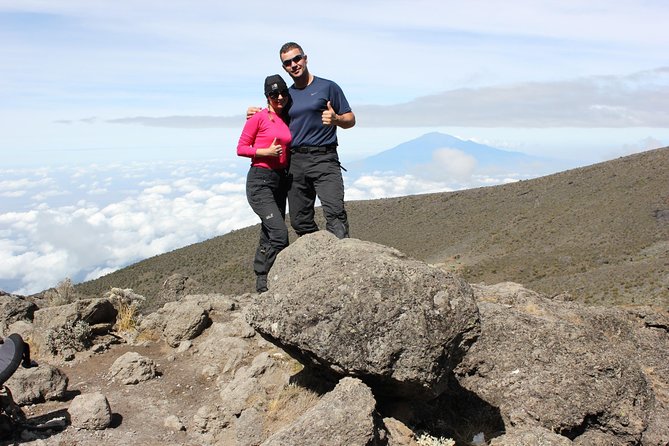
This is the day that justifies choosing six days instead of five. You leave Horombo for a shorter hike toward Mawenzi Ridge or Zebra Rock, then return to the hut for lunch, rest, dinner, and another night at altitude.
The walking time is about four hours. That may sound easy after the previous day, but it has an important job. You gain height during the day and then sleep at the same camp, allowing your body more time to adjust without pushing your overnight elevation too far.
The views toward Mawenzi are a strong reason to make the climb. Mawenzi is the jagged secondary summit of Kilimanjaro, and the ridge gives you a different angle on the mountain than the main trail. Zebra Rock is another possible destination, but the exact choice depends on the guide and conditions.
Use the afternoon wisely. Eat, drink, organize your summit clothing, and rest. The next stage is longer, colder, and more exposed. This is not the day to spend all your energy taking photos or wandering far from camp.
More Kilimanjaro routes:
- Kilimanjaro climb by Lemosho Route (7-day)
★ 5.0 · 651 reviews - Kilimanjaro climb, Machame Route (7-day)
★ 5.0 · 262 reviews - Kilimanjaro Climbing Lemosho Route 8 Days.
★ 5.0 · 186 reviews - Climbing Kilimanjaro – Machame Route
★ 5.0 · 170 reviews
Day 4: Horombo Hut to Kibo Hut
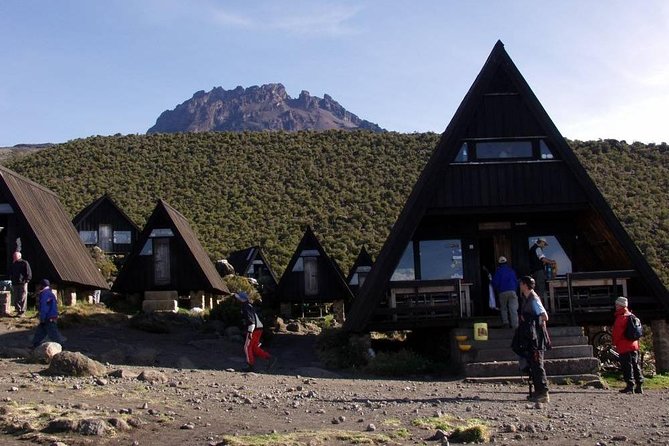
The route now crosses 9.5 kilometers in about six to seven hours. You pass the last water point and continue onto the saddle, the broad, nearly vegetation-free plateau between Mawenzi and Kibo.
The saddle can feel stark after the earlier forest and moorland. There is little cover, so weather and wind matter. The trail itself is described as well built, but the combination of altitude, distance, and barren surroundings can make this stage feel longer than the mileage suggests.
Kibo Hut sits below the summit zone. You arrive, eat an early dinner, and try to sleep early because the final ascent begins around midnight. This is a strange evening. You may not feel hungry, you may struggle to sleep, and your mind may keep returning to the climb ahead. Eat what you can and prepare your clothing, headlamp, water, and personal items before lying down.
The package includes fresh drinking water and hot water for washing. It also recommends bringing water-purifying tablets, snacks, personal medicine, and a portable toilet. A portable toilet is optional but strongly recommended in the supplied information. Confirm exactly what the operator provides, since the standard hut arrangement may not offer the privacy some people expect.
Day 5: The midnight climb to Uhuru Peak
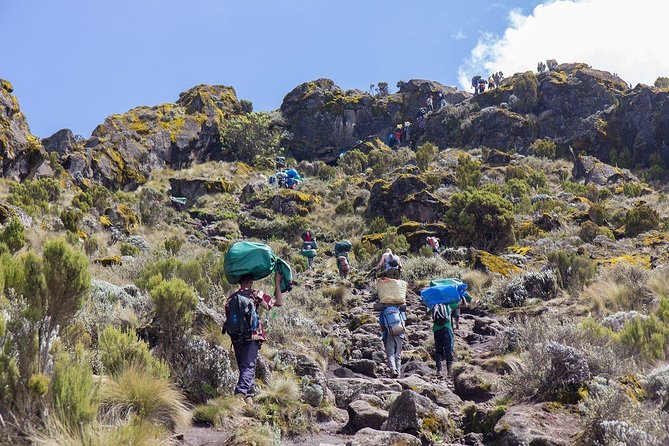
The summit day is the hardest part of the trip by a wide margin. The schedule gives a total distance of about 22 kilometers and 12 to 15 hours of walking.
You begin around midnight. The climb proceeds slowly toward Hans Meyer Cave at about 5,220 meters, then continues upward toward Gilman’s Point at 5,681 meters. Reaching Gilman’s Point means you have reached the crater rim, but it is not yet Uhuru Peak.
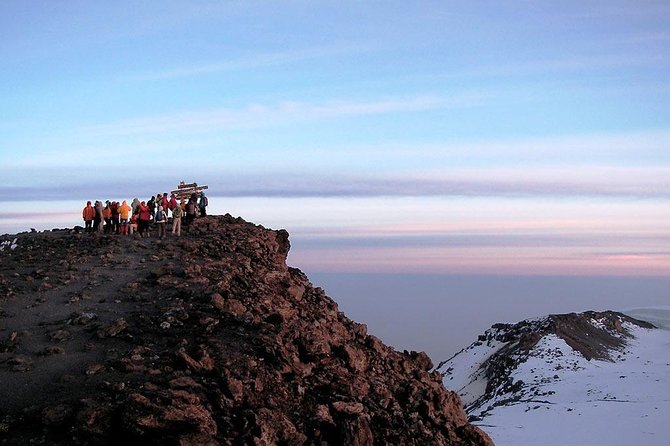
Sunrise near the crater rim can be unforgettable. The cold night begins to ease as light reaches the mountain, and the horizon opens across Tanzania. From Gilman’s Point, you continue for another one to two hours toward Uhuru Peak, the highest point on Kilimanjaro.
This final section can be psychologically difficult. You have already climbed for hours, the air is thin, and every step feels deliberate. A guide may set a slow pace, often described by the Swahili phrase pole pole, meaning slowly, slowly. Follow that pace rather than racing ahead.
Emergency oxygen is included, but it is for emergencies only and is not intended as summit assistance. That is an important distinction. Oxygen equipment does not remove the risks of altitude sickness, and reaching the top depends on your health, acclimatization, weather, and the guide’s safety decisions.
After Uhuru Peak, you return to Kibo Hut for a warm meal and a one to two-hour rest. Then you continue down to Horombo Hut. This is why the day can stretch to 15 hours. The summit photograph is only one part of the day; you must still descend a long way afterward.
Not everyone reaches the summit, and that is not a personal failure. One account connected with this program describes a climber who did not make the top but planned to try again with the same team. A responsible guide will treat a safe retreat as the correct decision when your health requires it.
Day 6: Horombo Hut back to Marangu Gate
The final stage takes you through the heath and moor zone to Mandara Hut, where lunch is expected, then down through the rainforest to the national park gate at about 1,860 meters.
The listed distance is 20.8 kilometers, with about eight hours of walking. Another timing note says the gate may be reached after roughly six hours, so treat this as a full descent day rather than planning an early afternoon departure.
Your knees and feet may feel the descent more than the uphill walking. Trekking poles can be useful, though personal hiking gear is not included. At the gate, you say goodbye to the guides and support crew before transferring back to your Moshi hotel.
A hot shower, dinner, and a proper bed will feel well earned. The night after the climb is included, so you do not need to rush to the airport immediately after reaching the gate. The return transfer to Kilimanjaro Airport is also included, but confirm the timing if your flight is soon after the trek.
Food, water, staff, and safety
Food is one of the strongest parts of the package. Breakfast, lunch, and dinner are supplied during the mountain portion, with five breakfasts, five dinners, and six lunches listed. The wording is slightly untidy, but the day-by-day plan indicates meals throughout the six-day schedule, including lunch on the final day.
Several personal accounts praise the meals and the cook. That matters more than it may seem. At altitude, you need regular food, and familiar warm meals can make a tiring day easier. Bring extra snacks because snacks are not included and your appetite may change during the climb.
A qualified mountain guide, assistant guides, porters, and cook are included, with their wages listed as part of the price. This is a substantial service structure. You should ask how porter welfare and tipping are handled, since those details are not given here.
Fresh drinking water is included, along with hot water for washing each day. Water-purifying tablets remain on the suggested personal packing list. Personal medicine is also your responsibility. Travel insurance and health insurance are not included, and neither are visas or flights.
The provider is Intrepid Explorer Tanzania. The supplied material also contains references to Enjoy Kili and slightly mixed route descriptions, including one comment about Machame. That does not necessarily describe this exact departure, but it is a good reason to confirm the operator name, route, accommodation, and staff for your booking in writing.
What to bring and what to clarify
Your personal hiking and trekking gear is not included, though some equipment may be rented from the operator’s store in Tanzania. The exact rental inventory is not supplied, so do not assume every item will be available in your size.
Before booking, I would ask about:
- The exact hut and sleeping arrangement on each night
- Whether mattresses are supplied inside the huts
- Why tents, chairs, tables, and mattresses appear in the equipment list
- The number of people in your private group
- The guide’s name and emergency procedures
- The operator’s current porter and tipping policy
- The meal plan and the meaning of the five breakfast, five dinner, and six lunch counts
- The transfer schedule for your arrival and departure flights
You need moderate physical fitness, but fitness alone does not guarantee a summit. The altitude is the main challenge. Training should include long uphill walks, long descents, and consecutive days on your feet.
Who should choose this climb
This route suits you if you prefer huts to tents, want a private group, and like having transport, food, accommodation, and staff arranged in one package. It also suits people who want a gentler acclimatization plan than the minimum five-day Marangu schedule.
It is less suitable if you want quiet trails or a wilderness route with no backtracking. Marangu uses the same general path for the ascent and descent, and its reputation as the easiest route can create false confidence. The summit day is still severe.
It may suit a first Kilimanjaro attempt, provided you understand the physical and altitude demands. It can also work for a birthday or group goal. One organized party specifically planned its summit for a 40th birthday, while another celebrated at Horombo with a cake and champagne arranged by the guides.
The 100 percent recommendation figure and five-star overall rating from 15 listed ratings suggest strong satisfaction with the service. I would read that mainly as evidence of good organization, meals, staff care, and support. It is not proof that every person will reach Uhuru Peak. One positive account clearly says the climber turned back before the summit.
Should you book the six-day Marangu trek?
I would book it if you want the practical comforts of mountain huts and a full support team, and if you can manage the long summit day with realistic expectations. The extra Horombo acclimatization day is the right choice, and the included airport transfers, hotel nights, meals, water, staff, and emergency oxygen give the $2,350 price useful value.
Before paying, get the accommodation and equipment details clarified. Also check the meeting point, which is described unusually as Gilman’s Point even though the trek begins at Marangu Gate. That may be an administrative error, but it should be corrected before departure.
Choose this climb for its hut accommodation, clear progression through five ecological zones, and strong support package. Do not choose it because someone called it easy. Kilimanjaro demands patience, good preparation, and the willingness to stop if your body gives you a warning.
FAQ
How long is the Marangu Route trek?
The trek lasts approximately six days, beginning and ending in the Moshi area. The itinerary includes five nights on the mountain schedule and hotel accommodation before and after the climb.
What is the highest point reached?
The summit goal is Uhuru Peak at 5,895 meters. The route also passes Gilman’s Point at 5,681 meters on the crater rim.
Where does the trek begin?
The hiking portion begins at Marangu Gate after collection from your Moshi lodge and completion of national park paperwork.
Does the tour include airport transfers?
Yes. Return transfers between Kilimanjaro Airport and Moshi are included.
Are hotel nights included?
Yes. The package includes the night before and the night after the climb at a hotel in Moshi, with dinner and breakfast.
Where do you sleep on the mountain?
The Marangu Route is described as using dormitory-style sleeping huts. The included equipment list also mentions tents and mattresses, so you should confirm the precise arrangement with Intrepid Explorer Tanzania.
Is an acclimatization day included?
Yes. Day three is an extra acclimatization day at Horombo Hut, with a hike toward Mawenzi Ridge or Zebra Rock before returning for lunch and rest.
Are meals included?
Yes. Breakfast, lunch, and dinner are included during the trek. Snacks are not included and should be brought separately.
What is the cancellation policy?
You can cancel at least 24 hours before the experience start time for a full refund. Cancellations or changes made less than 24 hours before the start time are not accepted for a refund.
More six day trips in Moshi & Kilimanjaro
- Kilimanjaro climb, Lemosho Route (6-day)
★ 5.0 · 129 reviews - Kilimanjaro climb, Marangu route (6-day)
★ 5.0 · 72 reviews - 6 Days 5 Night Safari
★ 5.0 · 57 reviews - 6 Days Tanzania Classic Safari
★ 5.0 · 52 reviews
More Hiking Tours in Moshi & Kilimanjaro
- Best Kilimanjaro Adventure 7 days Machame route Trekking
★ 5.0 · 42 reviews - Kilimanjaro 7 Day Private Trekking Experience
★ 5.0 · 40 reviews - 8 Days Kilimanjaro Hike via Lemosho Route
★ 5.0 · 39 reviews - 6 Days Machame Route Kilimanjaro Climbing Trekking Tour
★ 5.0 · 34 reviews
Newly listed around Moshi & Kilimanjaro
- Climb Mount Kilimanjaro: 7 Days Machame Route★ 5.0 · 3 reviews
- 6 Days Mount Kilimanjaro Climbing via Rongai Route★ 5.0 · 3 reviews
- Explore 1 day Ngorongoro Crater Budget Group Safari from Arusha★ 5.0 · 3 reviews
- Mt. Kilimanjaro Day Hiking★ 5.0 · 3 reviews
- Chemka (Kikuletwa) Hot Springs, Tanzania★ 5.0 · 3 reviews
- Guided City tour of Moshi★ 4.3 · 3 reviews
- 8 Day Tanzania Family Safari★ 5.0 · 3 reviews
- Serengeti Safari with Sirikwa Travel★ 5.0 · 3 reviews
Kilimanjaro Climbs, compared.








Browse the lists this tour appears in