
Reviewed · KILIMANJARO CLIMBS
6 Days Kilimanjaro Trekking – Machame Route
Africa’s highest mountain rises to 5,895 meters, and the six-day Machame Route gives you a direct, demanding way to reach Uhuru Peak. You move from coffee and banana farms into rainforest, heather, high moorland, volcanic rock, and snow near the summit.
I like the route’s strong acclimatization day from the Shira Plateau to Lava Tower and down to Barranco. I also like the practical support: private transport, guides, porters, five nights of mountain accommodation, and a team that has included guides such as Peter, Alex, Adam, Habibu, and Kijaji on past departures.
The main catch is the pace. Six days leaves less time to adjust to altitude than longer Machame itineraries, and summit day is hard even for fit hikers. The published schedule also uses both Barranco Hut and Millennium Camp in one description, so confirm the exact overnight camps before you pay.
Key points at a glance
- The Machame Route changes scenery fast: Coffee and banana plantations give way to rainforest, heather, lava rock, glaciers, and snow.
- Lava Tower is the key altitude test: You climb to about 4,876 meters, then sleep lower at Barranco to help your body adjust.
- Summit day begins around midnight to 2 a.m.: Expect heavy scree, cold, darkness, and a long ascent to Stella Point and Uhuru Peak.
- The final route descends through Mweka: Mud is likely at lower elevations, so gaiters and trekking poles are useful.
- Support is a major part of the price: The package includes a professional guide, porter, hotel transfers, taxes, park fees, lunch, and five nights of accommodation.
- The team has earned praise for pacing and meals: Guides Peter and Alex are noted for adjusting walking speed, while chef Daniel is credited with varied mountain meals.
Why the Machame Route makes a strong Kilimanjaro choice
Machame is often called the scenic route because it gives you a broad sample of Kilimanjaro in a short period. You start among farms and forest, then cross open high country before reaching the volcanic upper slopes. The route does not simply point uphill every day. It climbs high, drops lower, and uses that pattern to help with altitude.
That matters because the summit is not mainly a test of leg strength. At 5,895 meters, thin air is the real problem. The climb from Shira to Lava Tower, followed by a descent to Barranco, is especially useful. You gain height during the day, then sleep at a lower elevation than your highest walking point.
I like this route for people who want scenery and a real mountain challenge, rather than a short walk to a viewpoint. You will not get a soft introduction. The six-day schedule is efficient, but it gives you less spare time if your body adjusts slowly.
The private format is another advantage. Only your group participates, so the pace can be adapted within reason. Guides on previous trips, including Peter and Alex, have been praised for walking at a speed suited to the group, explaining plants along the way, and keeping communication clear. That sort of attention is worth more than a fancy camp slogan on a high mountain.
More Hiking Tours in Moshi
- Private Kilimanjaro Hike 7 Day Lemosho Route
★ 5.0 · 60 reviews - Best Kilimanjaro hiking day trip tour with Kilinge Adventures
★ 4.5 · 54 reviews - #1. Best Kilimanjaro Day hike Tour-Machame Route-ISMANI
★ 4.2 · 47 reviews
Day 1: Moshi to Machame, from farms to rainforest
The trip begins with pickup from Kilimanjaro Airport or your hotel, depending on your arrangements. The drive toward the park gives you an early look at northern Tanzania, including coffee and banana plantations grown by local people as food and cash crops.
At Machame, you enter the lower mountain zone. The first section leads through rainforest, where the air is usually cooler and wetter than in Moshi. The vegetation is a pleasant surprise for anyone picturing Kilimanjaro as a bare volcanic cone from the start.
The overnight is listed as Machame Hut, although Kilimanjaro routes commonly use camps rather than enclosed huts in this area. Confirm the exact sleeping arrangement with Afrishare before departure. In practical terms, you should expect basic mountain accommodation, not a hotel room.
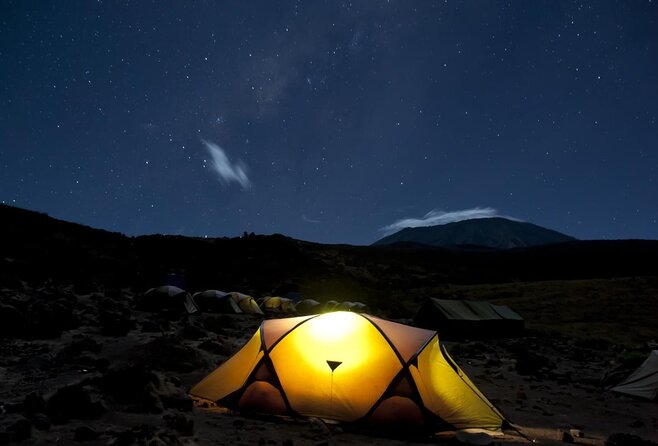
Dinner and an early night are important here. Day one may not feel like the hardest walking, but it begins the adjustment process. Keep your daypack light and bring rain protection where you can reach it quickly. The mountain can change from warm to wet without much warning.
Day 2: Machame to Shira, leaving the forest behind
After breakfast, the route leaves the rainforest and begins climbing through heather. The path crosses a small valley, then follows a steep, rocky ridge before turning west toward a river gorge.
This is a more open day than the first. You start to see the mountain’s scale, and the forest no longer hides every view. The walk is described as taking about three to four hours to reach Shira, though your group’s pace and rest stops will affect the timing.
Shira is one of Kilimanjaro’s three major volcanic centers, rising to about 4,160 meters. It is an old volcanic zone, broad and exposed, with a very different feel from the damp forest below. The open setting can also mean stronger wind and colder evenings.
Take this night seriously. Some people feel fine at Shira and then notice a headache or poor sleep later. Tell your guide about symptoms early. You are not trying to prove toughness by staying silent.
Day 3: Shira Plateau, Lava Tower, and Barranco
This is the most important acclimatization day of the route. From the Shira Plateau, you walk east along a ridge and pass the junction leading toward Kibo, the volcanic center that forms the summit.
The route then turns southeast toward Lava Tower, also called the Shark’s Tooth. The high point is about 4,876 meters, or 15,997 feet. You may feel the altitude here, even if the walking itself is manageable.
After Lava Tower, the path descends to Barranco at roughly 3,860 meters. The day ends close to the elevation where it began, but that is exactly the point. Your body gets time at a higher altitude without forcing you to sleep at the day’s highest point.
This is a long and varied day, and the change from rocky upper ground to Barranco’s setting is memorable. The two major peaks, Kibo and Mawenzi, are part of Kilimanjaro’s volcanic story, and the views become more dramatic as the forest falls far below.
The schedule supplied for this tour refers to both Barranco Hut and Millennium Camp in this section. That is unclear. Ask which camp is planned for your departure, because exact camp location affects the walking time, sleeping height, and next morning’s start.
More Kilimanjaro routes:
- Kilimanjaro climb by Lemosho Route (7-day)
★ 5.0 · 651 reviews - Kilimanjaro climb, Machame Route (7-day)
★ 5.0 · 262 reviews - Kilimanjaro Climbing Lemosho Route 8 Days.
★ 5.0 · 186 reviews - Climbing Kilimanjaro – Machame Route
★ 5.0 · 170 reviews
Day 4: Barranco Wall to Barafu Camp
After breakfast, you face the Barranco Wall. This is a steep ridge rather than a technical rock climb, but you will use your hands in places and move carefully. A guide is especially useful here because the best line is not always obvious.
The route continues through the Karanga Valley, with lunch listed at about 4,200 meters. You then reach the junction connecting with the Mweka Trail before climbing toward Barafu Camp.
By now, the scenery is sparse and volcanic. Barafu means ice in Swahili, and the camp sits high on the mountain at around 4,600 meters, though the exact elevation can vary by camp position. Mawenzi and Kibo are visible from this side, giving you a clear sense that the summit is close, but not yet easy.
Barafu is where you prepare for the hardest part of the trek. Eat what you can, organize your headlamp, warm layers, gloves, water, and snacks, and try to rest. Dinner may be early, followed by a short sleep before the midnight start.
The team support is important here. Guides such as Peter and Alex have been praised for keeping communication clear and encouraging hikers without forcing an unsafe pace. That balance matters. A summit goal is worthwhile, but altitude symptoms must be taken seriously.
Day 5: The midnight push to Stella Point and Uhuru Peak
Summit day begins very early, usually between midnight and 2 a.m. You climb in darkness through heavy scree toward Stella Point on the crater rim. The slope is steep, the air is thin, and every step can feel slow.
Stella Point sits at about 5,685 meters. If the weather cooperates, sunrise here can be extraordinary. You will likely stop only briefly, since cold and altitude make long pauses uncomfortable.
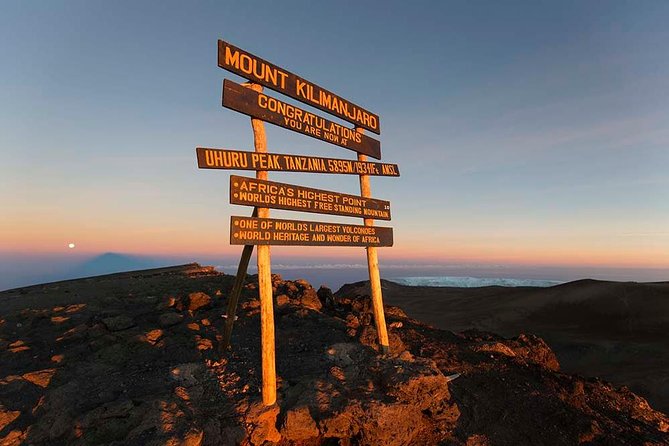
From Stella Point, the route continues for about an hour toward Uhuru Peak. Snow may appear along this section. At 5,895 meters, Uhuru Peak is the highest point on Kilimanjaro and the highest point in Africa.
The final ascent is both physical and mental. You may be walking slowly, breathing hard, and focusing on only a few steps at a time. Your guide’s job is to watch your condition, keep the group moving safely, and help you make sensible choices if altitude becomes a problem.
The summit is not guaranteed. Weather, altitude sickness, exhaustion, or route conditions can stop a strong hiker. That is not failure. Reaching Stella Point is already a major achievement, and a professional operator should treat safety as more important than a photograph at the top.
After the summit, you descend to Barafu for rest, then continue lower toward the Mweka side if conditions and timing allow. This makes day five extremely long. It is one reason you should arrive with a moderate level of fitness and avoid treating the six-day plan as a casual holiday walk.
Day 6: Mweka descent, certificates, and the ride back
The final descent continues through changing vegetation toward Mweka Park Gate. Lower down, the trail can be wet and muddy. Gaiters keep mud out of your boots, while trekking poles help protect your knees during the long downhill stretch.
At the gate, you receive summit certificates. The route then continues for about another hour to Mweka Village, where a vehicle takes you back to your hotel in Moshi or Arusha, or to the airport if arranged.
This transfer is useful because you are likely to be tired, dusty, and ready for a shower rather than another negotiation with local transport. Keep rain gear and a warmer layer handy during the descent, but shorts and a T-shirt may be enough once you reach lower elevations.
Tipping is not included. The information specifically notes tipping for the driver as an extra, and it also reminds you to tip guides and porters. Bring cash and ask the operator for current advice on fair amounts before you start.
What the $1,715 price really covers
At $1,715 per person, this is not a cheap walk, but Kilimanjaro costs are driven by park fees, mountain staff, food, transport, permits, and the logistics of moving a group into a remote setting.
The package includes:
- Five nights of accommodation
- All fees and taxes
- Lunch
- A professional guide
- Porter support
- Hotel pickup and drop-off
- Private participation for your group
The stated inclusions deserve a close read. Lunch is specifically listed, while the itinerary also describes breakfast and dinner at camp. Ask for a written meal plan before booking so you know exactly what is covered each day.
Food quality can make a major difference at altitude. Chef Daniel has been credited with preparing a varied menu despite the difficult mountain conditions. That is encouraging, especially if you need vegetarian food or have dietary restrictions. Vegetarian meals are available, but you must request them when booking.
The private format improves value if you are traveling with several people who want the same pace and schedule. For a solo hiker, the per-person cost may feel higher, but private support and airport or hotel transfers can simplify the trip.
Guides, porters, and the human side of the climb
The people supporting you are central to this experience. Guides named in past departures include Peter, Alex, Adam, Habibu, and Kijaji. Ibrahim has also handled communication with some groups. Staff assignments can change, so treat these names as examples rather than a promise that a particular guide will lead your climb.
The strongest service qualities to look for are clear communication, careful pacing, and honest advice about altitude. Peter and Alex have been praised for adjusting their speed to the group and explaining local plants. Adam has been described as fun and motivating, which can matter during the long summit push.
Porters carry much of the shared mountain equipment, allowing you to keep your personal daypack manageable. Pack respectfully and avoid bringing unnecessary weight. Your comfort should never depend on asking staff to carry luxury items you could leave behind.
The final reminder about tips is not a footnote. Guides, porters, cooks, and drivers are part of the service you are buying, but their gratuities are separate. Plan for that cost from the start.
Fitness, weather, food, and what to pack
The operator rates this experience for people with moderate physical fitness. That does not mean you need to be an athlete, but you should be ready for several consecutive days of uphill walking, cold nights, poor sleep, and a very long summit day.
The tour operates in all weather. Your clothing must work across several zones, from wet forest to cold volcanic slopes. Keep waterproof layers accessible rather than buried in your main bag.
Useful items include:
- Waterproof jacket and trousers
- Warm layers for Barafu and summit morning
- Gloves and a warm hat
- Headlamp with spare batteries
- Gaiters for the muddy descent
- Trekking poles
- Water and easy-to-eat snacks
- A small daypack for personal essentials
Specific equipment lists are not provided, so ask Afrishare for its current packing list. Also confirm the exact sleeping camps, daily walking hours, meals, airport arrangements, and guide-to-hiker ratio.
Who should book this six-day climb?
I would recommend this trip to a fit hiker who wants a private Kilimanjaro attempt and values support from guides and porters. It suits someone who wants a scenic route, clear transfers, and a structured plan rather than arranging each mountain service separately.
It is less suitable if you dislike early starts, basic accommodation, wet trails, or uncertain weather. It may also be the wrong choice if you want the best possible acclimatization odds, since a longer Machame itinerary gives you more time on the mountain.
Families should note that children must be accompanied by an adult, and the child rate applies only when sharing with two paying adults. Anyone with dietary needs should provide those details at booking.
Free cancellation is available when you cancel at least 24 hours before the experience starts. Within 24 hours, the payment is not refunded, and late changes are not accepted.
Should you book it?
Book this six-day Machame trek if you want a serious, scenic Kilimanjaro climb with private support and a price that covers the main mountain services. The Lava Tower acclimatization day, the Barranco Wall, and the sunrise summit attempt give the route plenty of variety.
Before paying, get written confirmation of the camp names, meals included, transfer details, tipping expectations, and the full equipment list. If you can afford an extra day, ask about a longer version of Machame. If six days is your limit, arrive fit, walk slowly, speak up about symptoms, and respect the mountain’s timetable.
FAQ
How long is the Kilimanjaro Machame Route experience?
The trek lasts approximately six days and includes five nights of accommodation.
Where does the experience start?
The listed meeting point is Kilimanjaro Airport at Kilimanjaro National Park, Tanzania. Hotel pickup is also included.
Does the price include transport?
Yes. Hotel pickup and drop-off are included. The final vehicle transfer can take you to a hotel in Moshi or Arusha, or to the airport.
Are guides and porters included?
Yes. The package includes a professional guide and porter support.
Are park fees and taxes included?
Yes. All fees and taxes are included in the stated price.
Is food included?
Lunch is listed as included. The daily plan also describes breakfast and dinner at camp, so confirm the full meal plan with Afrishare before booking.
Can vegetarian meals be provided?
Yes. A vegetarian option is available if you request it when booking. You should also provide any other dietary requirements at that time.
What happens if I cancel?
You receive a full refund if you cancel at least 24 hours before the experience starts. Cancellations or changes made within 24 hours are not accepted for a refund.
More six day trips in Moshi & Kilimanjaro
- Kilimanjaro climb, Lemosho Route (6-day)
★ 5.0 · 129 reviews - Kilimanjaro climb, Marangu route (6-day)
★ 5.0 · 72 reviews - 6 Days 5 Night Safari
★ 5.0 · 57 reviews - 6 Days Tanzania Classic Safari
★ 5.0 · 52 reviews
More Hiking Tours in Moshi & Kilimanjaro
- Best Kilimanjaro Adventure 7 days Machame route Trekking
★ 5.0 · 42 reviews - Kilimanjaro 7 Day Private Trekking Experience
★ 5.0 · 40 reviews - 8 Days Kilimanjaro Hike via Lemosho Route
★ 5.0 · 39 reviews - 6 Days Machame Route Kilimanjaro Climbing Trekking Tour
★ 5.0 · 34 reviews
Newly listed around Moshi & Kilimanjaro
- Climb Mount Kilimanjaro: 7 Days Machame Route★ 5.0 · 3 reviews
- 6 Days Mount Kilimanjaro Climbing via Rongai Route★ 5.0 · 3 reviews
- Explore 1 day Ngorongoro Crater Budget Group Safari from Arusha★ 5.0 · 3 reviews
- Mt. Kilimanjaro Day Hiking★ 5.0 · 3 reviews
- Chemka (Kikuletwa) Hot Springs, Tanzania★ 5.0 · 3 reviews
- Guided City tour of Moshi★ 4.3 · 3 reviews
- 8 Day Tanzania Family Safari★ 5.0 · 3 reviews
- Serengeti Safari with Sirikwa Travel★ 5.0 · 3 reviews
Kilimanjaro Climbs, compared.








Browse the lists this tour appears in