
Reviewed · KILIMANJARO CLIMBS
Trek To Mount Kilimanjaro
The most interesting feature here is the Lemosho route, Kilimanjaro’s quieter scenic approach. You begin in lush rainforest, then cross the open Shira Plateau before joining the busier trail toward the summit. That change in scenery gives you a much fuller mountain experience than a quick uphill march.
I like the low-crowd setting and the strong practical support: hot meals, treated water, proper mountain tents, an oxygen tank, rescue cover, and a crew paid according to KPAP standards. The main concern is the advertised two-day duration. A two-day schedule does not match the usual Lemosho climb described in the supplied details, so you should confirm exactly what is included before paying.
Key points to know
- Lemosho offers the scenic start: Expect rainforest, broad mountain views, and time on the Shira Plateau.
- The package is crew-supported: Guides, cooks, porters, three hot meals daily, tents, mattresses, and mess facilities are included.
- Moshi stays are included: You receive two nights of hotel accommodation, plus airport transfers.
- The route description and duration conflict: The schedule lists two days, while the route explanation refers to several days of acclimatization.
- The group is capped at 10 people: That can make guide contact and camp routines easier.
- Sirikwa has a strong service record: Specific guides praised in past Sirikwa trips include Pail and Jyroi, though your assigned team should be confirmed directly.
Lemosho’s rainforest entrance
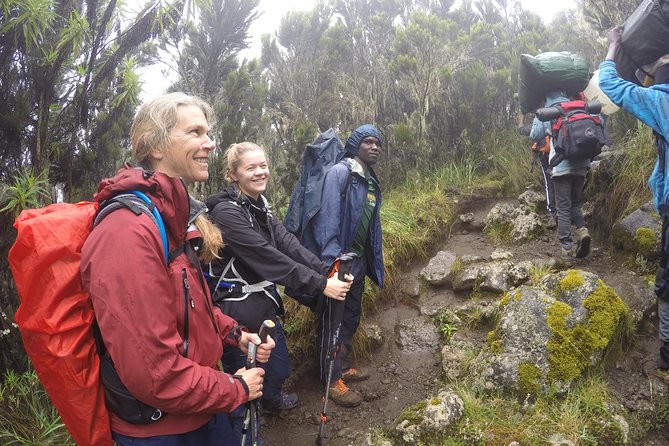
Lemosho is a fine choice if you want Kilimanjaro to feel like a wilderness trip, not simply a high-altitude staircase. The route begins on the western side of the mountain and is valued for its forest, open views, and relatively quiet early stages.
The first part is the kind of walking that rewards patience. You move through thick rainforest, where the mountain feels far more alive than it does above the tree line. The supplied itinerary gives this first park day about eight hours, although it does not provide a precise trail segment, camp name, elevation gain, or distance.
That missing detail matters. On a serious Kilimanjaro trip, your daily altitude, sleeping elevation, walking distance, and camp location help you judge the physical demand. Ask Sirikwa for the exact route plan before booking, especially since the listing calls this a two-day climb.
The route’s appeal grows after the forest. As the trees thin, you gain wider views around the volcanic massif. Lemosho is particularly good for people who want changing scenery, rather than the same trail both up and down.
More Hiking Tours in Moshi
- Private Kilimanjaro Hike 7 Day Lemosho Route
★ 5.0 · 60 reviews - Best Kilimanjaro hiking day trip tour with Kilinge Adventures
★ 4.5 · 54 reviews - #1. Best Kilimanjaro Day hike Tour-Machame Route-ISMANI
★ 4.2 · 47 reviews
Crossing the Shira Plateau slowly
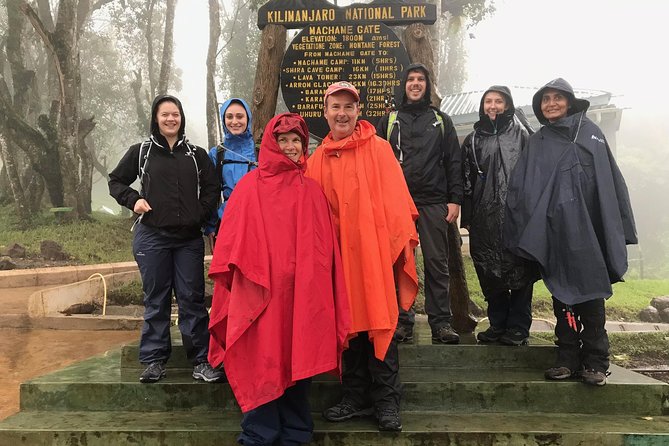
The Shira Plateau is the key reason to consider Lemosho. It gives you time to walk across high open ground before the hardest summit section. In theory, that gradual progression helps you get used to altitude better than a rushed ascent.
I say in theory because acclimatization depends on the actual number of days and sleeping elevations. The description calls this a two-day Lemosho climb and also says the route uses time on the plateau to prepare for the summit. Those claims do not sit comfortably together.
The longer Lemosho schedules associated with this operator are seven or eight days, including an eight-day Lemosho trip and a seven-day group climb. Those durations make more sense for the route’s stated acclimatization purpose. If the advertised product is really only two days, it may represent a shortened section, a typo, or an incomplete itinerary rather than a full Lemosho summit climb.
You should not treat two days as a normal full Kilimanjaro ascent. The supplied information confirms the route name and mountain stops, but it does not give enough detail to verify a complete summit plan. Get the answer in writing.
What the two listed days actually tell you
Day one is assigned to Kilimanjaro National Park and is described as an eight-hour outing. The focus is the Lemosho approach, with rainforest and panoramic mountain views. Park admission is shown as free for this stop, but the package itself includes park entry fees, so you should read that as an itinerary display detail rather than proof that the climb has no park charges.
Day two is assigned to Mount Kilimanjaro, also for about eight hours. The description emphasizes the park’s role in protecting Africa’s highest mountain and the world’s largest free-standing volcanic mass. It does not spell out the summit hour, summit camp, descent route, or final exit point.
That is the biggest practical weakness in the information provided. A full Kilimanjaro plan normally needs a clear sequence of camps and a clear summit schedule. Here, you are given a broad route description but not the operational detail needed to picture the climb.
The two-day label also conflicts with the two hotel nights in Moshi and the mention of camping fees, tents, cooks, porters, and camping equipment. Those inclusions suggest a longer mountain program. Before you rely on this offer, ask:
- Is the price for a complete summit climb or only a two-day mountain segment?
- How many nights are spent camping?
- Which camps are included?
- Is summit day included?
- What are the ascent and descent routes?
- Are the two hotel nights before and after the mountain?
These are not fussy questions. They determine what you are buying.
A support team that covers the basics
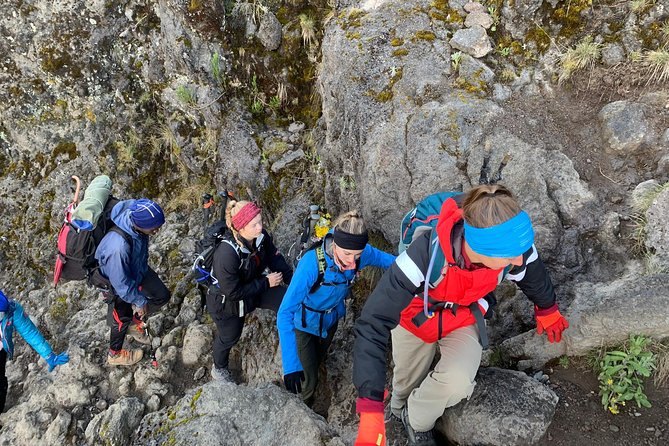
The strongest part of the package is the amount of mountain support included. You receive four-season tents, a sleeping mattress, a mess tent with tables and chairs, hot water for washing, and three hot meals each day on the mountain.
That setup makes a major difference after a long walking day. A mess tent gives you a place to eat and sit out of the weather, while hot washing water is a welcome luxury at altitude. The package also includes treated and filtered drinking water, so you do not have to rely on untreated mountain sources.
A cook, guides, assistant guide, and porters are part of the team. The company also states that the mountain crew receives fair wages approved by KPAP, the Kilimanjaro Porters Assistance Project. That is an important point for you to check when comparing operators, since porter treatment is part of the moral cost of a Kilimanjaro climb.
The listed safety equipment includes an oximeter, oxygen tank, and emergency first-aid kit. These items do not remove the risks of altitude, but they show that the operator has planned for common mountain emergencies. You should still ask how the guides monitor symptoms, what the evacuation procedure is, and who makes the decision to turn back.
Past Sirikwa trips have included guides named Pail and Jyroi, while other experiences mention Ole and Alfred in company roles. Those names give you a sense of the people connected with the operator, but they do not confirm who will lead this particular departure. Ask for your guide names and qualifications before setting out.
More Kilimanjaro routes:
- Kilimanjaro climb by Lemosho Route (7-day)
★ 5.0 · 651 reviews - Kilimanjaro climb, Machame Route (7-day)
★ 5.0 · 262 reviews - Kilimanjaro Climbing Lemosho Route 8 Days.
★ 5.0 · 186 reviews - Climbing Kilimanjaro – Machame Route
★ 5.0 · 170 reviews
Meals, water, and camp comfort
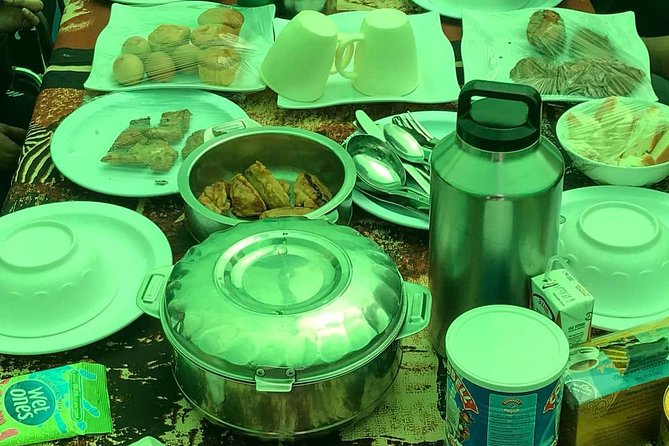
Three hot meals daily are included while you are on the mountain. That is valuable because food planning becomes harder as the climb grows colder, longer, and more tiring. The listing does not provide menus, so you should ask whether dietary requirements can be handled and how far in advance to communicate them.
Filtered drinking water is included throughout the trek. This saves you from buying large amounts of bottled water and reduces plastic waste. Bring a reusable bottle or hydration system, since the supplied information does not specify the container arrangement.
The tents are described as four-season mountain tents. You also receive a sleeping mattress, though no sleeping bag is listed among the inclusions. That omission is worth checking. Do not assume a sleeping bag is provided simply because a mattress is included.
The same applies to clothing, trekking poles, headlamps, duffel bags, and personal gear. The package lists several group services but does not offer a full equipment-rental inventory. Ask for a complete packing list.
Is $2,700 a fair price?
At $2,700 per person, the price can offer good value if it covers a genuine multi-day Lemosho summit climb. Park entry, camping fees, rescue fees, VAT, hotel accommodation, airport transfers, food, water, tents, and a large support team add up quickly.
The 18 percent VAT is already included, which makes comparison easier. Team Kilimanjaro Rescue fees are also included, along with professional guides, cooks, and porters. You are not looking at a bare-bones walking package.
But price only makes sense beside duration. For a two-day experience, $2,700 is difficult to judge without knowing precisely what those two days contain. For a full seven or eight-day Lemosho climb with two Moshi hotel nights and the listed services, it is easier to understand the value.
The price excludes flights, visa costs, tips, hotel meals other than breakfast, alcohol, soft drinks, cigarettes, snacks, and other non-essential items. Tips can be a meaningful extra cost on a supported mountain trip, so budget for them separately.
I would compare this offer with other operators using the same checklist: total mountain days, number of staff, park fees, rescue cover, hotel nights, food, crew wages, and equipment. A cheaper headline price may leave out services that you would later need to pay for.
Group size, timing, and physical demands
The maximum group size is 10 people. That is small enough to keep the group manageable and gives you a better chance of direct contact with the guides. It also limits the social scale of camp life, which suits people who prefer a quieter climb.
The listed start time is 8:00 a.m. Pickup is offered, and the experience is near public transportation. The precise pickup point is not supplied, so confirm whether collection is from your Moshi hotel, Kilimanjaro International Airport, or another location.
The tour requires moderate physical fitness. That phrase is broad, especially for a mountain route involving altitude and long walking days. You should be comfortable with sustained uphill walking and prepared for changing conditions, but the operator should provide the more useful details: daily distance, elevation gain, maximum altitude, and summit timing.
Do not choose this trip on scenery alone. Kilimanjaro is not difficult only because of the trail. Altitude, cold, fatigue, and the length of the summit schedule matter just as much. The route’s stated acclimatization advantage is one reason I like Lemosho, but it depends on booking a proper multi-day version.
What the strong service record suggests
Sirikwa’s past trips are repeatedly associated with supportive guides and porters, careful airport handling, and attention to details from arrival through departure. One Boston group of 10 specifically looked for a trained guide and support team, while another group of four described a seven-day Lemosho climb with a large mountain crew.
Those details point to an operator used to handling groups rather than only selling a simple trail transfer. The company has also arranged wider Tanzania trips, including safaris and waterfall outings, which may be useful if you are combining Kilimanjaro with other activities.
Still, good service does not replace a clear itinerary. The supplied experiences include seven-day and eight-day climbs, while this product says two days. That difference should be your first booking question, not an afterthought.
The 100 percent recommendation figure and five-star rating across 12 submitted ratings are encouraging, though the displayed review scores are marked N/A in the supplied material. I would treat the praise as a positive signal about staff care and organization, not as proof that every departure has the same guide team or route conditions.
Who should book this Lemosho experience?
You should consider it if you want a scenic western approach, a smaller group, organized support, and Moshi accommodation wrapped into one package. It may suit an active first-time climber who values having guides, cooks, porters, food, water, and safety equipment arranged in advance.
It is also a good fit if ethical crew treatment matters to you. The stated KPAP-approved wages are an important part of the operator’s offering.
I would hesitate if you want a clearly documented two-day summit itinerary. The route description points toward a longer acclimatization climb, and the included camping equipment suggests more than two days. You need confirmation before committing money or arranging flights around it.
Free cancellation is available if you cancel at least 24 hours before the local start time. Inside that window, the amount paid is not refunded, and changes are not accepted.
Should you book it?
Book this experience if Sirikwa confirms that the $2,700 price covers the full Lemosho climb you want, with a detailed day-by-day plan and named guides. The route itself is appealing: quieter forest, open Shira Plateau walking, strong mountain support, and a group limited to 10.
Do not book until the two-day duration is explained. That single detail affects safety, acclimatization, value, and your chance of reaching the summit. Ask for the exact camps, distances, elevations, summit schedule, descent plan, equipment list, and airport transfer arrangements.
If the two-day label is an error and the package is actually a standard multi-day Lemosho climb, this could be a well-supported and fairly priced choice. If two days is the real duration, I would look for a different Kilimanjaro plan.
FAQ
Where does the trek begin?
The experience is based in Moshi, Tanzania, and follows the Lemosho route through Kilimanjaro National Park. Pickup is offered, but the exact pickup location is not specified.
How long is the experience?
The advertised duration is approximately two days, with each listed day described as lasting about eight hours. The route description discusses several days on the Shira Plateau, so you should confirm the actual duration before booking.
What accommodation is included?
The package includes two nights of hotel accommodation in Moshi. It also includes four-season mountain tents and camping fees for the mountain portion.
Are meals and drinking water included?
Three hot meals daily are included while you are on the mountain. Treated and filtered drinking water is also included throughout the trek. Hotel meals other than breakfast are not included.
What is not included in the price?
Flights, a visa, tips for the guides, porters, cooks, and assistant guide are excluded. Hotel meals other than breakfast, alcohol, beverages, cigarettes, snacks, and other non-essential items are also excluded.
How many people can join the group?
The maximum group size is 10 people. The listed start time is 8:00 a.m., and confirmation is received at the time of booking.
More Hiking Tours in Moshi & Kilimanjaro
- Best Kilimanjaro Adventure 7 days Machame route Trekking
★ 5.0 · 42 reviews - Kilimanjaro 7 Day Private Trekking Experience
★ 5.0 · 40 reviews - 8 Days Kilimanjaro Hike via Lemosho Route
★ 5.0 · 39 reviews - The Best & Unique Kilimanjaro Hiking tour 7 days Machame route
★ 5.0 · 34 reviews
Newly listed around Moshi & Kilimanjaro
- Climb Mount Kilimanjaro: 7 Days Machame Route★ 5.0 · 3 reviews
- 6 Days Mount Kilimanjaro Climbing via Rongai Route★ 5.0 · 3 reviews
- Explore 1 day Ngorongoro Crater Budget Group Safari from Arusha★ 5.0 · 3 reviews
- Mt. Kilimanjaro Day Hiking★ 5.0 · 3 reviews
- Chemka (Kikuletwa) Hot Springs, Tanzania★ 5.0 · 3 reviews
- Guided City tour of Moshi★ 4.3 · 3 reviews
- 8 Day Tanzania Family Safari★ 5.0 · 3 reviews
- Rongai Route 7 Days★ 5.0 · 3 reviews
Kilimanjaro Climbs, compared.








Browse the lists this tour appears in