
Reviewed · KILIMANJARO CLIMBS
The Best of Machame Route in 6 Days: Your World’s Summit Guide
Kilimanjaro’s Machame Route gives you the full mountain story in six days: rainforest on the first morning, high moorland by the second, the Lava Tower for acclimatization, and a hard midnight push to Uhuru Peak. You’ll camp each night and finish at 5,895 meters, the highest point in Africa.
I like the route’s climb-high, sleep-lower rhythm on Day 3, and I like that meals, camping equipment, Moshi transfers, a briefing, and a summit certificate are part of the package. The main caution is the six-day schedule, which is demanding, while park fees, tips, hotels, and personal hiking gear are not included in the $1,150 price.
Key points to know before you book
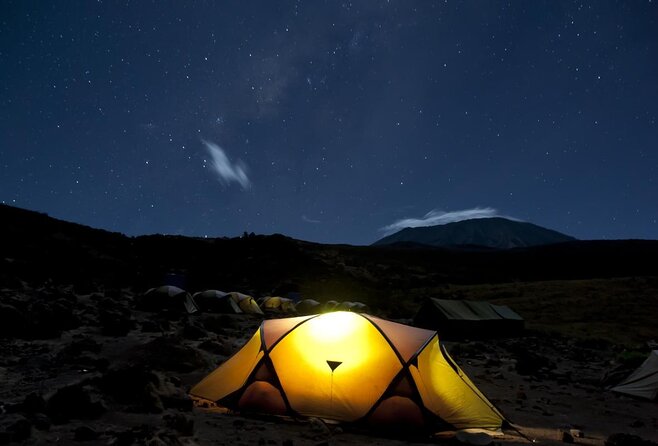
- The Machame Route uses a strong acclimatization day: You climb toward Lava Tower, then descend to Barranco Camp.
- Summit day lasts 10 to 13 hours: You start between midnight and 2 a.m., reach Uhuru Peak, then descend to Mweka Camp.
- The scenery changes quickly: Expect rainforest, moorland, semi-desert, alpine desert, and high summit terrain.
- The price covers the mountain basics: Meals, tents, mattresses, Moshi hotel transfers, a guide, briefing, and certificate are included.
- Park charges are extra: You must budget separately for Kilimanjaro National Park fees, crew tips, hotels, flights, and personal gear.
- The route is physically serious: A moderate fitness level is required, but the long summit day is much harder than an ordinary hike.
Why the Machame Route is a smart six-day choice
The Machame Route is popular for a good reason. It gives you a varied climb and includes a useful acclimatization pattern rather than taking you straight upward every day. Day 3 is especially important: you climb as high as 4,650 meters at Lava Tower, then sleep at roughly the same elevation where you began.
That climb high, sleep lower pattern gives your body a better chance to adjust to thin air. It does not remove the risk of altitude sickness, and it does not turn the trek into an easy walk, but it is one of the most valuable features of this route.
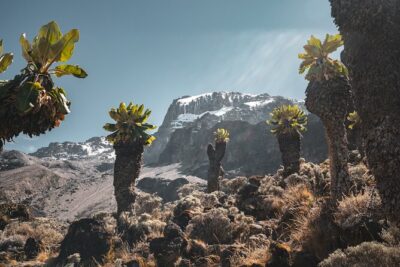
You also get more than a summit attempt. The mountain changes character as you climb. The first day feels like a forest trek. By the time you reach Barafu Camp, the trees are gone and the ground is dry, open alpine desert. At the summit, the setting is stark, cold, and exposed.
The tradeoff is time. Six days is enough for this route, but it leaves less room for your body to adjust than a longer itinerary would. If you are new to high-altitude hiking, you should take the schedule seriously and arrive ready to walk slowly, follow your guide’s instructions, and manage your energy.
More Kilimanjaro routes:
- Kilimanjaro climb by Lemosho Route (7-day)
★ 5.0 · 651 reviews - Kilimanjaro climb, Machame Route (7-day)
★ 5.0 · 262 reviews - Kilimanjaro Climbing Lemosho Route 8 Days.
★ 5.0 · 186 reviews
Day 1: From Moshi to Machame Gate and the rainforest
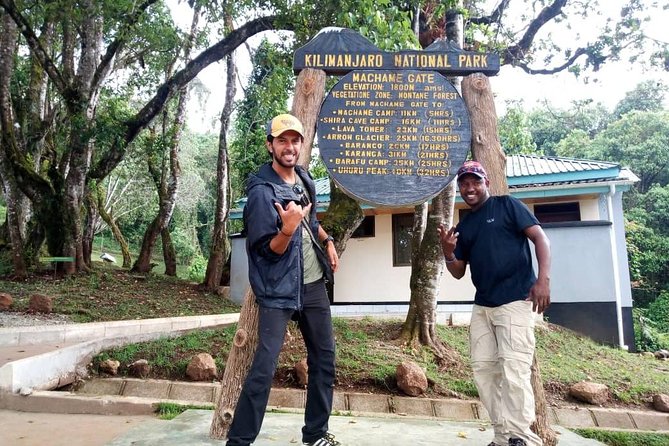
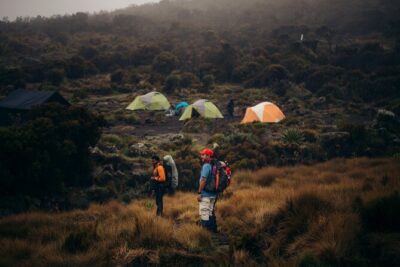
Your first transfer takes about 45 minutes from Moshi to Machame Gate, passing through the village of Machame. The official starting elevation is about 1,830 meters, or 6,000 feet, and the trail climbs to Machame Camp at 3,050 meters.
The hike covers about 11 kilometers and takes five to six hours. You begin in montane forest, on a winding trail that steadily gains height. This is a pleasant introduction to the mountain, but do not make the common mistake of treating it as a warm-up with no consequences. You gain more than 1,200 meters on the first day.
Breakfast, lunch, and dinner are provided during the trek, with overnight camping at Machame Camp. Camping equipment, including a tent and mattress, is also included. You still need your personal hiking clothing and equipment, and those costs can add up if you do not already own suitable gear.
The first day’s main challenge is pacing. You may feel strong at the lower elevation, but saving energy matters more than racing ahead. The aim is to arrive at camp ready for the next morning, not to prove how fast you can climb.
Day 2: Leaving the trees for Shira Camp
After breakfast, the trail leaves the rainforest behind and enters moorland. The route climbs along a steep rocky ridge, crosses a valley, and then turns west toward a river gorge before reaching Shira Camp.
This is a shorter day by distance, about 5 kilometers, but it still climbs from 3,050 meters to 3,850 meters. Hiking takes roughly four to five hours. The change in habitat is one of the day’s rewards. The dense forest gives way to more open ground, wider views, and a stronger sense that you are high on a volcanic mountain.
Shira Camp sits at about 12,600 feet. At this point, your legs may still feel fine, but altitude can begin to affect sleep, appetite, and energy. Breakfast, lunch, and dinner are included, so you can focus on resting, drinking, and preparing for the longer days ahead.
The short distance should not tempt you into unnecessary exertion. On a six-day climb, every day matters. A steady pace and an early night are more useful than extra wandering around camp.
Day 3: Lava Tower and the crucial descent to Barranco
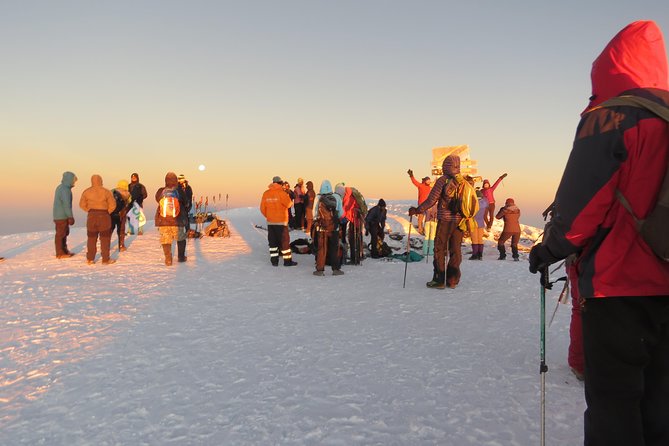
Day 3 is the route’s key acclimatization day. From Shira Camp, you hike east along a ridge, pass the junction toward Kibo, and then turn southeast toward Lava Tower, also called Shark’s Tooth.
Lava Tower reaches about 4,650 meters, or 15,250 feet. You then descend to Barranco Camp, ending the day around 4,000 meters. The listed elevation figures vary slightly along the route, but the main point is clear: you spend time at a higher altitude before sleeping lower.
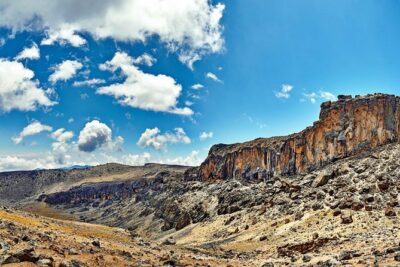
The hike covers about 10 kilometers and takes five to six hours. The setting changes again, this time to semi-desert. Plant life becomes less dominant, the air feels thinner, and the volcanic rock takes center stage.
This day can feel strange because you finish not far above where you started. That is intentional. The value is not in gaining maximum height for the night. It is in giving your body a controlled exposure to higher altitude.
Barranco Camp also prepares you mentally for the next morning. The Barranco Wall is visible ahead, and Day 4 begins with that steep section. You will have breakfast, lunch, and dinner, then camp at Barranco.
More six day trips in Moshi & Kilimanjaro:
- Kilimanjaro climb, Lemosho Route (6-day)
★ 5.0 · 129 reviews - Kilimanjaro climb, Marangu route (6-day)
★ 5.0 · 72 reviews - 6 Days 5 Night Safari
★ 5.0 · 57 reviews - 6 Days Tanzania Classic Safari
★ 5.0 · 52 reviews
Day 4: The Barranco Wall and Barafu Camp
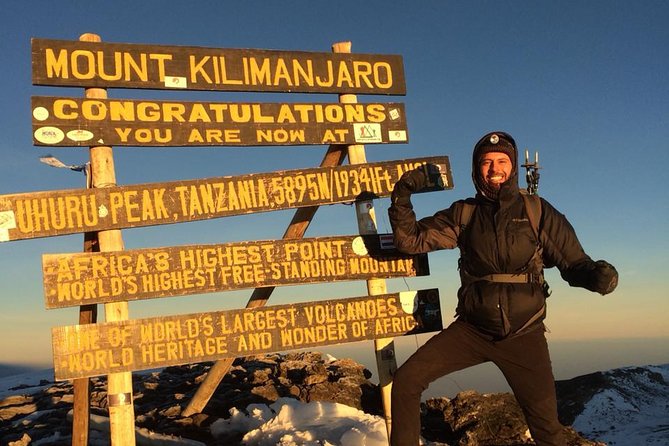
After breakfast, you tackle the Barranco Wall, climbing to about 4,250 meters. It is the most visibly dramatic section of the route before the summit. The wall is steep and can look intimidating from camp, but the day is not just one uphill scramble.
After the wall, the trail crosses the Karanga Valley at about 4,050 meters before continuing to Barafu Camp. You complete the South Circuit on this section, with summit views opening along the way.
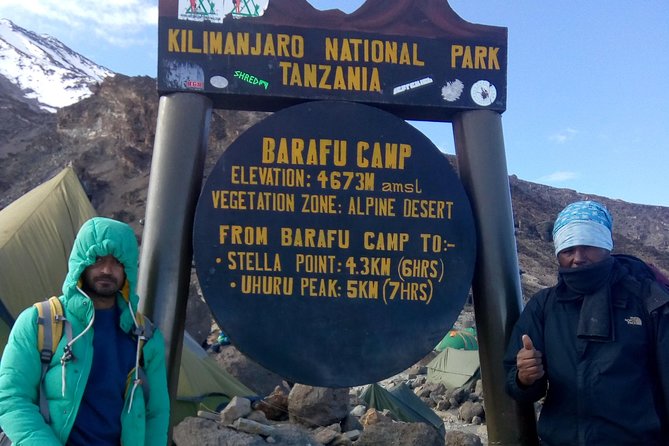
The total distance is about 9 kilometers. Hiking takes six to eight hours, and the habitat is alpine desert. You gain height from roughly 4,000 meters to 4,700 meters, which means the air is now thin and the cold can be much more noticeable.
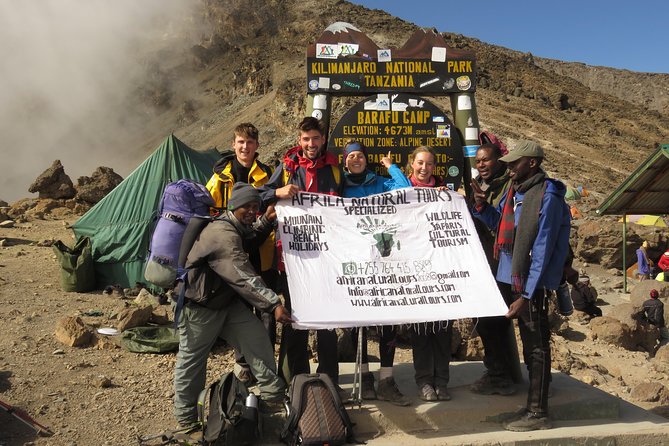
Barafu Camp is the launch point for summit night. Once you arrive, the practical goal is to eat, organize your clothing and headlamp, and rest. You will have dinner, but the early start means you may not get much sleep.
This is where the six-day schedule feels especially compressed. You have already completed several demanding days, and the summit push begins only hours after reaching Barafu. Good preparation and careful pacing are essential.
Day 5: Uhuru Peak, sunrise, and the long descent
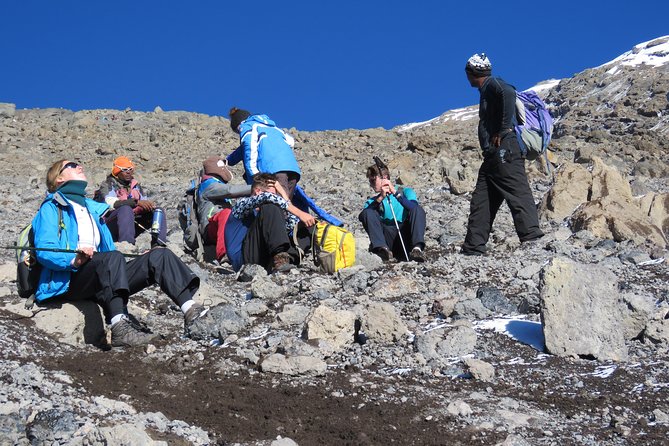
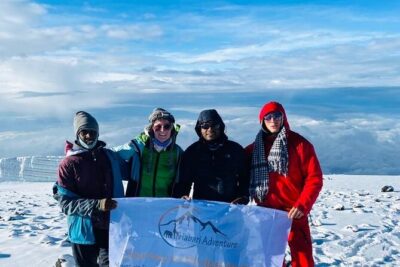
Summit day begins between midnight and 2 a.m. You climb in darkness toward Stella Point, moving between the Rebmann and Ratzel glaciers and ascending over scree. The route reaches the crater rim at Stella Point before continuing to Uhuru Peak.
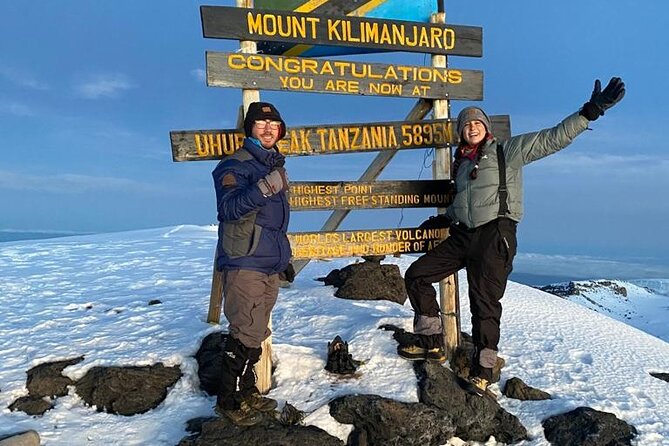
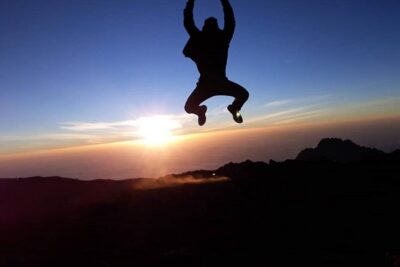
The summit is 5,895 meters, or 19,340 feet. Reaching it requires more than strong legs. Cold, darkness, altitude, and fatigue all work against you. The reward is the chance to stand at Africa’s highest point, with sunrise from the summit area if weather and timing allow.
The advertised highlight refers to an unforgettable sunset from the summit, weather permitting, but the actual schedule is built around a midnight start and a sunrise ascent. You should think of this as a sunrise summit experience rather than plan around a sunset.
After reaching Uhuru Peak, you descend to Barafu for lunch, then continue down to Mweka Camp. The uphill portion covers about 5 kilometers, followed by roughly 13 kilometers downhill. The total hiking time is 10 to 13 hours.
That downhill section is not an easy finale. Your knees and feet take a beating after the summit, and loose ground can make the descent tiring. You spend the night at Mweka Camp at about 3,090 meters, which gives you a much-needed drop in altitude.
Breakfast, lunch, and dinner are provided. Keep your expectations realistic: summit day is the hardest part of the trek, and reaching the top is never guaranteed. Weather, altitude, and physical condition all matter.
Day 6: Mweka Gate, certificates, and the drive back to Moshi
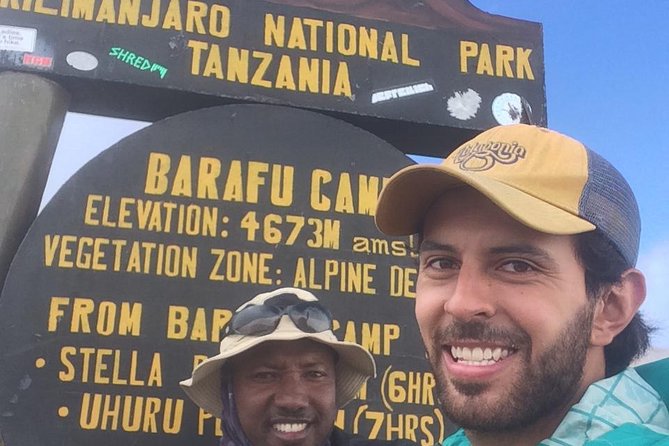
The final hike goes from Mweka Camp to Mweka Park Gate. You descend about 10 kilometers, from 3,090 meters to 1,680 meters, in three to four hours.
The lower trail can be wet and muddy. Gaiters and trekking poles are specifically useful here, even if you did not need them higher up. After reaching the gate, you receive your summit certificate and meet the Monkey Adventures vehicle for the roughly 60-minute drive back to your Moshi hotel.
This is a straightforward final day, but your legs may still be worn out from the summit push. Breakfast is included, and the trek ends after the Moshi transfer.
The hotel itself is not included. You need to arrange accommodation before and after the climb, and airport transfers are also outside the package.
What the $1,150 price really covers
At $1,150 per person, the price is not the full cost of climbing Kilimanjaro. It covers many important mountain services, including:
- Breakfast, lunch, and dinner during the trek
- Pickup from your booked hotel in Moshi to Machame Gate
- Drop-off from Mweka Gate to your Moshi hotel
- Camping equipment such as a tent and mattress
- A pre-trek briefing
- A professional Kilimanjaro hiking guide
- A trekking certificate
The largest extra is the Kilimanjaro park fee. The information provided does not give a set amount, so you should confirm the current charge before booking and ask exactly how it will be collected. Crew tips are also not included and should be part of your planning.
You will also pay separately for hotels in Moshi, airport transfers, domestic or international flights, and personal hiking gear. The phrase pickup offered applies to the specified Moshi hotel transfer, not every pickup location shown elsewhere in a booking system.
The value is strongest if you already have suitable hiking clothing and can arrange your own Moshi hotel and flights. If you need to buy boots, warm layers, waterproof clothing, a sleeping bag, poles, and other equipment, your actual budget will be much higher.
Food, camping, and the practical mountain setup
Meals are included throughout the trekking days, which removes one major daily concern. You do not need to organize food for each camp, but the supplied details do not describe menus, special diets, or drink service. If you have dietary needs, ask the operator before departure.
A tent and mattress are included, but personal sleeping equipment is not listed. The same applies to hiking gear. You should confirm what the mattress means in practice and what you must bring or rent before arriving in Tanzania.
The briefing is useful because the route has several demanding transitions. You need to know how the group will handle the midnight start, what happens if you feel unwell, and how park fees and crew tips are managed.
The tour can accept up to 100 people, which is a large maximum. That does not mean every departure will have 100 people, but you should ask about your expected group size. A smaller group may feel more personal, while a larger group can mean more varied walking speeds and more activity at camp.
Who should choose this Kilimanjaro climb
This trek suits you if you want a classic Kilimanjaro route with strong scenery, included meals, camping equipment, and Moshi transfers. It is also a good fit if you value the Lava Tower acclimatization day and want to cross several distinct mountain zones on one climb.
You should have a moderate level of physical fitness, but that phrase should not be read as casual. The first four days involve steady climbing, and summit day lasts up to 13 hours. You need to be comfortable walking for long periods and handling a very early start.
This is less suitable if you want a relaxed holiday, dislike camping, or need a large margin for acclimatization. A seven-day version is mentioned as an option, but the detailed schedule supplied here is for six days. Confirm the exact length before paying.
The experience is also a better fit if you can plan the extras carefully. Park fees, tips, Moshi hotels, airport transfers, flights, and personal gear can change the total cost considerably.
Booking, cancellation, and final decision
Confirmation is received at booking, and free cancellation is available up to 24 hours before the local start time. Within 24 hours, you cannot receive a refund or make changes.
I would book this tour if you want the Machame Route’s varied scenery and acclimatization profile, and if you are prepared for a hard six-day schedule. The included meals, camping equipment, Moshi transfers, guide, briefing, and certificate make the base price useful.
I would pause before booking if you have not budgeted for park fees and tips, or if you need to purchase a full set of mountain gear. Ask about the expected group size, the exact guide arrangement, the seven-day option, and the current park charges.
The strongest reason to choose it is the route itself: rainforest, moorland, Lava Tower, Barranco Wall, alpine desert, and Uhuru Peak in one compact climb. The strongest reason to hesitate is the same six-day compression. If you are fit, organized, and realistic about the summit day, this is a demanding but well-structured way to attempt Africa’s highest mountain.
FAQ
How long is the Kilimanjaro tour?
The experience lasts approximately six days. A six or seven-day option is mentioned, but the detailed schedule covers six days.
Where does the tour begin and end?
The tour begins with pickup from your booked hotel in Moshi and a drive to Machame Gate. After descending to Mweka Gate, you are driven back to your hotel in Moshi.
Is food included during the trek?
Yes. Breakfast, lunch, and dinner are included during the trekking portion of the experience.
Is camping equipment provided?
Yes. Camping equipment includes a tent and mattress. Personal hiking gear is not included.
Are Kilimanjaro park fees included in the price?
No. All Mount Kilimanjaro park fees are excluded and may be paid directly to the park or through the tour operator.
How difficult is the climb?
You should have a moderate level of physical fitness. Summit day is the most demanding, with a midnight to 2 a.m. start, 10 to 13 hours of hiking, and a climb to 5,895 meters before descending to Mweka Camp.
What is the cancellation policy?
You can cancel up to 24 hours before the local start time for a full refund. Cancellations or changes made within 24 hours are not accepted and are not refundable.
Newly listed around Moshi & Kilimanjaro
- Climb Mount Kilimanjaro: 7 Days Machame Route★ 5.0 · 3 reviews
- 6 Days Mount Kilimanjaro Climbing via Rongai Route★ 5.0 · 3 reviews
- Explore 1 day Ngorongoro Crater Budget Group Safari from Arusha★ 5.0 · 3 reviews
- Mt. Kilimanjaro Day Hiking★ 5.0 · 3 reviews
- Chemka (Kikuletwa) Hot Springs, Tanzania★ 5.0 · 3 reviews
- Guided City tour of Moshi★ 4.3 · 3 reviews
- 8 Day Tanzania Family Safari★ 5.0 · 3 reviews
- Rongai Route 7 Days★ 5.0 · 3 reviews
Kilimanjaro Climbs, compared.
Browse the lists this tour appears in