
Reviewed · KILIMANJARO CLIMBS
Kilimanjaro Trek 7 Days – Machame Route
Kilimanjaro’s Machame Route gives you the mountain’s best variety in seven days: thick rainforest, open moorland, volcanic rock, giant senecios, and a cold, dark push to Uhuru Peak. It is often called the Whiskey route, a nickname that hints at its tougher, more adventurous character compared with the gentler Marangu approach.
I like two things right away. First, the route uses the valuable climb-high, sleep-lower pattern at Lava Tower and Barranco Camp. Second, the price includes the major mountain costs, a private group, hotel nights in Moshi, meals, porters, and a portable flush toilet. The main catch is that seven days is still a demanding schedule, especially on summit night.
- A dramatic five-habitat climb: You move from rainforest to heath, alpine desert, and finally the Arctic zone near the summit.
- Lava Tower acclimatization: The route climbs to 4,603 meters before dropping to Barranco Camp at 3,953 meters.
- Private group format: Only your own party takes part, which allows more direct communication with the guide team.
- A midnight summit attempt: You reach Stella Point around sunrise before continuing to Uhuru Peak.
- Moshi stays included: One night before and one night after the trek are covered on a bed-and-breakfast basis.
- Strong service record: The company is praised for organization, food, diet flexibility, equipment help, and friendly support.
Why Machame is Kilimanjaro’s popular scenic choice
Machame is a route for people who want more than a straightforward uphill walk. Its path circles through Kilimanjaro’s southern side, showing you changing plant life and wide mountain views as the air gets thinner.
The route is considered one of the mountain’s most successful options, and its seven-day version gives you more time than the shorter itineraries. That extra time matters. Altitude, not technical climbing, is the main challenge on Kilimanjaro, so a schedule that lets your body adjust is worth paying attention to.
You should still keep your expectations sensible. This is not a casual holiday hike. You need a moderate level of fitness, and summit night requires several hours of walking in darkness, cold, wind, and high altitude.
The private format is useful if you are traveling with family or friends, or if you want a more personal pace. It does not make the mountain easy, but it gives your group a direct relationship with the guide team rather than placing you in a large mixed party.
What the $2,890 price really covers
At $2,890 per person, this is a substantial purchase, but many of the expensive and necessary parts of a Kilimanjaro climb are already included.
Your package covers park entry, camping, forest, rescue fees, and 18 percent VAT on tour services. It also includes guides, cooks, and porters, plus a sleeping tent, dining tent, mattress, tables, chairs, lanterns, and a portable flush toilet with its own tent.
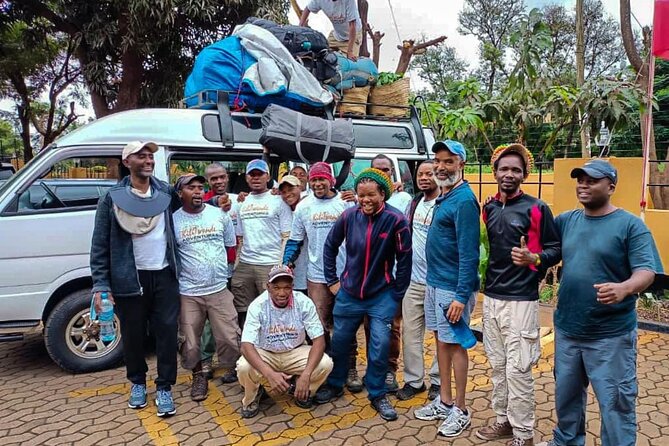
You also receive three meals a day on the mountain, transfers to and from the gates, airport transfers from Kilimanjaro International Airport, and one hotel night before and after the climb in Moshi. That reduces the amount of planning you need to do once you arrive.
The included gear is practical rather than luxurious. A 1.5-inch foam sleeping mattress is supplied, but sleeping bags and some personal equipment cost extra. Listed rental prices include $40 for a sleeping bag, $35 for a duffle bag, $40 for hiking boots, and $10 for walking sticks.
Budget separately for tips to the guides, porters, cooks, and waiters. Those gratuities are not included. You also pay for hotel lunches, dinners, drinks, laundry, visas, insurance, cameras, and international or domestic flights.
I see the price as reasonable if you need a full-service climb with airport pickup, hotel nights, food, camping equipment, and a crew. If you already own most of your gear and arrange your own airport transport, compare the total cost carefully with other operators.
More Hiking Tours in Moshi
- Private Kilimanjaro Hike 7 Day Lemosho Route
★ 5.0 · 60 reviews - Best Kilimanjaro hiking day trip tour with Kilinge Adventures
★ 4.5 · 54 reviews - #1. Best Kilimanjaro Day hike Tour-Machame Route-ISMANI
★ 4.2 · 47 reviews
Day 1: Moshi to Machame Camp through rainforest
After breakfast, you leave your Moshi hotel at about 8:30 a.m. The drive to Machame Gate takes roughly an hour and passes through Machame village on the mountain’s lower slopes.
Registration comes first. Then you begin a 11-kilometer walk through dense rainforest, following a winding trail up a ridge to Machame Camp at 2,833 meters.
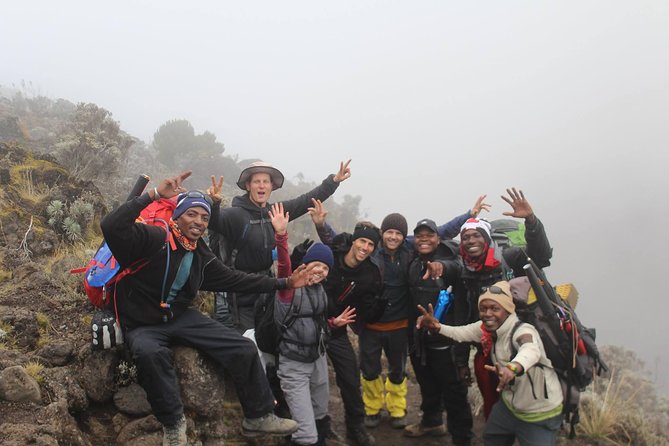
Allow five to seven hours for the hiking portion. The forest is a strong opening scene, with thick vegetation and a shaded trail, but it can also feel damp and tiring. Your first day is not the steepest or highest, yet you are carrying the excitement and uncertainty of the climb.
The camp sits in the rainforest zone. You should use this day to settle into the rhythm of walking slowly, eating well, drinking regularly, and listening closely to your guide’s advice.
Day 2: Heath and open moorland on the Shira Plateau
Day two covers about five kilometers and takes four to six hours. You leave the rainforest behind and follow a rising trail toward a steep, rocky ridge.
The vegetation opens into heath and moorland as you reach the Shira Plateau. This change is one of Machame’s pleasures. The trail feels more exposed, and the views have room to expand.
You cross a large river gorge before reaching Shira Cave Camp. The shorter distance does not mean an effortless day. The climb continues upward, and rocky ground can make a modest mileage feel longer.
This is a good day to watch how your body responds to altitude. You might feel fine, or you might notice a headache, poor sleep, or reduced appetite. Tell the guide early if something feels wrong. The route is designed to help with adjustment, but it cannot remove the effects of altitude.
Day 3: Lava Tower and the descent to Barranco
Day three is one of the most useful and memorable sections of the climb. The route first rises seven kilometers toward Lava Tower, a large volcanic rock formation at 4,603 meters.
You spend about four to five hours reaching the tower and then another two to three hours descending three kilometers to Barranco Camp at 3,953 meters. The total day is listed at about five hours in the schedule, but the separate hiking times suggest you should be prepared for a longer day.
The key idea is simple: climb high, then sleep lower. Reaching Lava Tower exposes you to a higher altitude during the day, while the descent to Barranco gives your body a better place to rest. This is valuable preparation for the summit.
After Lava Tower, the trail passes through the unusual Senecio Forest. The giant plants give this stretch a strange, almost prehistoric feel. You begin and end the day at similar elevations, but the time spent high is the point.
This can be a difficult day if altitude affects you. Do not treat the descent as a sign that the day is finished. You still need energy for the walk to Barranco Camp and the next morning’s climb.
More Kilimanjaro routes:
- Kilimanjaro climb by Lemosho Route (7-day)
★ 5.0 · 651 reviews - Kilimanjaro climb, Machame Route (7-day)
★ 5.0 · 262 reviews - Kilimanjaro Climbing Lemosho Route 8 Days.
★ 5.0 · 186 reviews - Climbing Kilimanjaro – Machame Route
★ 5.0 · 170 reviews
Day 4: The Barranco Wall and Karanga Valley
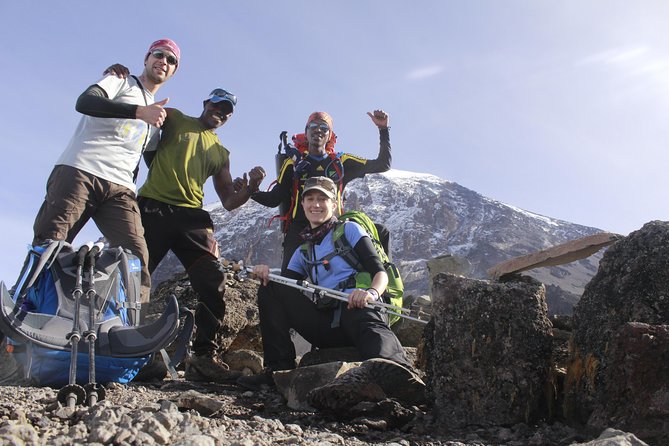
Day four covers about five kilometers through alpine desert and takes four to five hours. It starts with a descent to the base of the Great Barranco Wall.
The wall rises nearly 900 feet above the trail. The climb is steep but non-technical, meaning you do not need rock-climbing equipment or technical climbing skills. You should expect hands-on movement in places and a careful pace.
From the top, the trail crosses hills and valleys before dropping sharply into Karanga Valley. The Karanga River is the last water point on the route, so take this section seriously. From the valley, you climb again to Karanga Camp for lunch.
A shorter acclimatization walk is planned later in the afternoon. I like this feature because it keeps the day focused without wasting the body’s adjustment time. You can stretch your legs, look at the surrounding slopes, and return to camp before the major summit preparation begins.
The distance is short on paper, but the repeated rises and drops make this a proper mountain day. The Barranco Wall may also be uncomfortable if you dislike exposure or steep ground.
Day 5: Barafu Camp and the final preparation
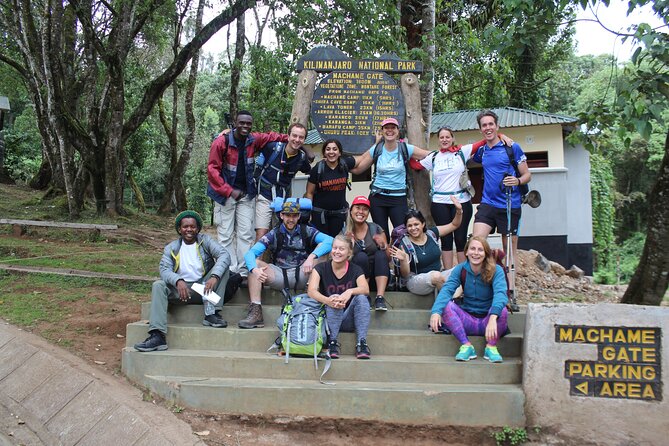
From Karanga Camp, you walk about four kilometers to Barafu Hut, usually in four to five hours. The route passes the junction with the Mweka Trail and then climbs through rocky ground.
By reaching Barafu, you have completed the Southern Circuit. The route has shown you the summit from several angles, and the mountain’s upper slopes now feel close.
Barafu Camp is the launch point for summit night. After arrival, your priorities are rest, food, warm clothing, and preparation. The schedule calls for an early dinner, followed by time to organize your gear before trying to sleep.
When the weather clears, you may see Mawenzi and Kibo, Kilimanjaro’s two major peaks. The view is a fitting reward, but do not let it distract you from the night ahead.
The short mileage can be misleading. You are at altitude, and the camp is not the place for a long wander. Keep your equipment ready, ask questions, and follow the guide’s instructions about the midnight start.
Day 6: Midnight to Uhuru Peak, then down to Mweka
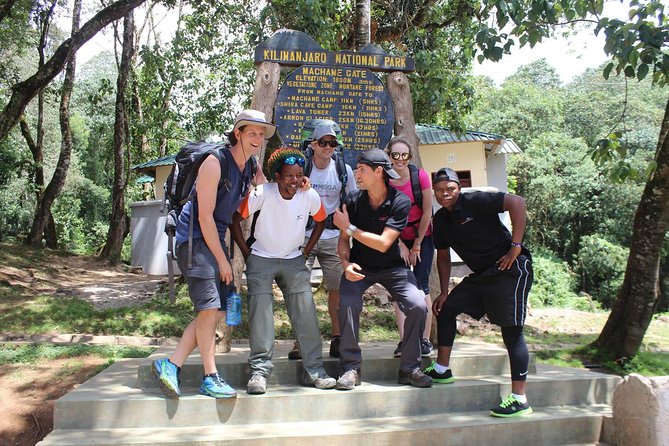
Summit day is the hardest part of the trek. You begin around midnight and walk through cold, wind, and darkness for several hours, taking short breaks along the way.
The route climbs about five kilometers to Stella Point, with seven to eight hours listed for this section. You are expected to reach Stella Point at about sunrise, at roughly 5,760 meters, or 18,900 feet.
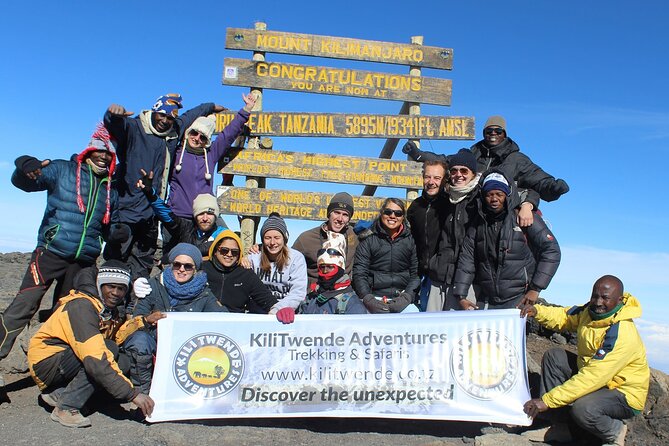
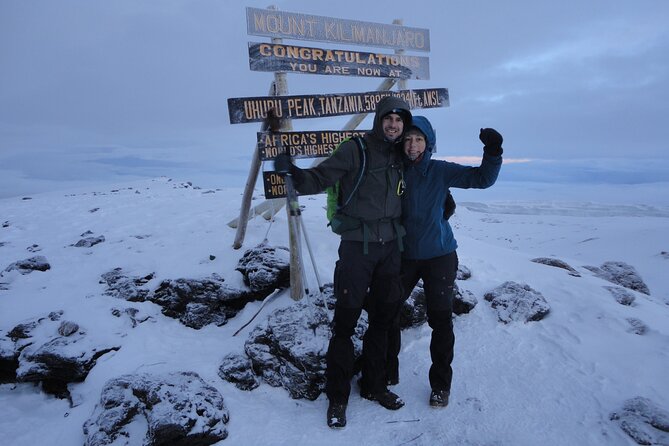
From Stella Point, you continue along the rim to Uhuru Peak, the highest point in Africa, at 5,895 meters. The final stretch may be short in distance, but altitude makes every step count. Take photographs at the summit, but keep the stop brief so you can begin the descent.
You then return to Barafu Camp before continuing down to Mweka Camp at 3,100 meters. The descent from Uhuru Peak to Mweka is listed at 12 kilometers and four to six hours, in the rainforest zone. Combined with the summit approach, this is a very long day.
I would not underestimate the return to Mweka. Many people focus so heavily on reaching the summit that they forget they still have hours of downhill walking. Good boots, walking sticks, water, and careful pacing are especially useful here.
Day 7: Mweka Gate and the return to Moshi
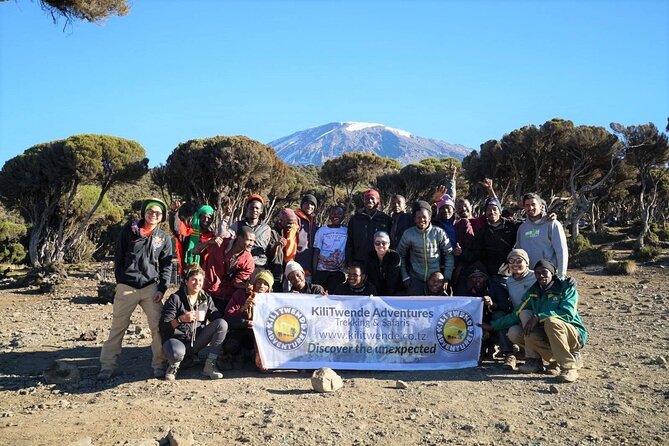
The final day covers about 10 kilometers and takes three to four hours. After breakfast, you descend through rainforest to Mweka Gate.
At the gate, you sign out with the national park authority and collect your summit certificate. A vehicle then transfers you back to your Moshi hotel.
This final walk is easier than summit day, but tired legs can make downhill trails awkward. You should keep your pace controlled and save a little energy for the gate formalities and transfer.
The included post-trek hotel night is welcome. You can shower, sleep properly, and enjoy Moshi without needing to arrange another room at the last minute.
Food, camping, and the human side of the climb
The mountain package includes breakfast, lunch, and dinner each day, served in a mess or dining tent with tables, chairs, and lanterns. A cook prepares the meals, and the setup is designed to make camp life more comfortable than a basic self-supported trek.
Food is one area where the company receives especially strong praise. The service is described as generous, with enough food to satisfy hungry climbers, and dietary restrictions have been accommodated. You should still state your needs clearly before departure.
The crew includes professional guides, cooks, porters, and waiters. The company also lists fair wages approved by the Kilimanjaro Park Authority and local associations. Tips remain extra, so plan for them as part of the real cost of the trip.
The portable flush toilet is another practical touch. It will not turn a mountain camp into a hotel, but it avoids relying entirely on basic public facilities.
Several named staff members are associated with the company’s wider climbing and safari work, including Bobby, Robert, Jerry, Joseph, Sadhi, and John. Ask who will lead your particular group, since the supplied information does not assign each person to this exact departure.
Who should choose this seven-day climb
This route suits you if you want the scenic Machame approach, prefer a private group, and can handle long days on uneven ground. It is also a good fit if you value having transport, Moshi accommodation, meals, porters, and mountain equipment arranged in one package.
You do not need technical mountaineering skills for the Barranco Wall, but you do need moderate physical fitness. The summit attempt is the real test, with a midnight start and a long descent on the same day.
The seven-day schedule offers a better adjustment pattern than a rushed climb, but it is not the longest available option. If you are especially concerned about altitude, ask the operator if a longer itinerary is possible.
This is less suitable if you want a relaxed walking holiday, dislike camping, or expect every cost to be included. Personal gear, flights, insurance, hotel meals, and crew tips can add noticeably to the advertised price.
Booking details and cancellation terms
Pickup is offered, and round-trip airport transfers from Kilimanjaro International Airport are included. The scheduled start time is 8:30 a.m., with confirmation provided at booking.
This is a private activity, so only your group participates. Free cancellation is available up to 24 hours before the experience starts for a full refund. Changes or cancellations inside that 24-hour window are not accepted for a refund, and the cut-off uses local time.
The climb requires suitable weather. If poor weather forces cancellation, you are offered another date or a full refund.
Should you book the Machame Route?
I would choose this trek if you want Kilimanjaro’s strongest scenery and a well-supported seven-day plan rather than the simplest route to the top. The Lava Tower day, Southern Circuit views, private format, included Moshi nights, and full camp crew make the package appealing.
Book it only after adding the costs of gear rental, tips, insurance, visas, flights, and hotel meals. You should also be honest about your fitness and comfort with a midnight summit attempt.
If you are ready for cold nights, steep rocky trails, and a very long summit day, Kilitwende Adventures offers a practical package with a lot of support built in. If you want more time for altitude adjustment, ask about a longer version before paying.
FAQ
How long is the Kilimanjaro Machame Route experience?
The trek lasts approximately seven days, beginning with a transfer from Moshi to Machame Gate and ending with a transfer from Mweka Gate back to Moshi.
What is the highest point reached?
The route reaches Uhuru Peak at 5,895 meters, or 19,341 feet, the highest point on Mount Kilimanjaro.
Is airport pickup included?
Yes. Round-trip airport transfers to and from Kilimanjaro International Airport are included.
Is hotel accommodation included?
Yes. One night before and one night after the trek are included in Moshi on a bed-and-breakfast basis.
Are meals included during the climb?
Yes. Three meals a day are included during the mountain portion of the trek.
Is camping equipment provided?
Yes. The package includes a sleeping tent, dining tent, sleeping mattress, tables, chairs, lanterns, and a mess tent.
Is a sleeping bag included?
No. A sleeping bag is listed as personal equipment and can be rented for $40.
Do I need technical climbing skills?
The Barranco Wall is described as steep but non-technical. The tour requires a moderate level of physical fitness.
Is this a private tour?
Yes. Only your own group participates in the activity.
What happens if bad weather cancels the climb?
You are offered a different date or a full refund if the experience is canceled because of poor weather.
More week long trips in Moshi & Kilimanjaro
- Climbing Kilimanjaro through 7 days Machame Route
★ 5.0 · 151 reviews - 7 Days Kilimanjaro via Machame route affordable price
★ 5.0 · 110 reviews - 7-Day Magical Tanzania Safari -Premium High End Package
★ 5.0 · 53 reviews - 7 Days Machame route – Kilimanjaro
★ 5.0 · 45 reviews
More Hiking Tours in Moshi & Kilimanjaro
- Best Kilimanjaro Adventure 7 days Machame route Trekking
★ 5.0 · 42 reviews - Kilimanjaro 7 Day Private Trekking Experience
★ 5.0 · 40 reviews - 8 Days Kilimanjaro Hike via Lemosho Route
★ 5.0 · 39 reviews - The Best & Unique Kilimanjaro Hiking tour 7 days Machame route
★ 5.0 · 34 reviews
Newly listed around Moshi & Kilimanjaro
- Climb Mount Kilimanjaro: 7 Days Machame Route★ 5.0 · 3 reviews
- 6 Days Mount Kilimanjaro Climbing via Rongai Route★ 5.0 · 3 reviews
- Explore 1 day Ngorongoro Crater Budget Group Safari from Arusha★ 5.0 · 3 reviews
- Mt. Kilimanjaro Day Hiking★ 5.0 · 3 reviews
- Chemka (Kikuletwa) Hot Springs, Tanzania★ 5.0 · 3 reviews
- Guided City tour of Moshi★ 4.3 · 3 reviews
- 8 Day Tanzania Family Safari★ 5.0 · 3 reviews
- Serengeti Safari with Sirikwa Travel★ 5.0 · 3 reviews
Kilimanjaro Climbs, compared.








Browse the lists this tour appears in