
Reviewed · KILIMANJARO CLIMBS
Machame Route 6 days 5 Nights/Kilimanjaro Climb
Kilimanjaro’s Machame Route gives you a proper mountain journey, not a quick march to a hut. In six days, you walk from rainforest to high desert, sleep in camps, pass Lava Tower and the Barranco Wall, then make the hard midnight push to Uhuru Peak for sunrise. I like the extra acclimatization built into the route, and I like that this is a private climb with meals, porters, and a dedicated guide team included. The catch is simple: six days is still a demanding schedule, and summit day can last about 14 hours.
I also like the practical support behind the climb. Past departures have included guides such as Epa, Goodluck, Vitto, Nicholas, Eric, Rama, and David, with repeated praise for patient guiding, strong organization, good food, and the crew’s help on the summit push. Just remember that a private tour does not make the mountain easy. You need moderate fitness, proper clothing, altitude awareness, and enough patience to walk slowly.
Key points to know before booking
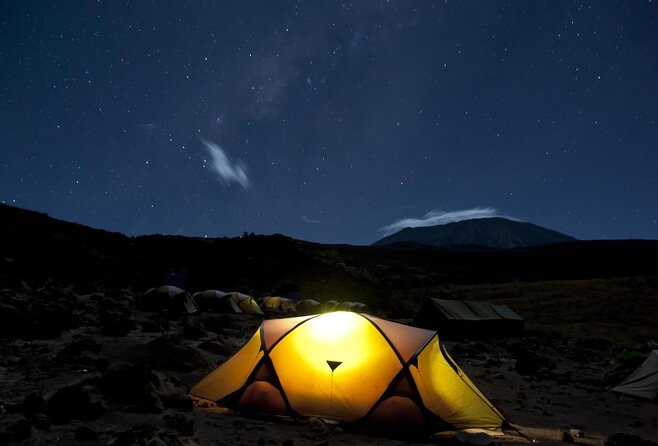
- Seven-hour rainforest start: The first day climbs through wet, slippery forest to Machame Camp.
- The high-value acclimatization day: Day three climbs to Lava Tower before dropping to Barranco Camp, helping your body adjust to altitude.
- A dramatic summit morning: You leave Barafu between midnight and 2 a.m. and aim for sunrise at Stella Point.
- Camping, food, and water are included: Breakfast, lunch, dinner, and bottled water form the backbone of the trip.
- A private group keeps the climb personal: Only your own booking group takes part, with a guide team assigned to you.
- Budget for tips and gear: Guide, cook, and porter gratuities are separate, as are flights, visas, insurance, drinks, and personal equipment.
Why six days on Machame can work well
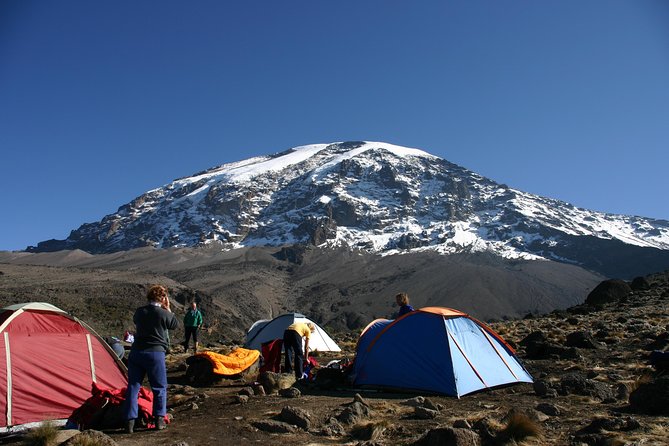
At 5,895 meters, Mount Kilimanjaro is high enough to cause altitude sickness even when the trail itself is not technical climbing. The main challenge is the thin air, followed by long walking days, cold nights, uneven ground, and the mental strain of summit morning.
Machame is often chosen because it gives you more time to adjust than the shorter Marangu itinerary. The route also uses what climbers call climb high, sleep low on the Lava Tower day. You gain height during the day, then sleep lower at Barranco. That change is useful because your body gets a taste of higher altitude before the overnight stay.
Six days is a sensible amount of time for someone who wants a focused climb, but it is not the most relaxed possible schedule. If you are worried about altitude, ask if a longer Machame version is available. The supplied experience is specifically six days and five nights, so you should prepare for a tight rhythm rather than a leisurely mountain holiday.
More Kilimanjaro routes:
- Kilimanjaro climb by Lemosho Route (7-day)
★ 5.0 · 651 reviews - Kilimanjaro climb, Machame Route (7-day)
★ 5.0 · 262 reviews - Kilimanjaro Climbing Lemosho Route 8 Days.
★ 5.0 · 186 reviews
Day one: Moshi to Machame Gate and the rainforest
The morning begins with pickup from Moshi at about 9 a.m. The drive to Kilimanjaro National Park’s gate takes roughly 50 minutes and passes through Machame village on the lower slopes of the mountain.
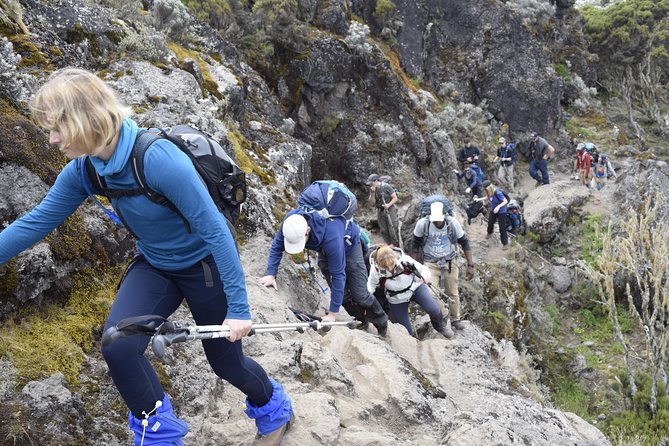
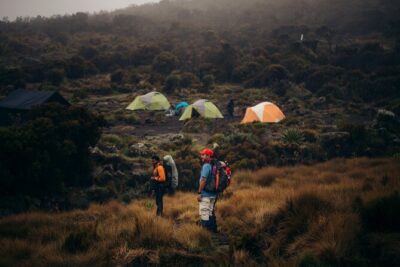
At the gate, the trail enters the rainforest. The path winds uphill along a ridge, with the lower sections often muddy and slippery. You walk for about seven hours before reaching Machame Camp. That first day is not just a warm-up. It is a full day on your feet, and the damp forest can make the going slower than the distance suggests.
This is where gaiters and trekking poles earn their place in your bag. Gaiters keep mud and water out of your boots, while poles help on slick ground and reduce strain on your knees. Bring rain protection even if the morning begins clear. The climb operates in all weather conditions.
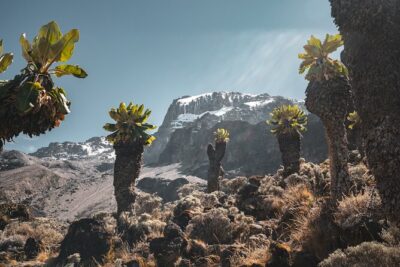
The forest is one of the more appealing parts of Machame because the scenery changes quickly as you gain height. You begin in a green, wet environment, then gradually leave the taller trees behind. The main drawback is that this opening section can feel crowded and muddy, especially if several climbing groups reach the trail at the same time.
Day two: Heather, rocky ridges, and Shira Camp
After breakfast, you leave the forest glades and continue on an ascending path. The trail crosses a small valley and follows a steep, rocky ridge covered with heather before turning west toward a river gorge.
The walking time is about five hours, shorter than day one. That is welcome after the long rainforest climb, though the route continues upward and the terrain remains uneven. You finish at Shira campsite, on the broad Shira Plateau.
Shira is a major change in scenery. The enclosed forest gives way to open high ground, with wider views and a more exposed feeling. You should expect cooler air and stronger weather here. Your routine remains basic and reliable: rest, dinner, and sleep in camp.
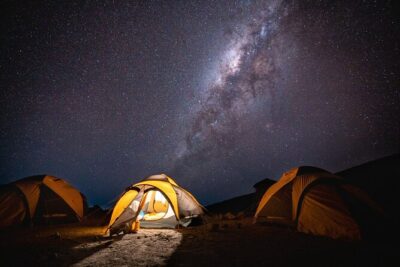
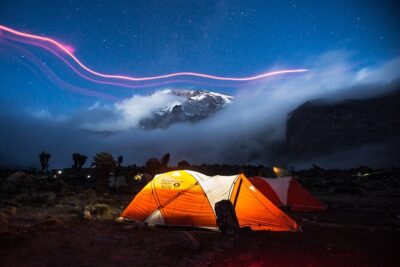
Camping is part of the appeal, but it is also part of the work. You will not have a private room, a hot shower, or a normal hotel bed on the mountain. The price includes camping accommodation and meals, but it does not include personal equipment, so check your sleeping bag, warm layers, rain gear, and footwear before arrival.
Day three: Lava Tower and the Barranco acclimatization drop
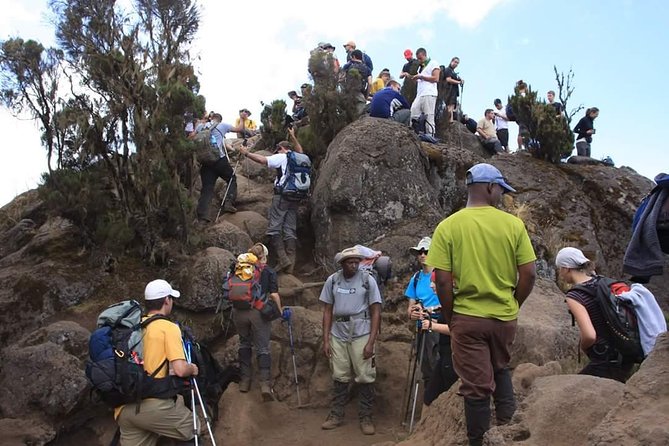
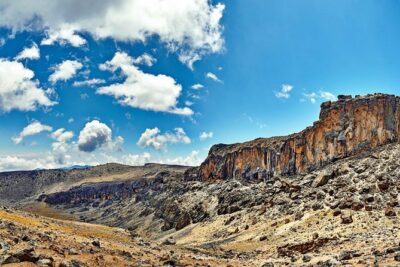
Day three is the route’s most important altitude-management day. From Shira, you climb east along a ridge and pass the junction toward Kibo, Kilimanjaro’s highest volcanic cone. The route then turns southeast toward Lava Tower, also called the Shark’s Tooth.
The itinerary places the Lava Tower area at about 16,000 feet, with the second junction leading toward Arrow Glacier. You then descend to Barranco Hut at about 13,000 feet. The day takes around seven hours, and you finish at roughly the same elevation where you began.
That may look inefficient on paper, but it is exactly why this day matters. You spend time at a higher altitude without sleeping there. Then you drop to Barranco for the night, giving your body a better chance to adjust. This is one reason I prefer Machame to a route that rushes upward with fewer acclimatization stages.
The trail is also more demanding here. The air is thinner, the ground is rocky, and the weather can change quickly. Take the guide’s pace seriously. Walking slowly is not a sign of weakness on Kilimanjaro. It is one of the best tools you have.
More six day trips in Moshi & Kilimanjaro:
- Kilimanjaro climb, Lemosho Route (6-day)
★ 5.0 · 129 reviews - Kilimanjaro climb, Marangu route (6-day)
★ 5.0 · 72 reviews - 6 Days 5 Night Safari
★ 5.0 · 57 reviews - 6 Days Tanzania Classic Safari
★ 5.0 · 52 reviews
Day four: Barranco Wall, Karanga, and Barafu
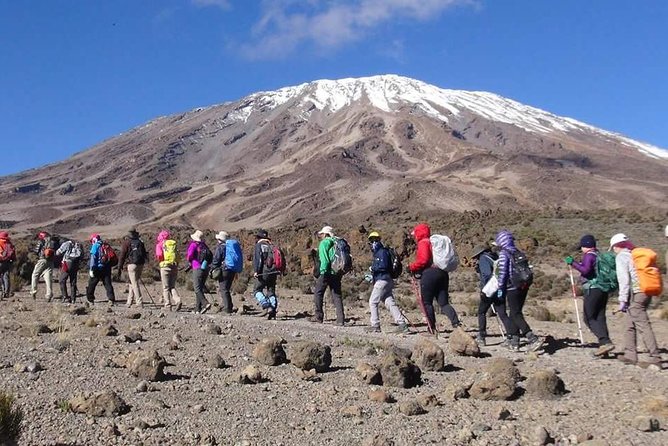
After breakfast, you leave Barranco and climb the steep ridge beside the Barranco Wall. This is one of the route’s memorable sections. It looks intimidating from camp, but the important point for you is that the day requires steady movement, careful footing, and a calm head rather than speed.
From the wall, the trail continues to Karanga Valley campsite. You then leave Karanga, pass the junction connecting with the Mweka Trail, and continue to Barafu Hut. The day is listed at about nine hours, so it is long even before summit morning begins.
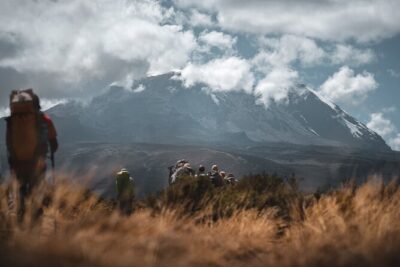
At Barafu, you have completed the Southern Circuit and can see both Mawenzi and Kibo. This camp is your launch point for the summit attempt. The practical challenge is getting enough rest. You will eat dinner, organize your equipment, and try to sleep before leaving between midnight and 2 a.m.
Plan your summit kit before you lie down. Keep warm clothing, gloves, headlamp, water, snacks, and any personal medication within easy reach. Do not bury important items in a large bag. A tired climber should not have to unpack everything in the dark.
Day five: The midnight climb to Uhuru Peak
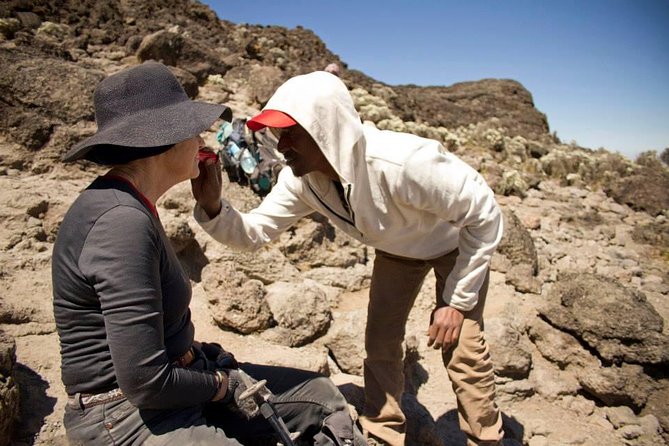
Summit day is the hardest part of the trip by a wide margin. You leave Barafu in the early morning and climb between the Rebmann and Ratzel glaciers, heading northwest through heavy scree toward Stella Point on the crater rim.
The ascent to Stella Point, listed at about 18,600 feet, is physically and mentally punishing. You are walking in darkness, often in cold conditions, after very little sleep. Loose scree can make each step feel frustratingly small. This is when the guide’s calm support matters most, and when a private group can adjust its pace and breaks more easily.
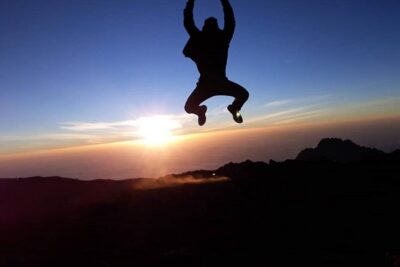
At Stella Point, you pause for a short rest and, weather permitting, watch the sunrise. This is one of the strongest reasons to choose the early summit schedule. The sky brightens over the high volcanic slopes while you are already on the crater rim.
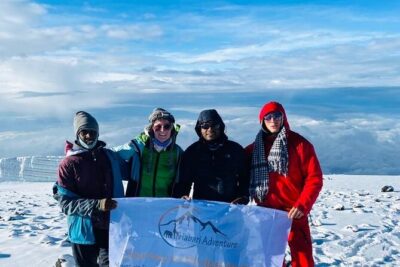
From Stella Point, you may encounter snow during the roughly one-hour ascent to Uhuru Peak. Reaching Uhuru means standing at the highest point on Kilimanjaro and in Africa. The summit moment may be brief. Cold, altitude, wind, and fatigue limit how long you can comfortably stay there, so focus on the achievement rather than trying to linger.
The full day is listed at about 14 hours. That figure tells you what to expect better than any promotional language. Summit day is not a normal hike. It combines the climb to the top with the return journey, and your energy can change quickly at altitude.
Follow the guide’s instructions if you develop serious symptoms. A summit is never worth ignoring your health. The mountain crew’s role is not only to help you reach the top, but also to bring you down safely.
Day six: Descent through Mweka to Moshi
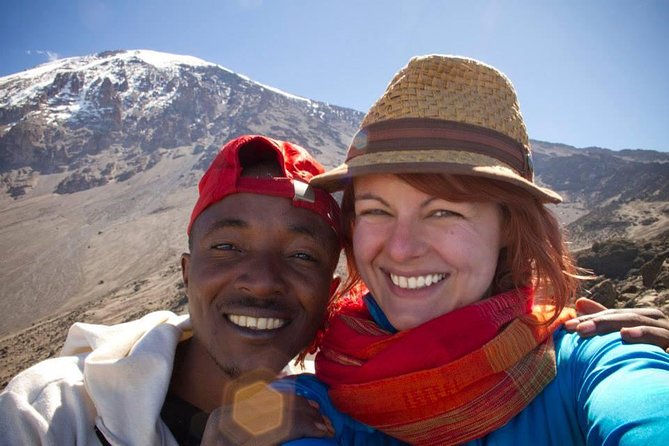
After breakfast, you descend toward Mweka Park Gate to receive your summit certificate. The lower trail can again be wet and muddy, so keep gaiters and trekking poles available rather than packing them away after the ascent.
The itinerary gives about four hours for this section, followed by another hour to Mweka village. A vehicle then takes you back to your hotel in Moshi. After five nights in tents and several long days at altitude, the return to a hotel bed will feel like a major event.
Clothing changes on the descent. Shorts and a T-shirt may be comfortable at lower elevations, but keep rain gear and warmer layers handy because conditions can shift before you reach the gate. The descent is easier on breathing than the summit climb, but tired legs and knees can make it surprisingly uncomfortable.
What the $1,990 price covers
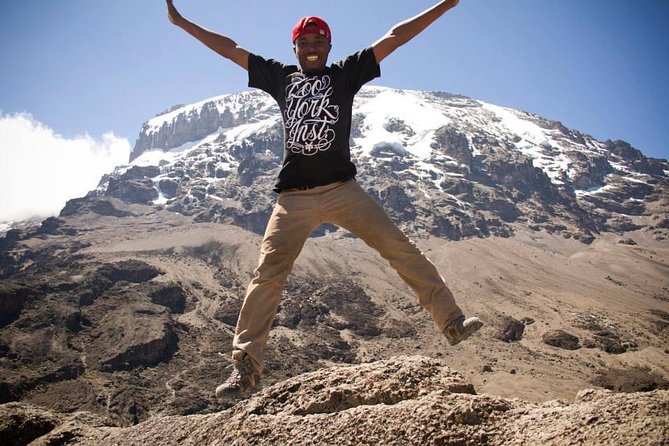
At $1,990 per person, this is not a low-cost day tour. It is a six-day national park trek with a private guide, camping, a cook and porters, meals, bottled water, park access, and transport from Moshi to the mountain and back.
The private format is important. Only your group participates, so you are not automatically tied to strangers’ pace or fitness. That does not guarantee a fast or slow climb, since altitude should set the pace, but it does give the guide more room to focus on your group.
The food has been a repeated strength of this operation, with past climbers specifically praising the meals throughout the route. Six breakfasts, seven lunches, and six dinners are listed, along with bottled water. Because the meal count is unusual for a six-day trip, confirm exactly what is served on each day before departure.
The cost does not include international flights, visas, travel insurance, alcoholic or non-alcoholic drinks, extra personal equipment, or activities after the climb. Safaris, waterfall visits, and massages are also separate. Tanzania makes it easy to add a safari, but you should treat that as a separate budget decision.
Tips are expected in addition to the booking price. The suggested amounts are $15 to $20 per guide per day, $10 to $15 per day for the cook, and $8 to $10 per porter per day. Since the recommendation says tips are for group sharing, ask the operator how the final pool is divided among the crew. Bring enough cash in suitable currency before leaving Moshi.
Who should choose this climb
I would recommend this trip to you if you want a private Kilimanjaro experience, prefer camping to a hut-based route, and can commit to long walking days. It suits people who want a clear six-day plan and value having a guide team, cook, and porters handling the mountain logistics.
You need a moderate level of physical fitness. You do not need to be a technical mountaineer based on the information provided, but you do need to walk for up to nine hours on some days and manage a 14-hour summit day.
This is less suitable if you dislike early starts, basic camping, mud, cold, or uncertain weather. It is also a poor fit if you expect the private format to remove the effects of altitude. The mountain remains the mountain.
Children must be accompanied by an adult. Passport name, number, expiry date, and country are required for every participant at booking, and you should provide dietary requirements at that time. A multilingual guide may operate the trip, but the specific language should be confirmed before you pay.
The listed dress code says formal, which does not fit a six-day mountain trek. For the climb itself, you need practical hiking clothing, layered warmth, rain protection, gloves, sturdy footwear, and suitable personal equipment. Ask the operator to clarify the formal dress note rather than arriving in city clothes.
My practical verdict on Migration Venture Africa
The strongest part of this climb is the combination of route design and human support. The Machame itinerary gives you the useful Lava Tower to Barranco acclimatization day, while the private setup lets the guide team concentrate on your group.
The operation has been associated with guides including Epa, Goodluck, Vitto, Nicholas, Eric, Rama, and David. Past departures also praised the wider crew for encouragement, organization, food, and help during the summit attempt. Those details matter because a successful Kilimanjaro climb often depends on steady decisions, patient pacing, and support when the final ascent becomes unpleasant.
At the same time, the six-day plan asks a lot from you. You should arrive ready for wet forest trails, rocky ridges, high camps, short sleep, and a long summit day. Insurance is not included, and you should arrange it yourself before departure.
Cancellation is flexible up to 24 hours before the local start time for a full refund. Changes or cancellations inside that 24-hour window are not accepted or refunded.
Should you book the six-day Machame Route?
Book it if you want a private, well-supported climb and you are prepared for a serious physical challenge. The $1,990 price makes the most sense when you value the included mountain crew, meals, camping, park access, and Moshi transfers rather than viewing it as a simple guided walk.
Before booking, confirm the exact guide language, equipment available for hire, meal schedule, tip arrangements, and whether a longer itinerary is possible. If your main concern is altitude, an extra day may be worth more to you than a lower price.
For a fit and determined climber who wants the sunrise approach to Uhuru Peak, Machame offers a strong route with varied scenery and a useful acclimatization pattern. Just bring realistic expectations. The private service can improve your support and organization, but it cannot make summit morning short, warm, or easy.
FAQ
Where does the Kilimanjaro climb begin?
The experience begins in Moshi, Tanzania, with pickup offered at about 9 a.m.
How long is the climb?
The experience lasts approximately six days and includes five nights of camping.
What route does the climb use?
The climb follows the Machame Route through the rainforest, Shira Plateau, Lava Tower, Barranco, Karanga, and Barafu before the summit attempt and descent through Mweka.
Is this a private tour?
Yes. Only your booking group participates in the activity.
Is camping included?
Yes. Camping accommodation is included as part of the mountain climb.
Are meals included?
Yes. Breakfast, lunch, and dinner are included. The listed package includes six breakfasts, seven lunches, and six dinners.
Is bottled water included?
Yes. Bottled water is included.
What is not included in the price?
International flights, visas, travel insurance, alcoholic and non-alcoholic drinks, additional personal equipment, tips, and activities after the climb are not included.
How difficult is the climb?
You should have a moderate level of physical fitness. The longest listed day is summit day at about 14 hours, and other days take between four and nine hours.
Can I cancel for a full refund?
You can cancel at least 24 hours before the local start time for a full refund. Cancellations or changes made less than 24 hours before the start are not accepted or refunded.
Newly listed around Moshi & Kilimanjaro
- Climb Mount Kilimanjaro: 7 Days Machame Route★ 5.0 · 3 reviews
- 6 Days Mount Kilimanjaro Climbing via Rongai Route★ 5.0 · 3 reviews
- Explore 1 day Ngorongoro Crater Budget Group Safari from Arusha★ 5.0 · 3 reviews
- Mt. Kilimanjaro Day Hiking★ 5.0 · 3 reviews
- Chemka (Kikuletwa) Hot Springs, Tanzania★ 5.0 · 3 reviews
- Guided City tour of Moshi★ 4.3 · 3 reviews
- 8 Day Tanzania Family Safari★ 5.0 · 3 reviews
- Rongai Route 7 Days★ 5.0 · 3 reviews
Kilimanjaro Climbs, compared.
Browse the lists this tour appears in