
Reviewed · KILIMANJARO CLIMBS
7 Days Kilimanjaro Trekking Machame Route
The Machame Route gives you Kilimanjaro in full color: wet rainforest on day one, open moorland above Shira, a stark volcanic zone, the Barranco Wall, and a midnight push toward Uhuru Peak. You sleep in tents rather than huts, and the trail is steeper and more demanding than the Marangu Route.
I like the careful acclimatization day through Lava Tower to Barranco, and I like the private format, where your group hikes with its own support team. Guides named in the tour information include Sebastian Shirima and Henry, both praised for motivation and encouragement. The drawback is clear: this is a serious trek, not a sightseeing stroll. Long days, rough trails, thin air, and a summit night can test you hard.
Key points to know before booking
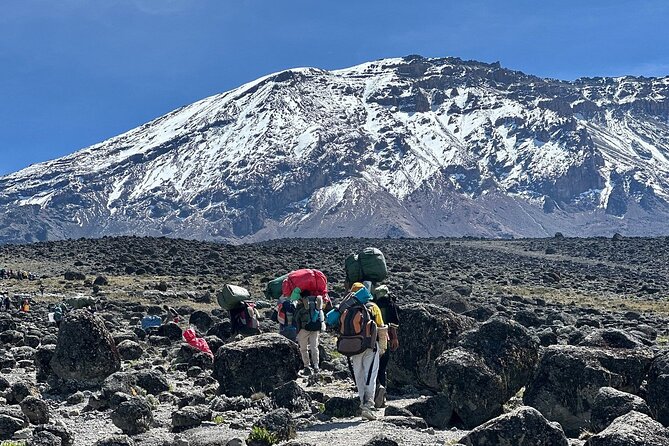
- Seven days on the Machame Route: You cover about 62 kilometers from gate to gate, with a summit attempt on day six.
- Four distinct mountain zones: The route moves from montane forest to moorland, semi-desert, high alpine terrain, and alpine desert.
- Tent camping throughout the climb: This route offers more solitude from hut life, but you need to be comfortable sleeping outdoors in changing conditions.
- A private trek with a named support team: Only your group participates, with guides and porters providing practical help and encouragement.
- The summit day is the real test: You start around midnight to 2:00 am, reach Stella Point, continue to Uhuru Peak, then descend to Mweka Camp.
- A $2,500 price that needs careful checking: The personal support and seven-day route may offer good value, but you should confirm exactly what the price includes before paying.
Why the Machame Route is worth the effort
Kilimanjaro is not a technical climb in the usual mountaineering sense, but the Machame Route still demands real fitness. The trail is steep in places, the days can last up to eight hours, and the summit push combines cold, darkness, altitude, and fatigue.
The reward is variety. You do not spend a week looking at the same type of scenery. The route begins under tall forest, then breaks into heather and open moorland. By the time you reach Lava Tower, the vegetation has thinned into a spare volcanic world. The Barranco Wall adds a hands-on scramble, while the summit day brings snow, glaciers, sunrise, and Africa’s highest point.
I also like the route’s built-in altitude strategy. On day three, you climb toward Lava Tower and then descend to Barranco Camp, finishing close to your starting elevation. That up-and-down pattern takes time, but it helps your body prepare for the summit. On Kilimanjaro, a shorter day is not always the smartest day. A slower route can give you a better chance of reaching the top.
The private setup matters, too. You are not simply dropped onto a trail with directions. Your group hikes with its own team, and the guide can respond to your pace and condition. Sebastian Shirima is named as a lead guide, while Henry is also praised for motivation and support. Ask who will lead your departure and how the guide team is organized before the trek begins.
More Hiking Tours in Moshi
- Private Kilimanjaro Hike 7 Day Lemosho Route
★ 5.0 · 60 reviews - Best Kilimanjaro hiking day trip tour with Kilinge Adventures
★ 4.5 · 54 reviews - #1. Best Kilimanjaro Day hike Tour-Machame Route-ISMANI
★ 4.2 · 47 reviews
Day one: Machame Gate to rainforest camp
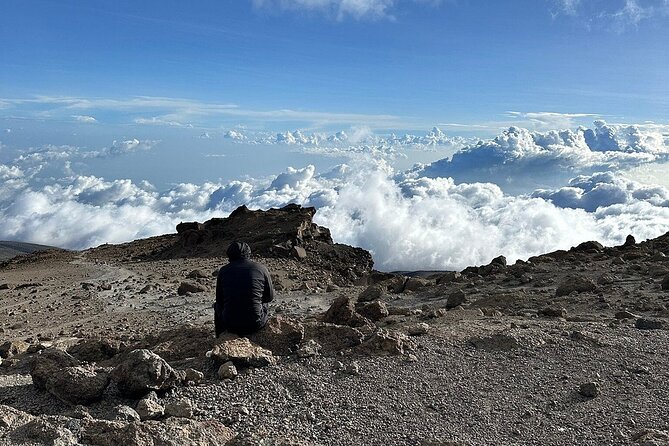
After breakfast, you are transferred to Machame Gate. The first formal steps are registration and preparation, then the walking begins through montane forest.
This is a fitting introduction to Kilimanjaro. The route is green and humid at the lower elevation, with the forest providing shade and a strong sense that you are leaving ordinary roads behind. You hike about 11 kilometers, usually taking five to seven hours, and finish at Machame Camp at roughly 3,000 meters.
The first day can look easy on paper, but do not treat it as a race. Your body is adjusting to a long walking day, a heavier pack, and the rhythm of a camping trek. Keep your pace steady and use this day to learn how your boots, clothing, water system, and trekking poles feel.
Your team sets up camp, and dinner is followed by an overnight stay in the tented camp. Because the tour uses tents rather than mountain huts, you should expect a more basic mountain routine. That is part of the Machame experience, but it also means you need to be ready for less indoor comfort.
Day two: Shira Plateau and the first altitude gain
The rainforest fades as you climb into heath and open moorland. This day covers about nine kilometers and takes four to six hours, rising from approximately 3,000 meters to 3,850 meters.
The trail crosses a valley and follows a rocky ridge. Some sections are steep, and the change from enclosed forest to open high country makes the day feel more exposed. You cross the Shira Plateau and continue toward Shira 2 Camp, with a river gorge adding a striking feature to the route.
This is one of the days when slow hiking pays off. The distance is not huge, but the altitude gain is significant. You may feel fine at the gate and noticeably different by camp. Pay attention to your guide’s pace and tell the team promptly if you feel unwell.
Shira Camp is a good place to settle into the mountain schedule. You will have a tent, dinner, and an overnight stay at altitude. Keep warm after sunset, organize your sleeping gear before dark, and do not leave small essentials buried in your duffel.
Day three: Lava Tower, Shark’s Tooth, and Barranco
Day three is the key acclimatization day. From Shira, you climb east along a ridge, pass the junction toward Kibo, and continue southeast toward Lava Tower, also called Shark’s Tooth.
The route reaches an altitude of about 4,800 meters, or 16,000 feet, before descending to Barranco Camp at around 3,960 meters, close to the stated 13,000 feet. The hiking distance is about 10 kilometers, and the day can last six to eight hours.
You finish the day at nearly the same elevation where you began, but that does not make it wasted effort. The high point followed by descent gives your body valuable exposure to altitude before the summit attempt. This is exactly the sort of day that can feel frustrating if you only measure progress by distance, but it is central to the route’s design.
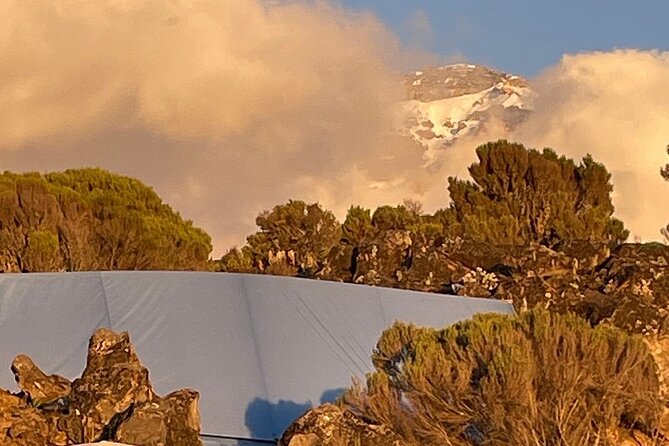
The setting also changes sharply. The habitat is described as semi-desert, with far less plant cover than the lower slopes. Lava Tower gives you a strong sense of the mountain’s volcanic structure, while the descent to Barranco provides relief after the high point.
You should expect this day to be tiring. Eat and drink even if your appetite is low, and use the long descent to protect your knees. The support of the guide team becomes especially important here, since the day combines altitude gain, uneven ground, and a lengthy return to camp.
More Kilimanjaro routes:
- Kilimanjaro climb by Lemosho Route (7-day)
★ 5.0 · 651 reviews - Kilimanjaro climb, Machame Route (7-day)
★ 5.0 · 262 reviews - Kilimanjaro Climbing Lemosho Route 8 Days.
★ 5.0 · 186 reviews - Climbing Kilimanjaro – Machame Route
★ 5.0 · 170 reviews
Day four: Scrambling up the Barranco Wall
The Barranco Wall is the most distinctive physical feature before the summit. It rises about 257 meters, and the route requires basic scrambling skills as you work upward toward the Karanga Valley.
Scrambling here means using your hands as well as your feet on sections of rock. That may sound intimidating, but it is not described as technical climbing. Still, you should be comfortable moving carefully over uneven stone and following the guide’s instructions.
After the wall, the trail rolls through a series of climbs and descents before reaching Karanga Camp at about 3,960 meters. The distance is only seven kilometers, but the day is listed at roughly seven hours. That tells you something useful: terrain and altitude, not mileage alone, set the pace.
The habitat is high alpine. There is less shelter, more exposure, and a stronger feeling of being above the ordinary world. The short distance can tempt you to hurry, but save energy. Karanga is a staging point for the next camp, not the time to prove your speed.
Day five: Karanga to Barafu Base Camp
Day five covers about six kilometers in around three hours. The trail joins the Mweka route and climbs to Barafu Camp at approximately 4,680 meters.
This is intentionally a short day. You are told to hike easily, relax, and prepare for the summit push. That advice deserves attention. The real work comes later, and an energetic arrival at Barafu is more useful than a fast morning.
Barafu sits in the alpine desert zone. The air is thin, the setting is spare, and the camp marks the point where ordinary hiking gives way to a much harder night. Try to organize your clothing, headlamp, water, and summit equipment before resting. The exact sleeping and meal arrangements should be confirmed with the operator, since the supplied information does not list every camp service.
The midnight to 2:00 am start can feel strange. You may sleep only briefly, or not at all, before setting off. That is normal for this schedule, but it makes day five’s quiet pace especially valuable.
Day six: Stella Point, Uhuru Peak, and the long descent
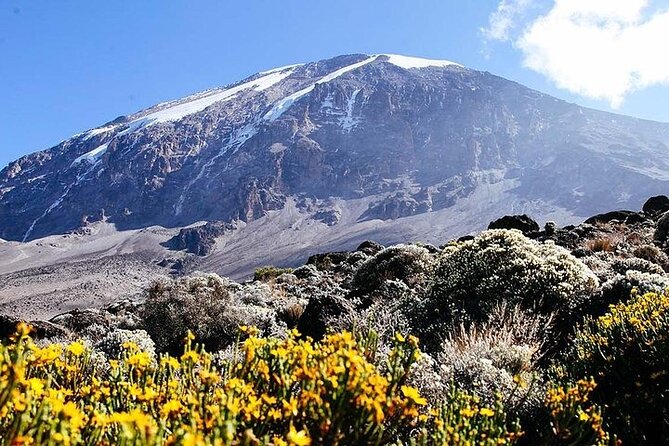
Summit day begins between midnight and 2:00 am. You climb toward the summit between the Rebmann and Ratzel Glaciers, reaching Stella Point at about 18,600 feet.
The route is steep and the conditions can be cold. At Stella Point, you stop for a short rest and, weather permitting, see sunrise. From there, you may encounter snow during the final hour to Uhuru Peak.
Uhuru Peak is the highest point on Kilimanjaro and the highest point in Africa. Faster hikers may see sunrise from the summit, but do not make speed your main goal. Reaching the top safely is more important than arriving first for a photograph.
The descent is long. You go down to Mweka Hut Campsite, stopping at Barafu for lunch. Loose gravel can make the descent awkward, so gaiters and trekking poles are specifically useful. The tour information is cut off while discussing summit equipment, but it clearly advises attention to loose ground and changing conditions.
This is the hardest day by far because it combines a night start, high altitude, a summit climb, and many hours of descent. Your guide team’s encouragement becomes a major part of the experience. Sebastian Shirima and Henry are named for their motivational support, and the team’s positive spirit, including singing and dancing in some accounts, has been an important part of the human side of the climb.
Do not judge the summit day only by the time spent at Uhuru Peak. The climb up is just half the job. Protect your knees on the way down, keep drinking, and follow the guide’s pace.
Day seven: Mweka descent and return to town
After breakfast at Mweka Camp, you continue downhill to Mweka Park Gate. The route drops from about 10,000 feet to 5,400 feet, covers roughly 10 kilometers, and takes three to four hours.
The habitat changes back to rainforest. At lower elevations, the trail may be wet and muddy. Gaiters and trekking poles remain useful, while shorts and a T-shirt may be enough for the warmer sections. Keep rain gear and warmer clothing accessible because mountain weather can change before you reach the gate.
At the gate, you receive your summit certificates. You then walk another hour to Mweka Village, where a vehicle meets you for the drive back to your hotel in Arusha.
That transfer detail is worth clarifying before departure. The tour lists Moshi as its location and says pickup is offered, while the final return is described as going to Arusha. Ask exactly where pickup begins and where the post-trek transfer ends, especially if your hotel is in Moshi rather than Arusha.
What the $2,500 price means
At $2,500 per person, this is a major trip expense. The value depends on what is included beyond the guided hiking itself. The supplied details confirm a private activity, pickup offered, mobile ticket, guides, porters, camping support, and transport between major points in the schedule, but they do not provide a full itemized list of park fees, meals, equipment, transfers, or gratuities.
That means you should ask for a written list before booking. The private format and seven-day schedule are meaningful benefits. You are paying for a supported climb rather than arranging each transfer, camp night, and mountain day yourself. A longer Machame itinerary also gives you more time than a compressed climb, which can be useful for acclimatization.
I would not call the price automatically cheap or expensive without the inclusion list. Compare the total cost, not just the headline number. Ask about airport or hotel pickup, park and rescue fees, meals, tents, sleeping arrangements, porter support, and the exact return transfer.
Who should book this trek
This trip suits a physically fit person with some hiking experience who wants several distinct mountain zones and accepts basic tent camping. You should be ready for five to eight-hour hiking days, steep ground, a rocky scramble, and a summit attempt beginning in the middle of the night.
It is less suitable if you want hut accommodation, gentle inclines, short walking days, or a flexible summit schedule. The Machame Route is popular because of its scenery, but popularity does not make it easy.
The private format may suit couples, families, or friends who want to move as one group. Service animals are allowed, and the activity is near public transportation, though the trek itself takes place on a remote mountain route. A moderate fitness level is stated as the minimum, but I would prepare beyond the minimum if possible.
Practical details before you commit
The listed start time is 7:00 am, with breakfast and transfer to Machame Gate on day one. Confirm the exact pickup location and date, since the mountain schedule and the initial meeting time are not the same thing.
Confirmation is received at booking, and the tour uses a mobile ticket. The activity is private, so only your group participates. Free cancellation is available if you cancel at least 24 hours before the experience start time. Cancellations within 24 hours are not refunded, and late changes are not accepted.
The most useful packing advice provided is simple: bring gaiters and trekking poles for loose gravel and muddy lower trails, keep rain gear and warmer clothing within reach, and prepare for snow near the summit. You should also ask the operator for a complete equipment list because the supplied description does not specify every item.
Should you book the seven-day Machame Route?
I would choose this trek if you want Kilimanjaro’s scenery, prefer a private group, and are willing to work for the summit. The route’s strongest points are its changing habitats, its sensible acclimatization day, and the support of a guide and porter team that includes names such as Sebastian Shirima and Henry.
I would pause before booking if you dislike tents, have little hiking experience, or expect the $2,500 price to cover every possible cost without checking. Get the inclusion list, confirm the Moshi and Arusha transfers, and ask who will lead your climb.
For a fit hiker who wants a serious but organized seven-day mountain adventure, the Machame Route offers a strong balance of scenery, challenge, and personal support. Just remember that Kilimanjaro rewards patience more than bravado.
FAQ
How long is the Kilimanjaro Machame Route trek?
The experience lasts approximately seven days. The Machame Route is about 62 kilometers, or 37 miles, from gate to gate.
What time does the tour start?
The listed start time is 7:00 am. On the first day, you have breakfast and transfer to Machame Gate before beginning the trek. The summit push on day six starts much earlier, between midnight and 2:00 am.
Where does the trek take place?
The tour is based in Moshi, Tanzania, and takes place on Mount Kilimanjaro. The final transfer is described as returning you to a hotel in Arusha.
Is this a private tour?
Yes. Only your group participates in the activity.
What level of fitness is needed?
A moderate physical fitness level is required, and the route is designed for people who are physically fit with some hiking experience. The trail includes steep sections, long hiking days, and a difficult summit push.
Do you sleep in mountain huts?
No hut accommodation is described for this route. The Machame trek uses tent camping, with camps set up for dinner and overnight stays.
Is pickup available?
Yes. Pickup is offered, though you should confirm the exact pickup location and transfer details with Kiwoito Africa Safaris before the trek.
What is the cancellation policy?
You can receive a full refund if you cancel at least 24 hours before the experience start time. Cancellations or changes made within 24 hours are not accepted, and the amount paid is not refunded.
More week long trips in Moshi & Kilimanjaro
- Climbing Kilimanjaro through 7 days Machame Route
★ 5.0 · 151 reviews - 7 Days Kilimanjaro via Machame route affordable price
★ 5.0 · 110 reviews - 7-Day Magical Tanzania Safari -Premium High End Package
★ 5.0 · 53 reviews - 7 Days Machame route – Kilimanjaro
★ 5.0 · 45 reviews
More Hiking Tours in Moshi & Kilimanjaro
- Best Kilimanjaro Adventure 7 days Machame route Trekking
★ 5.0 · 42 reviews - Kilimanjaro 7 Day Private Trekking Experience
★ 5.0 · 40 reviews - 8 Days Kilimanjaro Hike via Lemosho Route
★ 5.0 · 39 reviews - 6 Days Machame Route Kilimanjaro Climbing Trekking Tour
★ 5.0 · 34 reviews
Newly listed around Moshi & Kilimanjaro
- Climb Mount Kilimanjaro: 7 Days Machame Route★ 5.0 · 3 reviews
- 6 Days Mount Kilimanjaro Climbing via Rongai Route★ 5.0 · 3 reviews
- Explore 1 day Ngorongoro Crater Budget Group Safari from Arusha★ 5.0 · 3 reviews
- Mt. Kilimanjaro Day Hiking★ 5.0 · 3 reviews
- Chemka (Kikuletwa) Hot Springs, Tanzania★ 5.0 · 3 reviews
- Guided City tour of Moshi★ 4.3 · 3 reviews
- 8 Day Tanzania Family Safari★ 5.0 · 3 reviews
- Serengeti Safari with Sirikwa Travel★ 5.0 · 3 reviews
Kilimanjaro Climbs, compared.








Browse the lists this tour appears in