
Reviewed · KILIMANJARO CLIMBS
Best Kilimanjaro Adventures 6 Days Marangu Route Experience
Kilimanjaro’s Marangu Route gives you a rare luxury on Africa’s highest mountain: a bed in a hut every night. Over six days, you walk from rainforest to Uhuru Peak, with an extra acclimatization day at Horombo that gives your body a better chance at handling the altitude. I like the hut lodging and the steady change in scenery. I also like that meals, porters, guides, water, and transport back to Moshi or Arusha are arranged.
The catch is that this is still a serious high-altitude climb, not a comfortable mountain walk. The summit push begins around midnight and can take about 11 hours, while the $1,000 price does not include Kilimanjaro National Park fees and taxes. You should also expect busy huts, especially at Horombo.
Key points before you book
- Hut-based mountain nights: You sleep in A-frame huts with beds and mattresses instead of carrying a tent.
- A useful acclimatization day: Day three includes a hike toward Mawenzi Hut before returning to Horombo.
- Four distinct mountain zones: The route moves from rainforest to moorland, then alpine desert and the rocky summit zone.
- A demanding summit morning: You leave Kibo Hut around midnight for Gillman’s Point and then Uhuru Peak.
- Meals and mountain support included: Six breakfasts and lunches, five dinners, drinking water, porters, guides, a cook, and mattresses are covered.
- Strong emphasis on staff support: Past groups have praised guides including Erick, Gewa, Thomas, Steve, Victor, and Stephano for encouragement and organization.
Why the Marangu Route appeals to many climbers
The Marangu Route is often called the Coca-Cola Route, a nickname that can make it sound easy. It is not. The trail is less technical than a rock-climbing route, but the altitude makes every step harder, especially above Horombo.
Its main practical advantage is the hut system. The A-frame buildings at Mandara, Horombo, and Kibo provide sleeping space and mattresses. That means you do not need to sleep in a tent, though hut life is shared and can be noisy or crowded. Mandara can house up to 70 people, while Horombo can accommodate about 100 hikers, along with guides, cooks, and porters.
I find the route appealing for people who want a clear, organized path and prefer huts to camping. The extra night at Horombo is also important. A five-day Marangu climb moves faster and gives you less time to adjust. This six-day plan uses day three for acclimatization, which is one of its strongest features.
The route is not a loop. You go up and come down along the same general corridor. That can feel repetitive on the descent, but it also means you recognize the terrain and finish with a familiar walk through the forest.
More Kilimanjaro routes:
- Kilimanjaro climb by Lemosho Route (7-day)
★ 5.0 · 651 reviews - Kilimanjaro climb, Machame Route (7-day)
★ 5.0 · 262 reviews - Kilimanjaro Climbing Lemosho Route 8 Days.
★ 5.0 · 186 reviews
Day 1: Marangu Gate to Mandara Hut
Pickup is offered from Moshi or Arusha, with the listed start time around 8:30 a.m. The drive takes you to Marangu Gate, where registration and park formalities come first. The actual hike begins after that process.
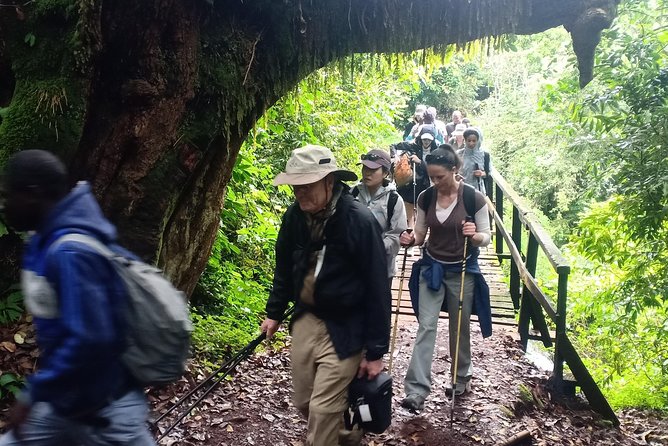
Your first hours are in Kilimanjaro’s rainforest zone. The trail is narrow and shaded, with thick vegetation around you. This is a pleasant start, but the damp forest can make the path slippery, especially if the weather turns wet.
Lunch is planned around the halfway point. After eating, you continue through the forest to Mandara Hut. The day is short by mountain standards, listed at about four hours of walking, but you should not treat it as a free afternoon in Moshi. Your body is beginning to work at altitude, and a slow pace is useful from the first step.
Once at Mandara, you can rest or take the short walk to Maundi Crater. On a clear day, the lookout gives you views toward Taveta to the east and Mawenzi Peak to the northwest. Clouds may cover the mountain, so do not count on a perfect panorama. Still, Maundi Crater is a worthwhile option because it lets you stretch your legs without committing to a long extra hike.
Mandara’s A-frame huts have beds and mattresses, plus a dining area. That is a comfortable start compared with camping, though sleeping space is shared. The included dinner, prepared by the mountain cook, is especially useful here. You do not need to think about food logistics after the day’s walk.
Day 2: Mandara Hut to Horombo Hut
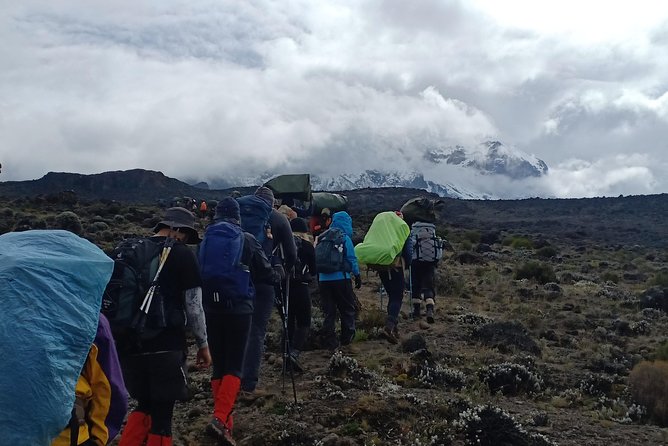
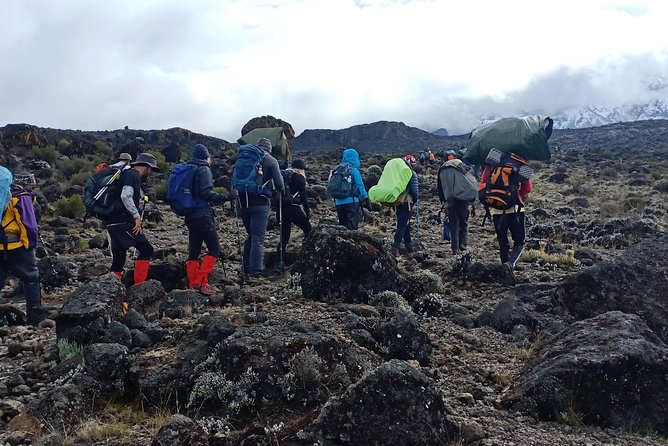
After breakfast, you leave the forest and enter Kilimanjaro’s moorland zone. The trees thin out, and the plants become shorter and more suited to the cooler, drier conditions. The views begin to open, with possible sights of Mawenzi and Kibo if the weather cooperates.
This day takes about five hours. A picnic lunch is planned at Kambi ya Taabu before you continue toward Horombo. The walking is longer than day one, but it gives you a gradual move into higher ground rather than a sudden jump.
Horombo is often considered the most pleasant of the Marangu huts because the small A-frame buildings hold up to eight people each. The setting is attractive, but this is also the busiest sleeping area on the route. Climbers going up, climbers coming down, porters, cooks, and guides all use the area. Expect a social and active camp rather than solitude.
That busy setting has one benefit: you see how the mountain works as a shared route. It also means earplugs and patience may be useful, though those items are not listed as part of the tour. The afternoon is free for rest, which matters. Do not spend every spare minute walking around camp.
Day 3: Horombo to Mawenzi Hut and back
This is the day that makes the six-day schedule more sensible. You use Horombo as a base and hike higher toward Mawenzi Hut, then return for a late lunch and a relaxed afternoon.
The walk is listed at about five hours. The goal is not simply to see another hut. Spending time at a higher elevation helps your body adjust before the route pushes toward Kibo. No acclimatization plan guarantees a summit, but this extra day gives you a better foundation than a faster itinerary.
The views toward Kibo are a major reward. Mawenzi has a sharp, rugged profile, while Kibo appears broader and more imposing. Weather can change quickly, so you may get only brief views. Keep your pace controlled, drink the supplied purified water, and tell your guide early if you feel unwell.
The afternoon back at Horombo should be treated as part of the climb, not wasted time. Eat, rest, and prepare your clothing and daypack for the next stage. This is also a good point to discuss the summit plan with your guide. Guides named in past groups include Erick, Gewa, and Thomas, with other teams led by Steve, Victor, and Stephano. The important point is not the name alone, but the guide’s ability to monitor your pace and condition.
More six day trips in Moshi & Kilimanjaro:
- Kilimanjaro climb, Lemosho Route (6-day)
★ 5.0 · 129 reviews - Kilimanjaro climb, Marangu route (6-day)
★ 5.0 · 72 reviews - 6 Days 5 Night Safari
★ 5.0 · 57 reviews - 6 Days Tanzania Classic Safari
★ 5.0 · 52 reviews
Day 4: Horombo to Kibo Hut across the Saddle
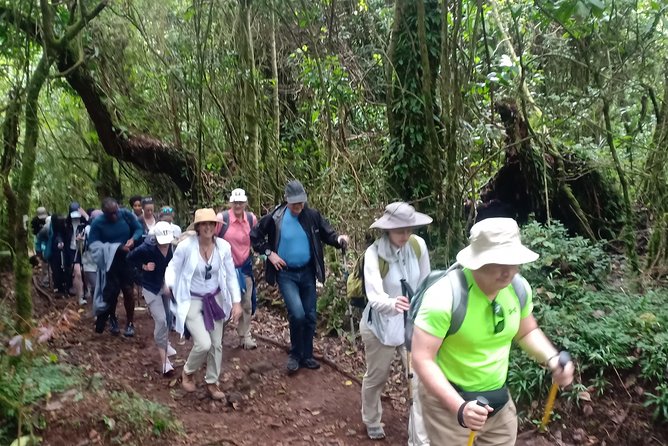
Day four is the longest approach before the summit. You leave Horombo after breakfast and cross moorland into the alpine desert. After about an hour, you reach Maua River, a small stream. Beyond it, vegetation fades and the ground becomes flatter.
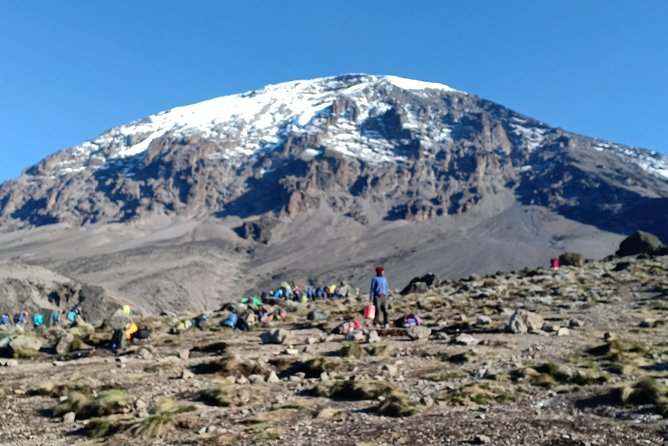
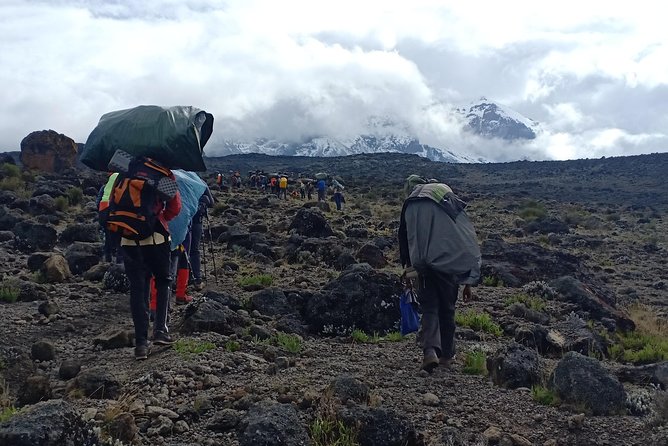
Lunch is planned at Middle Red Hill. Afterward, you continue for about two hours across the Saddle, the broad, stark area between Mawenzi and Kibo. There is little vegetation here, and the scenery feels severe compared with the forest below. That change is part of the mountain’s appeal. Kilimanjaro is not one unchanging slope. It gives you several distinct environments in a single climb.
The day is listed at about eight hours. Although the trail is not described as technical, the distance and altitude can wear you down. Kibo Hut is reached around 3 p.m., leaving several hours to rest before the midnight start.
This is the point where good organization matters. Dinner, breakfast, drinking water, mattresses, porters, and the cook’s support are included, so you can focus on resting. Keep your summit clothing and water close. You should also avoid wandering around Kibo. The best preparation is quiet rest.
Day 5: Gillman’s Point and Uhuru Peak
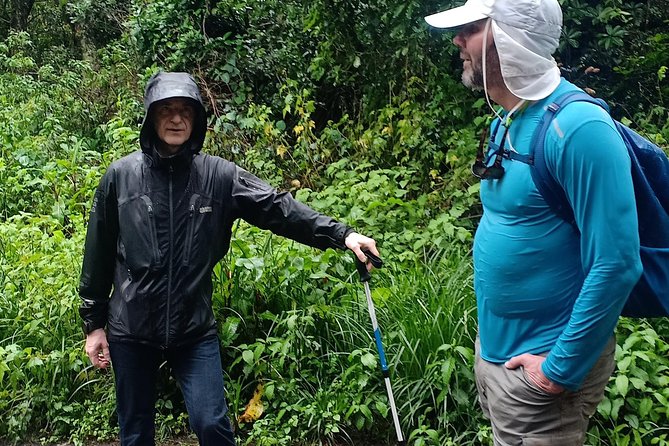
Summit day starts around midnight. The first target is Gillman’s Point on the crater rim, at about 5,681 meters. The climb takes roughly five hours and includes rocky switchbacks. William’s Point, at approximately 5,000 meters, comes after about two hours from Kibo Hut, followed by another stretch before the switchbacks begin.
This is the hardest part of the trip. The route may be described as the easiest of the three crater ascent paths, but that comparison should not fool you. At this altitude, a modest slope can feel punishing. The cold, darkness, thin air, and early start all add to the strain.
At Gillman’s Point, the route continues along the crater rim toward Uhuru Peak. The climb is more gradual, but fatigue and altitude remain serious. The full summit day is listed at about 11 hours, though the exact timing depends on your pace, rest breaks, weather, and health.
Reaching Uhuru Peak is not guaranteed, and no responsible operator should promise it. The guides’ role is crucial here. The strongest praise connected with this operation centers on encouragement, patience, organization, and steady support from the guides and porters. One past group of 16 reached the summit together, but that should be seen as a happy outcome, not a standard you must match.
After the summit, you return to Kibo Hut and then continue down toward Horombo, according to the day’s schedule. This makes for a very long day. You will likely feel relief more than celebration at first. Eat, drink, and follow your guide’s instructions rather than rushing the descent.
Day 6: Horombo Hut to Marangu Gate
The final morning brings a downhill walk through the cloud forest to Marangu Gate. The route is listed at about six hours, and the descent can be harder on tired knees than expected.
Watch your footing. The forest trail may be slippery, particularly after rain. This is not the time to hurry simply because the summit is behind you. Trekking poles, if you bring them, can help with balance, but they are not listed as included equipment.
At Marangu Gate, the tour vehicles wait to take you back to Moshi or Arusha. You can buy t-shirts and sodas at the gate, a small but pleasant finish after several days without ordinary roadside comforts.
Food, huts, porters, and what the $1,000 covers
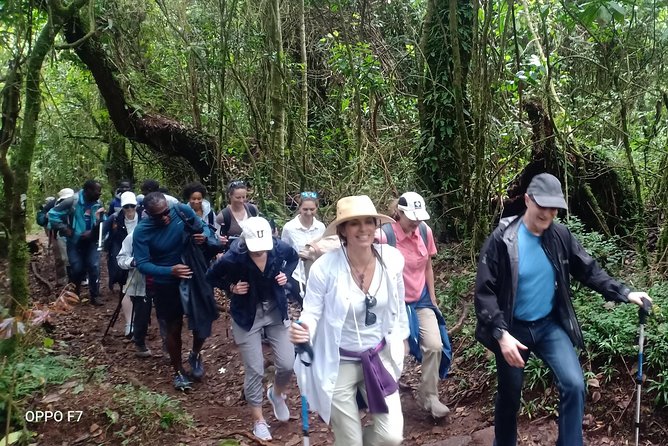
At $1,000 per person, the tour offers reasonable value if the listed inclusions are delivered as stated. You receive six breakfasts, six lunches, five dinners, fresh and nutritious food, clean purified drinking water, hut accommodation, mattresses, guides, porters, and cook salaries.
That package covers the essentials of a supported climb. You are not arranging food at altitude, finding your own hut space, or carrying every item up the mountain. The porters’ work is a major part of the experience, so ask how loads are managed and make sure you budget tips separately.
The price does not include Kilimanjaro National Park fees and tax. This is the most important cost detail to clarify before booking. You should also plan for tips and personal items. Optional activities, such as a short safari after the climb, are separate.
The operator says it follows fair and ethical treatment of porters. That is encouraging, but you can still ask for details about porter welfare, wages, load limits, and tipping practice. Responsible mountain travel depends on these points.
Who this six-day climb suits best
I would consider this trip if you want the structure of a guided expedition without tent camping. The hut system, included meals, and planned transportation make it easier to concentrate on walking and altitude management.
It is also a good match for people who can handle long days and accept basic shared accommodation. The route is popular and can be crowded. If your main goal is quiet wilderness, the busy Horombo huts may disappoint.
You should arrive with a basic level of walking fitness. The supplied information says most travelers can participate, but that does not remove the need to prepare. The summit day is long, and altitude sickness can affect people who are otherwise fit. Take symptoms seriously and listen to your guide.
Group size can reach 100 people. That is a large possible maximum, though your actual climbing group may be smaller. Ask about expected group size before paying, since group numbers affect pace, sleeping arrangements, and personal attention.
Practical details to settle before departure
Pickup is offered, and the meeting time is listed as 8:30 a.m. from Moshi or Arusha. Confirmation is provided at booking, and the starting area is near public transportation.
The experience requires good weather. If poor weather causes cancellation, you are offered another date or a full refund. You can also cancel for a full refund up to 24 hours before the start time. Changes or cancellations inside that 24-hour window are not accepted.
The current rating is 4.9 from 18 ratings, with 94 percent recommending the experience. The strongest themes are organized transport, helpful guides, supportive porters, good meals, and successful summit attempts. There is also a warning to keep expectations specific: praise for the Kilimanjaro climb does not automatically tell you anything about optional safari arrangements.
Before booking, confirm these points:
- The exact amount of park fees and taxes added to the $1,000 price
- Your pickup location and return destination
- Expected group size
- The guide assigned to your group
- Porter welfare and tipping arrangements
- What personal gear you must bring
- How the company handles altitude symptoms and an early descent
Should you book the Marangu Route with Kilinge Adventures?
I would book this six-day climb if you value hut accommodation, a built-in acclimatization day, and full mountain support. The plan has a sensible rhythm: two approach days, a higher training walk from Horombo, a long move to Kibo, then the summit attempt.
I would hesitate if you want an uncrowded route, dislike shared huts, or need the $1,000 price to include every major park charge. Confirm the extra fees first. Also remember that the guide’s encouragement can help, but it cannot erase the effects of altitude or guarantee Uhuru Peak.
For the right climber, this is a practical Marangu package with strong staff support and a clear route to Africa’s highest summit. Go prepared, walk slowly, rest on day three, and treat the mountain with respect.
FAQ
Where does the six-day Marangu Route experience start?
The experience starts from Moshi or Arusha, with pickup offered. The listed meeting time is 8:30 a.m., followed by transport to Marangu Gate.
How long does the Kilimanjaro climb last?
The experience lasts approximately six days. The walking times listed range from about four hours on day one to about 11 hours on summit day.
Where do you sleep on the Marangu Route?
You sleep in mountain huts at Mandara Hut, Horombo Hut, and Kibo Hut. The huts have beds with mattresses, and the buildings use shared sleeping spaces.
Is food included?
Yes. The package includes six breakfasts, six lunches, and five dinners, along with fresh nutritious food and clean purified drinking water.
Is the Kilimanjaro National Park fee included?
No. Kilimanjaro National Park fees and tax are listed as exclusions. Tips, personal items, and optional tours are also not included.
Does the tour include an acclimatization day?
Yes. Day three is an acclimatization day. You hike from Horombo toward Mawenzi Hut and return to Horombo for lunch and rest.
What happens if bad weather cancels the climb?
If poor weather causes cancellation, you are offered a different date or a full refund. You can also cancel up to 24 hours before the start time for a full refund.
Newly listed around Moshi & Kilimanjaro
- Climb Mount Kilimanjaro: 7 Days Machame Route★ 5.0 · 3 reviews
- 6 Days Mount Kilimanjaro Climbing via Rongai Route★ 5.0 · 3 reviews
- Explore 1 day Ngorongoro Crater Budget Group Safari from Arusha★ 5.0 · 3 reviews
- Mt. Kilimanjaro Day Hiking★ 5.0 · 3 reviews
- Chemka (Kikuletwa) Hot Springs, Tanzania★ 5.0 · 3 reviews
- Guided City tour of Moshi★ 4.3 · 3 reviews
- 8 Day Tanzania Family Safari★ 5.0 · 3 reviews
- Rongai Route 7 Days★ 5.0 · 3 reviews
Kilimanjaro Climbs, compared.








Browse the lists this tour appears in