
Reviewed · KILIMANJARO CLIMBS
Mount Kilimanjaro 6 days – Machame route
The Machame Route gives you Kilimanjaro in one tough, scenic sweep: rainforest, high plateau, volcanic rock, glacier views, and a sunrise summit at Uhuru Peak. You cover about 62 kilometers from gate to gate, with the hardest work saved for the fifth day.
I like the useful acclimatization pattern on Day 3, when you climb toward Lava Tower and then sleep lower at Barranco. I also like that the $2,220 price includes guides, porters, cook, camping gear, meals, airport transfers, and hotel nights in Moshi. The main caution is simple: six days is a fast schedule, and the summit day can last about 14 hours.
- Lava Tower to Barranco: A climb high followed by a descent helps your body prepare for summit altitude.
- Midnight summit attempt: You reach Stella Point around sunrise, then continue toward Uhuru Peak at 5,895 meters.
- Full mountain support: A qualified guide team, assistant guides, porters, cook, tents, tables, chairs, and washing water are included.
- Two Moshi hotel nights: Dinner and breakfast are provided before and after the climb.
- Wet lower trails: The rainforest and Mweka descent can be muddy, so gaiters and trekking poles earn their place.
- Private booking: Only your own group takes part, rather than joining an open public departure.
Why the Machame Route earns its reputation
Machame is often called the Whisky Route, a fitting nickname for a trail that asks more from your legs than easier approaches. It begins in thick forest and quickly turns into a serious high-altitude trek, with steep ridges, rocky paths, scree, and long hours on your feet.
You do not simply walk uphill for six days. The route rises, dips, circles the mountain, and shows the summit from several angles. That variety is the chief reason I would choose it over a route that reaches the top by a more direct line.
The itinerary is designed for people with moderate fitness and some hiking experience. First-time trekkers can use it, but you should arrive ready for long uphill days, cold nights, basic camping, and a very demanding summit push. This is not a casual mountain holiday with a scenic walk added on.
The group is private, so the size and rhythm of your party matter. You will have a mountain guide, assistant guides, porters, and a cook. The named team associated with this operation includes guide Emmanuel, along with Isaya, Jumanne, Ngwasuma, chef staff, porters, and Yahya. Exact crew assignments can vary, but the important point is that this is a supported climb rather than a self-guided hike.
Day 1: Machame Gate to rainforest camp
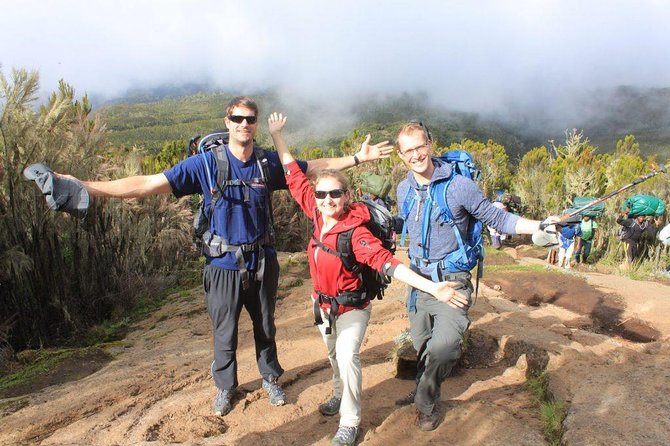
The morning transfer from Moshi to the Kilimanjaro National Park Gate takes about 45 minutes. The drive passes through Machame village on the mountain’s lower slopes, then the walking begins at roughly 1,830 meters.
Your first 11 kilometers lead through rainforest to Machame Camp at about 3,050 meters. Allow five to six hours. The trail winds up a ridge, and the lower section can be muddy and slippery, particularly in wet conditions.
This is a good first day because the forest offers shade and a gradual introduction to the mountain. It is also where poor preparation shows quickly. Keep rain gear handy, and bring gaiters and trekking poles. Shoes that work well on dry paths may feel less impressive here.
Machame Camp is not a luxury resort. You will sleep in tents, with the crew handling the main camp setup. Camping chairs, tables, sleeping mattresses, and water for washing are included, which makes a real difference after a long first walk.
More Kilimanjaro routes:
- Kilimanjaro climb by Lemosho Route (7-day)
★ 5.0 · 651 reviews - Kilimanjaro climb, Machame Route (7-day)
★ 5.0 · 262 reviews - Kilimanjaro Climbing Lemosho Route 8 Days.
★ 5.0 · 186 reviews
Day 2: Forest edge and the Shira campsite
After breakfast, the route leaves the rainforest and enters more open ground. You climb from approximately 3,050 to 3,850 meters, covering about 5 kilometers in four to five hours.
The trail crosses a valley and follows a steep, rocky ridge before turning west toward a river gorge. The distance is short compared with Day 1, but the altitude and uneven surface make it feel like a proper mountain day.
The Shira campsite introduces a different side of Kilimanjaro. The dense lower forest is gone, and the views open up around the Shira Plateau. You will notice the air getting thinner, even though the walking distance is modest.
I like this stage because it prevents the itinerary from becoming a simple race to higher ground. You have time to settle into the daily routine: breakfast, walking, camp arrival, washing, dinner, and rest. Try not to spend your energy proving how fast you can walk. The mountain will have its own opinion soon enough.
Day 3: Lava Tower and the important Barranco descent
Day 3 covers around 10 kilometers and takes five to six hours. You climb from roughly 3,850 meters toward 4,000 meters at Barranco Camp, but the trail reaches the Lava Tower area at about 4,650 meters before dropping again.
From the Shira Plateau, you head east along a ridge and pass a junction toward Kibo, Kilimanjaro’s main summit cone. The route then turns southeast toward Lava Tower, also called Shark’s Tooth. A second junction leads toward Arrow Glacier before you continue down to Barranco.
This is one of the most valuable days in the plan. You climb high, then sleep at a lower altitude than the highest point reached that day. That climb high, sleep lower rhythm gives your body a useful chance to adjust.
Do not mistake the lower camp elevation for an easy day. The trail is long, the air is thin, and the Lava Tower section can feel demanding. But the effort has a clear purpose. If you are choosing Machame partly for its acclimatization pattern, this is the day that makes the route appealing.
Day 4: Barranco to Barafu Camp
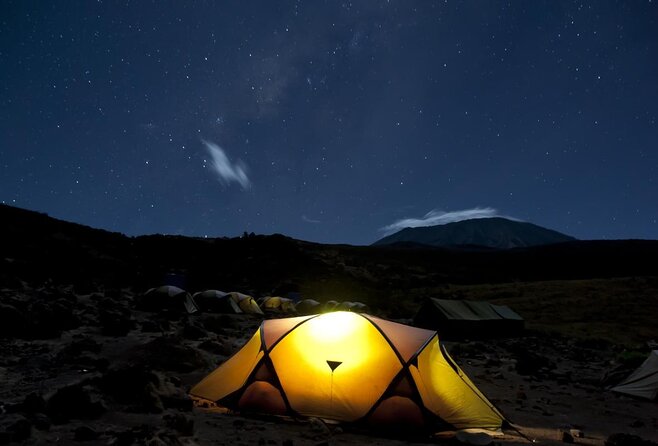
Day 4 takes about seven hours over 9 kilometers. You climb from approximately 4,050 meters to Barafu Camp at roughly 4,700 meters.
The route completes what is known as the South Circuit, giving you views of the summit from changing angles. The terrain is increasingly stark and rocky, and the camp sits high enough that rest may not feel as refreshing as it did lower down.
Barafu is the launch point for the summit attempt. Dinner comes before an early bedtime, though sleep may be short or difficult. You need to organize your clothing, headlamp, water, snacks, and personal medicine before turning in.
This is a day for discipline. Eat what you can, drink regularly, and follow the guide’s pace. The summit schedule begins around midnight to 2 a.m., so a relaxed afternoon matters more than squeezing in extra activity.
More six day trips in Moshi & Kilimanjaro:
- Kilimanjaro climb, Lemosho Route (6-day)
★ 5.0 · 129 reviews - Kilimanjaro climb, Marangu route (6-day)
★ 5.0 · 72 reviews - 6 Days 5 Night Safari
★ 5.0 · 57 reviews - 6 Days Tanzania Classic Safari
★ 5.0 · 52 reviews
Day 5: Stella Point, Uhuru Peak, and the long descent
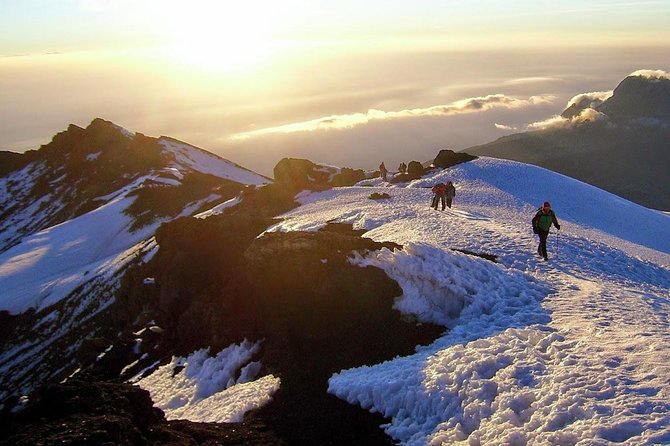
The summit day is the heart of the trip and the part you must respect most. You begin between midnight and 2 a.m., climb from about 4,700 meters, reach the summit at 5,895 meters, and then descend all the way to around 3,090 meters.
The uphill distance is listed as approximately 5 kilometers, followed by about 13 kilometers downhill. The full day can last 14 hours. That combination of cold, darkness, thin air, steep scree, and fatigue makes this the most mentally and physically difficult section.
The route heads northwest between the Rebmann and Ratzel glaciers, climbing through heavy scree toward Stella Point on the crater rim. Your pace will likely be slow. That is normal. A guide-led, steady rhythm is far more useful here than speed.
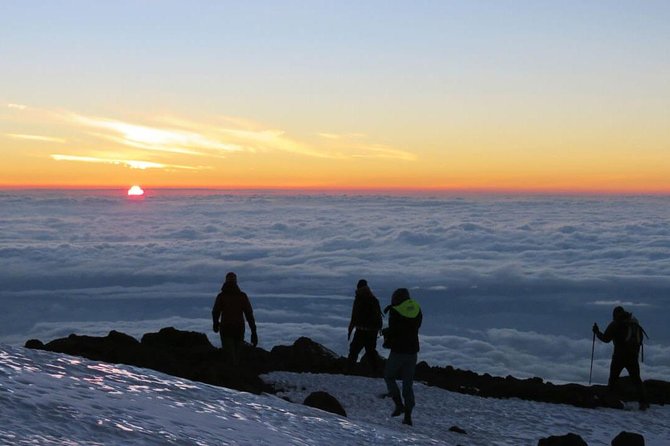
At Stella Point, around 5,730 meters, you pause briefly and may see sunrise over the surrounding peaks. Stronger, faster hikers may reach Uhuru Peak in time for sunrise, while others watch the light arrive at Stella Point before completing the final hour.
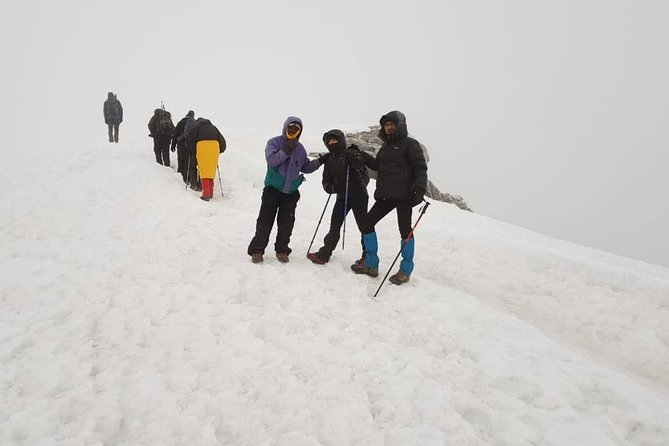
Snow may appear between Stella Point and Uhuru Peak. At the summit, you have reached the highest point in Africa, but do not linger too long. The altitude does not become safer because the view is good.
The descent is where many people discover that summit day is not finished at the top. Your knees and feet still have hours of work. You continue down to the camp around 3,090 meters, where a meal and sleep are especially welcome.
Emergency oxygen and a basic first aid kit are supplied, but these are safety provisions, not summit aids. They should not be understood as a substitute for preparation or altitude judgment.
Day 6: Mweka Trail and the return to Moshi
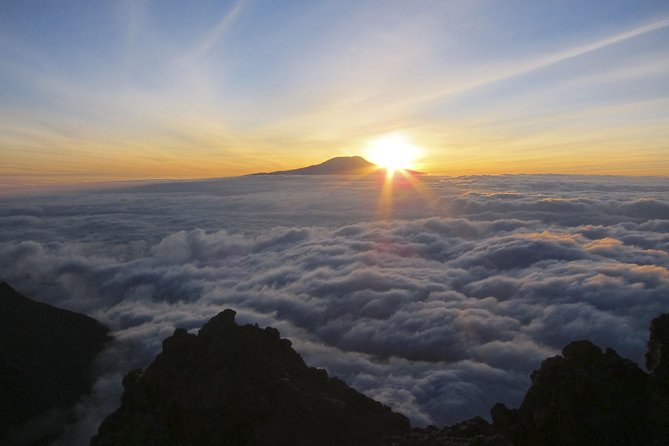
After breakfast, you descend from around 3,090 meters to Mweka Park Gate at about 1,680 meters. The walk takes roughly three to four hours and covers around 10 kilometers.
The Mweka Trail can be wet and muddy at lower elevations. Gaiters and poles are useful again, and you can usually switch to shorts and a T-shirt once the temperature rises. Keep rainwear and a warm layer within reach because mountain weather can change before you reach the gate.
At the park gate, you receive summit certificates. From there, you continue for about another hour to Mweka Village, where a vehicle takes you back to your Moshi hotel in roughly 30 minutes.
This final day is short compared with the summit push, but descending tired legs on slippery ground is no joke. Take your time. A careful final walk is better than ending an otherwise successful climb with a fall.
What the $2,220 price really covers
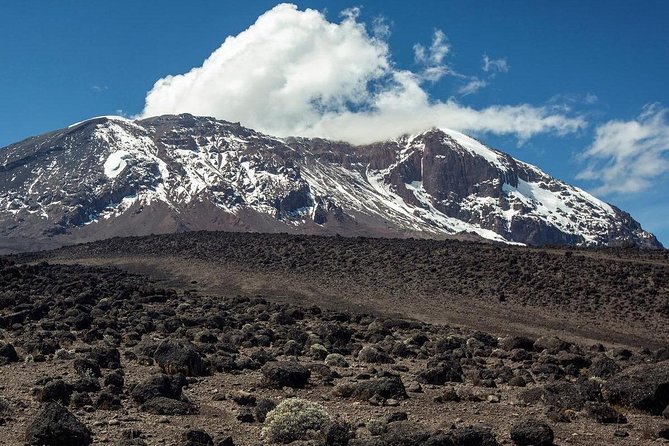
At $2,220 per person, this is a substantial purchase, but the price includes far more than trail access. You receive return Kilimanjaro airport transfers, the night before and the night after the climb in a Moshi hotel, dinner and breakfast at those hotels, five breakfasts on the mountain, six lunches, and five dinners.
The package also includes park-related fees and taxes, qualified mountain staff, crew salaries in line with Kilimanjaro National Park guidelines, tents, tables, chairs, sleeping mattresses, daily washing water, emergency oxygen, and a basic first aid kit.
That bundle gives the price reasonable value, especially if you would otherwise arrange airport transport, hotel nights, food, permits, equipment, and a mountain crew separately. You are paying for logistics as well as walking.
The inclusions do not cover flights, visas, insurance, personal items, drinks, snacks, medicine, water-purifying tablets, or personal trekking gear. A portable toilet is optional but strongly recommended. It costs extra, yet many people will consider it worthwhile at high camps and during a long night on the mountain.
Alcohol and both alcoholic and non-alcoholic drinks are also excluded. Bring your own permitted snacks and personal supplies rather than expecting the mountain menu to cover every preference.
Food, camping, and the mountain crew
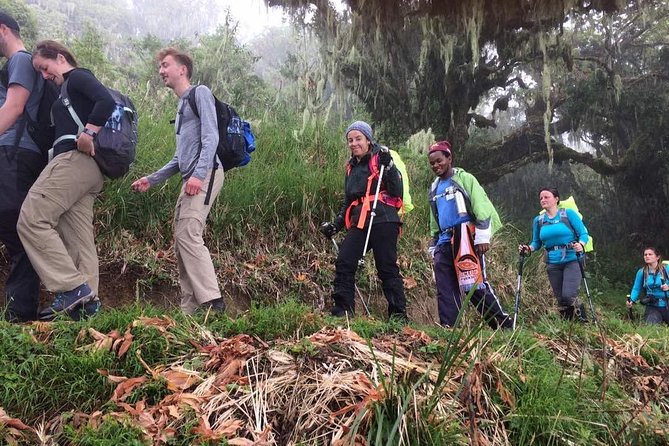
The cook prepares five dinners, six lunches, and five breakfasts during the climb. One particularly useful detail from the positive accounts is that the food was described as better than expected for such a difficult setting. That matters because appetite often becomes unreliable at altitude, and a warm meal can restore more than calories.
The camp setup includes a tent, sleeping mattress, chairs, tables, and water for washing each day. These are basic comforts, not hotel services. You should still expect cold, dust, limited washing, and a schedule controlled by weather, terrain, and your body.
The crew is central to the experience. Wence handles the operation, with Emmanuel among the guides connected with successful climbs. Isaya, Jumanne, Ngwasuma, Yahya, the cook, and the porters have also been singled out in strong accounts of the service.
I would ask before departure who your lead guide will be, how the private group will be paced, and how porter support is organized. The company has also handled changes when a larger party chose to switch from Machame to Rongai at extra cost. That tells you route decisions can sometimes be negotiated, but you should confirm any change and its price in writing.
Who should book this climb
This route suits you if you have moderate fitness, some hiking experience, and the patience to walk slowly for several days. You do not need to be an elite athlete, but you should be comfortable with five to seven hours of walking before the summit day.
It can work for a first Kilimanjaro climb if you prepare seriously. Build endurance, practice with a loaded daypack, and use the footwear, poles, and rain protection you plan to take on the mountain.
I would hesitate to recommend the six-day schedule if you want the gentlest possible altitude adjustment. The itinerary is efficient and scenic, but the summit day is long and the overall climb is compressed. Ask the operator about longer options if you have a history of altitude trouble or prefer more recovery time.
The private format is useful for couples, families, or friends who want their own pace. It also gives a solo climber a chance to ask about joining a group, but do not assume that a group place, route change, or final crew lineup is guaranteed without direct confirmation.
Practical details before you pay
Pickup is offered, and the package includes transfers between Kilimanjaro airport and Moshi. The walking portion begins at Machame Gate in Kilimanjaro National Park and ends after the descent through Mweka and the transfer back toward Moshi.
Confirmation is provided at booking. The activity is private, and only your group participates. The stated meeting point is Machame Gate, so confirm the exact hotel pickup time and the practical meeting instructions before arrival.
Free cancellation is available if you cancel at least 24 hours before the local start time. Cancellations or changes made inside that window are not accepted for a refund.
Should you book the six-day Machame Route?
I would book this trip if you want a classic Kilimanjaro route with strong scenery, a full support crew, and a price that covers the major logistics. The Lava Tower and Barranco pattern is a real benefit, and the included hotels, meals, transfers, and camping equipment reduce the number of arrangements you must make yourself.
I would not choose it simply because six days sounds convenient. Convenience comes with a hard summit schedule. Book it if you are ready for the midnight start, the 14-hour summit day, muddy forest trails, basic camping, and a careful approach to altitude.
Before paying, confirm the guide team, group size, portable toilet cost, gear requirements, and what happens if the route changes. If those details suit you, Machame offers a demanding but well-supported way to reach Uhuru Peak.
FAQ
How long is the Machame Route climb?
The climb takes approximately six days and covers about 62 kilometers, or 37 miles, from park gate to park gate.
Is the Machame Route suitable for first-time trekkers?
Yes, first-time trekkers can use the route, but it is designed for people with moderate physical fitness and some hiking experience.
What time does the summit attempt begin?
The summit climb begins very early, usually between midnight and 2 a.m. on Day 5.
How high is Uhuru Peak?
Uhuru Peak is at 5,895 meters.
How long is summit day?
The summit day takes about 14 hours. It includes roughly 5 kilometers uphill and about 13 kilometers of descent.
Are airport transfers included?
Yes. Return transfers between Kilimanjaro airport and Moshi are included.
Are hotel nights included?
Yes. The package includes the night before and the night after the climb in a Moshi hotel, with dinner and breakfast.
Is camping equipment provided?
Yes. Tents, camp chairs, tables, sleeping mattresses, and water for daily washing are included.
Is a portable toilet included?
No. A portable toilet is optional, but it is highly recommended and costs extra.
Newly listed around Moshi & Kilimanjaro
- Climb Mount Kilimanjaro: 7 Days Machame Route★ 5.0 · 3 reviews
- 6 Days Mount Kilimanjaro Climbing via Rongai Route★ 5.0 · 3 reviews
- Explore 1 day Ngorongoro Crater Budget Group Safari from Arusha★ 5.0 · 3 reviews
- Mt. Kilimanjaro Day Hiking★ 5.0 · 3 reviews
- Chemka (Kikuletwa) Hot Springs, Tanzania★ 5.0 · 3 reviews
- Guided City tour of Moshi★ 4.3 · 3 reviews
- 8 Day Tanzania Family Safari★ 5.0 · 3 reviews
- Rongai Route 7 Days★ 5.0 · 3 reviews
Kilimanjaro Climbs, compared.








Browse the lists this tour appears in