
Reviewed · KILIMANJARO CLIMBS
6 Days Kilimanjaro Climbing Machame route
Kilimanjaro’s Machame Route gives you the mountain’s biggest scenery in a short six-day push. You’ll walk from forest into high-altitude moorland, cross the Shira Plateau, scramble up Barranco Wall, and make the midnight climb to Uhuru Peak, Africa’s highest point.
I like the route’s natural acclimatization pattern, especially the high climb toward Lava Tower followed by a descent to Barranco Camp. I also like the variety: big views of Kibo and Mawenzi, strange high-altitude plants, glaciers, cloud forest, and a proper camping experience.
The main concern is the schedule. Six days is demanding, and the published day-one and day-two descriptions repeat the same route details, so you should confirm the exact camps and walking plan before paying. Machame is scenic, but its popularity can mean busy trails and campsites.
Key points to know before you book
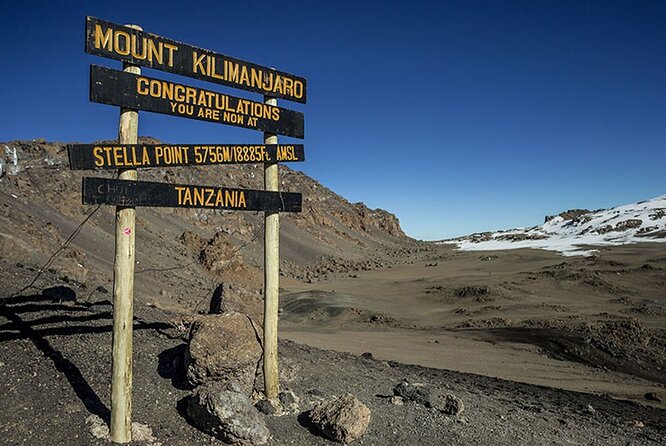
- Uhuru Peak comes after a midnight start: Expect about six hours of headlamp walking before Stella Point, then a final climb along the crater rim.
- Barranco Wall is a hands-on scramble: You may need to use your hands in places, though the itinerary describes it as a scramble rather than technical climbing.
- The route uses high then low walking: Day three climbs to about 4,530 meters before descending to Barranco Camp, a useful acclimatization pattern.
- Your $1,950 covers the basics: Camping equipment, park fees, transport, bottled or mineral water, and 6 breakfasts, 6 lunches, and 6 dinners are included.
- The tour is private: Only your group participates, and pickup is offered.
- The six-day plan is not forgiving: You need to be ready for long walking days, cold high-altitude conditions, and a 12-hour summit day.
Why Machame is the popular choice
Machame is often called the Whiskey Route, a nickname that hints at its tougher character compared with the easier Marangu Route. You do not sleep in huts here. You camp, walk longer days, and deal with a more rugged trail.
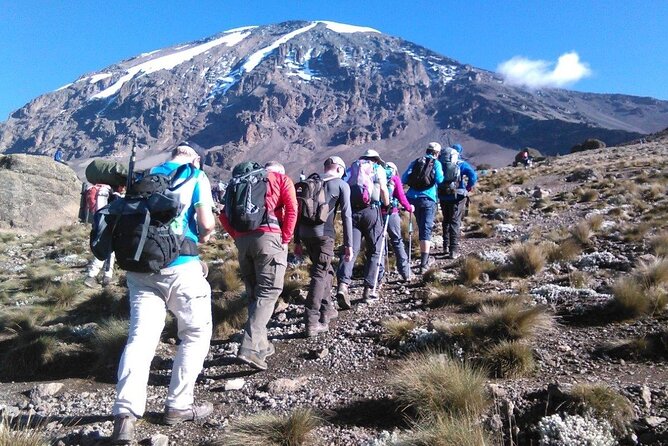
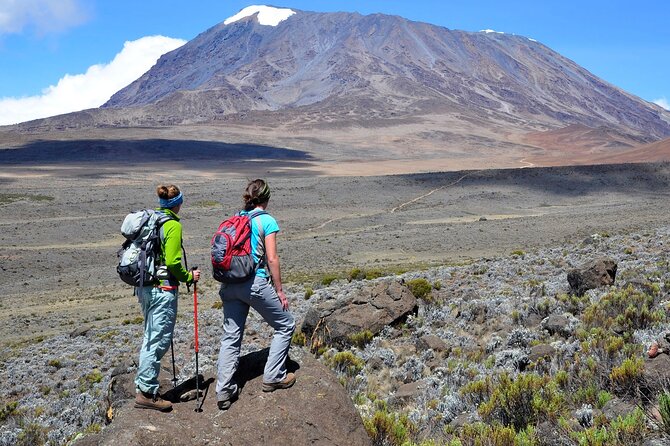
That effort buys you a changing view of Kilimanjaro. The route begins in forest and rises through smaller vegetation toward the open Shira Plateau. Later, you walk through barren alpine terrain before reaching the glaciers and volcanic rock near Barafu Camp.
I like the way the route makes you work for the mountain. It does not simply point you uphill and keep you there. You climb high, descend to sleep lower, and repeat the pattern. That matters because altitude is usually the real challenge on Kilimanjaro, not the technical difficulty of the trail.
The trade-off is crowding. Machame is one of the most used routes, so you may share narrow sections, camps, and viewpoints with many other climbing groups. The scenery remains excellent, but solitude is not the main reason to choose it.
More Kilimanjaro routes:
- 8-Day Small-group Lemosho Kilimanjaro Summit Trekking
★ 5.0 · 186 reviews - 7-Day Machame Kilimanjaro Summit Tour from Arusha
★ 5.0 · 125 reviews - Private Full Day Hiking Experience to Marangu Route
★ 5.0 · 61 reviews
Day one: forest, open views, and Shira Plateau
The first walking day takes about five hours and is considered the easiest section of the route, though it still includes uphill stretches. Bring plenty of water. Much of the trail is exposed, and a clear day can feel hot.
As you gain height, look back toward the plains and forest below. Ahead, the peaks of Kibo and Mawenzi begin to frame the climb. The vegetation changes as you walk. Tall trees give way to Kilimanjaro’s unusual high-altitude plants, including Senecio kilimanjari and Lobelia deckenii.
After lunch, the route continues toward Shira Plateau. The plateau was formed when lava from Kibo filled the Shira crater, and it gives you a wide, open setting after the enclosed forest. Shira Camp provides a place to rest, with Kibo to the west and Mount Meru to the east.
This is a good day to settle into the pace. You are not trying to prove anything on day one. Keep your steps steady, drink regularly, and use the viewpoints as short natural pauses.
Day two: confirm the exact plan before departure
The supplied schedule gives day two a walking time of about six hours, but its description repeats the day-one route, including the uphill sections, changing vegetation, Shira Plateau, and Shira Camp. That is not enough detail to tell you exactly where the second night is planned.
This matters because the next day begins with hiking across Shira Plateau and then continuing toward Barranco Camp. Before you book, ask the operator to confirm the day-two camp, route, elevation gain, and walking distance.
The broad purpose of this part of the climb is clear: continue gaining altitude without rushing toward the summit. The open plateau can feel exposed, and the lack of large trees means sun and wind may be more noticeable than in the forest.
Use the day to watch how your body reacts. A mild headache, poor sleep, or reduced appetite can happen at altitude, but you should tell your guide about symptoms rather than trying to hide them. The supplied information does not state the guide’s name, guide-to-climber ratio, or medical procedures, so those are sensible questions to ask before departure.
Day three: the high point before Barranco Camp
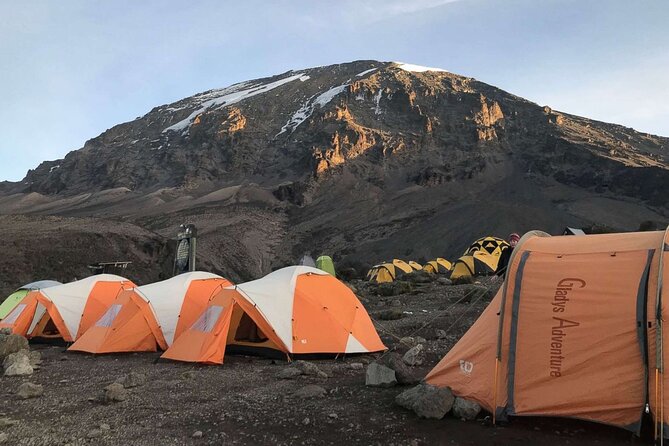
Day three is one of the smartest parts of the route. Although the final elevation gain is only about 110 meters, you climb roughly 690 meters during the day and reach about 4,530 meters before descending to Barranco Camp.
This is the high then low pattern that helps your body adjust. After breakfast, you walk east across Shira Plateau and pass the junction connecting the Shira and Lemosho routes. The scenery becomes more barren, with fewer signs of the forest below.
After lunch, you reach the highest point of the day and then descend quickly toward Barranco. Faster groups can take a detour via Lava Tower, a roughly 300-foot volcanic formation. The supplied schedule presents this as an option, so confirm with your guide whether it fits your group’s pace and conditions.
Barranco Camp is described as the most scenic campsite on the route, set among Senecio kilimanjari plants. The camp’s appeal is not comfort. It is the combination of rugged volcanic surroundings, unusual vegetation, and views toward the upper mountain.
The six-hour walking time may look manageable on paper, but altitude changes the feel of every hour. Walk slowly and avoid spending your energy racing ahead.
More six day trips in Arusha:
- Tanzania Wildlife Encounters – 6 Days
★ 5.0 · 277 reviews - Private 6-Day Tarangire Manyara Crater and Serengeti with Mid-Range Lodges
★ 5.0 · 238 reviews - 6 Days Private Budget Safari
★ 5.0 · 163 reviews - 6 Days Tanzania Budget Camping Safari
★ 5.0 · 145 reviews
Day four: Barranco Wall and the move to Barafu
Day four takes about seven hours and begins with the Barranco Wall. Expect around an hour and a half of scrambling. In some places, you will use your hands to pull yourself upward.
This is not described as technical mountaineering, but it is more physical than a normal uphill trail. Keep your hands free if possible, follow your guide’s line, and give yourself time. The wall can feel intimidating when you first see it, yet the challenge is concentrated into one section.
At the top, the trail drops briefly into the greener Karanga Valley before continuing toward Barafu Camp. Along the way, you can see several of Kibo’s glaciers and the point where the Mweka descent route connects with the Machame trail.
The approach to Barafu is stark, with little vegetation and an alpine desert feel. In exchange for the severe surroundings, the camp offers views toward Kibo, Mawenzi, and Rebmann Glacier.
This is the night to protect your energy. Dinner comes before an early attempt at sleep, since the summit hike begins around midnight. You may not sleep well at this altitude, so do not count on a long, comfortable night.
Day five: the six-hour push to Uhuru Peak
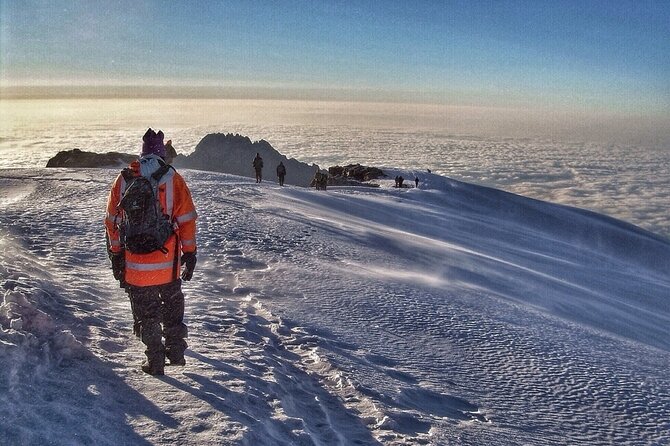
The summit day is the test. You start around midnight and walk by headlamp for roughly six hours to reach the crater rim at Stella Point.
The trail is steepest before the rim. Cold, darkness, thin air, and the long climb combine to make this the hardest part of the trip. Your pace will likely be slow, with frequent short pauses.
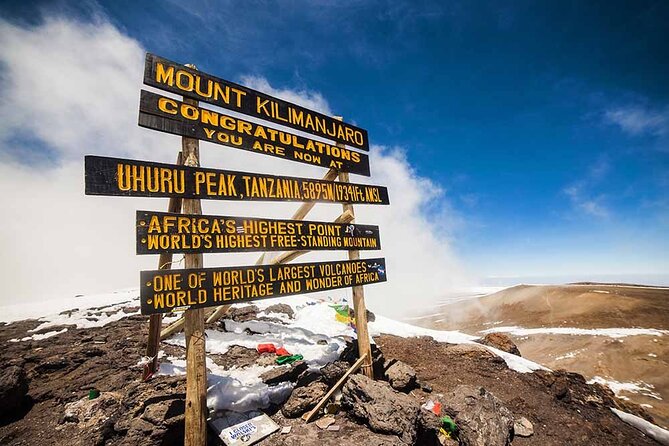
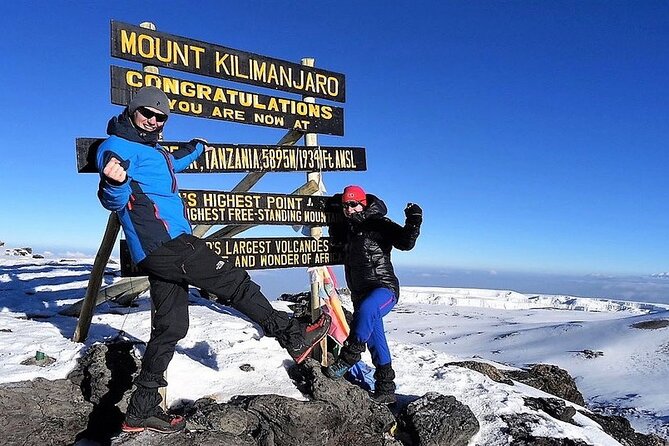
From Stella Point, the route to Uhuru Peak becomes a more gradual climb along the crater rim. It takes about an hour, but altitude makes even a gentle slope tiring. Reaching Uhuru Peak means standing at 5,895 meters, the highest point in Africa.
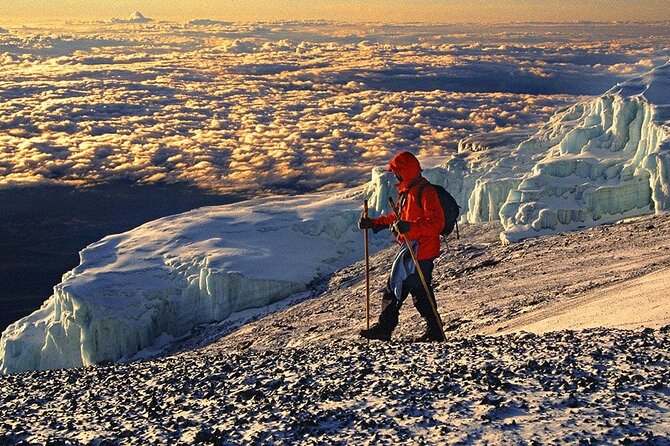
The summit stop is usually brief. Take your photos, stay warm, and listen to your guide. The crater rim walk offers views across the crater, clouds, and the mountain itself, but conditions can change quickly at this height.
After the summit, you descend to Mweka Camp. The descent is easier on the lungs but can be hard on tired legs. It is also a long day, listed at about 12 hours in total. This is why the trip is best for someone who can handle sustained walking rather than someone focused only on the summit photograph.
Day six: cloud forest and the Mweka Gate finish
After breakfast, you descend for about five hours to Mweka Gate. The final section passes through Kilimanjaro’s cloud forest, bringing you back into thicker vegetation after the bare upper slopes.
Watch your footing. The trail can be slippery during the descent, and tired legs make small slips more likely. At Mweka Gate, transport is provided to take you back to Moshi. You can buy T-shirts and soft drinks at the gate, a simple but welcome end to the climb.
The tour information says the activity ends back at the meeting point. Pickup is offered, but the published details do not clearly state the exact return arrangement to Arusha, so confirm whether your transport is to Moshi only or continues to Arusha.
What the $1,950 price really covers
At $1,950 per person, the price includes the main working parts of a six-day climb:
- Camping equipment
- All fees and taxes
- Transportation
- Bottled and mineral water
- Six breakfasts
- Six lunches
- Six dinners
That package can offer reasonable value if the equipment, meals, transport, and park charges are handled as described. A Kilimanjaro climb also requires considerable support behind the scenes, so the price is not simply paying for a walking guide.
Still, several important expenses remain outside the price. International and local flights, taxes attached to those flights, visa fees, travel insurance, personal accident insurance, and tips for the driver, guide, and cook are excluded. A visit to a cultural village is also separate and paid directly.
The price therefore works best when you compare the full trip cost, not just the advertised figure. Add insurance, visas, flights, tips, personal gear, and any nights before or after the climb.
Meals, camping, transport, and group setup
Six dinners, six lunches, and five breakfasts are listed as included, while the itinerary also states breakfast before the final descent. Confirm the meal count and timing with the operator, especially because the midnight summit schedule may change when breakfast is served.
Camping equipment is included, but the exact equipment list is not provided. Ask what tent, sleeping setup, dining equipment, and luggage support are supplied. You should not assume that every item you need for cold nights is included simply because camping equipment appears in the package.
Bottled and mineral water are included, which is useful on exposed sections and long summit hours. You should still ask how much water is supplied per day and how it is carried.
The tour is private, meaning only your group participates. That gives you more control over pace and rest stops than a large shared departure. The listing does not state the maximum group size, so ask how many people will be in your private party and how many support staff will accompany you.
Who should book this climb?
I would point this trip toward a fit hiker who wants a scenic Kilimanjaro route and accepts a demanding schedule. You need to be comfortable with five to seven hours of walking on most days, followed by a 12-hour summit day.
The Machame Route suits you if camping feels like part of the adventure, not a compromise. It also suits you if you value varied scenery and the high then low acclimatization pattern.
I would be cautious if you have never done a long mountain walk, dislike early starts, or want a relaxed summit attempt. Six days gives you less spare time for acclimatization than longer Kilimanjaro schedules, and the summit day is especially hard.
The information says most people can participate, but that should not replace a frank health discussion with your doctor and the tour operator. The itinerary does not provide medical screening rules or emergency evacuation details, so ask for those before booking.
Booking, cancellation, and small details that matter
Pickup is offered, and the listed start time is 7:00 a.m. The activity ends back at the meeting point. Confirmation is received at booking, and the tour is near public transportation.
Free cancellation is available if you cancel at least 24 hours before the local start time. Cancellations made inside that 24-hour window are not refunded, and late changes are not accepted.
The operator is Avocet Tanzania Safaris. Its other safari services include guides named Mike, with direct praise for his patience, animal-spotting ability, and care on Ngorongoro trips. That information relates to safari outings, not this mountain climb, so do not assume Mike will be your Kilimanjaro guide. Ask for the name and experience of the guide assigned to your group.
Should you book the six-day Machame Route?
Book it if you want Kilimanjaro’s classic scenery, a private departure, included camping and meals, and a route that uses useful altitude changes. The Barranco Wall, Shira Plateau, glaciers, cloud forest, and Uhuru Peak give this climb plenty of variety.
Think twice if you need a slower acclimatization schedule or dislike crowded routes. Before paying, get the day-two itinerary corrected in writing, confirm the equipment list, ask about guide and group size, and clarify the return transport from Mweka Gate.
With those points settled, this is a strong choice for a fit hiker who wants a challenging, scenic Kilimanjaro climb without adding safari days to the same package.
FAQ
How long is the Kilimanjaro Machame Route experience?
The experience lasts approximately six days.
What time does the tour start?
The listed start time is 7:00 a.m.
Where does the experience take place?
The climb takes place in Kilimanjaro National Park, with the tour based in the Arusha area.
Is pickup available?
Yes. Pickup is offered.
Is this a private tour?
Yes. Only your group participates.
Is camping equipment included?
Yes. Camping equipment is included in the price.
Are meals included?
Yes. The package includes breakfast, lunch, and dinner. The inclusions list specifies five breakfasts, six lunches, and six dinners.
What is not included in the price?
International and local flights with their taxes, visa fees, travel and personal accident insurance, tips for the driver, guide, and cook, and a cultural village visit are not included.
Can I cancel for a full refund?
Yes, if you cancel at least 24 hours before the experience start time. Cancellations made less than 24 hours in advance are not refunded.
Newly listed around Arusha
- 5-Day Private Safari Tour in Tanzania’s Wildlife★ 5.0 · 3 reviews
- 3 Days private safari Tarangire ,Ngorongroro crater &Manyara★ 5.0 · 3 reviews
- 3 Day Sharing Safari – Manyara, Ngorongoro Crater and Tarangire National Parks★ 5.0 · 3 reviews
- Tarangire National Park Day Trip★ 5.0 · 3 reviews
- 2 Days Tarangire and Ngorongoro Crater Tour★ 5.0 · 3 reviews
- 6 -Day Tarangire, Manyara, Serengeti & Ngorongoro★ 5.0 · 3 reviews
- 5 Days Group Camping Safari★ 4.7 · 3 reviews
- 7-Day Mt. Kilimanjaro Hiking: Machame Route★ 5.0 · 3 reviews
Kilimanjaro Climbs, compared.








Browse the lists this tour appears in