
Reviewed · KILIMANJARO CLIMBS
6-Day Kilimanjaro Umbwe Route–Steep,Adventurous, Challenging Path
The Umbwe Route gets to the heart of Kilimanjaro’s challenge quickly. You climb through wet rainforest, scramble over high volcanic rock, sleep inside the crater at 5,700 meters, then make the final push to Uhuru Peak at 5,895 meters. This is not the gentle way up Africa’s highest mountain.
I like the route’s dramatic change of scenery, from colobus monkeys and jungle fog to giant lobelia, lava rock, ice, and the Northern Ice fields. I also like the small-group format, complete with a guide, assistant guides, porters, and cook. The staff support matters greatly when your legs and lungs are working hard.
The main drawback is the schedule. Six days gives you little time to adjust to altitude, and the Umbwe Route is steep from the start. You need strong fitness, a serious attitude toward altitude safety, and comfort with a demanding climb.
Key points before you commit
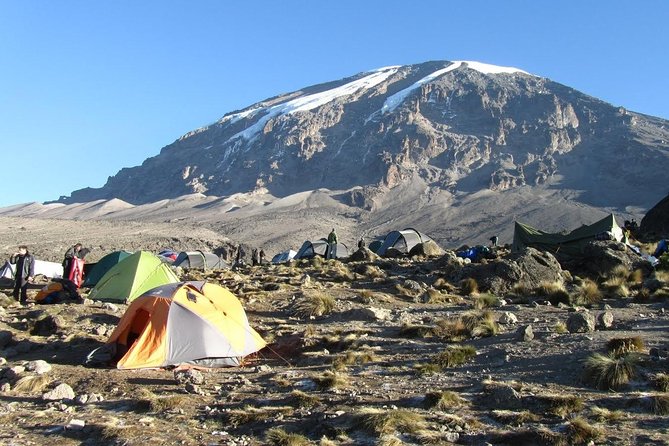
- Crater Camp at 5,700 meters: Spend a night inside Kilimanjaro’s snow-covered crater, with the Furtwangler Glacier and Northern Ice fields nearby.
- The steepest character of Umbwe: The route rises quickly through rainforest, heathland, rocky semi-desert, and the Western Breach.
- Uhuru Peak on day five: The summit attempt starts around 4:00 a.m., followed by a very long descent to Mweka.
- Private group format: Only your group participates, with pickup offered from Moshi and airport transfers included.
- Full mountain support: A qualified guide, assistant guides, porters, cook, tents, mattresses, meals, drinking water, hot washing water, emergency oxygen, and a first aid kit are provided.
- A demanding value proposition: At $2,310 per person, the price covers much of the hard logistics, but flights, visas, insurance, personal gear, and a portable toilet cost extra.
Why the Umbwe Route feels different
Many Kilimanjaro routes are built around a gradual climb. Umbwe takes a more direct line toward the mountain’s upper slopes, which gives it a wilder and steeper feel. In practical terms, you spend less time easing into the altitude and more time gaining height.
That direct approach is the route’s appeal and its warning. The first day is already a proper mountain day, not a short walk to a nearby camp. You climb for about five hours from Umbwe Gate to Bivouac Camp at 2,940 meters, often through rain, mud, and fog.
This route suits you if you have a good base of fitness and want a more intense climb with fewer distractions. It is less suitable if you prefer broad, gradual paths, a relaxed pace, or a longer altitude-adjustment schedule.
The experience is private, so only your own group takes part. That gives you a more personal setup than a large public departure, but the route remains physically demanding regardless of group size.
More Kilimanjaro routes:
- Kilimanjaro climb by Lemosho Route (7-day)
★ 5.0 · 651 reviews - Kilimanjaro climb, Machame Route (7-day)
★ 5.0 · 262 reviews - Kilimanjaro Climbing Lemosho Route 8 Days.
★ 5.0 · 186 reviews
Day 1: Umbwe Gate to Bivouac Camp
Your morning begins with an early breakfast at your Moshi hotel, followed by pickup and a drive to Umbwe Gate. You can buy mineral water there, collect a packed lunch, and wait while the porters organize the gear. You and your guide register with Tanzania National Parks before setting off.
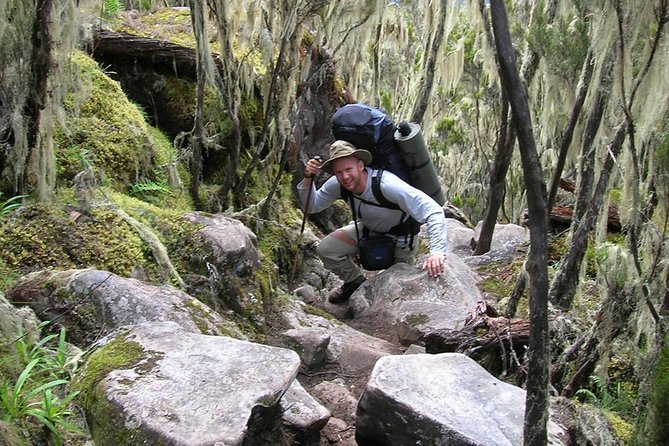
The first section enters rainforest. Expect a wet, muddy trail and frequent fog. This is the sort of start that quickly reminds you that Kilimanjaro is a real mountain, not simply a long sightseeing walk.
Keep an eye out for colobus monkeys in the trees. The forest is also a useful test of your clothing and footwear. Rain protection matters from the opening hours, and muddy conditions can make the steep path slower than the stated five-hour hiking time.
A lunch break comes about halfway up the trail. By late afternoon or early evening, you reach Bivouac Camp at 2,940 meters. Your tents are set up by the porters, and the cook prepares dinner. Drinking water and hot water for washing are supplied daily, a small comfort that becomes increasingly valuable as the nights get colder.
Day 2: Heathland, giant plants, and Barranco Valley
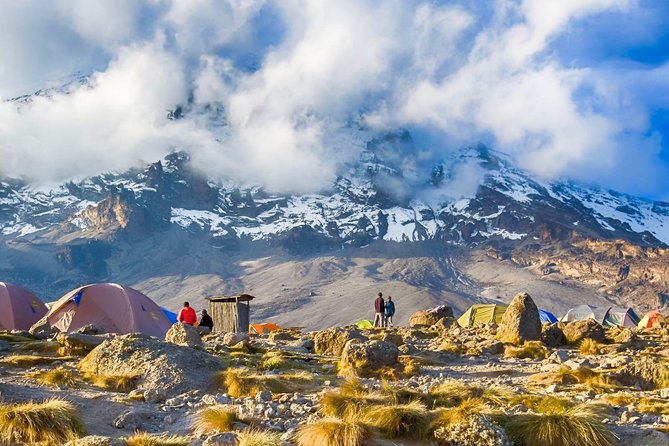
Day two takes about six hours and moves from rainforest into heathland and moorland. The change is striking. Trees give way to open slopes, unusual high-altitude plants, and wider views of Kilimanjaro.
Look for giant lobelia and groundsel, two plants that give this section a distinctly high-mountain appearance. As you climb, the view of Kilimanjaro improves, and the path eventually flattens before descending into the Barranco Valley.
Barranco Camp sits beside a stream, with the Great Barranco Wall to the east and the Western Breach visible nearby. This is one of the most visually rewarding camps on the route, but it is also a reminder of the terrain still ahead.
The descent into Barranco Valley may feel odd after climbing all day. It is part of the route’s shape, and you should not mistake a short descent for an easier overall day. Your crew again handles camp setup, meals, drinking water, and washing water.
Day 3: Lava Tower and the first real altitude test
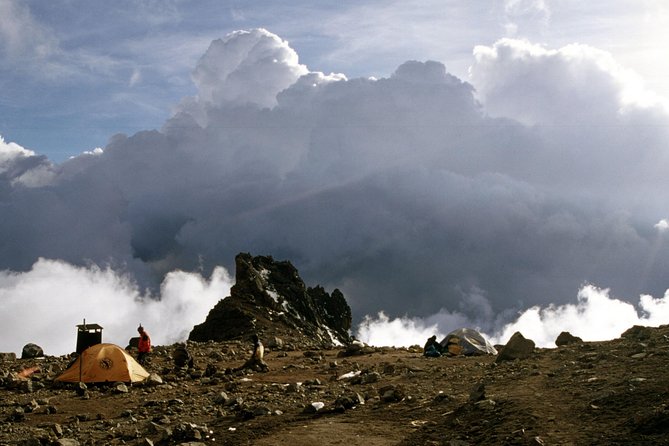
The third day leaves the moorland behind and enters a rocky semi-desert. You hike east for about five hours toward Lava Tower at 4,630 meters. The vegetation becomes sparse, and the trail feels more exposed and volcanic.
Lunch is served at Lava Tower. If weather allows, you can climb the massive tower, though this option adds effort at a point when the altitude may already be affecting you. Headaches and shortness of breath are normal signs of the mountain’s effect at this height, but they should never be dismissed or hidden from your guide.
After lunch, the route climbs to Arrow Glacier Camp at 4,800 meters. This section uses a steep Class 2 trail and requires scrambling over rock. The day takes about seven hours, making it one of the more demanding stages before the summit.
The altitude profile is the biggest concern here. You are gaining height quickly, and the six-day schedule leaves limited room for your body to adjust. Move slowly, drink as directed, eat even if your appetite falls, and tell the guide about any symptoms.
Emergency oxygen is included, but it is for emergencies only and is not intended as a substitute for proper acclimatization or as summit assistance. That distinction matters. The equipment is a safety measure, not a way to make a rushed ascent safe.
More six day trips in Moshi & Kilimanjaro:
- Kilimanjaro climb, Lemosho Route (6-day)
★ 5.0 · 129 reviews - Kilimanjaro climb, Marangu route (6-day)
★ 5.0 · 72 reviews - 6 Days 5 Night Safari
★ 5.0 · 57 reviews - 6 Days Tanzania Classic Safari
★ 5.0 · 52 reviews
Day 4: The Western Breach and a night in Crater Camp
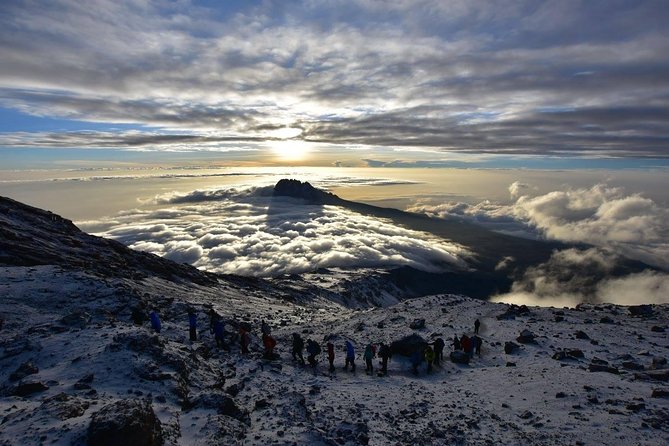
Day four is the route’s most unusual stage. From Arrow Glacier, you continue over rocky Class 2 terrain toward the Western Breach, then climb slowly to the crater at about 5,700 meters. The stated hiking time is around five hours, but the terrain and altitude can make progress feel very slow.
During the rainy season, icy conditions may require an ice axe and crampons. Those items are not included in the package, so you need to clarify rental arrangements in Moshi before setting off. Personal hiking gear is your responsibility, and equipment can be rented from stores in Moshi.
At the top, the Northern Ice fields come into view, with Furtwangler Glacier directly ahead. The setting is stark and extraordinary: stone scree, snow, ice, and a crater that feels far removed from the forest below.
You spend the night at Crater Camp, inside Kilimanjaro’s inner crater. This is a rare mountain experience, but it comes with a serious altitude warning. Sleeping at 5,700 meters can be difficult, and you should not treat the unique camp as a reason to ignore symptoms.
You may also take a day walk to the Ash Pit. The walk takes about one and a half hours, and the pit is described as 340 meters across and 120 meters deep. It is an optional addition, so you can decide based on weather, energy, and how your body is responding to the altitude.
Dinner is served at camp. A warm meal and a tent prepared by the crew help, but no camp comfort removes the strain of sleeping so high.
Day 5: Uhuru Peak, then a huge descent
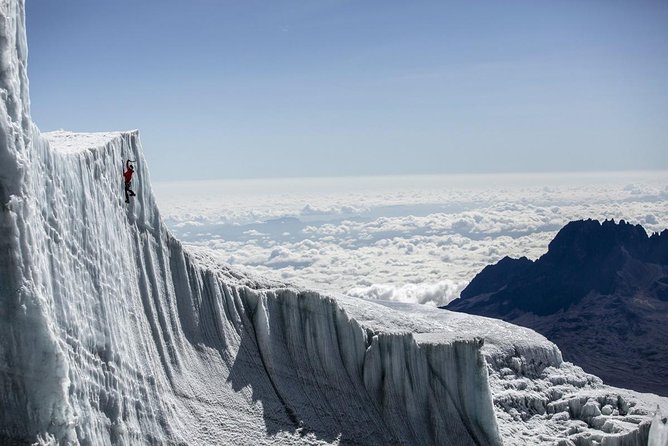
The summit day starts at about 4:00 a.m. with tea and biscuits. From the crater, you hike for roughly two hours over a snow-covered trail to Uhuru Peak, the mountain’s highest point at 5,895 meters.
This is likely to be the hardest mental and physical part of the climb. The trail is short compared with the descent that follows, but the altitude, cold, darkness, and fatigue make each step count. Your time at the summit is brief, allowing for photographs and a drink before beginning the descent.
The day’s numbers are demanding: approximately seven kilometers uphill, followed by about 23 kilometers downhill. The total hiking time is estimated at ten hours, with seven to eight hours spent descending to Mweka at 3,100 meters.
That long descent is easy to underestimate. Your knees, feet, and concentration are already tired after the summit, and the trail surface can be rough. Trekking poles, well-broken-in boots, and dry socks are especially useful personal items, though personal equipment is not included.
The reward is reaching Uhuru Peak and then losing altitude. After spending time above 5,000 meters, the lower camp at Mweka should feel like a major physical relief.
Day 6: Mweka Trail and the return to Moshi
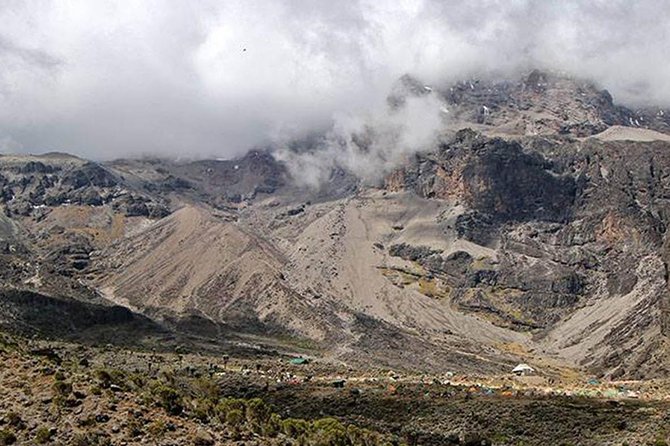
After breakfast, the mountain crew holds a celebration with dancing and singing. This is also the time to give tips to the guide, assistant guides, cook, and porters. Tips are not listed as included, so you should budget for them separately and carry a plan for distributing them fairly among the team.
The descent to Mweka Gate takes about three hours and covers around 15 kilometers through forest. This return through greener surroundings gives you a final reminder of how many ecosystems you crossed in only six days.
At the gate, you sign your name to receive a completion certificate. Reaching Stella Point at 5,685 meters earns a green certificate, while reaching Uhuru Peak at 5,895 meters earns a gold certificate.
From Mweka Gate, the stated plan continues for about one hour and three kilometers to Mweka village. The activity then returns to the meeting point in Moshi. Airport transfers to and from Kilimanjaro Airport are included, which simplifies the beginning and end of the trip.
What the $2,310 price really covers
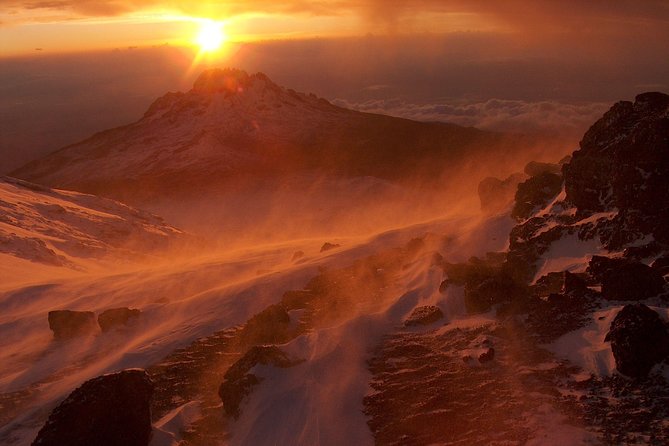
The $2,310 per-person price is not simply a guiding fee. It covers national park fees and taxes, airport transfers, mountain staff wages, tents, camp chairs, tables, sleeping mattresses, meals, drinking water, hot washing water, emergency oxygen, and a basic first aid kit.
You receive five breakfasts, six lunches, and five dinners. The included cook and food setup are important because buying meals along the mountain is not an option. A hot dinner and regular food are practical parts of your safety and stamina plan.
The package also includes a qualified mountain guide, assistant guides, porters, and a cook. Several direct experiences connected with this operator praise the organization, food, guide care, and porter support. Godfrey is named as a head guide on one Kilimanjaro climb, while Frazier helped another client arrange airport transport, lodging, and other local logistics. Those names do not necessarily mean they will lead your particular departure, so ask who is assigned to your group.
You still need to pay for flights, visas, travel and health insurance, personal medicines, water-purifying tablets, snacks, unspecified drinks, and personal items. Personal trekking gear is also extra, although rental shops in Moshi are available.
A portable toilet is optional but highly recommended. It costs extra, yet it can make camp life more comfortable, especially at exposed high camps where facilities are limited. Ask for the current price before booking.
The practical strengths of the support team
The strongest part of this setup is the amount of work handled behind the scenes. Porters carry equipment and prepare camp before you arrive, while the cook provides the day’s meals. That lets you focus on pacing, hydration, and altitude symptoms.
The company’s service record also points to strong attention to logistics. Airport pickup, hotel arrangements, and help with an extra Moshi town visit have all been part of the support offered on related trips. Confirm exactly what is included for your own booking, especially if you want extra nights or local sightseeing.
A good guide relationship matters on Umbwe. The guide needs to control the pace, watch for altitude problems, and make sensible decisions around Lava Tower, Arrow Glacier, and the Western Breach. Ask about guide experience on this route, emergency procedures, and the condition of any required technical gear.
Who should choose this six-day climb?
I would consider this route if you are already comfortable with long uphill days, steep trails, rough ground, and camping. You should also be prepared for rain, mud, cold, snow, and very high altitude.
The private format works well for a group of friends, family members, or colleagues who want to set their own rhythm. Group discounts are offered, so ask how the discount is calculated before paying.
I would hesitate to recommend Umbwe to a first-time mountain walker who wants the best possible acclimatization odds. The schedule is fast, and the route reaches high camps quickly. Strong fitness helps, but fitness alone does not guarantee that your body will adapt to 5,700 or 5,895 meters.
Travel insurance with mountain rescue and high-altitude trekking cover is not included and is essential to arrange independently. You should also bring a personal medical plan and make sure your insurance matches the route and altitude.
Bookings are confirmed at the time of booking. If you cancel at least three full days before the local start time, you can receive a full refund. Cancellations within three days are not refunded, and changes during that period are not accepted.
Should you book the Umbwe Route?
Book it if you want the most direct, steep, and adventurous approach to Kilimanjaro, and you accept that the challenge is the point. Crater Camp, the Western Breach, and the quick shift from rainforest to glacier country give this climb a character that easier routes do not match.
Think twice if you want a forgiving schedule or have limited trekking experience. At $2,310, the package offers solid logistical coverage and a full support crew, but you still need insurance, gear, tips, and careful preparation.
Before paying, confirm the guide assigned to your group, the availability of crampons and an ice axe if conditions require them, portable toilet pricing, airport transfer details, and the exact group discount. If those points are clear and you are ready for a serious altitude challenge, Umbwe can be a powerful way to reach Uhuru Peak.
FAQ
Where does the Kilimanjaro Umbwe climb start?
The activity starts in Moshi Urban, Tanzania. Pickup is offered from Moshi.
How long does the experience last?
The climb lasts approximately six days.
Is this a private or shared tour?
It is a private activity, so only your group participates.
Is airport transportation included?
Yes. Return transfers between Kilimanjaro Airport and Moshi are included.
What meals are provided?
The package includes five breakfasts, six lunches, and five dinners.
Is drinking water included?
Yes. Fresh drinking water and hot water for washing are provided daily.
Is camping equipment provided?
Yes. Tents, camp chairs, tables, and sleeping mattresses are included.
Is a portable toilet included?
No. A portable toilet is optional, costs extra, and is highly recommended.
Is personal hiking gear included?
No. Personal hiking and trekking gear is not included. You can choose to rent equipment from stores in Moshi.
What is the cancellation policy?
You receive a full refund if you cancel at least three full days before the experience start time. Cancellations or changes made within three days are not accepted or refunded.
Newly listed around Moshi & Kilimanjaro
- Climb Mount Kilimanjaro: 7 Days Machame Route★ 5.0 · 3 reviews
- 6 Days Mount Kilimanjaro Climbing via Rongai Route★ 5.0 · 3 reviews
- Explore 1 day Ngorongoro Crater Budget Group Safari from Arusha★ 5.0 · 3 reviews
- Mt. Kilimanjaro Day Hiking★ 5.0 · 3 reviews
- Chemka (Kikuletwa) Hot Springs, Tanzania★ 5.0 · 3 reviews
- Guided City tour of Moshi★ 4.3 · 3 reviews
- 8 Day Tanzania Family Safari★ 5.0 · 3 reviews
- Rongai Route 7 Days★ 5.0 · 3 reviews
Kilimanjaro Climbs, compared.








Browse the lists this tour appears in