
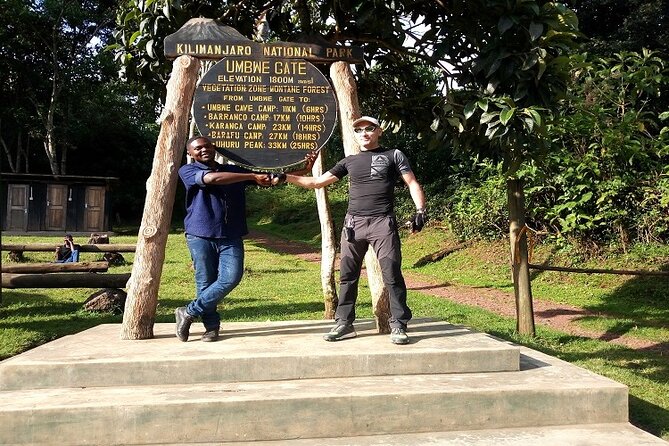
Reviewed · KILIMANJARO CLIMBS
Unforgettable 8 Days Lemosho Route Trekking on Kilimanjaro
The Lemosho Route gives you Kilimanjaro at its most varied: rain forest, high moorland, volcanic rock and glacier country all appear on one long climb. The route begins quietly on the western side, crosses the broad Shira Plateau, then joins busier trails near Lava Tower before the summit push.
I like the extra time for acclimatization and the route’s changing scenery. I also like that the $1,500 price includes park fees, all meals, guides, cooks and porters, though you still need to budget for tips, visas, flights and non-climbing accommodation. The main drawback is that summit day is physically severe, and the published schedule has some overlapping details around Barafu Camp and the final ascent that you should clarify before booking.
Key points at a glance
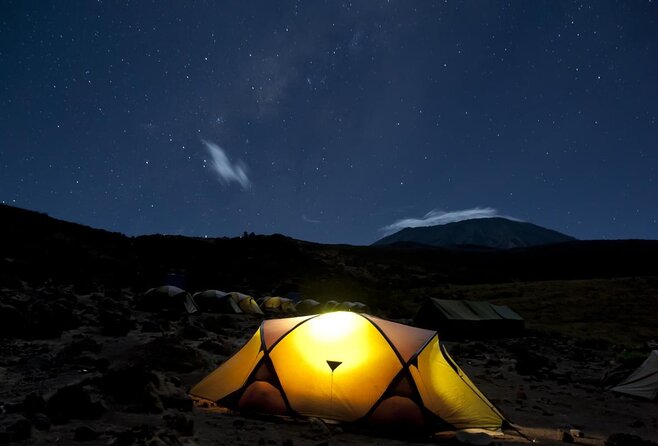
- Eight days on Lemosho: The longer schedule gives you more time to adjust to altitude than a rushed climb.
- A quiet western approach: You begin at Londorossi Gate and spend the first days in forest and open moorland before joining the Machame route.
- Shira Plateau crossing: Day three offers a relatively moderate walk that is useful for acclimatization.
- Lava Tower and Barranco: You climb high to 4,630 meters, then descend to sleep lower at Barranco Camp.
- A midnight summit attempt: The push to Stella Point and Uhuru Peak begins around 11:30 p.m. and includes a sunrise near the crater rim.
- Meals and mountain support included: Breakfast, lunch and dinner are provided, with guides, cooks and porters part of the organized climb, although tips are extra.
Why the Lemosho Route is worth eight days
Kilimanjaro is not a technical climbing trip in the usual sense, but altitude makes it demanding. The Lemosho Route earns its strong reputation because it does not rush you straight toward the summit. You spend time moving through several altitude zones, with the Shira Plateau and the Lava Tower day giving your body a chance to adjust.
The route approaches from the west, which means a longer drive from Moshi at the start. That extra road time is a fair trade for quieter early trails and broad mountain views. The first two days are spent moving from forest into moorland, rather than beginning immediately among large groups near the mountain’s southern routes.
I particularly like the route’s rhythm. You climb to a higher point at Lava Tower, then descend to Barranco Camp for the night. That climb high and sleep lower pattern is one of the most useful parts of the itinerary for altitude adjustment.
The route is not empty. Once it reaches the Machame corridor near Lava Tower, you should expect more people on the trail. Still, the opening days across western Kilimanjaro offer a calmer start than routes that begin closer to the southern gate.
More Hiking Tours in Moshi
- Private Kilimanjaro Hike 7 Day Lemosho Route
★ 5.0 · 60 reviews - Best Kilimanjaro hiking day trip tour with Kilinge Adventures
★ 4.5 · 54 reviews - #1. Best Kilimanjaro Day hike Tour-Machame Route-ISMANI
★ 4.2 · 47 reviews
Moshi to Mti Mkubwa Camp on day one
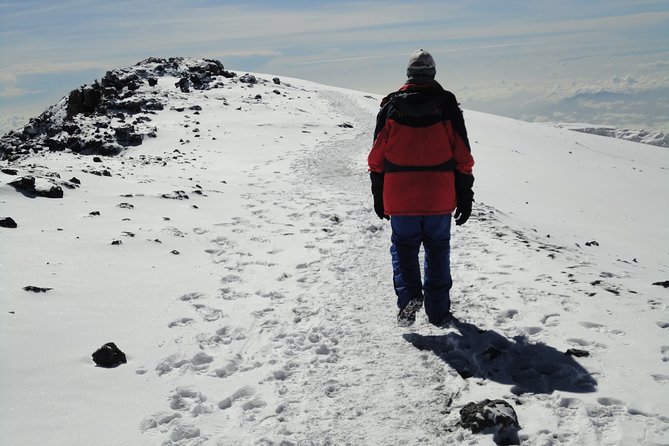
Your day begins with a hotel briefing from the chief guide, followed by a drive of about two and a half hours to Londorossi Park Gate at 2,250 meters. Park entry procedures take place here, and the climb formally begins after the required rules and regulations are handled.
A four-wheel-drive vehicle continues for roughly 11 kilometers to Lemosho Glades, at about 2,390 meters. From there, you walk through forest to Mti Mkubwa Camp, with around four hours of activity listed for the day.
This is a sensible opening stage. The forest gives you shade and a gentle introduction to walking with a pack, while the modest altitude keeps the first day from becoming a contest. Do not expect dramatic summit views right away. Day one is about settling into the group, checking your equipment and finding your walking pace.
Dinner and overnight accommodation are at Mti Mkubwa. Since meals are included, you do not need to arrange food during the climb, but personal snacks and extra drinks are not listed among the inclusions, so ask the operator what you should bring.
Crossing the Shira Ridge on day two
Day two is much longer, listed at about 11 hours. The trail grows steeper as you leave the forest and enter the giant heather moorland zone, where the vegetation becomes more open and the mountain begins to feel exposed.
You cross several streams, reach Shira Ridge at around 3,600 meters, and then descend gently to Shira One Camp on the Shira Plateau. The camp sits near streams, which gives the day a clear destination after a demanding climb.
This is one of the key days on Lemosho. You gain altitude fairly quickly, so a slow pace matters. The long duration also means you should not judge the climb by distance alone. Uneven ground, changes in slope and altitude can make a day feel much harder than the numbers suggest.
Shira One is a major change from the forest. You are now in open country with wide views and cooler conditions. Keep warm after sunset, and use the evening to eat, drink and rest rather than treating camp as a social late night.
Shira Two and the value of a moderate day
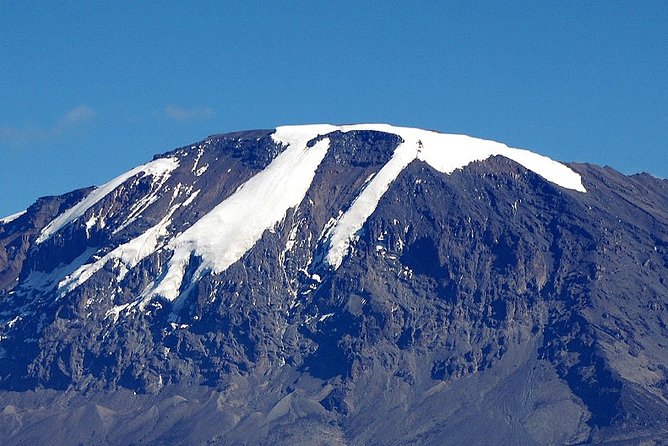
Day three crosses the Shira Plateau to Shira Two Camp, with about seven hours of walking. The route is described as moderate, passing through moorland meadows beside a stream.
The important feature here is not a famous landmark. It is the chance to walk without another sharp gain in difficulty. Optional walks across the plateau are available, and the day is intended to help with acclimatization.
I like this pause in the schedule. On Kilimanjaro, an easier day can be more valuable than another scenic detour because it leaves you better prepared for the higher camps. You still need to take the day seriously, since Shira Two is already at altitude and the next stage climbs much higher.
The plateau also gives you some of the route’s best open views. The western approach feels spacious, and the gradual change from heather to rock makes the mountain’s height clear without needing a dramatic viewpoint.
More Kilimanjaro routes:
- Kilimanjaro climb by Lemosho Route (7-day)
★ 5.0 · 651 reviews - Kilimanjaro climb, Machame Route (7-day)
★ 5.0 · 262 reviews - Kilimanjaro Climbing Lemosho Route 8 Days.
★ 5.0 · 186 reviews - Climbing Kilimanjaro – Machame Route
★ 5.0 · 170 reviews
Lava Tower and Barranco on day four
Day four is the route’s classic acclimatization stage. You hike east from Shira Two, following a steeper path above the vegetation toward Kilimanjaro’s upper slopes. After several hours, the trail reaches Lava Tower at 4,630 meters.
Lava Tower is a large remnant of earlier volcanic activity, rising several hundred feet above the surrounding rock. The trail passes directly below it, and the sure-footed may be able to scramble toward the top, though this should never take priority over safety or conserving energy.
Lunch is taken near Lava Tower before a descent of about two hours to Barranco Camp at 3,950 meters. That descent is the practical heart of the day. You reach a high point, spend time there, then sleep lower, which can help your body handle the coming summit elevations.
The day is listed at about five hours, though the walking time can vary with the group and conditions. Barranco is also a strong photo stop, with rocky slopes and the mountain’s upper cliffs close by. The tradeoff is that the ground becomes rougher and the air thinner, so you should expect a tougher walk than the short time suggests.
Barafu Camp and the long preparation day
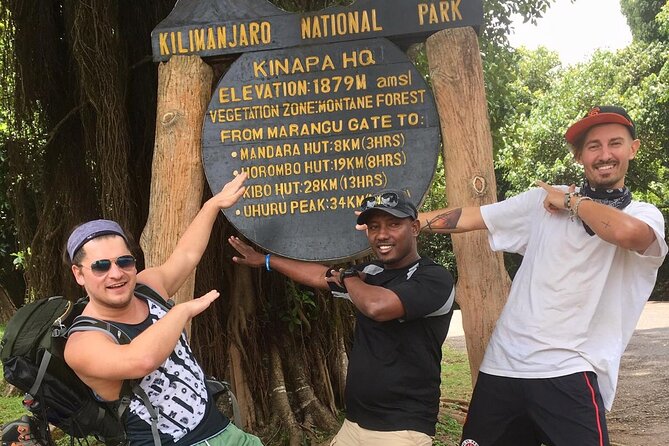
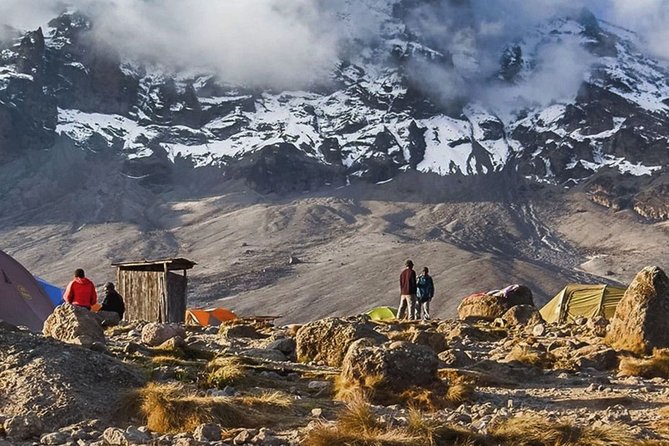
The information for days five and six needs careful clarification before you pay a deposit. Day five describes a three-hour climb to Barafu Camp at 4,640 meters, across steep, barren scree, followed by lunch, rest and an early dinner before a midnight start.
Day six is listed as a 13-hour stage. It describes hiking east over ridges and valleys to join the Mweka descent route, then turning toward Barafu Hut for a hot lunch. It also notes that Karanga Valley is the last water point and that there is no water at Barafu Camp.
These descriptions appear to overlap in their treatment of Barafu and summit preparation. The itinerary clearly intends you to reach the high camp, conserve energy and prepare for the summit attempt, but you should ask Rede Tours and Safaris to confirm the exact order of the Barafu, summit and descent stages.
The practical advice is sound: fill your water supply before Barafu, keep warm and learn the position of your tent before darkness. Barafu Camp is described as narrow, stony and exposed to wind. That is not a place to wander around casually after dark.
Your afternoon there is for resting, not sightseeing. The summit attempt requires you to be awake around midnight, so keep your evening simple and protect every hour of sleep you can get.
The midnight climb to Stella Point and Uhuru Peak
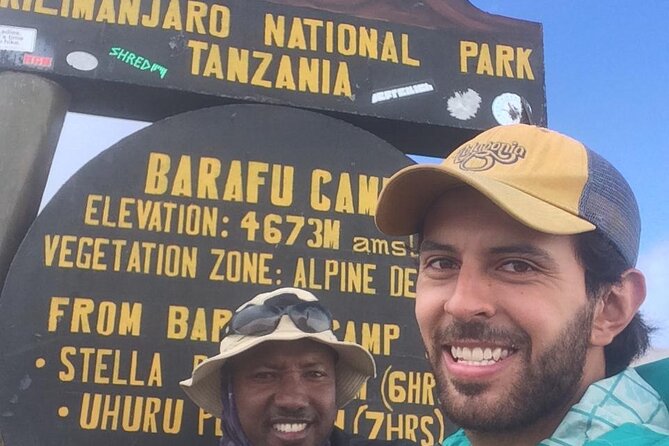
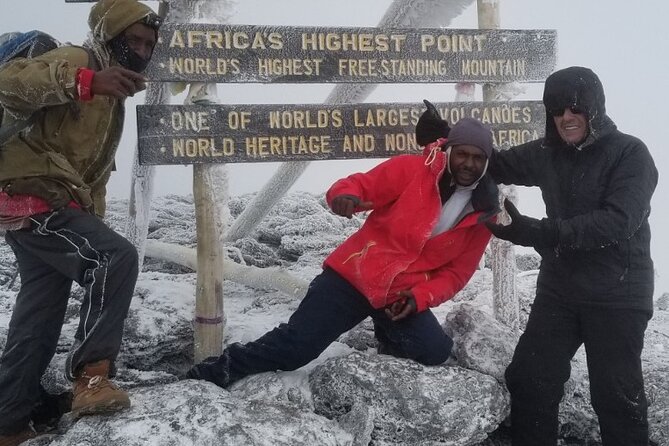
The summit day begins at about 11:30 p.m. with hot tea and biscuits. You then climb for around six hours through heavy scree between the Rebmann and Ratzel glaciers toward Stella Point on the crater rim.
This is the hardest section for many climbers. The trail is steep, the surface shifts underfoot, and the cold combines with exhaustion. The slow pace used by the guide team matters here. Your goal is steady movement, not speed.
Stella Point sits at 5,685 meters. You pause there for a short rest and may see sunrise from the crater rim. The schedule advises against staying too long, since the cold and fatigue can make restarting difficult.
From Stella Point, you join the upper part of the Marangu Route and continue around the rim toward Uhuru Peak. Snow may appear depending on the season and current storms. The supplied schedule gives only one hour for this final section, but actual timing can vary, so confirm how the operator defines the summit day and total walking hours.
Reaching Stella Point qualifies for a green summit certificate, while reaching Uhuru Peak earns a gold certificate. That distinction is useful if altitude or exhaustion forces you to stop short of the highest point. It recognizes a substantial achievement without pretending the two points are the same.
Descending through Mweka Gate on day eight
After the summit stage, the final day takes you down through the Mweka route. The listed plan calls for about three hours of scenic hiking to the park gate, followed by registration at Mweka Gate.
You are advised not to distribute tips until your equipment and the rest of the crew have safely reached the gate. This is practical advice. Carrying a little patience at the end of a major climb helps ensure the whole team is accounted for before the trip closes.
At the gate, successful climbers normally receive their certificates. The group then continues three kilometers to Mweka Village, where a hot lunch is served before the drive back to Moshi.
The final day is not simply a short exit. Descending can be hard on tired knees, and the trail changes again as you leave the high country. Keep your trekking poles close if you use them, and do not assume the downhill portion will feel easy.
What the $1,500 price really covers
At $1,500 per person, this climb sits in a price range where the included support matters more than small comforts. Park fees, taxes, breakfast, lunch and dinner are included, with eight breakfasts, eight lunches and seven dinners listed.
The organized food service is a real advantage on a long mountain route. You can focus on walking and recovery rather than trying to arrange meals at camps. The team structure also includes guides, cooks and porters, though the exact staffing arrangement is not specified.
You still need to budget for crew tips, visas, flights and accommodation outside the climb. Private transportation and hiking support materials are also excluded, so ask exactly what transport is provided from the meeting point and what equipment you must supply yourself.
The price is strongest for someone who values a longer route, included meals and organized mountain support. It may be less attractive if you are comparing only the headline cost with a shorter seven-day climb. The extra day and scenic western approach are the reasons to choose Lemosho, not simply the number of meals.
The activity starts at Shanty Town Road in Tanzania and ends back at the meeting point. Pickup is offered, but the supplied details do not specify the pickup area or vehicle arrangement, so confirm that before arrival.
Guides, food and the human side of the climb
The strongest praise attached to this operator focuses on the people running the climb. Nalisis is specifically singled out for guiding and for explaining practical questions, including where Kilimanjaro is located and where to land before the hike.
Jackson, the chef, also receives special mention. That matters because food becomes a central part of a high-altitude trip. A dependable hot meal can make the difference between feeling ready for the next day and merely enduring it.
The operator is Rede Tours and Safaris, also identified as Amore African Safari LTD. The group limit is listed as up to 100 people, which is a large possible maximum even if your actual climbing party is smaller. Ask how many climbers will be in your group and how guides, porters and tents are assigned.
I would also ask for a clear briefing on tipping. Tips are not included, and the final-day instructions indicate that the crew should be tipped at the gate after everyone and all gear arrive safely.
Who should choose this climb?
This route suits you if you want Kilimanjaro’s most varied scenery and prefer a longer acclimatization plan. It is also a good fit if you value a quieter start and want the Shira Plateau, Lava Tower and Barranco included in one continuous route.
You should be ready for long days, cold nights, steep scree and a midnight summit attempt. The schedule is not designed for a casual mountain walk, even though no technical climbing equipment is described as part of the experience.
This may not suit you if you need private comfort, a tightly defined transport package or a short itinerary. The listing allows shared, joining and private arrangements, but the price and exact services for each format should be confirmed before booking.
Four published ratings are shown at five out of five, with especially strong praise for the guide team, food, porters, cook and hospitality. I would treat that as encouraging rather than a guarantee, then use the names Nalisis and Jackson when asking for the current team plan.
Should you book the Lemosho Route?
I would choose this climb if your priority is scenery, time for acclimatization and a full support team rather than the lowest possible price. The western approach, Shira Plateau crossing and Lava Tower descent give you a more interesting mountain experience than a fast route aimed only at reaching the summit.
Before booking, get the Barafu and summit-day sequence in writing. Also confirm pickup, group size, equipment responsibilities, tipping expectations and what the $1,500 price covers for shared versus private arrangements.
Free cancellation is available if you cancel at least 24 hours before the local start time. If poor weather cancels the activity, you are offered another date or a full refund, but late changes and late cancellations are not refunded.
FAQ
Where does the Kilimanjaro climb begin?
The meeting point is Shanty Town Road in Tanzania. Pickup is offered, and the activity ends back at the meeting point.
How long is the Lemosho Route experience?
The experience lasts approximately eight days. The itinerary includes forest, moorland, the Shira Plateau, Lava Tower, Barranco, Barafu, the summit area and the Mweka descent.
What is included in the $1,500 price?
The price includes all fees and taxes, eight breakfasts, eight lunches and seven dinners. The organized climb also includes the guiding, cooking and porter support described for the route.
Are flights included?
No. Flights are not included in the price.
Are tips included?
No. Tipping the crew is not included. The final-day instructions advise waiting until the crew, equipment and group have reached the gate safely before giving tips.
Is accommodation in Moshi included?
Non-climbing accommodation is not included. You should arrange or confirm your Moshi hotel separately.
What is the highest point described on the route?
Stella Point is listed at 5,685 meters. The route then continues toward Uhuru Peak, with climbers who reach it receiving a gold certificate.
What happens if bad weather cancels the climb?
If poor weather causes cancellation, you are offered a different date or a full refund. The experience must be canceled at least 24 hours before the start time for a full refund for personal cancellations.
Can most people take part?
The activity states that most people can participate. It is still a demanding high-altitude climb with long walking days, a steep summit section and a midnight start, so you should assess your fitness and altitude readiness before booking.
More Hiking Tours in Moshi & Kilimanjaro
- Best Kilimanjaro Adventure 7 days Machame route Trekking
★ 5.0 · 42 reviews - Kilimanjaro 7 Day Private Trekking Experience
★ 5.0 · 40 reviews - 8 Days Kilimanjaro Hike via Lemosho Route
★ 5.0 · 39 reviews - The Best & Unique Kilimanjaro Hiking tour 7 days Machame route
★ 5.0 · 34 reviews
Newly listed around Moshi & Kilimanjaro
- Climb Mount Kilimanjaro: 7 Days Machame Route★ 5.0 · 3 reviews
- 6 Days Mount Kilimanjaro Climbing via Rongai Route★ 5.0 · 3 reviews
- Explore 1 day Ngorongoro Crater Budget Group Safari from Arusha★ 5.0 · 3 reviews
- Mt. Kilimanjaro Day Hiking★ 5.0 · 3 reviews
- Chemka (Kikuletwa) Hot Springs, Tanzania★ 5.0 · 3 reviews
- Guided City tour of Moshi★ 4.3 · 3 reviews
- 8 Day Tanzania Family Safari★ 5.0 · 3 reviews
- Serengeti Safari with Sirikwa Travel★ 5.0 · 3 reviews
Kilimanjaro Climbs, compared.








Browse the lists this tour appears in