
Reviewed · KILIMANJARO CLIMBS
Rongai Route 6 Days 5 Nights/Kilimanjaro climb
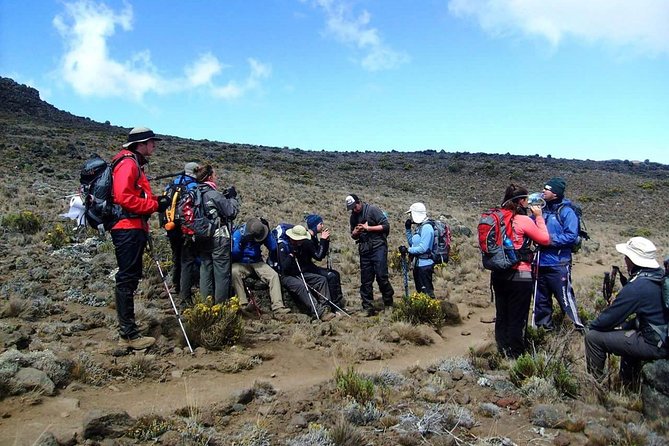
The Rongai Route gives you a quieter way up Kilimanjaro, approaching Africa’s highest mountain from the north near Nale Moru. The name is a little muddled: the original Rongai trail is closed, so today’s climb uses the northern route also called Loitokitok or Nalemoru. You still get the Rongai name when booking, and the route itself is the important part.
I like two things right away. First, the trail begins through maize fields and pine forest before opening to broad views over the Kenyan plains. Second, the route gives you a strong wilderness feel around Mawenzi Tarn, with fewer busy trail scenes than the better-known southern approaches. The climb is also capped at 15 people, which should make camp life and guide support more manageable.
The catch is the schedule. Six days is short for a 5,895-meter mountain, and summit day can last 10 to 16 hours. You need moderate fitness, a sensible pace, and the right attitude toward cold, fatigue, and changing weather.
Key points to know before booking
- Northern approach: You start near Nale Moru and climb through farmland, pine forest, moorland, and high desert.
- Quiet route character: The Rongai side is chosen for a more private feel and broad views toward Kenya.
- Mawenzi Tarn overnight: Day three ends at 4,330 meters, with an afternoon acclimatization walk to about 4,500 meters.
- Very long summit day: You leave Kibo Hut around 1am, reach Gilman’s Point, continue to Uhuru Peak, and descend to Horombo.
- Price includes the basics: At $1,850 per person, the package includes park fees, camping equipment, crew pay, meals, accommodation, and airport transfers.
- Small-group limit: No more than 15 people are listed for the activity, and children must be accompanied by an adult.
Why the Rongai Route feels different
Kilimanjaro has several routes, and the northern approach has a clear personality. You begin on the Kenyan side of the mountain, at Nale Moru, rather than walking in from the southern Marangu gate or the western routes.
That gives the opening day a more rural feel. Your vehicle carries you from the hotel toward the park and onward to the village area at about 1,950 meters. The walking begins on a narrow path through maize and potato fields, then moves into pine forest.
I like this gradual start. You are not thrown straight into a wall of rock and altitude. You get time to settle into the rhythm of walking, listening to the guide, and keeping your effort easy. The forest can be wet, so keep your waterproof jacket and trousers in your daypack rather than buried in a porter’s bag.
The route name deserves a quick explanation. The old Rongai Route began near a border village called Rongai, but that trail was closed. The current northern trail is commonly called Rongai, though signs may refer to it as Nalemuru or Nalemoru. This does not change the climb, but it explains why maps and booking details may use several names.
More Kilimanjaro routes:
- Kilimanjaro climb by Lemosho Route (7-day)
★ 5.0 · 651 reviews - Kilimanjaro climb, Machame Route (7-day)
★ 5.0 · 262 reviews - Kilimanjaro Climbing Lemosho Route 8 Days.
★ 5.0 · 186 reviews
Day 1: Nale Moru to the edge of moorland
After breakfast, collection is scheduled for around 9am. Your head guide takes you to Kilimanjaro National Park for registration, then the vehicle continues toward Nale Moru.
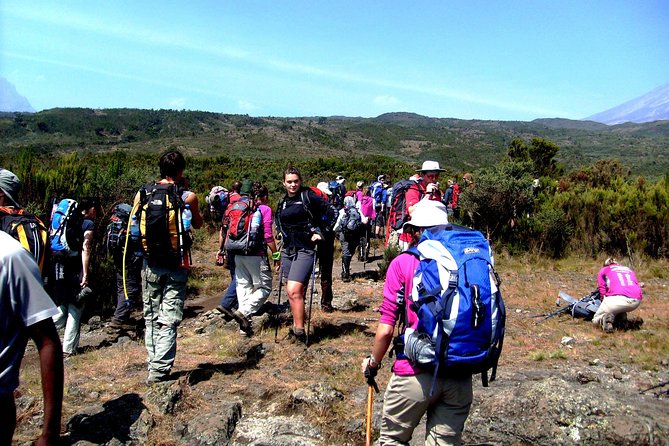
The first walk takes about three to four hours. The steady climb through farmland and pine forest is not technically difficult in the information provided, but you should resist the temptation to walk quickly. Starting slowly is useful preparation for the higher days ahead.
The main reward is the view toward the Kenyan plains as the forest thins. This is one of the route’s special features: you get an open sense of distance early in the trip rather than waiting until the summit.
The overnight camp sits near the upper edge of the forest and moorland zone. The first night is also a good test of your gear. If your boots rub, your sleeping system feels cold, or your pack is poorly arranged, you want to discover that here.
Day 2: Second Cave and Kikelelwa at 3,800 meters
Day two is longer, with the stated walking time ranging from six to seven hours and a distance of about nine kilometers. You climb steadily toward Second Cave at approximately 3,450 meters before continuing toward Kikelelwa Caves.
This is the day when altitude begins to matter. The gain is listed as about 950 meters, or 3,110 feet. The distance is not extreme by ordinary hiking standards, but the combination of uphill walking and thinner air changes how your body responds.
Your guide should set a slow pace. You will get more from a steady walk with regular breathing than from surging ahead and stopping often. Keep water accessible, eat even if your appetite drops, and tell the crew early if you feel unwell.
Weather permitting, the route gives you views of Kibo, the main summit cone, and the eastern ice fields around the crater rim. Those views help you understand the mountain’s shape. You are not simply walking uphill. You are moving around a huge volcanic massif with two major high points, Kibo and Mawenzi.
The night near Kikelelwa Caves is at about 3,800 meters. That is a substantial jump from the first camp, so this can be one of the more tiring evenings. The short schedule means you have less spare time for your body to adjust than on a seven or eight-day climb.
Day 3: Mawenzi Tarn and a useful acclimatization walk
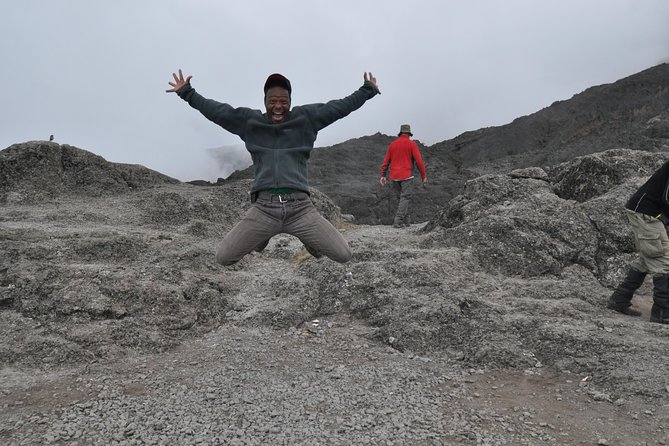
Day three is shorter, around three to four hours, but it includes steeper sections. You leave camp with a short, sharp climb up grassy slopes. The effort pays off with wide views and a stronger sense of being away from settled areas.
By now, the vegetation zone falls behind. The route reaches Mawenzi Tarn Hut at approximately 4,330 meters, beneath Mawenzi, Kilimanjaro’s second-highest peak. The setting is one of the most memorable parts of the route because the high mountain surroundings feel stark and exposed.
The itinerary includes an afternoon acclimatization walk to about 4,500 meters. This is valuable. You gain height during the day, then return to the overnight point rather than sleeping at the highest point reached. That kind of short high walk helps you see how your body reacts before summit night.
Do not treat the shorter walking time as a rest day. The elevation gain is about 730 meters, and the steeper trail can work your legs. Use the afternoon walk as a controlled test, not a race.
More six day trips in Moshi & Kilimanjaro:
- Kilimanjaro climb, Lemosho Route (6-day)
★ 5.0 · 129 reviews - Kilimanjaro climb, Marangu route (6-day)
★ 5.0 · 72 reviews - 6 Days 5 Night Safari
★ 5.0 · 57 reviews - 6 Days Tanzania Classic Safari
★ 5.0 · 52 reviews
Day 4: Across the saddle to Kibo Hut
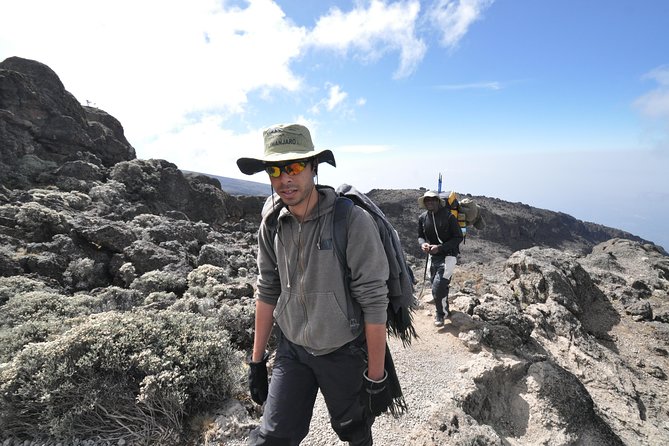
Day four crosses the broad, dry saddle between Mawenzi and Kibo. The walk is about nine kilometers and takes four to five hours, with a more modest elevation gain of roughly 370 meters.
The surroundings become a high, open desert. There is little visual clutter here, and the scale of the mountain becomes clear. The trail may feel easier underfoot than the steeper sections around Mawenzi, but the altitude makes ordinary walking feel slow.
You finish at Kibo Hut, at about 4,700 meters. This is the final overnight stop before the summit attempt. Dinner is early, and your main job is to eat, organize your headlamp and warm layers, and rest.
A scheduled wake-up around 1am leaves little room for a normal night’s sleep. Pack what you need before lying down. Put your summit clothing where you can reach it, keep your water from becoming difficult to drink in the cold, and avoid wasting energy searching through bags in the dark.
Day 5: Gilman’s Point, Uhuru Peak, and the long descent
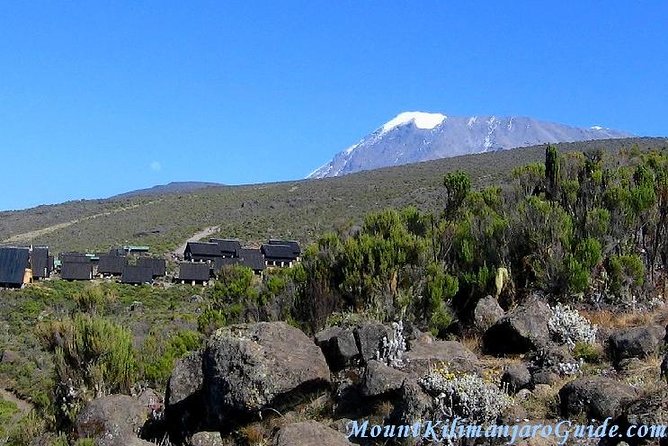
This is the day that decides the climb. You wake around 1am for a hot drink and snack, then begin by torchlight. The ascent to Gilman’s Point at 5,685 meters takes about five to six hours, though the full timing varies with pace, weather, and how you respond to altitude.
The instruction to walk very slowly is not a throwaway detail. At this height, rushing can drain you quickly. You need to protect your energy for the final section and the descent that follows.
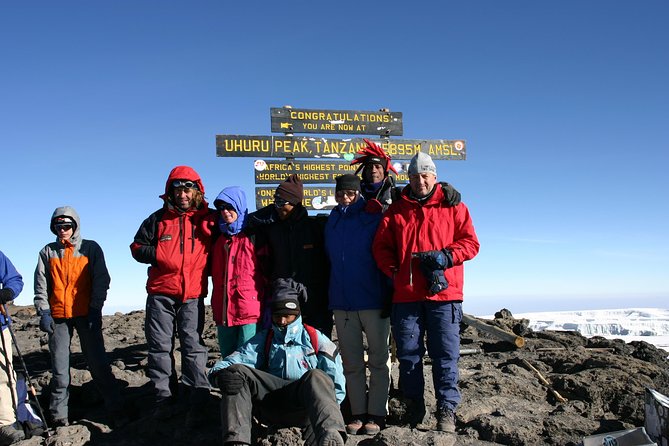
At Gilman’s Point, you pause for the sunrise over Mawenzi Peak. This is a major visual reward, but keep the stop practical. At nearly 5,700 meters, cold and fatigue remain serious concerns, and you still have the walk to Uhuru Peak.
The route continues along the crater rim to Uhuru Peak at 5,895 meters, the highest point in Africa. The additional distance is not huge on paper, but you are already tired and breathing thin air. Reaching the summit is less about speed than patience.
After the summit, you descend to Kibo Hut at 4,700 meters for brunch and a rest. Then you continue down to camp at Horombo Hut, around 3,720 meters. The total day is listed at roughly 10 to 16 hours, including about five to six hours up, one to two hours for the final summit section, and five to six hours down.
That is the key drawback of this six-day plan. You do not simply summit and finish. You must descend a great distance the same day, losing about 2,195 meters, or 7,200 feet, before the day ends.
Day 6: Through forest to Marangu Gate
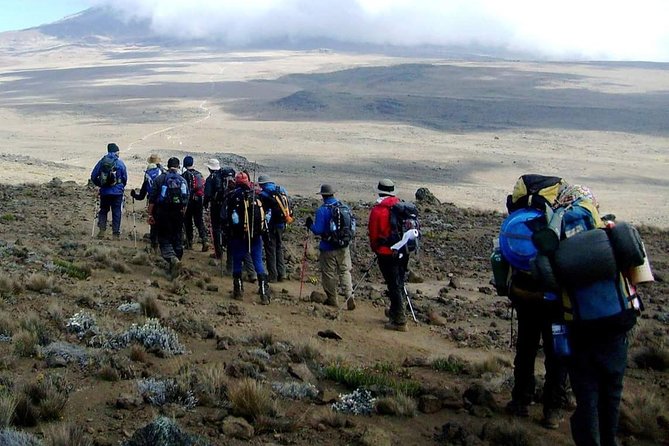
The final descent takes about five to seven hours and ends at Marangu Park Gate, at approximately 1,700 meters. The walking distance is listed as 20 kilometers, or 12.5 miles, with about 1,840 meters of descent.
After the high, dry sections, the return through lush forest can feel like a different world. The paths are described as good, but your legs may still be tired from the summit day. Trekking poles can be useful here, especially on the downhill.
At the gate, you sign out of the mountain. A driver then transfers you to your hotel in Moshi or Arusha. That final transfer is included, which is helpful after a long descent and removes one more transport detail from your hands.
What the $1,850 price covers
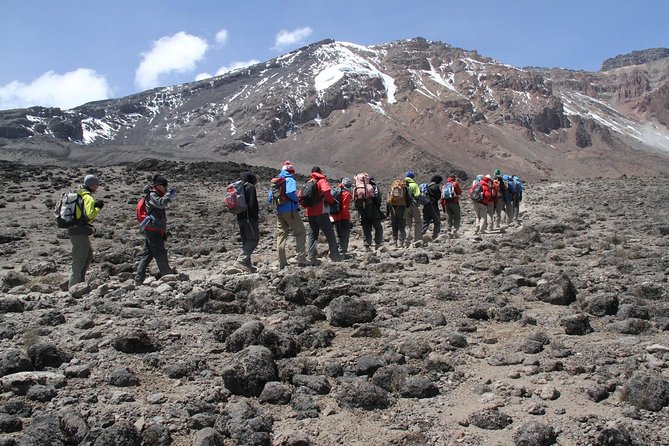
The price is $1,850 per person. That is not a casual day hike fee, but a six-day mountain package requires permits, food, crew, transport, and equipment.
Included items are:
- Camping equipment
- All park fees
- Crew salary
- Accommodation
- Airport transfers
- Five breakfasts
- Six lunches
- Five dinners
The meal count fits the schedule: lunch is provided on all six days, while breakfast and dinner are provided for five days. International flights, visas, alcohol, and soft drinks are not included.
I see reasonable value here because park fees alone form a large part of any Kilimanjaro climb, and this package also covers the crew, meals, accommodation, and transfers. The value depends heavily on how the operator handles the crew and equipment in practice, so ask for clear details about sleeping arrangements, luggage limits, and the exact airport transfer service before paying.
The group maximum of 15 is another useful part of the calculation. A group that size is not private, but it is more contained than a large departure. It can also mean different walking speeds, so ask how the guide team manages climbers who need to move at different paces.
The guide team and the human side of the climb
The experience is guide-led from the first park registration to the final gate. Names connected with Rongai trips include Vitalis and Eric, while Amos is described as the director who handled permits, transfers, and trip logistics for some departures.
You should confirm your actual guide team before the climb. That gives you a direct contact for questions about pace, equipment, health concerns, and the day-to-day plan.
The strongest praise connected with this operator focuses on support from the guides and careful handling of logistics. That matters on Kilimanjaro. You are not only buying a route. You are relying on the crew to keep the schedule organized when you are tired, cold, and thinking about little beyond the next step.
I also appreciate that the supplied experiences include first-time mountain climbers and couples marking special occasions. This route can suit a first major climb if you prepare properly, but the six-day timetable leaves less margin than a longer itinerary.
Who should choose this climb?
This trip suits you if you want a quieter northern approach, enjoy broad views toward Kenya, and prefer a route with a small-group limit. It also fits people who want a full Kilimanjaro climb without committing to an eight-day schedule.
You should be comfortable with long walking days, camping equipment, and basic mountain conditions. The stated requirement is moderate physical fitness, but summit day is much tougher than that phrase may suggest.
I would think twice if you want a relaxed acclimatization schedule or dislike overnight starts. The 1am wake-up, high-altitude ascent, and possible 16-hour summit day are the central challenge of this trip.
Children must be accompanied by an adult. The supplied information does not give a minimum age, so ask the provider directly before booking for a young climber.
Practical details that matter
Pickup is offered, and the meeting time is listed as 9am. The starting location is Moshi, Tanzania, with transport to Kilimanjaro National Park and onward to Nale Moru.
The activity accepts mobile tickets, and confirmation is provided at booking. Free cancellation is available if you cancel at least 24 hours before the local start time. Cancellations within 24 hours are not refunded, and late changes are not accepted.
Pack waterproof clothing where you can reach it on day one. You should also keep summit layers, a headlamp, snacks, and water close at hand for the pre-dawn start. The supplied details do not specify a complete equipment list, so ask exactly what camping gear is supplied and what you must bring yourself.
Should you book the Rongai Route?
I would choose this climb for the northern scenery, the quieter route character, and the strong value of having park fees, meals, crew pay, accommodation, and transfers bundled into the $1,850 price.
I would not choose it simply because it sounds easier than other Kilimanjaro routes. The six-day schedule is efficient, but summit day is severe, and the altitude gain comes quickly. If you are fit, well prepared, and realistic about the effort, this is a focused way to reach Uhuru Peak.
Before booking, confirm the exact route name, your guide team, sleeping arrangements, equipment list, and airport transfer details. If those answers are clear, the Rongai Route offers a memorable northern approach with excellent views and a serious but manageable mountain challenge.
FAQ
Where does the Rongai Route climb begin?
The current northern route begins near Nale Moru, at about 1,950 meters. It is also referred to as the Loitokitok or Nalemoru Route because the original Rongai trail is no longer used.
How long does the climb take?
The climb lasts approximately six days and five nights.
What time does the experience start?
The listed start time is 9am. Pickup is offered before the drive to Kilimanjaro National Park.
How high is Uhuru Peak?
Uhuru Peak is 5,895 meters above sea level.
How long is summit day?
The summit day can take about 10 to 16 hours in total. You begin around 1am, reach Gilman’s Point, continue to Uhuru Peak, descend to Kibo Hut, and then continue to camp at Horombo Hut.
What is included in the price?
The $1,850 price includes camping equipment, park fees, crew salary, accommodation, airport transfers, six lunches, five dinners, and five breakfasts.
Can I cancel for a full refund?
Yes. You can receive a full refund if you cancel at least 24 hours before the experience start time. Cancellations or changes made within 24 hours are not accepted for a refund.
Newly listed around Moshi & Kilimanjaro
- Climb Mount Kilimanjaro: 7 Days Machame Route★ 5.0 · 3 reviews
- 6 Days Mount Kilimanjaro Climbing via Rongai Route★ 5.0 · 3 reviews
- Explore 1 day Ngorongoro Crater Budget Group Safari from Arusha★ 5.0 · 3 reviews
- Mt. Kilimanjaro Day Hiking★ 5.0 · 3 reviews
- Chemka (Kikuletwa) Hot Springs, Tanzania★ 5.0 · 3 reviews
- Guided City tour of Moshi★ 4.3 · 3 reviews
- 8 Day Tanzania Family Safari★ 5.0 · 3 reviews
- Serengeti Safari with Sirikwa Travel★ 5.0 · 3 reviews
Kilimanjaro Climbs, compared.








Browse the lists this tour appears in