
Reviewed · KILIMANJARO CLIMBS
Kilimanjaro-marangu Route 6 Days Itinerary
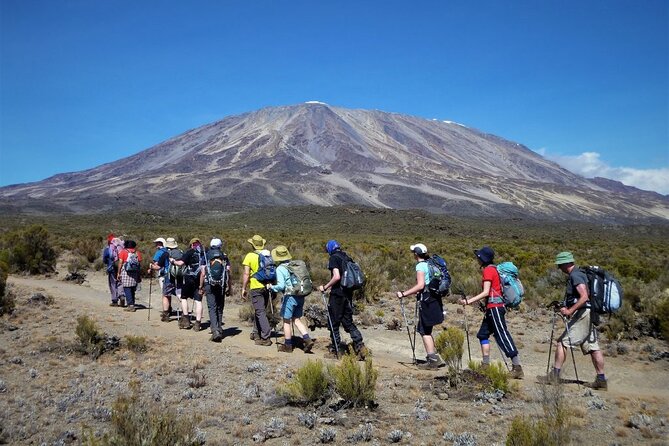
Kilimanjaro’s Marangu Route gives you a straightforward path to Africa’s highest point, with huts instead of tents and a longer acclimatization schedule than many short climbs. You begin at Kilimanjaro Mountain Resort, walk through rainforest and moorland, cross the Saddle between Mawenzi and Kibo, then make the hard midnight push toward Uhuru Peak at 5,895 meters.
I like the extra night at Horombo Hut, which gives your body more time to adjust before the summit attempt. I also like that private airport transfers, the pre-climb briefing, equipment check, mountain huts, meals, and return transport are built into the plan. The main caution is that this is physically demanding, and the listed 8-day schedule does not match the six-day title, so confirm the exact program before paying.
Key points to know before booking
- A private climb with a full acclimatization day: Only your group participates, and Day 4 adds a short walk near Mawenzi before you sleep again at Horombo.
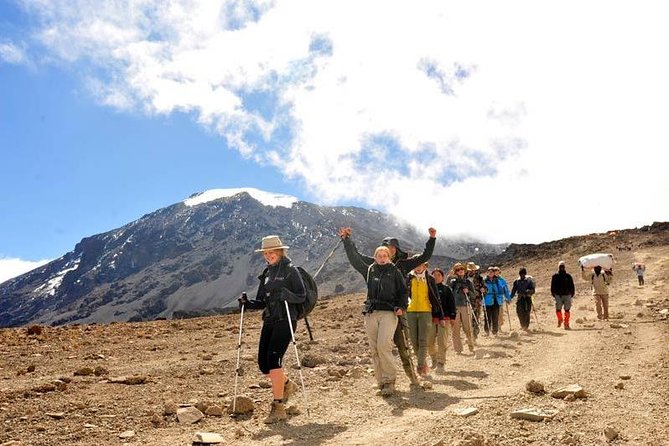
- Hut-based Marangu Route: You sleep at Mandara, Horombo, and Kibo huts rather than camping in tents.
- A long summit day: The climb from Kibo to the summit and back to Horombo is listed at 13 to 15 hours.
- Airport transfers are included: Pickup from Kilimanjaro International Airport and departure transport are part of the package.
- Best timing matters: January, February, August, and September are presented as the strongest months, while March through May should generally be avoided because of long rains.
- A serious fitness test: You need moderate physical fitness, proper medical coverage, and travel insurance.
What this Kilimanjaro climb is really like
At $1,950 per person, this is not a casual mountain outing. You spend several days above 3,000 meters, sleep at altitude, and finish with a long night climb on loose volcanic scree. The price makes more sense if you value a private group, airport transport, resort nights, guide support, mountain meals, and the extra acclimatization day.
The Marangu Route is often called the hut route because you sleep indoors at the mountain stops. That removes the need to carry or sleep in a tent, though it does not make the climb easy. The huts are practical mountain accommodation, and Kibo Hut has no running water, so you should be ready for simple conditions.
This itinerary begins and ends at Kilimanjaro Mountain Resort in Marangu. You may arrive at Kilimanjaro International Airport at any time, with a private transfer arranged to take you to the resort. The next morning, the mountain program begins after breakfast.
There is one planning detail worth clearing up. The product title refers to six days on the Marangu Route, while the supplied schedule covers eight days, including the arrival and departure days. The mountain portion runs from Day 2 through Day 7, with Day 1 for preparation and Day 8 for airport transfer. Ask for the final written schedule so flight times and hotel nights match.
More Kilimanjaro routes:
- Kilimanjaro climb by Lemosho Route (7-day)
★ 5.0 · 651 reviews - Kilimanjaro climb, Machame Route (7-day)
★ 5.0 · 262 reviews - Kilimanjaro Climbing Lemosho Route 8 Days.
★ 5.0 · 186 reviews
Day 1: briefing at Kilimanjaro Mountain Resort
The first day is deliberately quiet. You stay at Kilimanjaro Mountain Resort on the lower slopes of Kilimanjaro, a useful place to rest after your flight and prepare for the climb.
At 5:30 pm, you meet for a pre-climb briefing and equipment check. This is more important than it sounds. A loose boot, missing rain layer, or poorly fitting backpack can become a real problem after several hours on the mountain.
The operator also confirms your mandatory medical coverage and travel insurance. These checks are sensible, but do not assume the insurance itself is supplied by the tour. You should have your documents ready before arrival.
Dinner, bed, and breakfast are included at the resort. If you arrive late, confirm how the briefing will be handled. The general meeting information gives an 8:30 am start time, while the first-day briefing is set for 5:30 pm. Those times may refer to different parts of the trip, but you should ask for clarification.
Day 2: Marangu Gate to Mandara Hut
After breakfast, you make the short transfer from the resort to the national park gate. Gate formalities take time, so do not expect to start walking the instant you arrive.
The trail begins in tropical rainforest. This first section is usually a welcome change from airports, roads, and packing lists, but it is still a steady uphill walk. The schedule gives five to six hours from Marangu Gate to Mandara Hut at about 2,700 meters.
Mandara is your first mountain hut and your first real test of how your body responds to altitude. You can have dinner, sleep, or simply sit outside and take in the forest around camp. The itinerary also allows time to rest, which is good advice. You do not gain anything by racing through the first day.
Keep your water accessible and walk at a pace that lets you speak without gasping. The instruction to go slowly applies from the first step, not only near the summit.
Day 3: rainforest to Horombo’s open moorland
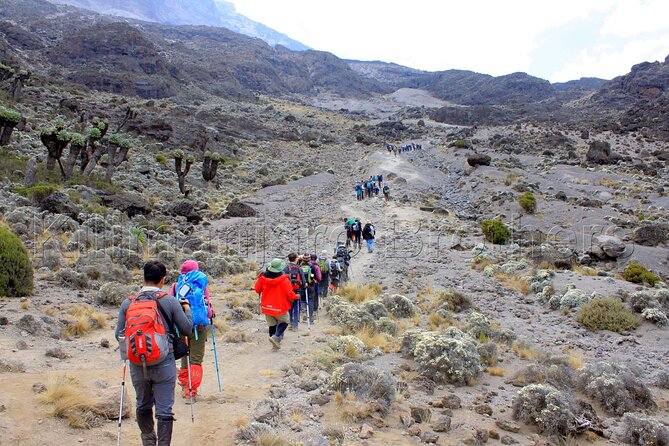
The climb from Mandara to Horombo takes four to six hours and reaches about 3,720 meters. The first part remains steep through forest, then the trail opens into moorland.
This change in scenery is one of the pleasures of the route. In clear weather, you can see Kibo and Mawenzi, the two major peaks of Kilimanjaro. The open terrain also makes the mountain feel larger and more exposed than it did in the trees.
You should reach Horombo Hut in the middle of the afternoon. That timing gives you a chance to eat, rest, and look around camp rather than arriving just before dark. Horombo is also where the itinerary slows down for altitude adjustment.
Altitude affects people differently, and no schedule can guarantee a successful summit. Headache, poor sleep, nausea, and unusual tiredness should be taken seriously. Tell your guide how you feel instead of trying to hide symptoms to keep up with the group.
More six day trips in Moshi & Kilimanjaro:
- Kilimanjaro climb, Lemosho Route (6-day)
★ 5.0 · 129 reviews - Kilimanjaro climb, Marangu route (6-day)
★ 5.0 · 72 reviews - 6 Days 5 Night Safari
★ 5.0 · 57 reviews - 6 Days Tanzania Classic Safari
★ 5.0 · 52 reviews
Day 4: the Horombo acclimatization day
The additional night at Horombo is one of the strongest features of this plan. Instead of climbing higher and sleeping there immediately, you take a shorter walk toward Mawenzi and the Zebra Rocks, then return to Horombo.
The schedule gives about three hours of walking. This is not a wasted day. It lets you spend more time at altitude while keeping the night at the same hut, a useful rhythm before moving toward Kibo.
You receive all meals for the day at Horombo Hut. Drink enough water, walk slowly, and use the day to learn how your body is behaving. It is also a good time to check socks, footwear, layers, headlamp, and any small item you will need during the summit night.
The itinerary refers to this as a walk toward Mawenzi Hut, while the description also mentions Zebra Rocks. Ask your guide about the exact turnaround point, since the purpose is acclimatization rather than covering maximum distance.
Day 5: Horombo to Kibo across the Saddle
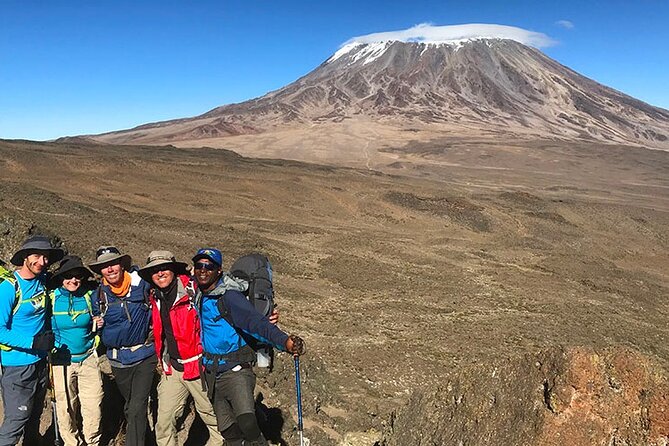
The route leaves Horombo and heads toward the lunar-looking Saddle between Mawenzi and Kibo. The ground becomes more open and stark as vegetation fades away.
The schedule describes a gradual six to seven-hour walk, then lists four to six hours in the timing line. Either way, this is a day to protect your energy. The destination is Kibo Hut at about 4,700 meters, where you spend the night before the summit attempt.
Go slowly. The phrase pole pole, meaning slowly in Swahili, is often associated with Kilimanjaro for good reason, even though the supplied itinerary does not name a particular guide or language routine. A steady pace helps you save strength for the final climb.
Kibo Hut has no running water. Bring enough water for your needs as directed by the mountain team, and expect a basic evening. The plan is to relax and go to bed early, though sleeping well at 4,700 meters can be difficult.
Pack your summit-night clothing where you can reach it. You do not want to search through every bag in the dark. The final ascent starts before midnight, so keep dinner, rest, and preparation simple.
Day 6: Gillman’s Point, Uhuru Peak, and a punishing descent
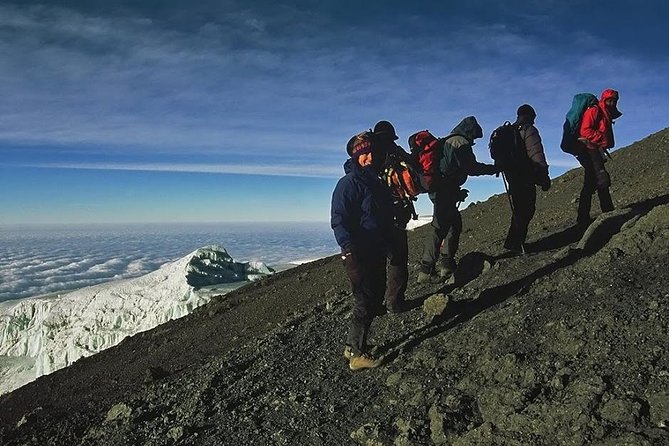
This is the day that defines the climb. You wake before midnight and begin up steep volcanic scree in darkness. The trail uses zigzags in places, but the slow climb remains hard because of the altitude, cold, darkness, and thin air.
The first major goal is Gillman’s Point on the crater rim at about 5,685 meters. The schedule allows a short rest there, often timed around sunrise. From this height, you can look toward Mawenzi as the light changes.
If you still feel strong, you continue along the crater rim for the roughly three-hour round trip to Uhuru Peak. At 5,895 meters, Uhuru is the highest point in Africa. The route description makes clear that this final stretch is optional in the sense that you should only continue if you are feeling well enough.
Do not treat Gillman’s Point as a minor stop. Reaching the crater rim is already a major achievement, and your guide should help you judge whether continuing is sensible. At this altitude, stubbornness is not a useful form of courage.
After a short time at the summit, you descend to Kibo Hut for refreshment, then continue down to Horombo Hut. The complete Kibo to summit to Horombo day is listed at 13 to 15 hours. That figure is the practical warning you need: even after reaching the top, you still have a long descent.
One line in the supplied schedule says 13 minutes for this day, but the walking detail says 13 to 15 hours. Treat the longer figure as the realistic planning estimate and confirm the timing with the operator.
Day 7: back to Marangu Gate
From Horombo, you descend through Mandara Hut and continue to Marangu Gate. The walking time is listed at six to seven hours.
The descent can feel easier because you are going lower, but tired knees and feet still need care. Use trekking poles if you have them and keep drinking water. Reaching the gate is not the moment to sprint. Save your attention for the trail.
Successful climbers receive summit certificates at the gate. From there, you transfer back to Kilimanjaro Mountain Resort for dinner and an overnight stay. This return to a proper hotel gives you a chance to wash, eat, sleep, and let the mountain experience settle in.
The structure is practical: you do not need to fly out immediately after the summit descent. That extra night also gives the schedule some breathing room if the mountain days run slowly.
Day 8: airport transfer or a longer Tanzania trip
After saying goodbye to the guides, a private departure transfer takes you from Moshi to Kilimanjaro International Airport. The transfer is included, so you do not need to arrange separate transport for your flight.
The operator also says you may discuss a short safari or another extension. No specific safari, price, duration, or vehicle details are supplied, so treat that as an option to arrange separately rather than a guaranteed part of the climb.
Build your flight plan around the full schedule, not the six-day title. The mountain program ends with a descent and resort night, followed by the airport transfer on Day 8.
When to climb Kilimanjaro on this route
January and February are listed as the warmest months, with evenings and mornings often clear of clouds. August and September are also recommended as strong months for climbing.
July can be colder. November and December can be wet, though November’s short rains do not necessarily stop every climb. March, April, and May bring long rains and should generally be avoided.
Weather is never fully predictable on Kilimanjaro. The operator requires suitable weather for the experience to run, and a cancellation caused by poor weather can lead to a different date or a full refund.
The timing advice matters because the route already asks a lot from you. Better weather can mean clearer views, less discomfort, and a more manageable trail, though it cannot remove the altitude or the long summit day.
What the $1,950 price includes in practical terms
The price is $1,950 per person. Its value depends on what you would otherwise need to arrange yourself.
The package includes pickup, private airport transfers, the resort stays described in the plan, the pre-climb briefing and equipment check, park access for the scheduled days, mountain hut accommodation, and meals specifically identified in the itinerary. The private format also means only your group participates, rather than joining a larger mixed party.
You should ask for a written inclusion list before booking. The material confirms medical coverage and travel insurance will be checked, but it does not say they are included in the price. It also does not list equipment rental, tips, drinks, or personal porters, so do not assume those costs are covered.
For a first Kilimanjaro climb, the extra Horombo night and included transfers add real value. If you are comparing cheaper programs, check whether they use fewer acclimatization days or leave airport transport and hotel nights to you. A lower price is not always lower overall cost.
Who should choose this climb
This trip suits you if you want a private Kilimanjaro attempt with hut accommodation, a fixed schedule, and a built-in acclimatization day. It also works well if you prefer to arrive at the airport and have transport waiting rather than piecing together taxis and hotel transfers.
You need moderate physical fitness, but that phrase should not be read as easy. The summit day is exceptionally long, and the route reaches nearly 5,900 meters. You should be comfortable walking for several hours on consecutive days and prepared for steep uphill terrain.
This is less suitable if you want a short, soft adventure or dislike basic mountain accommodation. Kibo’s lack of running water and the pre-midnight start are central parts of the experience, not small inconveniences.
The operator has an overall rating of 4.3 from nine ratings, but the small sample means you should still ask direct questions about guide assignment, group support, equipment, porter arrangements, and the exact final schedule. One published complaint describes a late pickup and poor communication before the climb. The operator apologized and said the feedback would be used to improve service. That makes communication worth confirming in writing before you arrive.
Should you book the Marangu Route program?
I would consider booking it if the private format, hut nights, included airport transfers, and extra Horombo acclimatization day match what you want. Those are useful features, especially for a first climb.
Before paying, get the exact eight-day schedule, confirm the 8:30 am meeting information and 5:30 pm briefing, and ask precisely what the $1,950 covers. Also confirm the guide team, equipment support, insurance requirements, and how the summit decision will be made if you feel unwell.
Book this trip for the mountain plan, not for a promise of an easy summit. If you are ready for a long summit night, simple huts, slow walking, and careful preparation, the Marangu Route gives you a clear and practical way to attempt Kilimanjaro.
FAQ
How long is the Kilimanjaro Marangu Route experience?
The supplied schedule covers approximately eight days, including arrival and departure days. The mountain walking runs from Day 2 through Day 7.
What is the price per person?
The price is $1,950 per person.
Where does the trip begin and end?
The trip begins and ends at Kilimanjaro Mountain Resort in Marangu. Airport transfers connect the resort with Kilimanjaro International Airport.
Are airport transfers included?
Yes. Private arrival and departure transfers are included, with no extra airport transfer fee stated.
Is this a private tour?
Yes. Only your group participates in the activity.
Where do you sleep during the climb?
You stay at Mandara Hut, Horombo Hut, and Kibo Hut on the mountain. You also stay at Kilimanjaro Mountain Resort before and after the climb.
Is there running water at Kibo Hut?
No. The itinerary specifically states that Kibo Hut has no running water.
How long is the summit day?
The walk from Kibo Hut to the summit and then to Horombo Hut is listed at 13 to 15 hours.
What months are recommended for climbing?
January, February, August, and September are listed as the best months. March, April, and May have long rains and should generally be avoided.
Can I cancel for a full refund?
Yes, if you cancel at least 24 hours before the experience start time. Cancellations made less than 24 hours in advance are not refunded, and poor weather may result in a different date or a full refund.
Newly listed around Moshi & Kilimanjaro
- Climb Mount Kilimanjaro: 7 Days Machame Route★ 5.0 · 3 reviews
- 6 Days Mount Kilimanjaro Climbing via Rongai Route★ 5.0 · 3 reviews
- Explore 1 day Ngorongoro Crater Budget Group Safari from Arusha★ 5.0 · 3 reviews
- Mt. Kilimanjaro Day Hiking★ 5.0 · 3 reviews
- Chemka (Kikuletwa) Hot Springs, Tanzania★ 5.0 · 3 reviews
- Guided City tour of Moshi★ 4.3 · 3 reviews
- 8 Day Tanzania Family Safari★ 5.0 · 3 reviews
- Serengeti Safari with Sirikwa Travel★ 5.0 · 3 reviews
Kilimanjaro Climbs, compared.








Browse the lists this tour appears in