
Reviewed · KILIMANJARO CLIMBS
Kilimanjaro Climb by Rongai Route 6 days
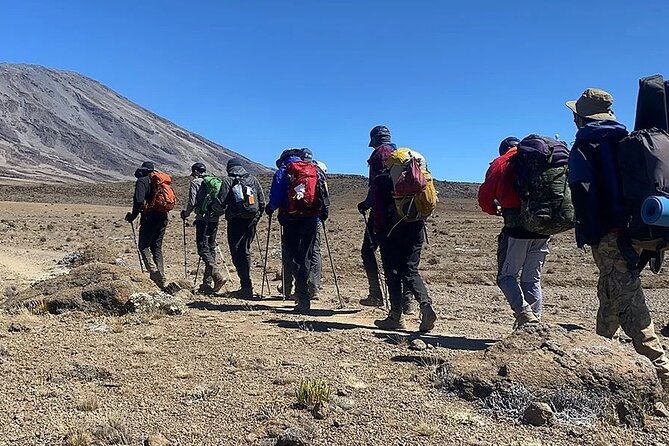
The Rongai Route gives you Kilimanjaro from its quieter northern side, where the trail begins near the Kenyan border and passes through fields, pine forest, moorland, volcanic desert, and the Arctic summit zone. I like the lower rainfall in the rainy season and the real wilderness feel before the route joins the busier southern trails. I also like that the price covers airport transfers, two hotel nights, park charges, meals, camping equipment, and a full support crew.
The catch is the summit day. You will hike for about 15 hours, starting near midnight and climbing from 4,720 meters to 5,895 meters before descending. The six climbing days are part of an eight-day trip, so you need enough time for the mountain, a moderate fitness level, and a clear head about the effects of altitude.
Key points to know before booking
- Northern approach: Rongai is Kilimanjaro’s only route from the north, near the Kenyan border.
- Eight days in practice: Six mountain days are framed by a hotel night before the climb and another after it.
- Quiet opening stages: Fields, pine forest, moorland, and wildlife make the early trail feel remote.
- Strong support package: Park fees, guides, porters, cooks, meals, tents, rescue fees, oxygen, and medical kits are included.
- Long summit push: The final mountain day covers about 21 kilometers and includes a midnight start.
- Small group limit: The maximum group size is 15 people, with experienced guides such as Hillary, Emmanuel, Felix, and Elinariki involved in past climbs.
Why Rongai is a smart route choice
Kilimanjaro is not a technical climb, but it is a serious high-altitude trek. The Rongai Route helps by spreading the ascent across several days and by giving you a less crowded opening than the Marangu Route.
The northern side receives less rain than the southern slopes, which matters if you are climbing during the wet season. You still need waterproof clothing, since mountain weather can change quickly, but Rongai is often chosen for its drier conditions.
I also like the change in scenery. You begin near working farms, walking past maize, beans, and potatoes. Then the path enters pine forest before opening into moorland and, later, the stark volcanic desert between Mawenzi and Kibo. It feels like a long journey through several worlds rather than a single uphill walk.
The tradeoff is that Rongai is not a short or easy option. The final day is especially demanding, and the route eventually descends through the Marangu side. You gain variety and solitude early on, but you still face the same thin air and steep summit slopes that define any Kilimanjaro climb.
More Kilimanjaro routes:
- Kilimanjaro climb by Lemosho Route (7-day)
★ 5.0 · 651 reviews - Kilimanjaro climb, Machame Route (7-day)
★ 5.0 · 262 reviews - Kilimanjaro Climbing Lemosho Route 8 Days.
★ 5.0 · 186 reviews
Your first day in Moshi and the airport transfer
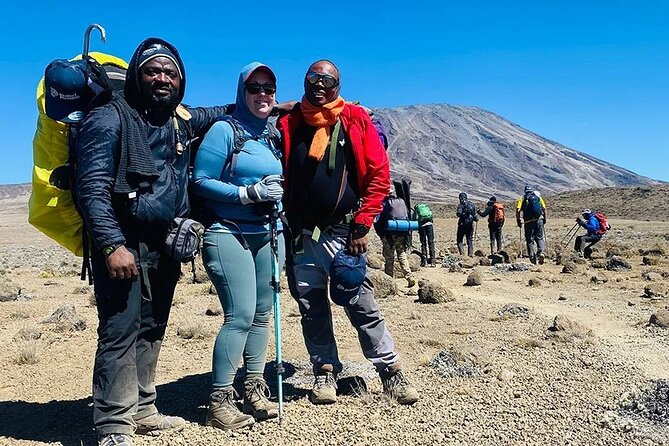
Your arrival starts at Kilimanjaro International Airport. A Hilbas representative picks you up and takes you to the hotel for a hot shower, a comfortable bed, a briefing, and a gear check.
This first night is more than a convenience. It gives you time to check whether your boots, clothing, and sleeping gear are ready before you walk into the mountain. Equipment rental is available for items you may need, though personal gear and sleeping bags are not part of the base price.
Airport transfers are included at both ends of the trip. That removes one common worry after a long flight, especially when you are carrying bulky trekking equipment.
The following morning begins with a transfer from the hotel to Marangu Gate for registration. Guides and porters prepare the mountain equipment there, then you continue by vehicle to Rongai Gate, also called Nalemuru. The drive to the trailhead takes about three hours, and lunch is served either on the way or at the gate.
Day two: farms, pine forest, and the Rongai wilderness
The first hike runs from about 1,900 meters to 2,626 meters. It covers 8 kilometers and takes roughly six hours through the rainforest zone.
You start near Nalemuru village, where the path winds through fields of maize, beans, and potatoes. This is one of the most appealing parts of the route because you see a working rural area before the mountain trail becomes wild.
The path then enters pine forest and climbs gently. The gradual pace is welcome on the first day, especially after the long road transfer. The forest is also home to wildlife, including black-and-white colobus monkeys.
Your support team carries the group equipment, prepares meals, and handles the camp setup. That lets you focus on walking at the steady pace set by the guide. Do not treat this as a race. The early days are where patient pacing helps you save strength for the summit night.
Day three: moorland and Mawenzi views
After breakfast, you continue from 2,626 meters to 3,600 meters, then drop slightly to a campsite at about 3,450 meters. The distance is 12 kilometers, with about seven hours of walking.
The forest gives way to moorland, a more open zone with broad views and lower vegetation. You hike toward the second cave, where lunch is served, then continue southeast across a small path that rises and falls.
This day is longer than the first, but the route is not simply a straight climb. The up-and-down walking can be tiring, yet it helps you adjust to the mountain’s changing height. The camp sits in a sheltered valley with views toward Mawenzi Peak.
Mawenzi is the jagged secondary summit of Kilimanjaro, and its shape gives this section a strong sense of place. You are not just walking toward a distant high point. You are moving between two major volcanic peaks.
More six day trips in Moshi & Kilimanjaro:
- Kilimanjaro climb, Lemosho Route (6-day)
★ 5.0 · 129 reviews - Kilimanjaro climb, Marangu route (6-day)
★ 5.0 · 72 reviews - 6 Days 5 Night Safari
★ 5.0 · 57 reviews - 6 Days Tanzania Classic Safari
★ 5.0 · 52 reviews
Day four: Mawenzi Tarn and a valuable acclimatization afternoon
Day four climbs from 3,600 meters to 4,300 meters over only 5 kilometers. It takes about six hours and crosses the alpine desert zone.
This is a shorter but steeper day, with grassy slopes leading toward Mawenzi Tarn Hut. You should expect the altitude to make the climb feel harder than the distance suggests. A slow pace is essential.
The reward is time. After lunch at Mawenzi Tarn, you have the afternoon to explore the area and rest at altitude. That pause is one of the route’s useful features. You are gaining height, but you are not forced to cover a long distance on the same day.
The mountain views also change here. You can look back across Kilimanjaro National Park from a higher position and see Mawenzi from a different angle. Bring warm layers even if the morning starts mild. At 4,300 meters, the temperature can drop sharply once you stop moving.
Day five: crossing the Saddle to Kibo Hut
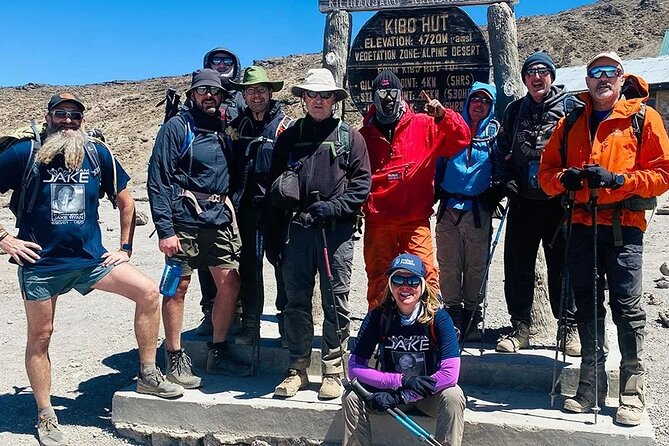
The next stage runs west across the Saddle, the high desert between Mawenzi and Kibo. You climb from 4,300 meters to 4,720 meters, cover 10 kilometers, and walk for about six hours.
This is a dry, exposed section with a dramatic view of the two peaks. There is little shelter, so sun protection, warm layers, water, and wind protection matter. The trail is not especially long, but the altitude makes each hour count.
Depending on your pace, lunch may be packed and eaten along the way, or served hot at Kibo Hut. That flexibility is practical because groups do not always move at the same speed.
At Kibo Hut, you receive an early dinner and go to bed. The rest may be brief. Your guide wakes you at about 11 p.m. for tea and biscuits before the midnight summit start.
This is the point where a six-day mountain plan becomes a test of preparation. Keep your summit clothing and headlamp close by. You do not want to sort through a packed bag in the dark while tired and cold.
Day six: the midnight climb to 5,895 meters
The summit day is the heart of the trip and the hardest section by far. You climb from Kibo Hut at 4,720 meters to 5,895 meters, then descend all the way to about 3,720 meters. The total distance is about 21 kilometers, with around 15 hours of hiking.
The trail first follows switchbacks over volcanic scree. You pass William Point at about 5,000 meters and Hans Meyer Cave at about 5,200 meters, which provides a useful resting point for tea or water.
The final approach to Gillman’s Point reaches 5,681 meters on the crater rim. This section is steep and covered with loose stone scree. It demands both physical effort and mental patience. Your guide will set the pace, and the crew carries the group mountain equipment.
From the crater rim, you continue toward the highest point at 5,895 meters. The Arctic zone, thin air, darkness, cold, and accumulated fatigue all arrive at once. You should expect the summit to feel hard, not simply scenic.
The company provides oxygen cylinders, oximeters, and medical kits, and its mountain guides hold Wilderness First Aid certifications. These supplies do not remove altitude risk, but they show that the operation is equipped for basic monitoring and emergencies. Your own travel insurance must still cover trekking at altitude and medical evacuation.
After reaching the summit, you descend to the camp at about 3,720 meters. The descent is long and can be rough on tired legs. Save energy for it, and follow the guide’s instructions even when the goal is behind you.
Day seven: rainforest descent and Marangu Gate
After an early breakfast, you descend 19 kilometers over about eight hours. The trail passes through moorland and then returns to rainforest before ending at Marangu Gate.
The vegetation changes quickly. You may see tall trees, flowers, and birds as the route drops into greener country. After the cold, bare upper mountain, the rainforest feels almost lush by comparison.
At Marangu Gate, every hiker signs out and receives a completion certificate. A Hilbas driver then returns you to the hotel, passing coffee and banana farms around the Marangu villages.
This is another reason to value the route design. You go up from the north and come down through the southeast, seeing more of Kilimanjaro than you would on a simple out-and-back route.
The food, tents, and support crew
The price includes three standard meals each day on the mountain: breakfast, lunch, and dinner. Drinks such as coffee, tea, Milo tea, and water are included as well.
Meal plans can be adjusted for vegetarian, vegan, lactose-free, gluten-free, halal, and other needs. Tell the operator about dietary requirements before the climb so the cook can prepare properly.
Two hikers share a tent unless you pay for a single arrangement. The group also has a dining tent with tables, chairs, crockery, and other shared equipment. These details matter more than they might sound. A place to eat and sit out of the weather helps you rest and maintain a routine.
Porters carry the mountain equipment, while guides lead the route and explain the mountain, Tanzanian culture, and local history. The crew also includes assistant guides, camp staff, cooks, and porters.
The company’s named guides have included Hillary, Emmanuel, Felix, and Elinariki. Past climbs have also involved Bariki, whose team helped a participant who needed extra care and got that person to safety. You should still ask at booking which guide will lead your departure, since staffing can change.
Tips for the crew are not included. Budget for them separately and ask the operator for current guidance before you arrive.
What the $2,282 price covers
At $2,282 per person, this is not a budget walk, but the package includes many costs that can add up quickly on Kilimanjaro.
Included are airport pickup and drop-off, transport to and from the park, two hotel nights, shared mountain camping, park fees, camping fees, vehicle fees, rescue fees, entry charges, guide and porter salaries, meals, group equipment, oxygen, oximeters, and medical kits.
Two guests share a hotel room before and after the climb, except on solo climbs. Single hotel accommodation and a private tent cost extra.
Flights, visas, travel insurance, personal clothing, footwear, sleeping bags, laundry, phone costs, souvenirs, and crew tips are not included. The price offers its best value if you need transfers, lodging, equipment support, and a complete mountain operation in one booking.
The group limit is 15 people. That is small enough to keep the guide’s attention practical, though the actual number on your departure can vary. Ask about the expected group size if personal space or pacing is important to you.
Who should book this Rongai climb
I would choose this route if you want a quieter start, prefer the northern approach, or plan to climb during the rainy season. It also suits you if you like changing scenery and do not mind camping in a shared tent.
You need a moderate level of fitness and the ability to walk for many hours, especially on the final day. The climb is not suited to anyone looking for a relaxed sightseeing tour or a short summit excursion.
The route is a good fit for hikers who value a full support team. You do not carry all the camping equipment yourself, and the cook, porters, guides, and camp staff handle much of the work around the hike.
Before booking, check your travel insurance, personal gear, sleeping bag needs, dietary requirements, and preferred room and tent arrangements. Also confirm the current guide assignment and tipping advice.
Should you book it?
Book this Rongai Route climb if a quieter northern trail, lower rainy-season exposure, full logistics, and a strong crew package matter to you. The combination of airport transfers, hotel nights, park charges, meals, camping gear, medical supplies, and experienced English-speaking guides gives the $2,282 price solid practical value.
Skip it if you want a short or comfortable mountain holiday. The summit day is a 15-hour effort with a midnight start, and the trip demands patience, fitness, and acceptance of basic mountain camping. For the right hiker, though, Rongai offers a varied and less crowded way to reach Kilimanjaro’s 5,895-meter summit.
FAQ
How long does the Kilimanjaro climb take?
The mountain climb takes six days, while the full experience lasts about eight days including the hotel night before the climb, the post-climb hotel night, and airport transfers.
Where does the Rongai Route begin?
The route begins near Nalemuru village at Rongai Gate, on the northern side of Kilimanjaro close to the Kenyan border.
What is the price per person?
The listed price is $2,282 per person.
Is airport pickup included?
Yes. Transportation from Kilimanjaro International Airport is included for both pickup and drop-off.
Are hotel nights included?
Yes. Two hotel nights are included, one before and one after the climb. Two people share a room unless you pay extra for single accommodation.
Do hikers share tents?
Yes. Two hikers share a tent on the mountain unless a single tent is arranged for an additional charge.
What meals are provided?
Breakfast, lunch, and dinner are provided on the mountain. Coffee, tea, Milo tea, water, and other listed drinks are also included.
Can special diets be accommodated?
Yes. Vegetarian, vegan, lactose-free, gluten-free, halal, and other meal plans are available.
What equipment and safety support are included?
The package includes group camping equipment, oxygen cylinders, oximeters, medical kits, and a support crew. Guides hold Wilderness First Aid certifications.
Is travel insurance included?
No. Flights, Tanzania visa costs, and travel insurance are not included. Personal clothing, footwear, sleeping bags, and other personal items are also your responsibility.
How large can the group be?
The maximum group size is 15 people.
What fitness level is required?
A moderate physical fitness level is required. The summit day covers about 21 kilometers and takes roughly 15 hours, with a midnight start.
How does cancellation work?
You receive a full refund if you cancel at least six full days before the local start time. Cancellations made two to six days before the start receive a 50 percent refund, while cancellations within two days are not refunded.
Newly listed around Moshi & Kilimanjaro
- Climb Mount Kilimanjaro: 7 Days Machame Route★ 5.0 · 3 reviews
- 6 Days Mount Kilimanjaro Climbing via Rongai Route★ 5.0 · 3 reviews
- Explore 1 day Ngorongoro Crater Budget Group Safari from Arusha★ 5.0 · 3 reviews
- Mt. Kilimanjaro Day Hiking★ 5.0 · 3 reviews
- Chemka (Kikuletwa) Hot Springs, Tanzania★ 5.0 · 3 reviews
- Guided City tour of Moshi★ 4.3 · 3 reviews
- 8 Day Tanzania Family Safari★ 5.0 · 3 reviews
- Serengeti Safari with Sirikwa Travel★ 5.0 · 3 reviews
Kilimanjaro Climbs, compared.








Browse the lists this tour appears in