
Reviewed · KILIMANJARO CLIMBS
Discover Our Latest 6 Days Climbing Kilimanjaro – Marangu Route
Kilimanjaro’s Marangu Route is the mountain’s most straightforward trail, but straightforward does not mean easy. This six-day plan gives you a private party, hut beds instead of tents, and a full acclimatization day at Horombo before the summit push. That extra day matters when your body is trying to adjust to thin air.
I like the hut accommodation, since you do not need to carry camping equipment or sleep in a tent. I also like the support system: a guide, porters, cooked meals, briefing, return transport from Moshi, and a certificate at the end. The main catch is cost clarity. The advertised $1,150 price does not include park fees, insurance, tips, personal gear, airport transfers, or hotels before and after the climb, so ask for the full final total before paying.
Key details of the six-day climb
- Private party on the Marangu Route: You climb with your own booked group rather than being placed with strangers, although the activity allows up to 90 participants overall.
- A real acclimatization day at 3,720 meters: You spend an extra night at Horombo and walk toward Mawenzi Peak, reaching about 4,600 meters before returning to the hut.
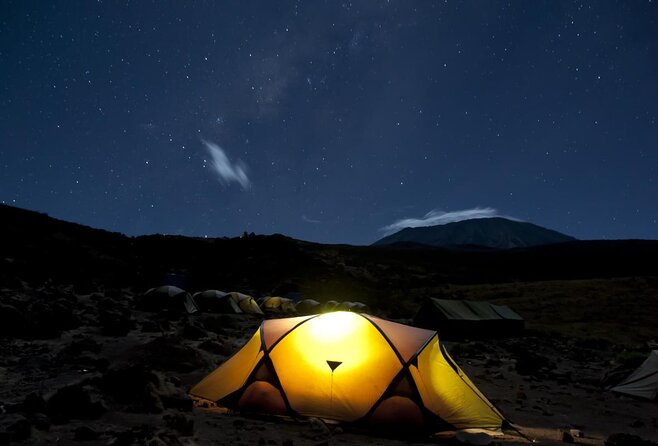
- Hut beds instead of camping: Mandara, Horombo, and Kibo provide dormitory-style accommodation with limited facilities at the highest hut.
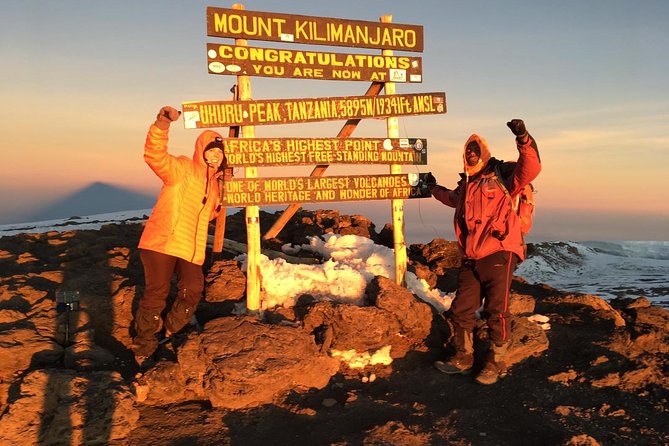
- Midnight summit attempt: You leave Kibo shortly after midnight, aim for Gillman’s Point around sunrise, then continue toward Uhuru Peak if you have the strength.
- Meals and mountain crew included: Breakfast, lunch, dinner, a professional guide, porters, and a trek briefing are part of the package.
- Moshi transport is covered: Pickup from and return to your Moshi hotel are included, while airport transfers and town hotels are not.
Why six days on Marangu can work
The Marangu Route is often called the easiest Kilimanjaro path because its trail is relatively direct and uses huts rather than tents. That label can mislead you. The altitude is still severe, the summit day is long, and the route gains height quickly compared with longer approaches.
The strength of this plan is the Horombo acclimatization day. After hiking from Mandara to Horombo, you spend another day at the same hut while walking higher and returning to sleep lower. That is a useful rhythm: climb high during the day, then rest at your sleeping altitude.
You begin and end in Moshi, Tanzania. A private vehicle collects you from your Moshi hotel and takes you to Marangu Gate, where registration and park procedures take place. At the end, the same basic arrangement takes you from Marangu Gate back to your hotel.
The price of $1,150 per person can be reasonable for a six-day supported climb, especially with huts, food, a guide, porters, briefing, and private ground transport included. But park fees are specifically excluded, and those fees can be a substantial part of a Kilimanjaro trip. Add travel or medical insurance, tips for the mountain crew, personal hiking gear, hotel nights, and flights before you compare this package with another operator.
More Kilimanjaro routes:
- Kilimanjaro climb by Lemosho Route (7-day)
★ 5.0 · 651 reviews - Kilimanjaro climb, Machame Route (7-day)
★ 5.0 · 262 reviews - Kilimanjaro Climbing Lemosho Route 8 Days.
★ 5.0 · 186 reviews
Day 1: Marangu Gate to Mandara Hut
Your first morning starts early with pickup from your hotel in Moshi. The drive brings you to Marangu Gate, where registration is completed and your mountain team waits. This is the practical start of the climb, so use the time to check your daypack, water, rain protection, and any clothing you may need during the first hike.
The trail begins in rainforest. This is one of the most pleasant parts of the route, with mosses, lichens, flowers, and orchids along the path. You might also see colorful birds, colobus monkeys, and other monkey species. On clear days, there are views back toward Moshi and the broad plain below.
The walk to Mandara Hut takes about four to five hours. That sounds manageable, and compared with later days it is, but you should still keep your pace slow from the beginning. Your guide will set the walking rhythm, and the local phrase pole pole, meaning slowly, is central to staying comfortable at altitude.
Mandara Hut is your first dormitory-style stop. The day’s accommodation, meals, and mountain support are included, but the specific facilities at the hut are limited. Treat this as a short mountain day, not a chance to prove how fast you can climb.
Day 2: Mandara to Horombo at 3,720 meters
After breakfast, you continue through the final section of rainforest. The trees gradually thin, and the trail opens into alpine meadow with tall heather. This change is striking because Kilimanjaro begins to feel less like a forest hike and more like a high mountain crossing.
Kibo and Mawenzi come into view ahead. Kibo is the higher, snow-capped summit cone, while Mawenzi has a rougher, rocky profile. These two peaks frame much of the route and give you a clear sense of where you are heading.
The climb to Horombo takes roughly five to seven hours and gains about 1,000 meters. That elevation gain is the day’s real challenge. You may still feel strong, but the air is thinner, and a pace that seemed slow at the gate can feel just right now.
Horombo Hut sits at about 3,720 meters. It is a busy stopping point on Marangu, with dormitory accommodation rather than a private room. You should expect a basic mountain stay, not hotel comfort. Keep your sleeping items and warm layers close, and avoid using more energy than necessary after arrival.
Day 3: Horombo acclimatization walk toward Mawenzi
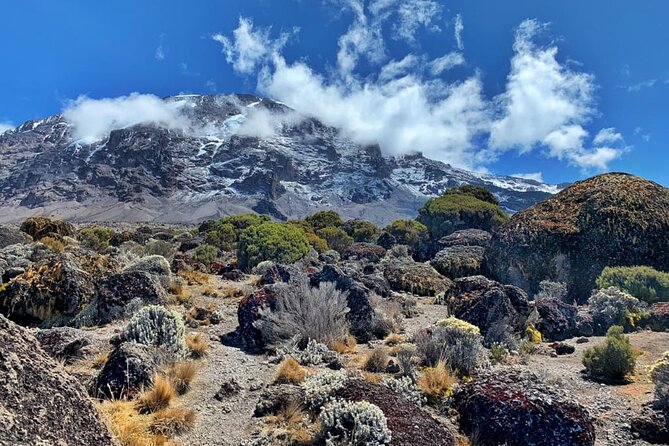
This is the day that gives the six-day schedule its best chance of working. You sleep again at Horombo, but during the day you walk higher toward the base of Mawenzi Peak. The route takes about four to five hours round trip and reaches approximately 4,600 meters before returning to the hut.
The point is not to conquer Mawenzi. It is to let your body spend time at greater altitude without forcing you to sleep there. You get mountain views, a demanding half-day walk, and a quieter afternoon to rest before the summit approach.
I would take this day seriously. Eat the provided meals, drink regularly, and tell your guide about headaches, nausea, dizziness, unusual fatigue, or breathing trouble. An acclimatization day cannot remove the risks of altitude, but skipping rest or pushing too hard can make the next two days harder.
The Mawenzi walk also adds variety to the route. You are not simply sitting in the hut waiting for summit day. The jagged peak provides a dramatic backdrop, and the high moorland gives you a preview of the harsher terrain above.
More six day trips in Moshi & Kilimanjaro:
- Kilimanjaro climb, Lemosho Route (6-day)
★ 5.0 · 129 reviews - Kilimanjaro climb, Marangu route (6-day)
★ 5.0 · 72 reviews - 6 Days 5 Night Safari
★ 5.0 · 57 reviews - 6 Days Tanzania Classic Safari
★ 5.0 · 52 reviews
Day 4: Horombo to Kibo Hut across the Saddle
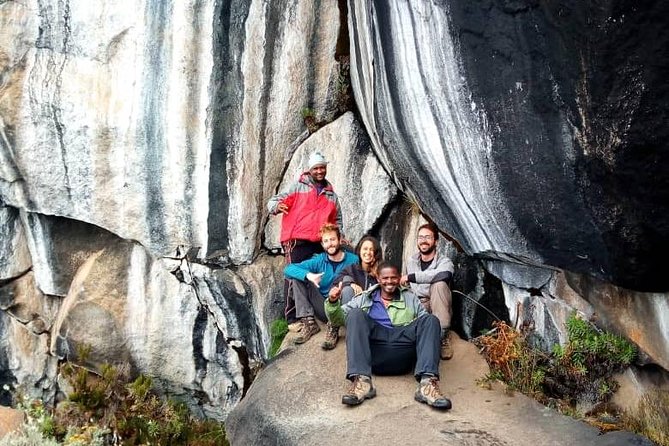
The route changes again as you leave Horombo. Vegetation becomes sparse, the ground grows stonier, and the surroundings feel dry and exposed. You pass the Last Water point and cross the Saddle, the broad high area between Mawenzi and Kibo.
This stretch takes about five to seven hours. The Saddle is not a place for rushing. It is open, stark, and exposed to the mountain weather, with little shelter along the way. Keep your water, warm clothing, sun protection, and snacks easy to reach.
Kibo Hut sits at approximately 4,705 meters. It is a dry-stone-walled hut with dormitories and limited amenities. This is your last sleeping stop before the summit attempt, so the goal is simple: eat, prepare, and rest.
The evening routine is important. Repack your daypack and hand unnecessary items to the porters. You do not want extra weight during the steep midnight climb. Lay out your headlamp or torch, warm layers, gloves, and water before trying to sleep. You will be woken shortly after midnight, so there is little time for a leisurely morning routine.
Day 5: Gillman’s Point and Uhuru Peak
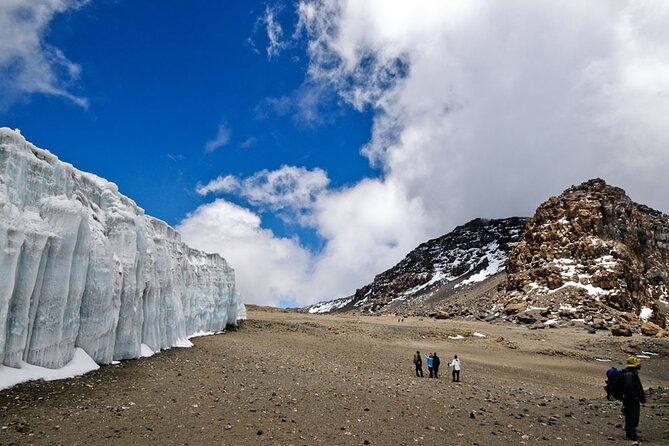
Summit day is the hardest part of the trip. You leave shortly after midnight and climb a long scree slope by torchlight. The frozen scree can be firmer and easier to walk on at this hour, but the slope remains steep and tiring.
After roughly two hours, you reach Hans Meyer’s Cave. About three hours into the climb, the trail reaches Johanne’s Notch and the crater rim. From there, the ascent becomes steeper as you work toward Gillman’s Point at 5,685 meters.
The schedule aims to reach Gillman’s Point near sunrise. That timing gives you the chance to see the first light over the ice fields and Mawenzi’s jagged upper slopes. It also means you are climbing during the coldest and darkest part of the night, so proper personal gear is essential.
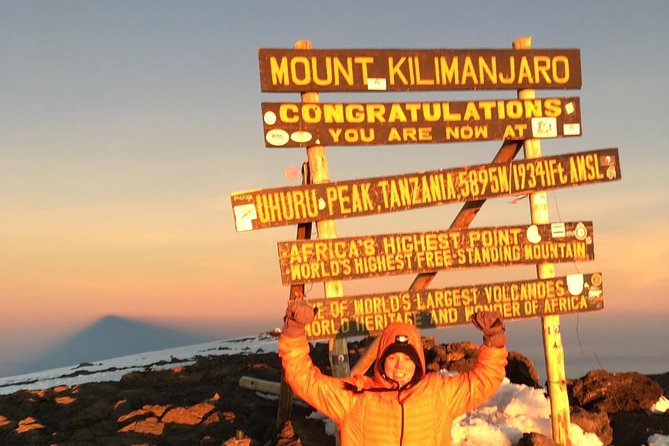
Gillman’s Point is on the crater rim, not the highest point of Kilimanjaro. If you have enough strength and your guide considers conditions suitable, you continue around the rim toward Uhuru Peak, the mountain’s summit. The information supplied for this trip does not provide a separate exact time or distance for the Uhuru section, so expect the full day to vary with pace, weather, and how your body responds to altitude.
The day is listed at about 12 hours. That includes the summit effort and the descent, so it is a serious endurance test even for fit hikers. The descent back toward Kibo can feel easier at first, but tired legs and loose ground require care. After returning to Kibo, the route continues toward Horombo Hut for the night.
This is also the day when your guide’s judgment matters most. A guide can help you maintain a safe pace and assess whether you should continue, rest, or turn back. The strongest praise associated with this experience focuses on the mountain crew, especially the guide’s encouragement and the chef’s support with meals. That kind of practical help is valuable when motivation drops at high altitude.
Day 6: Horombo to Marangu Gate and Moshi
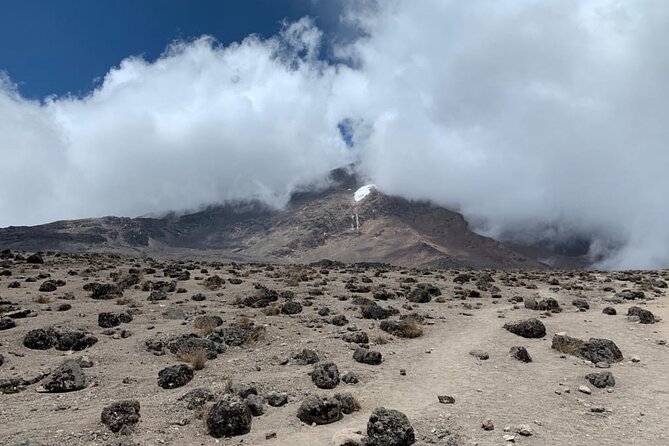
The final day takes you from Horombo back through the alpine meadow and rainforest to Marangu Gate. The descent is around 20.8 kilometers, or 12.9 miles, and takes about eight hours.
You may move faster downhill, but do not treat this as a casual walk. After the summit day, your knees and feet will be tired. Trekking poles, if you bring them, can help, though personal hiking gear is not included in the package.
Breakfast and lunch are included on this day. At Marangu Gate, the climb ends, and private transport returns you to your Moshi hotel. You receive a trekking certificate, a small but fitting reminder of the effort involved.
The route gives you a satisfying change of scenery from rainforest to moorland to high, dry rock, then back down through the forest. The return walk also gives your body time to settle after the summit attempt before the vehicle ride into town.
Hut accommodation, meals, and mountain support
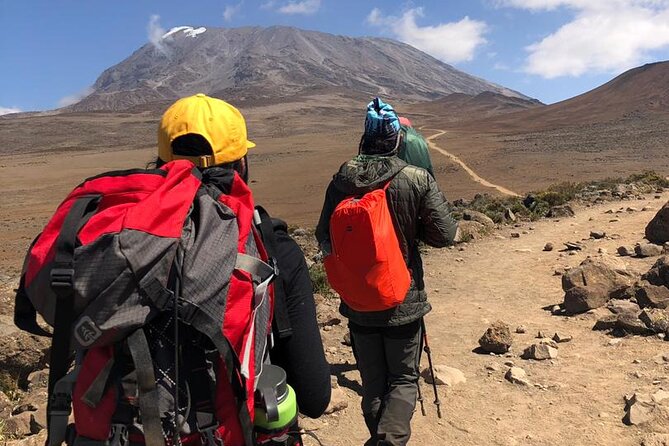
The Marangu Route’s main practical advantage is its huts. You avoid carrying camping equipment and do not need to sleep on the ground. That makes packing simpler and can be a good fit if you prefer a bed in a dormitory to a tent.
The trade-off is privacy. The accommodation is dormitory-style, and Kibo Hut has limited amenities. You should pack with basic mountain conditions in mind, not with the expectations of a lodge.
Breakfast, lunch, and dinner are included during the trek. A chef is part of the support team, and one especially positive account gives strong credit to the chef, porters, and guide. Food is not a minor detail on a climb like this. Regular meals give you energy for long walking days and reduce the amount of planning you need to do on the mountain.
Porters carry shared equipment and other items, but personal hiking gear is not included. You should confirm exactly what the porters will carry and what weight limits apply before departure, since the supplied details do not specify those limits.
What the $1,150 price really covers
At $1,150 per person, this is not an all-in Kilimanjaro holiday. It is the core mountain package.
Included services are:
- Pickup from your Moshi hotel to Marangu Gate
- Return transport from Marangu Gate to your Moshi hotel
- Trek briefing
- Professional Kilimanjaro guide
- Porters
- Hut accommodation
- Breakfast, lunch, and dinner during the trek
- Camping fees
- Trekking certificate
The important omission is all Mount Kilimanjaro park fees. These may be paid directly to the park or through the tour operator, but you need to establish the amount and payment method before booking.
You also pay separately for travel or medical insurance, tips for the mountain crew, airport transfers, hotels in Moshi before and after the trek, flights, and personal hiking gear. The tour does offer mobile tickets, and booking confirmation is provided at the time of reservation.
I would ask for a written cost breakdown with the park fees added. That gives you a fair comparison with competing six-day climbs. A lower headline price can lose its advantage once required fees and hotel nights are added.
Who should choose this climb
This route suits you if you want the classic Kilimanjaro experience with hut accommodation and a direct return from Moshi. It is also a sensible choice if you value having your own private party and want a full rest and acclimatization day at Horombo.
The six-day schedule is still demanding. You need to be prepared for long walking days, cold conditions, a midnight start, and a summit above 5,800 meters. The activity information says most travelers can participate, but it does not remove the need for personal fitness, medical advice when appropriate, and suitable equipment.
This may not suit you if you want a relaxed mountain holiday, private rooms, or a short summit day. It is also not ideal for anyone who has not budgeted for park fees, insurance, tips, hotels, and gear beyond the listed price.
The advertised maximum is 90 participants, while the experience is presented as a private-party climb. Ask how your booking will be organized and how many people will actually be in your own group. That detail affects the feel of the climb and the amount of direct attention you receive.
Booking advice and cancellation terms
Free cancellation is available up to 24 hours before the start time for a full refund. Changes or cancellations made less than 24 hours before the start are not accepted for a refund.
The experience requires good weather. If poor weather causes cancellation, you are offered another date or a full refund. Since mountain conditions can change, keep some flexibility in your wider Tanzania schedule if possible.
Should you book the Marangu Route?
I would consider this trip if you want a six-day Kilimanjaro climb with huts, meals, porters, and private Moshi transfers at a clearly explained total price. The extra Horombo day is the strongest feature, and the guide and crew support can make a real difference during the summit push.
Before booking, get the park fees in writing, confirm the actual size of your private group, and check what personal equipment you must supply. If those costs fit your budget and you are ready for a 12-hour summit day, this is a practical route to Uhuru Peak. If you want more time for altitude adjustment or a less compressed schedule, compare it with a longer route before making your choice.
FAQ
Where does the Kilimanjaro climb begin?
The climb begins with pickup from your hotel in Moshi and a drive to Marangu Gate. Registration is completed at the gate before you start hiking.
How long is the Marangu Route experience?
The experience lasts approximately six days. The itinerary includes five nights on the mountain before returning to Moshi on day six.
Where do I sleep during the climb?
You sleep in dormitory-style huts at Mandara Hut, Horombo Hut, and Kibo Hut. Kibo Hut is at about 4,705 meters and has limited amenities.
Is an acclimatization day included?
Yes. Day three is spent at Horombo Hut, with a four to five-hour round-trip walk toward Mawenzi Peak. The walk reaches about 4,600 meters before returning to Horombo.
Are meals included?
Breakfast, lunch, and dinner are included during the trek. Breakfast and lunch are specifically included on the final day.
What is not included in the price?
Park fees, travel or medical insurance, tips for the mountain crew, airport transfers, hotels before and after the trek, flights, and personal hiking gear are not included.
Can I cancel for a refund?
You can cancel at least 24 hours before the start time for a full refund. If poor weather causes the activity to be canceled, you are offered a different date or a full refund.
Newly listed around Moshi & Kilimanjaro
- Climb Mount Kilimanjaro: 7 Days Machame Route★ 5.0 · 3 reviews
- 6 Days Mount Kilimanjaro Climbing via Rongai Route★ 5.0 · 3 reviews
- Explore 1 day Ngorongoro Crater Budget Group Safari from Arusha★ 5.0 · 3 reviews
- Mt. Kilimanjaro Day Hiking★ 5.0 · 3 reviews
- Chemka (Kikuletwa) Hot Springs, Tanzania★ 5.0 · 3 reviews
- Guided City tour of Moshi★ 4.3 · 3 reviews
- 8 Day Tanzania Family Safari★ 5.0 · 3 reviews
- Serengeti Safari with Sirikwa Travel★ 5.0 · 3 reviews
Kilimanjaro Climbs, compared.








Browse the lists this tour appears in