
Reviewed · KILIMANJARO CLIMBS
#1. Kilimanjaro 5-days hiking Marangu joining tour
Kilimanjaro’s Marangu Route gives you a clear, classic path to Africa’s highest point, moving from monkey-filled rainforest to stark alpine desert and finally the icy summit zone. The five-day plan uses huts rather than tents, which makes the trip simpler and more comfortable at night.
I like the chance to pause at Horombo Hut, where you can rest among the peaks before the summit push. I also like the strong practical support: guide, cook, waiter, porters, meals, water, and transport are arranged for you. The main caution is cost. The advertised $675 price excludes park fees, and you should budget for an additional $750 before hiking.
Key points at a glance
- Mandara Hut begins the climb in rainforest, with an optional walk to Maundi Crater.
- Horombo Hut provides the main rest stop, with views toward Kibo and Mawenzi.
- Kibo Hut sets up the midnight summit attempt, so expect an early night and a very long fourth day.
- Uhuru Peak requires serious effort, with up to 15 hours of walking on summit day.
- Shedrack is one named guide connected with the experience, and guide and support staff handle practical needs throughout.
- The $675 price does not include park fees, with an additional $750 noted before the hike.
From Marangu Gate into the rainforest
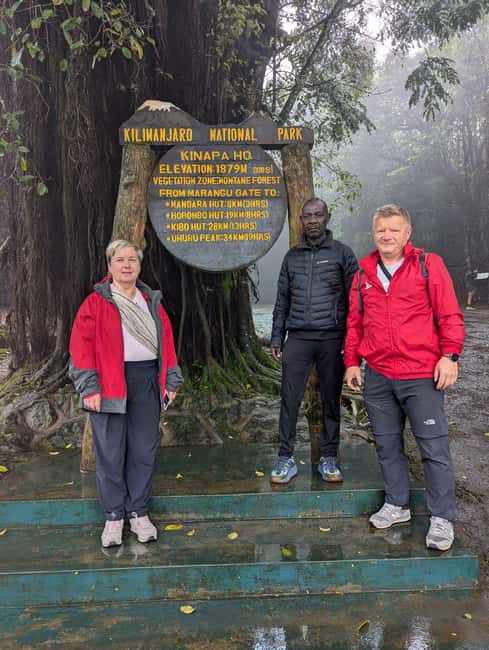
Your hike starts with a transfer from your Moshi or Arusha hotel to Marangu Gate. Registration comes first, then the trail enters thick rainforest at about 1,870 meters.
This first day covers only 8 kilometers, but it is not a throwaway warm-up. You are gaining roughly 850 meters in altitude, and the forest keeps the path shaded and damp. You might spot monkeys and unusual plant life along the way, though wildlife sightings are not guaranteed.
The destination is Mandara Hut at 2,720 meters. Reaching a hut instead of setting up camp is one of the route’s practical advantages. You have a fixed place to rest, eat, and organize your gear after four to five hours on foot.
If your energy and timing allow, take the optional short walk to Maundi Crater. It adds interest without turning the first day into a major test, and it offers broad views from above the forest. Ask your guide about the timing before setting out, since the extra walk should fit comfortably into the day rather than leave you rushing into dinner.
More Hiking Tours in Moshi
- Private Kilimanjaro Hike 7 Day Lemosho Route
★ 5.0 · 60 reviews - Best Kilimanjaro hiking day trip tour with Kilinge Adventures
★ 4.5 · 54 reviews - #1. Best Kilimanjaro Day hike Tour-Machame Route-ISMANI
★ 4.2 · 47 reviews
Mandara to Horombo, where the mountain opens up
Day two is longer, covering 12 kilometers in six to seven hours. You leave the rainforest behind and enter heathland and moorland, where the trees thin and the views widen.
This change in scenery is one of the best parts of the route. Kibo and Mawenzi peaks begin to define your surroundings, and the trail feels more like a high mountain path than a forest walk. The steady ascent takes you from 2,720 meters to 3,720 meters, so your walking pace matters.
I would follow the familiar mountain rule here: go slowly, drink regularly, and do not race stronger members of the group. The supplied drinking water helps, but you still need to manage your own bottle or hydration system and keep drinking before you feel thirsty.
Horombo Hut is the busiest-feeling stop on this itinerary because it serves as a base for climbers on the mountain. That can be useful. You have a chance to share the hut environment with other people, compare notes, and settle into the rhythm of high-altitude trekking.
The drawback is that the five-day schedule does not give you a separate acclimatization day at Horombo. You spend one night here, then continue to Kibo Hut on day three. If altitude affects you, this timetable can feel demanding.
The alpine desert and Kibo Hut
Day three covers 10 kilometers in six to seven hours, taking you from Horombo Hut to Kibo Hut at 4,703 meters. The vegetation fades as you cross the alpine desert, leaving a much barer setting and dramatic views toward Kibo Peak.
You pass the Last Water Point, an important marker in the day’s route. From here, the mountain becomes more exposed and spare. There is less visual distraction, and the goal ahead feels very real.
Kibo Hut is where you prepare for the hardest part of the trip. The schedule calls for an early rest before a midnight start, so do not expect a relaxed evening. Eat what you can, arrange your headlamp and warm layers, and keep your summit clothing within easy reach.
Your sleeping bag is not included, so you need to bring one. A sleeping mattress and camping equipment are listed as included, but the route uses hut accommodation, so ask the operator exactly what equipment is supplied and what you must carry yourself before departure.
Uhuru Peak and the long fourth day
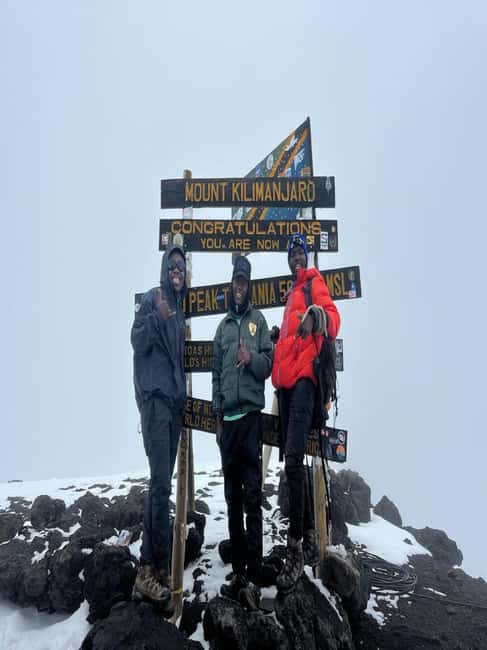
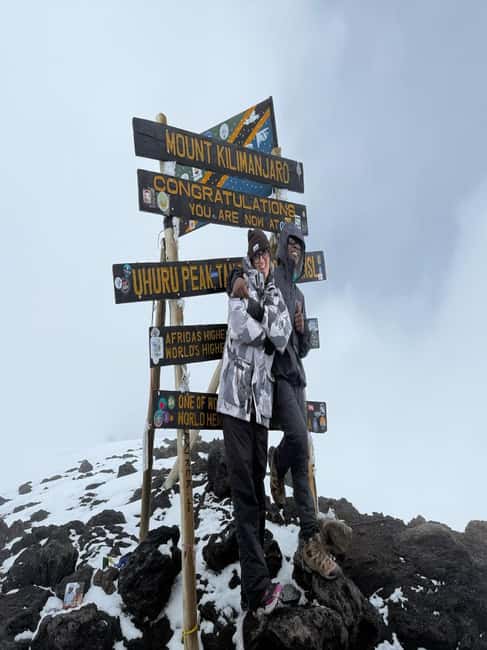
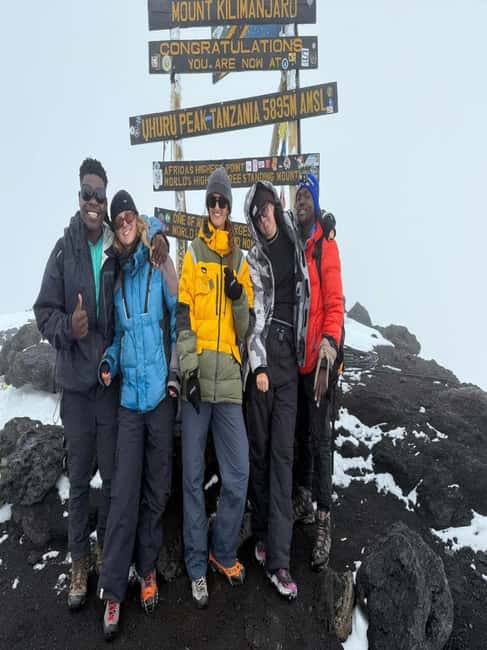
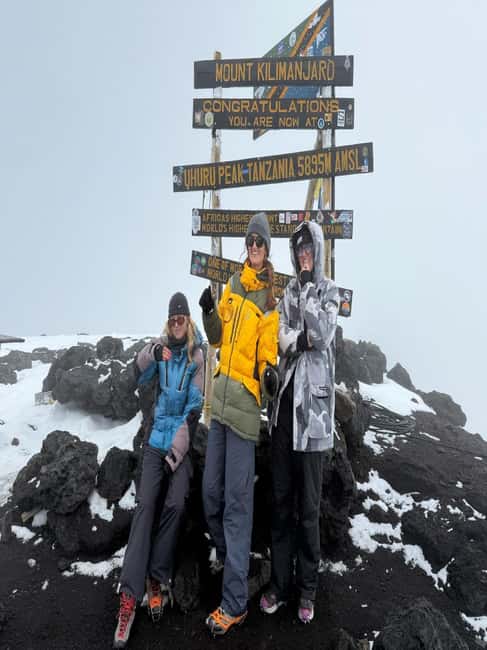
Summit day begins around midnight. You walk under starlight toward Gilman’s Point at 5,681 meters, aiming to arrive around sunrise. From there, the route continues along the crater rim to Uhuru Peak at 5,895 meters, the highest point in Africa.
This is a serious physical test. The stated distance is 22 kilometers, and the hiking time is 11 to 15 hours, including the descent. You first climb from Kibo Hut to the summit zone, then return to Kibo Hut for lunch and a rest before continuing down to Horombo Hut.
The route passes through an arctic zone near the top, then returns to heathland. That rapid change in temperature and altitude is why your clothing system matters. Bring the listed jacket and gloves, plus a headlamp or flashlight, and keep them accessible rather than buried in your main luggage.
The summit is not simply a photo stop. Thin air, fatigue, cold, and the length of the day all work against you. If you feel sick, tell your guide immediately. One useful strength of this operation is the level of personal support reported on the mountain. Makoto described a guide and waiter carrying luggage, offering food, and advising on medicine when high altitude caused illness.
That kind of attention matters. A guide cannot remove altitude problems, but prompt support can help you make a safer decision about slowing down or turning back. Do not treat reaching Uhuru Peak as more important than your health.
After the summit, you return to Kibo Hut for lunch and rest, then walk on to Horombo Hut. This final section can feel surprisingly hard because your legs have already done the steepest work. The reward is a lower sleeping altitude and a chance to recover before the final descent.
More Kilimanjaro routes:
- Kilimanjaro climb by Lemosho Route (7-day)
★ 5.0 · 651 reviews - Kilimanjaro climb, Machame Route (7-day)
★ 5.0 · 262 reviews - Kilimanjaro Climbing Lemosho Route 8 Days.
★ 5.0 · 186 reviews - Climbing Kilimanjaro – Machame Route
★ 5.0 · 170 reviews
The return through forest to Marangu Gate
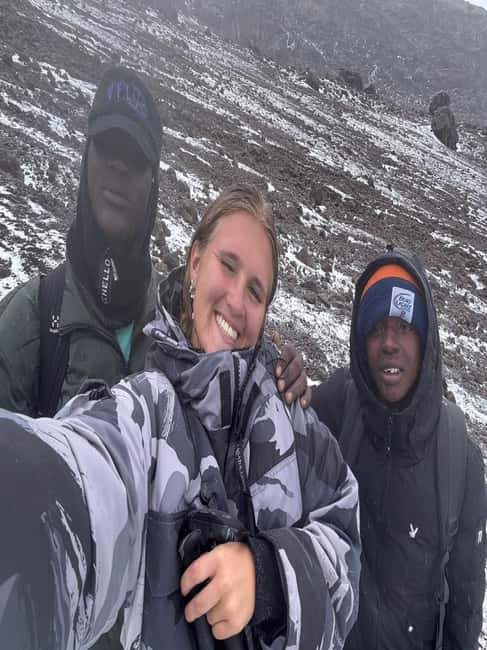
Day five drops from Horombo Hut at 3,720 meters to Marangu Gate at 1,870 meters. The distance is 20 kilometers, with five to seven hours of walking through heathland and back into rainforest.
Descending is easier on your breathing, but it can be tough on your knees and feet. Good hiking shoes are essential, and trekking poles may be useful if you already use them, though poles are not specifically listed among the included items.
The return through the forest gives you a gentler final view of the route. You see the vegetation change again as the air becomes warmer and the trail loses altitude. At Marangu Gate, you receive a summit certificate before the drive back to Moshi or Arusha.
That transfer closes a demanding trip in a practical way. You do not need to arrange your own return transport, and you can head back for a proper celebration after five days on foot.
What the $675 price really covers
At $675 per person, the package includes several important services:
- Hut accommodation
- An English-speaking professional guide
- Transport from your Moshi hotel to the gate
- Transportation connected with the itinerary
- Meals listed in the schedule
- Drinking water
- Camping equipment
- A sleeping mattress
The staff support is a major part of the value. The operation includes more than a guide alone, with porter and food service support described in the experience details. Harrison also received airport assistance and round-the-clock help, but airport support is not clearly listed among the formal inclusions, so confirm it before relying on it.
The price needs careful reading. National Park fees are not included, and an additional $750 was required before hiking in one reported case. That means your practical budget could be about $1,425 per person before travel insurance, alcoholic drinks, and personal gear.
This is the most important booking question. The $675 headline price looks attractive, but the park fee changes the total sharply. Ask for the full amount in writing, including taxes, transfers, permits, staff costs, and any extra charges. The provided information confirms that park fees are separate, but does not explain every part of the $750 figure.
Travel insurance is also your responsibility. Alcoholic drinks are not included, which is hardly a problem on the trail, but it matters if you are planning a celebration afterward.
Guides, food, and day-to-day support
The tour provides an English-speaking guide, meals, water, hut accommodation, and support staff. Those basics matter more on Kilimanjaro than fancy extras. You need someone to keep the group moving at a sensible pace, explain the route, watch for altitude problems, and coordinate meals and sleeping arrangements.
Shedrack is one named guide associated with this experience. Andrea singled him out as an excellent guide. If you book, ask whether Shedrack is available or who will lead your departure, since guide assignments can vary.
The food details are limited, so do not assume a special menu or unlimited snacks. Bring any preferred trail food that you know you can eat at altitude, but check what is allowed and practical. The experience includes meals as indicated in the itinerary and drinking water, not every snack or personal drink.
Support can also mean help with your luggage. Makoto’s experience shows that staff may step in when altitude sickness makes carrying a bag difficult. Still, pack light and bring only what you need. Your daypack should hold water, warm layers, a flashlight, gloves, and personal items, while the rest of your kit can be handled according to the operator’s arrangements.
Packing for five days above 5,000 meters
The stated packing list is short, but the summit day requires careful preparation. Bring:
- Hiking shoes
- A warm jacket
- Gloves
- A sleeping bag
- A flashlight or headlamp
- A daypack
- Trekking gear
- A power bank
The power bank is a smart addition because charging access in mountain huts is not specified. Treat it as essential if you rely on your phone for photos, communication, or navigation.
Your hiking shoes should be comfortable before you arrive. Do not bring brand-new footwear for an 11 to 15-hour summit day. Keep your jacket, gloves, flashlight, and water easy to reach at Kibo Hut.
The supplied details do not list a full clothing system, rain protection, sun protection, or first-aid supplies. Ask Kilinge Adventures for its complete packing list before leaving home. The provided list is a starting point, not proof that it covers every condition on the mountain.
Who this five-day route suits best
This tour suits you if you want a structured Kilimanjaro climb with hut accommodation, organized meals, transport, and a professional guide. It also works well if you prefer not to manage every permit, transfer, and support detail yourself.
The route is not ideal if you want a slow acclimatization program. Five days is a tight schedule, and the summit day is exceptionally long. The night at Horombo provides some rest, but it is not a full extra day for adjusting to altitude.
You should also be comfortable with changing conditions. The route moves from rainforest to heathland, moorland, alpine desert, and arctic terrain. That variety is the appeal, but it means your clothing and pacing must be flexible.
The experience has a strong record in the supplied rating, with an overall score of 4.8 from four ratings. The highest praise focuses on helpful staff, strong organization, and personal care when altitude sickness became a problem. The lower score does not criticize the mountain experience itself. It points to the need for clearer warning about the separate park fee.
Should you book this Marangu climb?
I would consider booking this tour if you want the classic Marangu route and value a team that handles transport, huts, food, water, and mountain support. The rainforest start, Horombo rest stop, alpine desert, and Uhuru summit attempt give you a full Kilimanjaro experience in five demanding days.
I would not book it based on the $675 price alone. Confirm the full cost first, especially the additional $750 park fee, and ask for the complete gear list and guide assignment. If you accept the short acclimatization schedule and are ready for a very long summit day, Kilinge Adventures offers a practical, well-supported way to attempt Kilimanjaro.
FAQ
How long is the Kilimanjaro Marangu tour?
The tour lasts five days, beginning and ending with transport between Moshi or Arusha and Marangu Gate.
What is the price per person?
The listed price is $675 per person. National Park fees are not included, and an additional $750 was reported as payable before the hike.
Are National Park fees included?
No. National Park fees are specifically excluded from the listed price.
Where do you sleep during the hike?
You stay in mountain huts, including Mandara Hut, Horombo Hut, and Kibo Hut. A sleeping mattress is included, but you need to bring your own sleeping bag.
Is a guide included?
Yes. A professional English-speaking guide is included. Shedrack is one guide associated with this experience.
What happens on summit day?
You start around midnight from Kibo Hut, reach Gilman’s Point, continue to Uhuru Peak, return to Kibo Hut for lunch and rest, then continue down to Horombo Hut. The day covers about 22 kilometers and can take 11 to 15 hours.
Are meals and drinking water included?
Yes. Meals indicated in the itinerary and drinking water are included.
What should you bring?
Bring hiking shoes, a jacket, gloves, a sleeping bag, a flashlight, a daypack, trekking gear, and a power bank. Ask the operator for its full packing list before departure.
More Hiking Tours in Moshi & Kilimanjaro
- Best Kilimanjaro Adventure 7 days Machame route Trekking
★ 5.0 · 42 reviews - Kilimanjaro 7 Day Private Trekking Experience
★ 5.0 · 40 reviews - 8 Days Kilimanjaro Hike via Lemosho Route
★ 5.0 · 39 reviews - The Best & Unique Kilimanjaro Hiking tour 7 days Machame route
★ 5.0 · 34 reviews
Newly listed around Moshi & Kilimanjaro
- Climb Mount Kilimanjaro: 7 Days Machame Route★ 5.0 · 3 reviews
- 6 Days Mount Kilimanjaro Climbing via Rongai Route★ 5.0 · 3 reviews
- Explore 1 day Ngorongoro Crater Budget Group Safari from Arusha★ 5.0 · 3 reviews
- Mt. Kilimanjaro Day Hiking★ 5.0 · 3 reviews
- Chemka (Kikuletwa) Hot Springs, Tanzania★ 5.0 · 3 reviews
- Guided City tour of Moshi★ 4.3 · 3 reviews
- 8 Day Tanzania Family Safari★ 5.0 · 3 reviews
- Serengeti Safari with Sirikwa Travel★ 5.0 · 3 reviews
Kilimanjaro Climbs, compared.








Browse the lists this tour appears in