
Reviewed · STONE TOWN TOURS
Zanzibar: Stone Town Tour with Slave Market Ticket
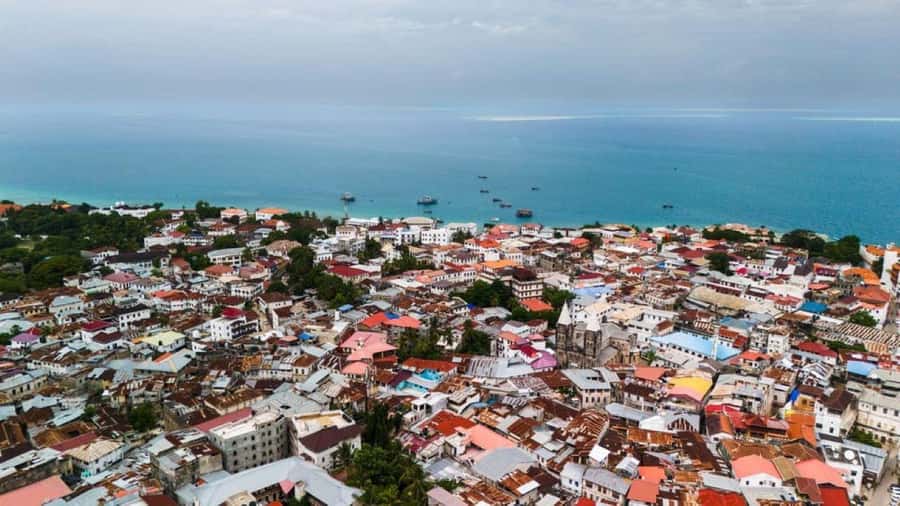
Stone Town’s narrow lanes tell two very different stories at once. You’ll see carved Zanzibar doors, grand balconies, old palaces, and busy market stalls, while the former Slave Market forces you to face the painful trade that helped shape East Africa. The tour also reaches the Old Fort, Forodhani Gardens, and Freddie Mercury’s former home.
I like the Slave Market ticket included in the $29 price, and I like the way the walk links Swahili, Arab, Indian, European, and Portuguese influences in one compact area. The main concern is consistency: one guide named Mbwana received strong praise for history and practical help, while other reports describe a late start, hard-to-understand English, and a shorter tour.
Key points to know before booking
- The former Slave Market begins the tour: The included admission gives the walk a serious historical focus from the start.
- Expect three hours on foot: Stone Town’s lanes, market, and shopping streets are the route, so comfortable shoes matter.
- Mbwana is the guide to hope for: He is praised for clear explanations, useful answers, shopping help, and restaurant suggestions.
- Freddie Mercury’s museum costs extra: The tour visits his former home, but museum entry is about $8 per person.
- Darajani Market adds everyday Zanzibar: Fruit, vegetables, fish, meat, spices, and local foods bring the city beyond its grand buildings.
- The $29 price is fair if the tour runs fully: Confirm the included Slave Market ticket at the start, since one booking required a second $5 payment.
Why Stone Town works best on foot
Stone Town is not a city you understand from a vehicle window. Its famous lanes are narrow, twisting, and full of small details: carved doors, balconies, old walls, shopfronts, and sudden views toward larger landmarks. A guide helps you connect those pieces instead of simply walking past them.
The city was declared a UNESCO World Heritage site in 2000. Its character comes from several cultures meeting over centuries. Swahili traditions mix with Arab and Indian design, along with European and Portuguese influence. That blend appears in the buildings, religious sites, markets, food, and trading history.
The three-hour format gives you a useful first look without taking an entire day. You’ll cover major landmarks, stop at the former Slave Market, visit Darajani Market, and have time for coffee and shopping. The tradeoff is pace. You should not expect long interior visits at every building or a slow architectural study of each lane.
More Stone Town walks:
- Zanzibar: Stone Town, Spice Tour, Prison Island with Lunch
★ 4.4 · 1,219 reviews - Zanzibar: Prison Island, Stone Town, & Spice Farm Tour
★ 4.5 · 579 reviews - Zanzibar; Prison Island, Nakupenda, StoneTown Tour with BBQ
★ 4.3 · 457 reviews
Beginning at the former Slave Market
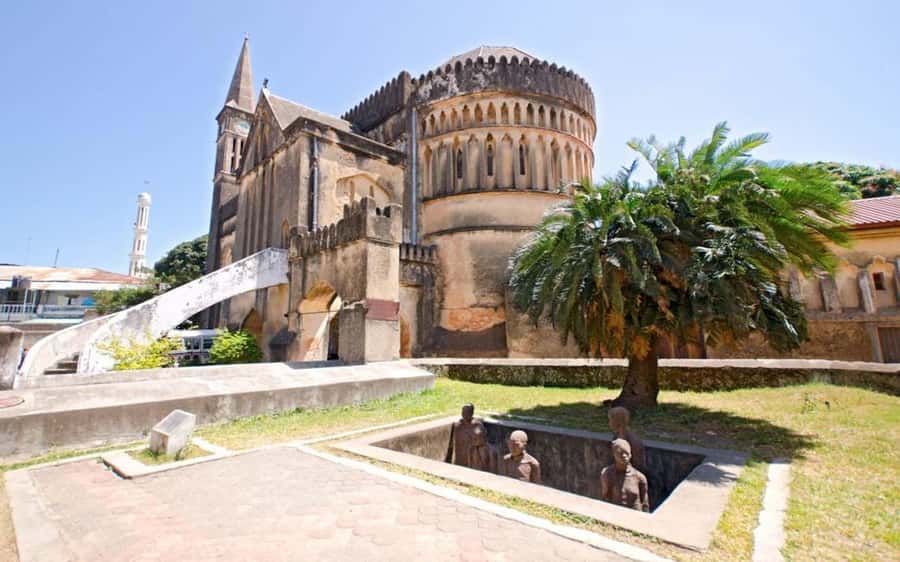
The former Slave Market, now home to the Anglican Cathedral, is the most important stop on the route. It gives the tour moral weight and context before the lighter parts of Stone Town begin.
Your guide explains the East African slave trade and the trade routes that connected Zanzibar with wider parts of the region. You also learn about Dr. David Livingstone and missionaries who worked against the trade. This is not a decorative history stop. It deals with suffering, forced movement, and the economic systems that shaped Zanzibar.
The included entry ticket is a real benefit. Admission is listed as part of the $29 cost, so you should not normally need to pay again. One booking reported paying another $5 at the site, though, so I would confirm the ticket with your guide before entering. Keep your booking details handy rather than assuming the matter will sort itself out.
Allow yourself to listen carefully here. The subject is heavy, and the quality of the explanation matters. A good guide can help you understand why Zanzibar became so important in East African trade and why the cathedral occupies this particular site.
Darajani Market and the everyday city
From the former Slave Market, the walk continues to Darajani Market, established in 1904. This is where Stone Town shifts from grand landmarks to daily business.
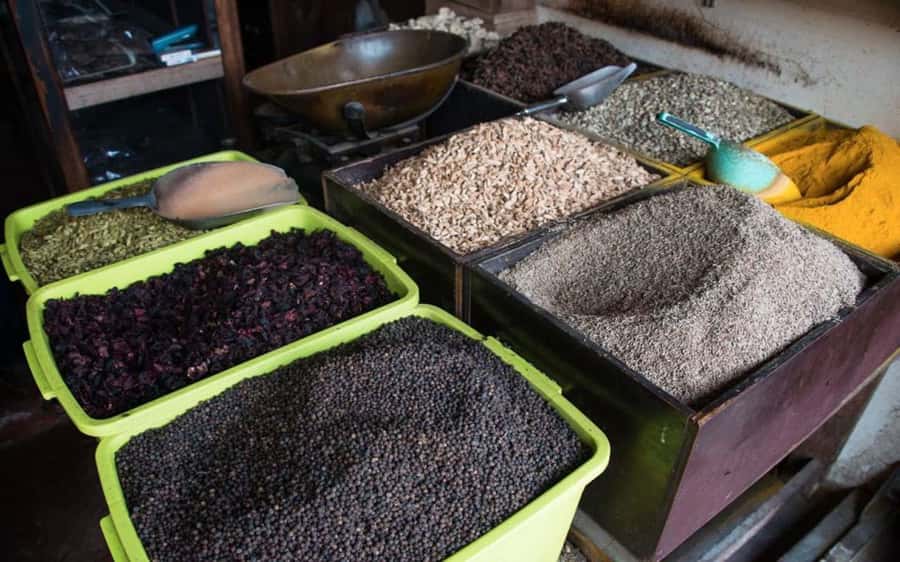
You’ll see stalls filled with fresh fruit, vegetables, meat, fish, and spices. The market is a useful counterpoint to the palaces and museums. Zanzibar is not only a place of sultans and explorers. It is also a working city where people shop, sell food, and move through the day.
This part of the tour is good for your senses and your camera, but you should follow your guide’s lead. Market floors can be crowded, and fish, meat, and strong spices are part of the setting. If you want to sample local delicacies or buy something, the guide can help you understand what you are seeing.
The market is also a possible time pressure. Three hours passes quickly, and shopping can easily expand into a longer stop. I would treat purchases as optional unless the guide clearly allows time for them.
A coffee pause in the narrow lanes
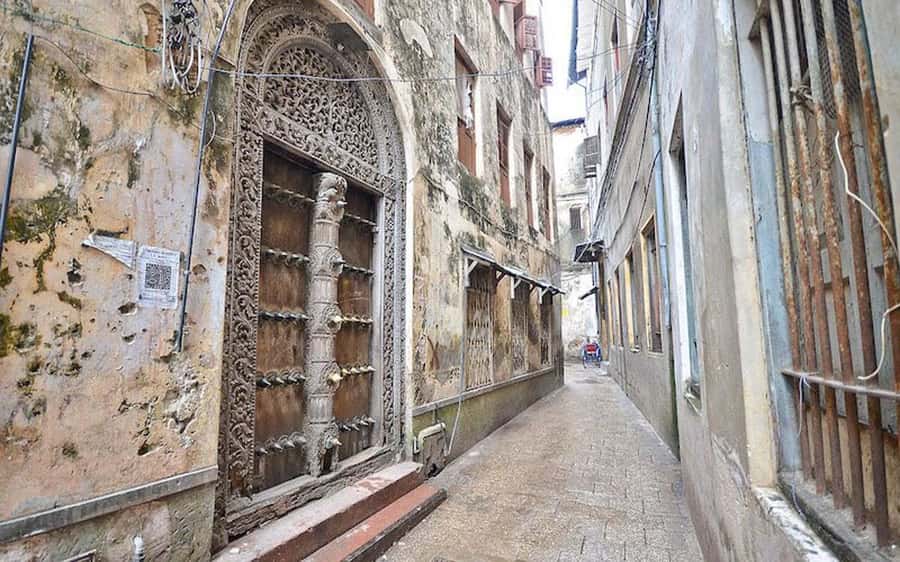
After Darajani Market, you walk through Stone Town’s narrow streets toward Zanzibar Coffee House. The stop gives you a chance to sit down with a cup of local coffee and reset before the next group of landmarks.
Coffee is not included as part of the tour description, so plan to pay for your own drink. The value here is not just the cup. It breaks up a walking route that includes markets, historical sites, and shopping streets.
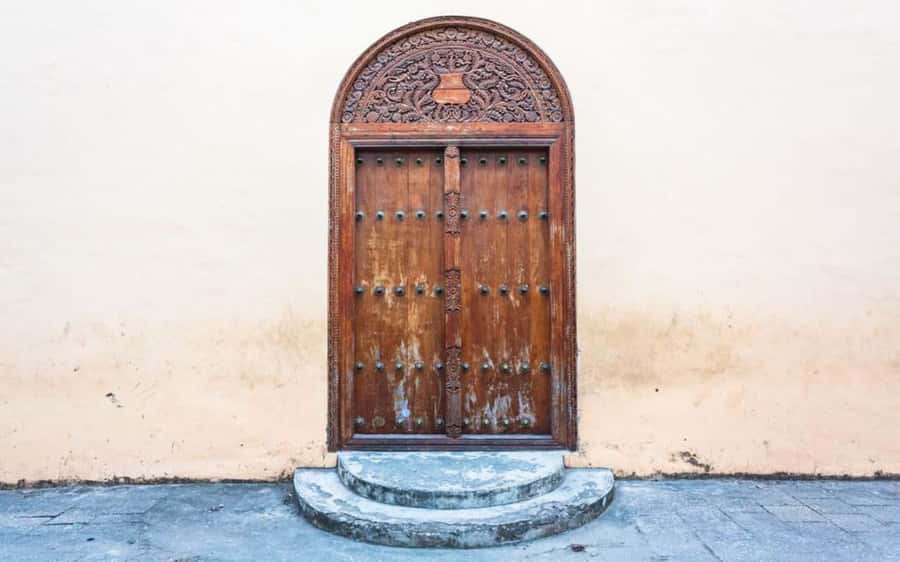
The lanes themselves are part of the attraction. Look for Zanzibar’s carved doors and the balconies attached to older buildings. They show how local Swahili design absorbed Arab and Indian influences. The route is best enjoyed slowly, but the stated duration means you may need to keep moving.
The walk is not suited to someone who wants a bus tour or a mostly seated outing. The tour information specifically describes three hours of walking through Stone Town’s lanes and shopping areas. Wear practical shoes and carry water, although a bottle is provided.
Other visits to the slave trade history sites:
- Stone Town Guided Tour: Culture, Slave Market & Spice Market
★ 4.8 · 44 reviews - Spice , Prison Island ,Stone Town and Slave Market Site Tour
★ 5.0 · 24 reviews - Stone Town Private Tour with Slave Market Tickets
★ 5.0 · 13 reviews - Zanzibar: Stone Town Heritage & Slave Market Tour
★ 4.4 · 7 reviews
Sultan’s Palace and the old sultanate
The Sultan’s Palace offers a look at Zanzibar’s royal past. Its rooms and setting point to the period when the island was governed by a sultanate with major links to the Indian Ocean trade.
This stop helps explain the contrast between wealth and hardship in Stone Town. Grand residences and ceremonial buildings existed alongside markets and the slave trade. A guide can make those connections clearer than a quick visit on your own.
The palace is also one reason a guided walk offers more value than simply buying a map. The buildings do not explain themselves, and the city’s history can become confusing when Swahili, Arab, Indian, European, and Portuguese influences overlap.
Do not expect a full museum day here. The entire tour lasts only three hours, and the palace is one stop among many. The strength of this route is breadth, not long visits inside each landmark.
Forodhani Gardens and Zanzibar food
Forodhani Gardens is known as an evening meeting place, with local food sold around the waterfront area. The tour points out dishes and drinks such as seafood, barbecues, sugarcane juice, and Zanzibar pizza.
The timing matters. A three-hour tour may pass through before the gardens reach their evening peak, so your exact food experience depends on the start time. The activity description lists starting times based on availability, rather than promising a particular evening food session.
Still, the guide can help you return later with a better sense of what to try. Zanzibar pizza is a local specialty, and sugarcane juice offers a simple taste of the island’s street-food culture. Personal expenses are not included, so carry money if you want to eat or drink.
This is a pleasant change of mood after the former Slave Market. That contrast is one of the tour’s strengths. Stone Town carries difficult memories, but it is also a living place where people meet, cook, shop, and socialize.
House of Wonders and the Old Fort
The House of Wonders, also known as Beit el-Ajaib, is one of Stone Town’s best-known landmarks. It is described as the tallest building in East Africa and has a ceremonial past tied to Zanzibar’s rulers.
You’ll hear stories connected with the building and its formal role. The word wonders in its name hints at the sense of spectacle it was meant to create. Even if you only see it as part of a walking route, it gives you a strong visual marker for the city’s royal district.
The nearby Old Fort adds a different layer. It has served as a battleground, a primitive railway station, and more. Its changing use shows how Stone Town’s buildings have been adapted over time rather than preserved as frozen monuments.
The fort is also a practical place to orient yourself. From here, the route moves toward Freddie Mercury’s former home and then to the French Catholic Cathedral. Your guide should help you keep the sequence clear, since the lanes can feel similar after several turns.
Freddie Mercury’s home and the extra museum fee
The tour visits the home associated with Freddie Mercury, the Queen frontman. You can learn about his connection to Zanzibar and take photos near his childhood home.
This is a quick cultural stop rather than the main purpose of the walk. Fans may want more time, but the route does not include admission to the Freddie Mercury Museum. Entry costs approximately $8 per person, paid separately.
That extra fee matters when you compare the total cost. At $29, the tour already includes a guide, bottled water, and the former Slave Market admission. Add the museum and any food, coffee, shopping, or transport, and your final spending rises.
I would book the museum only if Freddie Mercury is a main reason for your visit. Otherwise, the exterior stop gives you the connection without adding to the cost.
Notre Dame and the final shopping walk
The French Catholic Cathedral, or Notre Dame of Zanzibar, is described as beautifully sculpted and located in the heart of Stone Town. Its presence adds another religious and architectural layer to the route.
Along with the Anglican Cathedral at the former Slave Market, it shows how different faiths have left their mark on the city. You are not just ticking off buildings. You are seeing how Zanzibar’s history appears through places of worship, royal residences, markets, and public spaces.
The walk ends with more narrow streets, souvenir shops, and boutiques before you return to your pickup point or hotel. This is a good place to buy something if you have already seen the market and have a clearer idea of what you want.
Shopping can be enjoyable, but it may also be the least structured part of the tour. If you prefer a firm historical ending, ask your guide to finish with the cathedral before spending time in the shops.
Guide quality matters more than usual
A Stone Town walking tour depends heavily on the person leading it. The strongest feedback names Mbwana as an excellent guide who explains Zanzibar and Stone Town’s past clearly, answers questions, helps with purchases, and suggests restaurants and activities for the rest of your stay.
That kind of local help can add real value. You can ask about food, places to visit, and practical shopping decisions while you are already in the city. The guide’s input may be especially useful if this is your first day in Zanzibar.
But the service record is not perfectly steady. One account describes the guide failing to appear at the arranged time, with a replacement arriving about 40 minutes later. Another describes a one-hour tour, unanswered questions, and a second payment for the Slave Market ticket. English was also difficult to understand in one case.
I would not ignore those warnings. Confirm your pickup time, check that you have a working contact number, and verify the included ticket at the beginning. If the tour starts late, ask how the guide will cover the promised stops within three hours.
English, French, German, and Italian are available. If language clarity is important to you, state your preferred language when booking and confirm it before the walk begins.
Is $29 a good value?
At $29 per person, the price is reasonable for a three-hour guided walk that includes the former Slave Market admission and bottled water. You are paying for context and navigation as much as for entry tickets.
The value is strongest if you want a broad introduction to Stone Town in one morning or afternoon. You see the major landmarks, market, palace area, old fort, cathedral, food district, and shopping lanes without having to plan the route yourself.
The value falls if the tour is shortened or poorly organized. A one-hour walk does not offer what you paid for, especially if you also have to pay the Slave Market fee again. The Freddie Mercury Museum is another extra cost, and hotel transfer is not included unless arranged separately.
Free cancellation up to 24 hours before the start and reserve-now, pay-later booking make it easier to keep plans flexible. Pickup is included from a Stone Town hotel, while transfer from elsewhere is available on request rather than automatically included.
Who should book this Stone Town walk?
I would choose this tour if you want a compact introduction to Zanzibar’s capital and prefer learning the setting as you walk. It suits first-time visitors, history-minded visitors, architecture fans, food-curious visitors, and Queen followers who want to see the Freddie Mercury connection.
It is also useful early in a Zanzibar trip. Advice about restaurants, activities, and shopping can help you plan the remaining days, especially if you get Mbwana as your guide.
I would think twice if you dislike walking, want a private and highly controlled schedule, or need guaranteed guide reliability. The route is not designed as a deep visit to every museum. It is a wide tour of Stone Town’s key places, with the quality resting heavily on the guide.
Should you book it?
Book it if you want the former Slave Market, Darajani Market, Stone Town’s lanes, royal buildings, and major landmarks explained in one three-hour outing. The $29 price is fair when the full route is delivered, and the included Slave Market ticket gives it a useful advantage.
Before setting out, confirm the pickup, preferred language, guide, and Slave Market admission. If those details are clear, this can be an efficient and meaningful first look at Stone Town. If your schedule allows, return to Forodhani Gardens later for food and consider the Freddie Mercury Museum only if the extra $8 fits your interests.
FAQ
How long does the Stone Town tour last?
The tour is scheduled for three hours and involves walking through Stone Town’s narrow streets and shopping areas.
What is included in the $29 price?
The price includes guided tour services, bottled water, and admission to the former East Africa Slave Market.
Is Freddie Mercury Museum entry included?
No. Museum entry is not included and costs approximately $8 per person.
Does the tour visit Freddie Mercury’s former home?
Yes. The route visits the home associated with Freddie Mercury and allows time for photos nearby.
Is hotel pickup included?
Pickup is included from a Stone Town hotel. Hotel transfer can be arranged on request, but it is not generally included outside that provision.
Which languages are available?
The tour offers live guides in English, French, German, and Italian.
What places does the tour visit?
Stops include the former Slave Market and Anglican Cathedral, Darajani Market, Zanzibar Coffee House, Sultan’s Palace, Forodhani Gardens, House of Wonders, Old Fort, Freddie Mercury’s former home, Notre Dame of Zanzibar, and Stone Town’s shopping lanes.
Do I need to pay for food or coffee?
Yes. Personal expenses are not included, so you pay separately for coffee, food, drinks, and shopping.
Is the Slave Market ticket included?
Yes, admission is listed as included. Confirm this with the guide at the start because an additional payment was reported during one booking.
Can I cancel the tour?
You can cancel up to 24 hours in advance for a full refund. Reserve-now, pay-later booking is also available.
More shopping trips in Zanzibar
- Stone Town walking tour, shopping, history and culture
★ 5.0 · 6 reviews - Tanzanite experience tour – Tanzanite shopping in Arusha
★ 5.0 · 12 reviews - 24 Hours in Arusha—Arusha Museum, Cultural Heritage, Maasai Market, Shanga
★ 5.0 · 4 reviews - Full-Day Moshi Private Forest Walk and Local Market Tour
★ 5.0 · 4 reviews
More markets in Zanzibar
- Zanzibar:Stone town Street food market walking tour,transfer
★ 4.5 · 9 reviews - Arusha: Traditional Tanzania Cooking Class & Food Market Tour
★ 5.0 · 34 reviews - Arusha: Traditional Tanzania Cooking class& Food Market Tour
★ 4.9 · 12 reviews - Private Market Tour and Tanzanian Cooking Class in Moshi
★ 5.0 · 7 reviews
Newly listed around Zanzibar
- Zanzibar: Nungwi/Kendwa Beach Sunset Dhow Cruise with Fruits★ 3.4 · 3 reviews
- Prison Island, Sea Turtles, Rock Restaurant & Relax in Beach★ 4.6 · 3 reviews
- Starfish Beach; The Rock; Kuza Cave; Paje Beach; Salaam Cave Tour★ 4.5 · 3 reviews
- Zanzibar: Half-Day Spice Farm Tour,the flavours of Zanzibar★ 4.7 · 3 reviews
- Joazani forest & Spice farm with lunch★ 5.0 · 3 reviews
- Nakupenda Island Snorkeling Sea trip & Lunch W/Transfer -Zanzibar★ 4.0 · 3 reviews
- Mnemba Island Snorkeling and Dolphin tour★ 5.0 · 3 reviews
- Zanzibar:Jozani forest, Spice farm with Swahili Cuisine clas★ 4.2 · 3 reviews
Stone Town Tours, compared.






Full-Day Private Stone Town +Spice Farm and Prison Island Tour
Read our review →
Browse the lists this tour appears in