
Reviewed · KILIMANJARO CLIMBS
Kilimanjaro Machame Route 6 Days
The six-day Machame Route gives you a demanding but well-organized way to reach Uhuru Peak at 5,895 meters. Over five nights on the mountain, you walk about 62 kilometers from gate to gate, passing from rainforest to high alpine and glacial zones before descending through Mweka.
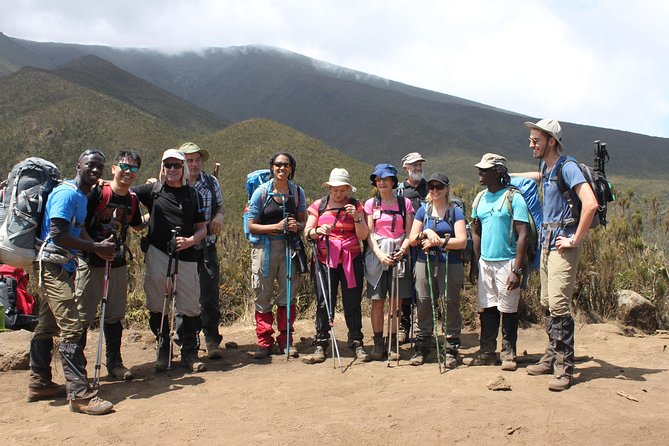
I like the small private-group format, since only your party takes part, and I like the serious safety setup: emergency oxygen, VHF radios, a Gamow Bag, pulse oximeters, and mountain rescue fees are included. Guides Mawra and Samson are named among the team, while the porters and cook handle much of the practical work that keeps camp life moving.
The main caution is the schedule. Six days is the shortest stated duration for this route, so you get less time to adjust to altitude than on a longer climb. You should arrive with good fitness, some hiking experience, and a clear understanding that summit day is physically tough.
Key points to know before booking
- 62 kilometers on foot: You cover about 37 miles from Machame Gate to Mweka Gate over six mountain days.
- A fast six-day schedule: The route includes five nights on the mountain, with altitude gains coming quickly.
- Several climate zones: Expect rainforest on the first and last days, low and high alpine terrain in the middle, and glacial conditions near the summit.
- Strong safety provision: Emergency oxygen, a Gamow Bag, radios, pulse oximeters, and rescue fees are part of the package.
- Private participation: Only your group takes part, with pickup, transfers, meals, porters, and hotel nights included.
- A full-service camp: You receive tents, sleeping mats, dining furniture, warm washing water, purified drinking water, and a portable personal toilet.
What the six-day Machame Route feels like
Machame is often called the Whiskey Route, and the name hints at its character: this is not the easiest way up Kilimanjaro. The path is more demanding than a simple walk, with steep sections, altitude changes, and long summit hours.
Still, the route has a good visual rhythm. You begin in thick rainforest, move into open alpine country, cross the Barranco area, and then enter the stark upper mountain before Uhuru Peak. You do not simply walk uphill for six days. The setting and vegetation change as quickly as your breathing does.
The six-day plan is designed for physically fit people with some hiking experience, though first-time trekkers can complete it if they are properly prepared. I would not choose this schedule for a casual holiday hiker who dislikes long days or has never spent time at altitude.
The private format is useful here. Your group can focus on its own pace and communication rather than joining a large mixed party. You also have experienced English-speaking mountain guides, porters, and a cook supporting the climb.
More Kilimanjaro routes:
- Kilimanjaro climb by Lemosho Route (7-day)
★ 5.0 · 651 reviews - Kilimanjaro climb, Machame Route (7-day)
★ 5.0 · 262 reviews - Kilimanjaro Climbing Lemosho Route 8 Days.
★ 5.0 · 186 reviews
Day 1: Machame Gate to Machame Camp
Your first day starts with a drive to Machame Gate at about 1,640 meters, or 5,380 feet. From there, you climb to Machame Camp, also called Machame Hut, at approximately 2,850 meters, or 9,350 feet.
The stated walking time is five to six hours, covering about 11 kilometers. This is the longest distance of the early days, but the rainforest setting makes it an inviting introduction to Kilimanjaro.
The first day matters because it sets your pace. You are gaining more than 1,000 meters of altitude, so racing ahead would be a poor choice. Keep your steps easy, drink the purified water provided, and use the day to learn how your body responds.
You sleep in waterproof mountain tents rather than a permanent hut. A mess tent, dining tables, chairs with backs and armrests, and warm water for washing are included, which makes the camp routine much more comfortable than a basic backpacking setup.
Day 2: Machame Camp to Shira Camp 2
Day two covers only about five kilometers, or three miles, but still takes around five to six hours. You climb from Machame Camp to Shira Camp 2 at roughly 3,810 meters, or 12,500 feet.
The shorter distance does not make this an easy day. The altitude rises sharply, and the route leaves the rainforest for the low alpine zone. That change is one of the pleasures of Machame: in a single morning, the dense lower vegetation gives way to a more exposed mountain setting.
This is also a day when you need to pay attention to food and hydration. All meals are provided, with large portions of fresh, nutritious food. You do not need to plan mountain cooking or ration your meals, but you should still tell the guide if you are struggling to eat or drink.
The package includes a porter to carry your day-pack during the summit attempt. Do not confuse that with a reason to overpack. Personal expenses such as laundry, telephone use, and beverages are not included, so keep your personal gear and spending needs simple.
Day 3: Shira Camp 2 to Barranco Camp
Day three is one of the longest days, with eight to nine hours of hiking over about 10 kilometers. You move from Shira Camp 2 to Barranco Camp, crossing from the low alpine zone toward the high alpine zone.
The distance is not extreme on paper, but the combination of altitude and duration makes this a serious day. You need patience. A slow, steady pace will serve you better than trying to keep up with the fastest member of the group.
Barranco is an important stopping point because it places you close to the famous Barranco Wall area. The itinerary does not give a separate climbing time for the wall, so you should treat this day as a demanding high-altitude walk rather than assume a short sightseeing stop.
This is where a strong guide team earns its keep. The package includes English-speaking professional mountain guides, VHF handheld radios, pulse oximeters, and emergency equipment. Those items do not remove the risks of altitude, but they give the crew tools to monitor and respond to problems.
More six day trips in Moshi & Kilimanjaro:
- Kilimanjaro climb, Lemosho Route (6-day)
★ 5.0 · 129 reviews - Kilimanjaro climb, Marangu route (6-day)
★ 5.0 · 72 reviews - 6 Days 5 Night Safari
★ 5.0 · 57 reviews - 6 Days Tanzania Classic Safari
★ 5.0 · 52 reviews
Day 4: Barranco to Karanga Valley, then Barafu
Day four is short in distance but packed with altitude gain. You walk from Barranco Camp to Karanga Valley Camp at around 3,995 meters, or 13,106 feet. After lunch, you continue to Barafu Camp at roughly 4,673 meters, or 15,331 feet.
The stated walking time is four to five hours, covering about four kilometers. That is a large ascent over a short distance, so you should expect the altitude to matter more than the mileage.
Karanga provides a midway point before the final push to Barafu. After reaching Barafu, you are in the high alpine zone and close to the start of the summit attempt. The camp is functional rather than leisurely. You need to eat, organize your clothing and equipment, and rest as much as possible.
This compressed timing is a central weakness of the six-day route. The schedule gets you high quickly, but it leaves less room for slow acclimatization. If you are deciding between six days and a longer version of Machame, altitude adjustment should be the main factor, not just the lower price or shorter holiday.
Day 5: Barafu Camp to Uhuru Peak and Mweka Camp
Summit day is the heart of the trip. You climb to Uhuru Peak at 5,895 meters, or 19,341 feet, then descend to Mweka Camp at about 10,000 feet.
The listed hiking time is four to six hours, with a total distance of about 12 kilometers. Because this day combines the summit with a major descent, you should clarify the exact timing with the operator before departure. The provided schedule describes the full route, but summit conditions and group pace can affect the day considerably.
The upper mountain is described as glacial zone, followed by all the earlier zones during the descent. That means cold, exposed conditions near the top and a return through changing terrain as you lose altitude.
You receive a porter to carry your day-pack during the summit attempt. That is a useful inclusion on the hardest day, but you still need to carry personal essentials such as water, layers, and any items your guide requires.
The safety equipment is especially relevant here. Emergency oxygen, a Gamow Bag, pulse oximeters, VHF radios, and mountain rescue fees are included. These are reassuring provisions, but they are not a guarantee against altitude sickness. You should report symptoms early and follow the guide’s instructions.
Day 6: Mweka Camp to Mweka Gate
The final day brings you from Mweka Camp down to Mweka Gate at about 1,640 meters, or 5,340 feet. The descent takes around three to four hours and covers approximately 10 kilometers through rainforest.
After leaving the mountain, you transfer to the hotel for your summit certificate and celebration party. An overnight stay at your previous hotel is included, giving you a proper place to wash, sleep, and recover after the climb.
This last night is more valuable than it might look on a price sheet. After five nights in tents and a demanding summit day, a hotel bed and a scheduled transfer make the return to ordinary life easier. The package includes one hotel night before and one after the trek, with bed and breakfast accommodation.
Camp comfort, meals, and equipment
This is a full-service camping trip, not an independent hike where you carry every item and prepare your own meals. Waterproof sleeping tents, a mess tent, cold-weather sleeping mats, dining tables, large chairs, and crew tents are provided.
Warm water for washing is available each day. You also receive clean, purified drinking water and a portable personal flash toilet. These details matter because comfort and hygiene become more important as the days pass.
All meals are included on the mountain, with six breakfasts, six lunches, and six dinners listed in the package. The food is described as fresh, healthy, nutritious, and served in large portions. You also have a cook with the support crew, so meal preparation is not your responsibility.
The equipment list is one of the strongest parts of the price. Emergency oxygen and rescue fees are not glamorous extras, but they are exactly the type of mountain support you want arranged in advance. Radios help the team communicate, while a pulse oximeter allows oxygen levels to be checked.
The package also promises fair and ethical treatment of porters. That is worth looking for when comparing Kilimanjaro operators. Ask how many porters are assigned to your group and how tipping is handled, since tips are not included.
Guides, porters, and the private-group setup
The experience is operated by Kilimanjaro Brothers, described as a local Tanzanian company. The named guides Mawra and Samson are associated with a trip praised for fun, professional guiding, strong summit support, and excellent work by the porters and cook.
I would pay close attention to the human side of this climb. On Kilimanjaro, guides manage pace, altitude concerns, route decisions, camp timing, and morale. Porters move equipment and help build the camp. The cook keeps you fed when your energy is low.
Because this is a private activity, only your group participates. That can be a major advantage if you are traveling with friends or family and want a shared schedule. Group discounts are offered, though the exact discount is not stated, so ask for the current group price before booking.
Pickup and arrival and departure transfers are included. Transportation in the destination location is also listed, reducing the need to arrange separate rides around the trek.
Is the $2,326.61 price good value?
At $2,326.61 per person, this is not a cheap walk in the park. It is a multi-day mountain operation that includes park entrance fees, government taxes, rescue fees, guides, porters, a cook, meals, camping equipment, transfers, and two hotel nights.
I see the price as reasonable if you want an organized climb with safety systems already in place. Buying park access, arranging transport, hiring a professional crew, supplying meals, and carrying camping equipment independently would be difficult and would not necessarily reduce the real cost.
The value depends on what you need. If you already own equipment, have your own transport, and are comfortable organizing a climb, you may prefer a more basic package. If you want a local team to handle the camp work and logistics, this price includes many of the costly parts.
Tips, a Tanzania visa, laundry, telephone use, drinks, personal expenses, and optional tours are extra. A short safari after the climb is specifically listed as an optional addition, so budget separately if you want to extend the trip.
Who should book this climb?
I would recommend this route to a fit hiker who wants a private Kilimanjaro climb and can manage long days at altitude. It suits people who value a full support crew, substantial meals, hotel nights, and a clear safety plan.
First-time trekkers can use the route, but you should not mistake that for an easy introduction. The six-day schedule is compact. You need to train for sustained uphill walking, carry a sensible day-pack, and be prepared for cold conditions near the summit.
This route is less suitable if you want a relaxed acclimatization schedule, dislike camping, or have no recent hiking experience. The moderate fitness requirement listed for the activity should be treated as a floor, not a target.
The experience is also a good match for a group that wants to stay together. Since the trip is private, the guides can work with your party alone, though your group still needs to respect the mountain schedule and safety advice.
Booking details and cancellation
Confirmation is received at booking, and pickup is offered. The activity is near public transportation, although the included transfers mean you may not need to use it for the main trek arrangements.
Free cancellation is available if you cancel at least 24 hours before the experience start time. Changes or cancellations inside that window are not accepted for a refund. If poor weather forces cancellation, you are offered another date or a full refund.
Should you book the six-day Machame Route?
Book it if you want a private, well-supported Kilimanjaro climb with strong equipment, meals, transfers, and hotel nights already arranged. The route gives you varied scenery and a real summit attempt, while the local crew, including guides such as Mawra and Samson, provides the personal support that matters on a hard mountain.
Think twice if you are choosing six days only because it is the shortest or least expensive option. The tight schedule means less time for altitude adjustment, and summit day is not a casual outing.
My practical advice is to ask about current group discounts, porter numbers, expected summit timing, and the exact hotel before paying. If your fitness is solid and you accept the demanding pace, the package offers good value for a serious Kilimanjaro experience.
FAQ
How long is the Kilimanjaro Machame Route experience?
The climb lasts approximately six days, including five nights on the mountain. The total walking distance is about 62 kilometers, or 37 miles, from gate to gate.
What is the highest point reached?
The route reaches Uhuru Peak at 5,895 meters, or 19,341 feet.
Where does the trek begin and end?
The climb begins at Machame Gate, at about 1,640 meters. It ends at Mweka Gate, also at approximately 1,640 meters.
Is this a private tour?
Yes. Only your group participates in the activity.
Are meals included?
Yes. Breakfast, lunch, and dinner are included while you are on the mountain. The package lists six breakfasts, six lunches, and six dinners.
Are hotel nights included?
Yes. Two nights of standard hotel accommodation are included, one before and one after the trek. The accommodation is listed as bed and breakfast.
What safety equipment is provided?
The package includes emergency oxygen tanks, VHF handheld radios, a Gamow Bag, pulse oximeters, and mountain rescue fees.
Is drinking water provided?
Yes. Clean, purified drinking water is included, along with warm water for washing each day.
What is not included in the price?
Tips, a Tanzania visa on arrival, personal expenses such as laundry, telephone use, and beverages, and optional tours such as a safari are not included.
Newly listed around Moshi & Kilimanjaro
- Climb Mount Kilimanjaro: 7 Days Machame Route★ 5.0 · 3 reviews
- 6 Days Mount Kilimanjaro Climbing via Rongai Route★ 5.0 · 3 reviews
- Explore 1 day Ngorongoro Crater Budget Group Safari from Arusha★ 5.0 · 3 reviews
- Mt. Kilimanjaro Day Hiking★ 5.0 · 3 reviews
- Chemka (Kikuletwa) Hot Springs, Tanzania★ 5.0 · 3 reviews
- Guided City tour of Moshi★ 4.3 · 3 reviews
- 8 Day Tanzania Family Safari★ 5.0 · 3 reviews
- Serengeti Safari with Sirikwa Travel★ 5.0 · 3 reviews
Kilimanjaro Climbs, compared.








Browse the lists this tour appears in