
Reviewed · KILIMANJARO CLIMBS
The 6 Days Kilimanjaro Climbing Tour via Machame Route in 2025/26
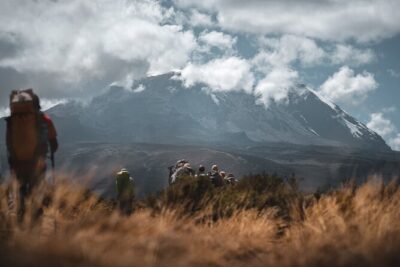
Kilimanjaro’s Machame Route gives you changing scenery, a useful acclimatization climb, and a genuine shot at Uhuru Peak, Africa’s highest point. You begin in wet rainforest and finish among rock, ice, and thin Arctic air. The route is scenic, but this six-day version wastes no time.
I like the smart climb-high, sleep-lower pattern on day three, and I like that the trip includes park fees, meals, a guide, porters, and a cook. Guides named in past trips include Baraka and Buda, while the crew’s care and good cooking receive repeated praise. The catch is simple: this is a hard schedule, with little sleep before the summit and a long day from Barranco to Barafu.
Key points to know before booking
- Day three reaches Lava Tower before dropping to Barranco, a classic acclimatization move that helps your body prepare for the summit.
- The Barranco Wall and Barafu climb come on the same day, making day four one of the toughest parts of the route.
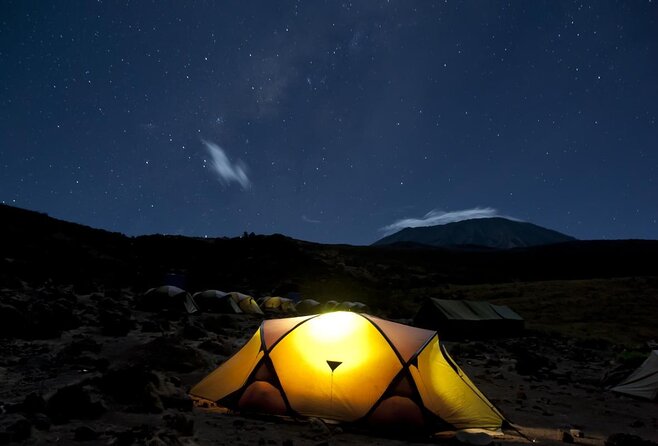
- Summit night starts around midnight to 2 a.m., after only four to six hours of rest.
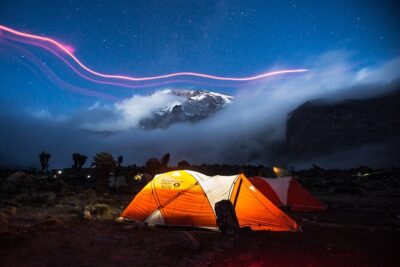
- The route crosses five distinct habitats, from rainforest and moorland to semi-desert, alpine desert, and Arctic terrain.
- The $2,000 price includes six breakfasts, six lunches, five dinners, and park-related fees, but not flights, visas, or crew tips.
- The trip returns to Moshi on day six, after collecting summit certificates at Mweka Park Gate.
Why the six-day Machame Route is appealing
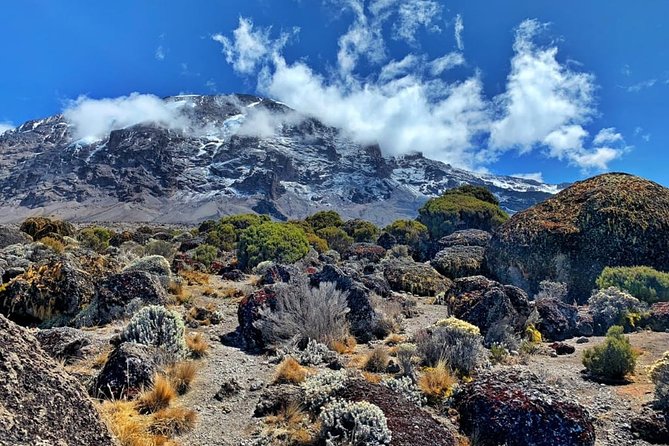
Machame is often chosen for its scenery, and you can see why from the daily progression. The trail moves through thick forest, open heather country, broad high-altitude plains, stark volcanic rock, and the frozen upper slopes around Uhuru Peak.
The route also has a useful acclimatization feature. On day three, you climb from the Shira Plateau toward Lava Tower at about 16,000 feet, then descend to Barranco Camp at roughly 13,000 feet. You finish near the same height where you began, but your body has spent time higher up.
That pattern is helpful, though it does not make the tour easy. The six-day itinerary is described as difficult, and that warning deserves your attention. You need a good base of fitness, steady footing, and the ability to keep moving for many hours at altitude.
I also like the range of support included. Meals are provided throughout the mountain portion, and a guide, porters, and cook form the working team. Past trips have singled out guides such as Baraka, a Maasai guide, and Buda for their mountain experience and care. That personal support matters most when the weather turns wet or the pace becomes slow.
The price is $2,000 per person. For a Kilimanjaro climb, that is meaningful value if you want a package that covers the main mountain costs and food. Still, you need to budget separately for flights, your Tanzanian visa, and crew tips. The supplied details do not say that hotel nights, climbing gear, airport transfers, or personal insurance are included, so ask before paying.
More Kilimanjaro routes:
- Kilimanjaro climb by Lemosho Route (7-day)
★ 5.0 · 651 reviews - Kilimanjaro climb, Machame Route (7-day)
★ 5.0 · 262 reviews - Kilimanjaro Climbing Lemosho Route 8 Days.
★ 5.0 · 186 reviews
Day one: from Moshi to Machame Camp
The morning starts at 8 a.m. at Kiliserengoro Climbing Tour Operator in Moshi. The drive to Mount Kilimanjaro National Park Gate takes about 50 minutes and passes through Machame village on the lower slopes.
The first walking section enters the rainforest. The trail winds up a ridge, and the lower part can be muddy and slippery. This is not a glamorous start, but it is a good reminder that Kilimanjaro is a real mountain, not a paved walk to a viewpoint.
You will hike for about six hours before reaching Machame Camp. The forest gives you shade, but wet ground can slow the group. I would bring gaiters and trekking poles from the first day, not pack them somewhere deep in your duffel.
The day is long enough to test your boots without exhausting you at altitude. Keep your pace calm. There is no prize for reaching camp early and spending the evening nursing sore feet.
Day two: leaving the forest for Shira
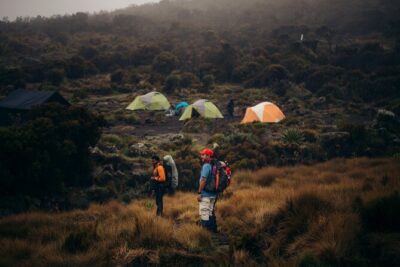
After breakfast, the trail leaves the rainforest and enters moorland. The route climbs from about 9,400 feet to 12,500 feet, covering roughly five kilometers in four to six hours.
The scenery opens up as the trees give way to heather and rocky ridges. You cross a small valley and follow a steep ridge before turning west toward a river gorge. The walking is shorter than day one, but the altitude begins to affect the feel of every uphill step.
Shira Camp is an important change in mood. You are now above the forest, in a more exposed high mountain setting. Rest, eat, and drink well. The itinerary includes breakfast, lunch, and dinner on this climbing program, which takes away one major task at the end of a tiring day.
The short distance should not fool you. At 12,500 feet, breathing is harder than it would be at the gate, and the path remains uneven. Move slowly and tell your guide if you feel unwell.
Day three: Lava Tower and the descent to Barranco
Day three is the route’s key acclimatization day. From Shira Camp, you climb east along a ridge and pass the junction toward Kibo, the volcanic summit cone.
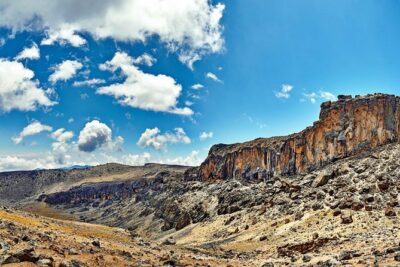
The trail then turns southeast toward Lava Tower, also called the Shark’s Tooth. The high point is about 16,000 feet, though the listed camp elevation is around 13,000 feet. You cover about 10 kilometers in six to eight hours through semi-desert terrain.
This is where the six-day Machame Route earns its reputation for a better acclimatization profile than some shorter options. You go higher during the day, then descend to Barranco Camp. The climb high, sleep lower idea is practical, not just a slogan.
The second junction leads toward Arrow Glacier, at about 16,000 feet, before the trail drops to Barranco Hut. You finish the day at nearly the same elevation as you started, but you have given your body valuable time at a greater height.
This day can be mentally odd. You work hard uphill, reach a stark volcanic zone, then lose much of that height before camp. That descent is not wasted effort. It is one of the reasons this itinerary is structured as it is.
More six day trips in Moshi & Kilimanjaro:
- Kilimanjaro climb, Lemosho Route (6-day)
★ 5.0 · 129 reviews - Kilimanjaro climb, Marangu route (6-day)
★ 5.0 · 72 reviews - 6 Days 5 Night Safari
★ 5.0 · 57 reviews - 6 Days Tanzania Classic Safari
★ 5.0 · 52 reviews
Day four: the Barranco Wall and Barafu Camp
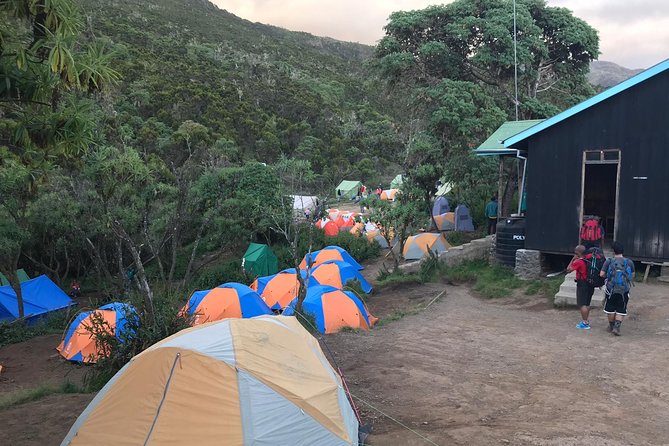
Day four is the big warning sign in this itinerary. You leave Barranco after breakfast and climb the steep ridge beside the Barranco Wall before continuing to Karanga Valley.
The wall is not described as a technical climbing pitch, but it is steep, rocky, and demanding. You will use your hands at times to steady yourself, and the pace may slow as the group negotiates the rock.
From Karanga, the route continues to the junction with the Mweka Trail and then climbs toward Barafu Hut at about 15,000 feet. The total distance is roughly nine kilometers, and the walking time is listed at eight to ten hours.
Barafu means ice, and the camp gives you views toward both Mawenzi and Kibo. You have also completed the South Circuit, seeing the summit from several angles. The views are a reward, but Barafu is mainly a staging ground for summit night.
This is a day to eat even if your appetite is poor. Prepare your summit clothing and headlamp before trying to sleep. The schedule gives you dinner and a partial night of rest, but you should expect only about four to six hours of sleep before the early start.
Day five: the midnight push to Uhuru Peak
Summit day begins between midnight and 2 a.m. You leave Barafu at about 15,300 feet and climb toward the crater rim between the Rebmann and Ratzel glaciers.
The ascent is only about five kilometers on paper, but distance does not tell the story. You are walking in darkness, at very high altitude, on heavy scree, after a long day and a short sleep. This is the most physically and mentally difficult section of the tour.
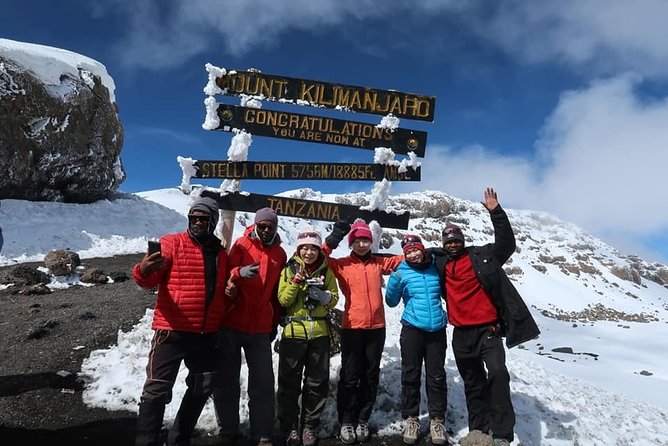
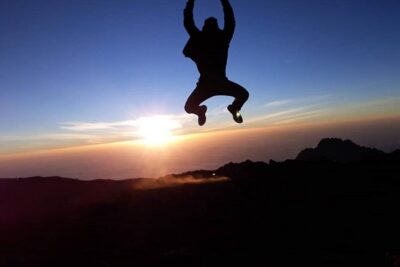
The route heads northwest toward Stella Point at 18,600 feet. If the weather cooperates, sunrise from the crater rim can be unforgettable. The cold, fatigue, and thin air can also make this pause feel less like a victory than a necessary break.
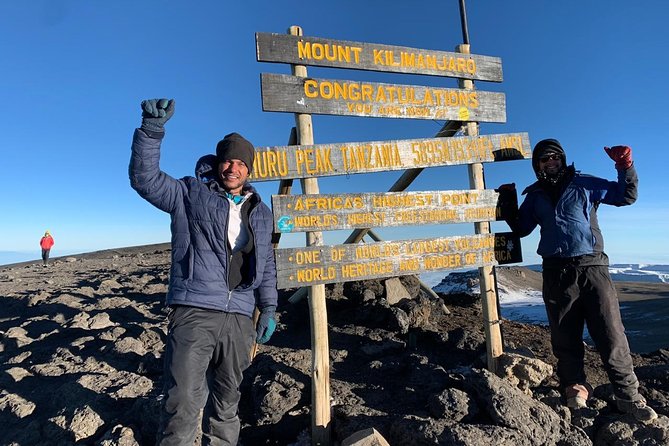
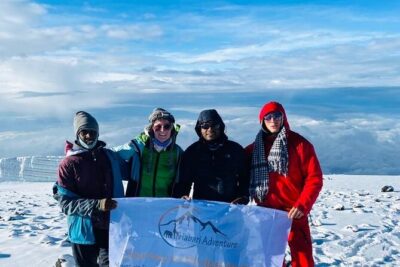
From Stella Point, the route continues around the crater rim toward Uhuru Peak, at 19,345 feet, or 5,895 meters. The supplied schedule lists seven to eight hours for the ascent, followed by a four to six-hour descent.
That produces a very long day. The overall description puts the hardest part of the route at roughly 19 to 24 hours of demanding walking across day four and day five, with very little sleep. You should consider this the central decision point: if you want more time for acclimatization and a less compressed summit schedule, a longer Kilimanjaro itinerary may suit you better.
After reaching the summit, you descend toward lower camp at about 10,000 feet. The descent helps, but it is not easy. Knees and feet take a beating, and many people find the downhill stretch surprisingly tiring after the summit effort.
Day six: descending through the rainforest
The final day begins around Mweka Camp at about 10,000 feet. You walk roughly 10 kilometers through rainforest, with three to four hours listed for the descent.
The lower trail can be wet and muddy. Gaiters and trekking poles are useful again, while shorts and a T-shirt may be comfortable lower down. Keep rain gear and warmer clothing close, because mountain weather can change before you reach the gate.
At Mweka Park Gate, you receive your summit certificates. From there, you continue for about another hour to Mweka village, where a vehicle takes you back to your Moshi hotel.
This final transfer is welcome after five demanding days. The activity ends back at the meeting point, but the information does not specify the name of the Moshi hotel or whether the hotel stay is included. Confirm that detail before you travel.
What the crew and meals add to the experience
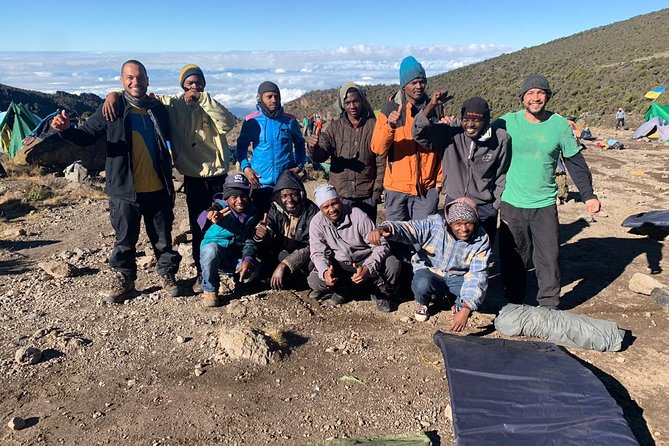
A Kilimanjaro climb is a team effort. The package includes porters, a cook, and guides, even though the exact staffing arrangement is not set out in the supplied details.
The strongest praise centers on the crew’s care, friendly attitude, and help on difficult sections. Guides named in past trips include Baraka and Buda. One trip also praised a guide for adding a meal at a local restaurant, though you should not assume that extra stop is part of this six-day package.
Food is included as six breakfasts, six lunches, and five dinners. That covers the listed mountain days, but ask what meals look like and how dietary needs are handled. The supplied information confirms that meals are included, not the menus or the ability to meet special diets.
Tips are not included. Crew tipping is a normal expense to plan for, and you should ask the operator for current guidance on fair amounts and how tips are shared among guides, porters, and the cook.
Fitness, equipment, and the real level of difficulty
The booking information calls for moderate physical fitness, but the itinerary itself gives a more useful picture. This is a difficult climb with steep gains, steep losses, long walking days, and a summit attempt at nearly 20,000 feet.
You should be comfortable walking for six to ten hours on uneven ground. You also need to tolerate a very early start, cold conditions, rain, mud, scree, and limited sleep.
The supplied details specifically recommend gaiters and trekking poles for muddy sections. Bring reliable rain gear and warm clothing, and keep both accessible rather than buried in your pack.
The package does not list personal equipment, technical gear, flights, visa costs, or insurance. Do not read the $2,000 price as an all-in trip cost. Ask for a written list of inclusions, especially for accommodation before and after the climb, airport or hotel transfers, equipment rental, and emergency arrangements.
Group size, pickup, and booking details
Pickup is offered, and the stated meeting point is the Kiliserengoro Climbing Tour Operator office in Moshi. The activity starts at 8 a.m., and confirmation is received at booking.
The maximum group size is listed as 200 people. That is a very large possible maximum, though it does not tell you the size of your actual departure group. Ask how many climbers will be in your group and how many guides will accompany it.
A small group can make pacing and communication easier. A large group may mean more waiting at narrow or steep sections, especially around the Barranco Wall and the summit route.
Free cancellation is available if you cancel at least 24 hours before the local start time. Inside 24 hours, the payment is not refunded, and changes are not accepted. If poor weather causes cancellation, you are offered another date or a full refund.
Is $2,000 good value?
The price makes sense for a basic, organized mountain package that includes all fees and taxes, daily meals, guides, porters, and a cook. Those costs form the backbone of a Kilimanjaro climb, and handling them in one booking is convenient.
Value depends on what is not included. Flights, the visa, crew tips, accommodation details, personal kit, and insurance can add a substantial amount. You should compare the full trip cost, not only the advertised per-person price.
I would also ask how the operator supports porters. The package depends heavily on their work, and clear information about wages, loads, accommodation, and tipping is part of choosing responsibly.
Who should book this climb?
I would recommend this route to a fit hiker who has only six days available and accepts a demanding schedule. It suits someone who values changing scenery and wants the high-altitude Lava Tower to Barranco pattern built into the route.
It is less suitable if you are new to strenuous walking, uneasy with steep rocky trails, or want a relaxed summit attempt. The combination of Barranco to Barafu and the midnight summit push is the part you must accept before booking.
The strong overall rating supplied for the experience is 5 out of 5 from 23 reviews, with 100 percent recommending it. The praise focuses on successful summits, caring guides and porters, tasty food, and well-organized support. That is encouraging, but your own result will still depend on fitness, weather, altitude response, and the exact crew assigned.
Should you book the six-day Machame Route?
Book it if six days is your firm limit and you want the scenic Machame approach with a serious acclimatization day at Lava Tower. The route offers forest, open moorland, volcanic rock, the Barranco Wall, broad summit views, and the chance to reach Uhuru Peak.
Think twice if you can add another day. The six-day version compresses the hardest work into a very tight window, and the short rest before summit night is the main weakness.
Before committing, confirm your group size, hotel arrangements, equipment options, meal requirements, tipping guidance, and the full cost beyond $2,000. If those answers are clear and you are ready for a long, cold, sleep-deprived summit day, Kiliserengoro Climbing Tour Operator offers a practical way to tackle Kilimanjaro by one of its most scenic routes.
FAQ
How long is the Kilimanjaro Machame Route tour?
The tour lasts approximately six days. The listed walking times range from about three to ten hours on most days, with the summit day requiring a seven to eight-hour ascent and a four to six-hour descent.
Where does the tour start?
The meeting point is Kiliserengoro Climbing Tour Operator in Moshi, Tanzania. The stated start time is 8 a.m., and pickup is offered.
What meals are included?
The package includes six breakfasts, six lunches, and five dinners.
What is not included in the price?
Flights, crew tips, and a Tanzanian visa are not included. The supplied details do not confirm whether hotel stays, personal equipment, or insurance are included, so ask the operator.
How high is Uhuru Peak?
Uhuru Peak is listed at 19,345 feet, or 5,895 meters.
What happens if bad weather cancels the tour?
If poor weather causes cancellation, you are offered a different date or a full refund. If you cancel, you must do so at least 24 hours before the local start time for a full refund.
Newly listed around Moshi & Kilimanjaro
- Climb Mount Kilimanjaro: 7 Days Machame Route★ 5.0 · 3 reviews
- 6 Days Mount Kilimanjaro Climbing via Rongai Route★ 5.0 · 3 reviews
- Explore 1 day Ngorongoro Crater Budget Group Safari from Arusha★ 5.0 · 3 reviews
- Mt. Kilimanjaro Day Hiking★ 5.0 · 3 reviews
- Chemka (Kikuletwa) Hot Springs, Tanzania★ 5.0 · 3 reviews
- Guided City tour of Moshi★ 4.3 · 3 reviews
- 8 Day Tanzania Family Safari★ 5.0 · 3 reviews
- Serengeti Safari with Sirikwa Travel★ 5.0 · 3 reviews
Kilimanjaro Climbs, compared.
Browse the lists this tour appears in