
Reviewed · KILIMANJARO CLIMBS
Kilimanjaro Climb – 6 Days Marangu Route
The Marangu Route takes you from Kilimanjaro’s rainforest to the summit in six days, with a bed in a permanent hut at each mountain camp. That makes it the most straightforward route logistically, but the short schedule gives your body less time to adjust to high altitude.
I like the hut accommodation, especially if you would rather sleep indoors than carry a tent-based camp setup. I also like the built-in acclimatization day at Horombo Hut, plus the support of a cook, porters, guides, meals, oxygen, and first-aid equipment.
The main drawback is the route’s pace. You climb high quickly, then face a steep summit night from Kibo Hut. Marangu also uses the same path for both ascent and descent, so it can feel busier than routes with separate up and down trails.
Key points to know before booking
- Permanent mountain huts: You sleep in huts at Mandara, Horombo, and Kibo rather than tents.
- A six-day summit plan: The schedule includes one full acclimatization day at Horombo Hut.
- A steep summit night: The climb from Kibo Hut to Uhuru Peak gains about 1,145 meters before the descent begins.
- Full mountain support: Guides, porters, a cook, three hot meals daily, oxygen, an oximeter, and a first-aid kit are included.
- Private group format: Only your own group takes part in the activity.
- A demanding final descent: After the summit, you continue down to Horombo, then walk 18 kilometers to Marangu Gate the next day.
What the six day Marangu Route is really like
At $2,200 per person, this is not a casual day hike with a large sightseeing bus. You are paying for a private six-day mountain operation, park fees, accommodation, food on the mountain, airport transfers, and a full support crew.
The price has real value if you want the main arrangements handled in one package. You do not need to organize separate transport from Kilimanjaro International Airport, pay park charges on your own, arrange mountain huts, or find a cook and porters independently.
Still, the price does not cover every expense. Hotel lunches, dinners, and drinks before and after the climb are extra. You also need travel insurance, personal toiletries and other items, and gratuities for the guides, porters, and cook.
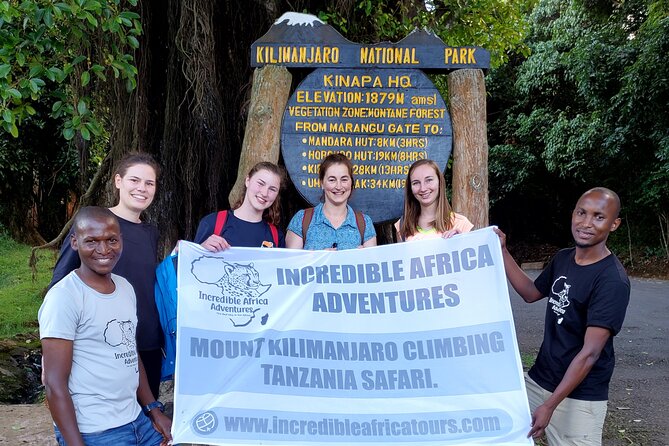
The company is Incredible Africa Adventures. Octavian is the key contact named in the experience details, and previous mountain groups have worked with guides including Alex, Rafael, and Manme. King, the chef, was singled out for keeping one climbing team well fed. Those names matter because mountain days are shaped as much by the support crew as by the route itself.
More Kilimanjaro routes:
- Kilimanjaro climb by Lemosho Route (7-day)
★ 5.0 · 651 reviews - Kilimanjaro climb, Machame Route (7-day)
★ 5.0 · 262 reviews - Kilimanjaro Climbing Lemosho Route 8 Days.
★ 5.0 · 186 reviews
Arrival in Moshi and the pre-climb briefing
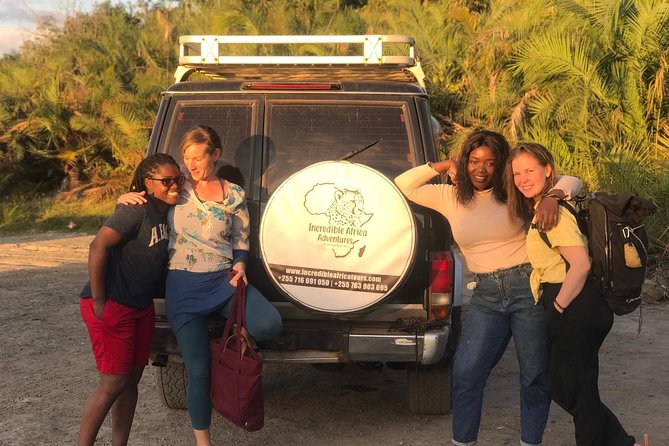
The experience begins with pickup at Kilimanjaro International Airport. Private transport takes you to your hotel in Moshi or Arusha, where you spend the first night before the climb.
A head guide meets you for a short briefing about Kilimanjaro and the Marangu Route. This is also the time for a gear check and for arranging any equipment hire you need.
That gear check is useful. It gives you a chance to discover a missing item before you are on the mountain rather than at 4,700 meters. The supplied information does not specify which equipment can be rented, so ask the operator for a current rental list before arrival.
The tour requires a strong physical fitness level. You do not need to be a technical climber based on the information provided, but you do need to handle several long walking days, a major altitude gain, cold conditions near the summit, and a very long descent.
Day 1: Marangu Gate to Mandara Hut through rainforest
The first mountain day covers about 7 kilometers and takes roughly four to five hours. You gain approximately 950 meters, finishing at Mandara Hut at 2,750 meters.
This is the gentlest introduction to the route in terms of distance. The rainforest section gives you a clear change from the airport and hotel setting into a mountain trek. You should expect a steady uphill walk rather than a quick stroll.
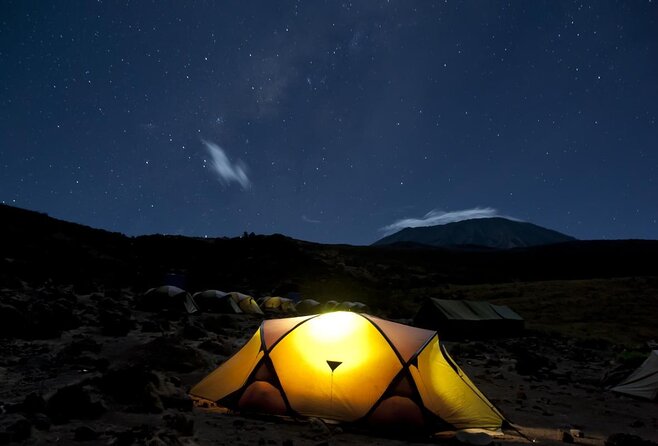
Mandara is your first overnight hut. The permanent shelter is one of Marangu’s biggest selling points. You are not setting up a tent after the first climb, though the hut format does not remove the physical demands of the trip.
The short distance can make this day seem easy. Do not use that as a reason to rush. The best approach is a slow pace that leaves energy for the coming days and allows you to settle into the walking rhythm.
Day 2: Mandara Hut to Horombo Hut across moorland
Day two is longer, with 11 kilometers of trekking over five to six hours. The route climbs another 1,030 meters, taking you to Horombo Hut at 3,780 meters.
The surroundings change from rainforest to moorland. This is one of the satisfying parts of the Marangu Route because the scenery changes in broad stages as you rise. You can feel the mountain becoming more exposed and less sheltered.
Horombo is an important stop. You stay here for two nights, which creates room for the acclimatization day that follows. That extra night is especially valuable on a six-day itinerary because the overall schedule is still fairly compressed.
The distance is moderate, but the altitude gain is serious. Walk slowly, drink what your support team recommends, and tell your guide if you feel unwell. The itinerary includes an oximeter, portable oxygen tanks, and an emergency first-aid kit, but those items are safety support, not a substitute for careful pacing or medical judgment.
More six day trips in Moshi & Kilimanjaro:
- Kilimanjaro climb, Lemosho Route (6-day)
★ 5.0 · 129 reviews - Kilimanjaro climb, Marangu route (6-day)
★ 5.0 · 72 reviews - 6 Days 5 Night Safari
★ 5.0 · 57 reviews - 6 Days Tanzania Classic Safari
★ 5.0 · 52 reviews
Day 3: A full acclimatization day at Horombo Hut
The third day is not a rest day in the hotel sense. You spend the day at Horombo Hut and take short guided hikes around the area to help with acclimatization.
I like this part of the schedule because it breaks up the climb before the route moves toward Kibo Hut. You get time to rest while still walking at altitude. That balance is more useful than simply staying inside all day.
The supplied itinerary does not give the exact route, distance, or duration of these short hikes. Your head guide sets the plan according to the group and conditions. Use the day sensibly. Eat, drink, keep your walking gear organized, and rest when you are not hiking.
This is also a good point to check your personal items. Toiletries, insurance, and other personal supplies are not included. Keep essentials easy to reach rather than buried in a porter bag.
Day 4: Horombo Hut to Kibo Hut across the high desert
The fourth day covers about 12 kilometers in five to six hours. You gain roughly 920 meters and sleep at Kibo Hut, which sits at 4,700 meters.
The route moves into a desert-like high-altitude zone. The change is stark: less shelter, thinner air, and a more serious sense of what lies ahead. Kibo is the launch point for the summit attempt, so the day has a practical purpose beyond reaching another camp.
You need to protect your energy here. The summit begins after a short sleep, so this is not the time for an unnecessary race to camp. Eat the hot meal provided, prepare your summit clothing and personal gear, and follow the timing set by your guide.
Kibo Hut is high enough that some people may find sleep difficult. The itinerary does not promise private rooms or specific hut arrangements, so ask the operator about sleeping conditions if that matters to you.
Day 5: Kibo Hut to Uhuru Peak, then down to Horombo
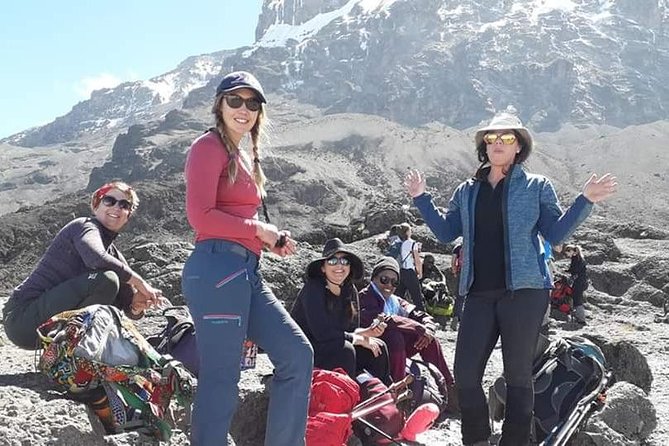
Summit day is the hardest part of the climb. The ascent takes about six to eight hours over 7 kilometers, with an altitude gain of approximately 1,145 meters.
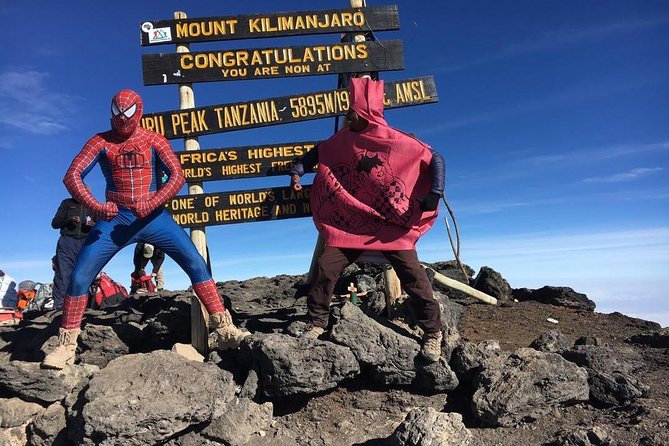
The route from Kibo Hut is steep. It passes Gilman’s Point before continuing to Uhuru Peak, the highest point on Mount Kilimanjaro. The plan gives you a short time at the summit before you begin the descent.
You should think of this as two major mountain days joined together. After reaching the summit, you descend for another five to six hours over 12 kilometers, losing about 2,175 meters before returning to Horombo Hut.
That descent is not an afterthought. Your knees and feet may be more tired going down than going up, especially after the steep summit section. Good footwear and trekking poles, if you use them, can make a real difference, but the supplied details do not confirm that poles are provided.
The route’s lower summit success rate is linked to its shorter schedule and steep incline. No guide can remove the effects of altitude. The crew can support you, monitor you, and respond to problems, but your pace and health decisions remain important.
Day 6: Horombo Hut to Marangu Gate
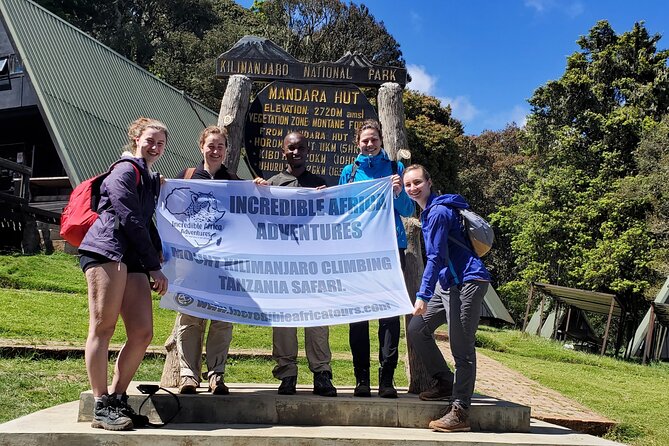
The final day covers 18 kilometers and takes about five to seven hours. You lose around 1,878 meters before arriving at Marangu Gate.
After the summit effort, this is a long finish. The descent returns through lower sections of the route, eventually reaching the park gate. You receive your Kilimanjaro summit certificate at Marangu Gate.
From there, private transport takes you back to your hotel in Moshi or Arusha. If you have a flight or another activity planned, leave plenty of space in your schedule. The itinerary gives an estimated walking time, not a guaranteed arrival time.
The shared ascent and descent route has a practical advantage: you know the broad route you are returning through. The cost is repetition. You do not get a completely different trail on the way down, and Marangu can have more traffic because everyone uses the same path.
Food, porters, and mountain safety
Three hot meals daily are included while you are on the mountain. That is a useful part of the package because long days at altitude are easier when food is planned and prepared for you.
King, the named chef from one climbing team, received special credit for the meals. The exact menu is not provided, so ask about dietary needs before booking rather than assuming every request can be handled.
Professional mountain guides, a cook, and porters are included. The guides provide route support and lead the short acclimatization hikes. Porters carry equipment, allowing you to focus on walking with a manageable daypack.
Tips are not included. Budget separately for gratuities for the guides, porters, and cook. The operator should be able to explain its recommended tipping practice, and you should ask how the team is paid and how tips are distributed.
Portable oxygen tanks, an oximeter, and an emergency first-aid kit are also included. These are reassuring safety measures, but they do not make the climb low risk. Travel insurance is not included, so arrange suitable cover before you go.
Who should choose Marangu in six days?
This route suits you if your main priority is a shorter Kilimanjaro climb with hut accommodation. It also makes sense if you have limited time in Tanzania and want a private trip rather than a shared group departure.
You should be comfortable with a strong physical challenge and a demanding summit night. The 6-day schedule allows one acclimatization day, but it still gives you less time to adjust than longer routes.
I would be cautious about choosing this option if you dislike steep uphill walking, long descents, shared hut sleeping, or repeating the same route. I would also avoid treating the shorter duration as proof that it is easy. The reduced number of days is a convenience, not a reduction in the mountain’s height.
The private format is useful if your group wants to set its own rhythm. Only your group takes part, so you are not tied to strangers’ walking speeds. Ask in advance how many people will be in your group and what sleeping arrangements apply, since those details are not specified.
Booking, cancellation, and practical planning
The price is $2,200 per person, and the experience is commonly booked about 18 days ahead. I would not wait until the last minute if you need flights, hotel nights, insurance, or rental gear.
Confirmation is received at booking. Pickup is offered from Kilimanjaro International Airport, and the meeting point is listed as Kilimanjaro National Park and Kilimanjaro Airport.
You can cancel for a full refund up to 24 hours before the local start time. Cancellations or changes made inside that 24-hour window are not accepted for a refund. The climb also depends on good weather and a minimum number of participants, although it is a private activity. If the operator cancels for either reason, you are offered another date or experience, or a full refund.
Should you book this Kilimanjaro climb?
Book it if you want the shortest practical Marangu itinerary, prefer huts to tents, and value having transport, park charges, meals, porters, guides, and safety equipment arranged together.
Think twice if your priority is the highest possible summit odds or a slower altitude schedule. The six-day Marangu Route is convenient, but the steep summit night and same-way return make it a demanding choice.
For a fit climber with limited time, this can be a sensible Kilimanjaro plan. Go in prepared, budget for tips and insurance, ask clear questions about gear and huts, and treat the acclimatization day as part of the climb rather than spare time.
FAQ
How long is the Kilimanjaro Marangu Route experience?
The experience lasts approximately six days, including the arrival and mountain itinerary details provided.
Where does the climb start?
The meeting point is listed at Kilimanjaro Airport and Kilimanjaro National Park in Tanzania.
Does the tour include airport transfers?
Yes. Private transport to and from Kilimanjaro International Airport is included.
Where do you sleep during the climb?
You sleep in permanent mountain huts at Mandara Hut, Horombo Hut, and Kibo Hut.
Is there an acclimatization day?
Yes. Day three is a full day at Horombo Hut, with rest and short guided hikes intended to help with acclimatization.
Are meals included?
Three hot meals daily are included while you are on the mountain. Hotel lunches, dinners, and drinks before and after the climb are not included.
Is this a private tour?
Yes. Only your own group participates in the activity.
What safety equipment is included?
The package includes portable oxygen tanks, an oximeter, and an emergency first-aid kit.
What happens if I need to cancel?
You can receive a full refund if you cancel at least 24 hours before the local start time. Cancellations or changes made less than 24 hours before the start are not refunded.
Newly listed around Moshi & Kilimanjaro
- Climb Mount Kilimanjaro: 7 Days Machame Route★ 5.0 · 3 reviews
- 6 Days Mount Kilimanjaro Climbing via Rongai Route★ 5.0 · 3 reviews
- Explore 1 day Ngorongoro Crater Budget Group Safari from Arusha★ 5.0 · 3 reviews
- Mt. Kilimanjaro Day Hiking★ 5.0 · 3 reviews
- Chemka (Kikuletwa) Hot Springs, Tanzania★ 5.0 · 3 reviews
- Guided City tour of Moshi★ 4.3 · 3 reviews
- 8 Day Tanzania Family Safari★ 5.0 · 3 reviews
- Serengeti Safari with Sirikwa Travel★ 5.0 · 3 reviews
Kilimanjaro Climbs, compared.








Browse the lists this tour appears in