
Reviewed · KILIMANJARO CLIMBS
Kilimanjaro Climb Marangu Route 6 days
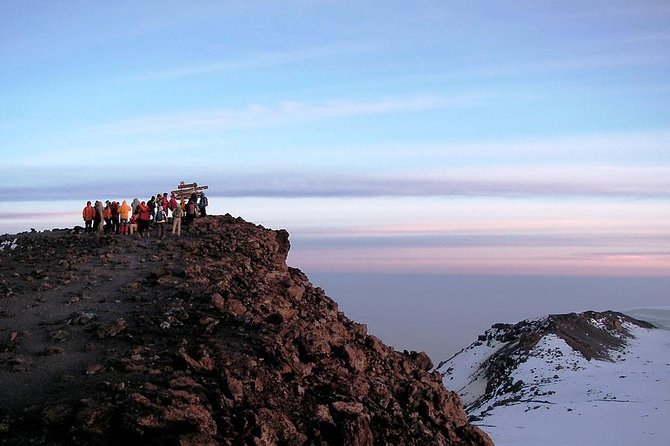
The most memorable part of this climb is the change in world under your feet. In six days, you move from tropical forest to moorland, across the bare Saddle between Kibo and Mawenzi, then into the cold, dark hours of the summit push. The midnight climb to Uhuru Peak is the test, with sunrise at Gilman’s Point as the first great reward.
I like two things here: the built-in acclimatization day at Horombo, which gives your body extra time at altitude, and the private format, which keeps the pace and daily routine within your own group. The crew’s fair-wage policy and filtered water also add real value.
The main drawback is the schedule. Day five combines a six-to-eight-hour summit ascent with another four-to-five hours back to Horombo, so this is not a gentle holiday walk. You need solid fitness, patience, and a willingness to be uncomfortable for a few hours.
Key points to know before booking
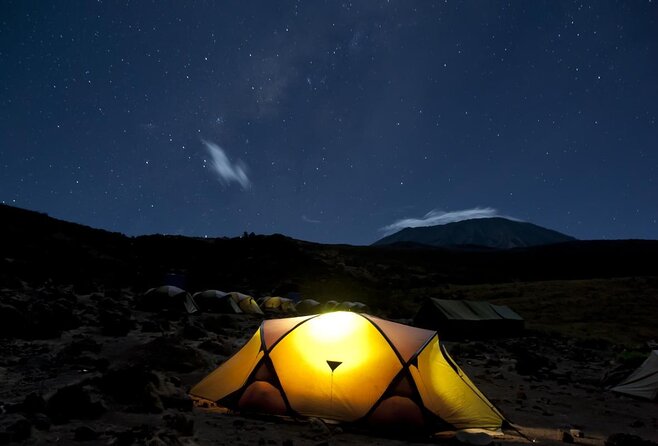
- Summit night begins around midnight: Expect cold, darkness, steep scree, short rest stops, and a long descent after reaching Uhuru Peak.
- Day three is for acclimatization: You hike toward Mawenzi Ridge and return to Horombo, rather than advancing camp.
- The route crosses five distinct zones: Rainforest, heath, moorland, alpine desert, and arctic terrain.
- This is a private climb: Only your group participates, with private transport from Moshi to the gate and back.
- The $2,290 price covers core trek costs: Park fees, meals, filtered water, hot wash water, transport, and mountain crew wages are included.
- Personal gear is not included: You must supply or arrange your own trekking equipment, insurance, flights, visas, drinks, and personal spending.
From Moshi to the Marangu Gate rainforest
Your climb starts in Moshi Urban, Tanzania, with transport to Marangu Gate. The gate is more than a starting line. There are formalities to complete before you enter Kilimanjaro National Park, so the first day includes a practical pause before the walking begins.
From the gate, the trail rises through tropical rainforest toward Mandara Hut. The distance is 8 kilometers, or about 5 miles, with four to five hours of walking. You gain roughly 2,812 feet, moving from 6,046 feet at Marangu Gate to 8,858 feet at Mandara.
This is a good opening day because the distance is manageable and the forest gives you shade. The trail also offers the chance to see blue monkeys near the upper edge of the forest. As you climb, the path eventually widens and the forest gives way to open hillsides.
I would treat this first day as a pace-setting exercise, not a race. Your main job is to walk steadily, drink the filtered water provided, and notice how your body responds to the rising altitude. The short distance can feel easy, but saving energy matters later.
More Kilimanjaro routes:
- Kilimanjaro climb by Lemosho Route (7-day)
★ 5.0 · 651 reviews - Kilimanjaro climb, Machame Route (7-day)
★ 5.0 · 262 reviews - Kilimanjaro Climbing Lemosho Route 8 Days.
★ 5.0 · 186 reviews
Mandara Hut to Horombo and the first big views
Day two covers 12 kilometers, or 7 miles, from Mandara Hut to Horombo Hut. The stated walking time is six to eight hours, and the elevation rises from 8,858 feet to 12,205 feet.
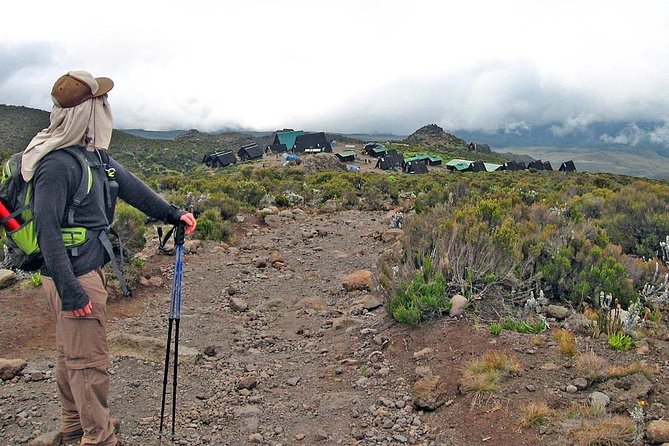
The forest continues for a while, then opens into heath and high moorland. This is where Kilimanjaro begins to feel less like a forest trek and more like a high mountain climb. You may get your first views of Kibo and Mawenzi, two of the three volcanic peaks that form Kilimanjaro’s summit area.
Horombo is an important stop because it is both a camp and an acclimatization point. By the end of the day, you are already above 12,000 feet. That makes the next day’s rest and practice hike especially useful.
The distance is not extreme on paper, but the altitude changes the effort. I would expect a slower pace than on day one, with plenty of attention to breathing and hydration. The private setup may help here, since your group can focus on a steady rhythm instead of trying to match a larger party.
Mawenzi Ridge gives day three a purpose
Day three is the most valuable feature of this six-day plan. Instead of climbing higher and sleeping at a new camp, you make an acclimatization hike from Horombo toward Mawenzi Ridge.
The route gains about 2,195 feet, from 12,205 feet to roughly 14,400 feet, over 5 kilometers. The stated ascent takes two to three hours. After spending time around the ridge, you return to Horombo over another 5 kilometers, with a one-to-two-hour descent.
This is not a wasted day. It lets you spend time higher than Horombo, then sleep again at the lower elevation. The aim is to give your body more time to adjust before Kibo Hut and summit night.
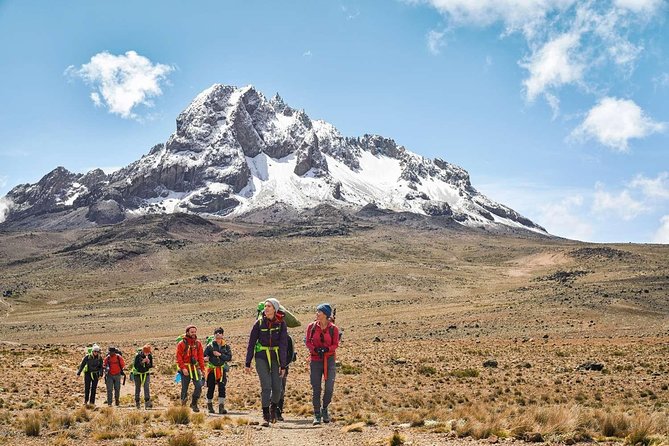
The Mawenzi Ridge section also adds variety. You get views toward Kibo and Mawenzi, along with a more rugged setting than the heath around Horombo. Since the hike is out and back, you do not carry on to a new camp at the end of it.
I like that this day combines practical altitude preparation with something worth seeing. The only caution is that you still need to use it sensibly. The climb is intended for acclimatization, not for proving how fast you can reach the ridge.
Crossing the Saddle to Kibo Hut
Day four takes you from Horombo Hut to Kibo Hut, a 10-kilometer, or 6-mile, climb lasting six to eight hours. You rise from 12,205 feet to 15,430 feet and enter the alpine desert zone.
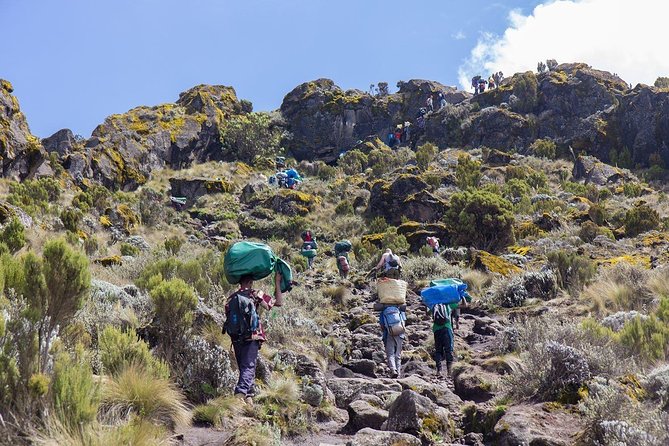
The defining feature is the Saddle, the broad, bare area between Kibo and Mawenzi. It is often described as lunar because vegetation becomes sparse and the surroundings feel exposed. This is the section where Kilimanjaro’s scale becomes clear. Kibo is the main summit, while Mawenzi has a sharper, more craggy profile.
The climb is gradual at first, but the altitude makes every mile count. Once you reach Kibo Hut, the focus shifts from walking to preparation. You rest and eat an early dinner before trying to sleep ahead of the midnight start.
That early meal and rest period matter. Day five begins when most people would normally be asleep, and the body has little spare energy at 15,430 feet. Pack what you need for the summit before settling down, so you are not searching for gloves or layers in the dark.
Kibo Hut is not the end of the climb. It is the staging point for the hardest section, and you should approach it with a quiet, practical mindset.
More six day trips in Moshi & Kilimanjaro:
- Kilimanjaro climb, Lemosho Route (6-day)
★ 5.0 · 129 reviews - Kilimanjaro climb, Marangu route (6-day)
★ 5.0 · 72 reviews - 6 Days 5 Night Safari
★ 5.0 · 57 reviews - 6 Days Tanzania Classic Safari
★ 5.0 · 52 reviews
The midnight push to Uhuru Peak
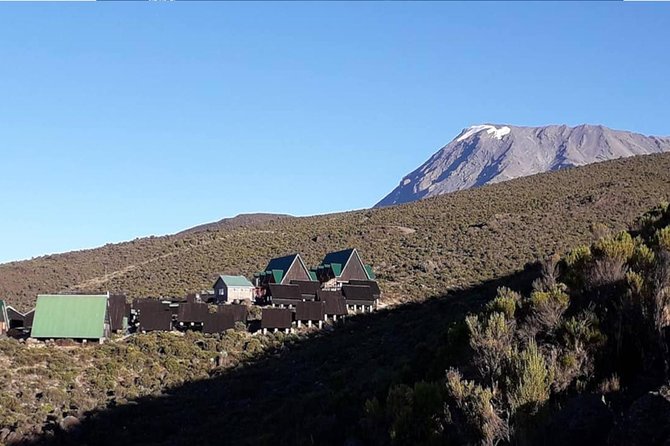
The summit day begins around midnight. From Kibo Hut, you climb 6 kilometers to Uhuru Peak, gaining nearly 3,911 feet from 15,430 feet to 19,341 feet. The ascent is expected to take six to eight hours.
This is the part that demands the most from you. The wind and cold can be severe, and the climb starts in darkness. The path zigzags up steep scree, loose volcanic gravel that can shift under your boots. The surface may be easier to handle when frozen, but it remains tiring and slow.
The recommended approach is simple: take short, frequent breaks and keep moving at a controlled pace. The goal is not speed. Your guide and crew are there to keep the climb organized, but your own patience matters just as much.
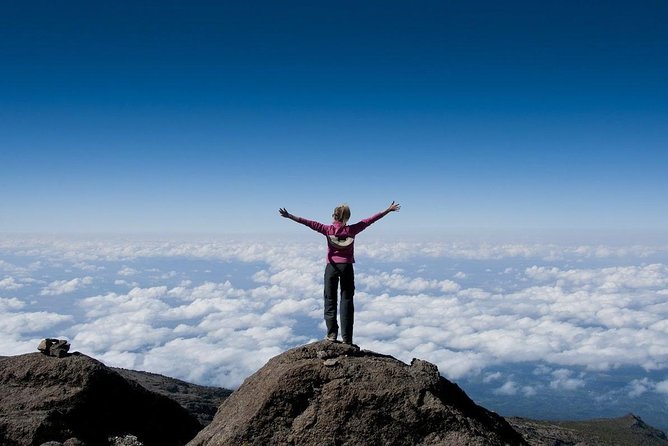
At about 18,600 feet, Gilman’s Point offers a major reward. Dawn over the crater rim can be spectacular, and reaching this point gives you a strong sense of progress. Uhuru Peak lies just above, at 19,341 feet, or 5,895 meters.
The final section to Uhuru Peak is still demanding, but it is shorter than the climb already behind you. From the summit, the route turns into a long descent. You return from Uhuru Peak to Horombo Hut over 16 kilometers, or 10 miles, with four to five hours listed for the descent.
That timing should be read carefully. It comes after the six-to-eight-hour ascent, so day five can total roughly 10 to 13 hours of walking. The descent may feel easier on your lungs, but tired legs and loose ground create their own problems.
The long descent through rainforest
Day six returns you from Horombo Hut to Marangu Gate. The distance is 20 kilometers, or 12 miles, and the expected walking time is five to seven hours. You drop from about 12,205 feet to 6,046 feet, moving back through heath and rainforest.
This is a long final day, but the direction is kinder than the ascent. As you lose altitude, breathing should feel easier and the vegetation returns. The rainforest offers a strong contrast to the barren terrain around Kibo.
At Marangu Gate, you collect your summit certificates. A vehicle then takes you back to your hotel in Moshi, and the activity ends at the starting meeting point.
Do not underestimate this last walk. It is mostly downhill, but 12 miles after summit day can be tiring. Comfortable footwear and careful footing still matter. The private return transport is useful here because you do not need to arrange your own ride after reaching the gate.
What the $2,290 price covers
At $2,290 per person, this climb is not a low-cost mountain outing, but the price includes several major expenses. You get all fees and taxes, private transportation, filtered water throughout the trek, hot water for washing, and meals.
The stated meal plan includes six lunches, five breakfasts, and six dinners. That gives you food coverage across the trek, though alcoholic and non-alcoholic drinks are not included. You should also budget for personal expenses.
The fair-wage policy for the mountain crew, based on Kilimanjaro National Park Authority standards, is an important part of the value. A climb depends heavily on the people carrying, cooking, guiding, and organizing the route. Knowing that crew wages are addressed directly makes the price easier to assess.
You still need to pay for flights, visas, insurance, and personal trekking gear. The gear point is especially important. The package does not provide your clothing, boots, or other individual equipment, so check what you already own before you book.
The private format is another part of the price. Only your group participates, which can give you more control over the walking rhythm and daily routine. It does not remove the physical demands, but it may make the experience feel more personal.
The crew and the private format
The company connected with this climb is Kilimanjaro Safari Experience. Shungu is the guide name associated with the trip, and the personal accounts of the climb place strong emphasis on his relationship with the crew.
The crew is described as working with respect and as long-time friends from childhood. That matters in a mountain setting, where teamwork affects both safety and morale. The warm hospitality also comes through clearly in the personal accounts connected with the company.
You should still ask who will guide your specific departure and how the crew structure will work. Shungu’s name is associated with the experience, but the supplied details do not promise that he personally leads every booking.
The private format means you are not sharing the activity with another booking group. That suits families, friends, and couples who want to make decisions together. It also makes it important that everyone in your party has a similar expectation of pace and effort.
Who should book this Kilimanjaro climb?
This route suits you if you have moderate physical fitness and are used to walking in mountain areas. The route description calls it tough but within the ability of a fit person accustomed to mountain walking.
You do not need to be a technical climber based on the information provided. The challenge comes from sustained walking, altitude, cold, steep scree, and the length of summit day. You should be comfortable spending several hours on your feet and managing a very early start.
This is a good choice if you value a built-in acclimatization day. The six-day schedule is more sensible than rushing straight from Horombo to Kibo without time for a higher practice hike.
It may not suit you if you want short daily walks, a relaxed sleep schedule, or a trip with little physical strain. The summit attempt is particularly demanding, and reaching the top cannot be treated as automatic.
The route also works well if you want varied scenery. You get rainforest, heath, moorland, the open Saddle, and arctic summit terrain in one climb. That variety is one of Marangu’s main attractions.
Practical details before you commit
Pickup is offered from Moshi, and the activity returns to the same meeting point after the drive back from Marangu Gate. Confirmation is received at booking, and the activity is private.
Free cancellation is available if you cancel at least 24 hours before the local start time. Cancellations within 24 hours are not refunded, and changes made inside that period are not accepted.
The package includes filtered water, but you should still take altitude seriously. The itinerary itself includes an acclimatization day, yet it does not promise that everyone will reach Uhuru Peak. Listen to the guide and treat the descent as part of the achievement, not as an afterthought.
A final practical check is your personal kit. Since trekking gear is excluded, review your boots, warm layers, and other essentials well before departure. The coldest hours come at the summit, not on the first rainforest walk.
Should you book it?
I would book this climb if you want a private Marangu Route experience with a sensible acclimatization day, included meals and water, private transport, and a clear six-day plan. The crew-wage policy and the reported respect within the team are meaningful positives, not decorative extras.
I would hesitate if you are not ready for the summit-night schedule or the 20-kilometer final descent. The $2,290 cost is reasonable for the included services, but you must add flights, insurance, visas, drinks, personal costs, and your own trekking gear.
For a fit walker who accepts the discomfort, this is a strong, focused way to approach Kilimanjaro. Book it for the route variety and the private support, but go in knowing that the mountain, not the itinerary, sets the final terms.
FAQ
Where does the Kilimanjaro climb start?
The climb starts in Moshi Urban, Tanzania. Transport takes you to Marangu Gate, where the park entry formalities are completed before hiking begins.
How long is the experience?
The climb lasts approximately six days.
Is the climb private?
Yes. This is a private activity, so only your group participates.
What route is used?
The climb uses the Marangu Route, passing through rainforest, heath and moorland, the Saddle alpine desert, and the arctic zone near Uhuru Peak.
Is an acclimatization day included?
Yes. Day three is an acclimatization hike from Horombo Hut toward Mawenzi Ridge, followed by a return to Horombo Hut.
How high is Uhuru Peak?
Uhuru Peak is listed at 19,341 feet, or 5,895 meters.
What meals and drinks are included?
The package includes six lunches, five breakfasts, and six dinners, along with filtered water throughout the trek. Alcoholic and non-alcoholic beverages are not included.
What is excluded from the price?
Flights, visas, insurance, personal trekking gear, personal expenses, and alcoholic or non-alcoholic beverages are excluded.
Newly listed around Moshi & Kilimanjaro
- Climb Mount Kilimanjaro: 7 Days Machame Route★ 5.0 · 3 reviews
- 6 Days Mount Kilimanjaro Climbing via Rongai Route★ 5.0 · 3 reviews
- Explore 1 day Ngorongoro Crater Budget Group Safari from Arusha★ 5.0 · 3 reviews
- Mt. Kilimanjaro Day Hiking★ 5.0 · 3 reviews
- Chemka (Kikuletwa) Hot Springs, Tanzania★ 5.0 · 3 reviews
- Guided City tour of Moshi★ 4.3 · 3 reviews
- 8 Day Tanzania Family Safari★ 5.0 · 3 reviews
- Serengeti Safari with Sirikwa Travel★ 5.0 · 3 reviews
Kilimanjaro Climbs, compared.








Browse the lists this tour appears in