
Reviewed · KILIMANJARO CLIMBS
Climb Mount Kilimanjaro: 7 Days Machame Route
Mount Kilimanjaro’s Machame Route gives you a full week to move from tropical rainforest to the roof of Africa. You start at Machame Gate, cross moorland and high alpine terrain, climb the Barranco Wall, and make your summit attempt after midnight on day six.
I like the built-in acclimatization day and the practical support: a guide, cook, porters, tents, meals, oxygen systems, and pulse oximeters are all part of the plan. Airport transfers and hotel nights also take some work off your plate. The catch is simple: this is a very hard climb, and the summit day can last about 13 hours.
Key points to know before you book
- Seven days gives you time to adjust to altitude: Day three takes you as high as 4,600 meters before you sleep lower.
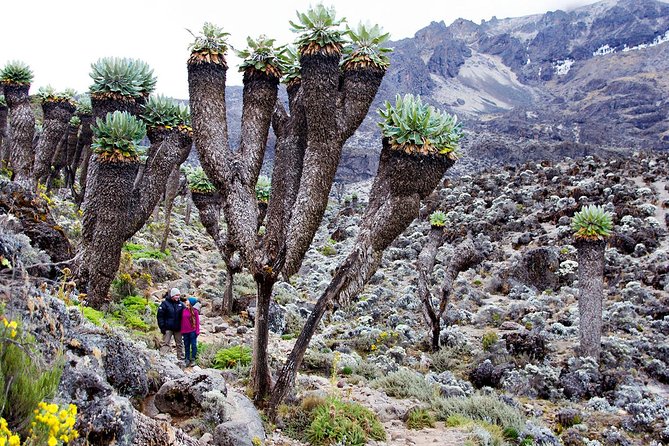
- The route changes scenery every day: You walk from dense rainforest to moorland, volcanic rock, scree, glaciers, and the crater rim.
- Summit day begins around midnight to 2 a.m.: Expect a long, cold, demanding day with a sunrise near Stella Point.
- Your support crew carries the camp: Porters carry up to 15 kilograms per climber, while the cook handles six breakfasts, six lunches, and six dinners.
- The package includes useful comfort items: Modern tents, two-inch sleeping pads, bottled water, hot drinks, dining equipment, and rescue fees are covered.
- Budget for extra charges: Personal gear rental, insurance, flights, hotel meals, and listed guide, cook, and porter tips are not included.
Why the Machame Route suits a seven-day climb
The Machame Route is a serious walking trip, not a sightseeing excursion with a mountain attached. You spend six nights on the mountain, sleep in tents, and tackle a major summit push after very little sleep. The route does, however, give you varied scenery and a useful high-and-low acclimatization pattern.
The most important design choice comes on day three. You climb to around 4,600 meters, then finish at a similar elevation to where you began. That climb high, sleep lower approach helps your body adjust before the upper mountain. It does not remove the risk of altitude sickness, but it is a sensible feature in a seven-day schedule.
You also get the South Circuit, which takes you around the mountain’s southern side before summit day. This means you see Kibo from several angles rather than walking straight toward the summit on one side.
The route is private, so only your group participates. That can make the pace and daily routine easier to manage than a large shared departure. The published information does not state the maximum group size, so ask about the number of climbers and the guide-to-climber ratio before paying.
More Kilimanjaro routes:
- Kilimanjaro climb by Lemosho Route (7-day)
★ 5.0 · 651 reviews - Kilimanjaro climb, Machame Route (7-day)
★ 5.0 · 262 reviews - Kilimanjaro Climbing Lemosho Route 8 Days.
★ 5.0 · 186 reviews
From Moshi to Machame Gate on day one
Pickup is offered from Kilimanjaro International Airport, with a transfer to the arranged hotel in Moshi. Hotel accommodation before and after the climb is included in a shared twin room, with breakfast. That is useful because you can arrive, sleep, and sort your kit without arranging extra transport yourself.
The trek begins at Machame Gate, normally about an hour from Moshi. The 8:00 a.m. start time matters. You will meet the guide, cook, and porters at the gate, while the crew handles park formalities and organizes the equipment.
Your first walk takes about six hours. The route climbs steadily through dense rainforest, with the mountain feeling more like a tropical forest trek than an alpine expedition at first. This is a good opening day because the effort builds gradually, though you should not treat the easy scenery as a sign that the week will be gentle.
The crew carries the group equipment and each climber receives portering support for up to 15 kilograms. You still need to carry your own daypack with items such as water, rain gear, warm layers, and personal essentials. The information provided does not specify a full packing list, so get one from the operator before departure.
Shira Camp and the first open views
Day two takes about five hours and moves into the low alpine zone. The thick forest gives way to moorland and grassland, and the route feels more exposed. The change is striking: you lose the enclosed forest and gain wider views across the mountain.
Shira Camp 2 sits on a plateau. From here, you can see Kibo to the northwest and Mount Meru to the east. These are your first clear high-mountain views, and they help you understand the scale of the climb ahead.
The shorter walking time sounds friendly, but altitude changes the equation. You may find five hours at elevation more tiring than a longer walk at home. Keep your pace slow, drink regularly, and tell the guide early if you feel unwell. The presence of oxygen systems and pulse oximeters provides a useful safety measure, but neither replaces careful monitoring and honest communication.
Camping is shared with one or two other climbers. Modern tents and two-inch warm sleeping pads are included, along with a dining tent, tables, chairs, crockery, and a first aid kit. A portable flush toilet can be provided free if you request it. Ask for this before the climb rather than waiting until you reach the mountain.
Day three uses altitude wisely
Day three is one of the most useful days on the route, even though the finish is at nearly the same elevation as the start. You walk for around six hours across high moorland and climb as high as 4,600 meters.
This is the day when the mountain becomes a test of altitude as much as fitness. You are deliberately exposed to thinner air, then return to camp at a lower sleeping height. The view and terrain change again, with volcanic ground replacing the softer greenery below.
Do not race this section. The best approach is a slow, steady rhythm, even if you feel strong early in the morning. The guide has more experience judging the pace than you do, so follow that lead.
The supplied information describes the professional mountain crew as having more than six years of climbing experience. It does not provide individual names, so you should ask for the names and roles of your guide and lead crew before setting off. You want to know who makes the final call on pace, weather, and safety.
More week long trips in Moshi & Kilimanjaro:
- Climbing Kilimanjaro through 7 days Machame Route
★ 5.0 · 151 reviews - 7 Days Kilimanjaro via Machame route affordable price
★ 5.0 · 110 reviews - Private Kilimanjaro Hike 7 Day Lemosho Route
★ 5.0 · 60 reviews - 7-Day Magical Tanzania Safari -Premium High End Package
★ 5.0 · 53 reviews
Barranco Wall and Karanga Camp
Day four is shorter in walking time, at about four hours, but it includes one of the route’s most memorable physical sections. You first descend into the beginning of the Great Barranco, then climb the Barranco Wall.
The wall is steep and tiring, but it is not a technical rock climb. You use your hands at points and move over rock, yet the supplied details do not call for ropes or technical climbing equipment. The challenge is the sustained effort, not specialist mountaineering skill.
After the wall, the route climbs from Karanga Valley to Karanga Camp at about 3,963 meters. This stop gives you another chance to adjust before the summit push. You will have already spent several days at altitude, and the route keeps you moving high while avoiding an immediate jump to the summit camp.
The short daily distance should not be mistaken for an easy day. The Barranco Wall can leave your legs tired, and the repeated climbs and descents demand patience. Use the afternoon to eat, drink, inspect your feet, and organize your summit clothing. You do not want to search through every bag at midnight.
Barafu Camp and the final rest
Day five takes around four hours as you continue to Barafu Camp. By now, you have completed the South Circuit, with views of Kibo from several directions. The route has gradually moved you into the high, stark upper mountain, where shelter and rest matter more than scenery alone.
Barafu is the staging point for the summit. You make camp, eat dinner, and try to sleep before the midnight to 2 a.m. start. That timetable is one of the hardest parts of the trip. You may not sleep much, then you must walk uphill through the cold and darkness.
This is where the equipment package earns its keep. Warm sleeping pads, modern tents, sleeping arrangements, hot coffee or tea, and cooked meals can make the difference between feeling merely tired and feeling completely spent. The information does not state the tent brand or sleeping bag provision, so check if you need to rent a sleeping bag or other cold-weather gear.
Personal gear rental is not included. That can add to the real cost, especially if you do not already own proper boots, insulated layers, gloves, headwear, and weatherproof clothing. Ask for the rental list and prices before you finalize your budget.
Summit night from Barafu to Uhuru Peak
The summit attempt begins around midnight to 2 a.m. You climb northwest between the Rebmann and Ratzel glaciers, moving over heavy scree toward Stella Point on the crater rim.
This is the most mentally and physically demanding part of the climb. Scree shifts underfoot, the air is thin, and the darkness makes the distance hard to judge. You need to keep moving slowly, take the breaks your guide recommends, and focus on the next manageable section rather than the full climb.
At Stella Point, you can rest briefly and watch the sunrise. Faster walkers may see the sunrise from the summit itself, but there is no need to turn this into a race. Reaching Stella Point is already a major achievement, and the final hour to Uhuru Peak still requires effort.
Snow may appear on the last section. At Uhuru Peak, you reach 5,895 meters, the highest point on Mount Kilimanjaro and in Africa. The summit moment is likely to be brief. Take in the views, mark the achievement, and follow the guide’s instructions for the descent.
The full summit day is listed at about 13 hours. That includes the climb to the top and the descent toward Mweka. You should expect a long day with little sleep, rather than a short summit walk followed by a relaxed afternoon.
The long descent to Mweka Gate
After Uhuru Peak, you descend toward Mweka. Going down can feel easier on your breathing, but it is tough on knees, ankles, and tired feet. Loose scree may make the first part awkward, so trekking poles can be useful if you already own or rent them.
Day six ends the high-mountain portion of the trip, but you still need to protect your energy. Eat when food is available, refill your water, and keep your boots secure. The crew will guide the pace, yet you should speak up about pain or signs of illness.
Day seven is a gentler four-hour descent through rainforest to Mweka Gate. The vegetation returns, and the trail feels far removed from the summit route you walked only hours earlier. At the gate, you complete park formalities and receive international certificates for a successful ascent.
A transfer takes you to your arranged hotel, where breakfast is included. You also have a return transfer to Kilimanjaro Airport. The timing of that airport transfer is not provided, so do not book a tight flight without confirming the schedule with All Weather Adventures.
What the $3,034 price covers
At $3,034, this is not a low-cost mountain trip, but the price includes many of the large expenses that can catch first-time climbers off guard. Kilimanjaro National Park permits, rescue fees, camping fees, airport pickup, trailhead transfers, hotel nights, tents, meals, porters, and crew support are all included.
You also receive bottled water, coffee or tea, group dining equipment, a first aid kit, oxygen systems, and pulse oximeters. Six breakfasts, six lunches, and six dinners are provided during the climb. That makes the package easier to price than a bare trekking offer where every permit and meal is added later.
The value depends on what you already own. If you need personal gear rental, the final figure will rise. International flights and insurance are also separate, and hotel lunches, dinners, and drinks before and after the climb are not covered.
There is also a listed charge of $100 per person for US nationals and $50 per person for other nationalities. The supplied information does not explain the exact purpose of this amount, so ask the operator to clarify it before booking.
Gratuities are listed separately at $15 to $20 per day for the guide, $10 to $15 per day for the cook, and $8 to $10 per day for the porter. Treat these as part of your working budget. Since the crew is central to your safety and comfort, bring enough cash in the appropriate currency and confirm the preferred tipping method.
Food, tents, toilets, and crew support
You share a tent with one or two other climbers. The arrangement is practical rather than private, so pack with limited space in mind and keep important items in small waterproof bags.
A cook prepares the included meals, with vegetarian food available if you request it when booking. The package includes bottled water and hot coffee or tea. No specific menu is provided, so mention dietary needs clearly before the climb rather than assuming they can be handled at the gate.
The dining tent, tables, chairs, and crockery mean you do not have to eat inside your sleeping tent. That simple separation can make camp life more pleasant, especially after a wet or tiring day.
A portable flush toilet is available free on request. Toiletries and laundry are not included. Pack personal cleaning supplies and enough clothing to manage several days without washing service.
The crew support is one of the strongest parts of the arrangement. A porter carries up to 15 kilograms per climber, while the guide manages the route and the cook handles meals. One published account described the team as helpful, friendly, and supportive throughout a physically demanding climb. That matches what you should want from a Kilimanjaro crew: calm help when the climb becomes uncomfortable.
Fitness, safety, and the real difficulty
You need a moderate level of physical fitness, but that phrase should not make the trip sound easy. The summit day lasts about 13 hours, and several earlier days involve steady climbing at altitude. You should be comfortable walking for many hours and handling steep, uneven ground.
Altitude is the main concern. The route includes a deliberate high-and-low day, oxygen systems, and pulse oximeters, but you can still become ill. Tell the guide about headaches, nausea, dizziness, unusual tiredness, or breathing trouble. Do not hide symptoms because you want to reach the summit.
The climb also asks you to accept basic mountain conditions. You camp for six nights, share a tent, use a portable toilet if requested, and carry personal items in a daypack. This suits you if you can trade hotel comfort for access to the mountain.
The private format is helpful for setting a group pace, but it does not make the mountain less demanding. A private climb can also mean you need to be more active in confirming details such as group size, crew names, rental gear, airport timing, and the extra listed charge.
Who should book this Kilimanjaro climb
I would choose this tour if you want a structured Kilimanjaro package with transfers, hotel nights, permits, meals, camping equipment, and a support crew arranged in advance. The seven-day length is also appealing if you want more acclimatization time than a compressed climb allows.
It suits an active person who accepts a hard physical challenge and is comfortable with shared camping. The strongest fit is someone who wants the Machame Route’s changing scenery and can commit to a very long summit day.
I would hesitate if you are looking for a relaxed holiday, private accommodation every night, or a short walk to the summit. I would also pause if you have not prepared for cold-weather gear costs, crew tips, insurance, and the extra amount listed for nationality.
The free cancellation policy gives you some booking flexibility: you can cancel at least 24 hours before the local start time for a full refund. Changes or cancellations within 24 hours are not accepted for a refund.
Should you book All Weather Adventures?
Book this climb if you value an organized, supported route and want the practical pieces handled in one package. The built-in acclimatization day, South Circuit, airport transfers, modern tents, warm pads, meals, and safety equipment give the $3,034 price real substance.
Before paying, confirm the guide and crew names, exact group size, gear rental costs, purpose of the $100 or $50 charge, and the airport transfer timing. If you are ready for a demanding climb rather than a comfortable mountain holiday, this seven-day Machame plan is a sensible option.
FAQ
How long is the Kilimanjaro Machame Route experience?
The climb lasts approximately seven days. The route begins at Machame Gate and ends at Mweka Gate, followed by a return to the arranged hotel.
What time does the tour start?
The stated start time is 8:00 a.m. Day one begins at Machame Gate, normally about a one-hour drive from Moshi.
Are airport transfers included?
Yes. Pickup from Kilimanjaro International Airport, transport to the arranged hotel, transfers to the trailhead, and return transport to Kilimanjaro Airport are included.
Are park permits and rescue fees included?
Yes. Kilimanjaro National Park permits, Kilimanjaro National Park rescue fees, and camping or hut fees are included.
What meals are included during the climb?
The package includes six breakfasts, six lunches, and six dinners, along with bottled water and coffee or tea. Vegetarian meals are available if you request them when booking.
Is camping equipment provided?
Yes. Modern tents, warm two-inch sleeping pads, group dining equipment, crockery, tables, and chairs are provided. A portable flush toilet can also be provided free if you request one.
What is not included in the price?
Personal gear rental, international flights, insurance, hotel lunches and dinners, drinks at the Moshi hotel, laundry, toiletries, and the listed guide, cook, and porter gratuities are not included. The information also lists an additional $100 charge for US nationals and $50 for other nationalities.
Newly listed around Moshi & Kilimanjaro
- 6 Days Mount Kilimanjaro Climbing via Rongai Route★ 5.0 · 3 reviews
- Explore 1 day Ngorongoro Crater Budget Group Safari from Arusha★ 5.0 · 3 reviews
- Mt. Kilimanjaro Day Hiking★ 5.0 · 3 reviews
- Chemka (Kikuletwa) Hot Springs, Tanzania★ 5.0 · 3 reviews
- Guided City tour of Moshi★ 4.3 · 3 reviews
- 8 Day Tanzania Family Safari★ 5.0 · 3 reviews
- Serengeti Safari with Sirikwa Travel★ 5.0 · 3 reviews
- Rongai Route 7 Days★ 5.0 · 3 reviews
Kilimanjaro Climbs, compared.








Browse the lists this tour appears in