
Reviewed · KILIMANJARO CLIMBS
7 Day Kilimanjaro Machame climb
The best part of this Machame Route climb is the changing terrain. You begin in dripping rainforest, cross open moorland and volcanic desert, then finish under a black sky in the arctic zone on the push to Uhuru Peak. The Barranco Wall adds a short hands-and-feet scramble, enough to make the mountain feel like a real climb without ropes or technical gear.
I like the route’s built-in acclimatization, especially the Lava Tower climb followed by a descent into Barranco Valley. I also like the care built into the package: twice-daily health checks, boiled water, an oxygen cylinder for every five climbers, a cook and waiter, and a porter welfare program. The main consideration is the summit day, which can last about 18 hours and demands strong fitness, patience, and comfort with cold, darkness, and altitude.
Key points to know before booking
- The Barranco Wall is a hands-on scramble: You use your hands and feet, but no climbing equipment or previous climbing experience is required.
- Lava Tower helps your body adjust: Day three takes you to 4,630 meters before descending, a sound approach to altitude management.
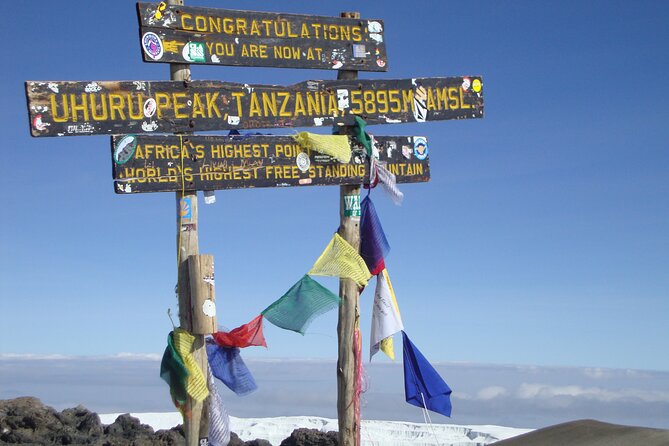
- Summit night is the real test: The ascent begins around midnight and reaches Uhuru Peak at 5,895 meters.
- The package covers the costly basics: Park fees, camping, meals, porters, guides, transfers, rescue fees, and emergency oxygen are included.
- This is private rather than a standard shared departure: Only your own group participates, and group discounts may be available.
- The crew structure is a major part of the value: Guides, porters, tent staff, a cook, and a waiter support the climb from start to finish.
Why the seven-day Machame Route works
Machame is often called the whisky route, a playful contrast with the gentler Marangu route. The nickname points to its tougher character and camping format. You sleep in tents rather than mountain huts, and the trail climbs and drops around Kilimanjaro’s southern circuit instead of marching steadily uphill.
That up-and-down pattern is useful. Kilimanjaro is not a technical mountain, but altitude is serious. Your body needs time to adjust, and the route gives you several chances to sleep at a lower elevation after hiking higher during the day.
You start and finish in Moshi. Pickup is offered from a Moshi-based lodge or meeting point, with the listed start at Shah Tours, 6 Sekou Toure Way, at 9:00 a.m. The route ends at Mweka Gate, where transport returns you to Moshi.
At $2,580 per person, this is not a bargain trek. But the fee includes several expenses that can add up quickly on Kilimanjaro: conservation and camping fees, rescue charges, a guide team, one porter carrying up to 15 kilograms of personal luggage per person, tents, meals, transfers, and boiled drinking water from the first camp onward.
You still need to budget for tips, insurance, a visa, personal gear, drinks, and possibly extra porters or a single tent. Sleeping bags and walking poles are not supplied, so check the equipment list before you arrive in Tanzania.
More Kilimanjaro routes:
- Kilimanjaro climb by Lemosho Route (7-day)
★ 5.0 · 651 reviews - Kilimanjaro climb, Machame Route (7-day)
★ 5.0 · 262 reviews - Kilimanjaro Climbing Lemosho Route 8 Days.
★ 5.0 · 186 reviews
Day one: Moshi to the rainforest
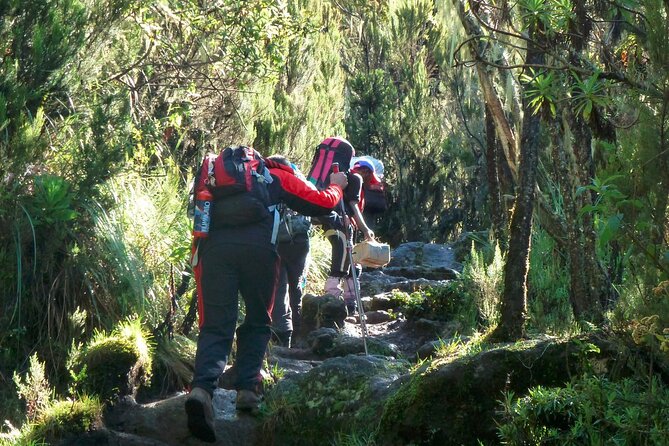
The first morning begins with a road transfer from Moshi to Machame Gate. Registration takes place at the gate, then you set off with your guide into Kilimanjaro’s rainforest zone.
This is a good opening day because the forest gives you shade and a sense of entering a different world. The vegetation is thick and varied, and the trail feels more enclosed than the open upper slopes. The walk takes about seven hours, with a steady and fairly steep climb toward the edge of the forest and the heather zone.
Rain is common here. Even if Moshi is dry and warm, the mountain can produce a wet afternoon. The path may become slippery, so shoes with solid grip are important. Trekking poles are also useful, though you must provide your own.
The first day is not technically difficult, but it is longer and steeper than some new climbers expect. Keep your pace calm from the start. Your goal is not to prove fitness on day one. It is to arrive with energy for the six days ahead.
Day two: Moorland views toward Shira
The forest gives way to heather and moorland on day two. The trail climbs a steep ridge toward Picnic Rock, a natural viewpoint with clear sight lines toward Kibo, Kilimanjaro’s highest cone.
On a clear day, this is your first strong view of the summit goal. You can also see the jagged peaks of the Shira Plateau to the west and, in the distance, Mount Meru. The route then becomes gentler, with a flatter walk toward camp.
The seven-hour day is still demanding, but the change in scenery helps. You are no longer walking beneath a thick canopy. The air feels more open, the views stretch farther, and the mountain begins to look less like a forest hike and more like a high-altitude expedition.
Cloud can hide much of this. Do not treat poor visibility as a disappointment. The weather changes quickly on Kilimanjaro, and even a short clear spell can reveal the peaks.
Day three: Lava Tower and Barranco Valley
Day three is the cleverest part of the itinerary from an altitude point of view. You climb steadily toward Kibo through alpine desert and reach Lava Tower at 4,630 meters. Then you descend toward Barranco Valley, ending the day around the elevation where you began.
This is the classic idea of hiking high and sleeping lower. Lava Tower also acts as a useful checkpoint. You discover how your body responds to thinner air before summit night, when the altitude becomes much more demanding.
The day takes about eight hours. The climb to Lava Tower can feel slow and tiring, even though you later lose much of that height. That is the point. Move slowly, drink regularly, eat even if your appetite fades, and tell your guide about headaches, nausea, unusual fatigue, or breathing trouble.
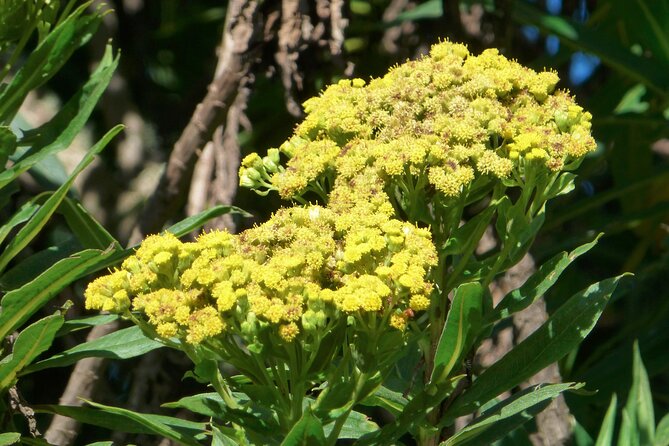
The descent into Barranco Valley brings one of Kilimanjaro’s distinctive sights, the large Kilimanjaro senecios. These flowering mountain plants look almost prehistoric against the volcanic ground. They are a small but memorable detail in an otherwise stark section of the route.
More week long trips in Moshi & Kilimanjaro:
- Climbing Kilimanjaro through 7 days Machame Route
★ 5.0 · 151 reviews - 7 Days Kilimanjaro via Machame route affordable price
★ 5.0 · 110 reviews - Private Kilimanjaro Hike 7 Day Lemosho Route
★ 5.0 · 60 reviews - 7-Day Magical Tanzania Safari -Premium High End Package
★ 5.0 · 53 reviews
Day four: Scrambling over Barranco Wall
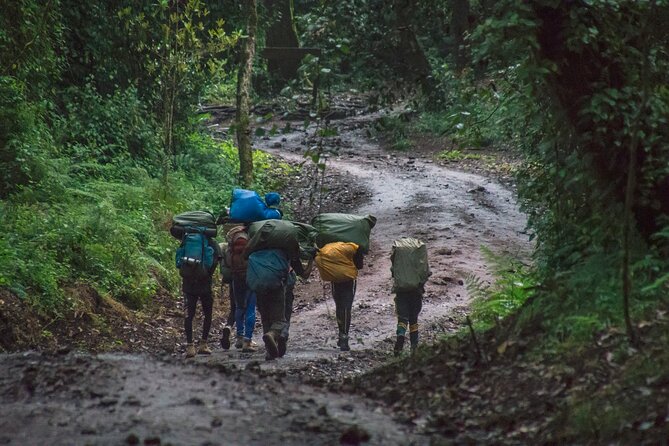
Barranco Wall is the day’s headline feature. You ascend a steep rock face using your hands and feet in places. It is a non-technical scramble, not a roped climb, and no special climbing experience is required.
Still, do not confuse non-technical with effortless. You need balance, steady footing, and the willingness to move carefully while other people are nearby. Your guide should direct you through the trickier sections. Keep your daypack compact and avoid loose items that can fall from pockets.
At the top, you get a fine view back toward camp and across to the Heim Glacier on Kibo. This is one of the most satisfying moments on the route because you have worked directly with the rock rather than simply walking a path.
The rest of the day winds through alpine desert to Karanga Valley. You descend into the valley, then climb again to camp. The total hiking time is about five hours, making this one of the shorter days, though the repeated descent and ascent still use your legs.
Karanga is the last water point. From here onward, water has to be carried and managed carefully. The supplied boiled water is a useful service, but bring enough personal capacity to drink comfortably throughout the day.
Day five: A quiet approach to summit camp
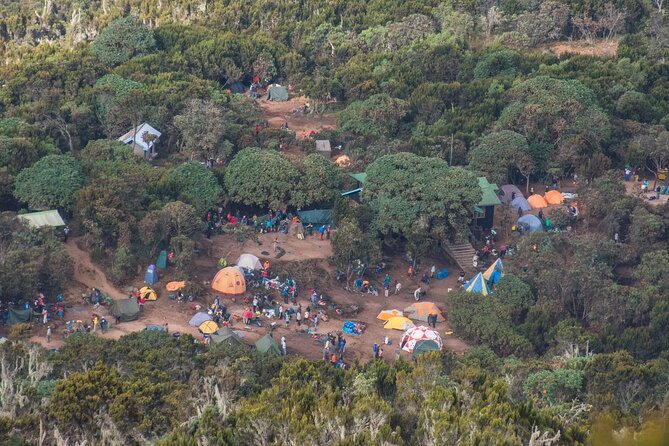
Day five is only about four hours of hiking. The trail rises gradually through empty alpine desert toward Kibo cone. The pace is intentionally slow, and you have time at summit camp to rest and prepare for the night ahead.
You may see Mawenzi Peak to the east, Kilimanjaro’s second major summit. The view helps place you within the mountain’s larger volcanic structure, with Kibo and Mawenzi forming the central drama of the climb.
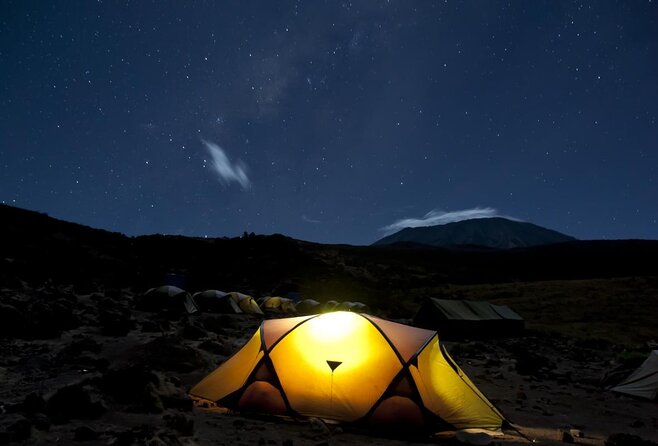
The short day is valuable because summit preparation is part of the itinerary, not an afterthought. Organize your clothing, headlamp, water, snacks, gloves, and walking poles before dinner. Try to sleep, even if altitude and anticipation make that difficult.
This is also the point where the trip becomes less about scenic hiking and more about managing resources. Eat a proper meal, keep your feet dry, and resist the temptation to wander far from camp. You will need every reserve for the final ascent.
Day six: Uhuru Peak under a midnight sky
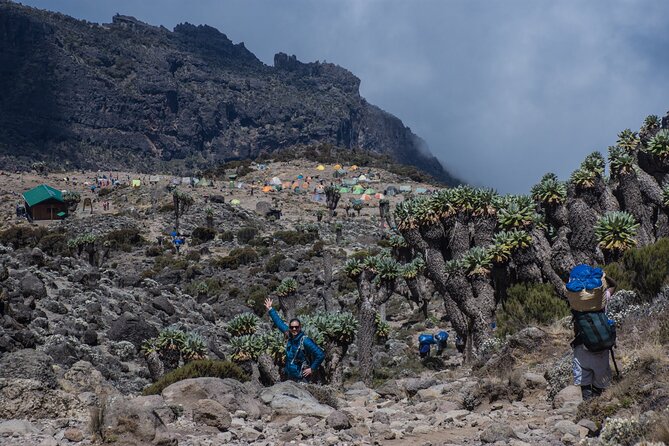
The summit attempt begins around midnight. You leave in darkness and cold, climbing through the arctic zone over loose volcanic scree. The trail rises in slow zigzags toward Stella Point at 5,685 meters, on the rim of Kibo crater.
This is the hardest physical and mental section. The slope is steep, the air is thin, and every step feels deliberate. The night start is practical because it aims to bring you to the crater rim around sunrise, but it also means you have little normal sleep before the longest day.
From Stella Point, you continue around the crater rim toward Uhuru Peak at 5,895 meters, the highest point in Africa. The remaining walk is shorter than the climb to Stella Point, but altitude makes it difficult. Time at the summit is usually brief because the air is so thin and the cold can be severe.
After the summit, you descend to base camp for breakfast or brunch. Then you pack your gear and continue down through the alpine desert. The full day is listed at about 18 hours, which is the clearest warning in the program. You should be prepared for a very long period on your feet, with little rest between the summit effort and the descent.
The safety system matters here. Guides conduct health checks twice daily and use a medical oximeter. The package includes one emergency oxygen cylinder for every five climbers and a first aid kit. These provisions do not remove altitude risk, but they show that health monitoring is part of the routine.
Do not book this climb casually if you have lung problems or a known altitude-related medical condition. The operator also asks for a strong level of physical fitness. Insurance is not included, and the optional Flying Doctors emergency evacuation membership is separate.
Day seven: Descending through the rainforest
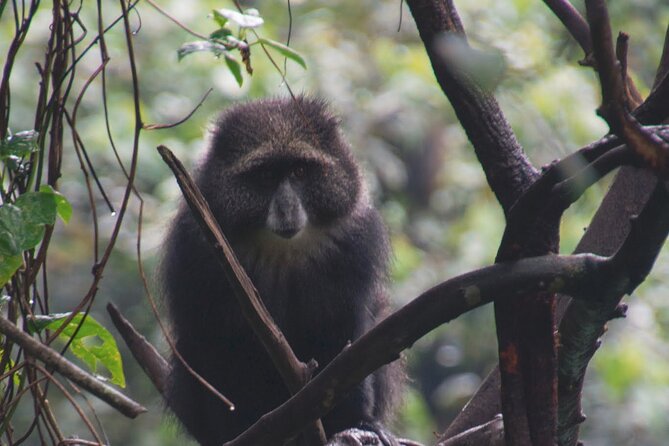
The final day reverses the first. You descend through the southern rainforest to Mweka Gate in about four hours, where a vehicle returns you to Moshi.
This can feel easy compared with summit day, but downhill walking brings its own strain. Knees and toes take repeated impact, so use poles if you have them and keep your descent controlled.
Mweka Gate is also the usual farewell point for the mountain crew. The crew generally heads home from the gate, so this is when you say goodbye to the guides, porters, cooks, and camp staff who made the week possible.
What the camping setup is like
The package includes four-season tents, a dining tent, tables, and chairs. Tent sharing is arranged for even-numbered groups, with a single tent for odd-numbered groups. An extra single tent costs $20 per day.
You receive a basic one-inch foam sleeping mattress. That is serviceable, but it is not a substitute for a warm, well-insulated sleeping bag. Personal sleeping gear is not included, so bring or rent equipment suited to freezing high-altitude nights.
Campsites have shared public toilet facilities. A hand-washing station and small personal wash basin are provided, which makes a real difference after a long day on dusty trails. A portable toilet is an optional comfort upgrade at $45 per day for up to five people, and a foldable bed costs $20 per day.
The food arrangement is stronger than a bare-bones camping trip. A mountain cook and waiter prepare and serve six breakfasts, six lunches, and six dinners, with eating utensils, bowls, cups, and cutlery supplied. Drinks such as soft drinks and alcohol cost extra.
Guides, porters, and the human side of the climb
The package uses trained, certified, English-speaking mountain guides at the minimum ratios required by KINAPA. Guide teams associated with this climb have included Calvin Shayo, John, Musa, Isaac, Acasio, Augustin, Matej, Denis, Baraka, and Vincent.
You should confirm your assigned guides during the pre-climb briefing rather than assume a particular name will lead your group. That briefing also includes an equipment check, a useful chance to identify missing layers, worn footwear, or inadequate sleeping gear before leaving Moshi.
One porter carries up to 15 kilograms of your personal luggage. You should still carry a daypack with water, rain protection, warm layers, snacks, and items needed during the day. Extra porters cost $20 per day, while an extra guide costs $35 per day.
The Kilimanjaro Porters Assistance Project monitoring is an important part of this operator’s setup. It provides a clearer welfare standard for porters, whose work is central to the climb. Tips are not included, so ask for current tipping guidance before departure and carry enough Tanzanian shillings or another accepted form of payment.
Is $2,580 a fair price?
I see this price as reasonable for a full-service private climb, provided the included services are what you want. Park and rescue fees alone form a major part of any Kilimanjaro budget, and this package also covers transport in both directions, camp infrastructure, meals, a cook, a waiter, porters, guide support, and boiled water.
The medical checks and emergency oxygen add practical value. So does luggage storage while you are on the mountain, since you do not need to carry everything from your Moshi stay.
The price is less attractive if you already own camping equipment, prefer a basic setup, or are looking for the lowest-cost shared departure. You will also need to add insurance, visa costs, tips, personal mountain equipment, drinks, and possibly comfort upgrades.
Because this is a private activity, only your own group participates. That gives you more control over the group dynamic, but it may cost more than joining a larger scheduled departure. Group discounts are listed, so ask for the exact rate for your party before paying.
Who should book this Kilimanjaro climb?
I would choose this route if you want varied scenery, a real camping experience, and a stronger acclimatization plan than a short five-day ascent. It suits people who enjoy long days outdoors and do not mind basic facilities.
It is also a good fit if you value a full support crew. The guides handle mountain leadership and health checks, while porters, tent staff, a cook, and a waiter take care of much of the camp work.
I would hesitate if you dislike cold nights, shared toilets, wet forest trails, or very long summit days. I would also choose a different plan, or seek medical advice first, if you have lung problems or a known altitude condition.
Book early enough to sort out your sleeping bag, walking poles, rain gear, and insurance. The pre-climb equipment check is helpful, but it cannot replace careful preparation at home.
Should you book it?
Book this 7-day Machame climb if your priority is a well-supported route with strong scenery, a useful high-and-low acclimatization pattern, and a serious summit attempt. The Barranco Wall gives the week extra character, while the included safety checks and crew services make the price easier to justify.
Do not book it simply because you want to say you climbed Africa’s highest mountain. The summit day is long, cold, and physically demanding. If you are fit, prepared, and comfortable with camping, Shah Tours offers a sensible package with the practical support needed for a tough but rewarding ascent.
FAQ
Where does the Kilimanjaro climb start?
The listed meeting point is Shah Tours, 6 Sekou Toure Way, Moshi, Tanzania. Pickup is offered from a Moshi-based lodge or pickup location, with the scheduled start time at 9:00 a.m.
How long is the Machame Route climb?
The experience lasts approximately seven days. Hiking times range from about four hours on day five to approximately 18 hours on summit day.
Is the Barranco Wall technical climbing?
No. The Barranco Wall involves a non-technical scramble using your hands and feet. No special equipment or previous climbing experience is required.
Is food included on the mountain?
Yes. The package includes six breakfasts, six lunches, and six dinners, along with eating utensils, bowls, cups, and cutlery. Drinks such as soft drinks and alcohol are not included.
Is drinking water provided?
Boiled drinking water is provided from the first camp onward. Water on the first day is not included, and soft plastic bottles are not permitted on the mountain.
What equipment is not included?
Personal mountain equipment such as sleeping bags and walking poles is not included. You also need to arrange insurance, visas, personal items, and tips. Extra single tents and comfort items such as portable toilets or foldable beds cost more.
Newly listed around Moshi & Kilimanjaro
- Climb Mount Kilimanjaro: 7 Days Machame Route★ 5.0 · 3 reviews
- 6 Days Mount Kilimanjaro Climbing via Rongai Route★ 5.0 · 3 reviews
- Explore 1 day Ngorongoro Crater Budget Group Safari from Arusha★ 5.0 · 3 reviews
- Mt. Kilimanjaro Day Hiking★ 5.0 · 3 reviews
- Chemka (Kikuletwa) Hot Springs, Tanzania★ 5.0 · 3 reviews
- Guided City tour of Moshi★ 4.3 · 3 reviews
- 8 Day Tanzania Family Safari★ 5.0 · 3 reviews
- Rongai Route 7 Days★ 5.0 · 3 reviews
Kilimanjaro Climbs, compared.








Browse the lists this tour appears in