
Reviewed · KILIMANJARO CLIMBS
Mountain Kilimanjaro Climbing 7 Days Machame Route
Kilimanjaro’s Machame Route gives you the mountain in full: wet rainforest, open moorland, volcanic rock, glaciers, and a summit push that begins around midnight. It is called the Whiskey route for good reason. This is the tougher alternative to the hut-based Marangu route, but the seven-day schedule gives your body more time to adjust.
I like the route’s changing scenery and the walk high, sleep low plan used on Day 3. I also like the southern circuit, which brings wide views of Kibo and Mawenzi before the final climb. The catch is simple: this is a serious physical test, with steep ground, tent camping, altitude, and a 15-hour summit day.
Key points to know before booking
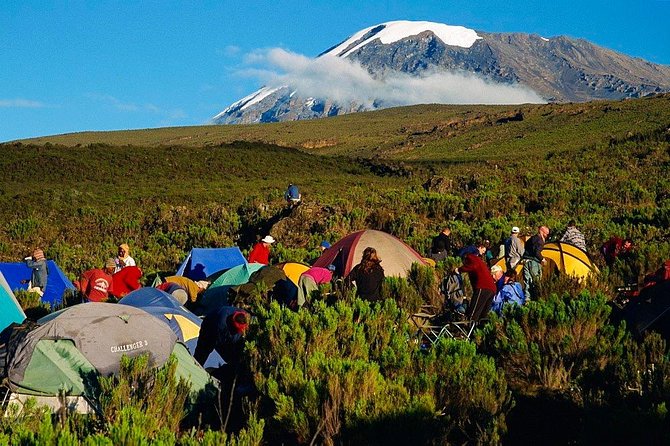
- The Machame Route uses tents, not mountain huts, so you need to be comfortable with basic camp life.
- Day 6 is the make-or-break day, starting around midnight and lasting about 15 hours.
- You reach Uhuru Peak at 5,895 meters, Africa’s highest point.
- The seven-day plan is wiser than the six-day minimum because it allows more time for altitude adjustment.
- The route changes scenery constantly, from dense rainforest to bare volcanic slopes and glacier views.
- Groups can include up to 15 people, with pickup offered and park admission included each day.
Why the seven-day Machame Route works
Machame is often chosen by people who want a more demanding climb and a stronger sense of moving through wild terrain. The trail does not simply march uphill on one steady road. It circles around the southern side of Kilimanjaro, gaining height, dropping slightly, then climbing again.
That pattern matters at altitude. Day 3 takes you as high as 4,600 meters before you sleep lower. Day 4 includes another short acclimatization walk to about 4,200 meters, followed by a return to camp. These small gains and losses help make the seven-day schedule more useful than rushing up in six days.
You will sleep in tents throughout the mountain portion. That keeps the experience close to the outdoors, but it also means cold nights, wet ground, and less comfort than you would get on Marangu, where hikers use fixed huts.
The price is $2,564.11 per person. That is a major outlay, so value depends on what you want from Kilimanjaro. You are paying for a full seven-day mountain program with park admission included in the daily itinerary, transport from Moshi to the gate and back, a tented route, a summit attempt, and a portered climbing setup. The supplied details do not spell out every inclusion, such as meals, equipment rental, tips, or hotel nights, so ask for a written breakdown before paying.
More Kilimanjaro routes:
- Kilimanjaro climb by Lemosho Route (7-day)
★ 5.0 · 651 reviews - Kilimanjaro climb, Machame Route (7-day)
★ 5.0 · 262 reviews - Kilimanjaro Climbing Lemosho Route 8 Days.
★ 5.0 · 186 reviews
Day 1: Moshi to Machame Gate and the rainforest
The day begins with about an hour on the road from Moshi to Machame Gate. Park formalities take place there, and you meet the porters who support the climb before starting uphill.
The first trail section passes through dense rainforest. This is one of the most appealing parts of the route because Kilimanjaro feels green, damp, and alive before the high-altitude scenery arrives. The path climbs steadily for about six hours.
You should expect mud and wet footing. This section is described as less well-trodden than some other routes, so parts may be overgrown. Good waterproof boots and patience matter more here than speed.
The first day is not the highest or most dramatic, but it sets the tone. You are not sightseeing from a vehicle. You are walking for hours, carrying what you need for the day, while the support crew handles the camp operation.
Day 2: Climbing toward the Shira Plateau
Day 2 continues through the forest before a steeper ascent onto the Shira Plateau. The walking time is about five hours, but the change in altitude makes the day feel more demanding than the clock suggests.
The reward is a broader view of Kilimanjaro. Looking back, you may see Mount Meru rising above the direction of Arusha. This is the first point where the mountain’s scale begins to open up around you.
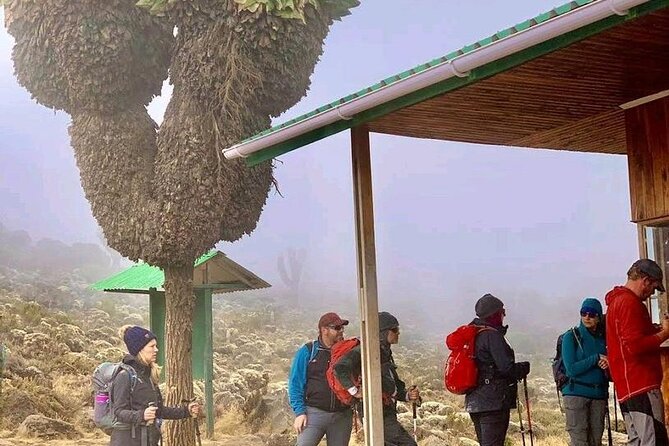
The Shira Plateau changes the feel of the climb. Trees thin out, the air becomes cooler, and the route begins to look more exposed. You are no longer simply walking through forest. You are moving into the high country, where sun, wind, and altitude become daily concerns.
Day 3: Lava Tower and the high moorland
Day 3 is an eight-hour walk across high moorland. The route crosses the southwest side of Kilimanjaro, passes beneath Lava Tower, and continues near the final section of the Western Breach before camp.
This is a very useful acclimatization day. You reach up to about 4,600 meters, then sleep lower. That is the logic behind walk high, sleep low, and it is one of the strongest reasons to choose seven days instead of the six-day minimum.
You should not treat this day as a casual scenic walk. Eight hours at altitude can drain you even if the trail itself does not involve technical climbing. The scenery becomes more severe, with fewer plants and more volcanic ground. The high point near Lava Tower gives you a clear sense of how much altitude remains.
The route is nontechnical, but that does not mean easy. You need to keep a steady pace, drink regularly, and pay attention to how you feel. The tour requires a moderate level of physical fitness, but the long days and altitude make preparation important.
More week long trips in Moshi & Kilimanjaro:
- Climbing Kilimanjaro through 7 days Machame Route
★ 5.0 · 151 reviews - 7 Days Kilimanjaro via Machame route affordable price
★ 5.0 · 110 reviews - Private Kilimanjaro Hike 7 Day Lemosho Route
★ 5.0 · 60 reviews - 7-Day Magical Tanzania Safari -Premium High End Package
★ 5.0 · 53 reviews
Day 4: Barranco Wall and Karanga Camp
The morning begins with a descent into the Great Barranco, a huge ravine. Then comes the Barranco Wall, one of the best-known sections of the Machame Route.
The wall is climbed over rock, but it is not a technical climbing pitch according to the tour details. Still, it is steep, long, and tiring. You will use your hands at times for balance, and the slow pace can make this section feel more like scrambling than ordinary hiking.
Above and beyond the wall, the trail passes beneath the Heim and Kersten glaciers before reaching the Karanga Valley. From there, you make a steep climb to Karanga Camp at 3,963 meters. The main walking day lasts about five hours.
If you have enough energy, the schedule includes a mid-afternoon acclimatization walk to around 4,200 meters, followed by a descent to camp. I like this feature because it gives you another controlled chance to gain altitude without sleeping at the higher point.
The Barranco Wall may be a concern if you dislike exposed or steep trails. It is not described as technical, but you should still expect a demanding climb over uneven rock.
Day 5: The barren climb to Barafu Camp
After breakfast, you walk toward Barafu Camp at 4,640 meters. This is a shorter day, about three hours, but the altitude and steep slope make it a serious one.
Vegetation disappears, leaving desolate scree slopes and bare volcanic ground. The lack of trees gives the camp a stark, high-mountain character, but it also means little shelter from cold or wind.
Once you reach Barafu, the main task is rest. You eat, drink, stay warm, and prepare for the summit night. Dinner comes early, and the plan is to sleep before getting up between 11 p.m. and midnight.
This is where the seven-day itinerary feels most sensible. You are not asked to push through a long approach day before the summit. The schedule gives you a short walking day and an afternoon to conserve strength.
Do not underestimate the need to rest here. Even if you feel strong, the climb from Barafu to the summit will be steep, cold, and long.
Day 6: Stella Point, Uhuru Peak, and 15 hours on foot
Summit day starts around midnight. You climb steeply toward the glaciers, spending four to five hours on scree while gaining a great deal of height over a short distance.
The first major goal is Stella Point on the crater rim at 5,739 meters. The timing aims to put you there as the first sunlight appears. From Stella Point, you can see ice cliffs in the crater and the jagged Mawenzi peak beyond.
Uhuru Peak is another hour from Stella Point, at 5,895 meters. Reaching it is the high point of the trip, both literally and emotionally. The views are wide, but the altitude can make even slow walking difficult.
The day does not finish at the summit. You return to Stella Point, descend the scree to Barafu Camp for breakfast, and then continue down to Millennium Camp. The total walking time is about 15 hours.
That figure should guide your decision more than the attractive summit photos. You need to handle a long night, a steep ascent, a descent on loose ground, and another major descent after breakfast. The route is rewarding, but it is not gentle.
Day 7: Mweka Gate and the return to Moshi
The last day is a six-hour descent through rainforest to Mweka Gate. After park formalities, you receive a certificate and meet the vehicles for the return to your Moshi hotel.
The forest feels different on the way down. After the bare slopes and cold camps above, trees and damp air can feel almost luxurious. The final walk is still tiring, especially after summit day, but the direction is easier than climbing.
A hot shower at the hotel is one of the simple pleasures built into the day’s rhythm. The mountain section is finished, but you still need to allow time for the gate process and the drive back to Moshi.
What the tour setup means for you
Pickup is offered, and the trip begins from Moshi. The drive to Machame Gate takes about an hour, so the starting point is practical if you are staying in town.
The group size can reach 15 people. That is large enough to create a social atmosphere, but it may also mean a wider range of walking speeds. The route already requires a slow, steady pace at altitude, so ask how the operator handles different abilities within one group.
The tour is offered with a mobile ticket, and confirmation is provided at booking. Cancellation is free if you cancel at least 24 hours before the local start time. Changes or cancellations inside that window are not accepted for a refund.
Exceed Expectations Tours & Safari is the named operator. Oscar Swai appears as the company contact and director in the supplied correspondence, and he responded to past booking inquiries with detailed price proposals. That makes it sensible to ask him or the company for exact inclusions before booking, especially for meals, sleeping gear, transfers, and tipping expectations.
The strongest parts of the experience
The route’s greatest strength is its variety. In one week, you move from rainforest to Shira’s open plateau, then across high moorland, volcanic scree, glacier country, and back into forest.
The second strength is the summit approach from Barafu. Starting around midnight places you on the crater rim near sunrise, when the light reaches the glaciers and Mawenzi. It is a demanding schedule, but the timing gives the climb a clear purpose.
I also value the use of acclimatization walks. The high point on Day 3 followed by lower sleeping conditions, plus the optional climb above Karanga, show that the schedule is not built only around reaching the top as fast as possible.
The main weakness is comfort. You sleep in tents, walk for up to 15 hours on summit day, and deal with mud, scree, cold, steep rock, and altitude. If you want a softer mountain holiday or prefer hut accommodation, Marangu may suit you better, though this tour’s information presents Machame as the more demanding route.
Who should book this Kilimanjaro climb?
I would choose this experience if you want a full seven-day mountain route, can manage long uphill days, and like the idea of changing scenery rather than staying on one direct trail. It suits a fit hiker who accepts that the summit day may be exhausting even with good preparation.
It is also a good choice if the southern circuit appeals to you. You see Kilimanjaro from several angles before approaching the summit from the east, then descend by the Mweka trail.
I would think twice if you dislike tents, struggle with steep uneven ground, or want a relaxed schedule. The moderate fitness requirement should not be read as a promise of ease. Altitude affects people differently, and the final day to Uhuru Peak is the hardest part by a wide margin.
Should you book the seven-day Machame Route?
Book it if you want the classic hard-working version of Kilimanjaro: rainforest at the start, high camps, a sunrise summit attempt, and a long descent through Mweka. The seven-day format gives you more breathing room for altitude than the six-day minimum.
At $2,564.11 per person, compare the written inclusions carefully before committing. If park fees, transport, camp services, and key support costs are covered, the price may offer solid value for a week on the mountain. If you need to add major equipment, hotels, meals, or tips, your real budget will be higher.
My practical call is this: choose Machame for the route and the acclimatization plan, but book only after confirming exactly what the operator supplies. If you are ready for tents, steep trails, and a 15-hour summit day, this is a strong way to approach Africa’s highest peak.
FAQ
How long is the Machame Route tour?
The climb lasts approximately seven days, including six nights on the mountain.
Where does the climb begin?
The route begins at Machame Gate, reached by about a one-hour drive from Moshi.
Where does the descent finish?
The descent follows the Mweka trail and finishes at Mweka Gate, where park formalities are completed before returning to Moshi.
What time does the experience start?
The listed start time is 12:00 a.m. The summit-night climb begins around midnight, with departure from Barafu planned between 11 p.m. and midnight.
How high is Uhuru Peak?
Uhuru Peak is 5,895 meters high.
How long is summit day?
Day 6 takes approximately 15 hours. It includes the climb from Barafu to Stella Point and Uhuru Peak, the return to Barafu, and the descent to Millennium Camp.
Do climbers sleep in huts or tents?
Machame uses tents rather than the fixed hut accommodation found on the Marangu route.
How large can the group be?
The maximum group size is 15 people.
What level of fitness is required?
The tour states that you should have a moderate level of physical fitness. The itinerary includes steep trails, long walking days, high altitude, scree, and a 15-hour summit day.
Is pickup available?
Yes. Pickup is offered as part of the experience details.
Can I cancel for a full refund?
Yes, if you cancel at least 24 hours before the experience start time. Cancellations or changes made less than 24 hours before the local start time are not accepted for a refund.
Newly listed around Moshi & Kilimanjaro
- Climb Mount Kilimanjaro: 7 Days Machame Route★ 5.0 · 3 reviews
- 6 Days Mount Kilimanjaro Climbing via Rongai Route★ 5.0 · 3 reviews
- Explore 1 day Ngorongoro Crater Budget Group Safari from Arusha★ 5.0 · 3 reviews
- Mt. Kilimanjaro Day Hiking★ 5.0 · 3 reviews
- Chemka (Kikuletwa) Hot Springs, Tanzania★ 5.0 · 3 reviews
- Guided City tour of Moshi★ 4.3 · 3 reviews
- 8 Day Tanzania Family Safari★ 5.0 · 3 reviews
- Rongai Route 7 Days★ 5.0 · 3 reviews
Kilimanjaro Climbs, compared.








Browse the lists this tour appears in