
Reviewed · MOSHI & KILIMANJARO TOURS
6 Day Private Camping Safari
The big draw here is the route: in six days, you reach four of Tanzania’s best-known wildlife areas, from the bird-filled shores of Lake Manyara to the wide grasslands of the Serengeti. You also get two full Serengeti days, which gives you a better shot at seeing wildlife than a quick one-night visit.
I like the private format, since your group sets the pace and shares the vehicle only with its own party. I also like the range of scenery: Rift Valley cliffs, open plains, volcanic crater walls, baobab trees, and elephant country all appear on one trip. The main consideration is that this is a long road-based safari, with early starts and substantial driving between parks.
Key points at a glance
- Two full days in the Serengeti: More time for game drives and for adjusting your route to current wildlife sightings.
- A classic Northern Circuit route: Lake Manyara, Serengeti, Ngorongoro Crater, and Tarangire each offer a different setting.
- Private travel for your own group: No mixed vehicle is mentioned, so the experience is designed around your party.
- Airport pickup and accommodation included: Pickup is offered from Kilimanjaro International Airport or Arusha Airport, with an overnight stay in Arusha before the safari.
- Camping with most meals covered: Six breakfasts, five lunches, and five dinners are included, while drinks at camps cost extra.
- A strong wildlife mix: Look for tree-climbing lions at Manyara, large herds and predators in the Serengeti, rhinos in Ngorongoro, and elephants in Tarangire.
Why this six-day route works
Tanzania’s Northern Circuit rewards a trip that gives each park its own day. Lake Manyara is compact and easy to add at the start. The Serengeti then receives the most time, as it should. Ngorongoro brings a different kind of wildlife setting, and Tarangire finishes the trip with elephants and baobabs.
I like this order because it builds from a small park to Tanzania’s most famous open plains, then moves through the crater and ends in a park known for its river and elephant families. You are not seeing the same type of scenery every day.
The private setup also matters. On a shared safari, everyone must agree on when to stop, how long to watch an animal, and when to move on. Here, your own group can discuss those choices with the guide. The available information names Cornelius, Elias, and Laurian among the guides associated with this safari operation, though your specific guide is not guaranteed in advance.
At $2,300 per person, this is not a budget park visit. But the price covers transport, arrival and departure transfers, accommodation, park-related fees, and most meals across six days. It becomes better value if you want a private vehicle and a full Northern Circuit route rather than a short safari from Arusha.
More Safaris in Moshi
- Safari Serengeti And Ngorongoro
★ 5.0 · 288 reviews - Big Five Safari In Tanzania
★ 5.0 · 99 reviews - Unforgettable Tanzania Safari And Zanzibar Beach
★ 5.0 · 97 reviews
Day 1: Arriving in Arusha from Kilimanjaro
Your safari begins with pickup at Kilimanjaro International Airport or Arusha Airport. A representative from Safaris Africa United drives you to your Arusha accommodation, where you spend the night before the main park program begins.
This first night is useful. It separates international arrival from the early safari start, giving you a place to sleep and get ready rather than trying to reach a park immediately after a flight. The start time for the activity is listed as 6:00 am, so plan for an early morning once the safari begins.
The airport transfer is included, as is the first night’s accommodation. The description does not specify the hotel or camp standard, so you should ask for the exact property before booking if room type matters to you. A post-safari night in Arusha is not included, so allow for that if your return flight is the following day.
Day 2: Lake Manyara beneath the Rift Valley escarpment
After breakfast, you drive to Lake Manyara National Park for a full park visit. The setting is immediately different from the open Serengeti. The park lies beside the shallow, alkaline lake, with the Rift Valley escarpment forming a dramatic western boundary.
Manyara is a small park, but its habitats change quickly. You may pass through savannah, evergreen forest, and areas near the lake. That variety helps explain why the park is so good for birdlife. During the rainy season, thousands of flamingos can gather around the lake, though the lake expands and contracts with the seasons.
The park is also associated with tree-climbing lions. Seeing one is never guaranteed, but the possibility adds a special reason to include Manyara. You may also find the park interesting for its sounds and smells, with forest and wetland habitats creating a different feel from the dusty open plains farther west.
The main drawback is time. A five-hour stop is listed, and the drive from Arusha takes part of the day. If your priority is only big cats or huge herds, you may find Manyara less dramatic than the Serengeti. If you value variety, birds, and the Rift Valley setting, it is a worthwhile opening park.
The name Manyara comes from the Maasai word emanyara, a plant used to build the protective enclosure around a family homestead. That small detail adds local context to a place that can otherwise seem like a quick stop on the way to the Serengeti.
Day 3: Crossing into the Serengeti
Day three takes you to Serengeti National Park after an early breakfast. The park is famous for broad grasslands, and the change from Manyara’s wooded and watery setting is striking.
The Serengeti is Tanzania’s oldest national park and part of an ecosystem that has changed little over millions of years. That long continuity is one reason the park feels so large and open. It is a place where visibility can stretch far across the plains, giving you a good chance to scan for animals while the guide chooses areas to explore.
The annual Great Migration is the park’s most famous event. Wildebeest move with zebra and antelope in search of fresh grazing, but the exact timing depends on rainfall. This is important when planning your trip: a safari in the Serengeti is worthwhile at any time, but the location of large herds changes during the year.
The first Serengeti day includes the journey into the park, so you should not treat it as an entire day of game driving. Even so, the route itself can provide wildlife sightings, and the program gives you a chance to begin exploring before the dedicated second Serengeti day.
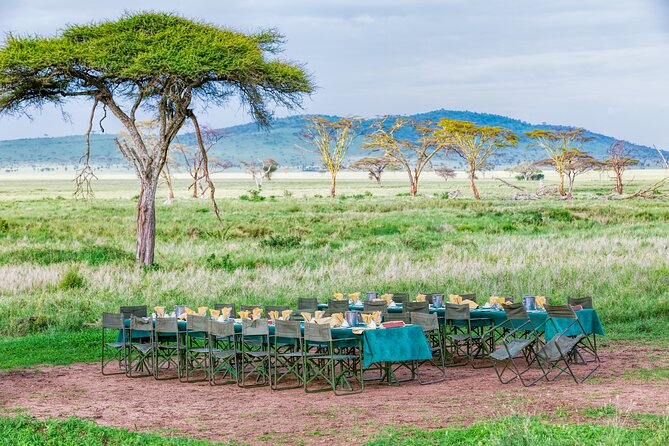
Camping can make this part of the trip feel close to the park environment, but the provided details do not state the camp names, tent style, bedding, or bathroom arrangements. Ask those questions before paying, especially if you are comparing this trip with lodge-based safaris.
More camping safaris in Moshi & Kilimanjaro:
- 4 Days Group Joining Camping Safari to Tarangire Serengeti Ngorongoro Crater
★ 5.0 · 50 reviews - 4 days adventure camping safari
★ 5.0 · 44 reviews - 6 Days Tanzania Budget Camping Safari with Migration
★ 5.0 · 31 reviews - 5 days Tanzania Camping Safari
★ 5.0 · 29 reviews
Day 4: A full day among the Serengeti plains
The second Serengeti day is the heart of the safari. With no new park transfer listed, you have more time for game drives and for following the best current sightings.
This extra day has real value. Wildlife does not follow a timetable, and a single game drive can be quiet even in an excellent park. Two days give you more chances to find animals, watch behavior, and see how the scenery changes from open grassland to areas with trees or water.
The guide’s judgment is especially important here. Cornelius is described as having a strong grasp of the national parks and their wildlife, while Elias and Laurian are also named as guides who have led this route. Your assigned guide may be different, but the operator’s guide team is a key part of what you are paying for.
The Serengeti is not a guaranteed checklist. You may see large mammals, predators, or migrating herds, but sightings depend on the season, weather, and animal movement. I prefer this honest view to a promise of seeing every famous species. The park’s open spaces are rewarding even when the animals are spread out.
Take note of the five-hour duration shown for each daily stop. The actual day may feel longer once early breakfast, driving, meals, and camp routines are included. Ask how much time is spent on game drives versus road transfers, since that balance can matter more than the headline number.
Day 5: Ngorongoro Crater and the search for rhino
After an early breakfast, you continue with a game drive through the Serengeti before heading toward the Ngorongoro Conservation Area. This en-route drive lets you use part of the morning for wildlife rather than simply leaving the park at once.
Ngorongoro Crater is one of Tanzania’s most memorable settings. The crater formed when a large volcano exploded and collapsed two to three million years ago. Today, steep volcanic walls surround open grassland, acacia woodland, lakes, and swamps.
The crater is known for a high concentration of large mammals. It is also one of the places on this route where you may look for black rhino. That sighting is never certain, but the crater gives you a stronger wildlife focus than a simple scenic overlook.
The descent into the crater is a major part of the experience. From above, the enclosed wilderness looks almost self-contained. Once inside, the walls remain visible and help you understand the scale of this volcanic basin.
Ngorongoro can feel busier than the Serengeti, and its enclosed setting means vehicles often gather around major animal sightings. That is a practical trade-off. You gain the chance to see many species in a compact area, but you may have less solitude than on the open plains.
Accommodation is included on the trip, but the exact night-by-night camp arrangement is not specified. Confirm where you sleep after the crater visit and how much driving remains before reaching camp.
Day 6: Elephants and baobabs in Tarangire
The final park is Tarangire National Park. It takes its name from the Tarangire River, which becomes the key water source for wildlife in the area during the dry season.
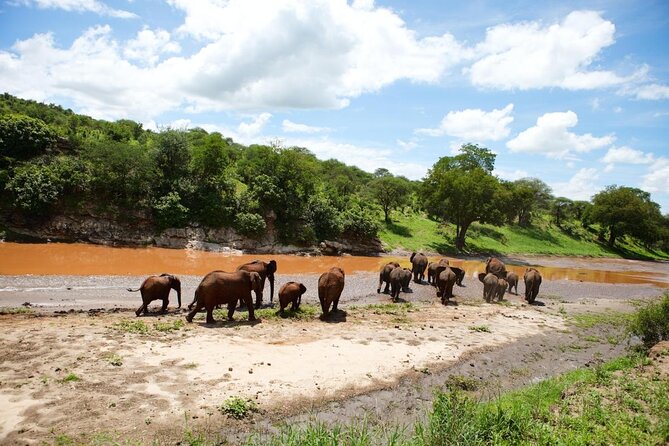
This park has a different visual character again. Elephant grass, acacia woodland, groundwater forest, and baobab trees create a more enclosed setting than the Serengeti. Large elephant families are one of the main reasons to come, and they are often seen near the river.
You might also find giraffe, bushbuck, hartebeest, lions, leopards, and a wide range of birds. Tarangire is noted for its bird breeding species, so bring patience if birds matter to you. The park is more than a final stop added for convenience. It gives the itinerary another distinct habitat and a strong chance of seeing elephants.
Ending here makes sense for a short Northern Circuit trip, especially if you like big trees and elephants as much as open plains. The drawback is another early start and another park drive after several days on the road. By day six, the private vehicle and clear communication with your guide become important for managing energy.
The activity ends back at the meeting point. Since the information does not state a specific end time, do not schedule a tight flight or onward transfer without confirming the expected return time with the operator.
What the $2,300 price includes
The listed price includes:
- Transportation during the safari
- Arrival and departure transfers
- Accommodation
- All fees and taxes
- Six breakfasts
- Five lunches
- Five dinners
That is a solid package for a private six-day route. The biggest value comes from combining several parks without having to arrange separate vehicles, transfers, accommodation, and park payments yourself.
The price does not include flights, visas, medical insurance, travel insurance, tips, drinks at camps, changes you request, or an extra night in Arusha after the trip. Drinks are an easy cost to overlook, so budget for them separately.
Tips are also excluded. The amount is not specified, so ask the operator for current guidance rather than guessing. If you are traveling as a group, group discounts may be available, but the discount amount is not provided.
Camping, comfort, and the private vehicle
This is sold as a private camping safari, not a lodge safari. That usually appeals to people who want a closer connection to the outdoors and a more traditional safari feel. But comfort can vary sharply between camps, and the supplied details do not explain the tent facilities.
Before booking, ask:
- Are the tents permanent or mobile?
- Are bathrooms private or shared?
- Is there hot water?
- How many people share the vehicle?
- Is there a charging setup?
- Which camps are used in each park?
Those are not minor details. They shape how the six days feel after long drives and early mornings.
The private format is a major advantage for families, couples, and groups of friends. One review described a party of nine spanning three generations, which suggests the format can work for a mixed-age group. Still, everyone should be comfortable with early starts, road time, and camping conditions.
Who should book this safari
I would recommend this trip to you if you want a classic Tanzania safari with several parks, strong wildlife potential, and a private setup. It suits first-time safari visitors who want the famous highlights without trying to plan every transfer themselves.
It is also a good fit for a group that values flexibility. Families and friends can share the experience without being placed with strangers, and group discounts may help reduce the per-person cost.
I would think twice if you want a slow, luxury holiday with short transfers and guaranteed hotel-style comfort. The route covers a lot of ground, and the early departures are part of the deal. It is also less suitable if you only want the Great Migration, since migration timing depends on rainfall and is not fixed.
Practical booking advice
Pickup is available from Kilimanjaro International Airport or Arusha Airport. Confirmation is normally issued at booking, but reservations made within seven days of departure may take up to 48 hours and remain subject to availability.
Most people can participate, and the activity is private for your group. The cancellation terms allow a full refund if you cancel at least 24 hours before the start time. Cancellations or changes inside that period are not accepted for a refund, and cut-off times use local Tanzanian time.
Bring questions about the camp standard, guide assignment, daily driving time, and the exact accommodation plan. Those answers will tell you more about the trip’s comfort level than the price alone.
Should you book it?
Book this safari if you want a full Northern Circuit sampler with two Serengeti days and the control that comes with private travel. The route gives you excellent variety, from flamingos and possible tree-climbing lions to rhino country, elephant herds, and baobab trees.
Choose another option if you want luxury lodging, a slower pace, or a trip focused only on migration herds. At $2,300 per person, the value is strongest for a group that wants transport, park access, accommodation, meals, and guiding handled in one package. Ask clear camping and schedule questions first, then this is a sensible way to see a broad slice of northern Tanzania in six days.
FAQ
Where does the safari start?
The safari starts at Kilimanjaro International Airport or Arusha Airport. Pickup is offered from either location.
What time does the activity start?
The listed start time is 6:00 am.
Where does the safari end?
The activity ends back at the meeting point.
Is this a private safari?
Yes. Only your group participates in the activity.
Which national parks and areas are included?
The route includes Lake Manyara National Park, Serengeti National Park, the Ngorongoro Conservation Area, and Tarangire National Park. It also includes an overnight stay in Arusha before the safari.
Are meals included?
Yes. The package includes six breakfasts, five lunches, and five dinners.
Are drinks at the camps included?
No. Drinks at the camps are not included.
Are flights and visas included?
No. Flights and visas are excluded, as are medical insurance and travel insurance.
More six day trips in Moshi & Kilimanjaro
- Kilimanjaro climb, Lemosho Route (6-day)
★ 5.0 · 129 reviews - Kilimanjaro climb, Marangu route (6-day)
★ 5.0 · 72 reviews - 6 Days Tanzania Classic Safari
★ 5.0 · 52 reviews - The Best of Machame Route in 6 Days: Your World’s Summit Guide
★ 5.0 · 44 reviews
More Safaris in Moshi & Kilimanjaro
- 8-Day Essence of Tanzania Safari – Luxury
★ 5.0 · 72 reviews - Great Migration Safari In Tanzania
★ 5.0 · 71 reviews - Serengeti, Ngorongoro and Tarangire 4 Days Safari
★ 5.0 · 59 reviews - 6 Days 5 Night Safari
★ 5.0 · 57 reviews
Newly listed around Moshi & Kilimanjaro
- Climb Mount Kilimanjaro: 7 Days Machame Route★ 5.0 · 3 reviews
- 6 Days Mount Kilimanjaro Climbing via Rongai Route★ 5.0 · 3 reviews
- Explore 1 day Ngorongoro Crater Budget Group Safari from Arusha★ 5.0 · 3 reviews
- Mt. Kilimanjaro Day Hiking★ 5.0 · 3 reviews
- Chemka (Kikuletwa) Hot Springs, Tanzania★ 5.0 · 3 reviews
- Guided City tour of Moshi★ 4.3 · 3 reviews
- 8 Day Tanzania Family Safari★ 5.0 · 3 reviews
- Serengeti Safari with Sirikwa Travel★ 5.0 · 3 reviews
Moshi & Kilimanjaro Tours, compared.








Browse the lists this tour appears in