
Reviewed · MOSHI & KILIMANJARO TOURS
6-Day Northern Safari
The best part of this six-day safari is its strong three-park route. You get Tarangire’s elephant country, the open Serengeti, and Ngorongoro Crater without spending your whole trip on one type of scenery. The route begins and ends near Arusha, making it a practical choice after flying into Kilimanjaro.
I like the private format, since your group can focus on its own pace and wildlife interests. I also like the mix of lodging, from cottage-style rooms to a roomy tent with a large bed, running water, and views across the Serengeti.
The main consideration is time. Six days gives you a fine Northern Circuit sampler, but it includes several long driving days. If you want slow mornings, extra time in one park, or a better chance of following the Great Migration, you may want a longer safari.
Key points before you book
- Three famous parks in six days: Tarangire, Serengeti, and Ngorongoro Crater form a classic Northern Circuit route.
- Private group travel: Only your own party takes part, which allows more personal attention from the guide.
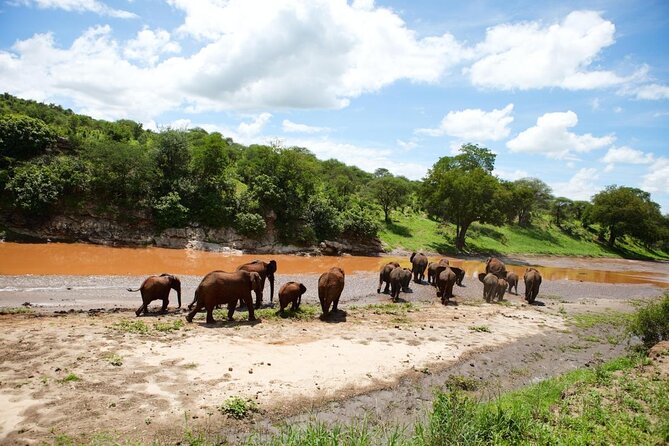
- Strong elephant viewing: Tarangire is especially appealing for its resident elephant population and huge baobab trees.
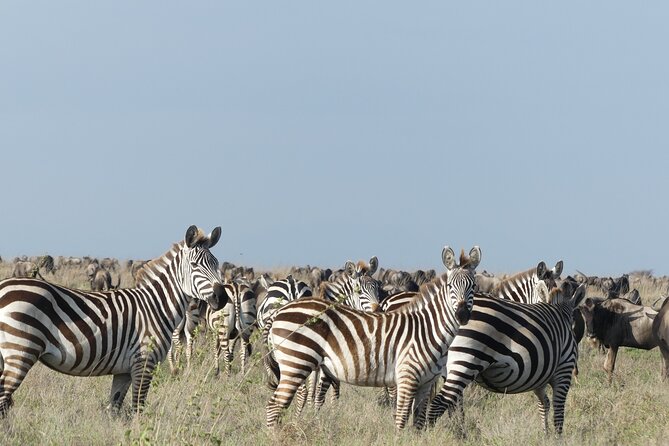
- A full Serengeti day: Day four allows about 10 hours on safari, giving you time to search for lions, leopards, cheetahs, hyenas, giraffes, and large antelope herds.
- Meals are built in: The price includes six breakfasts, five lunches, five dinners, and all fees and taxes.
- Local guide team: Guides named in the feedback include Shaban, Shabani, Georges, Aruna, Chabane, and Harouna, with Joel handling safari planning and communication.
Why this route works so well
At $2,600 per person, this is not a budget outing, but a six-day private safari includes far more than a vehicle and a few game drives. The package covers accommodation, meals listed above, all fees and taxes, airport pickup, and transport through three of Tanzania’s most important wildlife areas.
That bundled price matters in Tanzania. You are not piecing together separate park visits, hotel nights, meals, and transfers. You also avoid the uncertainty of arranging your own route between Arusha, Tarangire, Serengeti, Ngorongoro, and the airport.
The tradeoff is that the price does not include a visa or travel insurance. You will need to arrange both separately. Also check the final lodging plan before paying, since the supplied schedule names specific properties but safari operators can sometimes adjust accommodations.
The private setup is a real advantage for couples, families, and solo visitors who do not want to share a vehicle with strangers. Families in particular may appreciate the direct support from the guide team. Solo guests also avoid the awkwardness of joining a large group for six days.
The overall score is listed as 5 out of 5, with 100 percent recommending the experience. The strongest praise centers on attentive planning, friendly guides, good food, clear communication, and guides who respond to photographic opportunities. That combination matters more than flashy promises when you are spending long hours on rough park roads.
More Safaris in Moshi
- Safari Serengeti And Ngorongoro
★ 5.0 · 288 reviews - Big Five Safari In Tanzania
★ 5.0 · 99 reviews - Unforgettable Tanzania Safari And Zanzibar Beach
★ 5.0 · 97 reviews
Day 1: A calm start near Mount Meru
Your safari begins with pickup at Kilimanjaro International Airport at 7:30 a.m. A representative takes you to Pazuri Inn, on the western edge of Arusha near the lower slopes of Mount Meru.
You stay in a cottage-style suite. This first night is useful because it gives you a soft landing after an international flight and puts you close to the Northern Circuit. You are not expected to begin with a full game drive on arrival.
The schedule allows about eight hours for this first stop, though the practical part of the day is airport arrival, transfer, check-in, and settling in. If your flight schedule changes, the operator has been praised for handling changing arrival times, but you should still send your flight details clearly before departure.
Arusha is the gateway for this safari, not one of the main wildlife stops. Think of this night as a base for the journey ahead. If you want city sightseeing or extra time around Mount Meru, this six-day plan does not leave much room for it.
Day 2: Tarangire’s elephants and baobabs
After leaving Arusha, you drive west for about two hours to Tarangire National Park. That relatively short transfer gets you into the park early enough for a full-day game drive and a picnic lunch.
Tarangire is often skipped in favor of the Serengeti, which is a mistake if you care about elephants and distinctive scenery. The park is known for its resident elephant population, and the huge baobab trees give the day a look you will not get in the open Serengeti.
The season changes what you see. From March through May, the green season brings lush foliage and baobabs with full leaves. From June through October, dry conditions can gather very large herds of buffalo, wildebeest, and zebra around dependable water sources.
The strongest reason to keep Tarangire in the route is variety. You begin with thick vegetation, large trees, and elephants before moving to the broad plains farther west. That makes the first park feel distinct rather than like a warm-up for the Serengeti.
The day is listed at about eight hours, including the game drive and picnic lunch. Afterward, you travel to Eileen’s Tree Inn in Karatu. Karatu is well placed for the next day’s crossing through the Ngorongoro Conservation Area.
One practical note: a full game-drive day can be tiring, especially after an international arrival and an early departure. I would treat Tarangire as a major safari day, not a brief stop.
Day 3: Crossing the highlands into the Serengeti
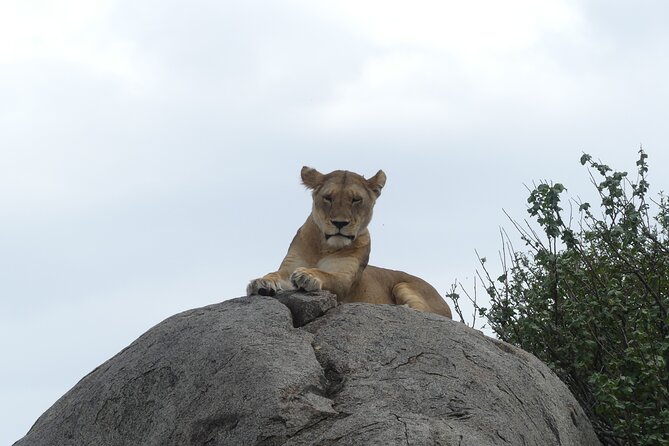
You leave early and drive north for about three hours through the Ngorongoro Conservation Area. This is more than a transfer. The road takes you through highland country before approaching the Serengeti from the south.
Entering the Serengeti gives you a sense of scale. The protected ecosystem covers about 1.5 million hectares, with tree-dotted plains and riverine forest. A short visit cannot cover it all, so basing the game drives around Seronera is a sensible choice.
Seronera sits near the center of the park and is a strong base for searching for a wide range of wildlife. You might find lions, leopards, giraffes, spotted hyenas, cheetahs, eland, and several types of gazelle. Wildebeest and zebra are common goals here, and the route may line up with the Great Migration depending on the time of year.
Your accommodation is Tanzania Bush Camp. The tent is described as roomy, with an oversized bed, running water, and broad views. This is not a bare sleeping setup. It gives you a closer feel for the bush while keeping some basic comfort.
The drawback is driving time. You spend part of the day crossing the highlands and reaching the park, so the first Serengeti game drive is not a full day. That is why the next day is important.
More Safaris in Moshi & Kilimanjaro:
- 8-Day Essence of Tanzania Safari – Luxury
★ 5.0 · 72 reviews - Great Migration Safari In Tanzania
★ 5.0 · 71 reviews - Serengeti, Ngorongoro and Tarangire 4 Days Safari
★ 5.0 · 59 reviews - 6 Days 5 Night Safari
★ 5.0 · 57 reviews
Day 4: The long Serengeti game drive
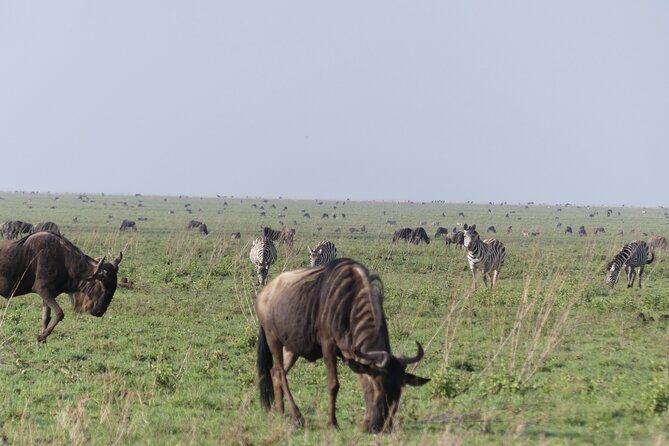
This is the centerpiece of the trip. You have about 10 hours for a full-day game drive in the Serengeti, which gives your guide time to cover more ground and wait for better wildlife moments.
A full day also improves your odds of seeing different types of animals. Big cats may be the headline, but the Serengeti works best when you pay attention to the full scene: grazing antelope, nervous zebra, hyenas moving through the grass, giraffes near trees, and birds working the plains.
The Great Migration is possible, but it should not be treated as a guarantee. The movement of millions of wildebeest and zebra changes by season and location. The tour is promoted as a year-round option, and the Serengeti still offers valuable wildlife viewing outside the migration period.
Birdwatchers have good reason to bring binoculars. More than 500 bird species are found in the Serengeti. You may not identify dozens in a single day, but the range of habitats and the long hours outside create many chances for bird sightings.
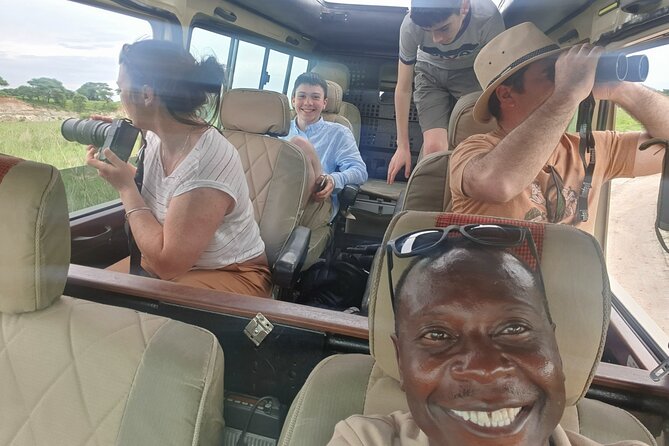
This is where the guide makes a major difference. Guides named in the supplied feedback include Shaban, Shabani, Georges, Aruna, Chabane, and Harouna. The most useful guide qualities described are patience, responsiveness, park experience, and an ability to position the vehicle well for photographs.
You should tell your guide early what matters most to you. If you want cats, birds, elephants, landscapes, or migration scenes, say so. A private vehicle makes that conversation more useful because your group is not balancing several unrelated wish lists.
The 10-hour day is a benefit and a strain. You get more time in the bush, but you also spend most of the day in a safari vehicle. Pack patience, sun protection, and a willingness to accept quiet stretches between exciting sightings.
Day 5: Ngorongoro Crater and the final wildlife circuit
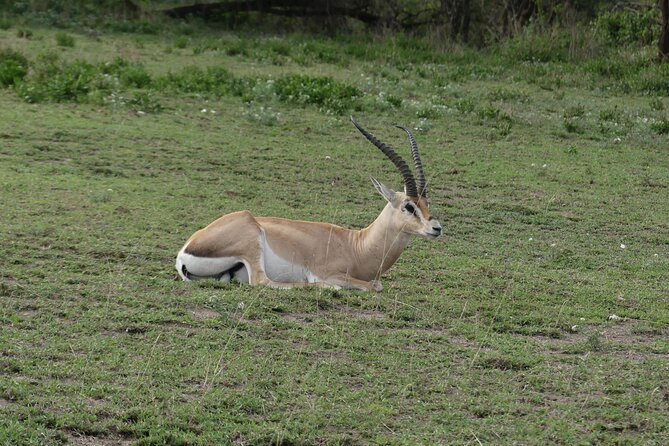
You begin with an early sunrise over the Serengeti and a hot mug of tea before packing up. Then you take one last game drive while leaving the park and return through the Ngorongoro highlands.
The drive to Ngorongoro takes a little over two hours. The crater itself is a volcanic caldera formed at least two million years ago after a volcanic explosion. Its enclosed setting makes it one of the most concentrated wildlife stops in the Northern Circuit.
The crater is especially important for threatened species such as black rhinoceros and cheetah. Sightings are never promised, but this is one of the places on the route where your guide will be alert for them.
Ngorongoro also gives the trip a different feel from the Serengeti. The Serengeti is about huge open space and movement. The crater is a defined natural basin, with wildlife gathered within a dramatic geological setting.
After the crater visit, you return to Eileen’s Tree Inn in Karatu. Having a second night at the same property is helpful. You do not need to change rooms again, and the shorter final drive leaves room to recover after several early starts.
The day is listed at about eight hours. In practice, it combines an early start, a morning wildlife visit, a long transfer, and another lodge night. If you are sensitive to vehicle motion or need frequent rest, ask about the exact timing before booking.
Day 6: Breakfast in Karatu and airport transfer
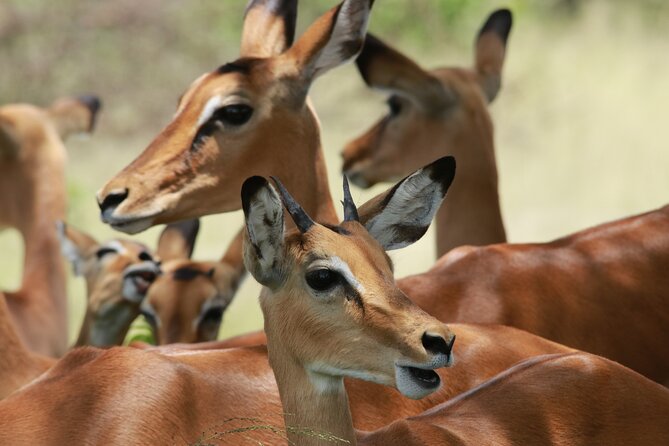
The final morning is intentionally light. You have a poolside breakfast at Eileen’s Tree Inn while looking over the gardens and listening to birdsong.
Then you drive for about two hours back to Arusha and continue to Kilimanjaro International Airport for your departure flight. This is a clean ending, but you should check the timing carefully against your flight. The package gives the road time, not a promise that every departure schedule will fit.
The airport transfer is one reason this tour works well as a complete arrival-to-departure package. You do not need to arrange a separate final ride from Karatu. Still, give yourself a sensible buffer at the airport, particularly if your flight is international.
Lodging, food, and comfort on the road
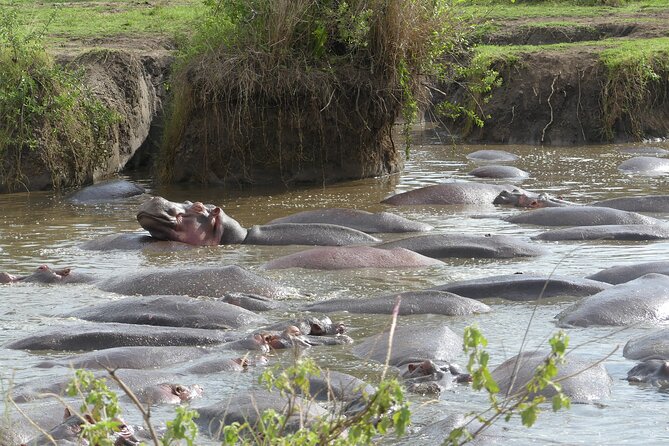
The accommodation moves from a cottage-style suite at Pazuri Inn to Eileen’s Tree Inn and Tanzania Bush Camp. That creates a useful range of experiences. You get a conventional lodge setting in Arusha and Karatu, plus a tented camp in the Serengeti.
The Tanzania Bush Camp tent is described with a large bed, running water, and views. That is a good middle ground for people who want a night close to nature but do not want the simplest form of camping.
Food is included throughout the six days: breakfast every morning, five lunches, and five dinners. The supplied feedback gives special attention to the cooking, with Boniface, also called Boni, praised for generous and tasty meals. Kitchen staff are also credited with fresh fruit and vegetables.
That matters because safari days are long. Included meals reduce both cost and planning effort, and a reliable meal schedule is more useful than a fancy menu when you are leaving early and returning tired.
Ask for the confirmed lodge and meal arrangements before departure. The operator has changed lodges in the past after receiving poor guest feedback, which suggests some flexibility, but it also means the named properties should be treated as the planned accommodation rather than an absolute guarantee.
Guides and the value of a private vehicle
The company is Chalema Tanzania Safaris, with Joel described as the responsive director who handles planning and communication. Several guide names appear in the supplied feedback, including Chabane, Shaban, Shabani, Georges, Aruna, Harouna, and Praygod.
You should not assume a specific guide unless the company confirms one for your dates. Still, the recurring strengths are useful: guides are described as attentive, serious about safety, able to explain animals and local life, and quick to adjust when guests have particular interests.
A private tour means only your group participates. That is valuable in a safari setting because wildlife encounters do not follow a timetable. You may want to remain with a pride of lions, spend longer photographing elephants, or move on quickly from a common sighting. A private group gives you more say.
The tradeoff is price. A solo guest pays $2,600, while a couple or family can divide the cost across the group if the pricing structure allows it. You should confirm how the per-person rate changes with group size before booking.
When to go: green season or dry months
The tour is presented as suitable at any time of year, but the character of the parks changes.
March through May is the green season. Vegetation is lush, Tarangire’s baobabs look especially full, and the parks have a softer, greener appearance. Rain can make road conditions less predictable, so ask the operator how recent weather may affect daily drives.
June through October is the dry period highlighted in the schedule. Tarangire can produce very large herds of buffalo, wildebeest, and zebra during these months. Dry conditions also make animal viewing appealing because vegetation is less dense in many areas.
The Serengeti’s Great Migration may coincide with your visit, but the route alone cannot ensure that you will be in the right place at the right time. If migration is your main goal, give the operator your dates and ask which area of the Serengeti the vehicle will use.
The year-round claim is most convincing if your main goal is a broad Northern Circuit safari rather than one exact animal event. You will have Tarangire, Serengeti, and Ngorongoro in every season, but weather, vegetation, and animal movement will vary.
What the $2,600 price really buys
The price includes:
- Six breakfasts
- Five lunches
- Five dinners
- All fees and taxes
- Accommodation named in the route
- Airport pickup and return transfer
- A private safari experience
That is a solid package for someone who wants one operator to coordinate the entire circuit. The value improves if you would otherwise pay separate prices for park access, meals, transfers, and lodging.
It is less attractive if you want a luxury-only safari or very slow travel. The schedule covers three major areas in six days, and driving is part of the experience. You are paying for access, coordination, and a private guide rather than a relaxed stay at one high-end lodge.
Visa costs and travel insurance are extra. Free cancellation is available until 24 hours before the start time. Inside that 24-hour window, the amount paid is not refunded and changes are not accepted.
Who should book this safari
I would recommend this trip to first-time safari visitors who want Tanzania’s classic Northern Circuit in one well-organized package. It is also a good match for couples, families, and solo visitors who value private travel and personal attention.
Photographers should like the long Serengeti day and the guide team’s focus on finding good vehicle positions. Wildlife lovers will appreciate the range, from Tarangire elephants to Serengeti cats and possible Ngorongoro rhino sightings.
I would be more cautious if you dislike early starts, long road transfers, or full days in a vehicle. I would also ask for a longer version if you want more time in the Serengeti or have a specific migration goal.
Should you book the six-day Northern Safari?
Book it if you want a well-rounded private safari with the three big Northern Circuit stops, included meals, airport transfers, and a mix of lodge and tented accommodation. The route is thoughtfully shaped, and the strongest part is the two-night Serengeti focus, including one full day in the park.
Before paying, confirm your assigned guide, exact lodge names, flight transfer timing, visa needs, and travel insurance. If you accept the driving and keep your expectations flexible about migration and rare animals, this is a strong six-day introduction to Tanzania’s best-known wildlife country.
FAQ
Where does the safari start?
The meeting point is Kilimanjaro International Airport in Tanzania, with a listed start time of 7:30 a.m. Pickup is offered.
Which national parks are included?
The route includes Tarangire National Park, Serengeti National Park, and Ngorongoro Crater.
Is this a private tour?
Yes. Only your group participates in the activity.
What meals are included?
The package includes six breakfasts, five lunches, and five dinners.
Are park fees and taxes included?
All fees and taxes are included in the listed price.
Are visa and travel insurance included?
No. Visa costs and travel insurance are not included.
More six day trips in Moshi & Kilimanjaro
- Kilimanjaro climb, Lemosho Route (6-day)
★ 5.0 · 129 reviews - Kilimanjaro climb, Marangu route (6-day)
★ 5.0 · 72 reviews - 6 Days Tanzania Classic Safari
★ 5.0 · 52 reviews - The Best of Machame Route in 6 Days: Your World’s Summit Guide
★ 5.0 · 44 reviews
Newly listed around Moshi & Kilimanjaro
- Climb Mount Kilimanjaro: 7 Days Machame Route★ 5.0 · 3 reviews
- 6 Days Mount Kilimanjaro Climbing via Rongai Route★ 5.0 · 3 reviews
- Explore 1 day Ngorongoro Crater Budget Group Safari from Arusha★ 5.0 · 3 reviews
- Mt. Kilimanjaro Day Hiking★ 5.0 · 3 reviews
- Chemka (Kikuletwa) Hot Springs, Tanzania★ 5.0 · 3 reviews
- Guided City tour of Moshi★ 4.3 · 3 reviews
- 8 Day Tanzania Family Safari★ 5.0 · 3 reviews
- Serengeti Safari with Sirikwa Travel★ 5.0 · 3 reviews
Moshi & Kilimanjaro Tours, compared.








Browse the lists this tour appears in