
Reviewed · KILIMANJARO CLIMBS
6-Day Kilimanjaro Climbing Via Machame Route
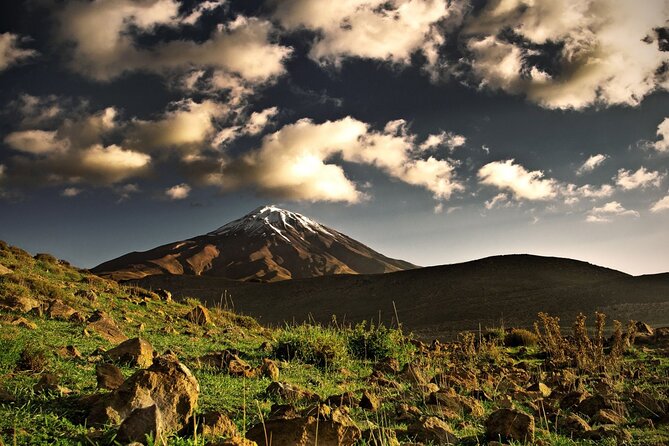
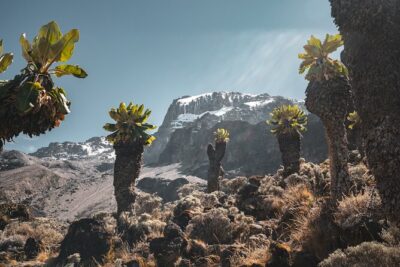
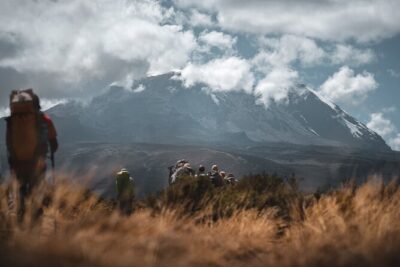
The Machame Route gives you Kilimanjaro in changing chapters: wet rainforest, open moorland, volcanic rock, high alpine desert, and a freezing summit push under the stars. You approach from the southwest, circle across the mountain’s southern side, and descend by the Mweka Route.
I like the route’s strong acclimatization pattern, especially Day 3, when you climb toward Lava Tower and then sleep lower at Barranco Camp. I also like the variety, from the wide Shira Plateau to the scramble-like Barranco Wall. The main drawback is the six-day schedule. It is demanding, and the route’s popularity can mean crowded trails and camps.
Spirit of Kilimanjaro receives a 5 out of 5 rating from 23 reviews, with 100 percent recommending the experience. Guides named in customer feedback include William, Paul, Rama, Izadini, Tulisa, Elya, Baraka, Charles, Dave, Sele, and Will. The repeated praise centers on patient guidance, summit encouragement, strong teamwork, and good food.
Key points before you book
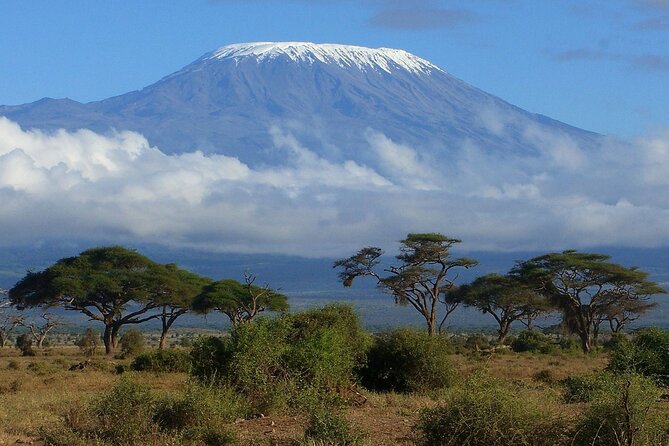
- The route changes scenery every day: Rainforest, moorland, semi-desert, alpine desert, and high summit terrain all appear within one climb.
- Day 3 is the acclimatization key: You climb to about 4,650 meters at Lava Tower, then descend to Barranco Camp at roughly 4,000 meters.
- Barranco Wall adds hands-on fun: This steep ridge is not simply a long walk, so confidence on rocky ground helps.
- Summit day is the real test: You start around midnight to 2 a.m. and climb toward Stella Point through heavy scree.
- The price covers the main mountain services: Park fees, guides, chef and cook, meals, and taxes are included in the $1,810 price.
- The six-day format suits fit, experienced hikers: Beginners may prefer a longer itinerary, though that option is not described here.
Why the Machame Route earns its Whiskey nickname
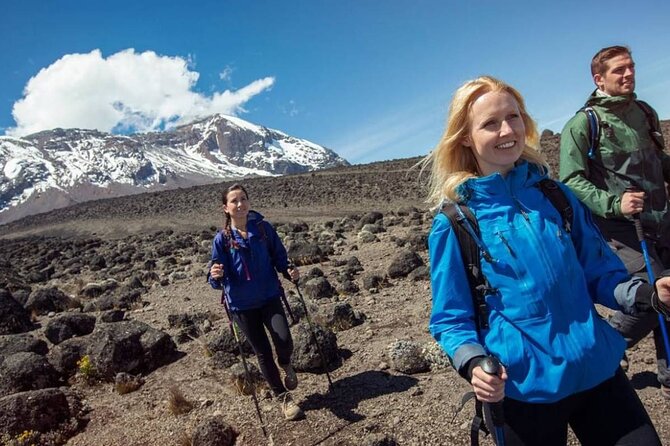
Machame is often called the Whiskey Route because it is seen as harder and more expensive than the Marangu Route. That nickname is more useful as a warning than as a promise of exclusivity. You should expect steep sections, long hiking days, basic camping conditions, and a serious summit night.
The route is considered one of the better choices on Kilimanjaro for the balance of scenery, acclimatization, and price. You do not simply walk uphill for six days. The path rises, drops, crosses valleys, and approaches the summit from several directions.
That variation matters at altitude. The schedule lets you climb high near Lava Tower, then sleep lower at Barranco. This does not remove the risk of altitude sickness, but it gives the itinerary a sensible rhythm. You still need to walk slowly, follow guide instructions, and be ready for a physically difficult climb.
Machame is better suited to you if you have hiking or backpacking experience. You do not need to be a technical mountaineer based on the itinerary, but you should be comfortable with long days, uneven trails, steep ground, and cold conditions.
More Kilimanjaro routes:
- Kilimanjaro climb by Lemosho Route (7-day)
★ 5.0 · 651 reviews - Kilimanjaro climb, Machame Route (7-day)
★ 5.0 · 262 reviews - Kilimanjaro Climbing Lemosho Route 8 Days.
★ 5.0 · 186 reviews
Day 1: Machame Gate to Machame Camp
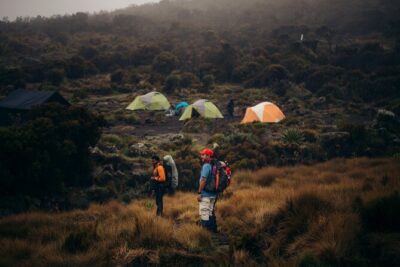
The drive from Moshi to Machame Gate takes about 45 minutes and passes through Machame village on the mountain’s lower slopes. After entering Kilimanjaro National Park, you begin in montane forest.
The first day covers about 11 kilometers and takes five to six hours. You rise from roughly 1,830 meters to 3,050 meters, with lunch and dinner included.
This is a pleasant start in terms of scenery, but the trail can be muddy and slippery at lower elevations. The route winds upward through thick forest and follows a ridge toward camp. Gaiters and trekking poles are useful here, not as fancy extras but as practical tools for wet, uneven ground.
The day is long enough to feel like a real start, yet it does not demand the extreme effort of the summit push. You should use it to settle into the walking pace, check your boots, and learn how your guide manages breaks.
Day 2: Moorland and the Shira campsite
After breakfast, the forest begins to thin. You climb across a valley and follow a steep, rocky ridge before turning west toward a river gorge.
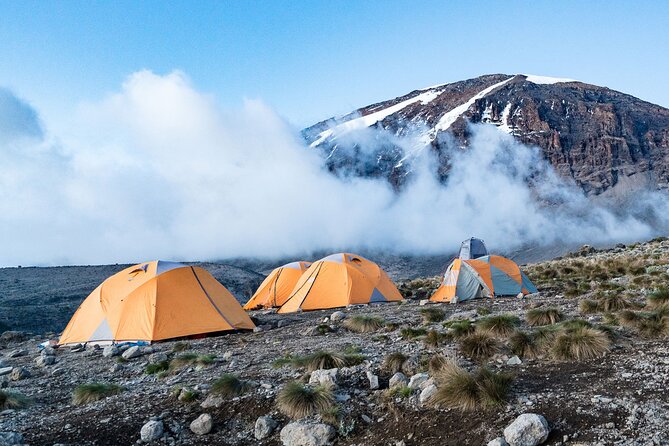
This is a shorter day by distance, about five kilometers, but it still takes four to five hours because the route continues upward. You finish at Shira Camp at about 3,850 meters, in the moorland zone. Breakfast, lunch, and dinner are included.
The change from forest to open high country is one of the rewards of Machame. You gain broader views and a greater sense of the mountain’s scale. The tradeoff is exposure. The trees no longer provide the same shelter, and the air feels thinner as you rise.
I would treat this as a measured day, not a chance to prove your fitness. Walking too fast early in a Kilimanjaro climb can make later days much harder. The guides associated with this company are repeatedly praised for calm pacing and attention to individual limits, which is exactly the kind of support you want here.
Day 3: Lava Tower and the Barranco acclimatization circuit
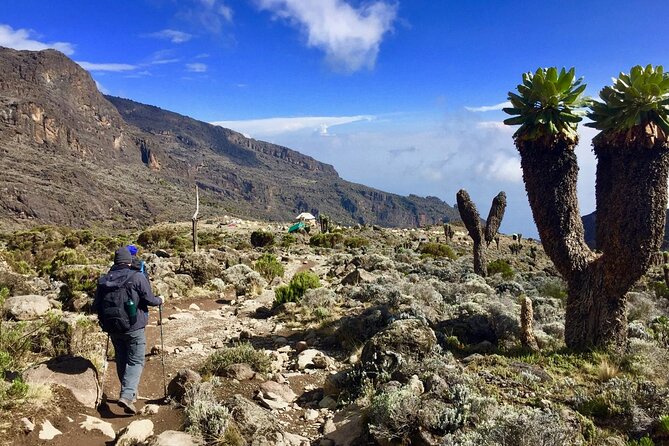
Day 3 is the most carefully designed part of the route. From the Shira Plateau, you head east along a ridge, pass the junction toward Kibo, and continue southeast toward Lava Tower, also known as the Shark’s Tooth.
Lava Tower reaches about 4,650 meters. The route also passes a junction toward the Arrow Glacier before descending to Barranco Camp. You finish the day at about 4,000 meters, close to where you began in elevation, after covering 10 kilometers in five to six hours.
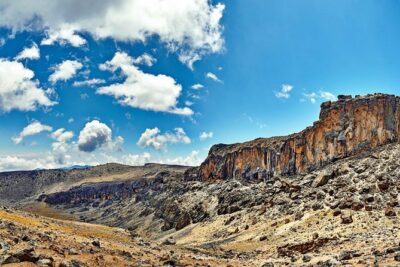
This is listed as a semi-desert zone, and the scenery becomes stark and volcanic. The trail is less about forest shade and more about rock, open ground, and the mountain’s upper slopes.
The important point is not the final elevation. It is the climb-high, sleep-lower pattern. Your body gets time at greater altitude before you spend the night lower at Barranco. That makes this day valuable, though it can also be tiring because the route climbs and descends over several hours.
An optional scramble up Lava Tower is mentioned as part of the route’s appeal, but the itinerary does not specify how that option is handled. Ask the operator before departure if this is something you particularly want to do.
More six day trips in Moshi & Kilimanjaro:
- Kilimanjaro climb, Lemosho Route (6-day)
★ 5.0 · 129 reviews - Kilimanjaro climb, Marangu route (6-day)
★ 5.0 · 72 reviews - 6 Days 5 Night Safari
★ 5.0 · 57 reviews - 6 Days Tanzania Classic Safari
★ 5.0 · 52 reviews
Day 4: Barranco Wall, Karanga Valley, and Barafu Camp
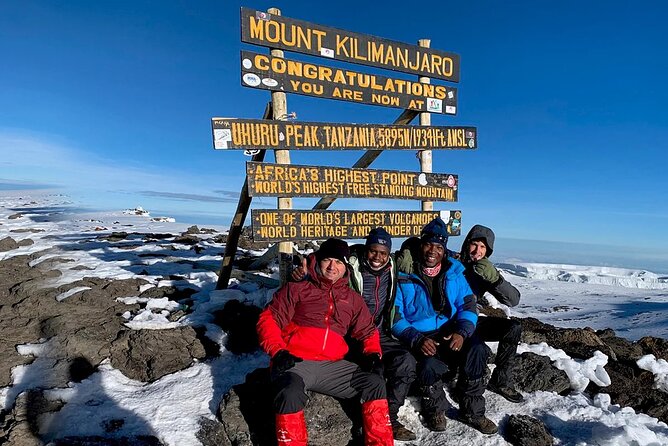
After breakfast, the route reaches the famous Barranco Wall. You climb a steep ridge around 4,250 meters, continue through Karanga Valley at about 4,050 meters, and then join the Mweka Trail before climbing to Barafu Camp.
The distance is about nine kilometers, with six to eight hours of hiking. You rise from roughly 4,000 meters to 4,700 meters and spend the night in the alpine desert.
The Barranco Wall is one of Machame’s memorable sections because it adds a physical challenge beyond ordinary uphill walking. You need to use your hands at times and choose your footing carefully. It is not described as a technical climbing pitch, but it is steep and can feel imposing when viewed from below.
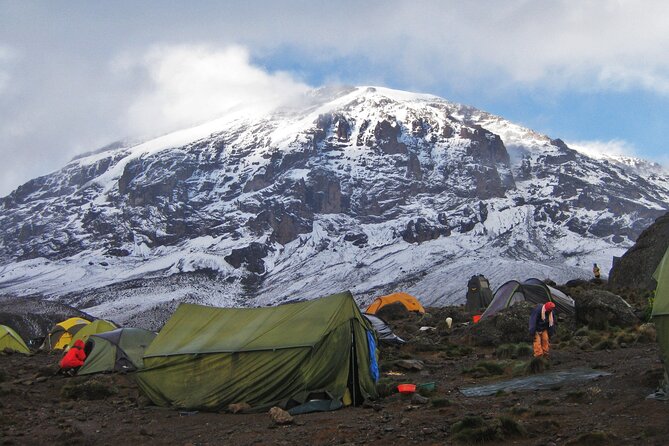
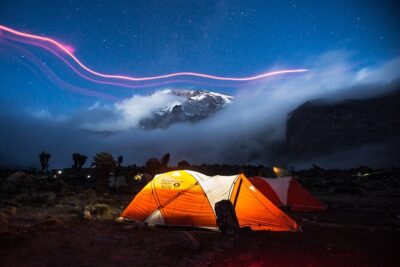
The route then completes what is called the South Circuit, giving you views of the summit from different angles. Barafu Camp is the launch point for the summit attempt, and the view toward the peak helps you understand what remains.
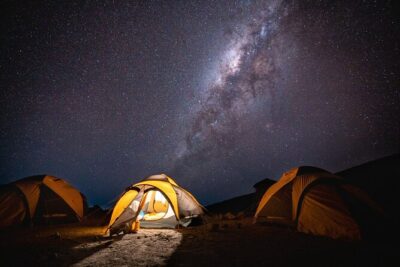
This is also where the six-day schedule begins to feel compressed. After four days of rising altitude and long walks, you have little time to rest before summit night. I would keep your evening at Barafu quiet, organize warm clothing and headlamp supplies, and follow the guide’s instructions closely.
Day 5: The midnight summit push to Stella Point
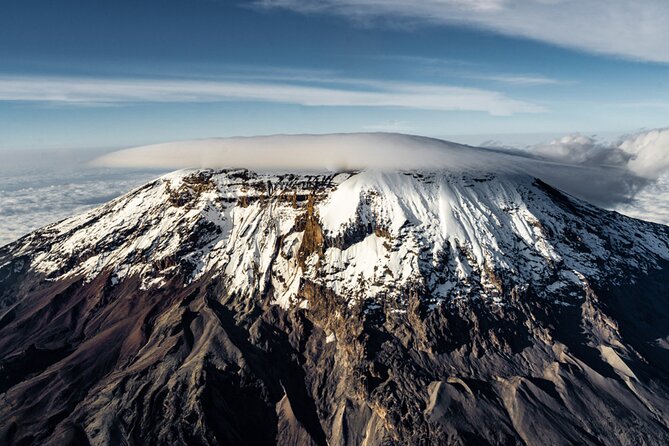
The summit attempt begins very early, usually between midnight and 2 a.m. You climb northwest between the Rebmann and Ratzel glaciers, moving slowly through heavy scree toward Stella Point on the crater rim.
This is the most mentally and physically difficult part of the climb. The route description gives six hours for this section, but it does not provide a full distance or a detailed schedule for the descent and return to camp. Plan for a very demanding day and confirm the exact summit-day timetable with Spirit of Kilimanjaro.
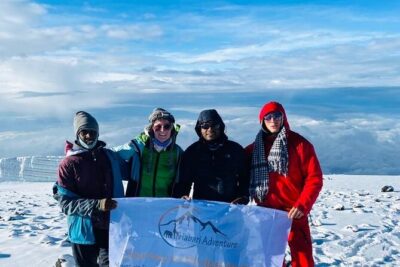
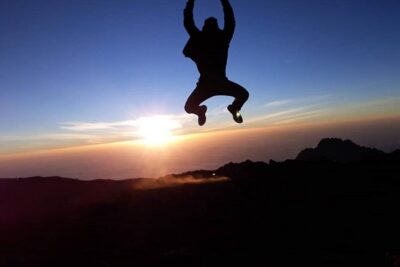
At Stella Point, you can stop for a short rest and watch sunrise. Faster hikers may reach the summit in time for sunrise, but the timing depends on your pace and conditions.
The early start has a practical reason. It allows the climb to begin during the coldest, quietest hours and gives you a chance to reach the crater rim around sunrise. You should expect darkness, cold, thin air, loose rock, and a slow pace.
This is where guide support matters most. Names praised for calm leadership and motivation include Paul, Rama, Izadini, Tulisa, Elya, Baraka, and Charles, though your exact guide team will depend on the departure. William is also described as responsive during trip planning and flexible in arranging the climb.
You should not treat reaching Stella Point as failure if you cannot continue to Uhuru Peak. Stella Point is on the crater rim, while the summit itself is higher. The available details do not promise a summit success rate, and altitude affects every person differently.
Day 6: Mweka descent and return to Moshi
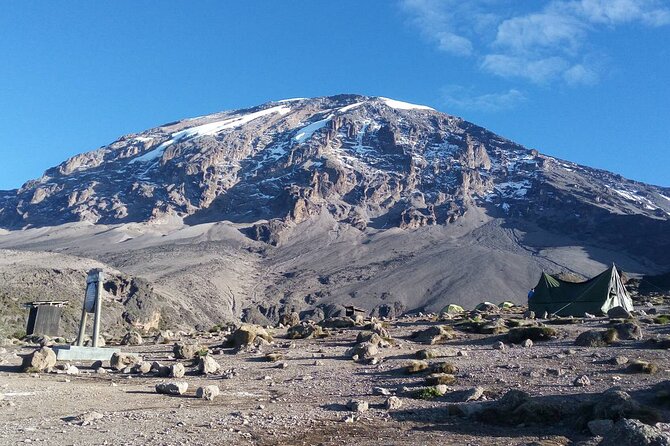
After breakfast, you descend toward Mweka Park Gate. The listed route covers about 10 kilometers and takes three to four hours, dropping from around 3,090 meters to 1,680 meters.
The habitat changes back to forest, and the lower trail can be wet and muddy. Gaiters and trekking poles are useful again. Shorts and a T-shirt may be comfortable at lower elevations, but keep rain gear and warmer clothing within reach because conditions can change during the descent.
At Mweka Gate, you receive your summit certificates. A Monkey Adventures vehicle then takes you back to your hotel in Moshi, a drive of about 60 minutes.
This final day is shorter than the summit push, but your legs may be tired and your attention may be poor after the previous night. Pack your day bag carefully so you have dry clothes, water, and any small items needed for the drive.
What the $1,810 price covers
At $1,810 per person, the cost includes park fees, professional guides, a chef and cook, taxes and other listed fees, plus breakfast, lunch, and dinner. Those inclusions cover the core services required for a guided Kilimanjaro climb.
The price does not include your visa or international flights. Pickup is offered, but the provided meeting information lists a start time of 12:00 a.m., so confirm the exact pickup location and departure time before you arrive in Moshi.
The value depends on what you want from the climb. If you want a guided route with meals, park access, and an organized support team, the package is straightforward. You should still ask for clarification about gear rental, porter arrangements, accommodation before and after the climb, tips, drinks, and the detailed summit-day schedule, since those items are not specified here.
The maximum group size is listed as 100 people. That is a large possible capacity, even though some customer accounts describe private or small friend groups with several guides. Ask how your booking will be grouped. Group size affects walking pace, time at rest stops, and the feel of the camps.
The guide team and the human side of the climb
The strongest praise for Spirit of Kilimanjaro centers on the people. William is described as quick to answer questions, patient, flexible, and helpful during planning. Guides such as Paul, Rama, Izadini, Tulisa, Elya, Baraka, and Charles are praised for encouragement, calm leadership, and care during the summit attempt.
The cooking team also receives repeated approval, with food described as a major part of the positive experience. That matters on a six-day climb because regular meals help you maintain energy when appetite and stamina may drop at altitude.
Several groups also describe being supported by large crews. That can mean more hands available for camp work and route support, but it also makes it important to understand the company’s porter and tipping practices before you go.
Who should book this climb?
I would point this trip toward an active person who wants a scenic Kilimanjaro route and is comfortable with a demanding schedule. Previous hiking or backpacking experience is useful, especially for the Barranco Wall, steep ridges, muddy forest trails, and long summit day.
The route may suit you if you value varied scenery and a sensible acclimatization day more than indoor comfort. It is less suitable if you want a relaxed holiday pace or dislike early starts, cold nights, basic camps, and uncertain performance at altitude.
The company’s 100 percent recommendation figure and repeated praise for its guides are encouraging. Still, no set of positive comments can guarantee that you will reach the summit. Your fitness, health, preparation, weather, and response to altitude all matter.
Practical preparation for the six days
Bring gaiters and trekking poles for both the wet forest sections and the muddy descent. Prepare for warm lower slopes and cold high camps, since the route moves through several climate zones.
Keep your pace slow from Day 1. The point is to arrive at summit night with energy left, not to win the first day. Drink according to your guide’s instructions, report symptoms promptly, and do not hide headaches, nausea, dizziness, or unusual fatigue.
Pack clothing in layers so you can adjust as the route rises. Keep rain gear accessible rather than buried in your main luggage. Your summit-night clothes should be ready before you sleep at Barafu Camp.
Cancellation is free with a full refund if you cancel at least 24 hours before the local start time. Cancellations within 24 hours are not refunded, and late changes are not accepted.
Should you book the six-day Machame Route?
Book it if you want a scenic and challenging Kilimanjaro route with Lava Tower acclimatization, Barranco Wall, a South Circuit approach, and a guided return through Mweka. The $1,810 price covers the main park, guide, cook, and meal costs, making it a reasonable package for a tightly scheduled climb.
Think twice if you are new to long-distance hiking or want extra time to adjust to altitude. Before paying, confirm the group size, exact pickup plan, gear arrangements, porter details, tips, and the full summit-day schedule. If those answers are clear and you are ready for a hard six-day effort, Machame offers one of Kilimanjaro’s most varied routes.
FAQ
Where does the Kilimanjaro climb begin?
The experience is based in Moshi, Tanzania. Pickup is offered, and the first transfer goes from Moshi to Machame Gate.
How long is the Machame Route climb?
The experience lasts approximately six days.
What time does the activity start?
The meeting information lists a start time of 12:00 a.m. Confirm the exact pickup details with Spirit of Kilimanjaro before the climb.
How far is the drive from Moshi to Machame Gate?
The drive takes about 45 minutes.
How far do you hike on Day 1?
Day 1 covers about 11 kilometers and takes five to six hours. You walk through montane forest from Machame Gate to Machame Camp.
What happens on Day 3?
You cross the Shira Plateau, climb toward Lava Tower at about 4,650 meters, pass the Arrow Glacier junction, and descend to Barranco Camp. The day covers about 10 kilometers and is important for acclimatization.
Is the Barranco Wall part of the route?
Yes. On Day 4, you climb the Barranco Wall before continuing through Karanga Valley to Barafu Camp.
When does the summit attempt begin?
The summit push begins very early, between midnight and 2 a.m. You climb toward Stella Point through heavy scree.
What meals are included?
Breakfast, lunch, and dinner are listed as included during the climb. The package also includes a chef and cook.
Are park fees and guides included in the price?
Yes. The $1,810 price includes park fees, professional guides, a chef and cook, and all listed fees and taxes. Visa costs and international flights are not included.
Newly listed around Moshi & Kilimanjaro
- Climb Mount Kilimanjaro: 7 Days Machame Route★ 5.0 · 3 reviews
- 6 Days Mount Kilimanjaro Climbing via Rongai Route★ 5.0 · 3 reviews
- Explore 1 day Ngorongoro Crater Budget Group Safari from Arusha★ 5.0 · 3 reviews
- Mt. Kilimanjaro Day Hiking★ 5.0 · 3 reviews
- Chemka (Kikuletwa) Hot Springs, Tanzania★ 5.0 · 3 reviews
- Guided City tour of Moshi★ 4.3 · 3 reviews
- 8 Day Tanzania Family Safari★ 5.0 · 3 reviews
- Serengeti Safari with Sirikwa Travel★ 5.0 · 3 reviews
Kilimanjaro Climbs, compared.
Browse the lists this tour appears in