
Reviewed · KILIMANJARO CLIMBS
6 Day Kilimanjaro Climbing Via Marangu Route
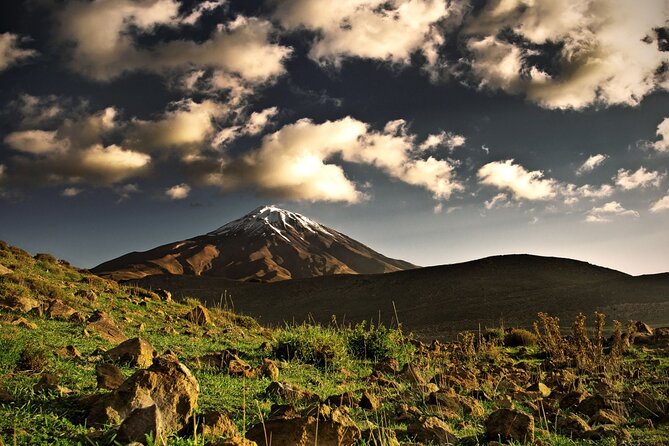
The big draw here is simple: you get a shot at Uhuru Peak, Africa’s highest point at 19,340 feet, while walking through six ecological zones. The Marangu Route begins in rainforest, passes heath and alpine desert, and ends among cold volcanic rock and ice. It is a remarkable change of scenery in only a few days.
I like the practical hut-based format, since you sleep at Mandara, Horombo, and Kibo rather than carrying a tent each night. I also like the strong human side of the operation. Guides named Antipas, William, Tuliza, and Emanuel receive warm praise for care, organization, humor, and support, including looking after a 70-year-old father.
The main caution is the schedule confusion. The product is called six days, the summary says five days, and the itinerary itself runs over five trekking days. It also mentions Machame Route and camping, while the day-by-day plan describes the Marangu Route and mountain huts. Get the exact route, nights, and summit plan in writing before paying.
Key things to know before climbing
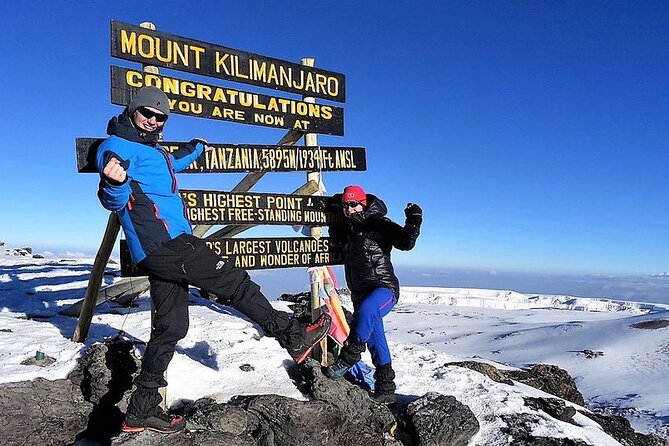
- Uhuru Peak at 19,340 feet: The summit push begins before sunrise and is the hardest part of the climb.
- Marangu huts, not standard tent camping: Mandara, Horombo, and Kibo are the named overnight stops.
- Six ecological zones: You move from lush rainforest through heath, alpine desert, and the harsh arctic zone.
- Meals and basic gear included: Five breakfasts, five lunches, five dinners, snacks, bottled water, a sleeping bag, and camping equipment are listed.
- A people-focused guide team: Antipas, William, Tuliza, and Emanuel are names connected with especially positive accounts of care and organization.
- Check the duration carefully: The title says six days, but the supplied day plan covers five days and ends back at the gate.
The real appeal of the Marangu Route
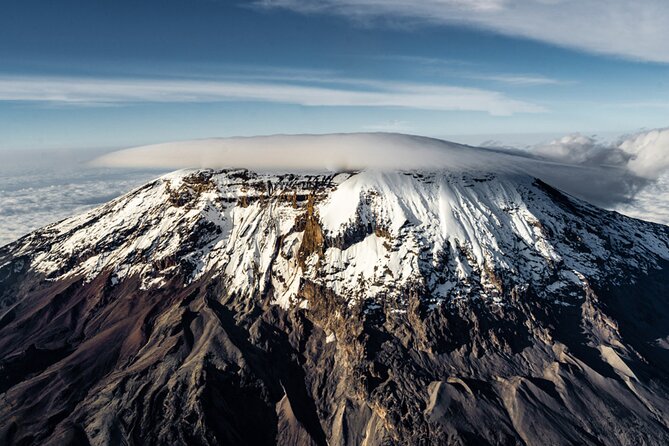
Marangu is often chosen because the route uses huts and follows a relatively direct line toward the summit. That makes it an attractive option if you prefer a bed and roof to a tent, or if you want a clear, structured climb without carrying your own full camping setup.
The setting changes quickly. On the first day, you walk under rainforest canopy. By the time you reach Horombo, the trees have given way to open heath. Near Kibo, the ground becomes dry and spare, and the air grows thin. At the summit, you are in a cold, severe world that feels far removed from the forest below.
The route is not easy simply because it has huts. Altitude is the central challenge. You start at Kilimanjaro National Park’s Marangu Gate and finish at nearly 6,000 meters at Uhuru Peak. A sensible pace, steady hydration, and honest communication with your guide matter more than bravado.
One important point: the supplied description refers once to Machame, a scenic camping route, and later describes Marangu. Those are not interchangeable labels. The actual day plan is clearly written around Marangu, with Mandara, Horombo, and Kibo huts. Confirm the route before you go.
More Kilimanjaro routes:
- Kilimanjaro climb by Lemosho Route (7-day)
★ 5.0 · 651 reviews - Kilimanjaro climb, Machame Route (7-day)
★ 5.0 · 262 reviews - Kilimanjaro Climbing Lemosho Route 8 Days.
★ 5.0 · 186 reviews
Day 1: Marangu Gate to Mandara Hut
Your climb starts at Marangu Gate, where park formalities are completed and you meet the guide and porter team. The listed starting point is Kilimanjaro International Airport, with a 7:30 a.m. start time and pickup offered.
The first walk covers about 8 kilometers and takes around four hours. This is the gentlest day in the plan, but it is still useful preparation for what follows. You walk through thick rainforest, with plenty of plant life and the possibility of seeing forest birds and monkeys.
Mandara Hut sits at about 2,700 meters. The night here gives you your first taste of sleeping high on the mountain. You should use the evening to eat, drink, organize your clothing, and sleep as much as you can.
I like this opening because it lets your body begin adjusting without an immediate, punishing ascent. The drawback is that a short first day can create false confidence. The hard work is still ahead, and you should treat the first afternoon as recovery time rather than an excuse to overexert yourself.
Day 2: Heathland and the Horombo Hut
After breakfast, you leave the rainforest behind and enter the heathland zone. The route covers roughly 12 kilometers and ends at Horombo Hut, around 3,700 meters above sea level.
The big visual reward is the changing view toward Mawenzi Peak, one of Kilimanjaro’s distinctive volcanic formations. The vegetation becomes lower and more open, giving you a stronger sense of exposure and distance than you had in the forest.
This is also the day when altitude can begin to make itself known. Headache, tiredness, and a slower walking pace are possible concerns, though the supplied information does not promise how your body will respond. Follow your guide’s pace, drink the bottled water provided, and mention symptoms early.
The itinerary gives a three-minute duration for this stop, which is clearly inconsistent with a full day of hiking. Treat the stated 12-kilometer walk and Horombo overnight stay as the useful information, but ask the operator for a corrected daily schedule.
Day 3: The alpine desert and Kibo Hut
Day three takes you to Kibo Hut at approximately 4,700 meters. The forest and heath are now gone. You enter an alpine desert, with the saddle between Mawenzi and Kibo opening ahead.
This is where the climb becomes more mental as well as physical. The air is thinner, the terrain is stark, and every step costs more effort. The plan specifically stresses pacing and hydration, and that advice should guide the entire day.
Kibo is the staging point for the summit attempt. You need to arrive ready to rest, eat dinner, and prepare clothing and equipment for an early start. The schedule does not provide a detailed hour-by-hour plan, so ask about the exact wake-up and summit departure time.
I see the value of this night at Kibo, even though it may be uncomfortable. You are positioned close to the summit, which reduces the distance for the final ascent. The tradeoff is altitude. Sleeping at about 4,700 meters can be difficult, and the next morning will demand your strongest effort.
More six day trips in Moshi & Kilimanjaro:
- Kilimanjaro climb, Lemosho Route (6-day)
★ 5.0 · 129 reviews - Kilimanjaro climb, Marangu route (6-day)
★ 5.0 · 72 reviews - 6 Days 5 Night Safari
★ 5.0 · 57 reviews - 6 Days Tanzania Classic Safari
★ 5.0 · 52 reviews
Day 4: The pre-dawn push to Uhuru Peak
This is the summit day, and it is the part you should take most seriously. The ascent begins in the early hours so you can reach Uhuru Peak near sunrise. You then descend to Kibo Hut before continuing down to Horombo Hut.
The stated plan describes this as both physically and mentally demanding. That is the right expectation. You need warm clothing, patience, and the willingness to move slowly. A peak attempt is not won by racing uphill. It is won by managing your energy over many hours.
Reaching Uhuru Peak is the emotional high point of the trip. You stand at the highest point in Africa, surrounded by the cold, stark upper zone of Kilimanjaro. The views and sense of achievement can be extraordinary, but the summit is not the end of the day. The descent to Kibo, followed by the continued walk to Horombo, makes this a long and tiring stage.
The staff’s attitude matters most here. One account describes Antipas taking particular care of a 70-year-old father during the climb. Other named staff include William, Tuliza, and Emanuel, with praise centered on kindness, good organization, humor, and steady support. Since guide assignments can change, ask who will lead your group and how the team handles a slower climber or a failed summit attempt.
Day 5: Returning through the forest
The final listed day takes you from Horombo Hut down to Marangu Gate. You pass back through heath and rainforest, with possible sightings of colobus monkeys and birds.
This descent may feel easy after summit day, but tired legs can make uneven ground awkward. Keep your pace controlled and save energy for the final walk to the gate. At the end, you receive summit certificates and say goodbye to the guides and porters.
The return to the forest is more than a change in scenery. It gives you a clear sense of how far you have come, from warm, leafy slopes to the freezing summit zone and back again. At the gate, the formal part of the climb ends, and the activity returns to its meeting point.
Here again, the schedule needs clarification. The experience is marketed as six days, yet five trekking days are supplied. Ask if the sixth day is an airport transfer, an extra acclimatization night, or simply a naming error.
Meals, equipment, and what the price means
The listed price is $2,196 per person. That is a large cost, but the value depends on what is actually delivered and on the final number of days.
The package includes coffee or tea, snacks, bottled water, a guide, park fees and taxes, a sleeping bag, camping equipment, and five breakfasts, five lunches, and five dinners. It also offers pickup, with Kilimanjaro International Airport given as the starting point.
For a mountain climb, included meals and staff support remove much of the planning burden. You do not need to arrange each park payment separately, and the presence of a guide team gives you help with route decisions and the demands of altitude. The sleeping bag and equipment inclusion may also reduce the amount of specialist gear you need to bring.
Still, do not assume every item you need is covered. The supplied details do not list visas, international flights, personal clothing, medical expenses, tips, or extra accommodation. Visa costs and international flights are specifically excluded.
I would also ask a direct question about the phrase signature camping. The day-by-day plan names huts, not tent nights. The difference affects comfort, packing, and expectations. Ask for a written list of overnight locations, included equipment, meal count, and the exact number of climbing days.
Group size, pickup, and booking details
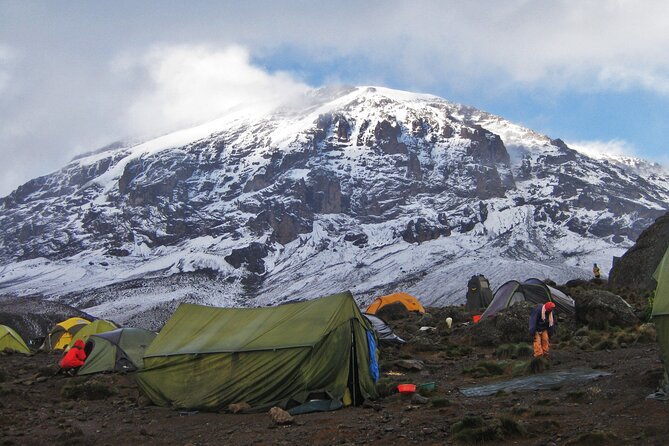
The activity allows up to 100 participants, which is a very large maximum for a mountain product. Your actual group may be much smaller, but the advertised limit means you should ask how groups are divided and how many climbers will share one guide team.
The meeting point is Kilimanjaro International Airport on Kilimanjaro Airport Road, Tanzania. Pickup is offered, and the listed start time is 7:30 a.m. Since the timing and duration conflict in the supplied information, confirm where you will be collected and when the trek truly begins.
Most people can participate according to the supplied activity details, but that should not be mistaken for a promise that the climb is easy or suitable for every level of fitness. The route reaches high altitude and includes a strenuous summit day. You are responsible for arriving prepared and for discussing health concerns with a qualified medical professional.
The cancellation terms are simple. You receive a full refund if you cancel at least 24 hours before the local start time. Cancellations or changes inside that 24-hour window are not refunded or accepted.
The human side of the climb
The strongest part of this experience appears to be the guide and porter team. Good mountain staff do more than point out the path. They help set a safe pace, watch how you are coping, keep meals moving, and maintain morale when the air is thin and the hours are long.
The names Antipas, William, Tuliza, and Emanuel are worth noting when you communicate with the operator. Antipas is specifically associated with careful attention to an older climber. William and Tuliza are praised in accounts of well-run ascents, and Emanuel is remembered for companionship, laughter, and shared moments during the climb.
You should not book solely because of a particular name, since staff availability can change. Instead, use these details to ask better questions: Who is leading my group? How many porters and guides are assigned? What happens if one person needs to turn back? How will the group handle different walking speeds?
Those answers will tell you more than a polished itinerary. A supportive team can make a hard climb feel manageable. A vague answer about staffing is a reason to pause.
Who should book this climb?
This experience suits you if you want a guided Kilimanjaro ascent with a direct route, hut accommodation, meals, park fees, and airport pickup bundled together. It is also a reasonable fit if you value human support and do not want to organize the mountain logistics yourself.
The Marangu format may appeal to you if tent camping is not your first choice. You will still face cold, fatigue, and altitude, but the named huts provide a more defined overnight structure.
I would be cautious if you need a perfectly clear schedule before booking. The five-day itinerary, six-day title, Machame reference, and camping language do not agree. That does not automatically make the climb poor, but it does mean you should get written confirmation of the route and duration.
The six existing ratings are all five-star scores, and the most praised qualities are supportive staff, good organization, English communication, kindness, and morale. Those are meaningful strengths for a climb where the guide team is part of your daily safety and comfort.
Should you book the Spirit of Kilimanjaro climb?
Book it if the operator confirms that you are getting the Marangu Route, the listed huts, the full food and equipment package, and a clear five or six-day schedule. At $2,196, the package can offer solid value if the park fees, meals, sleeping bag, guide service, and pickup are all delivered as described.
Do not book until the contradictions are settled. Ask for the exact overnight plan, the true number of days, your meeting arrangements, the guide-to-climber ratio, and what signature camping means in practice.
If those answers are clear, this is an appealing way to approach Kilimanjaro. You get major changes in climate and terrain, a serious summit attempt, and a guide team whose most praised trait is not showmanship but care.
FAQ
Is this experience five days or six days?
The experience is titled a six-day climb, but the supplied tour summary says approximately five days and the day-by-day plan covers five days. Ask the provider to confirm the exact duration before booking.
Which Kilimanjaro route does this tour use?
The detailed itinerary describes the Marangu Route, with stops at Marangu Gate, Mandara Hut, Horombo Hut, and Kibo Hut. The overview also mentions Machame Route, so confirm the route in writing.
Where does the activity start?
The listed meeting point is Kilimanjaro International Airport on Kilimanjaro Airport Road in Tanzania. Pickup is offered, and the listed start time is 7:30 a.m.
Does the tour reach Uhuru Peak?
Yes. The plan includes an early morning ascent to Uhuru Peak, described as the highest point in Africa, at 19,340 feet.
Are meals included?
Yes. The package lists five breakfasts, five lunches, and five dinners, along with coffee or tea, snacks, and bottled water.
Is a sleeping bag included?
Yes. A sleeping bag and camping equipment are included in the listed package. Since the itinerary names mountain huts and the overview mentions camping, confirm exactly what equipment you will use.
What is the cancellation policy?
You can cancel at least 24 hours before the experience start time for a full refund. Cancellations or changes made less than 24 hours before the local start time are not accepted and are not refunded.
Newly listed around Moshi & Kilimanjaro
- Climb Mount Kilimanjaro: 7 Days Machame Route★ 5.0 · 3 reviews
- 6 Days Mount Kilimanjaro Climbing via Rongai Route★ 5.0 · 3 reviews
- Mt. Kilimanjaro Day Hiking★ 5.0 · 3 reviews
- Explore 1 day Ngorongoro Crater Budget Group Safari from Arusha★ 5.0 · 3 reviews
- Chemka (Kikuletwa) Hot Springs, Tanzania★ 5.0 · 3 reviews
- Guided City tour of Moshi★ 4.3 · 3 reviews
- 8 Day Tanzania Family Safari★ 5.0 · 3 reviews
- Serengeti Safari with Sirikwa Travel★ 5.0 · 3 reviews
Kilimanjaro Climbs, compared.








Browse the lists this tour appears in