
Reviewed · KILIMANJARO CLIMBS
5 Days Marangu Route Kilimanjaro Trekking
The Marangu Route takes you from tropical rainforest to Uhuru Peak at 5,895 meters in only five days. It is the only Kilimanjaro route in this program with sleeping huts, so you trade tents for basic shared mountain lodging, but not for an easy climb.
I like the route’s changing scenery, from monkeys and thick forest to the stark saddle beneath Kibo. I also like that the price includes porters, meals, park and rescue fees, and a private group, which keeps the main costs clear.
The catch is the schedule. Summit night can last 12 to 15 hours, and the five-day plan gives you less time to adjust to altitude than longer routes. I would also confirm the hut setup and pickup time before paying, since the details mention both huts and camping equipment, and list a 1:30 am start alongside a first-day pickup after breakfast.
Key points at a glance
- Sleeping huts instead of tents: Marangu is the only route here described with hut accommodation, though the included equipment list also mentions tents and a mess tent.
- A demanding five-day ascent: The summit day covers 22 kilometers and may take up to 15 hours.
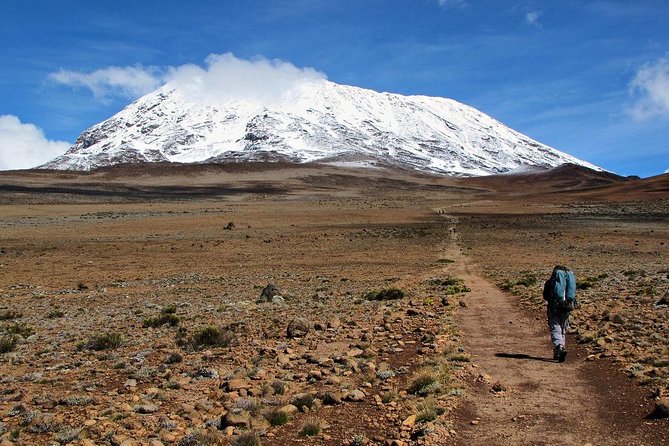
- Big scenery changes: You move from rainforest and primates to heath, moor, high desert, and the Kibo crater rim.
- Private departure: Only your group participates, with a professional guide and porter support.
- Useful inclusions: Meals, accommodation, rescue fees, taxes, park costs, and porterage are included.
- A guide worth asking about: Walter is named in one climbing account as a patient guide who helped with gear and comfort, but your assigned guide is not guaranteed.
Why Marangu feels different from other Kilimanjaro routes
Marangu is often called the Tourist Route or Coca-Cola Route. Those names point to its popularity and its hut system, not to a walk in the park. You still face steep ground, cold nights, thin air, and a very long summit push.
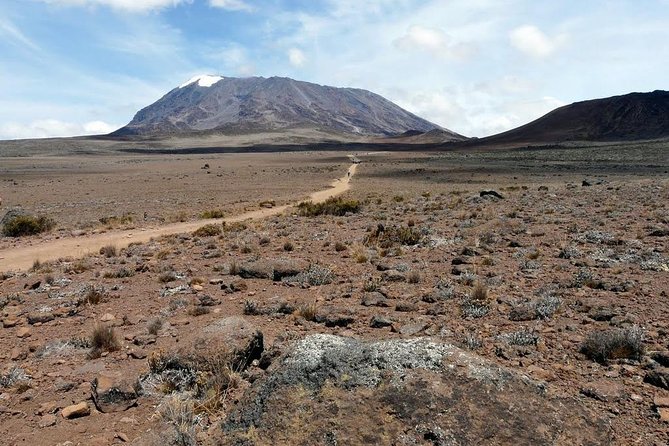
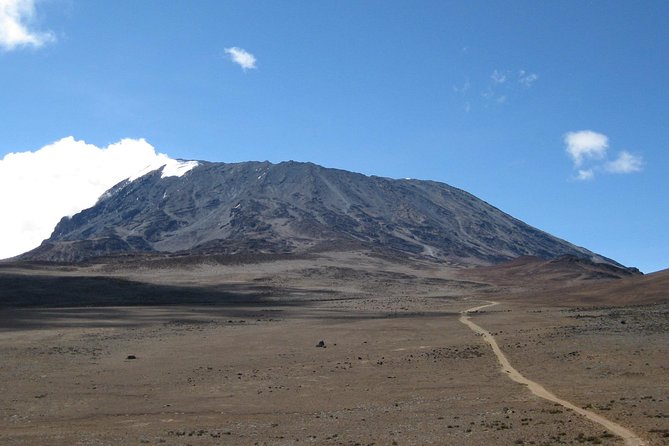
The route follows the same broad progression you want on Kilimanjaro: forest at the lower slopes, open highland vegetation in the middle, a nearly bare saddle near Kibo, and a frozen volcanic summit zone. The scenery changes fast enough to keep each day distinct.
The huts are the main practical draw. You are not relying solely on a tent, mattress, and cooking setup at camp. That can make the trip feel simpler, especially for a first high-altitude trek. Still, the published inclusions also list tents, a mess tent, mattresses, and cooking equipment. Ask Mafie Adventures exactly where you will sleep each night and what bedding is supplied.
The route’s popularity can also mean a busier trail and hut area than quieter approaches. This private trip means your walking group is limited to your own party, but private does not necessarily mean solitude on a popular mountain route.
More Hiking Tours in Arusha
- 8-Day Small-group Lemosho Kilimanjaro Summit Trekking
★ 5.0 · 186 reviews - Mountain Kilimanjaro Day Hike
★ 5.0 · 102 reviews - Private Full Day Hiking Experience to Marangu Route
★ 5.0 · 61 reviews
Day 1: Marangu Gate to Mandara Hut through the forest
After breakfast, the plan is to collect you from your lodge in Moshi and drive to Marangu Gate. At the gate, park paperwork and entry formalities come first. Only then does the walking begin.
The first stage covers 8.3 kilometers and takes about five hours. You hike through dense rainforest, where thick vegetation gives the lower mountain a very different feel from the exposed upper slopes. The route description also notes the chance to spot primates, so keep your eyes up and your pace steady.
Mandara Hut is your first overnight stop. After resting, you can walk to Maundi Crater for views toward the Kenyan interior. This short outing is a smart part of the day because it lets you see beyond the forest without adding another hard climbing stage.
I like this opening day because it is not just a transfer followed by a generic walk. The gate gives you a clear start point, the forest offers shade, and Maundi Crater adds a side view that helps you understand the mountain’s setting.
The five-hour estimate is manageable for a fit person, but you should not treat it as a race. The best use of day one is to settle into a slow pace, drink regularly, and learn how your guide organizes breaks. The listed start time of 1:30 am needs clarification, since the daily plan says pickup after breakfast. It may refer to a booking or meeting time, but you should confirm it directly.
Day 2: Mandara to Horombo and the first open views
Day two covers 12.5 kilometers and is estimated at nine hours. You leave Mandara after an early breakfast, pass the timberline, and enter the heath and moor zone.
This is your first major change in scenery. The forest gives way to open ground, lower vegetation, and broader views. After roughly four to six hours, Horombo Hut comes into sight at about 3,700 meters.
From Horombo, you can look toward Mawenzi, Kibo, and the broad Masai steppe. Mawenzi has a sharp, rugged profile, while Kibo is the main summit cone you will later climb. Seeing both peaks from the hut gives the day a strong sense of progress, even though the summit is still ahead.
The distance is not extreme by ordinary hiking standards, but altitude changes the calculation. At 3,700 meters, you may move more slowly and need more rest than you expect. Your guide should set a pace that lets you speak in short sentences without gasping. If you feel unwell, say so early.
Horombo is also where the five-day schedule begins to show its limits. A longer Kilimanjaro itinerary often uses an extra day for altitude adjustment, but this program moves onward the next day. The five-day format saves time and may suit a tight schedule, yet it asks more of your body.
Day 3: Across the saddle to Kibo Hut
The third day covers 9.5 kilometers and takes about seven hours. The trail passes the Last Water point before crossing the saddle, a nearly vegetation-free plateau between Kibo and Mawenzi.
This is a stark section. You leave behind the more varied plants of the heath and moor zone and walk through a broad, open area with little shelter. The main destination is Kibo Hut, usually reached after five to six hours, where you eat an early dinner and go to bed early.
The short sleep matters. Summit day begins around midnight, so this evening is about conserving energy rather than socializing or exploring. Pack the few items you need for the night ascent before dinner, since fumbling with equipment later will cost precious rest.
Kibo Hut sits high on the mountain, and the cold may feel sharp. Sleeping bag rental is available, but it is not included in the stated price. A sleeping bag is one of the first items I would arrange before arrival, along with suitable climbing clothing and any rented equipment.
The route description calls this stage long and tough, and that is fair. Seven hours of walking, followed by an early night at altitude, can leave you tired before the hardest section begins. Keep your day gentle and drink as directed by your guide.
More Kilimanjaro routes:
- 7-Day Machame Kilimanjaro Summit Tour from Arusha
★ 5.0 · 125 reviews - From Arusha/Moshi: Kilimanjaro Hike Marangu Route Day Trip
★ 4.5 · 54 reviews - Mount Kilimanjaro Day Hike Through Marangu Route to Mandara Hut
★ 5.0 · 37 reviews - 6 Days: Hiking Kilimanjaro via Machame Route
★ 5.0 · 24 reviews
Day 4: Gillman’s Point, Uhuru Peak, and the long return
Day four is the test. You begin the final ascent around midnight and cover about 22 kilometers in a total of 12 to 15 hours.
The first part is a slow climb through the dark toward Hans Meyer Cave at 5,220 meters. The route becomes more strenuous as you gain height. The cold, darkness, and thin air can make each step feel deliberate. This is where a patient guide and a controlled pace matter more than speed.
At sunrise, you aim to reach Gillman’s Point at 5,681 meters, on Kilimanjaro’s crater rim. The first light warming the ground can be a welcome change after the night climb. From there, you continue for another one to two hours toward Uhuru Peak, the summit at 5,895 meters.
Reaching Uhuru Peak is the high point of the trip, but it is not the end of the day. You return to Kibo Hut for a warm meal and a one to two hour rest, then continue down to Horombo Hut. That means the summit day combines ascent, descent, food, a short break, and another long descent.
You should think of this as an endurance day rather than a normal hike. The summit may take six to eight hours from the midnight start, and the full day can reach 15 hours. Your reward is not only the summit sign. You also see the crater rim at sunrise and the mountain’s upper volcanic terrain at close range.
One climbing account names Walter as a patient guide who supplied useful clothing and gear when a climber arrived without everything needed. That is a helpful example of the support you may receive, but Walter is not guaranteed to be your guide. Ask who will lead your group and what emergency support is available.
Day 5: Horombo to the gate and back to Moshi
The final stage covers 20.8 kilometers and takes about eight hours. You descend through the heath and moor zone to Mandara Hut, where a warm lunch is planned.
From Mandara, the trail returns to the tropical rainforest. This descent lets you see the opening section again from a different direction, but it can be hard on tired knees. Trekking poles would be useful if you already own them, although the supplied information does not confirm whether they are available for rent.
After about six hours of trekking, you reach Kilimanjaro National Park Gate at 1,860 meters. You say goodbye to the mountain guides, then take a short transfer back to your hotel in Moshi.
The hot shower and celebration are well earned. Do not underestimate the last day simply because the summit is behind you. Twenty kilometers of downhill walking after summit night is still a serious finish.
What the $1,800.16 price covers
At $1,800.16 per person, this is not a budget day hike, but Kilimanjaro pricing includes major costs beyond guiding. The package includes park costs, rescue fees, taxes and VAT, accommodation, porterage, a professional driver and guide, and meals.
Food coverage is listed as four dinners, four breakfasts, and five lunches. That matches the five-day structure for lunch, while dinner and breakfast are covered on the nights and mornings provided by the program. It is worth confirming the first and final hotel nights, since accommodation before and after the mountain is not included.
The value is strongest if you would otherwise need to arrange park fees, rescue cover, transfers, porters, cooking equipment, meals, and mountain accommodation separately. Porterage is especially important. It means you are not expected to carry every piece of group equipment yourself, though you should ask about baggage limits and ethical porter practices.
The price does not include international flights, visas, travel insurance, souvenirs, personal items, bath towels, tips, sleeping bags, or climbing gear. Gear and sleeping bags are available for rent, but the rental charge is extra.
Government tax or park-fee increases may also be passed on to you. This is a normal point to check before booking, as the advertised total may not cover later official increases.
Food, gear, and sleeping arrangements
Meals are part of the package, with a warm meal specifically noted after the summit descent and lunch at Mandara on the last day. One family account praised the food as well organized and adapted during the trek, which suggests Mafie Adventures can respond to dietary or energy needs, but you should still state your requirements before departure.
The equipment wording needs attention. The inclusions list tents, a mess tent, mattresses, and cooking equipment, while the Marangu plan names Mandara, Horombo, and Kibo huts. These may be standard support items carried by the crew, or the operator may use them under certain conditions. Get a clear answer in writing.
Climbing gear and sleeping bags can be rented. Bath towels are not included, and accommodation before and after the trek is also your responsibility. Pack personal basics carefully, since the mountain portion is not a hotel stay.
Tips are not included. You should budget for them separately and ask the company for its current guidance on how the tip is shared among guides, cooks, and porters.
Guide support and private group benefits
This is a private activity, so only your party participates. That gives you more control over pace and rest stops than a large mixed group. It also means the guide’s attention is focused on your group’s condition, which matters during the summit push.
A professional driver and guide are included, along with porters. Mafie Adventures has handled last-minute arrangements, and one climbing account specifically describes a guide named Walter as patient and attentive. That is useful reassurance if you are booking late, but last-minute availability should never replace checking the guide’s qualifications and the exact support plan.
The company’s wider safari work is also associated with a guide named Lucas and a cook named Erastus. Those names relate to a safari experience, not necessarily this climb, so do not assume either person will be on your mountain trip.
Ask three simple questions before departure: who is your lead guide, how many porters are assigned, and what happens if altitude symptoms force a descent. The package includes rescue fees, but you still need travel insurance because rescue coverage and full medical or trip cancellation coverage are not always the same thing.
Who should choose this five-day climb?
I would consider this route if you want the hut-based Marangu experience, prefer a private group, and have only five days for the mountain. It also suits people who like a clear route with known daily stages and included logistical support.
You should be realistic about fitness. The tour says most people can participate, but that does not remove the physical demands of altitude, long descents, and summit night. You need to be ready for a 12 to 15 hour day and for the possibility that the five-day plan may feel rushed.
This route may be less suitable if you want a quiet trail, a gradual acclimatization schedule, or a relaxed summit attempt. The short itinerary leaves little spare time. I would favor a longer option for anyone concerned about altitude or unsure about handling the summit day.
The route is also a good match for a first Kilimanjaro attempt if you value support and do not want to manage food, porters, park fees, and camp logistics yourself. Just do not confuse a straightforward route with an easy one.
Booking details worth checking first
Confirmation is provided at booking, and pickup is offered. The stated start and end point is Arusha, Tanzania, while the daily plan describes pickup from a lodge in Moshi and return to a Moshi hotel. That is another detail to clarify, especially if your lodging is in Arusha rather than Moshi.
The activity ends back at the meeting point. Public transportation is nearby, but the mountain transfer itself is arranged as part of the experience.
The cancellation policy is strict: the experience is non-refundable and cannot be changed for any reason. I would not book until your dates, hotel location, gear needs, insurance, and sleeping arrangements are settled.
Should you book the Marangu Route?
Book this trek if you want Kilimanjaro’s classic hut route, value an all-in package with porters and rescue fees, and can manage a hard five-day schedule. The forest, Maundi Crater, Mawenzi views, saddle crossing, crater rim, and Uhuru Peak give you a strong range of mountain scenery in a short time.
I would pause if you need flexible cancellation, want more altitude adjustment, or expect comfortable lodge-style sleeping. Before paying the non-refundable price, confirm the 1:30 am start, Moshi versus Arusha pickup, hut versus tent arrangements, rental costs, and your assigned guide.
For a fit person with limited time, this can be a practical Kilimanjaro package. For anyone who wants the best odds of a calm, gradual ascent, the five-day timetable deserves careful thought.
FAQ
How long does the Marangu Route trek take?
The trek lasts approximately five days, beginning at Marangu Gate and ending with a transfer back to the hotel meeting point.
Where does the activity start?
The stated meeting point is Arusha, Tanzania. The daily plan says you are collected from a lodge in Moshi and taken to Marangu Gate, so confirm the exact pickup location before booking.
Does the tour include sleeping accommodation?
Accommodation is included, and the itinerary names Mandara Hut, Horombo Hut, and Kibo Hut. The included equipment list also mentions tents, a mess tent, mattresses, and cooking equipment, so ask Mafie Adventures to confirm the exact sleeping arrangements.
Are meals included?
Yes. The package includes four dinners, four breakfasts, and five lunches.
Is climbing gear included?
No. Climbing gear is available for rent, but rental costs are not included in the stated price. Sleeping bags are also available for rent and are not included.
Can the booking be canceled or changed?
No. The experience is non-refundable and cannot be changed for any reason.
More five day trips in Arusha
- 5 Days Group Camping Safari
★ 5.0 · 730 reviews - 5-Day Highlights mid-Range Crater, Serengeti, Tarangire
★ 5.0 · 296 reviews - 5 Days Camping Tarangire, Serengeti & Ngorongoro crater & Visiting Maasai
★ 5.0 · 229 reviews - Tanzania Simba Safari – 5 Days
★ 5.0 · 217 reviews
Newly listed around Arusha
- 5-Day Private Safari Tour in Tanzania’s Wildlife★ 5.0 · 3 reviews
- 3 Days private safari Tarangire ,Ngorongroro crater &Manyara★ 5.0 · 3 reviews
- 3 Day Sharing Safari – Manyara, Ngorongoro Crater and Tarangire National Parks★ 5.0 · 3 reviews
- Tarangire National Park Day Trip★ 5.0 · 3 reviews
- 2 Days Tarangire and Ngorongoro Crater Tour★ 5.0 · 3 reviews
- 6 -Day Tarangire, Manyara, Serengeti & Ngorongoro★ 5.0 · 3 reviews
- 5 Days Group Camping Safari★ 4.7 · 3 reviews
- 7-Day Mt. Kilimanjaro Hiking: Machame Route★ 5.0 · 3 reviews
Kilimanjaro Climbs, compared.








Browse the lists this tour appears in