
Reviewed · KILIMANJARO CLIMBS
Kilimanjaro-lemosho Route 8 Days Itinerary
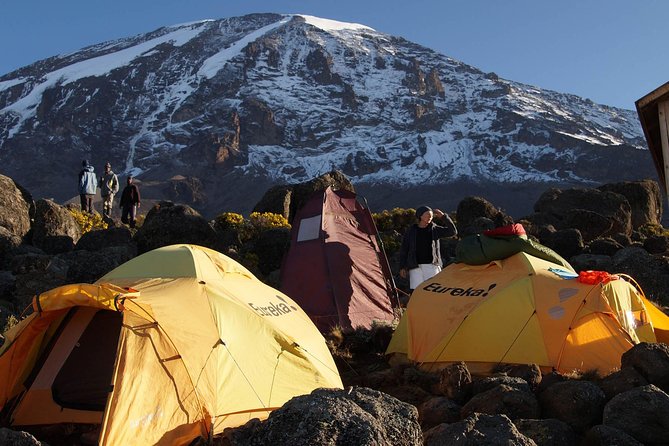
The Lemosho Route gives you a gradual approach to Kilimanjaro, starting in forest and climbing across the open Shira Plateau before reaching Lava Tower, Barranco Wall, and Uhuru Peak. It is a serious mountain trip, but the route builds altitude in stages rather than rushing straight upward.
I like the two nights around the Shira Plateau, which give you time to adjust before the hardest days. I also like that the package begins and ends at Arusha Safari Lodge, with airport transfers from Kilimanjaro International Airport included. The main drawback is the summit day: 13 to 15 hours on foot is a long, tiring push, and the itinerary leaves little room for a weather delay.
Key points to know before booking
- Eight trekking days, ten days overall: The climb runs from Day 2 through Day 9, with lodge nights in Arusha before and after the mountain.
- A varied western approach: You walk through forest, high open ground, volcanic terrain, glacier country, and the Barranco Valley.
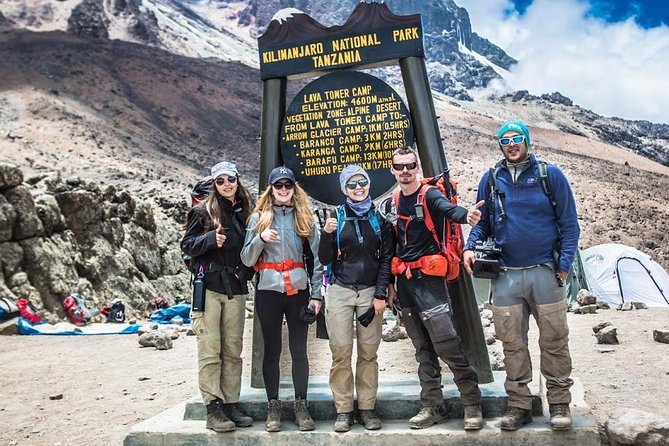
- Lava Tower is the altitude test: You climb to about 4,600 metres for lunch before descending to Barranco Camp, a useful high-and-low acclimatization pattern.
- The summit begins before midnight: You reach Stella Point for sunrise, then continue toward Uhuru Peak at 5,895 metres.
- Airport transfers are included: Private pickup from JRO to Arusha and a return transfer are part of the package.
- The price is $2,950 per person: That covers the main mountain services, lodging, meals, park entry, and transfers, but not tips, flights, or personal items.
Arusha Safari Lodge gives you a calm first night
Your trip begins at Arusha Safari Lodge, on the lower slopes of Mount Meru. You arrive at any time at Kilimanjaro International Airport, where a private transfer is scheduled to meet you and take you to the lodge.
That arrangement is useful after a long international flight. You do not need to arrange a separate taxi or find your way into Arusha at night. The first evening is also more than a hotel stop. At 5:30 pm, you attend a pre-climb briefing and equipment check.
Use this meeting wisely. It is the time to confirm that your clothing, footwear, sleeping gear, and personal mountain items are suitable. The team also checks mandatory medical coverage and travel insurance. The supplied details do not spell out every required item, so I would ask the operator for a full packing list before you fly.
Dinner, bed, and breakfast are included at the lodge. The itinerary lists breakfast on all ten days, lunch on all ten days, and dinner on nine days. That meal count appears to cover the mountain program and lodge stays, though I would confirm which meal is excluded on your departure day.
More Kilimanjaro routes:
- 8-Day Small-group Lemosho Kilimanjaro Summit Trekking
★ 5.0 · 186 reviews - 7-Day Machame Kilimanjaro Summit Tour from Arusha
★ 5.0 · 125 reviews - Private Full Day Hiking Experience to Marangu Route
★ 5.0 · 61 reviews
Day 2: Londorossi Gate to Mti Mkubwa Camp
After breakfast, you drive for about two hours from Arusha through rural countryside to Londorossi Gate. The road passes farmland and open views across the plains before reaching the route head.
Park registration takes place at the gate. This is not just paperwork. It marks the point where your climb enters the Kilimanjaro National Park system, and it can take some time as permits and group details are checked.
From the road head, you begin through forest toward Mti Mkubwa Camp at about 2,650 metres. The walking time is listed as three to four hours. This is a sensible opening day. You get your legs moving, but you do not begin with an exhausting march.
The forest section gives the climb a gentle start. You are still at a relatively modest altitude, so the main task is to settle into the slow walking rhythm your guides will use throughout the trip. Do not treat this as a race. Saving energy on the first afternoon matters later.
Day 3: Mti Mkubwa to the Shira Plateau
The forest thins as the trail climbs toward the rim of the Shira Plateau. This is a longer day, listed at six to seven hours, and the route begins to feel more exposed and high.
Shira Camp sits at about 3,550 metres. The change from forest to wide mountain views is one of the appealing parts of Lemosho. You move from enclosed woodland into open country, with a stronger sense that you are climbing a very large volcano rather than simply walking a forest trail.
The schedule calls for a slow and steady pace. That matters here. The distance itself may not be the only challenge. Your body is also beginning to respond to altitude, and a careful pace helps you notice early signs of trouble.
Day 4: Shira Cathedral and Shira Hut
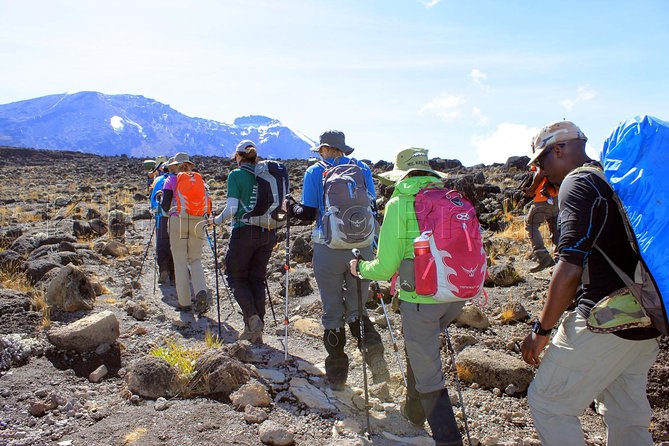
Day 4 is shorter, with three to five hours of walking. You follow an easier trail toward Shira Cathedral before reaching Shira Hut at approximately 3,840 metres.
The shorter day is valuable because it gives you more time at altitude without another very long push. It also provides a chance to enjoy the open views and rest before the route turns more demanding.
Shira Hut is exposed, and the temperature can fall well below freezing. That is an important practical warning. Even if the afternoon feels manageable, your evening and night can be much colder than the previous one. Keep warm layers close, protect your water from freezing if needed, and do not leave essential clothing buried in your luggage.
A few more Arusha days to compare
- Balloon Safari & Bush Breakfast in Serengeti – Miracle Experience
★ 5.0 · 1,646 reviews - Tanzania Classic – 7 Days
★ 5.0 · 1,151 reviews - 4 Days Group Camping Safari
★ 5.0 · 1,101 reviews - 5 Days Group Camping Safari
★ 5.0 · 730 reviews
Day 5: Lava Tower and the descent to Barranco
This is one of the best-designed days in the itinerary. From Shira Hut, you climb gently across the southwest side of Kilimanjaro, passing below Lava Tower and the final part of the Western Breach.
You reach the bottom of Lava Tower at around 4,600 metres for a hot lunch. Then you descend to Barranco Valley at about 3,900 metres, with five to seven hours of walking in total.
That high climb followed by a lower overnight stop is useful for acclimatization. You spend time at a significant altitude, then sleep lower than your highest point of the day. It is also a scenic transition, from broad high ground to the dramatic Barranco Valley.
Do not be surprised if this day feels harder than its gentle wording suggests. The altitude, exposure, and length can catch you off guard. The descent to Barranco is not wasted effort. It is part of the reason this route gives your body more time to adjust.
Day 6: The Barranco Wall and Karanga Camp
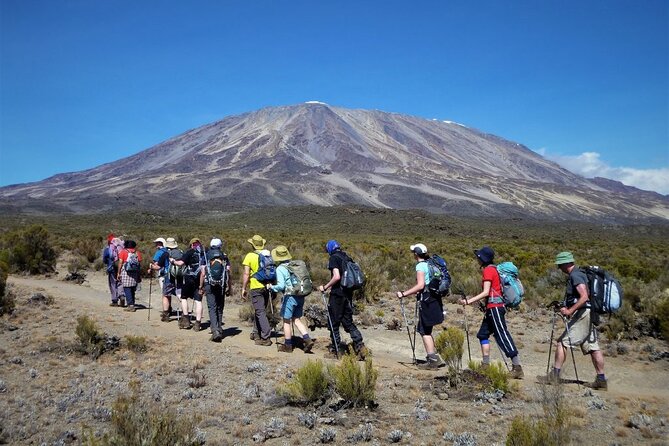
The day begins with a steep climb up the eastern wall of the Barranco Valley. The trail takes you below the Heim Glacier, where the route may offer striking views of Kilimanjaro’s ice and upper slopes.
You then climb the Barranco Wall. This is a steep section, but the itinerary does not describe it as a technical climbing pitch. Expect a demanding mountain trail where you may need to use your hands in places and move carefully.
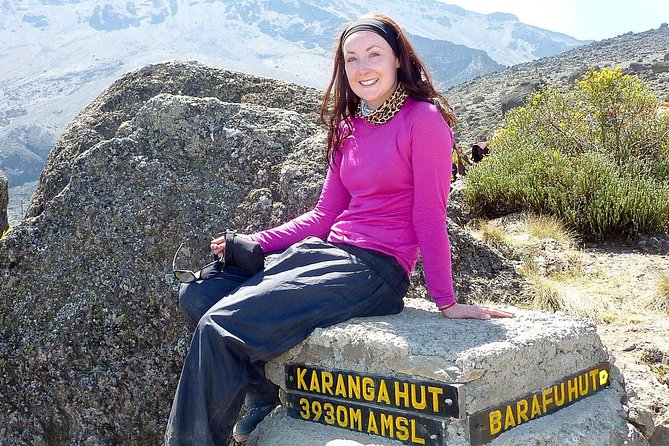
After the wall, the route drops into the alpine desert of the Karanga Valley before climbing again to Karanga Camp at about 4,000 metres. The walking time is listed as four to five hours. One itinerary entry says four minutes, which is clearly inconsistent with the stated walking time, so plan for a half-day mountain walk, not a brief transfer.
This day has a good sense of progress. You overcome a visible obstacle, lose some height, then regain it before camp. The repeated climbs and descents can be tiring, so steady pacing is still the rule.
Day 7: Karanga to Barafu Camp
From Karanga, you take the Traverse Route toward Barafu Ridge. This is a shorter day of three to four hours, but you climb to Barafu Camp at about 4,600 metres.
Barafu is the final camp before the summit attempt. The schedule wisely leaves the rest of the day for relaxing and preparing for the early start. You should use those hours for eating, drinking, organizing your summit clothing, and resting rather than wandering around camp.
The high camp can feel stark and cold. Since the next start is before midnight, every small bit of preparation helps. Keep your headlamp, warm clothing, water, and any personal essentials ready before you lie down. The itinerary calls for a very early night, but sleep may be short or difficult at this altitude.
Day 8: Stella Point, Uhuru Peak, and Mweka Camp
Summit day begins in darkness. You climb over loose volcanic scree, following well-graded zigzags at a slow pace toward Stella Point on the crater rim.
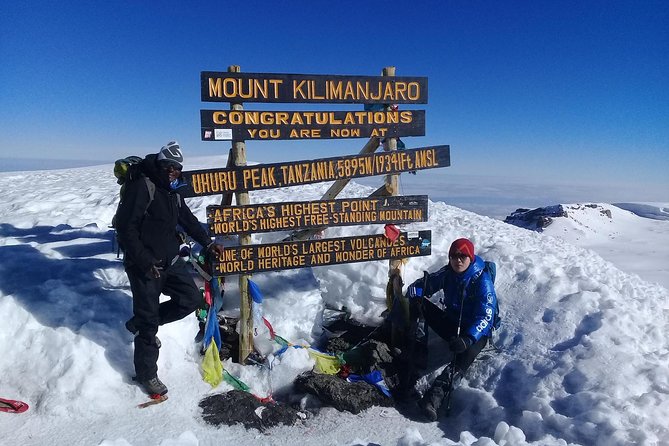
The itinerary gives the ascent to Stella Point as 5,735 metres. From there, you can pause for sunrise and views toward Mawenzi. If you still feel strong, the route continues along the crater rim toward Uhuru Peak, the highest point in Africa at 5,895 metres.
The final section from Stella Point to Uhuru Peak is described as about a two-hour round trip. That timing can feel longer when you are already tired, cold, and short of breath. The best approach is to judge your condition honestly and listen to the guide team.
After the summit, you descend to Barafu Camp for refreshments and then continue down to Mweka Camp at about 3,100 metres. The full day is listed at 13 to 15 hours. That is the central physical fact of this trip. Reaching the top is only part of the day. You still have a long descent before you sleep.
The quick loss of altitude can bring relief, but your legs may feel worn out. Good footwear and careful downhill walking matter just as much as fitness for the ascent.
Day 9: Mweka Camp to Arusha
The final mountain walk leads through rainforest to Mweka Gate and takes about three to five hours. At the gate, successful climbers receive summit certificates.
After lunch, you drive back to Arusha Safari Lodge for dinner, bed, and breakfast. This return to the lodge is a welcome comfort after the summit night and descent. You can wash, eat properly, and rest in a real bed rather than moving directly to an airport.
The itinerary calls this day an Arusha Village Experience, but the details supplied describe the rainforest walk, Mweka Gate, lunch, and return to the lodge. I would not book this expecting a separate village tour unless the operator confirms that one is included.
Day 10: The included return transfer
After saying goodbye to the guides, you receive a private transfer from Arusha to Kilimanjaro International Airport. The transfer is included for your flight home.
The timing is not specified, so give the company your flight details well in advance. If you have extra time in Tanzania, the operator says a short safari or another option can be discussed, but that would be separate from this listed mountain program.
What the $2,950 price covers
At $2,950 per person, this is not a low-cost walk-up-the-mountain outing. The price makes more sense when you consider the length and services included: Arusha lodging before and after the climb, airport transfers, meals, park admission, mountain transport, and a private activity for your own group.
Private touring is important here. Your group is not combined with strangers, so the guide team can work with your pace and condition. That can be a real benefit on summit day, when energy levels differ sharply.
Still, the price does not include international flights, tips, or personal items. Tips are a normal extra consideration for a guided mountain climb, and you should budget for them before departure. The package also requires medical coverage and travel insurance, so those costs sit outside the advertised price.
The operator’s strongest praise centers on its mountain team. Names connected with the company include Emmanuel and Frankie, and Clinton appears in the company’s customer communication. These names do not guarantee who will lead your departure, so ask directly about your assigned guides. You should also ask how many porters will support your group and what equipment is supplied.
Best months and the weather trade-off
January and February are listed as the best months, with warmer conditions and evenings and mornings that are often clear. August and September are also recommended.
July can be colder. November and December can be wet, while November usually brings shorter rains rather than rain every day. March, April, and May are described as the long-rain period and are best avoided.
Weather on a high mountain can change even in a good season. A favorable month improves your odds of clearer conditions, but it does not remove the need for warm clothing, rain protection, and a flexible attitude. Poor weather can lead to a changed date or a full refund under the stated cancellation terms.
Who should choose this Lemosho climb?
I would recommend this route to someone with a moderate level of physical fitness who wants a structured, private climb with a gradual western approach. You need to be comfortable walking for several hours on consecutive days and prepared for one very long summit day.
The route also suits someone who values support before and after the mountain. The included airport transfers and Arusha lodge nights remove several small decisions from the trip. That is especially useful if you are arriving from overseas.
I would hesitate to recommend it to anyone looking for a relaxed holiday with a little mountain walking added. The summit day is demanding, the high camps can be very cold, and the itinerary offers no spare day for an extra acclimatization or weather buffer.
The route is also not ideal if you need a fixed, easy schedule. The plan depends on mountain weather and your condition. The company requires a good weather outlook for the experience to proceed, and any changes made less than 24 hours before the start are not accepted.
Should you book Africa Joy Tours for this climb?
I would book this trip if you want the Lemosho Route, a private group, included airport transfers, and a full service that begins and ends at an Arusha lodge. The route design is appealing, with time on the Shira Plateau, a high point at Lava Tower followed by a descent, and a final approach through Barranco and Karanga.
Before paying, I would confirm four things in writing: the exact guide team, the packing and equipment list, the number of porters, and the meal details for all ten days. I would also ask how the company handles a weather cancellation and verify the start time, since the listing gives both an 8:30 am meeting time and a 5:30 pm briefing on the first day.
At $2,950, the value depends on solid mountain support. If the company answers those questions clearly and you are ready for the 13 to 15-hour summit day, this is a strong option for a carefully paced Kilimanjaro climb.
FAQ
How long does the Kilimanjaro Lemosho Route experience last?
The full program lasts approximately ten days. The mountain trek runs from Day 2 through Day 9, with Arusha lodge stays before and after the climb.
Where does the tour begin and end?
It begins and ends at Arusha Safari Lodge in Arusha, Tanzania. Airport pickup and return transportation are provided between the lodge and Kilimanjaro International Airport.
Are airport transfers included?
Yes. A private transfer from Kilimanjaro International Airport to Arusha is included, along with the departure transfer from Arusha to the airport.
What months are recommended for climbing Kilimanjaro?
January, February, August, and September are listed as the best months. March, April, and May bring long rains and should be avoided. July can be colder, and November and December can be wet.
How difficult is the climb?
Participants should have a moderate physical fitness level. The longest section is summit day, from Barafu Camp to the summit and then Mweka Camp, with 13 to 15 hours of walking.
Is this a private tour?
Yes. Only your group participates in the activity. The experience is operated as a private tour rather than a shared group departure.
What is not included in the $2,950 price?
International flights, tips, and items of a personal nature are not included. Medical coverage and travel insurance are also confirmed during the pre-climb briefing, so you should arrange those before arrival.
Newly listed around Arusha
- 5-Day Private Safari Tour in Tanzania’s Wildlife★ 5.0 · 3 reviews
- 3 Day Sharing Safari – Manyara, Ngorongoro Crater and Tarangire National Parks★ 5.0 · 3 reviews
- 3 Days private safari Tarangire ,Ngorongroro crater &Manyara★ 5.0 · 3 reviews
- Tarangire National Park Day Trip★ 5.0 · 3 reviews
- 6 -Day Tarangire, Manyara, Serengeti & Ngorongoro★ 5.0 · 3 reviews
- 2 Days Tarangire and Ngorongoro Crater Tour★ 5.0 · 3 reviews
- 5 Days Group Camping Safari★ 4.7 · 3 reviews
- 7-Day Mt. Kilimanjaro Hiking: Machame Route★ 5.0 · 3 reviews
Kilimanjaro Climbs, compared.








Browse the lists this tour appears in