
Reviewed · KILIMANJARO CLIMBS
6-Day Guided Tour in Machame Route Mt Kilimanjaro
Kilimanjaro’s Machame Route gives you the mountain in chapters: wet rainforest, open moorland, high desert, rock walls, and the cold arctic summit zone. The six-day plan packs in an acclimatization stop at Lava Tower before sending you toward Uhuru Peak, Africa’s highest point.
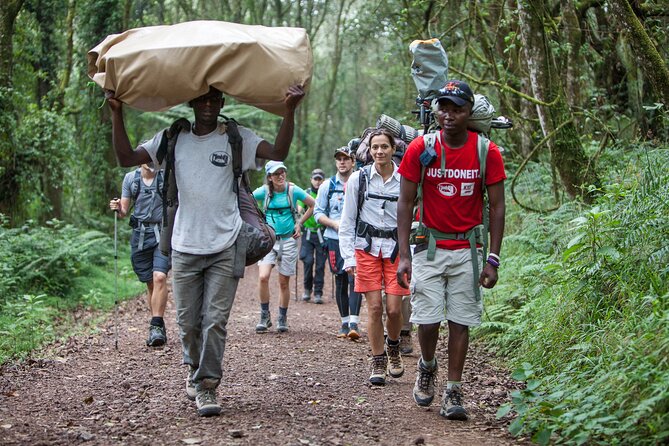
I like the small maximum group of six, which can make pacing and altitude checks more personal. I also like the practical support: porters set up camp, cooks provide three hot meals a day, and guides such as Goodluck, Herment, Amani, and Emanuel have been praised for calm leadership and care.
The main concern is the schedule. Summit night is demanding, with a midnight start, six to seven hours to Stella Point, another hour to Uhuru Peak, then a long descent to Mweka Camp. Six days is a brisk timetable, so strong fitness and a sensible approach to altitude matter.
Key points to know before booking
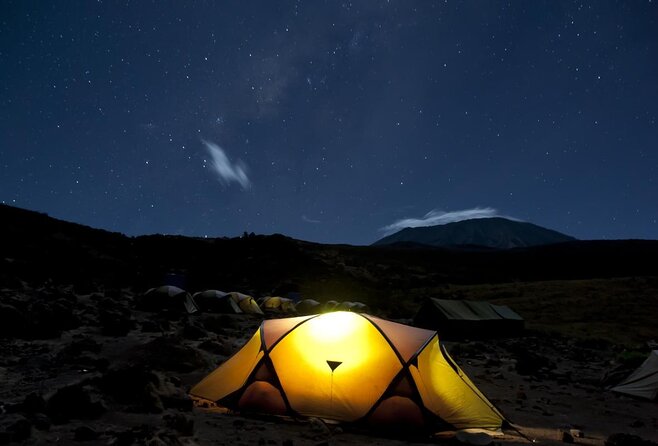
- Five climate zones in six days: You begin in thick rainforest and finish among volcanic rock, glaciers, and freezing summit conditions.
- Lava Tower acclimatization: Day 3 takes you high before descending to Barranco Camp, a useful climb-high, sleep-lower pattern.
- Small group size: The maximum is six climbers, allowing guides to watch pace and symptoms more closely.
- Strong crew support: Guides, porters, and cooks handle camp setup, meals, and mountain logistics.
- Midnight summit push: You climb by headlamp toward sunrise at Stella Point, then continue to Uhuru Peak.
- A fast route: The six-day format costs $2,495 per person and demands more from your body than a slower itinerary.
The Machame Route gives you Kilimanjaro in stages
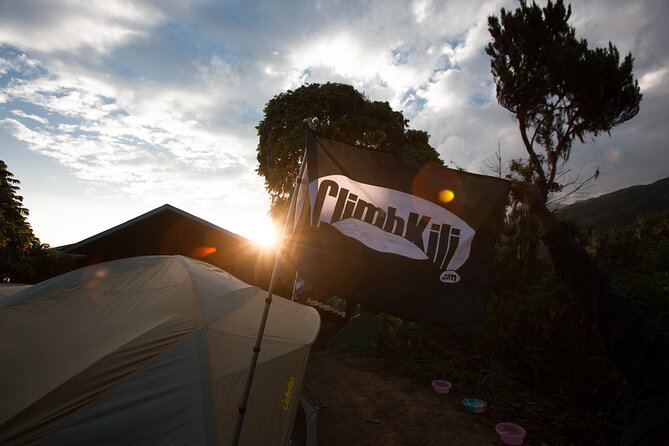
I like the Machame Route because the scenery changes often enough to keep your mind busy when your legs grow tired. You start beneath tall forest, move into heather and moorland, cross dry volcanic country, then climb through stark alpine terrain toward the summit.
The route also uses an important acclimatization idea on Day 3. You climb to Lava Tower at roughly 15,000 feet, then descend to Barranco Camp at about 13,000 feet. That high point gives your body some time at altitude without forcing you to sleep there.
The six-day plan is not a casual walk. Daily distances are moderate on several days, but the altitude gains, uneven trail, cold, and summit night make this a serious physical challenge. You should be comfortable walking for several hours uphill while carrying the personal items you need during the day.
The advertised summit success rate is 98 percent. That is an impressive figure, but it should not be treated as a promise. Altitude affects people differently, and success depends on weather, health, pacing, preparation, and the decisions made by you and your guide.
More Kilimanjaro routes:
- 8-Day Small-group Lemosho Kilimanjaro Summit Trekking
★ 5.0 · 186 reviews - 7-Day Machame Kilimanjaro Summit Tour from Arusha
★ 5.0 · 125 reviews - Private Full Day Hiking Experience to Marangu Route
★ 5.0 · 61 reviews
Day 1: Machame Gate to rainforest camp
Your morning begins with breakfast at the hotel, followed by a transfer from the hotel to Machame Gate. The stated meeting point is Summit Lodge in the Sakina Raskazone area of Arusha, with an 8:00 a.m. start.
The first walking section reaches about 9,400 feet, or 2,865 meters. The distance is listed as 6.8 miles, with roughly five to seven hours on the trail, although the day summary also gives a shorter walking time. That mismatch is worth clarifying with the operator before departure.
The trail winds upward through the rainforest along a ridge. Lower sections can be muddy and slippery, especially after rain. Gaiters and trekking poles are sensible choices here, not fancy extras. Good shoes with dependable grip matter more than speed.
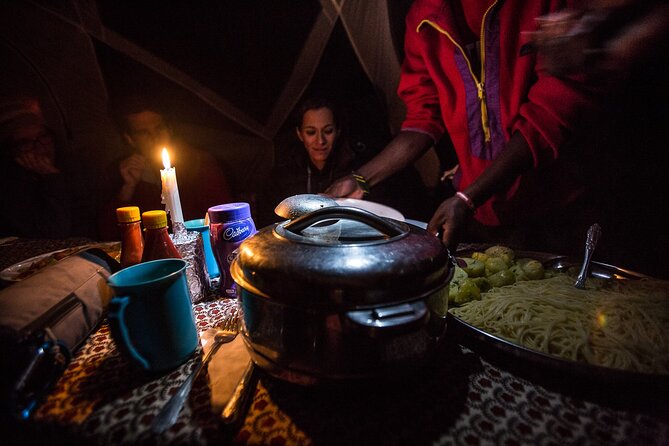
Machame Camp is your first overnight stop. Your tent should be set up before or around your arrival, and your personal belongings will be ready at camp. This is one of the most useful parts of a supported climb: you can focus on walking rather than pitching camp after a tiring day.
Day 2: Heather, moorland, and Shira Camp
Day 2 leaves the forest behind and reaches roughly 12,500 feet, or 3,810 meters. The route covers about 2.8 miles and takes four to six hours, though the short distance should not fool you. The trail climbs steadily, and altitude begins to affect breathing and pace.
You cross a small valley, follow a steep rocky ridge, and enter the moorland zone. Heather replaces the dense forest, and the route feels more exposed. The trail then turns west toward a dry river gorge before reaching Shira Camp.
This is a good day to settle into the mountain rhythm: slow walking, regular drinking, meals, and rest. Do not race ahead because the mileage looks short. On Kilimanjaro, time spent moving gently is often more useful than saving a few minutes.
The guide team is especially important here. Past climbs with Climb Kili have named guides including Herment Mosha, Goodluck, Amani, and Emanuel, also called Manny. You should confirm your assigned lead guide before setting out, since the named guides are not guaranteed for every departure.
Day 3: Lava Tower, Senecio forest, and Barranco
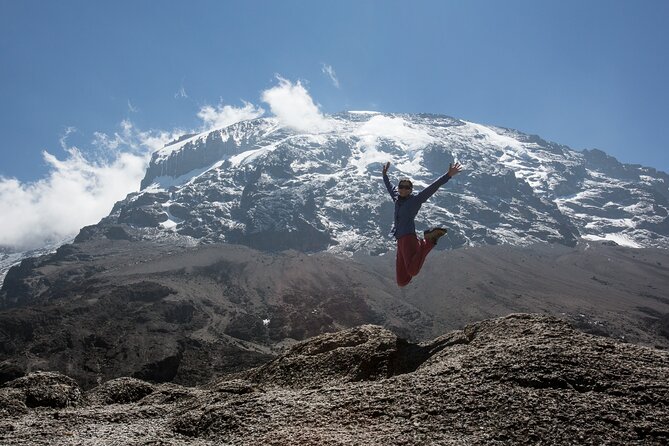
The third day is the route’s main acclimatization day. You climb toward Lava Tower, listed at about 15,000 feet, or 4,500 meters, before descending to Barranco Camp at approximately 13,000 feet.
The walking distance and timing are presented in two different ways in the schedule. One section lists about 4.3 miles and four to six hours, while another gives 5.6 miles and six to eight hours. Ask for the final day-by-day plan so you know which timing applies to your departure.
The climb to Lava Tower can feel hard because you are gaining height even though the day is designed to help your body adjust. After resting at the tower, you descend through a large Senecio forest and pass a waterfall before reaching Barranco Camp.
This high point followed by a lower overnight is one of the best features of the route. It gives you a taste of thin air, then lets you sleep lower than the day’s highest point. You may still feel headache, fatigue, nausea, or shortness of breath. Tell your guide early if anything feels wrong. Quietly hiding symptoms is a poor strategy on a high mountain.
Barranco Camp sits beneath the Barranco Wall. Clouds can drift up from the valley, and the wall gives the camp a dramatic setting. After dinner, rest well. Day 4 begins with one of the route’s most memorable climbs.
More six day trips in Arusha:
- Tanzania Wildlife Encounters – 6 Days
★ 5.0 · 277 reviews - Private 6-Day Tarangire Manyara Crater and Serengeti with Mid-Range Lodges
★ 5.0 · 238 reviews - 6 Days Private Budget Safari
★ 5.0 · 163 reviews - 6 Days Tanzania Budget Camping Safari
★ 5.0 · 145 reviews
Day 4: The Barranco Wall and Karanga Valley
Day 4 covers about 2.2 miles and takes four to five hours, reaching roughly 13,100 feet, or 3,992 meters. The headline feature is the Barranco Wall, a steep and adventurous section that takes you out of the valley and into harsher alpine terrain.
This is not a technical rock climb, but you will use your hands at times and should follow the guide’s instructions. The route can feel exciting and exposed without requiring mountaineering equipment. Poles may need to be put away for parts of the wall so you can balance and use both hands.
After the wall, you continue along the South Circuit path through the Karanga Valley. The day is relatively short compared with summit day, which gives you time to rest, eat, and prepare your clothing and daypack.
Karanga Camp is a useful staging point before the final push. Use the afternoon well. Check your headlamp, gloves, warm layers, water, snacks, and batteries. A small mistake in packing can feel much bigger at midnight in freezing weather.
Day 5: Stella Point, Uhuru Peak, and Mweka Camp
Summit day begins around midnight. The listed high point is 19,340 feet, or 5,895 meters, and the full day includes about 13 miles of walking, with roughly five kilometers uphill and 12 kilometers downhill.
The ascent to Stella Point takes about six to seven hours. You climb through heavy scree toward the crater rim, generally between the Rebmann and Ratzel glaciers. This is the steepest and most mentally demanding part of the non-technical route.
The midnight start serves two purposes. It gives you a chance to reach Stella Point around sunrise, and it allows the group to descend before the day becomes too late. You will likely spend hours walking in darkness, so a reliable headlamp is essential.
At Stella Point, you reach the crater rim and can see Uhuru Peak. The final hour to the summit may look short on paper, but at nearly 19,000 feet, every step takes effort. Keep your pace steady and let the guides set the rhythm.
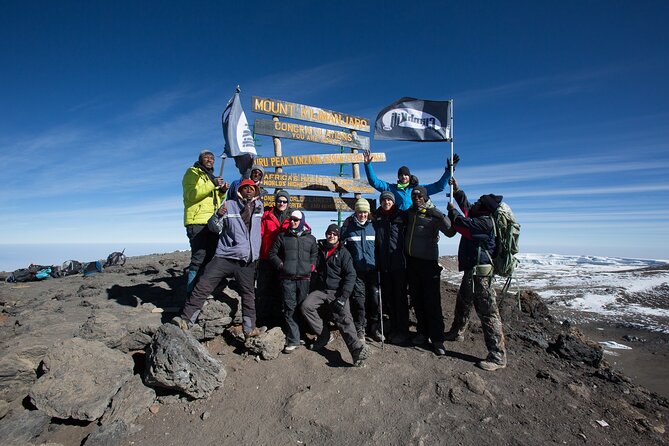
Uhuru Peak is the rooftop of Africa and the emotional high point of the trip. Take your photographs, but do not linger too long in the cold. The descent is not an afterthought. Scree can be loose, knees may be tired, and the route to Mweka Camp still takes several hours.
The day is listed as about 11 hours, though the ascent and descent estimates together suggest a longer day for some climbers. This is another point to clarify before booking. You should expect a very long day, not a neat timetable.
Past climbs have praised Climb Kili’s porters and guides for helping tired climbers continue safely. That support can be valuable, but it does not remove the need for preparation. You still need strong legs, patience, and the willingness to stop or descend if your health requires it.
You finish at Mweka Camp, where dinner and a celebration await. This is the point when the trip often shifts from intense effort to relief. Sleep may come quickly.
Day 6: Mweka Camp to the gate and back to Arusha
The final morning is an easier walk in comparison, though tired legs can make any descent feel long. You walk about 6.4 miles from roughly 5,400 feet, or 1,645 meters, to Mweka Gate in three to four hours.
At the gate, the Climb Kili vehicle transfers you back to your hotel. The experience ends at the original meeting point. A hot shower, clean clothes, and a full meal will feel well earned after the summit day.
This last transfer also makes the tour practical for anyone continuing on to another activity in northern Tanzania. The provided information does not specify a safari connection or extra hotel nights, so arrange those separately unless the operator confirms otherwise.
What the crew support means on a six-day climb
The strongest theme in the available feedback is the mountain crew. Guides named in past accounts include Herment, Goodluck, Amani, Emanuel, Gabi, Omi, Godlove, Leberatos, Gabby, and Florian. You should not assume a particular person will lead your group, but these names give you a sense of the team members associated with the company.
The support described includes camp being prepared before your arrival, three hot meals each day, and porters who carry shared equipment. That changes the climb considerably. You still walk the route under your own power, but you do not have to haul a full tent, cooking kit, and group supplies uphill.
Food matters more than many first-time climbers expect. A warm meal can restore morale when the air is cold and your appetite is poor. Climb Kili has also handled vegetarian requests, which is useful if you have dietary needs. Confirm any special requirements before departure.
The small group cap of six is another practical advantage. A smaller group can make it easier to set a shared pace and communicate symptoms. It can also feel more personal than a large departure, though the number of guides and porters may still be substantial because of mountain regulations and support needs.
The $2,495 price: where the value lies
At $2,495 per person, this is a major purchase. You are paying for more than a marked trail. The price supports a guide team, porters, cooks, camp logistics, transfers, and access to Kilimanjaro National Park, with admission included on each listed day.
The value is strongest if you want a managed climb rather than an independent expedition. You do not need to organize every camp movement yourself, and the crew support can help you conserve energy for the summit.
The six-day schedule is also part of the price calculation. A shorter climb may fit a tight holiday, but it gives you less time to adjust to altitude than longer versions of the Machame Route. If your schedule and budget allow, ask Climb Kili about a slower option before committing. The supplied information specifically describes this six-day plan, so do not assume extra acclimatization days are included.
I would also ask exactly what is covered beyond the listed transport, park admission, meals, tents, and crew. The supplied details do not spell out items such as hotel nights, equipment rental, tips, travel insurance, or personal transfers. Get those answers in writing.
Who should choose this climb
This trip suits you if you want a guided Kilimanjaro ascent with a small group and full camp support. It can work for a first-time high-altitude trekker, but beginner does not mean easy. You need strong physical fitness and the ability to manage long uphill days.
It may also suit families with older teenagers. Past group experiences have included climbers aged 12, 15, and 17, along with adults in their 50s. That does not make the route suitable for every young person. Fitness, maturity, altitude response, and medical advice should guide the decision.
Solo climbers can join with reassurance from the organized crew and small group format. Still, the six-day schedule is not ideal if you want a relaxed holiday pace. You should be ready for early mornings, basic tented nights, changing weather, and a long summit push.
This is not the right choice if you want a light scenic hike, dislike cold or wet conditions, or have not prepared for sustained uphill walking. It is also a poor fit if you expect a guaranteed summit based only on the stated success rate.
Practical details I would confirm before departure
Pickup is offered, and the stated start time is 8:00 a.m. at Summit Lodge in Arusha. Confirm the exact pickup arrangement, since the meeting point and hotel transfer affect your morning plans.
The tour uses a mobile ticket, and confirmation is sent within 48 hours, subject to availability. The cancellation terms allow a full refund if you cancel at least 24 hours before the local start time. Changes or cancellations inside that window are not accepted for a refund.
Before you go, ask about the apparent differences in the Day 1 and Day 3 mileage and timing. Also clarify the seven-day wording in the general description, since the detailed plan covers six days. These are simple questions, but clear timing helps you plan flights, hotel nights, and onward transport.
Pack for several climates, not one mountain. Rainforest conditions can be wet and muddy, while the summit requires serious cold-weather layers. Gaiters and trekking poles are specifically useful in the lower muddy sections, and a headlamp is essential for the midnight ascent.
Should you book Climb Kili’s six-day Machame Route?
I would book this trip if you want a well-supported Kilimanjaro climb, prefer a group of no more than six, and can handle a quick six-day schedule. The combination of varied scenery, the Lava Tower acclimatization climb, prepared camps, hot meals, and an experienced support team gives you a solid framework for the mountain.
I would pause before booking if you have flexibility to add time. The summit success figure is encouraging, but no operator can control altitude or weather. A slower schedule may give your body more room to adjust.
For a fit climber with limited holiday time, this is a strong option at a serious but understandable price. Confirm the itinerary discrepancies, ask what the fee includes, and prepare for summit night as the central test of the trip. If you do that homework, Climb Kili’s Machame Route can give you a demanding, carefully supported path to Uhuru Peak.
FAQ
Where does the tour start?
The stated meeting point is Summit Lodge in the Sakina Raskazone area of Arusha, Tanzania. The start time is 8:00 a.m., and pickup is offered.
How long is the experience?
The detailed itinerary covers six days. The general description uses seven-day wording, so you should confirm the exact duration with Climb Kili before booking.
How large is the group?
The maximum group size is six climbers.
How fit do I need to be?
You should have a strong physical fitness level. The route includes several hours of uphill walking, high-altitude trekking, and a midnight summit attempt followed by a long descent.
Is park admission included?
Admission tickets are listed as included for each day of the itinerary.
What is the cancellation policy?
You can receive a full refund if you cancel at least 24 hours before the experience start time. Cancellations or changes made less than 24 hours before the local start time are not accepted for a refund.
Newly listed around Arusha
- 5-Day Private Safari Tour in Tanzania’s Wildlife★ 5.0 · 3 reviews
- 3 Days private safari Tarangire ,Ngorongroro crater &Manyara★ 5.0 · 3 reviews
- 3 Day Sharing Safari – Manyara, Ngorongoro Crater and Tarangire National Parks★ 5.0 · 3 reviews
- Tarangire National Park Day Trip★ 5.0 · 3 reviews
- 2 Days Tarangire and Ngorongoro Crater Tour★ 5.0 · 3 reviews
- 6 -Day Tarangire, Manyara, Serengeti & Ngorongoro★ 5.0 · 3 reviews
- 5 Days Group Camping Safari★ 4.7 · 3 reviews
- 4 Days Tanzania Safari★ 4.5 · 3 reviews
Kilimanjaro Climbs, compared.








Browse the lists this tour appears in