
Reviewed · MOSHI & KILIMANJARO TOURS
9 Days Kilimanjaro Hiking or Climbing via Northern Circuit route
The Northern Circuit gives you a rare way to approach Mount Kilimanjaro’s Uhuru Peak: slowly, through several habitat zones, and with more time for altitude adjustment than shorter routes. You begin in the Lemosho rainforest, cross the Shira Plateau, circle the quieter northern slopes, and make the summit push from School Hut.
I like the nine-day schedule, which breaks the climb into manageable stages, and I like the route’s remote feel around Moir Hut, Buffalo Camp, and Third Cave. The chance to see sunrise near Gilman’s Point before reaching Africa’s highest summit is another strong reason to choose this route.
The main consideration is that this is still a hard high-altitude climb. Summit day lasts about 14 hours, the cold can be severe, and the $1,584 price needs careful checking because hotel arrangements and personal equipment may not be fully covered in the same way for every booking.
Key points to know before booking
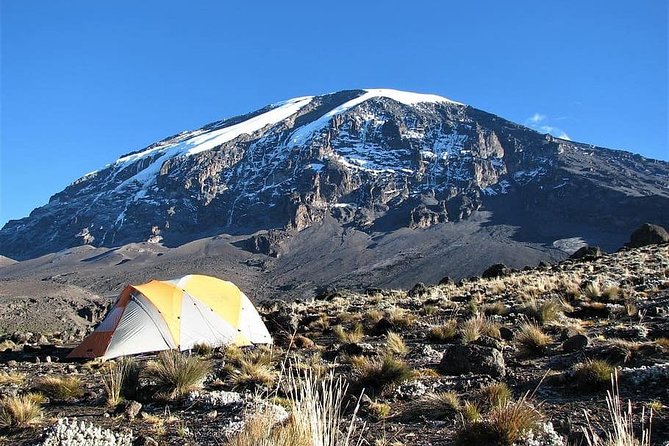
- Longer altitude plan: Nine days allow gradual gains, including a useful climb to Lava Tower followed by a descent to Moir Hut.
- Remote northern route: Buffalo Camp and Third Cave offer a quieter mountain setting than the busy lower trails.
- Very demanding summit day: Expect roughly 6 to 8 hours from School Hut to Uhuru Peak, then another 4 to 6 hours down to Mweka Camp.
- Meals and park costs included: Breakfast, lunch, dinner, taxes, park operation costs, transfers, and crew wages are listed as included.
- Personal costs remain: Flights, visas, insurance, hiking equipment, and crew tips are not included.
- Moshi logistics: Pickup is offered, the listed meeting point is in Shanty Town, and the activity finishes back there after the descent.
Why the Northern Circuit route is worth nine days
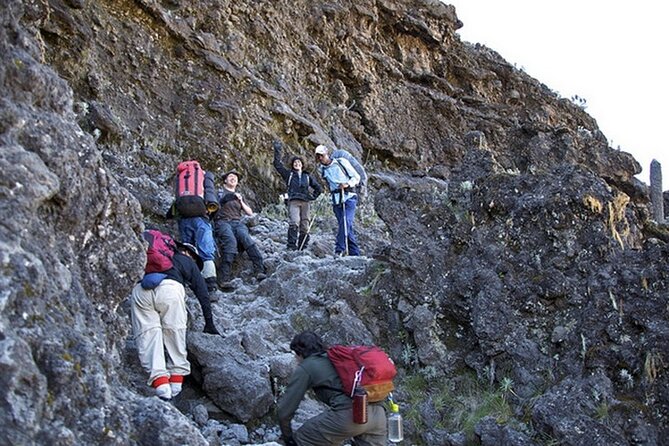
Kilimanjaro is not a technical mountaineering climb in the usual sense, but it is a serious physical test. The key problem is altitude. You can be fit, strong, and used to long walks, yet still struggle above 15,000 feet.
That is where this route makes sense. The Northern Circuit does not rush you straight toward the summit. It takes you from 7,742 feet at Londorossi Gate to higher camps in stages, with several days spent near or above 12,000 feet before summit night.
I especially like Day 4. You climb from Shira 2 Camp to Lava Tower at 15,190 feet, then descend to Moir Hut at 13,580 feet. That climb-high, sleep-lower pattern gives you useful time at altitude without forcing you to sleep at the day’s highest point.
The route also offers a different view of Kilimanjaro. Instead of simply heading toward the summit on the most direct line, you circle through the northern side, where the plains stretch toward the Kenya and Tanzania border. The tradeoff is simple: you spend more days and usually more money, but you gain a steadier pace and a quieter mountain setting.
More Hiking Tours in Moshi
- Private Kilimanjaro Hike 7 Day Lemosho Route
★ 5.0 · 60 reviews - Best Kilimanjaro hiking day trip tour with Kilinge Adventures
★ 4.5 · 54 reviews - #1. Best Kilimanjaro Day hike Tour-Machame Route-ISMANI
★ 4.2 · 47 reviews
Day 1: Londorossi Gate and the first rainforest camp
Your morning begins with the drive from Moshi to Londorossi Gate, listed at about four hours. This is not a minor transfer. You will complete park entry formalities there, so the day starts with paperwork before the walking begins.
From the gate, the drive continues to the Lemosho trailhead. The first hike covers about 6 kilometers and takes three to four hours, climbing from 7,742 to 9,498 feet. You spend the day in rainforest, following a trail through relatively undisturbed vegetation to Mti Mkubwa Camp.
This is a good opening stage because it eases you into the climb. You are walking uphill, but the distance is modest compared with later days. Keep your first day deliberately slow. A common mistake on Kilimanjaro is to treat the opening walk like a race while feeling fresh.
Day 2: Leaving the trees for Shira 1 Camp
Day 2 covers 8 kilometers in about five to six hours. You leave the rainforest and enter the heath zone, with tall grasses, heather, volcanic rock, and lichen-covered growth.
The route climbs across rolling ground and several streams before reaching Shira Ridge. From there, the trail drops gently toward Shira 1 Camp at 11,500 feet. This is your first clear view of Kibo, Kilimanjaro’s main volcanic cone, across the plateau.
The change in scenery is one of the pleasures of this route. You begin among trees, then quickly find yourself in open high country. The air will feel thinner, but the walking remains moderate. Take care with hydration and keep your pace easy, especially if you are not accustomed to high-altitude trekking.
Day 3: A short walk across the Shira Plateau
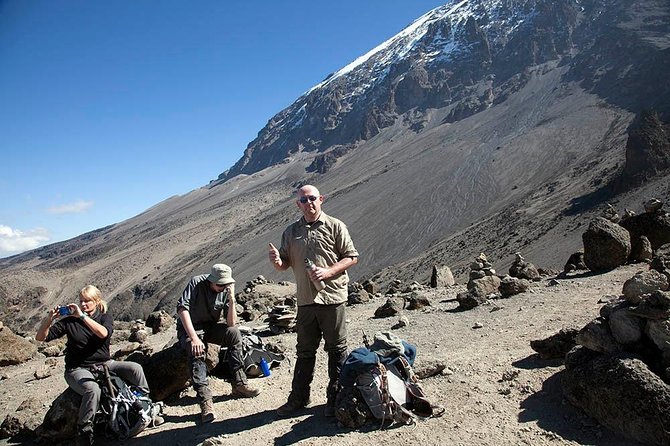
The third day is shorter, at 7 kilometers and three to four hours. You move from Shira 1 to Shira 2 Camp at 12,500 feet, walking east across moorland meadows.
This is not a throwaway day. The gentle distance gives your body time to adjust before the route climbs higher. You will see wildflowers and distinctive Senecio trees in the heath zone, along with broad views across one of the world’s highest plateaus.
I would use this day to check your clothing, water, headlamp, and sleeping setup. Small problems are easier to fix at 12,500 feet than on summit night. It is also a good chance to save energy. The climb is still young, and the hardest effort is ahead.
More Hiking Tours in Moshi & Kilimanjaro:
- Best Kilimanjaro Adventure 7 days Machame route Trekking
★ 5.0 · 42 reviews - Kilimanjaro 7 Day Private Trekking Experience
★ 5.0 · 40 reviews - 8 Days Kilimanjaro Hike via Lemosho Route
★ 5.0 · 39 reviews - The Best & Unique Kilimanjaro Hiking tour 7 days Machame route
★ 5.0 · 34 reviews
Day 4: Lava Tower, Lent Hills, and Moir Hut
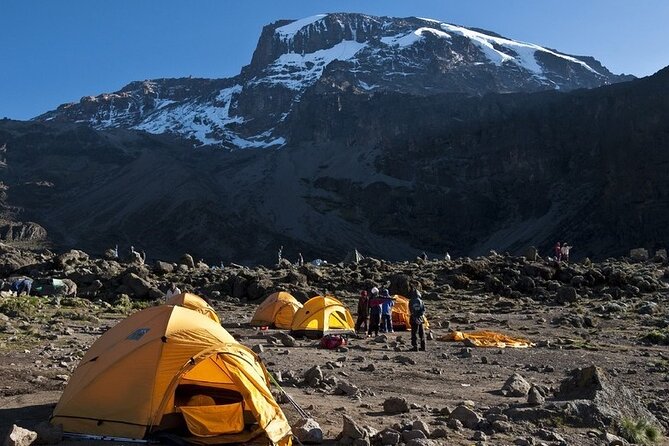
Day 4 is the route’s main acclimatization day. You hike 7 kilometers from Shira 2 to Lava Tower, gaining nearly 2,700 feet and reaching 15,190 feet. Lava Tower itself is a striking volcanic rock formation, described as about 300 feet tall.
After reaching the tower, you turn toward Moir Hut, dropping to 13,580 feet over another 7 kilometers. The full day takes about eight hours, split between a three to four-hour ascent and a two to three-hour descent, with time around the Lava Tower area and Lent Hills.
This is a demanding day even though you do not sleep at the highest point. The altitude may cause headache, breathlessness, poor appetite, or fatigue. Tell your guide promptly if you feel unwell. The route includes optional walks around Lent Hills, making Moir Hut a useful place to spend extra time adjusting.
The drawback is that the day can feel long and exposed. You are now in alpine desert, with less vegetation and less shelter than in the forest. Pack your warm layers where you can reach them, rather than burying them at the bottom of your bag.
Day 5: Moir Valley to Buffalo Camp
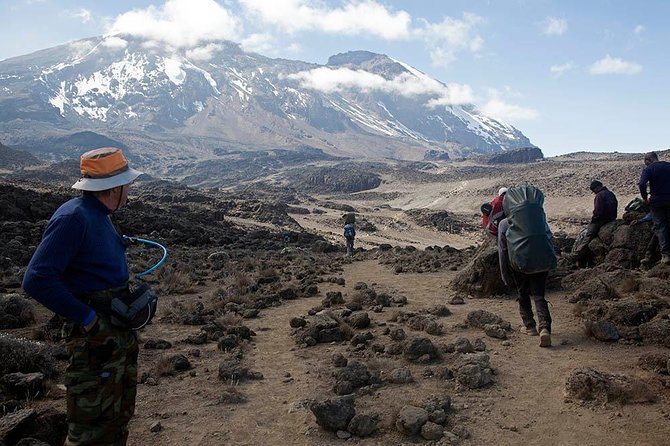
From Moir Hut, the trail climbs moderately toward the top of Lent Hills before returning to the main route. You then cross a rocky section and follow a gently undulating path to Buffalo Camp.
The distance is 12 kilometers, with five to seven hours of hiking. The elevation changes only slightly overall, from 13,580 to 13,200 feet, but the repeated ups and downs matter after Day 4.
This section is one of the route’s special features. From the northern side of Kilimanjaro, you can look across the plains toward the Kenya and Tanzania border. The setting feels more remote, and the trail is less direct than the southern approaches.
You should not expect a rest day in the ordinary sense. The lower net elevation gain helps, but 12 kilometers at this height is still work. Keep your daypack light and make use of the crew support listed in the price.
Day 6: Buffalo Ridge and Third Cave
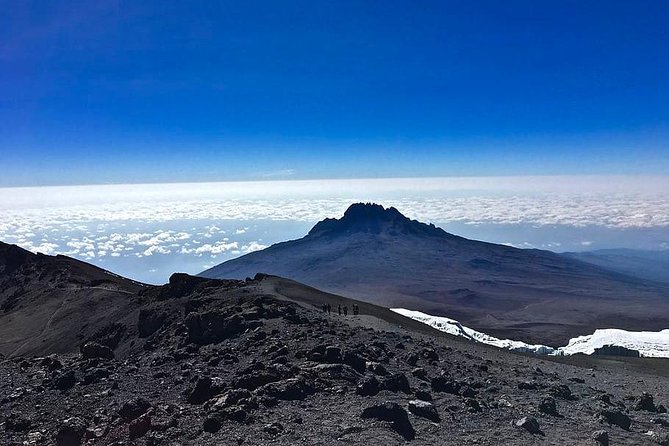
Day 6 takes you from Buffalo Camp to Third Cave, covering 8 kilometers in five to seven hours. You climb Buffalo Ridge, then move through increasingly sparse country and remote valleys on Kilimanjaro’s northern slopes.
The route reaches 12,700 feet at Third Cave, slightly lower than Buffalo Camp. That modest descent is helpful, but the terrain remains high and open. This is one of the quieter portions of the climb, with a strong sense of mountain wilderness.
The practical value of this day is its position in the schedule. You are not asked to gain a huge amount of height immediately before the summit. Instead, you continue moving around the mountain and preserve some time for adaptation.
Day 7: Crossing the Saddle to School Hut
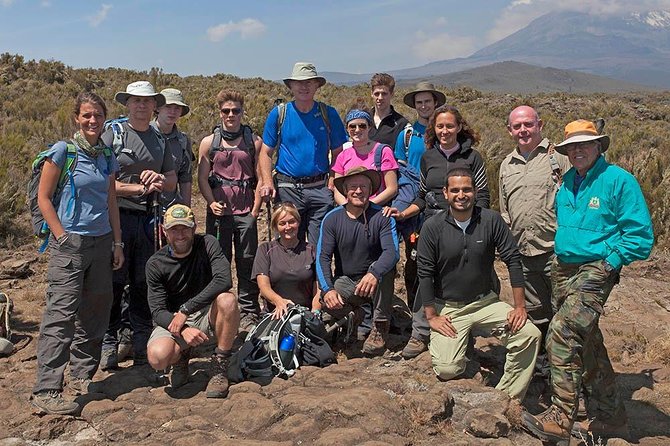
The seventh day is short in distance but important in preparation. You hike only 5 kilometers from Third Cave to School Hut, yet you climb from 12,700 to 15,600 feet over four to five hours.
The trail crosses the Saddle, the broad high area between Kibo and Mawenzi. With little vegetation in this alpine desert zone, the route can feel stark and exposed. Your destination is School Hut, where you rest and eat an early dinner before the midnight start.
This is when the climb becomes mostly about discipline. Eat what you can, organize your warm clothing, and protect your energy. You are not trying to have a full normal night of sleep. You are preparing for a long effort that begins while most people are in bed.
Day 8: Uhuru Peak and the long descent
Summit day begins around midnight. From School Hut at 15,600 feet, you climb 6 kilometers to Uhuru Peak at 19,341 feet, usually taking six to eight hours.
The first part happens in darkness, cold, and often strong wind. Breaks are frequent but short. The goal is to keep moving steadily without wasting energy. At Gilman’s Point, about 18,600 feet, you may reach the rim around sunrise and see light spread across Mawenzi Peak.
From there, you continue to Uhuru Peak, the highest point on Mount Kilimanjaro. Reaching it is a major physical achievement, but do not let the summit photo fool you into thinking the day is finished.
You then descend 12 kilometers to Mweka Camp at 10,065 feet, taking another four to six hours. The change in altitude is welcome, but the downhill can punish tired legs. The full day is listed at about 14 hours, making it by far the toughest part of the trip.
The habitat is labeled Arctic in the route description, though the practical point is clear: expect severe cold and an exposed, high-altitude environment. You need strong gloves, warm headwear, suitable layers, and dependable footwear. Personal hiking gear is not included in the price, so this preparation is your responsibility.
Day 9: Descending through rainforest to Mweka Gate
The final walk runs 10 kilometers from Mweka Camp to Mweka Gate, dropping from 10,065 to 5,380 feet. It takes about three to four hours and returns you to rainforest.
Lower elevations can be wet and muddy. After the stark upper mountain, the trees will feel like a different world, but the trail may be slippery. At Mweka Gate, you collect summit certificates, then continue for about an hour to Mweka Village.
A vehicle meets you at the village for the drive back to your Moshi hotel. The activity ends at the listed meeting point in Shanty Town, Moshi. That transfer matters after a 14-hour summit day followed by a long descent.
What the $1,584 price covers
At $1,584 per person, this trip offers solid value if the included services are delivered as described. The package lists all fees and taxes, airport pickup and drop-off, gate transfers, crew wages, Kilimanjaro operating costs, and meals throughout the climb.
The meal count is eight breakfasts, nine lunches, and eight dinners. That matches a nine-day schedule with lunch each day and breakfast and dinner on the appropriate camping nights.
Hotel accommodation before and after the climb is also listed, but the wording says it can be booked directly by you or through the operator. I would clarify this point before paying. Ask exactly which nights, hotel level, transfers, and room arrangements are included in your specific price.
You must budget separately for:
- International and local flights
- Visa costs
- Medical and travel insurance
- Personal hiking equipment
- Tips for the crew
Crew tips are not a small detail on a guided Kilimanjaro climb, so ask for the operator’s suggested tipping practice. The price also mentions group discounts, which could improve value if you are booking with friends or family.
Guides, group size, and the human side of the climb
No guide names are provided, so you should request the assigned lead guide and ask how the support team is organized before departure. The available feedback gives useful clues about the service: the guide and driver were described as friendly, and the airport pickup was handled from arrival onward.
That airport support can make the first day easier, especially if this is your first visit to Tanzania. Still, do not rely only on general promises. Confirm your pickup time, Moshi hotel, meeting location, and emergency arrangements.
The maximum group size is listed as 500 people. That is an unusually high ceiling for a mountain departure, even if your actual group may be much smaller. Ask how many climbers will be in your group and how many guides, cooks, and porters will support it.
The strongest praise connected with this route is its effect on less experienced hikers. The nine-day pace gives you more time to adjust, and the route has been suitable for groups ranging from age 26 to 60, with mixed levels of hiking experience. That does not make the climb easy. It means the schedule is more forgiving than a compressed six-day plan.
Who should choose this climb
I would recommend this route to you if you want the best chance to adapt gradually and do not mind spending nine days on the mountain. It suits fit beginners, experienced hikers who prefer a slower plan, and anyone drawn to remote northern views rather than the shortest possible route.
It is also a good choice if you value a full mountain journey. You pass through rainforest, heath, moorland, alpine desert, and the frozen upper zone, rather than seeing only the most direct trail.
I would be cautious if you have limited time, dislike camping, or are looking for a gentle holiday. The summit night is long, the weather can cancel the activity, and the included information does not cover personal gear, insurance, or flights.
Most people can participate, but the tour should not be treated as a casual walking trip. Medical and travel insurance are specifically your responsibility, and you should discuss high-altitude travel with a medical professional if you have health concerns.
Booking and cancellation details
Pickup is offered, and the listed meeting point is BURIGI CHATO SAFARIS CO LTD on Mkwawa Street in Shanty Town, Moshi. The stated start time is 8:30 am, although you should confirm whether that refers to the initial meeting or the first transfer from your hotel.
Confirmation is provided when you book. The activity has free cancellation up to 24 hours before the local start time for a full refund. Cancellations or changes made within 24 hours are not accepted for a refund.
The climb requires suitable weather. If poor weather causes cancellation, you are offered another date or a full refund. Keep this in mind when arranging connecting flights immediately after the climb.
Should you book the Northern Circuit?
You should book this climb if your priority is a gradual, scenic route with time for altitude adjustment and a quieter northern approach. The combination of Moir Hut, Buffalo Camp, Third Cave, and a summit attempt from School Hut gives the nine days a clear purpose.
I would book only after confirming the hotel details, actual group size, guide team, transfer schedule, and recommended equipment list. If those points are clear, $1,584 is a reasonable starting price for a package that includes meals, park costs, crew wages, and transport support.
Choose another route if you want the shortest or cheapest Kilimanjaro climb. Choose this one if you want to give your body more time, see more sides of the mountain, and accept that the summit day will be a major test.
FAQ
How long is the Kilimanjaro Northern Circuit tour?
The climb lasts approximately nine days, including the approach, summit attempt, descent, and return to Moshi.
Where does the activity start?
The listed meeting point is BURIGI CHATO SAFARIS CO LTD on Mkwawa Street in Shanty Town, Moshi, Tanzania. Pickup is also offered.
What time does the tour start?
The stated start time is 8:30 am. Confirm the exact pickup or meeting arrangement with the operator.
Is airport pickup included?
Airport pickup and drop-off are listed among the included services, along with gate transfers.
Are meals included?
Yes. The package lists eight breakfasts, nine lunches, and eight dinners.
Is hotel accommodation included?
Hotel accommodation before and after the climb is listed, but the details say it may be booked directly by you or through the operator. Confirm the exact arrangement before booking.
Is personal hiking equipment included?
No. Personal hiking gear is not included.
Are flights, visas, and insurance included?
No. Local and international flights, visas, medical insurance, and travel insurance are excluded.
Are crew tips included?
No. Tipping the crew is not included in the listed price.
Can I cancel for a full refund?
Yes. You can cancel at least 24 hours before the experience start time for a full refund. Cancellations or changes within 24 hours are not refunded.
Newly listed around Moshi & Kilimanjaro
- Climb Mount Kilimanjaro: 7 Days Machame Route★ 5.0 · 3 reviews
- 6 Days Mount Kilimanjaro Climbing via Rongai Route★ 5.0 · 3 reviews
- Explore 1 day Ngorongoro Crater Budget Group Safari from Arusha★ 5.0 · 3 reviews
- Mt. Kilimanjaro Day Hiking★ 5.0 · 3 reviews
- Chemka (Kikuletwa) Hot Springs, Tanzania★ 5.0 · 3 reviews
- Guided City tour of Moshi★ 4.3 · 3 reviews
- 8 Day Tanzania Family Safari★ 5.0 · 3 reviews
- Rongai Route 7 Days★ 5.0 · 3 reviews
Moshi & Kilimanjaro Tours, compared.








Browse the lists this tour appears in