
Reviewed · KILIMANJARO CLIMBS
7 Day Kilimanjaro Climbing Via Lemosho Route
Kilimanjaro’s Lemosho Route gives you the mountain’s most varied walk, from monkey-filled rainforest to bare volcanic slopes and the icy upper reaches near Uhuru Peak. You climb slowly through six ecological zones, with a careful high point at Lava Tower before dropping to Barranco Camp to help your body adjust.
I like the route’s scenery and its well-spaced camps. I also like the strong local crew, with guides including William, Rama, Emanuel Hoblen, and Emanuel Mkumbo praised for calm pacing, safety checks, and good mountain judgment. The main catch is simple: seven days is a serious physical test, and summit night means hiking through cold, wind, darkness, and thin air.
Key points to know before booking
- Six ecological zones: Walk from Afromontane rainforest through heather, moorland, alpine desert, and the harsh arctic zone near the summit.
- A useful acclimatization pattern: The route rises to Lava Tower at about 15,223 feet, then drops to Barranco Camp at roughly 13,044 feet.
- A real summit night: You leave Barafu Camp just before midnight and may reach Stella Point around dawn before continuing to Uhuru Peak.
- Camping with a dining tent: Tents, catered meals, and camp setup are included, giving you more comfort than a basic hiking trip.
- Local guides are central to the experience: William, Rama, and Emanuel are among the named guides associated with the climbs, with special praise for their care and pacing.
- Good value for a supported climb: At $2,566 per person, the price includes seven breakfasts, seven lunches, seven dinners, guiding, camping, and pickup, but not your visa.
Why Lemosho is the right route for scenery
Lemosho approaches Kilimanjaro from the west, beginning at Londorossi Gate after a long drive from Arusha. That approach matters. You start in thick Afromontane rainforest rather than stepping straight into a dry, crowded trail, and the first walking hours feel like a gradual introduction to the mountain.
The route then moves through several plant and climate zones. You see forest, heather, lichen-covered volcanic rock, giant lobelias, giant senecios, alpine desert, and finally the cold upper slopes. I like this changing scenery because the climb never feels like the same walk repeated for a week.
Lemosho also gives you broad views of Kibo, Kilimanjaro’s main summit cone, from the Shira Plateau. The old volcanic remains of Shira, once a separate peak before collapsing, add some useful geological context to the walk.
The tradeoff is time and effort. The drive to the trailhead is long, and the route includes several substantial uphill and downhill sections. You are not simply walking toward the summit in a straight line. The route rises, drops, and rises again to help with acclimatization.
More Kilimanjaro routes:
- Kilimanjaro climb by Lemosho Route (7-day)
★ 5.0 · 651 reviews - Kilimanjaro climb, Machame Route (7-day)
★ 5.0 · 262 reviews - Kilimanjaro Climbing Lemosho Route 8 Days.
★ 5.0 · 186 reviews
Day 1: Londorossi Gate to Forest Camp
The first day begins with transport from Arusha to Londorossi Gate, at about 7,742 feet. After meeting the wider climbing crew, you enter the rainforest and walk around four miles to Forest Camp, gaining roughly 1,756 feet.
This is a gentle opening by Kilimanjaro standards. The planned walking time is about three to four hours, with lunch taken on the trail and camp reached in the middle of the afternoon. The forest is the highlight, and you may want to keep your eyes open for wildlife.
The first camp also sets the tone for the trip. You sleep in camping accommodation, with breakfast, lunch, and dinner included. The outfit uses a dining tent and provides catered meals, which gives you a place to eat, organize gear, and get out of the weather.
Do not mistake this easier day for a free pass. You are adjusting to altitude from the start. Walk slowly, drink what your guide recommends, and avoid using your early energy simply because the trail feels manageable.
Day 2: Forest Camp to the Shira high country
Day two climbs from about 9,498 feet to 11,500 feet over roughly five miles. The walk takes around five to six hours and moves out of the forest into podocarpus and juniper woodland, then into heather and lichen-covered volcanic terrain.
The Shira Plateau is the special part of this day. It feels open and exposed after the trees, and you get a dramatic view of Kibo from the western side. Lunch is again taken on the trail, with camp reached during the afternoon at Moir Hut.
The change in altitude is noticeable. You may still feel fine, but the air is thinner and the trail is no longer a lowland stroll. This is where the guide’s pace becomes important. William, Rama, and the Emanuel guides are repeatedly singled out for keeping a steady rhythm rather than pushing fast.
A practical point: your walking days are not huge by distance, but the altitude makes every mile more demanding. Your main task is to preserve energy for the upper mountain. A slow day two is a successful day two.
Day 3: Lava Tower, giant senecios, and Barranco Valley
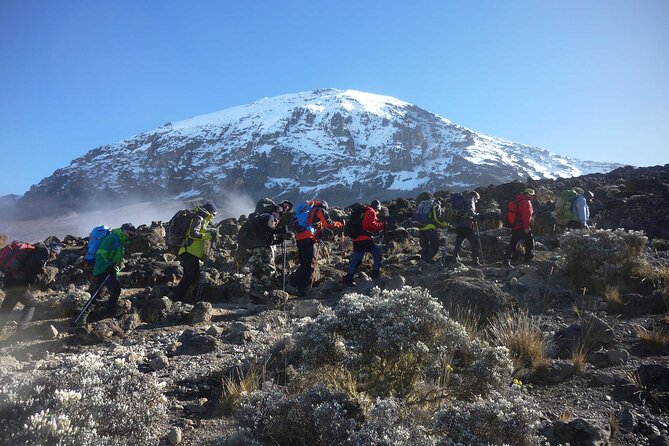
Day three is one of the best-designed parts of the route. You climb from the Moir area toward the slopes of Kibo, reaching about 15,223 feet at Lava Tower, then descend to approximately 13,044 feet at Barranco Camp.
The route covers about seven kilometers and takes four to six hours. The high point is Lava Tower, a volcanic rock formation rising about 300 feet above the surrounding area. If you feel strong, the itinerary allows an optional ascent of the tower, but you should treat that as optional for a reason.
The useful lesson of this day is climb high, sleep lower. You spend time at altitude, then drop to Barranco for the night. That pattern can help your body adjust, though no route removes the risk of altitude sickness.
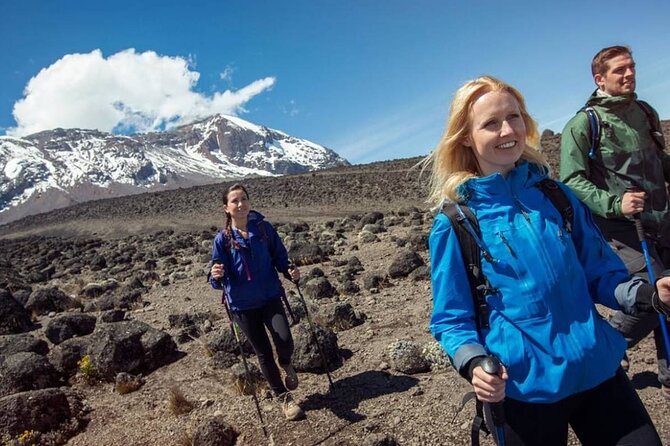
The plants here are strange and memorable. The Garden of the Senecios has giant groundsel and giant lobelia, plants that look almost out of place against the severe upper slopes. Barranco Valley is also one of the prettiest sections of the route, so keep your camera ready.
This day can be tiring because you gain a great deal of height before losing some of it. That descent is not wasted effort. It is one of the reasons the Lemosho plan gives you a better acclimatization rhythm than a rushed ascent.
More week long trips in Moshi & Kilimanjaro:
- Climbing Kilimanjaro through 7 days Machame Route
★ 5.0 · 151 reviews - 7 Days Kilimanjaro via Machame route affordable price
★ 5.0 · 110 reviews - Private Kilimanjaro Hike 7 Day Lemosho Route
★ 5.0 · 60 reviews - 7-Day Magical Tanzania Safari -Premium High End Package
★ 5.0 · 53 reviews
Day 4: Over the Barranco Wall to Karanga Camp
Day four is shorter, with about three miles of walking and four to five hours on the trail. The elevation changes only slightly, from around 13,044 feet to 13,123 feet, but the Barranco Wall makes the day feel more adventurous than the numbers suggest.
You use your hands and feet while working up the wall. It is not described as a technical rock climb, but you should expect uneven, steep ground and a need to concentrate. The reward comes at the top, where the trail crosses the Karanga Valley.
After the wall, the path continues through a series of inclines and declines to Karanga Camp. The repeated ups and downs can be tiring at this altitude, even on a short day. The camp is chosen to give you more time at height for acclimatization, not because it is the quickest route to the summit.
Sunset is a highlight here, with views toward the southern glacial valleys and ice fields above you. The camp’s location also gives you time to eat, rest, and sort your gear before the final high camps.
I would use this evening to check every layer, headlamp, glove, water bottle, and snack. Small problems are easier to solve at Karanga than at Barafu or during the midnight start.
Day 5: Barafu Camp and the wait for summit night
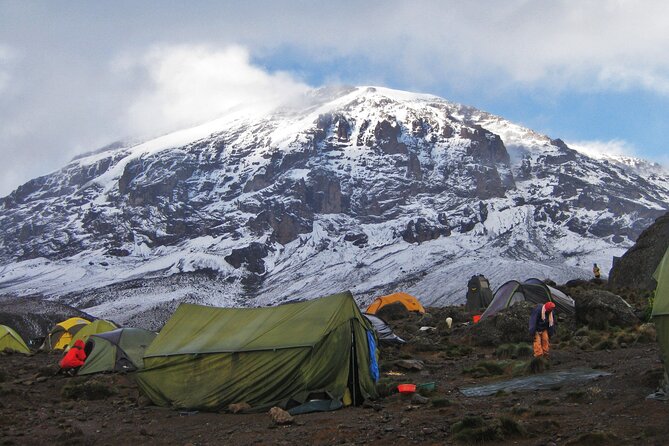
Day five takes you from about 15,288 feet to Barafu Camp at roughly 15,223 feet, depending on the elevation figures used by the operator. The stated walking time to the camp is about six hours, though the published schedule also includes summit and descent figures that belong to the next stage.
The route is now alpine desert: sparse, harsh, and exposed. Barafu is not a leafy campsite or a place for a long afternoon stroll. Strong winds can sweep across the high camp, while views of Mawenzi Peak may appear in the evening.
Lunch is taken at camp, followed by time to rest before an early dinner. That rest is important because the summit attempt starts just before midnight. You need to sleep, even if the altitude, cold, and excitement make that difficult.
The camp may be described as signature camping with spacious tents and a dining tent, but remember that comfort is relative at 15,000 feet. A tent, hot meal, and organized camp are valuable here, yet you are still sleeping high on a volcanic mountain in difficult conditions.
Day 6: The cold climb to Stella Point and Uhuru Peak
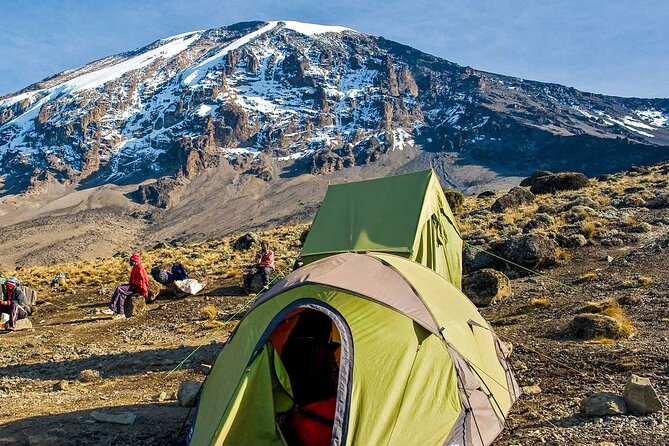
Summit day begins just before midnight. You walk in darkness through the coldest and windiest part of the climb, aiming first for Stella Point at about 18,652 feet.
The route reaches the rim around dawn in the planned schedule. That timing gives you a sunrise over Mawenzi Peak, one of the great visual rewards of the climb. From Stella Point, the remaining section to Uhuru Peak is relatively short by distance, but the altitude makes it feel much longer.
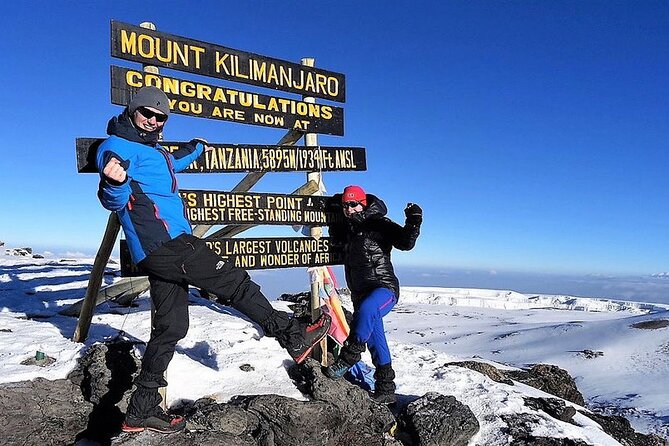
Uhuru Peak is listed at 19,341 feet, often rounded to 19,340 feet. It is the highest point in Africa and the main goal of the trip. You get time for photographs and a short celebration before beginning the descent.
The summit day is much longer than the four-hour figure shown beside part of the published itinerary. The detailed timing gives seven to eight hours for the ascent and four to six hours for the descent, which is a more useful way to think about it. You should expect a very long day, not a quick morning hike.
The descent is physically demanding in a different way. Your legs may feel worn out, and loose volcanic ground can make going down awkward. The route then continues toward lower camp or the next overnight stage, depending on the final operating plan.
This is also the day when guide support matters most. The named guides associated with this experience, including William, Rama, Emanuel Hoblen, and Emanuel Mkumbo, are praised for attention to safety, calm encouragement, and consistent pacing. Those are not decorative qualities on summit night. They help you decide when to slow down, rest, or turn back if your body is not coping.
Day 7: Descending through the forest
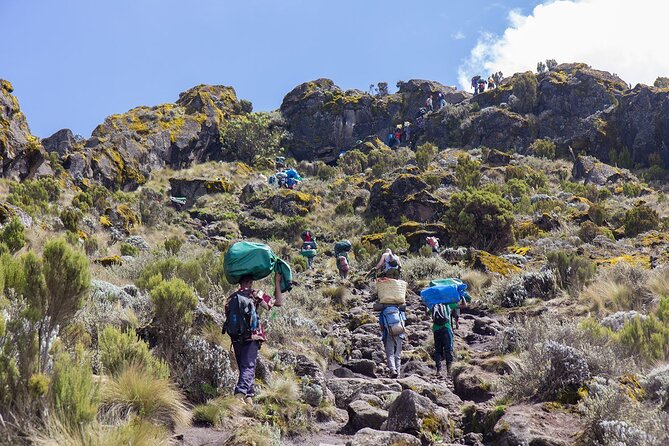
The final day continues downhill through montane forest. The listed trekking time is four to seven hours, with pickup around midday after you say goodbye to the crew and return to your hotel.
The descent can feel surprisingly tough after the summit push. Your feet, knees, and hips have done a lot of work, and the trail may feel less forgiving simply because you are tired. Still, the return to trees, warmer air, and thicker vegetation is a welcome change.
Back at the hotel, you have time for a shower and a celebratory dinner. That simple comfort is part of the appeal of a supported climb. You do not need to arrange your own camp breakdown or carry the full load from one site to the next.
The itinerary has some unclear elevation and timing entries, especially around days five and six. Ask Spirit of Kilimanjaro to confirm the exact overnight camp after the summit and the final descent plan before you pay. The overall sequence is clear, but the printed figures are not perfectly aligned.
Camping, food, and the local crew
This is a fully catered camping trip, not a self-supported hike. Breakfast, lunch, and dinner are included for all seven days, and the operator can cater to vegetarian, vegan, and gluten-free diets.
The dining tent is a useful feature. It gives you a proper place to eat rather than forcing every meal into your sleeping tent. Several comments also highlight tasty food, warm porters, and camps being set up before the group arrives.
That support changes the experience. You still walk every step of the climb, but you do not spend the evening pitching camp, cooking, and packing a heavy load. Your main job is to manage your body, your clothing, and your hydration.
The crew is a major part of the value. William and Rama are named often, while Emanuel Hoblen and Emanuel Mkumbo are also praised for their care and mountain experience. The best practical advice I can give is to ask for the names and roles of your guide team at the pre-climb briefing.
The information supplied does not give a porter tipping policy, gear rental list, medical support plan, or specific group size for your booking. Ask about those points directly. The maximum group size is listed as 100, which is a large possible cap, even though your actual climbing group may be smaller.
Is $2,566 a fair price?
At $2,566 per person, this is not a budget day hike, but it is a substantial multi-day service. The price includes camping, guiding, transport at the beginning and end, and 21 included meals: seven breakfasts, seven lunches, and seven dinners.
The value comes from the length and support. You are paying for seven days on a major African mountain, a dedicated crew, camp logistics, food, and an itinerary built around acclimatization. The Lemosho route also offers more scenic variety than a stripped-down approach that rushes you upward.
The price does not include your visa. You should also confirm other possible costs before booking, since the supplied details do not spell out park fees, equipment, tips, hotel nights, airport transfers, or travel insurance.
I would compare this trip by asking what is included in the competing price, not just looking for the lowest number. A cheaper climb may provide fewer days, simpler food, smaller tents, less guide support, or a less careful altitude plan.
Fitness, altitude, and who should book
You need a moderate level of physical fitness, but the summit requires more than ordinary sightseeing fitness. The walking days range from about three miles to longer summit stages, with steep ground, major elevation gain, and a midnight departure.
The greatest challenge is altitude rather than technical climbing. Lava Tower, Barranco Camp, Karanga, Barafu, Stella Point, and Uhuru Peak create a steady progression into thinner air. You should be ready to walk slowly and accept that your body may not respond as expected.
I would recommend this trip to someone who wants Kilimanjaro’s scenery and can commit to a full week of effort. It suits you if you value local guides, organized camping, cooked meals, and a route with time built in for acclimatization.
It is less suitable if you want a casual holiday, dislike camping, or need a flexible schedule. The summit attempt happens at night, and the upper mountain can be cold and windy. You should also be comfortable with the possibility that reaching the summit is not guaranteed.
Pickup is offered, and the stated start time is 9:00 a.m. Confirmation is provided at booking. The activity is near public transportation, though the first day includes a long vehicle transfer to the trailhead.
Should you book this Lemosho climb?
I would book this tour if your priority is a scenic Kilimanjaro route with a strong local crew and full meal support. The slow rise through forest, heather, volcanic rock, giant senecios, alpine desert, and the summit zone gives you a much better sense of the mountain than a quick ascent.
The strongest reasons to choose it are the Lemosho scenery, the climb-high-and-sleep-lower section near Lava Tower, the organized camping, and the personal care associated with guides such as William, Rama, and Emanuel. The main reasons to pause are the demanding summit night, the basic nature of high-altitude camping, and the unclear timing details in the supplied schedule.
Before booking, confirm the precise day five and day six plan, ask what is covered beyond the listed meals and camping, and check the expected group size. If those answers suit you, the $2,566 price offers a solid package for a serious, well-supported attempt at Uhuru Peak.
Free cancellation is available if you cancel at least 24 hours before the local start time. Changes or cancellations made inside that window are not accepted for a refund.
FAQ
How long is the Kilimanjaro Lemosho climb?
The experience lasts approximately seven days. Trekking times range from about four hours on shorter days to a much longer summit stage, with the summit ascent and descent listed separately.
What is the starting time?
The stated start time is 9:00 a.m. Pickup is offered.
What route does the climb use?
The climb follows the Lemosho Route, approaching Kilimanjaro from the west through rainforest before crossing higher ecological zones toward Uhuru Peak.
What meals are included?
Seven breakfasts, seven lunches, and seven dinners are included. Vegetarian, vegan, gluten-free, and other meal needs can be catered for.
Is camping included?
Yes. The accommodation is listed as Kilimanjaro camping, with spacious tents, a dining tent, catered meals, and camp support.
Is a visa included in the price?
No. A visa is not included.
What is the cancellation policy?
You can cancel up to 24 hours before the experience’s local start time for a full refund. Cancellations or changes made less than 24 hours before the start time are not accepted.
Newly listed around Moshi & Kilimanjaro
- Climb Mount Kilimanjaro: 7 Days Machame Route★ 5.0 · 3 reviews
- 6 Days Mount Kilimanjaro Climbing via Rongai Route★ 5.0 · 3 reviews
- Explore 1 day Ngorongoro Crater Budget Group Safari from Arusha★ 5.0 · 3 reviews
- Mt. Kilimanjaro Day Hiking★ 5.0 · 3 reviews
- Chemka (Kikuletwa) Hot Springs, Tanzania★ 5.0 · 3 reviews
- Guided City tour of Moshi★ 4.3 · 3 reviews
- 8 Day Tanzania Family Safari★ 5.0 · 3 reviews
- Rongai Route 7 Days★ 5.0 · 3 reviews
Kilimanjaro Climbs, compared.








Browse the lists this tour appears in